
旅游业

Search documents
想要“格林兰岛”?给美国算一笔经济账
Guo Ji Jin Rong Bao· 2026-01-15 10:49
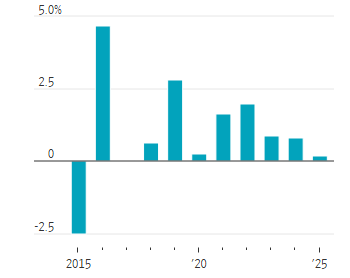
Core Viewpoint - The article discusses the complexities and challenges surrounding President Trump's interest in acquiring Greenland, highlighting its strategic importance and resource potential, while also noting its economic struggles and reliance on Danish subsidies [1][2]. Economic Overview - Greenland has a population of approximately 57,000, with about 80% of its land covered by ice, leading to a slow economic growth rate of 0.8% in 2024 and an expected 0.2% in 2025, primarily due to declining shrimp resources and prices [2]. - The economy is heavily reliant on fisheries, with 98% of export income coming from seafood, and recent economic activities have been driven by infrastructure investments, particularly a new international airport in Nuuk [2]. Financial Dependency - Denmark provides around 50% of Greenland's government revenue, equating to about 20% of the island's GDP, which translates to over $1 billion annually in support [3]. - If Denmark's financial support were to disappear, it would have catastrophic consequences for Greenland's economy, as acknowledged by local officials [3]. Public Sentiment and Political Dynamics - While some residents express hope that U.S. involvement could bring economic opportunities, public opinion polls indicate that most Greenlanders prioritize economic and social welfare over potential U.S. governance [3]. - Trump's administration considered direct financial incentives to Greenland residents to gain support, with comparisons drawn to U.S. aid to the Marshall Islands, which is significantly lower than what would be required to match Danish support [5]. Resource Development Challenges - The potential for mineral resource development in Greenland is complicated by high costs associated with infrastructure needs and severe weather conditions, along with the Greenland government’s complete control over mineral resources [6]. - Currently, only one mine is operational, but there are suggestions that Greenland could adopt a model similar to Iceland, integrating tourism, fisheries, and clean energy for growth [7]. Danish Investment - In response to U.S. interest, Denmark has announced an additional $250 million investment over the next three years for infrastructure projects, including a new regional airport and a deep-water port in eastern Greenland [7].

利好来了!央行“大礼包”:降息
Zhong Guo Ji Jin Bao· 2026-01-15 08:14
Group 1: Monetary Policy Changes - The People's Bank of China (PBOC) announced a reduction in various structural monetary policy tool rates by 0.25 percentage points, lowering the one-year relending rate from 1.5% to 1.25% [2] - The PBOC aims to enhance credit support for key sectors by improving structural tools and increasing support for economic transformation [2][3] Group 2: Market Performance - The A-share market showed a significant decrease in trading volume, with a total turnover of approximately 29,384.94 billion [4][6] - The Shanghai Composite Index fell by 0.33%, while the Shenzhen Component Index and the ChiNext Index rose by 0.41% and 0.56%, respectively [4] - A total of 2,230 stocks rose, while 3,121 stocks declined, indicating a broad market downturn [5][6] Group 3: Sector Performance - Semiconductor stocks experienced a rally, with companies like Tongcheng New Materials and Kangqiang Electronics hitting the daily limit [6] - The tourism sector showed active performance, with stocks such as Zhongxin Tourism and Shaanxi Tourism reaching their daily limit [8] - The non-ferrous metals sector also saw gains, with companies like Zinc Industry Co. and Luoping Zinc Electric hitting the daily limit [9] Group 4: Notable Stock Movements - Significant declines were observed in the commercial aerospace and AI application sectors, with stocks like China Satellite and Aerospace Power hitting their daily limit down [10] - Notable gainers included stocks in the semiconductor and tourism sectors, while several high-profile stocks in the commercial aerospace sector faced substantial losses [9][10]

又一国宣布:对华免签!
Shen Zhen Shang Bao· 2026-01-15 08:12
Group 1 - The core point of the article is that starting from January 16, 2026, Chinese citizens will be allowed to enter the Philippines visa-free for a maximum stay of 14 days, applicable only to those entering through Manila and Cebu airports [1] - The Philippine Department of Foreign Affairs stated that this measure aligns with the President's goals of promoting trade, investment, tourism, and enhancing cultural exchanges between the two countries [1]

人民日报:自贸港何以“热”力全开
Ren Min Ri Bao· 2026-01-15 07:38
Core Insights - The article highlights the significant growth in consumer spending in Hainan's free trade port, particularly during the New Year holiday, with a reported 128.9% year-on-year increase in duty-free shopping amounting to 7.12 billion yuan [1] - The success of Hainan's duty-free shopping is attributed to improved customs procedures and expanded product offerings, which enhance price competitiveness and consumer satisfaction [1][2] - The article emphasizes the importance of creating a favorable consumption environment through policy optimization and innovative experiences to attract both local and international consumers [2][3] Group 1: Economic Growth and Consumer Behavior - Hainan's duty-free shopping has seen a remarkable increase, with 7.12 billion yuan in sales during the New Year holiday, reflecting a 128.9% growth compared to the previous year [1] - The implementation of a "one line open, one line controlled" system has improved customs efficiency, allowing for quicker access to international brands and a broader range of zero-tariff products [1][2] - The shift from a tourist-exclusive shopping model to one that includes local residents has significantly boosted domestic consumption potential [2] Group 2: Policy and Governance - Continuous adjustments to the duty-free policy have allowed local residents to purchase duty-free items throughout the year, enhancing the shopping experience [2] - The article discusses the need for effective governance to manage the increased flow of people and goods post-closure, highlighting the use of smart regulatory measures to ensure consumer safety and satisfaction [3] - Hainan's commitment to creating a robust legal framework and business environment is seen as essential for sustaining consumer confidence and economic growth [3][4] Group 3: Future Outlook - The article suggests that the full closure operation is just the beginning, with ongoing efforts needed to refine service systems and create a more consumer-friendly environment [4] - Hainan's identity as a destination is reinforced by its natural beauty and the appeal of its duty-free shopping, which is expected to continue attracting visitors [4]
航班减、消费降……游客减少笼罩日本旅游业
Xin Hua She· 2026-01-15 06:53
Group 1 - The decline in Chinese tourists, who make up over half of foreign visitors in Kamakura, Japan, is putting significant pressure on local specialty shops and the broader economy [1] - In the Kansai region, which heavily relies on tourism, 50% to 70% of hotel bookings from Chinese tourists have been canceled, according to the Osaka Tourism Bureau [2] - Kansai International Airport predicts a 28% average reduction in flights between Japan and China from January to March [2] Group 2 - Major Japanese department stores reported a decline in tax-free sales, with Daimaru Matsuzakaya down 9.4%, Takashimaya down 9.8%, and Isetan Mitsukoshi down 20% during early December [4] - The reduction in Chinese tourists is expected to have a cascading effect on Japan's retail sector and local economies, particularly in areas that depend on foreign visitors for development and employment [4]

极北之地的幸福“领头人”
Xin Hua She· 2026-01-15 05:56
望着夜幕下的霓虹和篝火旁嬉笑的人群,漠河市委常委、北极镇党委书记文竹感慨道:"虽然我把 青春栽种在冰天雪地,但它开得热烈。" 地处北纬53度,最低气温零下53摄氏度,"极北"和"极寒"的标签曾让不少人对在漠河工作生活望而 却步,下辖的边境村落更是无人问津。因儿时曾在漠河生活,文竹知道祖国最北的边陲小镇需要年轻 人,怀抱着对这片土地的眷恋,在大学毕业后毅然奔赴这里,从北极镇洛古河村村支书助理做起,一扎 根就是13年。 漠河市盛产樟子松、白桦等良木,是昔日重要的木材生产基地,曾为国家开发建设提供宝贵资源。 2014年全面停止天然林商业性采伐后,漠河开始转型发展文旅产业。 为丰富村里旅游业态,文竹帮村民张罗成立游艇公司,还手把手教大家在手机上接订单。线上销售 模式开通后,订单成倍增长。"最北饺子馆""最北照相馆"等各种以"北"命名的商铺,如雨后春笋般接连 涌现。 大寒将至,在被称作"神州北极"的黑龙江省大兴安岭地区漠河市,冰雪点燃了全国游客的热情。 "这是一趟奔赴极寒的暖心之旅。"南方游客张女士感慨道,漠河这几天气温在零下三十几摄氏度, 但室内很暖和,吃得热乎、住得舒坦,人也热情。"我们住的民宿院里就有各式各样的冰 ...
千年冬捕焕新生 金融活水润北国 中国人民银行松原市分行推动查干湖文旅产业融合发展纪实
Jin Rong Shi Bao· 2026-01-15 03:00
Core Insights - The Chagan Lake Winter Fishing Festival has become a significant cultural tourism event, attracting over 81,000 visitors and generating more than 70 million yuan in revenue on a single day [1] - JD.com purchased the first fish of the festival for 1,699,999 yuan, and has entered into an annual purchasing agreement to buy nearly 50% of the fish production from Chagan Lake for the 2025-2026 season [1] - The People's Bank of China (PBOC) in Songyuan has been instrumental in supporting the integration of finance and cultural tourism in the region, promoting rural revitalization [1][2] Financial Support and Innovation - The Chagan Lake fishery has faced significant funding challenges due to a lack of effective collateral in traditional financing models, which has hindered its growth [2] - The PBOC has introduced a "water area and tidal flat mortgage" loan product to address these funding needs, allowing the fishery to leverage its water usage rights as collateral [3] - A total of 85 million yuan in loans has been provided to the Chagan Lake fishery this year, facilitating the introduction of quality fish seedlings and modern fishing equipment [3][4] Technological Integration - The PBOC has emphasized the importance of integrating financial services into the smart tourism sector to enhance operational efficiency and visitor experience [5] - A WeChat mini-program for the Chagan Lake scenic area has been launched, improving ticket sales and visitor management, and increasing entry efficiency by 50% [6] - The program also supports a direct sales channel for local fish products and integrates local service information, enhancing the overall tourism ecosystem [6][7] Support for Small and Micro Enterprises - The PBOC has tailored financial products to meet the needs of small and micro enterprises in the tourism sector, such as the "Ji e Loan" which offers flexible borrowing options [8][9] - This approach has helped local businesses manage seasonal cash flow challenges, improving their operational efficiency and reducing costs [9] Ecosystem Development - The PBOC aims to create a comprehensive ecosystem that integrates finance, tourism, and ecological protection, promoting sustainable development in the region [10] - Financial resources are being directed towards ecological projects, ensuring the preservation of water quality and biodiversity in Chagan Lake [10][11] - The initiative also supports the development of high-value fish products and cultural tourism offerings, fostering a diverse economic landscape [10]
让文旅“活”起来 让山水“火”起来 湖南怀化不断提升文旅金融服务质效
Jin Rong Shi Bao· 2026-01-15 03:00
Core Viewpoint - The integration of financial resources with the cultural tourism industry in Huaihua is enhancing tourism experiences and driving economic growth through various financial support initiatives. Group 1: Financial Support for Tourism Projects - The construction of the world's longest mountain cableway in Xupu County was supported by a 200 million yuan loan from the Industrial and Commercial Bank of Huaihua, ensuring timely operation despite previous delays due to high construction difficulty and funding needs [1] - The People's Bank of China Huaihua Branch has established a list of financing needs for 51 key cultural tourism projects, identifying a total financing demand of 5.92 billion yuan and disbursing over 2.7 billion yuan in loans [2] - A cultural tourism company in Hongjiang received a 230 million yuan loan from the Agricultural Development Bank to support infrastructure updates and educational tourism project development, contributing to a total of 820 million yuan in loans for agricultural cultural tourism projects in Huaihua [3] Group 2: Innovative Financial Products - The Huaihua Branch of the People's Bank of China is promoting innovative financing methods, such as pledging scenic area revenue rights and operating rights, to convert expected cash flows into financing guarantees [5] - The Hunan Bank provided a 250 million yuan loan to the Simeng Danxia Scenic Area by using forest rights and project fee rights as collateral, resulting in a 20% increase in annual revenue [6] Group 3: Enhancing Local Tourism Infrastructure - The Huaihua Agricultural Commercial Bank provided 55 million yuan in financial support for the construction of scenic area projects, including walking paths and performance venues, which has made the Borrowing Mother Creek a popular cultural experience destination [4] - The Huaihua Yushuwan Cultural Tourism Commercial Complex received 70 million yuan in loans from Huaihua Agricultural Commercial Bank, facilitating the completion of multiple tourism projects ahead of the Fifth Hunan Tourism Development Conference [7] Group 4: Improving Consumer Financial Services - The People's Bank of China Huaihua Branch has organized financial service teams to provide convenient payment and credit services to small and micro enterprises in the tourism sector, enhancing the overall consumer experience [8] - The Huaihua Agricultural Commercial Bank has deployed over 4,000 payment devices in scenic areas, saving merchants over 1.2 million yuan in transaction fees [8] - Local banks are offering promotional measures such as consumption coupons and discounts to stimulate tourism spending, exemplified by the collaboration during the traditional dragon boat race in Mayang Miao Autonomous County [9]
“十五五”开好局起好步丨西延高铁开通 让革命老区延安开启“快旅慢游”模式
Yang Shi Xin Wen Ke Hu Duan· 2026-01-15 01:41
Group 1 - The opening of the Xi'an to Yan'an high-speed railway by the end of 2025 will create a "one-hour economic circle" between Guanzhong and northern Shaanxi, revitalizing the economy and cultural pulse along the route and reshaping the development landscape of the old revolutionary base in northern Shaanxi [1] - The "Yan'an 1938 Block" has seen a significant increase in visitor traffic, with over 17,000 visitors during the New Year holiday, a year-on-year increase of 19.9%, attributed to the high-speed railway's opening [5][6] - The high-speed railway is promoting a transformation in the cultural tourism industry from "transit-style" to "immersive" experiences, enhancing service optimization and interconnectivity within scenic areas [6] Group 2 - The implementation of free admission policies at iconic sites like Baota Mountain and Hukou Waterfall aims to attract more visitors, while special offers for high-speed railway ticket holders at local attractions are designed to boost winter tourism [8] - The high-speed railway is also benefiting other industries, such as the apple industry in Luochuan County, where logistics improvements allow for rapid delivery of fresh apples, significantly reducing transportation losses from 15% to below 2% [10] - The opening of the high-speed railway is expected to increase annual visitor numbers to Yan'an to over 50 million, enhancing the region's economic vitality through improved transportation of people, goods, and information [10][12]

日元兑人民币汇率跌至4.48历史新低
Sou Hu Cai Jing· 2026-01-15 00:38
Exchange Rate Status and Market Reaction - The Japanese yen reached a historic low against the Chinese yuan at 4.48 on December 19, 2025, marking the lowest level on record; the yen also fell below 157 against the US dollar, despite a 25 basis point interest rate hike by the Bank of Japan, which failed to reverse the downward trend [1][2] Core Drivers of the Downward Trend - The conflict between monetary policies is evident as the Japanese government introduced a fiscal stimulus plan exceeding 21 trillion yen, raising debt concerns with a national debt-to-GDP ratio of 264%, while the central bank only made a minor interest rate increase; Prime Minister Fumio Kishida publicly opposed aggressive rate hikes, leading to a collapse in market confidence [3] - The widening interest rate differential between Japan and the US, with the US 10-year Treasury yield remaining above 4%, has driven continued selling of the yen through arbitrage trading [3] Economic and Social Impact - Input-driven inflation is eroding purchasing power, with rice prices soaring by 90% since the beginning of the year, and beef prices increasing by 150%-200% over the past 12 years, forcing consumers to cut back on food spending [6] - For every 1 yen depreciation, Japanese households face an annual increase in expenses of 6,000 yen, negating the benefits for exporting companies [7] - Small and medium-sized enterprises are facing survival crises due to skyrocketing import costs, with manufacturing profit growth declining by 2.1%, and tourism revenue sharply decreasing, further worsening the employment market [8] Intervention Challenges and Global Risks - The policy toolbox is nearing exhaustion, as government debt stands at 235% of GDP; if interest rates rise to 0.75%, annual debt servicing costs could surge by 8 trillion yen, potentially triggering a sovereign debt crisis [10] - Foreign exchange intervention is limited, with nearly half of the foreign reserves committed to US investments, leaving insufficient funds available; interventions in 2024 cost 5 trillion yen but only provided temporary stabilization [10] - There is a risk of a global financial chain reaction if approximately 20 trillion yen in arbitrage funds return en masse, which could impact liquidity in emerging markets and lead to competitive currency devaluations [10] - If the yen falls below the 160 mark, Japan may be forced to utilize foreign reserves for intervention, although the US has clearly opposed unilateral actions; without coordinated rate cuts from the Federal Reserve or G7 support, the yen could plunge towards 180:1 against the dollar [10]