
石油和天然气开采业

Search documents
反内卷拉动多少PPI?
HUAXI Securities· 2025-08-10 14:33
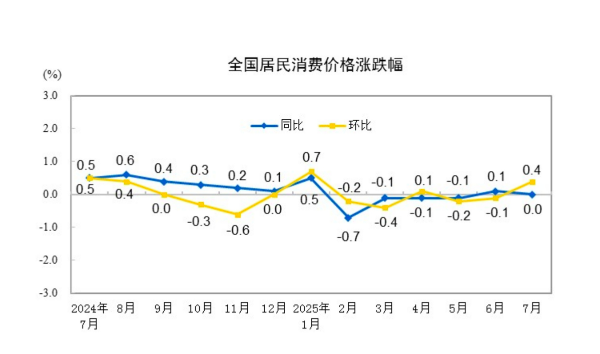
Inflation Data Summary - July CPI year-on-year growth is 0%, exceeding the expected -0.1% and matching the previous month's 0.1%[1] - July CPI month-on-month growth is 0.4%, up from -0.1% in the previous month and down from 0.5% year-on-year[1] - Core CPI year-on-year growth is 0.8%, slightly above the previous value of 0.7%[1] PPI Analysis - July PPI year-on-year decline is -3.6%, worse than the expected -3.4% and unchanged from the previous month[1] - PPI month-on-month change is -0.2%, an improvement from -0.4% in the previous month[1] - The decline in PPI is primarily driven by weak demand, with upstream industry price declines narrowing more significantly[2] Sector Contributions - Service and industrial consumer goods support CPI growth, contributing over 60% to the total CPI increase[2] - Food prices decreased by 0.2%, underperforming compared to the seasonal average decline of 0.7%[2] - Upstream industries like coal mining and black metal smelting show reduced price declines, indicating some recovery in these sectors[3] Future Outlook - To achieve a positive year-on-year PPI by year-end, the average month-on-month growth over the next five months needs to reach at least 0.42%[3] - The "anti-involution" policy effects are beginning to show, but full transmission may take time[3] - The current inflation data suggests a moderate environment, supporting a loose monetary policy stance[3]
延长石油申请基于多层感知机预测烃源岩有机碳含量专利 完成对区域的烃源岩整体性评价
Jin Rong Jie· 2025-08-09 11:55
本文源自:金融界 作者:情报员 金融界2025年8月9日消息,国家知识产权局信息显示,陕西延长石油(集团)有限责任公司申请一项名 为"一种基于多层感知机的地震预测烃源岩有机碳含量方法"的专利,公开号CN120447035A,申请日期 为2025年05月。 专利摘要显示,本发明涉及一种基于多层感知机的地震预测烃源岩有机碳含量方法,方法如下:获取岩 样的有机碳含量数据;提取岩样所在井的井旁地震道地震属性数据;将岩样的有机碳含量数据与井旁地 震道地震属性数据作相关性分析,优选出相关性高的优选地震属性数据;通过多层感知器训练岩样的有 机碳含量数据和优选地震属性数据,得到地震属性预测有机碳含量的多层感知器模型;将研究区内全储 层的优选地震属性数据输入至多层感知器模型,进而对研究区内全储层的有机碳含量数据进行预测。本 发明基于油气田前期勘探中广泛实施的地震勘探数据,和少量的岩心样本数据,完成对区域的烃源岩整 体性评价,对于烃源岩评价和指导勘探决策具有重要的意义。 天眼查资料显示,陕西延长石油(集团)有限责任公司,成立于1996年,位于延安市,是一家以从事石 油和天然气开采业为主的企业。企业注册资本1000000万人民币。 ...
中石化申请聚乙醇酸发泡材料及其制备方法与应用专利,所得聚乙醇酸发泡材料密度得到显著降低
Sou Hu Cai Jing· 2025-08-09 04:52
Group 1 - The core viewpoint of the article highlights that Sinopec has applied for a patent for a new type of polylactic acid foam material, which significantly reduces density compared to non-foamed materials, enhancing yield and thermal insulation properties, thus broadening its application scenarios and market potential [1][3] - The patent application, titled "Polylactic Acid Foam Material and Its Preparation Method and Application," was filed on February 2024, indicating ongoing innovation in polymer materials technology [1] - Sinopec, established in 2000, is primarily engaged in oil and gas extraction, with a registered capital of approximately 12.17 billion RMB and has invested in 263 companies, participated in 5000 bidding projects, and holds 5000 patent records [1] Group 2 - Sinopec Shanghai Petrochemical Research Institute, founded in 2022, focuses on technology promotion and application services, with a registered capital of 498 million RMB, and has invested in 2 companies and participated in 655 bidding projects [2] - The research institute holds 731 patent records and has 123 administrative licenses, indicating a strong emphasis on innovation and regulatory compliance [2]

7月核心CPI同比涨幅连续3个月扩大 下半年价格低位温和回升支撑因素有哪些
Di Yi Cai Jing· 2025-08-09 03:22
Group 1: Consumer Price Index (CPI) - In July, the CPI increased by 0.4% month-on-month, reversing a 0.1% decline from the previous month, with year-on-year growth remaining flat [1][3] - The year-on-year CPI was primarily influenced by lower food prices, which decreased by 1.6%, contributing approximately 0.29 percentage points to the CPI decline [1] - Core CPI, excluding food and energy, rose by 0.8% year-on-year, marking the highest increase since March 2024 [1] Group 2: Producer Price Index (PPI) - The PPI decreased by 0.2% month-on-month in July, but the decline was less than the previous month, marking the first narrowing of the decline since March [5] - Seasonal factors and uncertainties in the international trade environment contributed to price decreases in several industries, including a 1.4% drop in non-metallic mineral products [5][6] - The prices in coal mining and washing, black metal smelting, and photovoltaic equipment manufacturing saw reduced declines compared to the previous month, indicating improved market competition [6] Group 3: Economic Outlook - The National Bureau of Statistics indicated that prices are expected to gradually rise in the second half of the year, supported by stable economic performance and effective domestic demand expansion policies [6]

7月核心CPI同比涨幅连续3个月扩大,下半年价格低位温和回升支撑因素有哪些
Di Yi Cai Jing· 2025-08-09 03:20
Group 1: CPI Analysis - The core CPI, excluding food and energy prices, increased by 0.8% year-on-year, marking the highest growth since March 2024, with a 0.1 percentage point increase from the previous month [2] - In July, the CPI rose by 0.4% month-on-month, reversing a 0.1% decline from the previous month, primarily driven by increases in service and industrial consumer goods prices [4] - The decrease in food prices, particularly fresh vegetables and fruits, significantly impacted the CPI, with fresh vegetable prices down 7.6% year-on-year and fruit prices up 2.8% [1][4] Group 2: PPI Analysis - The PPI fell by 0.2% month-on-month in July, but the decline was less than the previous month, marking the first narrowing of the month-on-month decline since March [6] - Seasonal factors and uncertainties in the international trade environment contributed to price decreases in several industries, including non-metallic mineral products and coal mining [6][7] - The competitive market environment in industries such as coal, steel, and photovoltaic manufacturing has led to a reduction in price declines compared to the previous month [7] Group 3: Future Price Trends - The National Bureau of Statistics anticipates a moderate recovery in prices in the second half of the year, supported by stable economic performance, effective demand expansion policies, and reduced low-price competition among enterprises [7]
重磅发布!0.4%↑
Zheng Quan Shi Bao Wang· 2025-08-09 02:48
Group 1: CPI Analysis - The Consumer Price Index (CPI) increased by 0.4% month-on-month in July, reversing a previous decline of 0.1%, with a year-on-year change remaining flat [1][2] - The core CPI, excluding food and energy, rose by 0.8% year-on-year, marking the highest increase since March 2024, with a continuous expansion in growth for three consecutive months [2][3] - Service prices contributed significantly to the CPI increase, with a month-on-month rise of 0.6%, driven by seasonal factors such as summer travel, impacting the CPI by approximately 0.26 percentage points [2] Group 2: PPI Analysis - The Producer Price Index (PPI) decreased by 0.2% month-on-month, but the decline was less than the previous month, marking the first narrowing of the month-on-month decline since March [4][5] - Year-on-year, the PPI fell by 3.6%, with the decline remaining consistent with the previous month, indicating some improvement in supply-demand relationships in certain industries [5] - Seasonal factors and uncertainties in international trade affected prices in several sectors, with notable decreases in construction materials and energy-related prices [4][5]
7月份物价数据发布!金饰品价格同比上涨37.1%
Zheng Quan Ri Bao Wang· 2025-08-09 02:27
Group 1: CPI Analysis - The Consumer Price Index (CPI) increased by 0.4% month-on-month in July, which is 0.1 percentage points higher than the seasonal level [3] - The rise in CPI was primarily driven by increases in service and industrial consumer goods prices, with service prices up 0.6% and industrial consumer goods prices up 0.5% [3] - Seasonal factors, such as the summer travel peak, contributed to significant price increases in air tickets (17.9%), tourism (9.1%), hotel accommodation (6.9%), and vehicle rentals (4.4%) [3] Group 2: Core CPI Insights - The core CPI, excluding food and energy, rose by 0.8% year-on-year, marking the highest level since March 2024 [4] - Jewelry prices, particularly gold and platinum, saw substantial increases of 37.1% and 27.3% respectively, contributing approximately 0.22 percentage points to the CPI [4] - Food prices experienced a year-on-year decline of 1.6%, primarily due to high base effects from the previous year, which negatively impacted the overall CPI [4] Group 3: PPI Overview - The Producer Price Index (PPI) decreased by 0.2% month-on-month, but the decline was less severe than in previous months, marking the first month of narrowing decline since March [5] - Seasonal factors and uncertainties in international trade contributed to price decreases in certain industries, while domestic market competition improved, leading to reduced price declines in sectors like coal, steel, and solar energy [5][6] - Year-on-year, the PPI fell by 3.6%, with some industries experiencing price recoveries due to macroeconomic policies and demand improvements [6]
7月核心CPI同比持续回升,PPI环比降幅收窄
第一财经· 2025-08-09 02:11
Group 1 - The core viewpoint of the article highlights the ongoing effects of domestic demand expansion policies, leading to a rise in the Consumer Price Index (CPI) and a narrowing decline in the Producer Price Index (PPI [3][4][6] - In July, the CPI increased by 0.4% month-on-month, driven by rising prices in services and industrial consumer goods, with service prices up 0.6% and industrial consumer goods prices up 0.5% [4][5] - The core CPI, excluding food and energy, rose by 0.8% year-on-year, marking the highest increase since March 2024, with significant contributions from jewelry prices [4][5] Group 2 - The PPI decreased by 0.2% month-on-month, but the decline was less than the previous month, marking the first narrowing of the month-on-month decline since March [6][7] - Seasonal factors and uncertainties in the international trade environment contributed to price declines in certain industries, such as construction materials and electricity generation [6][7] - Year-on-year, the PPI fell by 3.6%, with some industries experiencing price increases due to improved supply-demand relationships and ongoing macroeconomic policies [8]

中石化取得高等规聚丁烯-1制备方法专利
Sou Hu Cai Jing· 2025-08-09 02:04
Group 1 - The core point of the article is that Sinopec has obtained a patent for a method of preparing high-grade polybutene-1, which indicates its ongoing innovation in the chemical industry [1] - Sinopec, established in 2000, is primarily engaged in oil and gas extraction, with a registered capital of approximately 12.17 billion RMB [1] - Sinopec has made investments in 263 companies and participated in 5,000 bidding projects, showcasing its extensive operational footprint [1] Group 2 - Sinopec (Beijing) Chemical Research Institute, founded in 2021, focuses on the manufacturing of chemical raw materials and products, with a registered capital of 100 million RMB [1] - The research institute has invested in 4 companies and participated in 1,387 bidding projects, indicating its active role in the industry [1] - The institute holds 1,678 patents and 16 trademarks, reflecting its commitment to research and development [1]
国家统计局:7月核心CPI同比持续回升 PPI环比降幅收窄
Di Yi Cai Jing· 2025-08-09 01:58
Group 1: CPI Analysis - The Consumer Price Index (CPI) showed a month-on-month increase of 0.4% in July, reversing a previous decline of 0.1% in June, primarily driven by rising service and industrial goods prices [2][3] - The core CPI, excluding food and energy, rose by 0.8% year-on-year, marking the highest increase since March 2024, with jewelry prices significantly contributing to this rise [2][3] - Food prices decreased by 1.6% year-on-year, influenced by a high base from the previous year, which negatively impacted the overall CPI [3] Group 2: PPI Analysis - The Producer Price Index (PPI) decreased by 0.2% month-on-month, but the decline was less severe than in previous months, indicating a potential stabilization in certain sectors [4][5] - Year-on-year, the PPI fell by 3.6%, with some industries experiencing price recovery due to improved supply-demand dynamics and ongoing industrial upgrades [5][6] - Specific sectors such as traditional industries and emerging industries showed positive price movements, with notable increases in prices for products like caustic soda and aircraft manufacturing [5][6]