
清洁电器

Search documents
“扫地茅”光环消退,石头科技港股IPO遭遇三重门
Zhong Guo Neng Yuan Wang· 2025-11-05 04:22
Core Insights - Stone Technology, once hailed as a leader in the cleaning appliance sector, is currently facing a dilemma of increasing revenue without corresponding profit growth, with a 72% year-on-year revenue increase but a 30% decline in net profit for the first three quarters of 2025 [1][2] Financial Performance - For the first three quarters of 2025, Stone Technology reported a revenue of 12.066 billion yuan, a 72.22% increase year-on-year, while net profit attributable to shareholders fell by 29.51% to 1.038 billion yuan [2] - In Q3 2025, revenue reached 4.163 billion yuan, up 60.71% year-on-year, but net profit only slightly increased by 2.51% to 360 million yuan [2] - Sales expenses surged to 3.180 billion yuan, doubling from 1.564 billion yuan in the previous year, indicating high investment costs [2][4] - R&D expenses also rose by 60.56% to 1.028 billion yuan [3] - The gross profit margin decreased from 53.86% to 43.73%, and the net profit margin fell from 21.01% to 8.60% [4] - Cash flow from operating activities was negative at -1.06 billion yuan, a 200% decline year-on-year, with inventory increasing by 110.06% to 3.13 billion yuan [4] Strategic Challenges - Stone Technology is attempting to balance its core business with diversification, focusing on a dual growth engine of stable core categories and emerging categories [5][6] - The washing machine division, established in 2024, faced significant layoffs within a year, indicating challenges in the diversification strategy [6] - Founder Chang Jing's involvement in the electric vehicle company, Extreme Stone Automotive, raises concerns about divided attention, with the automotive venture underperforming [6][7] IPO and Regulatory Concerns - Stone Technology is pursuing an IPO on the Hong Kong Stock Exchange, aiming to raise 1.5 billion HKD for international expansion and R&D [8] - The China Securities Regulatory Commission has raised three major compliance issues regarding data security, shareholder identification, and foreign investment qualifications, which could impact the IPO process [8]

前三季度我省对APEC其他经济体进出口2.73万亿元
Xin Hua Ri Bao· 2025-11-02 21:38
Group 1 - The APEC informal leaders' meeting will be held in Gyeongju, South Korea, from October 31 to November 1, 2025, highlighting the significance of APEC as a major economic cooperation mechanism in the Asia-Pacific region [1] - In the first three quarters of this year, Jiangsu's import and export volume to other APEC economies reached 2.73 trillion yuan, representing a year-on-year growth of 4.6% [1] - Midea's vacuum cleaner exports to Peru increased by 70.7% year-on-year in the first nine months of this year, benefiting from the China-Peru Free Trade Agreement which reduced import tariffs from 9% to 0% [1] Group 2 - Zhenjiang's exports of engineering machinery to other APEC economies reached 320 million yuan in the first three quarters, showing a year-on-year increase of 67.3% [1] - Komar Cosmetics (Wuxi) Co., Ltd. exported 100,000 essence products to Japan, with export value increasing nearly 3.7 times year-on-year in the first nine months [2] - The company leverages its global brand influence and local manufacturing advantages to enhance its market presence in the Asia-Pacific region [2]
家用洗地机基站安装标准正式发布,家装初期即可纳入整体空间规划
Huan Qiu Wang· 2025-10-31 08:09
Core Points - The China Household Electrical Appliances Association has released a group standard T/CHEAA 0052—2025 for home floor washing machines, focusing on base station installation requirements [1][3] - The standard aims to address the lack of unified installation standards in the market, which has led to difficulties in product-home environment compatibility and inconsistent installation quality [3] - The introduction of this standard is expected to facilitate a transition in the industry from optimizing individual product functions to providing systematic cleaning solutions for homes [3] Industry Impact - The standard was developed by the China Household Electrical Appliances Association's Cleaning Appliances Professional Committee, with contributions from various industry players including brands like Tineco, Leifheit, Midea, Haier, and others [3] - By establishing comprehensive technical specifications for base station installation, the standard serves as an authoritative reference for home designers, allowing for the integration of washing machine bases into overall space planning from the renovation stage [3] - The implementation of this standard is anticipated to catalyze technological innovation in the cleaning appliance sector, promoting higher quality and more sustainable development in the industry [3]

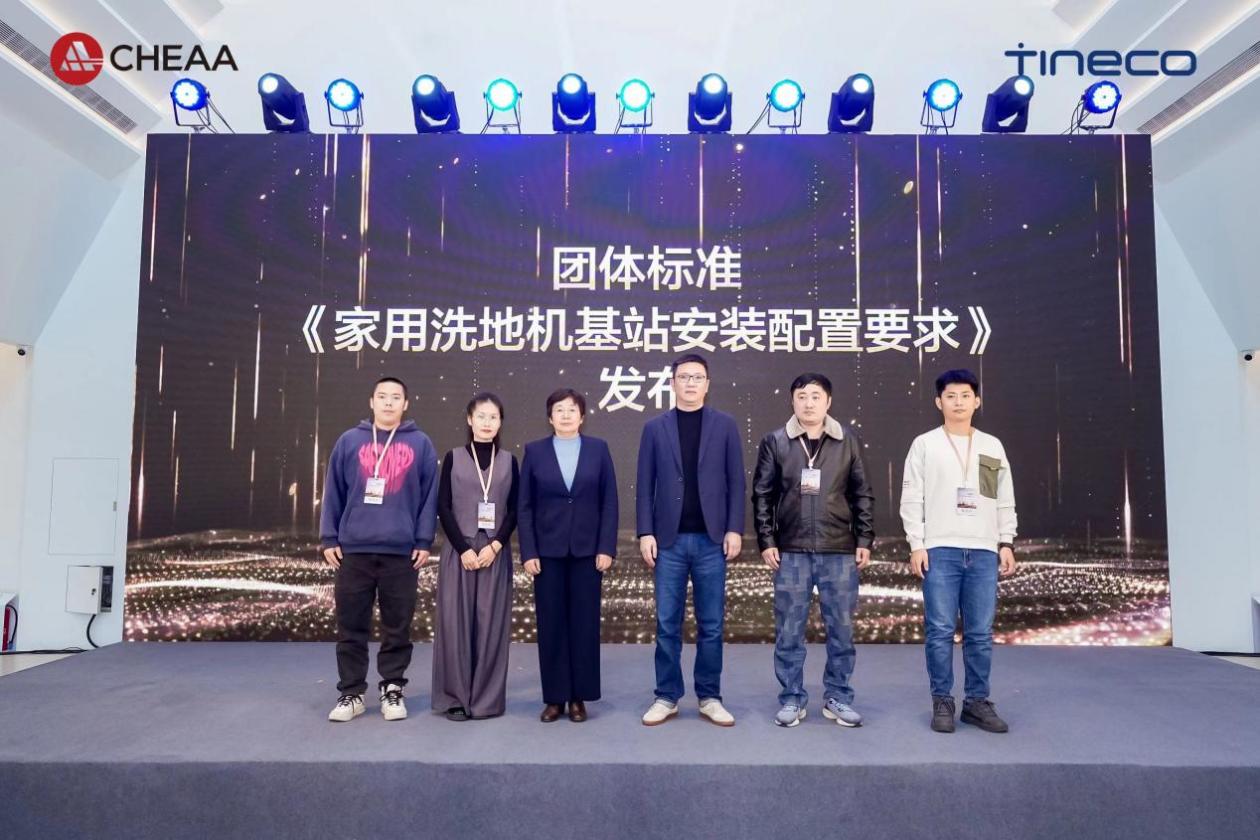
从“单机优化”到“系统解决方案”,洗地机行业再迎团体标准
Xin Jing Bao· 2025-10-31 07:15
Group 1 - The release of the group standard "Home Floor Washing Machine Base Station Installation Requirements" (T/CHEAA0052—2025) aims to provide scientific guidance for the market, addressing installation processes and ensuring safe operation in various environments [1][2] - The standard promotes a shift in the industry from "single machine function optimization" to "systematic home cleaning solutions," enhancing user experience and creating a "hidden order" cleaning aesthetic in living spaces [1][2] - The integration of home appliances with interior design is increasingly recognized as a key path to improving living quality and space efficiency, focusing on the organic fusion of appliances with living environments [1] Group 2 - The group standard fills a gap in the installation service standards for base station washing machines, helping to standardize industry installation processes and promote healthy industry development [2] - The standard alleviates user concerns regarding issues like pipe blockage and space mismatch, significantly lowering the barriers to high-end integrated cleaning experiences [2] - By reserving space during the renovation phase, users can enjoy a more convenient, intelligent, and elegant home cleaning experience while avoiding regrets related to later modifications [2]
家用洗地机标准再扩容 洗地机迈入“隐序时代”
Zhong Guo Jing Ji Wang· 2025-10-30 09:52
Core Insights - The forum on the "Hidden Sequence" aesthetic trend for cleaning appliances was held in Beijing, emphasizing the integration of cleaning appliances with modern home design [1][3] - The release of the T/CHEAA0052-2025 "Home Floor Washing Machine Base Station Installation Requirements" standard marks a significant step towards establishing uniform installation standards for base station washing machines [1][3] Industry Developments - The new standard aims to address the lack of unified installation standards in the market, ensuring compatibility between base stations and home environments, thus improving installation quality [3][5] - The standard was developed by the China Household Electrical Appliances Association and involved collaboration from various industry players, providing comprehensive guidelines for installation and quality inspection [5][7] Aesthetic Trends - The concept of "Hidden Sequence" aesthetics was a focal point of discussion, highlighting the need for deep integration between home appliances and home decor [7][8] - The "Hidden Sequence" aesthetic emphasizes not just the concealment of appliances but their harmonious integration into living spaces, enhancing the overall living experience [7][8] Future Directions - The standard is expected to catalyze technological innovation in the cleaning appliance industry, leading to higher quality and more sustainable development [7][9] - The focus on user-centered design and the evolution of cleaning appliances will continue to drive product advancements, aligning with consumer expectations for functionality and aesthetic integration [9]
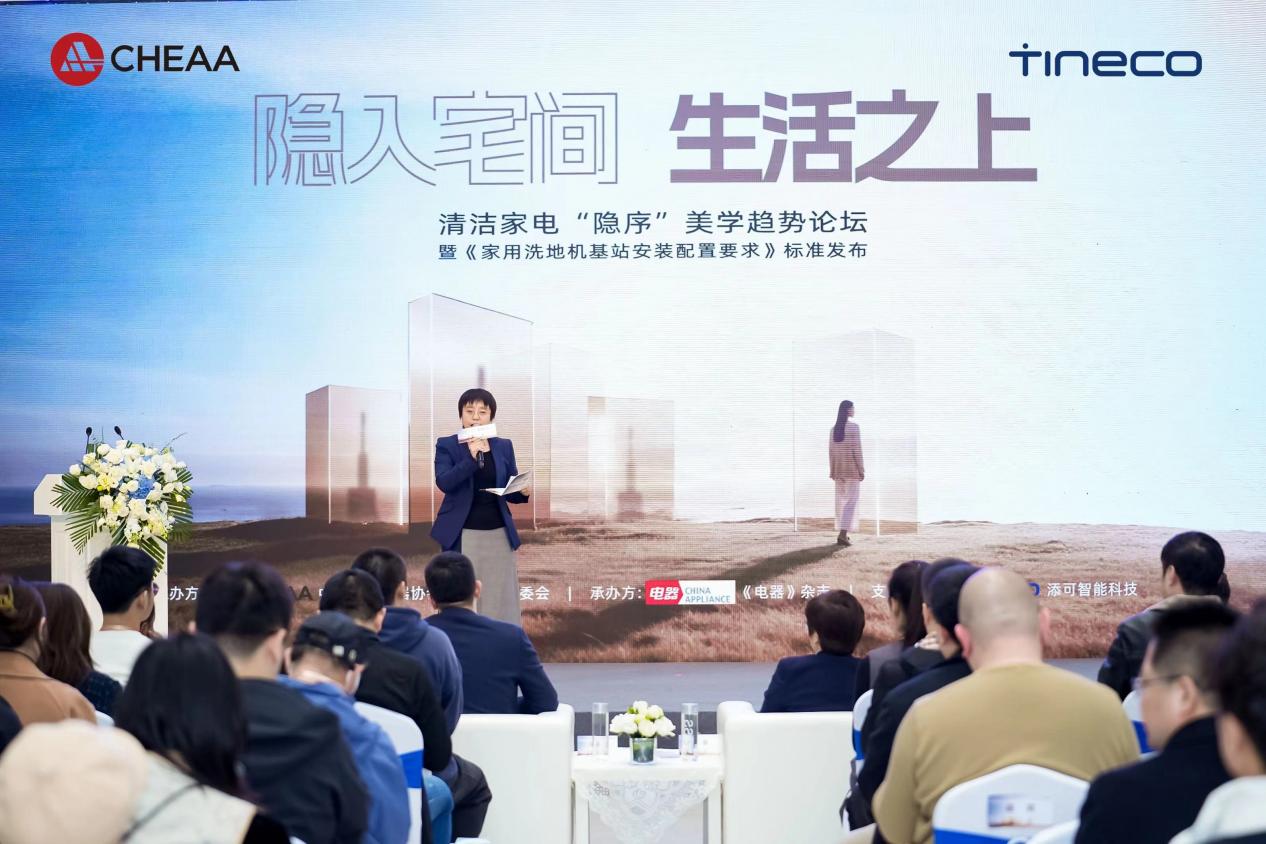
家用洗地机标准再扩容,清洁电器开启“隐序”美学新时代
Xin Lang Cai Jing· 2025-10-30 09:05
Core Insights - The forum titled "Aesthetic Dialogue on Cleaning Appliances: The 'Hidden Order' Aesthetic Trend" was held in Beijing, focusing on the integration of cleaning appliances into modern home design [1] - The release of the T/CHEAA 0052-2025 standard for home floor washing machine base station installation requirements marks a significant step towards standardizing the installation of cleaning appliances [3][5] Industry Developments - The newly released standard aims to address the lack of unified installation standards for base station washing machines, ensuring compatibility with home environments and improving installation quality [3][5] - The standard was developed by the China Household Electrical Appliances Association and various industry stakeholders, providing a comprehensive guideline for installation, quality inspection, and delivery [5][7] Aesthetic Trends - The concept of "Hidden Order" was a central theme, emphasizing the need for cleaning appliances to seamlessly integrate into living spaces while maintaining functionality [7][9] - The integration of cleaning appliances into home design is seen as a way to enhance the overall living experience, moving beyond mere functionality to a harmonious blend of aesthetics and utility [9][11] Future Directions - Industry leaders expressed optimism that the new standard will catalyze technological innovation and lead to higher quality, more sustainable development in the cleaning appliance sector [7][14] - The focus on user-centered design and the evolution of cleaning appliances will continue to drive product advancements, aligning with consumer expectations for a more integrated and aesthetically pleasing home environment [14]
“制造强国”实干系列周报-20251029
Shenwan Hongyuan Securities· 2025-10-29 04:14
Group 1: Aerospace Industry - The "Aerospace Power" has been included in the 14th Five-Year Plan, indicating a potential rapid development phase over the next five years[10] - The deep space economy is expected to become a core engine for transforming China from a space power to a space superpower, with significant breakthroughs in key technologies like satellite internet and reusable rockets[10] - The aerospace industry value chain is structured like a pyramid, with high profit margins in the mid and downstream sectors, which include satellite services and ground equipment[12] Group 2: PCB Equipment - Demand for drilling equipment is increasing due to the rise in the number of holes required for high-speed materials, leading to a significant increase in the number of machines needed for PCB production[33] - The market for laser drilling equipment is experiencing both volume and price increases, driven by the growing complexity of PCB designs[33] - Major players in the PCB equipment market, such as Dazhu CNC and Dingtai High-Tech, are expected to see substantial revenue growth, with Dazhu reporting a 95.19% year-over-year increase in revenue for Q3 2023[35] Group 3: Automotive Industry - The automotive industry is expected to focus on "expanding domestic demand" and "high-quality development" during the 14th Five-Year Plan, emphasizing smart and green technologies[51] - The integration of AI and green technologies is projected to enhance the competitiveness of the automotive sector, with a focus on electric and hybrid vehicles[54] Group 4: AI Glasses - The market for AI glasses is rapidly expanding, with major players like Meta launching products that have received strong market responses, indicating a growing consumer interest[60] - AI glasses are expected to enhance user interaction through integrated functionalities, positioning them as a significant advancement in wearable technology[64] Group 5: Floor Cleaning Machines - The floor cleaning machine market has seen significant sales growth since Q4 2024, driven by government subsidies, with a projected increase in sales volume[89] - The market is currently dominated by a few key players, indicating a trend towards increased market concentration[89]


科沃斯(603486):收入延续高增,盈利同比显著修复
HUAXI Securities· 2025-10-27 14:25
Investment Rating - The investment rating for the company is "Buy" [5] Core Views - The company reported a significant increase in revenue and profit for the first three quarters of 2025, with total revenue reaching 12.88 billion yuan, a year-on-year increase of 25.9%, and net profit attributable to shareholders of 1.42 billion yuan, up 130.6% [1] - The growth in revenue is attributed to strong sales of cleaning appliances, particularly the roller series products, despite challenges in domestic sales due to subsidy reductions [2] - The gross profit margin improved significantly, reaching 49.8% in Q3 2025, an increase of 7.7 percentage points year-on-year, primarily due to the higher sales proportion of roller series products [3] Revenue Summary - For Q3 2025, the company achieved revenue of 4.2 billion yuan, a year-on-year increase of 29.3%, with net profit soaring to 440 million yuan, reflecting a staggering increase of 7160.9% [1] - The online sales growth rates for the company's brands in Q3 were impressive, with the Ecovacs brand's floor cleaning machines growing by 122% year-on-year and the Tineco brand's washing machines by 35% [2] Profit Summary - The net profit margin for Q3 2025 was 10.4%, an increase of 10.2 percentage points year-on-year, driven by the substantial rise in gross profit margin [3] - The company expects to maintain a strong profit trajectory, with projected net profits of 1.99 billion yuan, 2.42 billion yuan, and 2.93 billion yuan for 2025, 2026, and 2027, respectively, reflecting year-on-year growth rates of 146.67%, 21.61%, and 21.23% [4] Financial Forecast - Revenue forecasts for 2025, 2026, and 2027 are set at 20.11 billion yuan, 23.04 billion yuan, and 26.52 billion yuan, representing year-on-year growth rates of 21.55%, 14.57%, and 15.10% [4] - The earnings per share (EPS) are projected to be 3.46 yuan, 4.20 yuan, and 5.10 yuan for the same years, with corresponding price-to-earnings (PE) ratios of 27.15, 22.33, and 18.42 [4]

科沃斯(603486):收入延续高增 盈利同比显著修复
Xin Lang Cai Jing· 2025-10-27 12:34
Core Insights - The company reported strong financial performance for the first three quarters of 2025, with revenue reaching 12.88 billion yuan, a year-on-year increase of 25.9%, and a net profit of 1.42 billion yuan, up 130.6% [1] - In Q3 2025, the company achieved revenue of 4.2 billion yuan, representing a 29.3% increase, and a net profit of 440 million yuan, which is a remarkable increase of 7160.9% [1] Revenue Analysis - Despite challenges in domestic sales due to subsidy reductions and high base effects from the previous year, the clean appliance sector continues to show robust growth. Online sales growth rates for robotic vacuum cleaners in Q1, Q2, and Q3 were 63%, 36%, and 53% respectively, while for floor washers, the growth rates were 41%, 41%, and 54% [2] - The company's brands, Ecovacs and Tineco, saw significant online sales growth, with Ecovacs robotic vacuum cleaners growing by 55%, 51%, and 122% in Q1, Q2, and Q3 respectively, and Tineco floor washers growing by 10%, 7%, and 35% [2] - Overseas revenue growth is expected to slow down due to tariff disruptions in the U.S. and seasonal factors affecting lawn mowers in Q3 [2] Profitability Analysis - The company experienced a significant increase in gross margin, with Q3 2025 gross margin at 49.8%, up 7.7 percentage points year-on-year, primarily driven by the increased sales proportion of the roller series products [2] - The sales net profit margin for Q3 2025 was 10.4%, reflecting a substantial year-on-year improvement of 10.2 percentage points [2] Investment Outlook - The company maintains revenue forecasts for 2025-2027 at 20.107 billion, 23.037 billion, and 26.515 billion yuan, representing year-on-year growth rates of 21.55%, 14.57%, and 15.10% respectively [3] - Corresponding net profits are projected to be 1.988 billion, 2.418 billion, and 2.931 billion yuan, with year-on-year growth rates of 146.67%, 21.61%, and 21.23% [3] - The estimated EPS for 2025-2027 is 3.46, 4.20, and 5.10 yuan, with corresponding PE ratios of 27.15, 22.33, and 18.42 times based on the closing price of 93.85 yuan on October 27, 2025, maintaining a "buy" rating [3]
科沃斯(603486)2025年三季报点评:科沃斯品牌延续高增 盈利能力显著改善
Xin Lang Cai Jing· 2025-10-27 06:34
Core Viewpoint - The company reported strong financial performance for Q1-Q3 2025, with significant revenue and profit growth, driven by the success of its product lines and market expansion efforts [1][2][3]. Financial Performance - For Q1-Q3 2025, the company achieved revenue of 12.88 billion yuan, a year-on-year increase of 25.9%, with Q3 revenue reaching 4.20 billion yuan, up 29.3% year-on-year [1][2]. - The net profit attributable to shareholders for Q1-Q3 2025 was 1.42 billion yuan, reflecting a year-on-year increase of 130.6%, while Q3 net profit was 440 million yuan, soaring 7160.9% year-on-year [1][2]. Market Analysis - Despite a diminishing effect from national subsidies in the domestic market, the demand for cleaning appliances remains strong, with online sales of vacuum cleaners and floor washers increasing by 52% and 55% year-on-year in Q3 2025, respectively [2]. - The company is actively promoting its rolling series products overseas, with the Ecovacs brand performing well in international markets, although the Tineco brand faces revenue pressure in the U.S. due to tariff disruptions [2]. Profitability and Cost Management - The company's gross profit margin for Q3 2025 improved by 7.7 percentage points to 49.8%, attributed to a better product mix and the increased share of rolling series products [2][3]. - The total expense ratio for Q3 2025 was optimized, with sales, management, R&D, and financial expense ratios at 31.1%, 3.1%, 4.9%, and 0.7%, respectively, reflecting a dilution effect from revenue growth [3]. Growth Prospects - The company continues to show operational improvement, with new product lines such as the T80/X9 rolling floor washers and lawn mowers entering a growth phase, contributing to revenue [3]. - The company is also exploring opportunities in fields like embodied intelligence, which could enhance profitability across various segments [3]. Investment Outlook - The company maintains a positive outlook with innovative product iterations in the vacuum cleaner segment and emerging growth from new business lines like lawn mowers [4]. - EPS forecasts for 2025, 2026, and 2027 have been slightly adjusted to 3.46, 4.01, and 4.43 yuan, respectively, with a target price of 110 yuan based on a DCF valuation method [4].