
油气

Search documents
构建全方位合作新格局 擘画能源治理新图景——习近平主席贺信为全球能源市场注入更多确定性
Xin Hua She· 2025-11-25 15:41
Group 1 - The core message of President Xi Jinping's congratulatory letter emphasizes the importance of Sino-Russian energy cooperation in promoting economic and social development, providing guidance for practical cooperation between enterprises, and injecting more certainty into the global energy market [1][2][4] - The Sino-Russian Energy Business Forum, initiated by the two heads of state, has received significant attention and guidance from them, highlighting the importance of bilateral energy cooperation [1][2] - The deepening of Sino-Russian energy cooperation is seen as beneficial not only for both countries but also for stabilizing the turbulent global energy market and enhancing global energy governance [2][3] Group 2 - China has established the world's largest and fastest-growing renewable energy system, and it is one of the countries with the fastest reduction in energy consumption intensity [2] - The establishment of a fair, just, and balanced global energy governance system is a key focus, with China actively advocating and practicing this principle [3][4] - The letter underscores the need for a more equitable global energy governance system, which aligns with the consensus for cooperation between China and Russia [3]
构建全方位合作新格局 擘画能源治理新图景
Xin Hua She· 2025-11-25 15:31
Core Insights - The congratulatory letter from President Xi Jinping to the 7th China-Russia Energy Business Forum emphasizes the importance of Sino-Russian energy cooperation in promoting economic and social development, providing guidance for practical cooperation between enterprises, and injecting more certainty into the global energy market [1][2]. Group 1: Sino-Russian Energy Cooperation - The letter highlights the positive role of Sino-Russian energy cooperation in enhancing the welfare of both nations and the global community, indicating a commitment to a comprehensive energy partnership [1][2]. - The forum, initiated by the two heads of state, has received continuous attention and guidance from them, reflecting the high-level support for bilateral energy cooperation [1][2]. Group 2: Global Energy Governance - The letter calls for the establishment of a fair, just, and balanced global energy governance system, with China positioned as an active advocate and practitioner [3][4]. - The emphasis on stability in global energy security and green low-carbon transition aligns with the commitment of the electricity sector to sustainable development [3]. Group 3: Future Directions - The Chinese government aims to deepen practical energy cooperation with key countries, including Russia, to ensure energy security under open conditions and promote a more equitable global energy governance system [4]. - The collaboration between China and Russia is expected to enhance the resilience of the global energy supply chain and contribute to the stability of the global energy market [2][3].
2025中东能源投资论坛,将于12月4日在京举行
中国能源报· 2025-11-25 08:46
Group 1: Core Insights - The Middle East is at the forefront of global energy transformation, balancing traditional hydrocarbon resources with ambitious green energy initiatives [2] - Major oil and gas producers in the region are investing heavily in renewable energy, green hydrogen, carbon capture and storage, and digital energy networks, creating significant investment opportunities [2] - The 2025 Middle East Energy Investment Forum aims to explore new opportunities, developments, and collaborations in the energy sector, facilitating resource matching and project implementation [2][3] Group 2: Forum Details - The forum is scheduled for December 4, 2025, in Beijing, focusing on building cooperation bridges in the Middle East and accelerating low-carbon energy transitions [4] - It will gather around 100 participants from government agencies, international organizations, business associations, and energy industry representatives to discuss innovative development paths and investment cooperation [3][7] - The forum will feature discussions on the explosion of the renewable energy industry, energy financial innovations, and the application of technology and digitalization in Middle Eastern energy projects [5][8] Group 3: Additional Activities - The forum will include a roundtable discussion on new opportunities and challenges in investing in Middle Eastern energy, emphasizing the comparative advantages of Chinese enterprises [8] - A report titled "2025 Middle East Energy Investment Development Report" will be released during the forum [8] - Strategic signing and legal risk management discussions will also be part of the agenda [8]


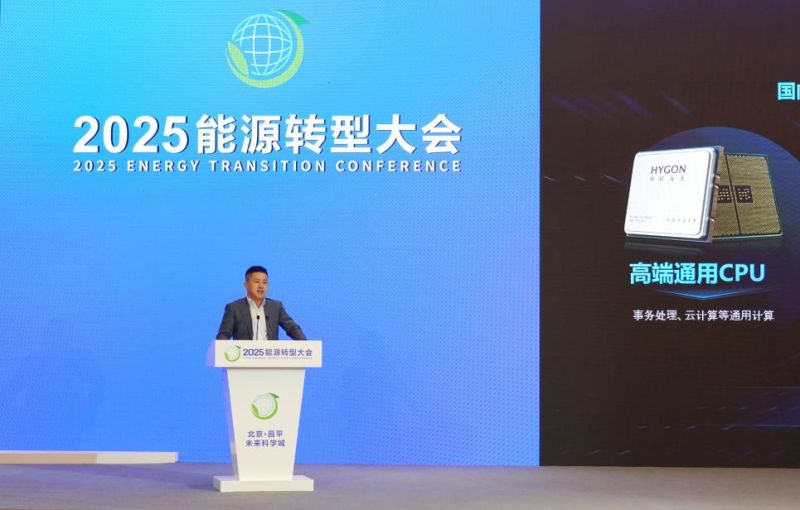
海光信息亮相全球能源转型大会,以自主可控算力全面赋能能源行业智能化升级
Zhong Guo Fa Zhan Wang· 2025-11-25 04:59
Core Insights - The global energy transition conference held in Beijing focused on the transformation trends and current status of the energy industry, with participation from major state-owned enterprises and industry experts [1] - Haiguang Information showcased its CPU+DCU full-stack computing system and collaborative innovations with energy state-owned enterprises at the conference [1] Group 1: Industry Trends - The energy sector is undergoing a critical upgrade from digitalization to intelligence, emphasizing the need for a self-controlled, multi-layered, and highly available computing architecture to ensure national energy security and facilitate industrial transformation [3] - Haiguang's computing solutions are widely applied in key areas such as oil and gas and electricity, enhancing system stability and security for clients [5] Group 2: Technological Developments - Haiguang's DCU features strong parallel computing capabilities and full precision support, effectively meeting the growing demand for intelligent computing in the energy sector, including large model training and complex scenario simulations [3] - The company is collaborating with energy enterprises to build a new generation of intelligent computing platforms based on a CPU+DCU collaborative computing architecture [3] Group 3: Applications and Collaborations - In the oil and gas sector, Haiguang's chip-based cloud platform supports core business operations, while its CPU+DCU architecture is utilized to establish AI computing centers for exploration and refining applications [5] - In the electricity sector, Haiguang's computing support enhances intelligent inspection and load forecasting, facilitating real-time perception and scheduling [5] - The company aims to create a safe, efficient, and green smart energy computing foundation through deep collaboration with the energy industry, promoting an open and sustainable domestic computing ecosystem [5]

深耕五载铸辉煌 勇毅前行启新程 昆仑信托以高质量发展书写“十四五”时代答卷
Jin Rong Shi Bao· 2025-11-25 02:14
时光荏苒,"十四五"规划即将落下帷幕。五年来,一批坚守初心、勇担使命的企业正书写着高质量 发展的生动答卷。昆仑信托便是其中深耕不辍的践行者——以高质量发展为引领,在自我提升、协同赋 能、创新突破的征程上勇毅前行。 回望来时路,每一步都是矢志不渝的奋进足迹。五年来昆仑信托主动提升发展能力,全面深化协同 发展,切实强化科技赋能,从2021年的1924亿元信托规模增长至2024年末的3371亿元。昆仑信托交出了 一份极具厚重感的发展答卷。 展望未来路,每一程都是勇毅前行的开拓之旅。站在党的二十届四中全会吹响改革新号角的历史节 点,昆仑信托立足过往发展积淀,汲取实践宝贵经验,以更广阔的视野、更坚定的决心擘画"十五五"高 质量发展新蓝图。 生态为纲 服务为本 绘就绿色发展与客户赋能新图景 新疆油田风城油田作业区是我国最大的浅层整装超稠油油田,超稠油开采中产生大量需要减排的二 氧化碳及其他杂质等。为贯彻落实"双碳"目标,解决风城油田集输尾气排放问题,2022年,昆仑信托投 资建设"新疆风城油田CCUS项目",并于2023年12月正式投产运行。该项目于2024年入选"央视财经金融 强国年度盛典"绿色金融年度案例。 在一个个 ...

署名文章丨国家能源局局长王宏志:学习贯彻习近平总书记关于中国式现代化的重要论述 推动能源高质量发展再上新台阶
国家能源局· 2025-11-25 01:48
Core Viewpoint - The article emphasizes the importance of understanding and implementing Xi Jinping's thoughts on Chinese-style modernization, particularly in the context of energy development and security [2][3][4]. Group 1: Understanding Chinese-style Modernization - The historical necessity and significance of advancing Chinese-style modernization are highlighted, as it is seen as the only correct path for national rejuvenation and a response to major societal contradictions [3]. - The prospects for Chinese-style modernization are described as bright and unstoppable, with significant progress made in economic and social development since the 20th National Congress [4]. Group 2: Energy Reform and Development - The article stresses the need for comprehensive energy reform to stimulate new momentum for high-quality development, with ongoing efforts to restructure the energy system and improve governance mechanisms [6]. - It calls for strengthening energy technology innovation, emphasizing the importance of technological advancements in driving new productive forces in the energy sector [7]. Group 3: Social Responsibility and Public Welfare - The commitment to improving energy security and ensuring that energy services meet the needs of the people is underscored, with initiatives aimed at enhancing the reliability of power supply and addressing issues affecting citizens' daily lives [8]. - The article highlights the importance of achieving carbon peak and carbon neutrality goals, positioning energy as a critical battleground for these objectives [9]. Group 4: Party Building and Governance - The necessity of maintaining the authority of the Party and ensuring its centralized leadership in energy work is emphasized, with a focus on political integrity and loyalty to the Party [10]. - The article discusses the importance of high-quality party building and organizational work in driving energy sector reforms and achieving national goals [11][12].

财政部:纳税人开采轻稀土原矿等 按照轻稀土选矿产品征收资源税
智通财经网· 2025-11-24 08:49
Core Viewpoint - The Ministry of Finance has issued a notice clarifying the execution standards for resource tax policies, specifically regarding the taxation of various mineral products, including light and heavy rare earths, condensate oil, and other mineral resources [1][2]. Taxation Policy - Taxpayers extracting light rare earth ores that undergo initial processing to produce mineral-type rare earth concentrates will be taxed according to light rare earth mining products [6]. - Taxpayers extracting ion-type rare earth ores and producing rare earth solutions, carbonates, and oxalates through ion exchange and other processes will be taxed according to medium and heavy rare earth mining products [6]. - Condensate oil extracted from gas fields will be taxed under the crude oil tax category [3][4]. Exemptions and Special Cases - Certain entities, such as administrative and judicial bodies, are exempt from paying resource tax on confiscated taxable products [2]. - Construction projects extracting sand, clay, and other minerals for direct use in the project are also exempt from resource tax [2]. Tax Calculation Basis - The tax basis for resource tax will be determined based on the sales amount excluding VAT for taxable products sold or self-used in continuous production of non-taxable products [7][8]. Related Transactions - If a taxpayer sells taxable products to an affiliated unit at a price significantly lower than the price charged to non-affiliated units without justification, tax authorities may adjust the taxable sales amount accordingly [9][10]. Implementation Timeline - The new tax policies will take effect on December 1, 2025, and will apply to previously unprocessed matters according to the new regulations [18].
阿根廷非常规石油产量创新高
Zhong Guo Hua Gong Bao· 2025-11-24 03:18
Core Insights - Argentina's unconventional oil production reached a historical high in September 2025, with an average daily output of 833,874 barrels, marking a 2% increase from August and a 14% increase year-on-year [1] - The growth in unconventional oil production is entirely driven by shale oil, with conventional oil production remaining stable [1] - Shale oil's average daily output surged by 30% year-on-year to 550,881 barrels, accounting for 66% of the country's total oil production, a record high [1] - The increase in oil and gas production has significantly boosted exports, improved trade balance, and enhanced federal revenue, providing critical momentum to Argentina's economy [1] - In contrast, natural gas production declined, with September's output at 4.9 billion cubic feet, down 6% month-on-month and 12% year-on-year, primarily due to a significant drop in shale gas production [1] Industry Outlook - Foreign investment in the oil and gas sector is on the rise, driven by President Milei's aggressive economic reforms that have eliminated strict capital controls and significantly reduced inflation [2] - Investment in the Vaca Muerta shale formation is expected to increase substantially from 2025 to 2030, with projections indicating that Argentina's average daily oil production could exceed 1 million barrels by the end of 2030 [2]
帮主郑重:油价十连降!加满一箱省出早餐钱,背后藏着这些投资机会
Sou Hu Cai Jing· 2025-11-24 01:55
Core Insights - The article highlights the significant downward adjustment of oil prices, marking the tenth reduction of the year, which reflects broader economic trends impacting consumer spending and logistics costs [1][3]. Price Adjustment Summary - The recent oil price adjustments have shifted from "seven increases, nine decreases, six stasis" to "seven increases, ten decreases, six stasis," resulting in a cumulative reduction of 690 yuan per ton for gasoline, equating to a decrease of 0.49 yuan per liter, the lowest in nearly four years [3]. - Although the individual price drop may seem minor, the cumulative effect translates to substantial savings for logistics, with truck drivers saving 195 yuan on fuel costs for every 10,000 kilometers driven, which will ultimately affect consumer prices [3]. Factors Behind Price Decline - The persistent decline in oil prices can be attributed to three main factors: 1. The cost reduction for major oil consumers, such as airlines and logistics companies, where fuel costs can account for over 30% of expenses, leading to a 5% profit increase for every 10% drop in oil prices [4]. 2. A significant drop in international oil prices, with Brent crude falling below $63 and WTI reaching $58, indicating a global supply surplus [4]. 3. Easing geopolitical tensions, particularly progress in the Ukraine peace plan and improved US-Russia relations, which have reduced market risk premiums [4]. 4. Lower-than-expected demand, characterized by high US crude inventories and rapid production increases in Brazil and Guyana, alongside the Federal Reserve's delay in interest rate cuts affecting consumer confidence [4]. Investment Implications - Investors should be cautious of the pressure on renewable energy sources, as low oil prices may diminish the appeal of electric vehicles, necessitating a reevaluation of the cost-saving logic associated with charging [4]. - There is an opportunity to invest in anti-cyclical assets, as oil and gas stocks, despite short-term pressures, may present long-term investment opportunities for companies with stable cash flows and dividend yields exceeding 5% [4]. - The article emphasizes the cyclical nature of commodities, suggesting that oil prices are nearing the breakeven point for shale oil production, indicating that OPEC+ may intervene with production cuts [5].
国际能源署发布报告显示—— 能源服务需求将持续上涨
Jing Ji Ri Bao· 2025-11-23 23:12
近日,国际能源署发布《2025年世界能源展望》报告强调,未来几十年,全球对能源服务特别是电力需 求将持续增长,包括交通、供暖、制冷、照明及其他家庭与工业用途的能源需求将快速上升,同时,数 据和人工智能相关服务需要的能源供应也将大幅上扬。 电力是当代工业和数字经济的命脉,目前,电力仅占全球终端能源消费的20%,但支撑起全球经济总量 40%以上领域,也是大多数家庭的核心能源保障。在可预见的时间内,全球电力需求增速将远高于能源 消费总量增速。这在当前全球能源投资中已有明显体现,对电力供应与终端电气化投资已占全球能源投 资总量的50%。 国际能源署多年来的分析持续凸显电力在全球经济中日益重要的地位。国际能源署署长法提赫·比罗尔 指出,与过去10年的趋势不同,电力消费增长不再局限于新兴经济体和发展中经济体。数据中心和人工 智能带来的电力需求迅猛增长,同样大幅推升了全球发达经济体的用电量。2025年全球数据中心投资预 计将达5800亿美元,已超过全球石油供应投资的5400亿美元,体现出全球经济形态的深刻变革。 报告指出,伴随着国际能源市场变革和国际政治格局动荡,在油气供应等传统能源安全风险之外,其他 关键矿产资源领域的脆 ...