新材料

Search documents
新材料50ETF(159761)涨超2.2%,市场关注AI基建扩张带动景气兑现
Mei Ri Jing Ji Xin Wen· 2026-01-14 05:13
Core Viewpoint - The new materials sector is experiencing rapid growth driven by downstream demand and supported by policy and technological advancements, indicating a potential acceleration phase for the industry [1] Group 1: Industry Overview - New materials are considered a foundational industry that supports the development of key sectors such as electronic information, new energy, biotechnology, and environmental protection [1] - The New Materials 50 ETF (159761) tracks the New Materials Index (H30597), which selects listed companies involved in advanced materials, strategic materials, and cutting-edge new materials to reflect the overall performance of the sector [1] Group 2: Sector Focus - In the electronic information sector, the focus is on materials, display materials, and 5G materials [1] - The aerospace sector emphasizes PI films, precision ceramics, and carbon fibers [1] - The new energy sector concentrates on photovoltaics, lithium-ion batteries, proton exchange membranes, and hydrogen storage materials [1] - The biotechnology sector highlights synthetic biology and scientific services [1] - The environmental protection sector focuses on adsorbent resins, membrane materials, and biodegradable plastics [1] Group 3: Market Dynamics - The new materials industry is catalyzed by downstream application sectors, gradually entering a prosperous cycle [1] - Component stocks in the New Materials Index typically possess high technical barriers and growth potential, with a focus on chemical, electronic, and new energy fields [1]
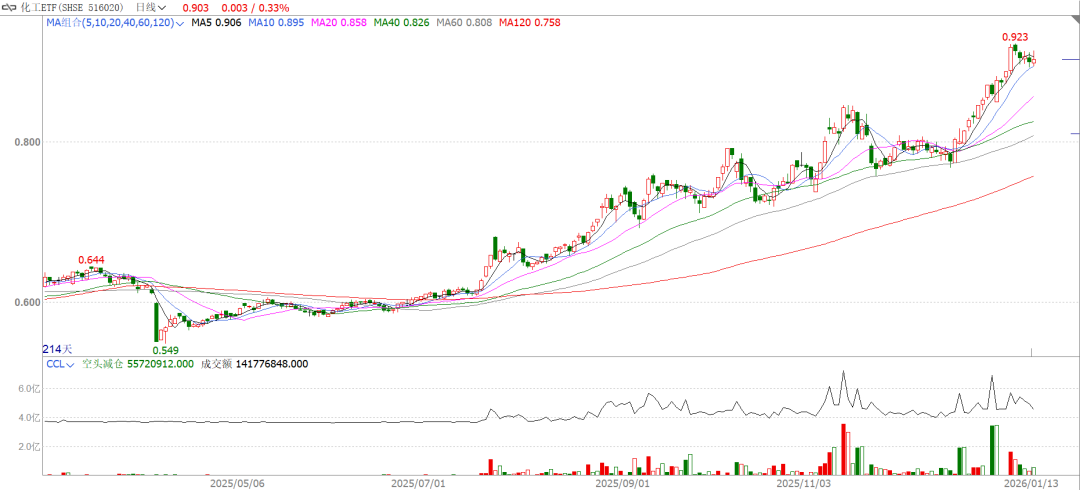
首个万吨级5-HMF产线封顶
Zhong Guo Hua Gong Bao· 2026-01-14 04:42
Core Viewpoint - The article highlights the completion of the main structure of Zhejiang Sugar Energy Technology Co., Ltd.'s "10,000-ton 5-Hydroxymethylfurfural (5-HMF) production project," marking it as the world's first large-scale production line for 5-HMF [1] Group 1 - The project is the first industrialization project successfully incubated at the Daishan New Materials Research and Experiment Base [1] - The transition from pilot-scale production (1,000 tons) to industrial-scale production (10,000 tons) was achieved in just over two years [1] - The project leverages the gradient cultivation system of the Daishan pilot base, facilitating the critical link from technology research and development to industrial implementation [1] Group 2 - The project provides essential raw material support for the bio-based new materials industry chain [1]
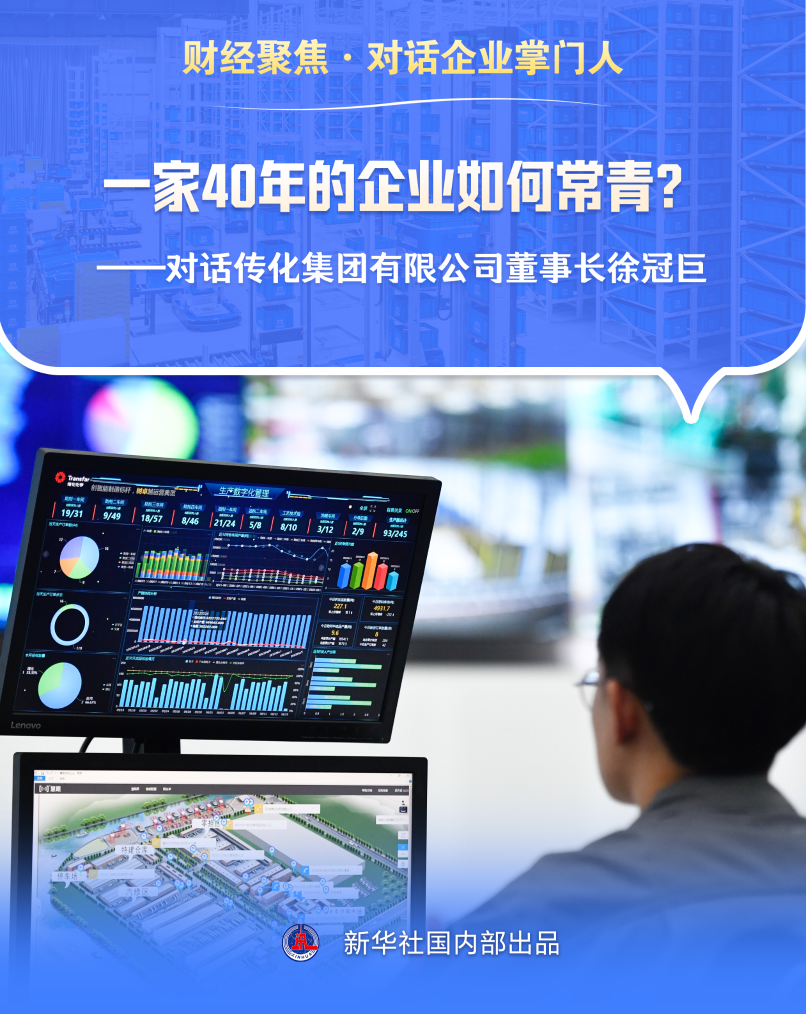
财经聚焦·对话企业掌门人丨一家40年的企业如何常青?——对话传化集团有限公司董事长徐冠巨
Xin Hua Wang· 2026-01-14 04:23
Core Insights - The article highlights the recognition of Transfar Group's technological strength and industrialization capabilities, particularly through its collaboration with state capital to establish the "Hangzhou Synthetic Biology Industry Pilot (Verification) Center" [3] - Transfar Group has evolved into a top 500 enterprise in China since its founding in 1986, with a diverse business portfolio including functional chemicals, new materials, logistics, technology parks, and agriculture [3] - The company emphasizes high-quality development over mere scale expansion, focusing on product innovation, platform innovation, and industrial ecosystem innovation [4][6] Financial Performance - In the period from January to November 2025, Transfar Group achieved a total revenue of 129.805 billion yuan, reflecting a year-on-year growth of 5.29% [4] Strategic Focus - The company prioritizes three key elements for high-quality development: talent, technology, and management, with a strong emphasis on continuous investment in innovation [6] - Transfar has developed a proprietary model called "Transfar Xiaozhi" to advance AI systems across 12 major fields and 58 scenarios, showcasing its commitment to embracing new technologies [9] Global Expansion - Transfar's products are now sold in over 130 countries, with overseas sales accounting for 25% of its manufacturing output [11] - The company has established 20 global production bases and 8 overseas R&D centers to enhance its competitive advantage in key regions [11] Social Responsibility - Transfar Group actively engages in rural revitalization and social responsibility, exemplified by its agricultural innovation platform in cooperation with local governments [13][15] - The "Xie Jing'an Transfar Agricultural Innovation Village" has nurtured nearly 50 agricultural enterprises, generating an additional output value of 270 million yuan and increasing villagers' income by over 27 million yuan [15]


美湖股份在苏州成立新材料研发中心公司
Xin Lang Cai Jing· 2026-01-14 03:44
Group 1 - The establishment of Meihu Intelligent Manufacturing (Suzhou) New Materials Research and Development Center Co., Ltd. has been recently announced [1] - The legal representative of the new company is Qin Qiao [1] - The business scope of the company includes new materials technology research and development [1] Group 2 - Meihu Intelligent Manufacturing is wholly owned by Meihu Co., Ltd. [1]

华泰期货:股指结束17连阳,关注“反内卷”
Xin Lang Cai Jing· 2026-01-14 02:44
Group 1 - The core viewpoint emphasizes the importance of resisting "involution" in various industries, as highlighted by the Ministry of Industry and Information Technology's meeting with representatives from 12 key sectors [2][9] - The World Bank has raised its global economic growth forecast for 2026 to 2.6%, an increase of 0.2 percentage points from the previous estimate, with specific GDP growth predictions for the US at 2.2%, the Eurozone at 0.9%, and Japan at 0.8% [2][9] - The A-share market experienced a correction, with the Shanghai Composite Index ending a 17-day winning streak, falling by 0.64% to close at 4138.76 points, while the ChiNext Index dropped by 1.96% [2][9] Group 2 - In the futures market, the current month contracts for the four major indices are trading at a premium, with increased trading volume and open interest for IF, IH, and IC contracts [3][10] - The equity market showed increased trading volume but closed lower, indicating some selling pressure; however, the spring market trend is not over, and there is potential for a rebound [4][11]

2026/1/14星期三:申万期货品种策略日报——股指-20260114
Shen Yin Wan Guo Qi Huo· 2026-01-14 02:21
1. Report Industry Investment Rating - There is no information provided about the report industry investment rating in the given content. 2. Core Viewpoints of the Report - The continuous improvement of the stock market since 2026 is the result of the joint action of four factors: the resonance of the technology cycle, the release of policy dividends, the improvement of economic recovery, and the return of overseas funds. Currently, the market has gradually shifted from being dominated by valuation expansion to a new stage driven by earnings. It is expected that in 2026, supply - side reform will continue, pushing up the prices of commodities and driving up the prices of resource - based stocks. Under the strategic guidance of the "15th Five - Year Plan", with the continuous release of various policy effects, the further enhancement of economic recovery momentum, and the continuous progress of overseas funds' allocation of Chinese assets, the stock market is expected to continue its volatile upward trend [2]. 3. Summary According to Relevant Catalogs 3.1 Stock Index Futures Market - **IF Contracts**: The previous day's closing prices of IF contracts (current month, next month, next quarter, and alternate quarter) were 4766.20, 4763.00, 4758.60, and 4715.00 respectively, with declines of - 26.80, - 22.20, - 20.80, and - 21.00 and declines of - 0.56, - 0.46, - 0.44, and - 0.44. The trading volumes were 39504.00, 11881.00, 97329.00, and 24015.00, and the open interests were 43353.00, 18273.00, 184613.00, and 61171.00, with changes in open interests of - 4859.00, 4351.00, 1785.00, and 4163.00 [1]. - **IH Contracts**: The previous day's closing prices of IH contracts (current month, next month, next quarter, and alternate quarter) were 3136.60, 3132.40, 3137.60, and 3128.60 respectively, with declines of - 6.60, - 9.40, - 4.60, and - 6.80 and declines of - 0.21, - 0.30, - 0.15, and - 0.22. The trading volumes were 14480.00, 4204.00, 41076.00, and 7618.00, and the open interests were 14532.00, 5098.00, 57216.00, and 18012.00, with changes in open interests of - 1655.00, 1612.00, 2024.00, and 1155.00 [1]. - **IC Contracts**: The previous day's closing prices of IC contracts (current month, next month, next quarter, and alternate quarter) were 8172.80, 8150.60, 8131.20, and 7985.20 respectively, with declines of - 104.60, - 99.00, - 98.80, and - 89.40 and declines of - 1.26, - 1.20, - 1.20, and - 1.11. The trading volumes were 43150.00, 15560.00, 120900.00, and 32704.00, and the open interests were 40507.00, 31014.00, 171420.00, and 74145.00, with changes in open interests of - 5529.00, 4930.00, 3885.00, and 2850.00 [1]. - **IM Contracts**: The previous day's closing prices of IM contracts (current month, next month, next quarter, and alternate quarter) were 8233.80, 8200.40, 8160.40, and 7960.40 respectively, with declines of - 161.00, - 149.60, - 145.80, and - 135.00 and declines of - 1.92, - 1.79, - 1.76, and - 1.67. The trading volumes were 60818.00, 21828.00, 178731.00, and 43725.00, and the open interests were 54431.00, 39945.00, 207812.00, and 99430.00, with changes in open interests of - 11425.00, 5127.00, - 632.00, and 5511.00 [1]. - **Inter - month Spreads**: The current inter - month spreads of IF, IH, IC, and IM (next month - current month) were - 3.20, - 4.20, - 22.20, and - 33.40 respectively, compared with the previous values of - 8.80, - 2.40, - 15.60, and - 40.80 [1]. 3.2 Stock Index Spot Market - **Major Indexes**: The previous values of the Shanghai - Shenzhen 300, Shanghai 50, CSI 500, and CSI 1000 indexes were 4761.03, 3132.93, 8143.28, and 8203.13 respectively, with declines of - 0.60, - 0.34, - 1.28, and - 1.84. The trading volumes (in billions of lots) were 301.45, 63.16, 364.13, and 454.44, and the total trading amounts (in billions of yuan) were 8010.55, 1888.53, 7352.19, and 8246.52 [1]. - **Industry Indexes**: Among the Shanghai - Shenzhen 300 industry indexes, the energy, raw materials, main consumption, and pharmaceutical sectors had increases of 0.76%, 1.40%, - 0.94%, and 1.65% respectively, while the industrial, optional consumption, real - estate finance, and information technology sectors had declines of - 0.70%, - 1.36%, 0.37%, and - 2.58% respectively [1]. 3.3 Futures - Spot Basis - **IF Contracts and Shanghai - Shenzhen 300**: The previous values of the basis between IF contracts (current month, next month, next quarter, and alternate quarter) and the Shanghai - Shenzhen 300 index were 5.17, 1.97, - 2.43, and - 46.03 respectively, compared with the previous two - day values of - 0.52, - 9.32, - 15.92, and - 54.72 [1]. - **IH Contracts and Shanghai 50**: The previous values of the basis between IH contracts (current month, next month, next quarter, and alternate quarter) and the Shanghai 50 index were 3.67, - 0.53, 4.67, and - 4.33 respectively, compared with the previous two - day values of - 1.94, - 4.34, - 3.54, and - 10.34 [1]. - **IC Contracts and CSI 500**: The previous values of the basis between IC contracts (current month, next month, next quarter, and alternate quarter) and the CSI 500 index were 29.52, 7.32, - 12.08, and - 158.08 respectively, compared with the previous two - day values of 24.67, 9.07, - 12.53, and - 165.73 [1]. - **IM Contracts and CSI 1000**: The previous values of the basis between IM contracts (current month, next month, next quarter, and alternate quarter) and the CSI 1000 index were 30.67, - 2.73, - 42.73, and - 242.73 respectively, compared with the previous two - day values of 38.19, - 2.61, - 45.61, and - 252.21 [1]. 3.4 Other Domestic and Overseas Indexes - **Domestic Indexes**: The previous values of the Shanghai Composite Index, Shenzhen Component Index, Small and Medium - sized Board Index, and ChiNext Index were 4138.76, 14169.40, 8730.75, and 3321.89 respectively, with declines of - 0.64%, - 1.37%, - 0.91%, and - 1.96% [1]. - **Overseas Indexes**: The previous values of the DAX index, Hang Seng Index, Nikkei 225, and S&P index had increases of 0.90%, 3.10%, - 0.19%, and 0.06% respectively [1]. 3.5 Macro Information - **US - Iran Tension**: US President Trump cancelled all talks with Iranian officials, and the US State Department asked US citizens to leave Iran immediately. The US Department of Defense officials said Trump had been briefed on military and covert operation options for the Iranian situation, but the White House said diplomacy was the "preferred" option [2]. - **Fed Chairman Issue**: The criminal investigation of Fed Chairman Powell continued to ferment. Many former US financial officials criticized the Trump administration's investigation, and global central bank governors were drafting a statement to support Powell. Trump said Powell exceeded the budget by billions and would announce the next Fed chairman in the coming weeks [2]. - **Trade Threat**: Trump threatened to impose 25% tariffs on countries with business with Iran. The Chinese Foreign Ministry spokesperson said China would firmly safeguard its legitimate rights and interests. Regarding the G7 finance ministers' agreement to reduce rare - earth imports from China, the spokesperson said China's stance on maintaining the stability and security of the global supply chain of key minerals remained unchanged [2]. - **Domestic Policies**: The Ministry of Industry and Information Technology held a symposium on manufacturing enterprises, emphasizing active participation in industry rule - making and self - discipline. Eight departments jointly introduced 14 measures to promote the high - quality development of elderly care services and the silver economy. By the end of 2024, the elderly population over 60 in China reached 310 million, and it is expected to exceed 400 million by 2035, with the silver economy scale expected to exceed 30 trillion yuan [2]. 3.6 Industry Information - **Industrial Internet**: In 2025, the core industrial scale of China's industrial Internet is expected to exceed 1.6 trillion yuan, driving an increase of about 2.5 trillion yuan in industrial added value. The average operating cost of 100 5G factories with global leading levels will be reduced by 19%. The Ministry of Industry and Information Technology deployed the development of industrial Internet platforms, aiming to have over 450 influential platforms, more than 120 million connected industrial devices, and a platform penetration rate of over 55% by 2028 [2]. - **Solar - Grade Polysilicon**: Starting from January 14, anti - dumping duties will continue to be imposed on imported solar - grade polysilicon from the US and South Korea for a period of 5 years [2]. - **Medical Supplies**: The latest batch of national high - value medical supplies procurement is scheduled to open bids on January 14, including 12 types of medical supplies in two categories: drug - coated balloons and urological interventions, with 496 products from 227 enterprises bidding [2].
长征镇打造高能级创新载体 服务沿沪宁产业创新带科创企业
Jie Fang Ri Bao· 2026-01-14 01:58
Core Viewpoint - The event held in Putuo District aims to create a cross-regional dialogue platform to explore high-quality incubation development paths and promote the efficient flow and deep integration of innovative elements such as talent, technology, and capital among cities along the Shanghai-Nanjing corridor [1] Group 1: Event Overview - The event is specifically focused on the incubation sector and is part of the efforts to enhance the business environment through legal frameworks [1] - Changzheng Town, the event's location, is positioned as a "bridgehead" for the industrial innovation belt along the Shanghai-Nanjing corridor, emphasizing policy innovation as a core driver of development [1] Group 2: Policy and Infrastructure Developments - The "Implementation Opinions on Supporting the Coordinated Development of Industry and Talent" was officially released, aiming to establish a comprehensive support system covering the entire lifecycle of enterprise growth and talent development [1] - The Bochuang Building and several service centers, including the Integrated Service Center and the Law-based Business Environment Monitoring Station, were inaugurated to support innovation and entrepreneurship [1] Group 3: Innovation and Support Mechanisms - The Bochuang Building is designed as a high-energy innovation carrier, providing a "ready-to-move-in" office environment along with rent reductions and computational power support for tech enterprises from the "Eight Cities and One District" [1] - The first five companies to move in are involved in cutting-edge fields such as intelligent connected vehicles, new materials, aerospace, smart healthcare, and new energy [1] - The Integrated Service Center will establish a unified project evaluation mechanism and resource allocation platform, promoting the functional synergy of three major innovation carriers [1]
李乐成接受《经济日报》采访:锚定新型工业化 推动工业经济向新向优
Jing Ji Ri Bao· 2026-01-14 01:28
Core Insights - The article emphasizes the importance of implementing the "14th Five-Year Plan" to promote a strong start for the industrial economy, focusing on new industrialization and high-quality development [2][3]. Group 1: Industrial Economic Development - In 2025, the industrial added value of large-scale industries increased by 6% year-on-year, with high-tech manufacturing and equipment manufacturing growing by 9.2% and 9.3% respectively [4]. - The Ministry of Industry and Information Technology (MIIT) aims to stabilize growth in key industries and regions, which account for 80% of the total industrial output [4]. - The MIIT plans to enhance effective demand by promoting flexible manufacturing and accelerating the application of new technologies like artificial intelligence [5]. Group 2: Modern Industrial System - The MIIT will focus on traditional industry renewal and the development of emerging industries to create new economic drivers [6][7]. - Key areas for development include integrated circuits, new materials, and aerospace, with plans to establish national demonstration bases for emerging industries [7]. - The MIIT aims to enhance the safety and controllability of supply chains while maintaining a reasonable proportion of manufacturing [7]. Group 3: Technological Innovation - The MIIT has made significant progress in integrating technology and industry during the "14th Five-Year Plan," with a focus on overcoming critical technological challenges [9]. - Future plans include increasing high-quality technological supply and enhancing the role of enterprises in innovation [10]. - The MIIT will establish a national manufacturing innovation center and promote the transformation of technological achievements into marketable products [10]. Group 4: Digital and Intelligent Transformation - The MIIT aims to accelerate the digital transformation of manufacturing, with over 7,000 advanced intelligent factories established [11]. - Key initiatives include building a robust digital infrastructure and promoting the application of industrial internet platforms [12]. - The MIIT will implement actions to enhance artificial intelligence in manufacturing, focusing on both technology and application scenarios [13].
周乃翔在威海调研时强调 强企业 扩内需 稳外贸 奋力实现“十五五”良好开局
Da Zhong Ri Bao· 2026-01-14 01:06
Group 1 - The provincial government emphasizes the importance of strong enterprises, expanding domestic demand, and stabilizing foreign trade to achieve a good start for the "14th Five-Year Plan" [1] - Huaxin Food (Shandong) Group is encouraged to prioritize quality and safety, deepen the domestic market, and expand internationally to increase market share [1] - The government urges enterprises to enhance upstream and downstream cooperation to strengthen core competitiveness, as seen in the case of Weihai Hengbang Mining Development Co., Ltd. [1] Group 2 - The government acknowledges the contributions of various enterprises to the modernization of Shandong and encourages them to seize opportunities, innovate, and strengthen brand building [2] - A call for a first-class business environment and improved government-enterprise communication mechanisms is made to facilitate quick responses to enterprise needs [2] - The government recognizes the achievements of Weihai's economic and social development and encourages further implementation of Xi Jinping's directives for high-quality development [2]
注意 化工板块新年强势崛起!有哪些投资机会?
Qi Huo Ri Bao· 2026-01-14 00:15
Core Viewpoint - The chemical sector has shown a strong resurgence at the beginning of the year, with a notable "stock market leading, futures and spot resonance" trend, indicating a recovery in industry sentiment [1]. Group 1: Market Performance - The core chemical ETF (516020) saw a gain of over 5% in the first week of the year, with leading products experiencing cumulative increases exceeding 10% and a single-day net inflow surpassing 200 million [5]. - The stock market's bullish sentiment has quickly transmitted to the commodity market, with chemical products rising and trading becoming active, particularly in the energy chain sector [5]. - The market is witnessing a clear leading pattern among top players in various sub-sectors, including bio-chemicals, new materials, and refining [5]. Group 2: Factors Influencing the Market - The current market trend is attributed to a fourfold resonance of policy, cost, supply, and demand, with the policy front providing a "strong tonic" for the sector [5]. - The Central Economic Work Conference has set a tone for stable growth, with ongoing "two new" policies and a focus on consumption, alongside plans to eliminate outdated production capacities [5]. - The geopolitical situation has raised oil prices, which is expected to support the profitability recovery of the chemical industry, with predictions of Brent crude oil prices stabilizing between $60 and $70 per barrel by 2026 [6]. Group 3: Demand and Supply Dynamics - Demand is expected to rebound significantly after the Spring Festival, supported by the "14th Five-Year Plan" focusing on expanding domestic demand, particularly in sectors like new energy, real estate, and automotive [6]. - The supply side is experiencing a noticeable contraction, with domestic chemical industry expansion nearing its end and overseas capacity exiting at an accelerated pace, leading to supply shortages in key areas like PX [6]. Group 4: Short-term and Mid-term Outlook - In the short term (1-3 months), the chemical sector is expected to have strong bottom support, with the resumption of work in February likely to enhance demand growth expectations [7]. - In the mid-term (3-6 months), the sector may experience increased differentiation, with performance largely dependent on demand resilience, supply disruptions, and oil price trends [7]. - Overall, the early-year rally in the chemical sector marks the beginning of industry recovery, but the structural and phase characteristics of the market are significant, necessitating close monitoring of macro policies, supply-demand changes, and oil price fluctuations [7].