股期联动

Search documents
碳酸锂反弹背后,是惜售博弈还是锂电行情重启?
Sou Hu Cai Jing· 2026-02-14 02:04
Group 1: Market Overview - Domestic commodity market shows a clear divergence due to improved macro expectations and pre-holiday risk aversion, with lithium carbonate and soybean one standing out while some products face profit-taking as the holiday approaches [1] - Commodity price trends are increasingly influenced by factors beyond simple supply and demand, including funding sentiment, policy signals, and geopolitical risks [1] Group 2: Precious Metals - Precious metals exhibit significant volatility but maintain a strong oscillating pattern, influenced by U.S. non-farm payroll data exceeding expectations, which delays Fed rate cut predictions from June to July [1] - The strong support for gold prices comes from ongoing geopolitical tensions and central banks' strategic accumulation of gold [1] Group 3: Lithium Carbonate - Lithium carbonate futures rebound strongly, driven by marginal supply contraction and ongoing inventory reduction, supported by positive demand expectations due to optimized export tax policies for lithium batteries [2] - Despite a projected decline in downstream production due to the Spring Festival, March production plans are expected to show significant year-on-year growth, indicating a tight supply-demand balance [2] Group 4: Soybean One - Soybean one futures lead the agricultural sector, driven by pre-holiday funding positioning based on expectations of tight supply-demand post-holiday [3] - The current spot market is entering a state of limited activity, but traders remain optimistic about post-holiday replenishment demand due to school openings and business resumption [3] Group 5: Stock and Futures Interaction - The strong rebound in lithium carbonate futures is rapidly transmitting to the stock market, creating a clear "stock-futures linkage" [3] - The futures market reacts more quickly to supply contractions and policy benefits, leading to improved profit expectations in the lithium battery supply chain, with upstream lithium resource stocks benefiting directly from price increases [3]
铝价 料进入拉锯模式
Qi Huo Ri Bao· 2026-01-30 03:36
Group 1 - Aluminum prices have reached a historical high of 25,640 CNY/ton, reflecting a long-term revaluation of aluminum as a strategic resource, despite high inventory and weak demand before the Spring Festival [1][7] - The geopolitical tensions, particularly between the US and Venezuela, have heightened supply chain vulnerabilities, impacting the pricing logic of industrial metals like aluminum [2] - The Middle East, especially Iran, poses a significant threat to aluminum supply due to its reliance on imported raw materials, with potential US tariffs increasing production costs and risking supply disruptions [2] Group 2 - The premium for aluminum in the European and American markets has surged, with the premium for shipments to Japan in Q1 2026 reaching 195 USD/ton, a 127% increase from Q4 2025 [3] - The financial market has shown a strong correlation between aluminum prices and stock performance, with significant gains in aluminum sector stocks indicating a bullish sentiment [4] - Despite the bullish market sentiment, the industrial fundamentals are weak, with a notable decline in production across major consumer sectors, leading to increased inventory levels [5] Group 3 - The copper-aluminum price ratio has provided a basis for aluminum price support, although the demand for aluminum as a substitute for copper is limited in the short term [6] - Regulatory measures have been implemented to stabilize the market and prevent excessive volatility, with the Shanghai Futures Exchange introducing risk control measures for aluminum trading [6] - Overall, aluminum prices are expected to fluctuate within the range of 23,500 to 25,500 CNY/ton, with high volatility anticipated as the market adjusts to seasonal demand and regulatory impacts [7]
注意 化工板块新年强势崛起!有哪些投资机会?
Qi Huo Ri Bao· 2026-01-14 00:15
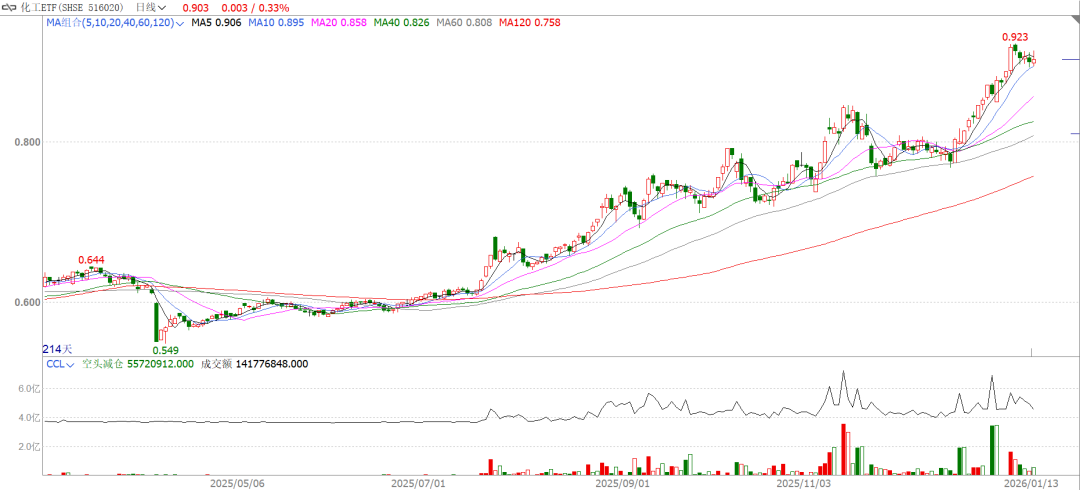
Core Viewpoint - The chemical sector has shown a strong resurgence at the beginning of the year, with a notable "stock market leading, futures and spot resonance" trend, indicating a recovery in industry sentiment [1]. Group 1: Market Performance - The core chemical ETF (516020) saw a gain of over 5% in the first week of the year, with leading products experiencing cumulative increases exceeding 10% and a single-day net inflow surpassing 200 million [5]. - The stock market's bullish sentiment has quickly transmitted to the commodity market, with chemical products rising and trading becoming active, particularly in the energy chain sector [5]. - The market is witnessing a clear leading pattern among top players in various sub-sectors, including bio-chemicals, new materials, and refining [5]. Group 2: Factors Influencing the Market - The current market trend is attributed to a fourfold resonance of policy, cost, supply, and demand, with the policy front providing a "strong tonic" for the sector [5]. - The Central Economic Work Conference has set a tone for stable growth, with ongoing "two new" policies and a focus on consumption, alongside plans to eliminate outdated production capacities [5]. - The geopolitical situation has raised oil prices, which is expected to support the profitability recovery of the chemical industry, with predictions of Brent crude oil prices stabilizing between $60 and $70 per barrel by 2026 [6]. Group 3: Demand and Supply Dynamics - Demand is expected to rebound significantly after the Spring Festival, supported by the "14th Five-Year Plan" focusing on expanding domestic demand, particularly in sectors like new energy, real estate, and automotive [6]. - The supply side is experiencing a noticeable contraction, with domestic chemical industry expansion nearing its end and overseas capacity exiting at an accelerated pace, leading to supply shortages in key areas like PX [6]. Group 4: Short-term and Mid-term Outlook - In the short term (1-3 months), the chemical sector is expected to have strong bottom support, with the resumption of work in February likely to enhance demand growth expectations [7]. - In the mid-term (3-6 months), the sector may experience increased differentiation, with performance largely dependent on demand resilience, supply disruptions, and oil price trends [7]. - Overall, the early-year rally in the chemical sector marks the beginning of industry recovery, but the structural and phase characteristics of the market are significant, necessitating close monitoring of macro policies, supply-demand changes, and oil price fluctuations [7].

注意,化工板块新年强势崛起!有哪些投资机会?
Qi Huo Ri Bao· 2026-01-13 23:39
Core Viewpoint - The chemical sector has shown a strong resurgence at the beginning of the year, with a notable "stock market leading, futures and spot resonance" trend, indicating a recovery in industry sentiment [2]. Group 1: Market Performance - The core chemical ETF surged over 5% in the first week of the year, with leading products seeing cumulative gains exceeding 10% and a single-day net inflow surpassing 200 million yuan [5]. - The stock market's bullish sentiment quickly transmitted to the commodity market, with active trading in chemical products, particularly in the energy chain, although performance varied among different products [5]. Group 2: Influencing Factors - The current market trend is attributed to a fourfold resonance of policy, cost, supply, and demand. The central economic work conference has set a tone for stable growth, and policies promoting consumption remain unchanged [5]. - Rising international geopolitical tensions have increased crude oil prices, which are expected to stabilize and support the profitability recovery of the chemical industry [6]. - Domestic and international supply constraints are evident, with a notable supply gap in key areas like PX due to the end of the domestic chemical industry's expansion cycle and accelerated exit of overseas capacity [7]. Group 3: Demand and Investment - Post-Chinese New Year, demand is expected to rebound, supported by the "14th Five-Year Plan" focusing on expanding domestic demand, particularly in sectors like new energy, real estate, and automotive [7]. - The chemical sector is attracting institutional investment due to its relatively low valuations, with both investment and industrial funds driving up trading activity [7]. Group 4: Market Outlook - Analysts believe the current market rally represents a phase of valuation correction, with short-term and medium-term trends likely to differ significantly [8]. - In the short term (1-3 months), strong bottom support is anticipated, with the February resumption season expected to further enhance demand growth [8]. - In the medium term (3-6 months), increased differentiation within the chemical sector is expected, with performance largely dependent on demand resilience, supply disruptions, and oil price trends [8].

铝&氧化铝产业链周度报告-20260111
Guo Tai Jun An Qi Huo· 2026-01-11 13:04
Report Title - Aluminium & Alumina Industry Chain Weekly Report [1] Report Date - January 11, 2026 [2] Report Analyst - Wang Rong, Chief Analyst/Assistant Director of Guotai Junan Futures Research Institute [2] Industry Investment Rating - Not mentioned in the report Core Viewpoints - Aluminium prices have significantly increased, approaching historical peaks. In the medium - term of 2026, supply constraints, diversified demand, a tight - balance market, and a low inventory - to - consumption ratio will support the upward movement of aluminium prices. However, high - price position management is necessary, and attention should be paid to potential risk points such as overseas AI - related equity asset performance and downstream processing profit indicators [3]. - For alumina, the fundamental driving force is downward, but the systematic risk preference rotation in the non - ferrous metal sector is still supporting the alumina futures market. As supply increases, it is expected that the spot and futures markets will form a negative feedback loop, and investors should look for selling opportunities at high prices [4]. Summary by Directory 1. Weekly Data - **Market Performance**: This week, the closing prices of alumina and aluminium futures increased, with the alumina主力 rising by 2.64% to 2843, the沪铝主力 rising by 2.90% to 24330, the LME aluminium rising by 4.24% to 3149, and the COMEX aluminium rising by 0.58% to 3110 [5]. - **Trading Volume and Open Interest**: The trading volume of alumina and aluminium futures increased, while the open interest of沪铝主力 decreased by 67380 lots, and that of alumina主力 increased by 164323 lots [5]. - **Inventory Changes**: Aluminium inventories increased, with the aluminium ingot social inventory rising by 80,000 tons to 718,000 tons. Alumina inventories also increased, with the ALD full - scale social inventory rising by 84,000 tons to 4.935 million tons [3][4][5]. - **Price Spread Changes**: The spot - futures price spread of alumina weakened, while that of A00 aluminium strengthened. The near - month spread of沪铝 strengthened [5][7][10]. 2. Trading End - **Price Spread**: This week, the A00 aluminium spot premium strengthened, while the alumina spot premium weakened. The near - month spread of沪铝 strengthened [7][10]. - **Trading Volume and Open Interest**: The trading volume of沪铝主力 and alumina主力 increased significantly. The open interest of沪铝主力 decreased slightly, while that of alumina主力 increased significantly and remained at a historical high [5][13]. - **Open Interest - to - Inventory Ratio**: The open interest - to - inventory ratio of沪铝 decreased, while that of alumina increased slightly and was at a historically low level [19]. 3. Inventory - **Bauxite**: Port inventories and inventory days increased. In December, the bauxite inventory of alumina enterprises increased. The port shipment volume from Guinea decreased, while the floating inventory increased. The port shipment volume from Australia increased, while the floating inventory decreased. The outbound volume showed differentiation, and the inbound volume increased [23][27][30][35]. - **Alumina**: The national total inventory and the ALD full - scale inventory continued to increase. The inventory in alumina plants, electrolytic aluminium plants, and ports increased, while the port inventory decreased [42][48][49][55]. - **Electrolytic Aluminium**: This week, the inventory increased significantly. Seasonally, the domestic electrolytic aluminium social inventory usually reaches its peak in the fifth or sixth week after the holiday and then enters a destocking cycle [56]. - **Processed Products**: The spot and in - plant inventories of aluminium rods increased. The raw material and finished product inventory ratios of aluminium profiles and aluminium sheets and foils mostly increased slightly [60][63]. 4. Production - **Bauxite**: In December, domestic bauxite supply increased slightly. The production in Shanxi increased, while that in Henan and Guangxi showed different trends in different data sources [66][68][69]. - **Alumina**: The capacity utilization rate remained stable, but the fundamental supply - side situation remained loose. This week, the domestic metallurgical - grade alumina production was 1.851 million tons, an increase of 23,000 tons from last week [71][74]. - **Electrolytic Aluminium**: The operating capacity remained at a high level, but the capacity utilization rate decreased slightly. The aluminium - water ratio decreased seasonally, and the ingot - casting volume is expected to increase [75][80]. - **Downstream Processing**: The production of recycled aluminium rods, aluminium rods, and aluminium sheets and foils decreased. The operating rate of domestic aluminium downstream leading enterprises increased, with the operating rates of aluminium sheets and aluminium foils increasing [81][85][86]. 5. Profit - **Alumina**: In December, the profit decreased slightly. The profits in Shandong, Shanxi, and Henan decreased slightly, while that in Guangxi was relatively better [93]. - **Electrolytic Aluminium**: The profit remained at a high level, but uncertainties in the global macro - economy and trade policies interfered with market expectations [106][109]. - **Downstream Processing**: The processing fee of aluminium rods decreased, and the downstream processing profit remained at a low level [110]. 6. Consumption - **Import and Export Profit and Loss**: The import profit and loss of alumina and沪铝 narrowed. In November 2025, the total export volume of aluminium products increased slightly, but the export demand was affected by trade policy adjustments [119][121][123]. - **Absolute Consumption Volume**: The commercial housing transaction area was at a low level, while the automobile production increased month - on - month [124].
股市面面观丨商品端多品种巨震波及股市,股期联动要注意哪些特点?
Xin Hua Cai Jing· 2025-12-29 10:22
Group 1 - The recent volatility in the commodity futures market has significantly impacted the stock prices of related companies, such as Shengda Resources and Tianqi Lithium [1][2] - Silver futures experienced a sharp increase of over 10% before a significant pullback, closing with a modest gain of 0.51%, while lithium carbonate futures saw a decline of 7.89% after reaching a yearly high [1] - The A-share market has seen strong performance in precious and non-ferrous metals since 2025, attracting considerable investor interest [2] Group 2 - The relationship between commodity prices and stock performance is complex, with historical instances of stock and futures prices diverging, particularly in the case of intermediate products like rebar [4] - The supply-demand dynamics for silver are critical, with investment and industrial demand driving prices, particularly in sectors like solar energy and electric vehicles [5][6] - Current silver prices are supported by tight supply conditions, with global inventories at a ten-year low, indicating a structural demand-supply imbalance [6] Group 3 - Despite the upward pressure on silver prices due to supply constraints, there are concerns about potential short-term corrections as the market enters an overbought phase [7] - Analysts suggest that while long-term factors may support precious metals, the rapid price increases may have overextended market expectations [7]
“股期联动”效应显著,有色金属板块走强,两大巨头共创历史新高
Zhong Guo Zheng Quan Bao· 2025-12-26 05:10
Group 1: Metal Market Performance - The main contracts for copper, gold, silver, and platinum futures reached historical highs, with lithium carbonate futures breaking through 130,000 yuan/ton [1] - The non-ferrous metal sector showed strength, with leading stocks Zijin Mining and Luoyang Molybdenum hitting historical highs, with market values of 886.8 billion yuan and 421.3 billion yuan respectively [1] - Copper prices are expected to continue rising due to ongoing adjustments in global copper inventory, supply shortages, and expectations of mid-term easing from the Federal Reserve [2] Group 2: Precious Metals Outlook - Gold remains in an upward channel but is currently experiencing high-level fluctuations; future trends depend on the interplay between declining real interest rates and a weakening US dollar [3] - Silver shows stronger short-term certainty due to a high gold-silver ratio indicating potential for correction, alongside increasing demand from industrial sectors like photovoltaics [3] Group 3: New Energy Sector Dynamics - The new energy sector, particularly the lithium battery supply chain, solar energy, and energy storage, is experiencing a rebound, with leading stocks such as Sungrow Power Supply and BYD seeing significant gains [4] - The surge in lithium carbonate futures and production adjustments by major cathode material manufacturers are key catalysts for the rebound in the new energy sector [5] - The lithium battery supply chain is emerging from a clearing phase, with demand growth exceeding expectations and signs of supply tightness in certain segments, indicating a recovery in the overall industry [6]



两大巨头,历史新高
Zhong Guo Zheng Quan Bao· 2025-12-26 04:50
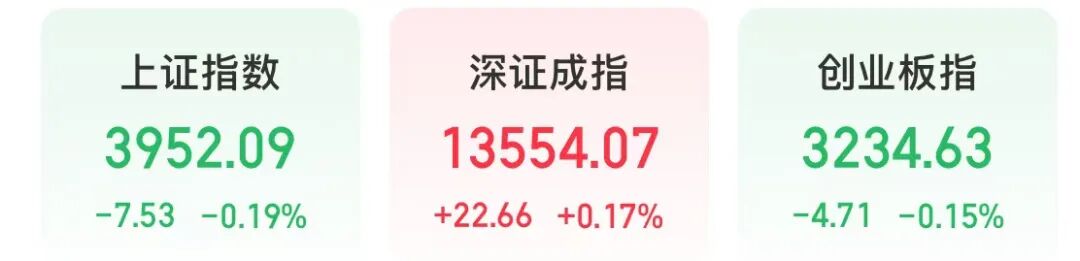
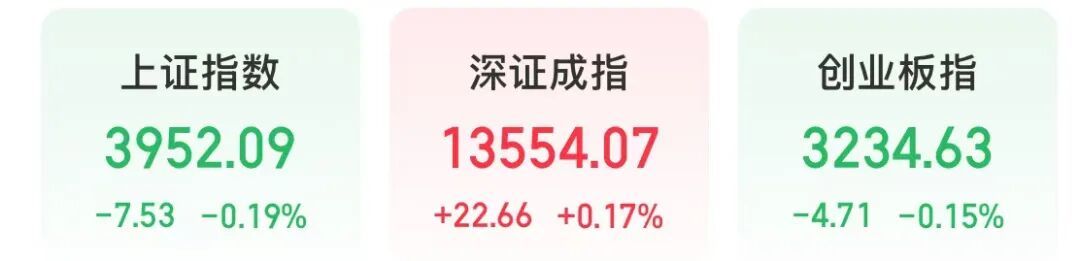
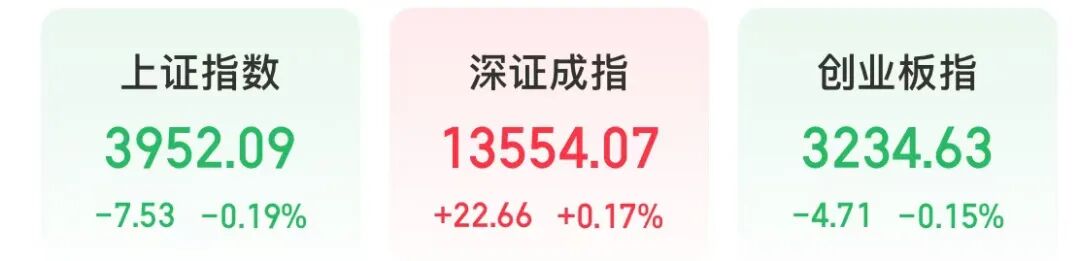
Group 1: Market Performance - The main contracts for copper, gold, silver, and platinum futures reached historical highs, with lithium carbonate futures surpassing 130,000 yuan/ton [1] - The non-ferrous metal sector showed strength, with leading stocks Zijin Mining and Luoyang Molybdenum both hitting historical highs, with market capitalizations of 886.8 billion yuan and 421.3 billion yuan respectively [1] - The Shanghai Composite Index fell by 0.19%, while the Shenzhen Component Index rose by 0.17%, and the ChiNext Index decreased by 0.15% [1] Group 2: Non-Ferrous Metals Sector - The non-ferrous metal sector, including precious and industrial metals, experienced an increase [2] - Key stocks in the industrial metal category, such as Jiangxi Copper and Guocheng Mining, saw significant gains, with Jiangxi Copper rising by 9.97% and Guocheng Mining by 10.01% [3] Group 3: Lithium Battery Industry - The lithium battery supply chain strengthened, leading to a rebound in the new energy sector, with stocks like Sungrow Power, Molybdenum, BYD, and Dufu all experiencing substantial increases [1][7] - The main contract for lithium carbonate futures continued to rise, driven by production cuts announced by major manufacturers, which are expected to reduce output without significantly impacting their financial performance [11] - The lithium battery supply chain is emerging from a clearing phase, with demand growth exceeding expectations and signs of supply tightness in certain segments [12]
两大巨头 历史新高!
Zhong Guo Zheng Quan Bao· 2025-12-26 04:44
Group 1 - The "stock-futures linkage" effect is significant, with major futures contracts for copper, gold, silver, and platinum reaching historical highs, and lithium carbonate futures surpassing 130,000 yuan/ton [1] - The non-ferrous metal sector is strong, with leading companies Zijin Mining and Luoyang Molybdenum both hitting historical highs in stock prices, with market values of 886.8 billion yuan and 421.3 billion yuan respectively [1] - The lithium battery supply chain is gaining strength, driving a rebound in the new energy sector, with leading stocks such as Sungrow Power Supply, Molybdenum, and BYD experiencing significant increases [1] Group 2 - The non-ferrous metal sector is rising, with precious and industrial metals also showing upward trends [2][3] - Specific stocks in the industrial sector, such as Guocheng Mining and Jiangxi Copper, have seen substantial increases, with Guocheng Mining up by 10.01% and Jiangxi Copper up by 9.97% [4] - The copper market is expected to see continued upward pressure due to ongoing adjustments in global copper inventory and supply shortages, with forecasts indicating a potential price increase [6] Group 3 - The new energy sector is rebounding, driven by the rise in lithium battery supply chains, photovoltaics, and energy storage, with stocks like Enjie and BYD showing strong performance [10] - Two main catalysts for the rebound include the significant rise in lithium carbonate futures and the recent announcements of production cuts by major cathode material manufacturers, which are expected to stabilize prices [10] - The lithium battery supply chain is emerging from a clearing and destocking phase, with demand growth remaining unexpectedly high, indicating a recovery in the overall industry [11]



两大巨头,历史新高!
Zhong Guo Zheng Quan Bao· 2025-12-26 04:24
Group 1: Market Performance - The main contracts for copper, gold, silver, and platinum futures reached historical highs, with lithium carbonate futures breaking through 130,000 yuan/ton [1] - The non-ferrous metal sector showed strength, with leading stocks Zijin Mining and Luoyang Molybdenum both hitting historical highs, with market values of 886.8 billion yuan and 421.3 billion yuan respectively [1] - The Shanghai Composite Index fell by 0.19%, while the Shenzhen Component Index rose by 0.17%, and the ChiNext Index decreased by 0.15% [1] Group 2: Industrial Metals - The industrial metals sector saw a rise of 2.58%, with notable stocks such as Guocheng Mining and Jiangxi Copper experiencing significant gains of 10.01% and 9.97% respectively [3][4] - The supply-demand balance for copper is tightening, with expectations of continued upward price movement due to low global copper inventories and supply shortages [4][5] Group 3: Lithium Battery Industry - The lithium battery supply chain is strengthening, with leading stocks like BYD and Sungrow Power experiencing significant increases [6][10] - The lithium carbonate futures surge and production cuts from major manufacturers are contributing to the rebound in the new energy sector [10] - The lithium battery industry is expected to see a recovery in demand and pricing stability, with signs of supply tightness emerging in key components [11]