茶饮

Search documents
蜜雪冰城的6元风,刮到了啤酒圈
36氪· 2025-10-22 00:46
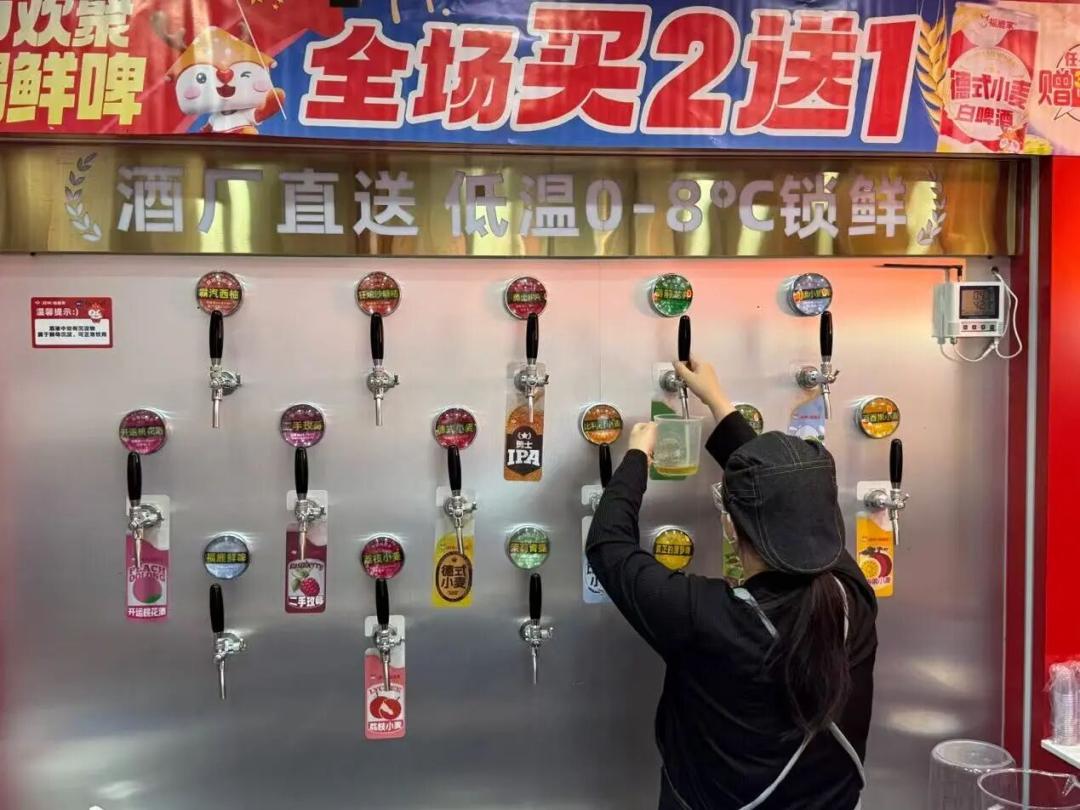
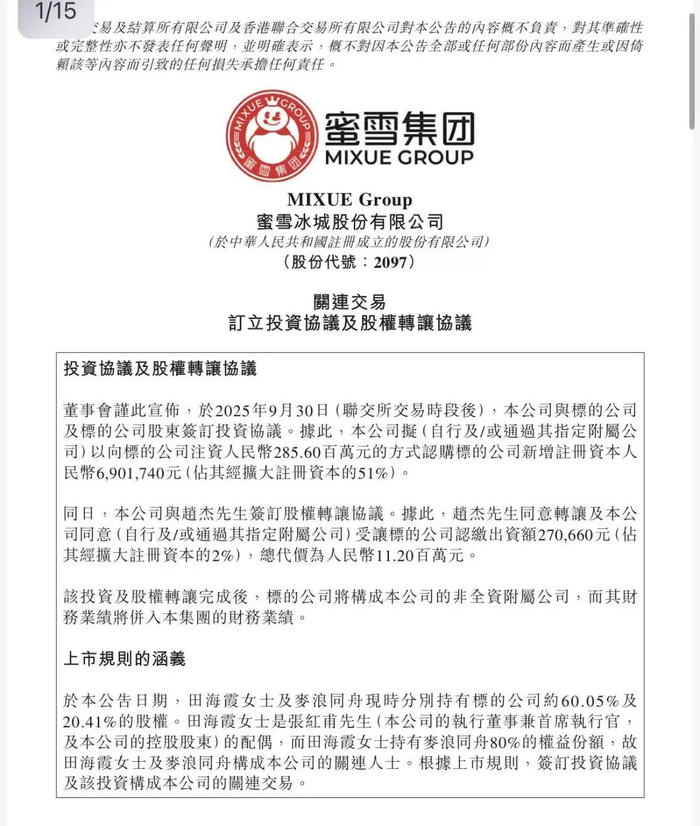
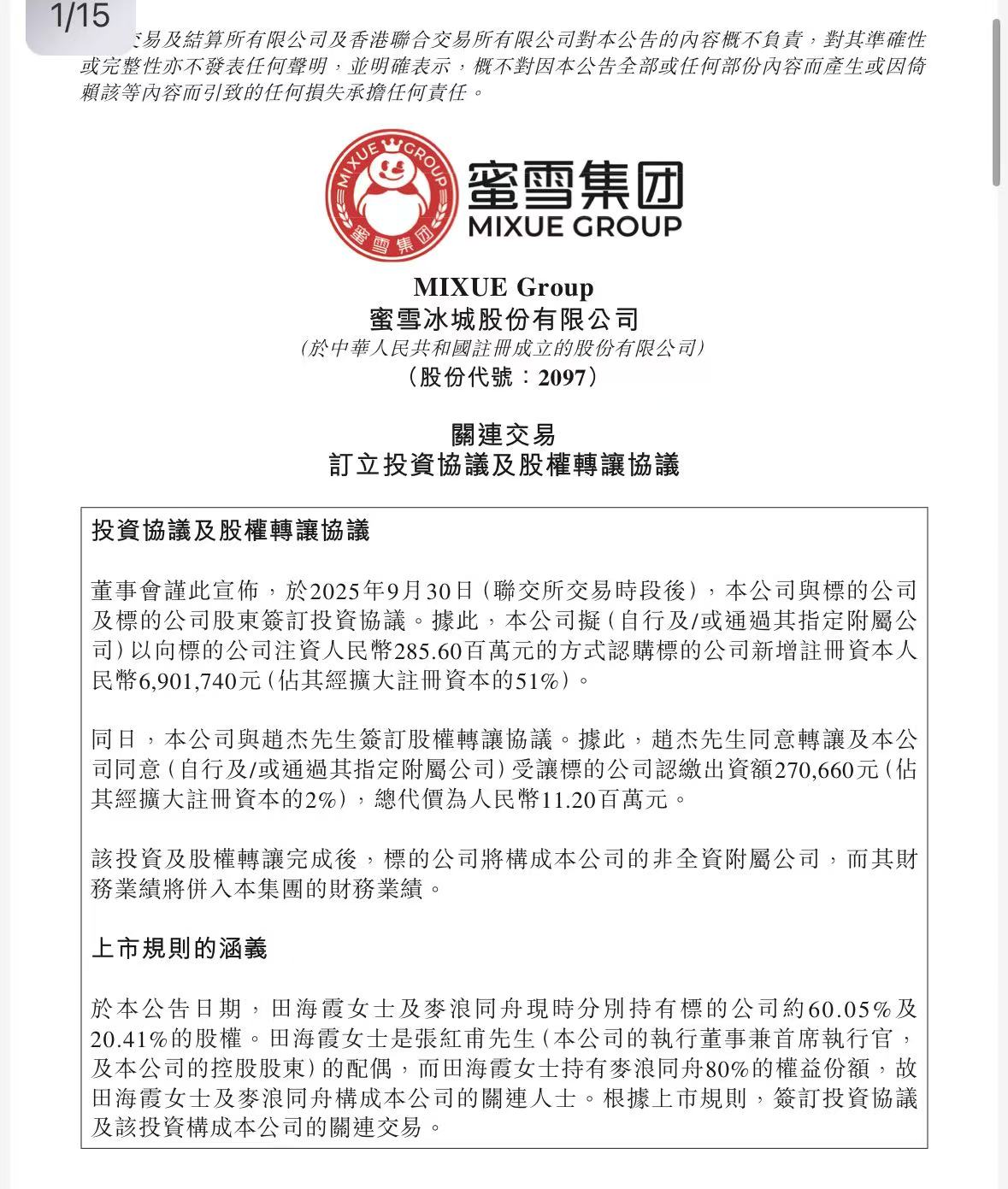
Core Viewpoint - The article discusses the recent acquisition of Fulu Family by Mixue Group for 297 million yuan, marking its entry into the beer industry, and highlights the potential for growth and market expansion in this sector [3][7][18]. Summary by Sections Acquisition Details - Mixue Group has acquired 51% of Fulu Family's expanded registered capital for 285.6 million yuan and an additional 2% stake for 11.2 million yuan, making Fulu Family a non-wholly owned subsidiary [7][20]. - Fulu Family operates 1,200 stores primarily in lower-tier markets, with a focus on affordable fresh beer [8][9]. Product Offering and Pricing - Fulu Family's main products include fresh beer, milk beer, tea beer, and fruit beer, with prices starting at 5.9 yuan per pound for fresh beer [12][18]. - The pricing strategy aligns with Mixue Group's focus on providing high-quality, affordable products, with a core price point of around 6 yuan [6][12]. Market Position and Strategy - Fulu Family's stores are located in less urbanized areas, similar to Mixue's strategy of targeting lower-tier markets [11][12]. - The acquisition aims to enhance Mixue Group's product portfolio, creating a synergy between fresh tea, coffee, and beer offerings [18][28]. Business Model and Operations - Fulu Family's operational model involves a simplified process where staff serve fresh beer directly from cold storage, allowing for quick service [17][18]. - The business primarily relies on a franchise model, similar to Mixue's approach, focusing on low initial investment and lightweight operations [29][30]. Financial Performance and Challenges - Fulu Family reported a loss of 1.5277 million yuan in 2023, with a projected net profit of only 1.0771 million yuan in 2024, indicating challenges in achieving profitability [37][38]. - The beer market's dynamics differ significantly from the tea beverage sector, raising questions about the sustainability of Fulu Family's low-price strategy [36][38].


3亿,蜜雪冰城,跨界收购了一家新公司
3 6 Ke· 2025-10-21 23:33
Core Insights - The article discusses the strategic acquisition of a 53% stake in the fresh beer chain brand Fulu Family by the tea beverage giant Mixue Ice City for 296.8 million yuan, marking its entry into the fresh beer market [1][3][19] - The acquisition is seen as a move to replicate the successful low-cost model of Mixue Ice City in the fresh beer sector, leveraging its extensive franchise system and cold chain logistics [3][19][21] Company Overview - Mixue Ice City has expanded its business from tea and coffee to include fresh beer, aiming to capture the growth potential in this emerging market [1][3] - Fulu Family, established in 2021, focuses on a "freshly brewed" model with a diverse product range including classic raw beer and fruit-flavored options, aligning well with Mixue's target demographic [1][3][5] Market Dynamics - The fresh beer market is experiencing rapid growth, with projections indicating a market size increase from 42.8 billion yuan in 2022 to 68 billion yuan in 2024, and expected to exceed 200 billion yuan by 2030 [16] - The primary consumer base for fresh beer consists of young adults aged 18-35, which overlaps significantly with Mixue's existing customer base [16][21] Competitive Landscape - The fresh beer market is characterized by competition among traditional beer giants, emerging chains, and regional brands, each with distinct advantages [18][19] - Emerging brands like Youblau and Helen's have adopted lightweight operational models that cater to young consumers, posing a challenge to Mixue's entry into the market [17][18] Strategic Goals - Mixue aims to expand Fulu Family's store count to 2,500 by 2026, utilizing its supply chain, brand management, and franchise system to achieve this goal [3][19] - The company plans to leverage its cold chain logistics to address the challenges of maintaining the quality and freshness of beer products [19][21] Challenges Ahead - Despite the potential for success, Mixue faces challenges in adapting its fast-moving consumer goods strategy to the social consumption context of fresh beer, which differs from its traditional beverage offerings [21] - Balancing low pricing with quality will be crucial, as consumers in the alcohol sector are more sensitive to product quality compared to tea and coffee [21]

霸王茶姬海外狂奔:迈入“规模化深耕” 的新阶段
Yang Zi Wan Bao Wang· 2025-10-21 14:39
Core Insights - Bawang Chaji, a new tea brand, has achieved significant milestones in Southeast Asia with the opening of the world's "tallest" store in Bangkok and the 200th store in Malaysia, marking a shift from "single-point exploration" to "scaled deepening" in overseas markets [1][2] Group 1: Store Openings and Market Expansion - The new store in Thailand is located on the 74th floor of the King Power Mahanakhon Tower, which is 314 meters tall, providing a unique tea-drinking experience combined with stunning city views [1] - In Thailand, Bawang Chaji plans to open 5 additional stores this month, bringing the total to 13, accelerating its nationwide network [1] - The brand has opened its 200th store in Malaysia, maintaining its status as a leading tea brand in the region [2] Group 2: Product Development and Localization - Bawang Chaji has successfully launched the "Hojicha Genmai Milk Tea," which became a phenomenon in Malaysia, selling out within two weeks of its release [2] - The brand adapts its products to local tastes, such as introducing region-specific items like "Imshan Matcha" in Malaysia and "Orchid Bi Luo Chun" in Singapore [3] - A dedicated R&D team in the Asia-Pacific region ensures that products retain their Eastern tea essence while appealing to local preferences [3] Group 3: Strategic Partnerships and Business Model - Bawang Chaji employs a "deep joint venture" model to integrate into local ecosystems, partnering with major companies in Thailand and Malaysia to enhance supply chain and market access [2] - The brand's strategy of "exchanging equity for resources" has proven effective, as evidenced by the successful launch of three stores in the Philippines, which sold 23,000 cups on the first day [2] Group 4: Globalization and Cultural Impact - Bawang Chaji has expanded its global footprint to cover seven overseas countries, with over 200 stores, and has recently entered the U.S. market, achieving over 5,000 cups sold on the first day in Los Angeles [3] - The rise of new tea drinks reflects a growing demand for healthy beverages and emotional connections, particularly among younger consumers, serving as a bridge to traditional Chinese tea culture [3] - The brand aims to continue its expansion in overseas markets, promoting Chinese tea culture as a new symbol of international cultural exchange [4]
蜜雪冰城卖啤酒了:斥资近3亿元,能否成为“第三增长曲线”
Di Yi Cai Jing· 2025-10-21 13:29
Core Viewpoint - The company, Mixue Group, is expanding into the fresh beer market by acquiring the brand "Fulu Family" with an investment of over 286 million yuan, aiming to diversify its product offerings and capture more consumer scenarios among young consumers [1][2][7]. Company Summary - Mixue Group has signed an investment agreement to inject 286 million yuan into Fulu Family, acquiring a 51% stake in the company [2][7]. - After the transaction, Mixue Group will hold a 53% stake in Fulu Family, marking its official entry into the fresh beer market [7]. - The acquisition is part of Mixue Group's strategy to develop a multi-category synergy of "freshly made tea + freshly ground coffee + fresh beer," aiming for scale expansion and multi-business growth [7][9]. Industry Summary - The tea and coffee markets in China are experiencing saturation and slowing growth, prompting companies to seek new opportunities [7][9]. - The fresh beer market in China is currently in a growth phase, with significant potential for expansion as the per capita beer consumption remains low compared to top countries [8][9]. - The fresh beer segment is characterized by a trend towards quality, diverse flavors, and enhanced consumer experiences, with fresh beer representing an upgrade in beer quality [9]. - Fulu Family's pricing strategy aligns with Mixue Group's value proposition, offering fresh beer at a competitive price of approximately 6-10 yuan per 500ml [8][9]. - The financial outlook for Fulu Family appears positive, with a projected net profit of 1.07 million yuan for 2024, indicating a turnaround from losses in 2023 [10].
蜜雪冰城卖啤酒了:斥资近3亿元,能否成为“第三增长曲线”
第一财经· 2025-10-21 13:08
Core Viewpoint - The article discusses how the tea and coffee markets are facing growth bottlenecks, prompting major players like Mixue Group to explore new markets, specifically the fresh beer segment [3][4]. Company Strategy - Mixue Group has invested over 286 million yuan to acquire a 51% stake in the fresh beer brand "Fulu Family," marking its entry into the fresh beer market [4][6]. - The acquisition aims to diversify Mixue Group's product offerings, creating a synergy between fresh tea, freshly ground coffee, and fresh beer, thereby enhancing its growth potential [10][12]. Market Context - The tea and coffee markets in China are experiencing saturation and intense competition, leading to a slowdown in growth rates [10][12]. - The fresh beer market is identified as a blue ocean opportunity, with significant growth potential as China's per capita beer consumption remains low compared to top countries [14]. Financial Performance - Fulu Family is projected to achieve a pre-tax net profit of 1.07 million yuan in 2024, indicating a turnaround from losses in 2023 [15]. Competitive Landscape - The fresh beer segment is characterized by a trend towards quality, diverse flavors, and enhanced consumer experiences, with fresh beer representing a quality upgrade in the beer market [14]. - Mixue Group's competitive advantages include strong brand recognition, supply chain efficiency, and a robust distribution network, which can help mitigate costs and support the new venture [15].
“雪王”卖啤酒了:斥资近3亿元控股的鲜啤福鹿家,能否成为“第三增长曲线”
Di Yi Cai Jing· 2025-10-21 12:36
Core Viewpoint - Mijue Group is entering the fresh beer market by acquiring the brand "Fulu Family" for over 280 million yuan, aiming to diversify its product offerings and capture new consumer segments as traditional beverage markets face saturation [2][3][8]. Company Summary - Mijue Group has invested 286 million yuan to acquire a 51% stake in Fulu Family, marking its official entry into the fresh beer market [3][7]. - The acquisition is part of Mijue Group's strategy to create a multi-category synergy with its existing products, including fresh tea and coffee, to drive growth [7][9]. - The company aims to leverage its strong brand, supply chain, and cost control capabilities to succeed in the fresh beer segment, which is currently experiencing rapid growth in China [8][9]. Industry Summary - The fresh beer market in China is still considered a blue ocean, with significant growth potential as per capita beer consumption remains low compared to developed markets [8][9]. - Recent trends in the beer industry indicate a shift towards quality, diverse flavors, and enhanced consumer experiences, with fresh beer representing a quality upgrade in the product offering [9]. - The beer industry is entering a phase of rapid expansion and professionalization, with Mijue Group's entry expected to contribute to this trend [8][9]. - Fulu Family's pricing strategy, with prices around 6-10 yuan per 500 ml, aligns with Mijue Group's value proposition and aims to make craft beer more accessible [8][9].
卢浮宫失窃背后:一个“分裂的法国”与消费市场巨变
3 6 Ke· 2025-10-21 11:31
Group 1: Theft Incident - The Louvre Museum in Paris experienced a shocking theft on October 19, where four suspects used a mechanical lift to access the Apollo Gallery and stole eight valuable items in just four minutes [1][3] - The stolen items included a necklace and earrings from Napoleon to Marie Louise, a brooch belonging to Empress Eugénie, and a sapphire set [5] - The incident has raised concerns about the security of French museums, with the Interior Minister acknowledging the overall vulnerability of these institutions [5] Group 2: Political and Economic Context - The theft has sparked strong political reactions in France, with President Macron calling it an "attack on our history" and other political leaders expressing their outrage [3] - France is currently facing a political crisis, with a "hung parliament" situation leading to difficulties in passing government proposals, which has weakened President Macron's authority [6] - The country's fiscal situation is concerning, with a deficit of 5.8% of GDP and a national debt of 114% of GDP, the third highest in the Eurozone [6][7] Group 3: Impact on Consumer Behavior - The rising cost of living has led nearly half of the French population to change their consumption habits, favoring lower-priced goods [13] - Supermarket sales in France fell by 4.1% in the first half of 2023 compared to the previous year, marking a historic low [13] - The emergence of low-cost platforms like Temu, which has a market penetration rate of 11.9%, reflects the shift in consumer preferences towards affordability [13] Group 4: Social Dynamics and Class Disparities - The growing wealth gap and class divide in France have contributed to a decline in the middle class, with poverty rates reaching their highest level since 2013, affecting approximately 15% of the population [10][12] - The political landscape is increasingly influenced by extreme political parties, reflecting deep societal fractures [9][10] - Young people in France are gravitating towards anti-consumerism and sustainability, impacting their purchasing decisions [12][22] Group 5: Market Opportunities for Brands - French luxury brands dominate the global market, with companies like LVMH, L'Oréal, and Hermès leading in various sectors [12] - The outdoor lifestyle trend in France presents opportunities for businesses in camping and garden furniture, with a projected market growth rate of 6.9% annually [18] - Chinese brands like Huawei and TCL have successfully penetrated the French market by leveraging local partnerships and adapting to consumer preferences [19][20]

05后的第一杯酒,可能是奶茶店里买的
3 6 Ke· 2025-10-21 11:25
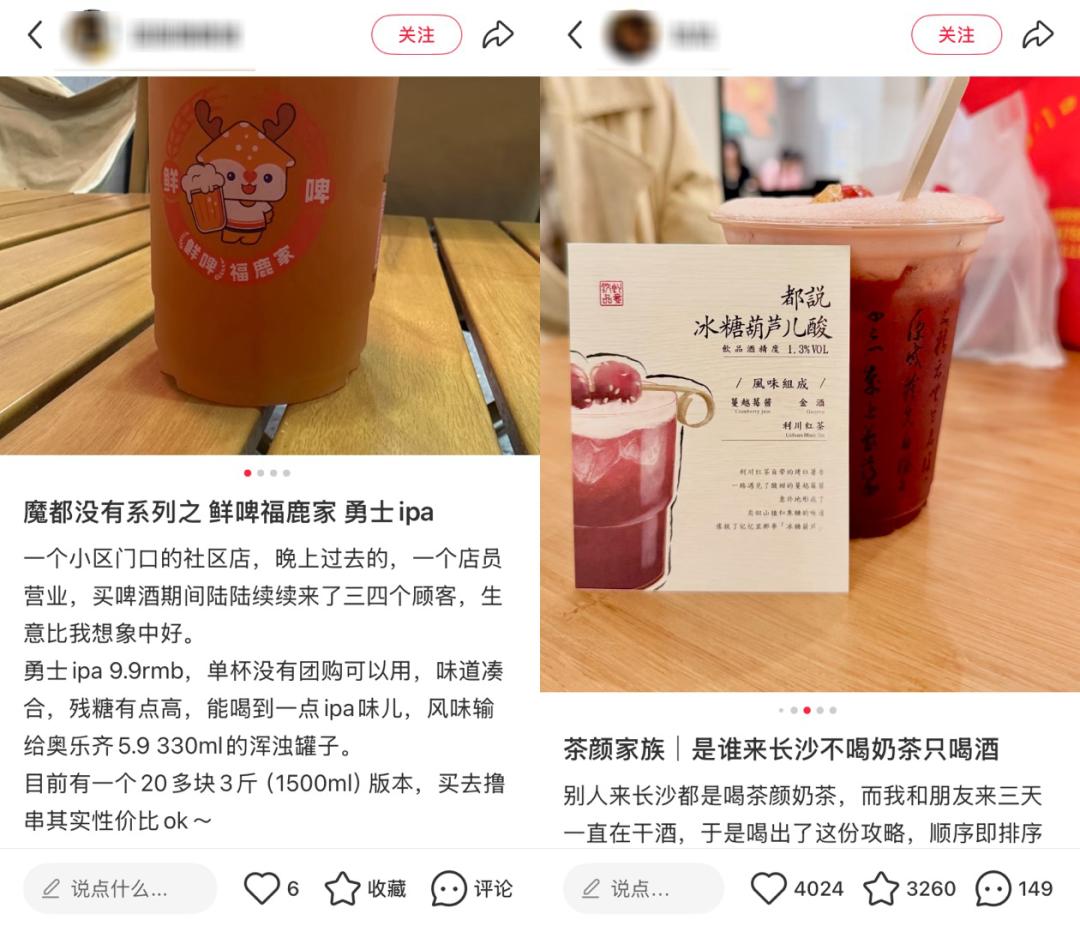
Core Insights - The rise of "tipsy" drinking culture among young people is leading to innovative business strategies in the beverage industry, particularly with brands like "Mixue Ice City" and "Chayan Yuese" expanding into alcoholic beverages [1][3][4] Group 1: Business Strategies - Mixue Ice City has invested nearly 300 million to acquire a 53% stake in the fresh beer brand "Fulu Family," expanding its business from tea and coffee to affordable beer [1] - Chayan Yuese launched an alcoholic tea series through its sub-brand "Yuan Yang Coffee" in 2022 and plans to establish a separate brand for alcoholic beverages in 2024 [1][3] - Both companies aim to capture the "tipsy" consumption trend, with Mixue focusing on efficiency and scale, while Chayan emphasizes cultural branding and deep customer engagement [6][14] Group 2: Market Dynamics - The "tipsy" business is fundamentally about providing emotional satisfaction, catering to the social and psychological needs of young consumers [3][4] - Traditional drinking culture, which emphasizes heavy drinking and social obligations, is being challenged by younger consumers who prefer a more relaxed and enjoyable drinking experience [5][6] - The growth of brands like Rio and Helen's Tavern indicates that "tipsy" drinking has become an essential lifestyle choice for young people [5] Group 3: Performance Metrics - Mixue Ice City's revenue for the first nine months of 2024 was 14.875 billion, with 97.4% coming from sales to franchisees [8] - However, the company faces challenges, including a decline in average store sales by 4.63% year-on-year, and an increase in store closures from 557 in 2021 to 1,609 in 2024 [10][9] - Chayan Yuese reported a revenue of 1.59 billion for the first half of 2024, with a growth rate of 29.1%, and 78.9% of its revenue coming from member purchases, indicating strong customer loyalty [15][16] Group 4: Competitive Landscape - The beer market presents higher barriers to entry compared to the tea and coffee markets, with lower consumption frequency and more intense competition from established brands like Budweiser and Tsingtao [11][13] - Chayan Yuese's strategy involves leveraging its cultural branding to differentiate itself in the crowded beverage market, while Mixue aims to replicate its tea business model in the beer sector [6][14][12] - Both companies are exploring ways to adapt their business models to meet the evolving preferences of young consumers, with Mixue focusing on rapid expansion and Chayan on maintaining quality and cultural relevance [20][21]
老牌董秘,遭遇沪上阿姨新问题
Xin Lang Cai Jing· 2025-10-21 09:09
Core Viewpoint - The article discusses the challenges faced by Hu Shang A Yi, a tea beverage brand, following its IPO, highlighting issues such as stock price decline, unmet expansion goals, and consumer complaints, which affect investor confidence in the company's long-term value [3][9][22]. Company Overview - Hu Shang A Yi was established on November 8, 2013, with a registered capital of approximately 1.05 billion RMB [4]. - The company went public on May 8, 2025, at an issue price of 113.12 HKD, raising 273 million HKD (approximately 35 million USD) [5][6]. IPO and Market Performance - Despite a successful IPO, Hu Shang A Yi's stock price has fallen below its issue price, closing at 107.20 HKD as of October 20, 2025 [3][9]. - The stock initially peaked at 197.60 HKD on its first trading day but quickly declined, indicating a lack of market confidence [8][9]. Expansion Plans - The "Ten Thousand Store Plan" proposed by the founder, aiming for 10,000 stores, remains unfulfilled, with only 9,436 stores reported as of June 30, 2025, falling short by 564 stores [10][11]. - The company opened 905 new franchise stores in the first half of 2025 but closed 645, resulting in a net increase of only 260 stores [10][11]. Financial Performance - For the first half of 2025, Hu Shang A Yi reported revenue of 1.818 billion RMB, a year-on-year increase of 9.7%, and a net profit of 202 million RMB, up 20.9% [10]. - The gross margin remained stable at 31.4%, indicating consistent profitability despite market challenges [10]. Market Challenges - The tea beverage market is experiencing increased competition and price wars, leading to a decline in consumer demand [3][22]. - Hu Shang A Yi's average daily GMV per store has decreased from 4,109 RMB in 2022 to 3,753 RMB in 2024, reflecting declining sales performance [15][17]. Consumer Sentiment - There has been a rise in consumer complaints regarding service quality and product hygiene, with 4,567 complaints recorded as of October 16, 2025 [18][22]. - The company's reliance on franchisees has led to quality control issues, further impacting brand reputation [18][22]. Strategic Recommendations - To address its challenges, Hu Shang A Yi may need to focus on supply chain improvements, product innovation, and aligning its market positioning to better compete in the crowded mid-tier segment [23][22].
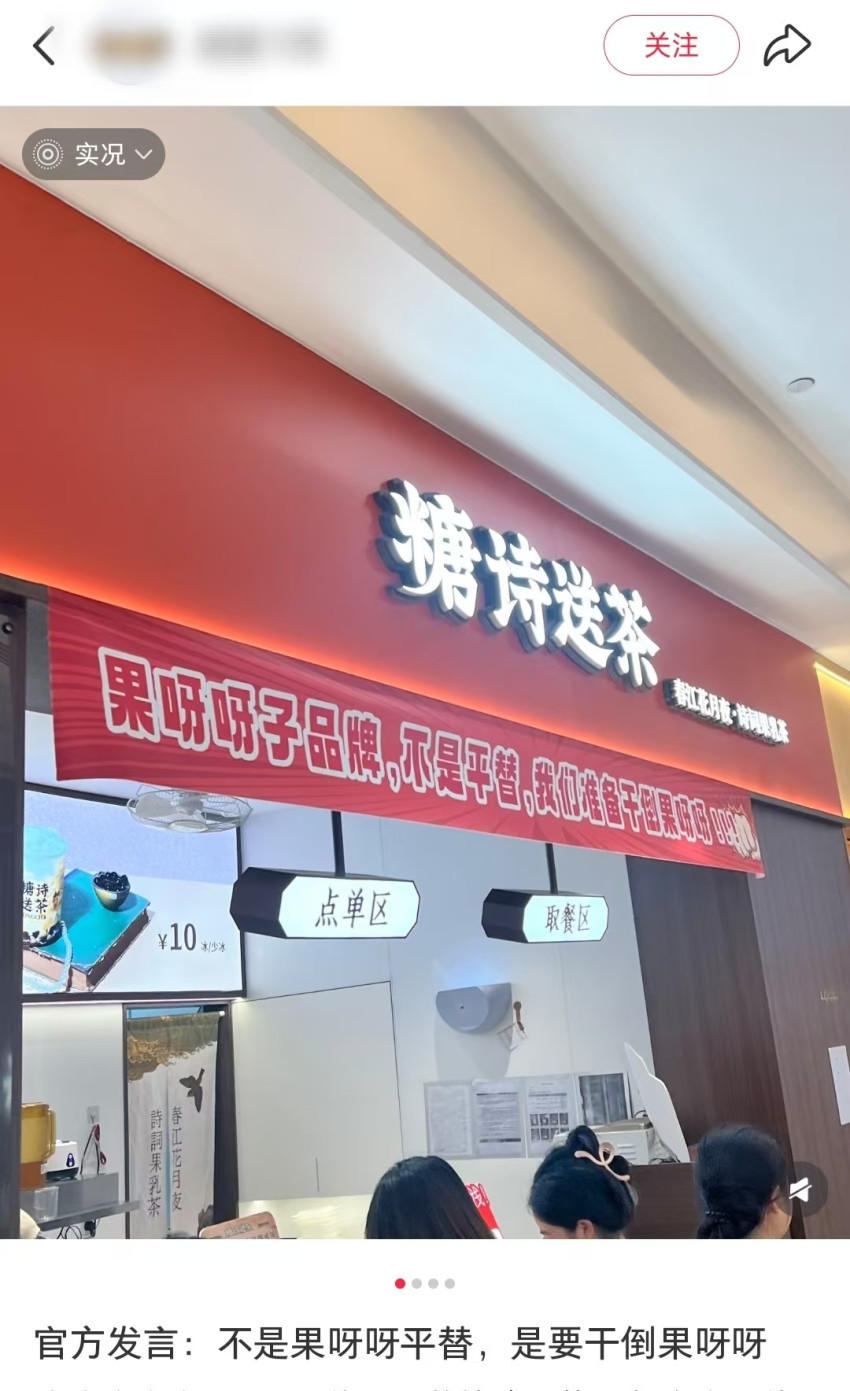
对标蜜雪冰城,果呀呀子品牌要干倒果呀呀?
3 6 Ke· 2025-10-21 07:52
Core Viewpoint - The recent launch of the sub-brand "Tang Shi Song Cha" by Guo Ya Ya, which aims to compete directly with its parent brand by offering lower-priced fruit tea products, has sparked significant discussion and interest in the market [1][4]. Company Strategy - "Tang Shi Song Cha" was quietly launched in May 2023, with its first store located near a Guo Ya Ya outlet in Changsha, and has since opened three locations [4]. - The pricing strategy for "Tang Shi Song Cha" is notably aggressive, with products priced at one-third of Guo Ya Ya's offerings, ranging from 8 to 10 yuan per cup [4][10]. - The product lineup includes 18 items such as fruit milk tea and fresh fruit juice, maintaining a creative naming style similar to Guo Ya Ya [4]. Market Positioning - Guo Ya Ya has previously launched other sub-brands, including "Wo Hu Cha Nong" and "E Mi Coffee," indicating a strategy to explore various market segments [7][8]. - The introduction of "Tang Shi Song Cha" aligns with a broader industry trend where competitors are increasingly targeting the sub-10 yuan price range, as seen with brands like Shu Yi Shao Xian Cao and Gu Ming [8][10]. Operational Efficiency - The smaller store model of "Tang Shi Song Cha," often located in lower-rent areas such as schools, helps reduce operational costs compared to Guo Ya Ya's traditional store sizes [10]. - The successful implementation of "Tang Shi Song Cha" is supported by Guo Ya Ya's established supply chain, which has been optimized through long-term agreements with local fruit orchards [10][11]. Future Developments - Guo Ya Ya is expected to continue expanding its brand portfolio, with plans for a new coffee brand "Guo Ya Ya G Coffee" on the horizon [11].