智能汽车

Search documents
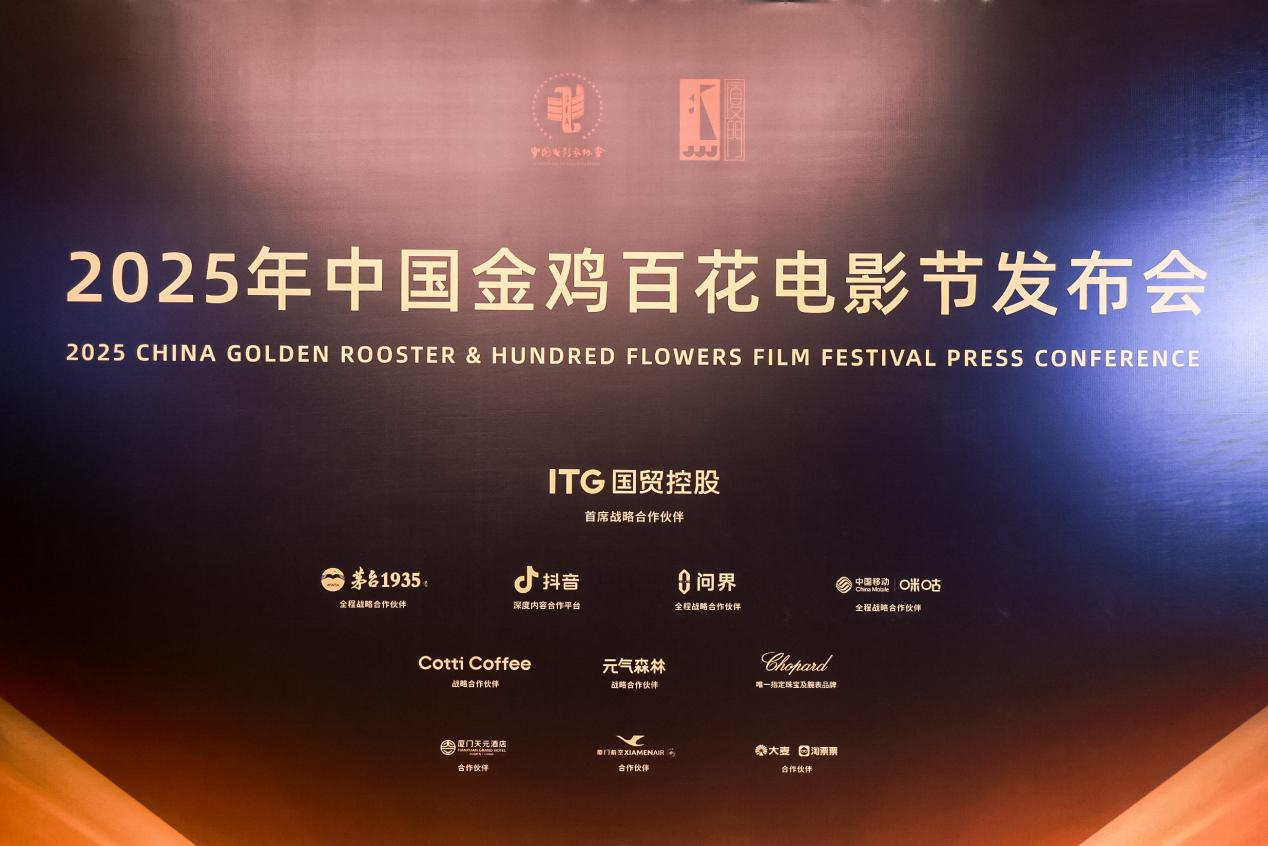
问界携手金鸡百花电影节 开启科技与艺术跨界合作新境界
Zhong Jin Zai Xian· 2025-09-26 09:49
Core Points - The 2025 China Golden Rooster and Hundred Flowers Film Festival announced its partnership with the automotive brand Wanjie, marking Wanjie's role as the official strategic partner and designated automotive brand for the event [1] - This collaboration signifies a deep alignment in the values of both parties, with the film festival focusing on the innovative development of Chinese cinema and Wanjie leading in the smart automotive sector [3] - The partnership is seen as a milestone in Wanjie's efforts to integrate technology and art, enhancing the brand's cultural significance and showcasing the fusion of cultural confidence and technological innovation [5] Group 1 - The China Golden Rooster and Hundred Flowers Film Festival is one of the most influential national film festivals in China, reflecting significant milestones in the development of Chinese cinema [3] - Wanjie aims to explore new realms of integration between technology and film art through this partnership, emphasizing the importance of innovation in both fields [5] Group 2 - The collaboration is expected to enrich Wanjie's brand with new cultural connotations, highlighting the synergy between cultural and technological confidence [5] - The partnership aligns with Wanjie's brand philosophy of "crossing boundaries and creating new realms," reinforcing its commitment to innovation [3]

可提供车主亲友救援同享服务,鸿蒙智行上线国庆安心行
Qi Lu Wan Bao· 2025-09-26 08:35
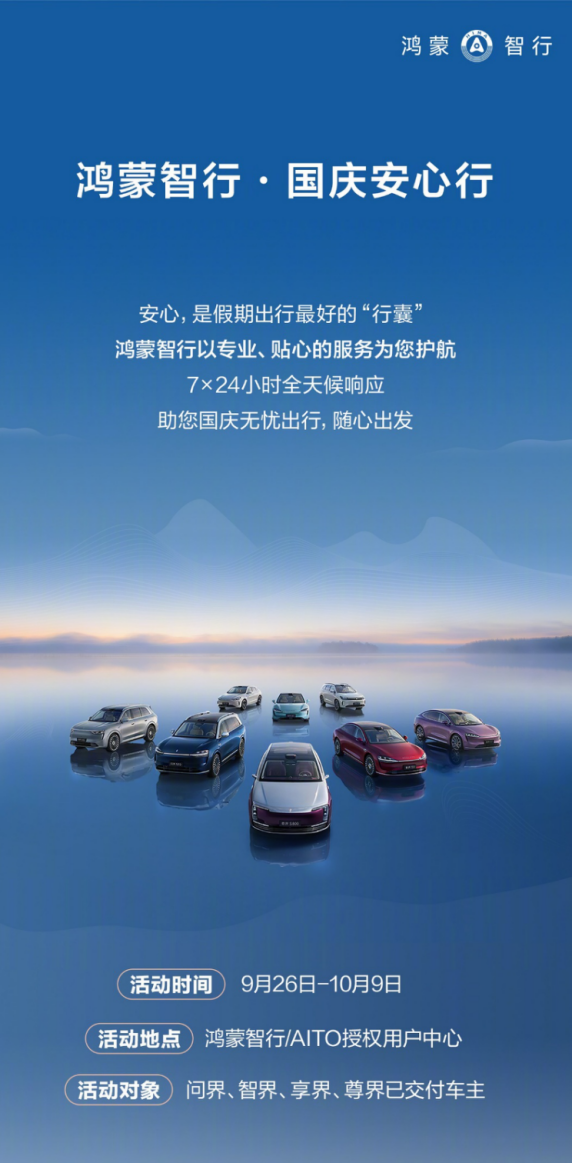
据悉,"国庆安心行"服务内容涵盖多项核心权益,其中包括"亲友救援同享服务"。据了解,在活动期 内,车主可向亲友发放总计3张"亲友车辆救援券",当亲友不同品牌的车辆因故障或事故无法行驶时, 亦可享受鸿蒙智行提供的24小时道路救援服务,包括拖车、蓄电池搭电、路边维修及困境救援等,进一 步拓展了原厂服务的边界,体现品牌对用户社交圈层的关怀。 此外,在活动期间,车主到店可享受一次包含近15项检测项目的全车安全检查,涉及车辆外观、底盘状 态、轮胎轮毂、冷却系统及空调系统等关键部分,确保车辆在长途行驶中的安全性与可靠性。同时,针 对西部地区用户,鸿蒙智行还增设专属保障项目,包括提供道路救援、轮胎递送及"返程无忧"车辆托运 支持等。 9月26日消息,鸿蒙智行于今日官宣正式推出"国庆安心行"专项服务活动,为旗下智界、享界、问界、 尊界等品牌已交付车主提供全方位、全天候的出行保障服务。本次活动自即日起持续至10月9日,覆盖 全国鸿蒙智行及AITO授权用户中心。 ...
小米集团-W(01810):小米发布会:17系列手机和汽车定制化服务是重点
HTSC· 2025-09-26 07:56
Investment Rating - The report maintains a "Buy" rating for Xiaomi Group with a target price of HKD 65.4 [5][7]. Core Insights - Xiaomi's recent product launch includes the Xiaomi 17 series smartphones, Pad 8, smart home appliances, routers, and a customized service for its automotive line, indicating a strong focus on innovation and ecosystem development [1][2]. - The company emphasizes its ongoing investment in hard technology, particularly in self-developed chips and smart vehicles, which are expected to support the development of a comprehensive "people-vehicle-home" ecosystem [1][4]. Summary by Sections Mobile Phones - The Xiaomi 17 series features competitive pricing and significant improvements in battery life, with the standard version priced at HKD 4,499 and the Pro version at HKD 4,999, which is a reduction of HKD 300 from the previous model [2]. - The new series utilizes Qualcomm's Snapdragon 8 Elite chip, manufactured with TSMC's 3nm process, and boasts a battery life improvement of 109% for the standard model compared to the iPhone 17 [2]. Automotive - Xiaomi introduced a customization service for its automotive line, allowing for personalized options for the SU7 Ultra and YU7 Max models, which is expected to attract high-end users and enhance brand prestige [3]. - The gross margin for Xiaomi's automotive and AI innovation business reached 26.4% in Q2 2025, an increase of 11 percentage points year-over-year, indicating a positive trend in profitability [3]. Annual Presentation - Founder Lei Jun highlighted the company's advancements in self-developed chips and electric vehicles since 2021, showcasing the successful launch of the Xuanjie SoC chip and the SU7 Ultra model, which has achieved notable performance metrics [4]. Profit Forecast and Valuation - The report projects Xiaomi's net profit for 2025-2027 to be RMB 443.1 billion, RMB 526.3 billion, and RMB 671.2 billion respectively, maintaining a target price of HKD 65.4 based on a sum-of-the-parts (SOTP) valuation method [5][42].

鸿蒙智行问界M7、尚界H5发布,真人感小艺超能干
Cai Fu Zai Xian· 2025-09-26 06:04
Core Insights - The launch of the new models AITO M7 and AITO H5 at the Hongmeng Intelligent Driving Autumn New Product Launch highlights the company's commitment to enhancing in-car experiences through advanced voice assistant technology [1] Group 1: Voice Assistant Features - The upgraded voice assistant "Xiao Yi" offers a natural conversation experience, allowing users to interact with the system using casual language, such as adjusting screen brightness with simple commands [1] - Xiao Yi's capabilities include real-time location-based information retrieval, enhancing user engagement during drives by providing details about nearby landmarks and attractions [1] Group 2: Entertainment and Information Services - Xiao Yi can fulfill entertainment needs by allowing users to request music or podcasts through voice commands, significantly improving safety and convenience while driving [2] - The assistant can also provide personalized news updates, summarizing industry insights and answering follow-up questions for deeper understanding [2] Group 3: Integration of Third-Party Services - The introduction of smart integrations with platforms like Meituan and Ximalaya allows users to order food or access podcasts seamlessly while driving, enhancing the overall in-car experience [3] - Users can engage in language practice through the voice assistant, making use of idle time during commutes for productive learning [3] Group 4: Personalized User Experience - The "Xiao Yi Habit Recommendation" feature learns user preferences over time, automatically adjusting seat positions and climate controls based on individual habits, thus providing a more comfortable driving experience [4] - The system's ability to execute these adjustments without user input enhances convenience and satisfaction during each journey [4]
小米法务部:部分MCN机构和网络黑水军持续发布不实言论 已对92个恶意侵权账号提起民事诉讼
Zheng Quan Shi Bao Wang· 2025-09-26 05:53
人民财讯9月26日电,小米法务部发文称,长期以来,部分MCN机构和网络黑水军持续发布不实言论, 恶意造谣诋毁公司,破坏清朗的网络舆论环境。为维护公司的合法权益,小米法务始终坚持依法依规推 进法律维权工作。2025年至今,小米法务已完成对16465条舆情线索的法律评估,重点监测网络账号231 个,并针对其中92个恶意侵权账号提起民事诉讼,依法追究相关侵权人的法律责任。目前,部分案件已 进入法院审理阶段,小米法务将适时公布案件进展。同时,亦关注到部分小米车主无端遭受网络攻击的 情形,小米法务已协助部分车主进行维权,目前已发起车主维权诉讼共计35件,后续小米法务将持续重 点关注此类网络侵权行为。 ...
部分小米车主无端遭受网络攻击,小米回应
Xin Jing Bao· 2025-09-26 05:48
Core Viewpoint - The company is actively pursuing legal actions against malicious online activities and false statements that harm its reputation and the online environment [1] Group 1: Legal Actions and Monitoring - Since 2025, the company’s legal department has completed legal assessments on 16,465 pieces of online sentiment data, focusing on monitoring 231 online accounts [1] - The company has filed civil lawsuits against 92 malicious infringement accounts to hold the infringers legally accountable, with some cases already in court [1] - The company has initiated a total of 35 lawsuits to assist car owners who have been unjustly attacked online, indicating a commitment to protecting its customers [1] Group 2: Commitment to Brand Protection - The company adopts a "zero tolerance" approach towards online infringement and will enhance sentiment monitoring to ensure accountability [1] - The legal department will utilize legal means to combat all forms of infringement, aiming to protect brand reputation and user reputation [1] - The company emphasizes that the online space is not lawless and that freedom of speech has its limits, urging respect for facts and rational discourse [1]
小鹏汽车官宣进入五国市场,盘中一度涨超6%,机构称持续看好强势自主整车品牌
Mei Ri Jing Ji Xin Wen· 2025-09-26 02:17
Group 1 - The Hong Kong stock market indices collectively declined, with the Hang Seng Tech Index dropping over 1%, impacting major stocks like Horizon Robotics, Xiaomi, Kingsoft, and JD Health [1] - XPeng Motors accelerated its global expansion by entering five new markets: Switzerland, Austria, Hungary, Slovenia, and Croatia, planning to launch pop-up stores in Budapest, Ljubljana, and Zagreb this fall [1] - Zhongtai Securities remains optimistic about investment opportunities in complete vehicles and intelligent driving, focusing on strong domestic brands and the robotics industry chain [1] Group 2 - Alibaba's Cloud Summit ignited bullish sentiment, with expectations for the Hang Seng Tech Index to break upward again, supported by potential Fed rate cuts and continued inflow of southbound capital [2] - Alibaba's stock price has doubled this year, making it the largest weighted stock in the Hang Seng Tech Index at 9.36% [2] - Investors without a Hong Kong Stock Connect account can access Chinese AI core assets through the Hang Seng Tech Index ETF [2]
小米集团-W(01810):小米17全系跨代升级,多IoT新品助力全品类高端化
CMS· 2025-09-26 01:33
Investment Rating - The report maintains a "Strong Buy" rating for Xiaomi Group [1] Core Views - Xiaomi has launched the Xiaomi 17 series, which includes significant upgrades across all models, aiming to compete directly with the iPhone in the high-end market [5] - The company is expanding its IoT product line with new high-end devices, including tablets, TVs, and smart home appliances, enhancing its AIoT ecosystem [5] - Xiaomi's automotive segment is gaining traction, with over 40,000 units of the YU7 model delivered and the introduction of customized services for its vehicles [5] - The report forecasts substantial revenue growth for Xiaomi, projecting total revenues of 489.9 billion, 660.3 billion, and 823.3 billion yuan for 2025, 2026, and 2027 respectively, with adjusted net profits of 43.1 billion, 63.5 billion, and 86.6 billion yuan for the same years [6][9] Summary by Sections Company Overview - Xiaomi Group is positioned as one of the top three smartphone manufacturers globally and the largest AIoT smart hardware platform [5] Financial Performance - The report provides a detailed financial forecast, estimating total revenue growth of 34% in 2025 and 35% in 2026, with net profit growth of 66% and 54% respectively [6][9] - Key financial metrics include a projected PE ratio of 35.7 for 2025, decreasing to 16.7 by 2027, indicating improving valuation over time [6][10] Product Development - The Xiaomi 17 series features three models with advanced specifications, including the Snapdragon 8 processor and significant battery capacity [5] - The introduction of high-end IoT products, such as the Xiaomi Pad 8 series and the S Pro Mini LED TV, reflects Xiaomi's strategy to enhance its product offerings [5] Automotive Segment - The automotive division is expected to grow, with the YU7 model's delivery numbers indicating strong market acceptance and the potential for further expansion through customized services [5]
抖音副总裁称很多所谓“字节概念股”的信息不实;追觅否认强制员工跟投丨数智早参
Mei Ri Jing Ji Xin Wen· 2025-09-25 23:12
Group 1 - The Vice President of Douyin stated that many so-called "Byte concept stocks" contain false information and urged caution among investors [1] - Douyin's management emphasizes the importance of rational and cautious investment principles, focusing on value and fundamentals rather than speculative hype [1] Group 2 - Chasing Technology denied rumors of "mandatory employee co-investment," clarifying that no such policy exists [2] - The company advocates for market-oriented, professional, and compliant practices in investment and management [2] Group 3 - XPeng Motors and Alibaba Cloud signed a cooperation agreement to promote post-quantum security technology in the automotive sector [3] - The collaboration aims to enhance safety algorithms in vehicles and expand applications to AI, V2X, chips, robots, and flying cars [3] - This partnership is expected to alleviate consumer concerns regarding the safety of smart vehicles and foster innovation within the automotive industry [3]

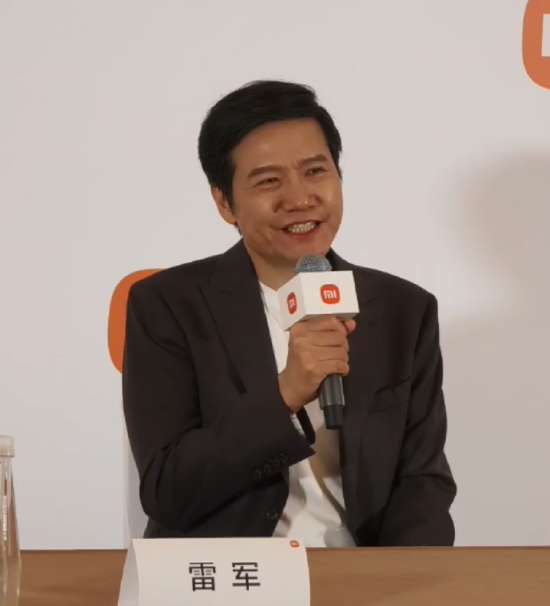
对话雷军:小米汽车接近半数都是女性
Xin Lang Ke Ji· 2025-09-25 15:18
Core Insights - Xiaomi's initial positioning as a geek brand has evolved into a mainstream brand, surpassing growth expectations [1] - The company faced challenges due to rapid growth, leading to misunderstandings and biases against it [1] - Xiaomi is focusing on high-end market penetration, with a significant shift in user demographics, including nearly half of its car users being women [1] Group 1 - Xiaomi's growth trajectory has exceeded initial expectations, transitioning from a niche to a mainstream brand [1] - The company has acknowledged past challenges related to its rapid growth, which included public misunderstandings and internal shortcomings [1] - A strategic shift towards high-end products has been implemented, with a focus on appealing to high-end and female consumers [1] Group 2 - Xiaomi has developed a methodology for high-end market penetration, focusing on three key areas: technology leadership, cognitive leadership, and aesthetic leadership [1] - Regular discussions are held each quarter to assess progress, challenges, and setbacks in the high-end market strategy [1]