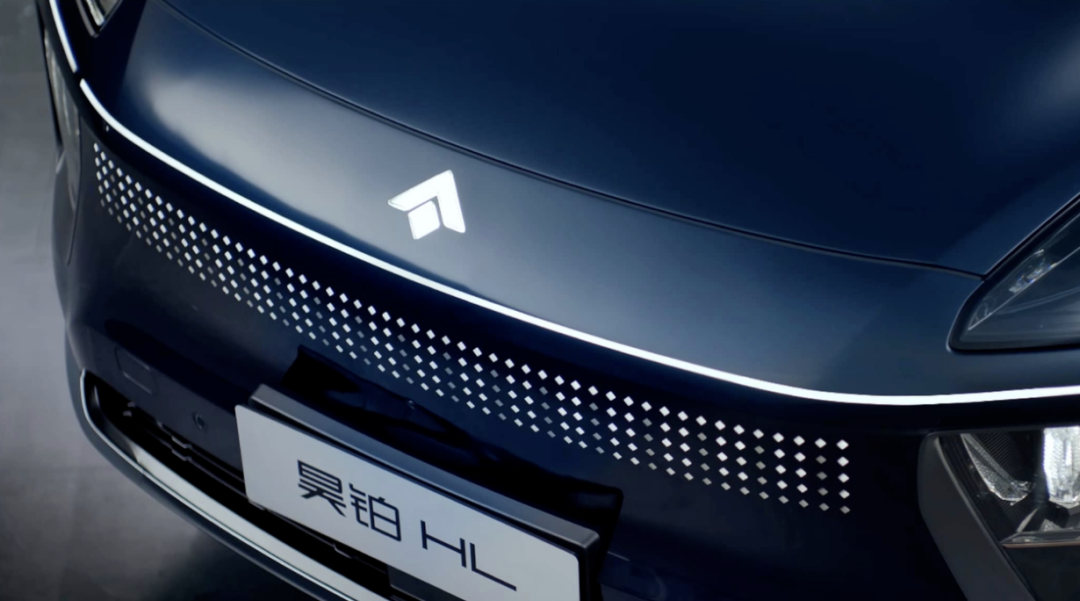
昊铂HL

Search documents
广汽集团改革落地首年:销售连续3个季度环比增长,Robotaxi、飞行汽车和具身智能进入商业化窗口期
Jin Rong Jie· 2026-03-31 02:58
Core Insights - GAC Group reported a total revenue of approximately 96.54 billion yuan and annual vehicle sales of 1.7215 million units for 2025, indicating a positive trend in sales following the implementation of the "Panyu Action" reform [1][2] Group 1: Sales and Market Performance - Since Q2 2025, GAC Group has experienced continuous sales growth, with a nearly 30% increase in sales in the second half of the year compared to the first half [3] - In January and February 2026, cumulative sales reached 203,100 units, a year-on-year increase of 3%, with self-owned brand sales exceeding 84,800 units, up 43.25% [3] Group 2: Reform and Efficiency Improvements - The "Panyu Action" reform initiated at the end of 2024 has led to significant efficiency improvements, with product planning efficiency up by 30%, project approval efficiency up by 67%, and decision-making efficiency up by 85% [2] - The new model development cycle has been shortened to 18-21 months, reflecting the effectiveness of the reform [2] Group 3: International Expansion - GAC Group's overseas terminal sales reached nearly 130,000 units in 2025, a year-on-year increase of approximately 48%, with overseas revenue of 17.022 billion yuan, up 44.99% [4] - The company aims for overseas sales of 250,000 units in 2026, supported by localized operational strategies [6] Group 4: Research and Development - Cumulative R&D investment exceeded 62 billion yuan by the end of 2025, with over 24,900 patent applications, focusing on solid-state batteries, intelligent cockpits, and intelligent driving technologies [7] - GAC has entered a critical commercialization window for technologies related to Robotaxi, flying cars, and embodied intelligence [7][8]

广汽集团(02238) - 海外监管公告
2026-03-29 10:46
香港交易及結算所有限公司及香港聯合交易所有限公司對本公告的內容概不負責,對其準確性或完整 性亦不發表任何聲明,並明確表示,概不對因本公告全部或任何部分內容而產生或因依賴該等內容而 引致的任何損失承擔任何責任。 GUANGZHOU AUTOMOBILE GROUP CO., LTD. 廣州汽車集團股份有限公司 ( 於中華人民共和國註冊成立的股份有限公司 ) (股份編號: 2238) 海外監管公告 本公告乃廣州汽車集團股份有限公司(「本公司」)按香港聯合交易所有限公司證券上市規 則第 13.10B 條發出。 以下文件乃本公司於二零二六年三月二十七日在中華人民共和國上海證券交易所網頁登載, 僅供參閱。 承董事會命 廣州汽車集團股份有限公司 馮興亞 董事長 中國廣州,二零二六年三月二十七日 於本公告日期,本公司的執行董事為馮興亞及閤先慶,本公司的非執行董事為陳小沐、鄧蕾、 周開荃、王亦偉及洪素麗,以及本公司的獨立非執行董事為趙福全、肖勝方、王克勤及宋鐵波。 1. 《廣州汽車集團股份有限公司 2025 年年度報告摘要》 2. 《廣州汽車集團股份有限公司 2025 年年度報告》 3. 《廣州汽車集團股份有限公司 2025 ...
广汽集团发布年度业绩 股东应占亏损87.84亿元 同比盈转亏
智通财经网· 2026-03-27 16:06
Group 1: GAC Group Financial Performance - GAC Group reported a revenue of 96.542 billion yuan in 2025, a year-on-year decrease of 10.43% [1] - The company experienced a loss attributable to equity holders of 8.784 billion yuan, marking a shift from profit to loss compared to the previous year [1] - Basic loss per share was 0.85 yuan [1] Group 2: Sales and Production Performance - In 2025, GAC Group's total vehicle production and sales were 1.7444 million and 1.7215 million units, respectively, representing declines of 8.98% and 14.06% year-on-year [1] - New energy vehicle sales reached 433,600 units, down 4.64% year-on-year, accounting for approximately 25.19% of total sales, an increase of about 2.5 percentage points from the previous year [1] - Sales of energy-efficient vehicles increased by 0.84% year-on-year to 454,600 units, with the proportion of energy-efficient and new energy vehicle sales rising to 51.60%, up about 6 percentage points from the previous year [1] Group 3: Strategic Initiatives and Product Development - GAC Group is implementing integrated reforms through the establishment of shared centers and product commercialization teams, driven by user demand [2] - The company is accelerating product upgrades with the launch of high-end models under the "Wishing Series," including the Wishing S7, Wishing M8, and Wishing S9, focusing on electric and intelligent advancements [2] - GAC Aion brand has achieved continuous month-on-month sales growth for seven months since June 2025, supported by new models and technology advancements [2] Group 4: Joint Ventures and Market Position - GAC Toyota achieved sales of 756,000 units in 2025, a year-on-year increase of 2.44%, with significant sales in high-value models [3] - GAC Toyota's sales of energy-efficient and new energy vehicles reached approximately 470,000 units, a 27.27% increase year-on-year, with a sales proportion of 62.2% [3] - GAC Honda is enhancing local development efforts and advancing intelligent solutions in collaboration with partners, achieving month-on-month sales growth for five consecutive months since August 2025 [3]
广汽集团(02238)发布年度业绩 股东应占亏损87.84亿元 同比盈转亏
智通财经网· 2026-03-27 15:58
Group 1 - GAC Group reported a revenue of 96.542 billion yuan for 2025, a year-on-year decrease of 10.43% [1] - The company recorded a loss attributable to shareholders of 8.784 billion yuan, marking a shift from profit to loss compared to the previous year [1] - Total vehicle production and sales were 1.7444 million and 1.7215 million units, respectively, representing declines of 8.98% and 14.06% year-on-year [1] Group 2 - The sales of new energy vehicles reached 433,600 units, a year-on-year decrease of 4.64%, accounting for approximately 25.19% of total sales, an increase of about 2.5 percentage points from the previous year [1] - The sales of energy-efficient vehicles increased by 0.84% year-on-year to 454,600 units [1] - The proportion of energy-efficient and new energy vehicle sales rose to 51.60%, up approximately 6 percentage points from the previous year [1] Group 3 - GAC's self-owned brands are accelerating product upgrades and innovations, launching high-end models under the "Xiangwang" series, which includes the Xiangwang S7, S8, and S9 [2] - The Aion brand is focusing on both pure electric and range-extended technologies, with new models like AION UT and AION i60, achieving continuous month-on-month sales growth since June 2025 [2] Group 4 - GAC Toyota achieved sales of 756,000 units in 2025, a year-on-year increase of 2.44%, with significant sales in high-value models like Camry and Sienna [3] - The sales of energy-efficient and new energy vehicles reached approximately 470,000 units, a year-on-year increase of 27.27%, with a sales proportion of 62.2% [3] - GAC Honda is enhancing local development efforts and has launched 14 new products in 2025, achieving sales of about 640,000 units, including over 150,000 units exported [3]
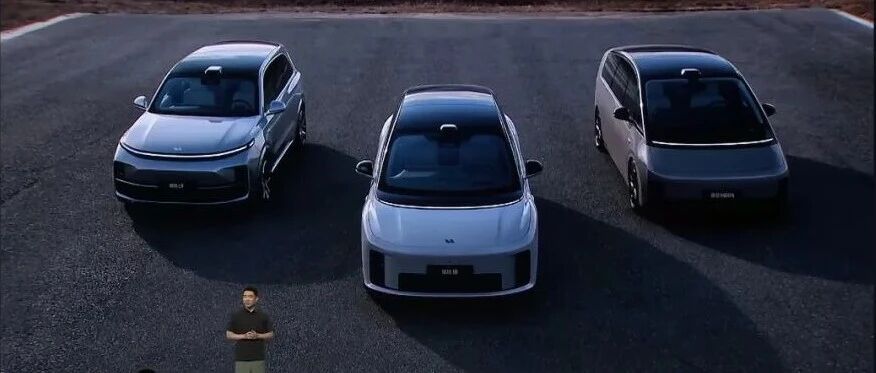
净利暴跌86%,李想要把“增程神话”换成AI+机器人
阿尔法工场研究院· 2026-03-13 08:04
Core Viewpoint - Li Auto is facing significant challenges as its competitive advantage in range-extended technology diminishes, leading to a sharp decline in profits and revenues, while the market becomes increasingly saturated with competitors and pure electric vehicles [2][3][7]. Financial Performance - In 2025, Li Auto reported a net profit of 1.139 billion yuan, a staggering decline of 85.8% year-on-year, with revenue dropping 22.3% to 112.3 billion yuan [2][3]. - The total vehicle deliveries for 2025 were 406,300 units, down 18.8% from the previous year, failing to meet both the initial target of 700,000 and the revised target of 640,000 [3][4]. - The gross margin for 2025 fell to 18.7%, down from 20.5% in 2024, with vehicle gross margin decreasing from 19.8% to 17.9% [4]. Market Competition - The range-extended vehicle market has become increasingly competitive, with multiple automakers introducing similar technologies, diminishing Li Auto's previous advantage [7][8]. - In 2025, the sales of pure electric vehicles reached 7.877 million units, a 24.4% increase year-on-year, while range-extended vehicle sales only grew by 6% to 1.235 million units [8][9]. Internal Challenges - Li Auto has experienced significant management turnover, with several key executives leaving the company, raising concerns about operational stability [5]. - A recall of 11,000 units due to safety issues has negatively impacted the brand's image and consumer trust, further complicating its recovery efforts [5][6]. Strategic Initiatives - To combat declining sales, Li Auto aims to achieve a sales target of 500,000 units in 2026, focusing on both range-extended and pure electric vehicles [9][10]. - The company plans to launch a new range-extended model, the Li L9 series, in the second quarter of 2026, featuring advanced charging technology and improved electric range [10]. - Li Auto is heavily investing in AI technology, with 50% of its 11.3 billion yuan R&D budget in 2025 allocated to AI, indicating a strategic pivot towards integrating AI into its vehicle offerings [10][11].

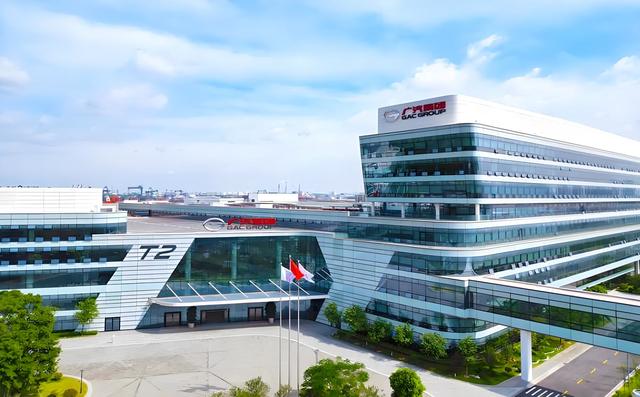
响应国家“双拥”号召 广汽集团新春拥军优属行动启动
Bei Jing Ri Bao Ke Hu Duan· 2026-02-02 09:29
Core Viewpoint - GAC Group launches a military support initiative titled "Salute to National Defenders, Welcoming the New Spring Journey" to honor active and retired military personnel and their families, running from now until March 31, 2026 [1][3] Group 1: Initiative Details - The initiative includes exclusive purchase subsidies, new car insurance discounts, and VIP service channels for GAC's brands: GAC Aion, GAC Trumpchi, and GAC Haobo [1] - GAC Haobo offers additional benefits such as lifetime free charging (selectable with trade-in subsidy), lifetime warranty on three electric components, and lifetime home charging pile delivery [1] Group 2: Commitment to Responsibility - The initiative integrates exclusive purchase benefits with GAC's "Three Responsibilities" policy, which holds the manufacturer accountable for issues related to spontaneous combustion, battery degradation, and smart parking accidents [1] - GAC Group is the first Chinese independent brand to propose the "Three Responsibilities" policy, establishing a comprehensive assurance system for consumers throughout the vehicle purchase, usage, and maintenance lifecycle [1] Group 3: Social Responsibility Efforts - GAC Group has conducted approximately 6,300 visits to retired military personnel and has employed 1,407 veterans [3] - The company has been recognized as a "Top Unit for Recruitment Work" for six consecutive years and has established five military-police joint enterprises, demonstrating a solid organizational structure and team development [3]
“投入不设上限”成空谈! 昊铂销量崩盘,广汽高端梦碎 | 次世代车研所
Xin Lang Cai Jing· 2025-12-25 01:15
Core Viewpoint - GAC Group's high-end brand Haobo is struggling to meet sales targets, leading to its merger with Aion, indicating a setback in its ambition to become a leading high-end brand in China [2][5][10]. Sales Performance - Haobo's cumulative sales for 2024 are projected at 17,300 units, achieving only 34.6% of its target of 50,000 units [5][8]. - Monthly sales have remained around 1,000 units, with some months reporting zero sales for the Haobo SSR supercar [2][8]. - In the first eleven months of this year, Haobo's total sales reached 13,800 units, which is lower than the monthly sales of mainstream new energy vehicle brands [8]. Strategic Changes - GAC Group announced the formation of the Haobo-Aion Business Unit, merging the two brands for unified operations, with a complete channel integration planned by March 31, 2026 [5][10]. - The merger is seen as a strategic retreat to consolidate resources and reduce costs, as Haobo's performance did not meet expectations [6][10]. Market Challenges - The high-end market is facing intense competition, particularly in the 100,000 to 200,000 yuan segment, where Aion's main models are being directly challenged by competitors like BYD and XPeng [10]. - Haobo lacks distinct technological advantages and a direct sales network, leading consumers to perceive it as a premium version of Aion rather than a standalone high-end brand [10][12]. Brand Image Issues - Haobo has faced multiple marketing crises, including public criticism from sponsored athletes and negative publicity from product experiences, which have damaged its brand image [12][14]. - The brand has also resorted to significant price reductions on several models, indicating struggles to maintain its premium positioning [14][15]. Future Prospects - GAC Group is prioritizing the new high-end smart electric vehicle brand "Qijing," developed in collaboration with Huawei, which is expected to launch two new models in mid-2024 [17][19]. - The success of Qijing may determine GAC's ability to establish a foothold in the high-end market, raising questions about Haobo's future role [19].
「投入不设上限」成空谈!昊铂销量崩盘,广汽高端梦碎
Xin Lang Ke Ji· 2025-12-25 00:41
Core Viewpoint - The GAC Group's high-end brand, Haobo, is struggling and has been merged with Aion, indicating a shift in focus towards the new brand, Qijing, which is expected to receive more resources and attention [2][5][16]. Group 1: Sales Performance - Haobo's sales performance has been disappointing, with a cumulative sales target of 50,000 units for 2024 only achieving 34% completion, translating to 17,300 units [2][7]. - Monthly sales for Haobo have been around 1,000 units, with some months reporting zero sales for specific models like the Haobo SSR [1][8]. - The recent launch of the Haobo GT Lite version saw a price reduction of 25,000 yuan within two months, indicating weak market demand [1][15]. Group 2: Strategic Changes - GAC Group has decided to merge Haobo with Aion into the same business unit, which is seen as a strategic retreat to consolidate resources and reduce costs [2][7]. - The merger aims to streamline operations and improve efficiency by integrating channels and resources between the two brands, with a complete integration planned by March 31, 2026 [2][9]. - The decision to merge is also influenced by the need to stop losses and refocus on core competencies, as Haobo's independent operations have not yielded the expected results [7][9]. Group 3: Market Positioning - Haobo is positioned as a high-end brand but struggles to differentiate itself in the competitive market, particularly against established players like BYD and XPeng [7][11]. - The brand's identity is perceived as fragmented, with a significant price gap between its high-end models and more affordable offerings, leading to consumer confusion [11][12]. - The launch of Qijing, a new high-end smart electric vehicle brand in collaboration with Huawei, suggests a strategic pivot for GAC Group towards a more competitive high-end market segment [15][16].
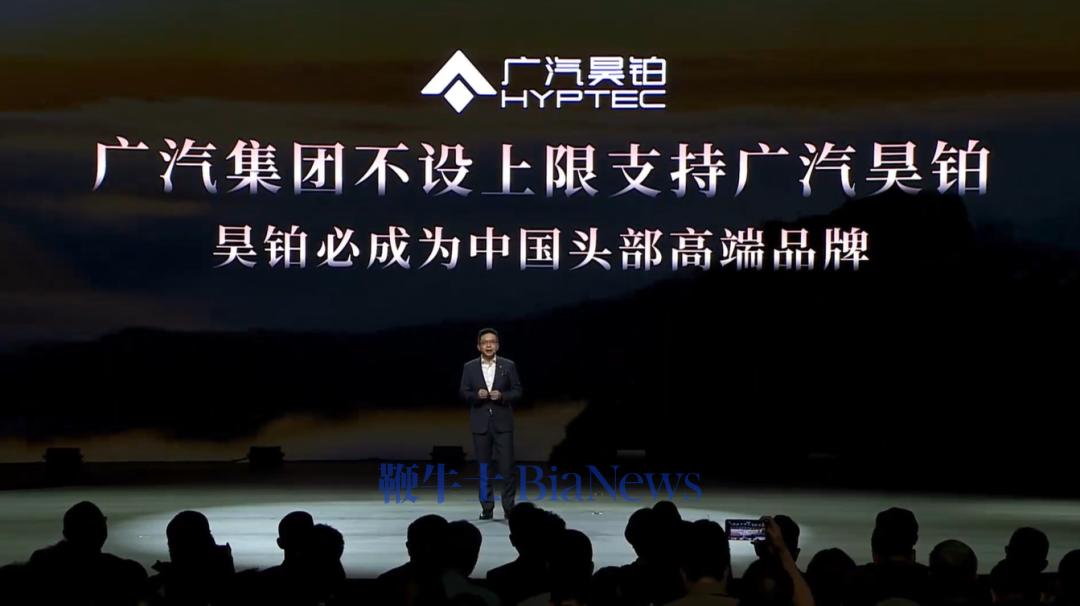
“投入不设上限”成空谈,昊铂销量崩盘,广汽高端梦碎
Xin Lang Ke Ji· 2025-12-25 00:31
Core Viewpoint - GAC Group's high-end brand Haobo has faced significant challenges, leading to its merger with Aion, indicating a failure in achieving high-end market aspirations and a shift in focus towards the new brand Qijing [1][3][11] Sales Performance - Haobo's cumulative sales for 2024 are projected at 17,300 units, achieving only 34% of its target of 50,000 units [1][6] - Monthly sales have remained around 1,000 units, with some months reporting zero sales for key models like the Haobo SSR [1][6] - In the first eleven months of this year, Haobo's total sales reached 13,800 units, which is lower than the monthly sales of mainstream new energy brands [6] Strategic Changes - GAC Group announced the integration of Haobo and Aion into the same business unit, with plans for full channel integration by March 31, 2026 [3][4] - The decision to merge is seen as a strategy to cut losses and focus resources, as Haobo's performance did not meet expectations [4][7] Market Challenges - Both Haobo and Aion are experiencing declining sales, attributed to external market conditions and internal operational issues [7] - The high-end market segment for Haobo lacks differentiation and a direct sales network, leading consumers to perceive it as a premium version of Aion [7][9] Brand Image Issues - Haobo has faced multiple marketing crises, damaging its brand image and product credibility [8] - Recent incidents involving public figures criticizing the brand have further contributed to negative perceptions [8] Future Prospects - GAC Group is prioritizing the new high-end brand Qijing, developed in collaboration with Huawei, which is expected to target the market above 300,000 yuan [11][12] - The success of Qijing's upcoming models will be crucial for GAC Group's position in the high-end market [12]
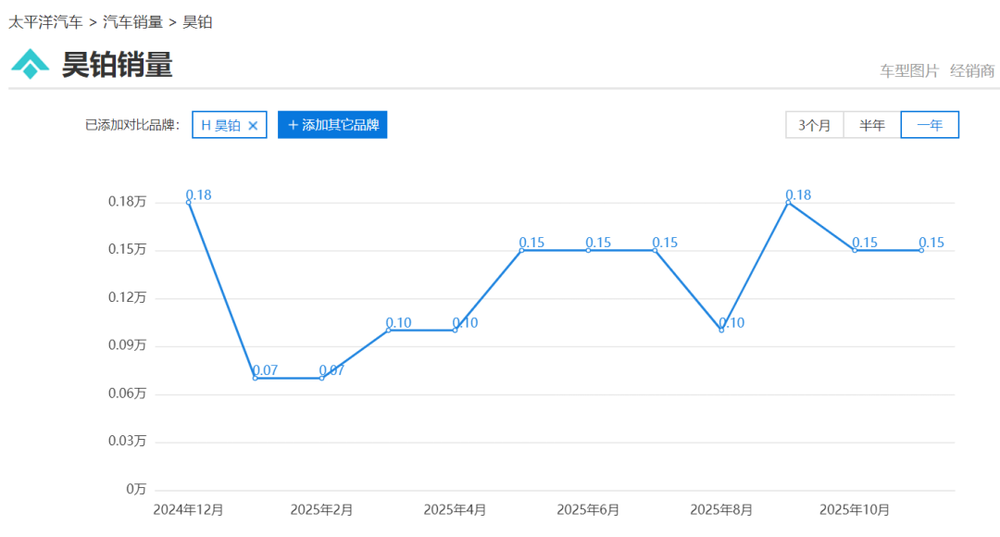
「投入不设上限」成空谈!昊铂销量崩盘,广汽高端梦碎 | 次世代车研所
Xin Lang Ke Ji· 2025-12-25 00:24
Core Viewpoint - GAC Group's high-end brand Haobo is struggling to meet sales targets, leading to its merger with Aion, indicating a setback in its high-end market ambitions [4][5][10]. Group 1: Sales Performance - Haobo's cumulative sales for 2024 are projected at 17,300 units, achieving only 34% of its target of 50,000 units [5][7]. - Monthly sales have remained around 1,000 units, with some months reporting zero sales for the Haobo SSR supercar [6][10]. - In the first eleven months of this year, Haobo's total sales reached 13,800 units, which is lower than the monthly sales of mainstream new energy vehicle brands [7]. Group 2: Strategic Changes - GAC Group announced the integration of Haobo and Aion into the same business unit, with plans for full channel integration by March 31, 2026 [4][5]. - The merger is seen as a strategic retreat to consolidate resources and reduce costs, as Haobo's performance did not meet expectations [5][8]. - The decision reflects a shift in focus towards the new high-end brand "Qijing," developed in collaboration with Huawei, which is expected to target the market above 300,000 yuan [13][15]. Group 3: Market Challenges - Both Haobo and Aion are facing declining sales due to increased competition in the 100,000 to 200,000 yuan electric vehicle market and a lack of differentiation in the high-end segment [8]. - Haobo's brand perception is weakened as consumers view it as a more expensive version of Aion, lacking unique selling points [8][10]. - The integration of the two brands raises concerns among Haobo owners regarding service quality and brand identity [5][11]. Group 4: Pricing and Promotions - Haobo has been forced to reduce prices on several models, including the Haobo GT, which saw a price drop of 25,000 yuan shortly after its launch [10][12]. - The pricing strategy has led to consumer skepticism, with some referring to purchasing Haobo vehicles at original prices as unwise [12].