
脑机接口

Search documents
脑机接口商业化提速!11股涨停三博脑科20CM,马斯克“量产预告”引爆赛道
Jin Rong Jie· 2026-01-06 02:09
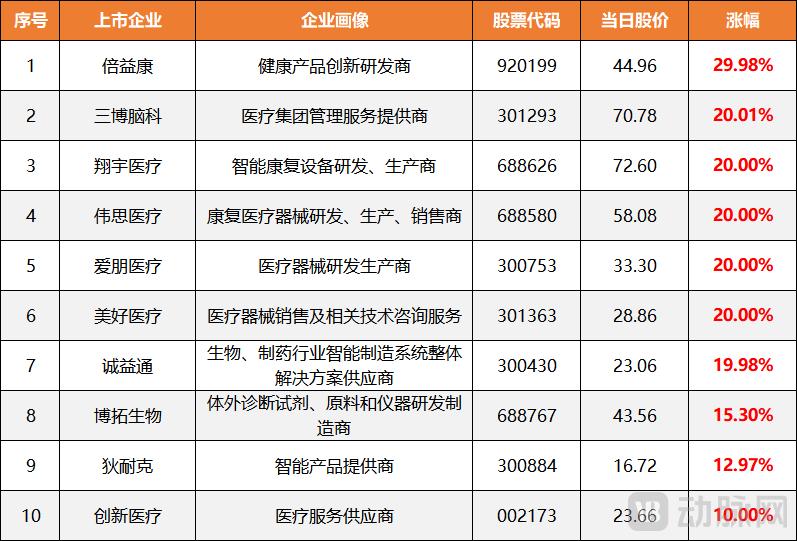
早盘,人脑工程板块表现活跃。板块内11只个股涨停。三博脑科、翔宇医疗、爱朋医疗、美好医疗 20CM涨停,伟思医疗涨超19%,麦澜德、诚益通涨超14%,熵基科技涨超12%,道氏技术、博拓生物 涨超10%,创新医疗、普利特、岩山科技、塞力医疗、盈趣科技、南京熊猫、国际医学涨停。 消息面上,马斯克旗下Neuralink宣布将在2026年启动脑机接口设备大规模生产,同步推进流程高度精 简、几乎完全自动化的手术方案,电极丝可直接穿过硬脑膜无需切除,有效规避传统侵入式设备的创伤 性瓶颈,实现效率与成本的双向优化。 同时,OpenAI首席执行官Sam Altman参与创立的脑机接口初创公司MergeLabs完成分拆独立,将专注于 超声波读取脑部活动技术研发,无需植入电极即可大范围解读大脑信号,为脑机接口应用提供全新技术 路径。 脑机接口核心技术研发:作为人脑工程的核心赛道,掌握信号采集、算法处理等核心技术的企业将率先 受益于行业技术迭代与商业化落地。随着侵入式与非侵入式技术同步推进,具备自主研发能力、拥有技 术壁垒的企业将抢占市场先机,分享行业高速增长红利。 医疗设备制造:脑机接口的商业化应用需要大量定制化医疗设备支持,包 ...

沪指刷新逾10年新高!突破2025年11月14日阶段高点,脑机接口概念延续强势、智能驾驶概念表现活跃
Jin Rong Jie· 2026-01-06 01:56
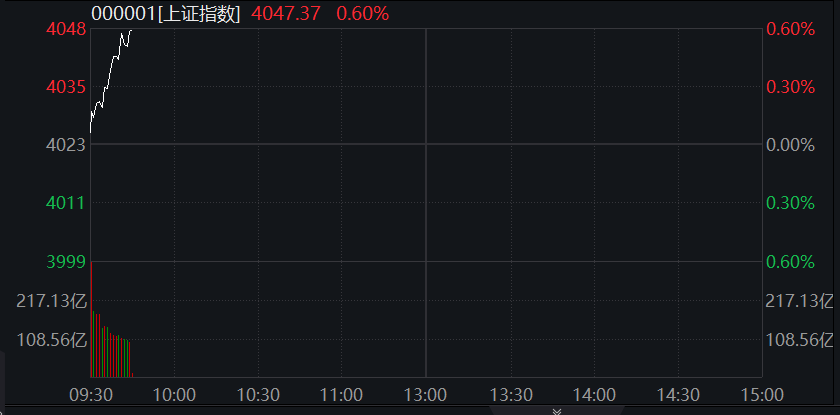
Market Performance - The Shanghai Composite Index surged after the opening, breaking the high point from November 14, 2025, and reaching the highest level since July 2015, closing at 4047.37 points, up 0.6% [1] - The Shenzhen Component Index rose by 0.69% to 13923.61 points, while the ChiNext Index increased by 0.46% to 3309.76 points, and the Sci-Tech 50 Index jumped 1.85% to 1429.42 points [1] - The total trading volume in the Shanghai and Shenzhen markets reached 567.525 billion yuan, with over 3500 stocks rising [1] Sector Highlights - The brain-computer interface sector continued to perform strongly, with several companies hitting the daily limit up, following a breakthrough in implant technology at Fudan University [3] - Semiconductor equipment stocks showed resilience, with companies like Jin Hai Tong hitting the daily limit up and others like Bei Fang Hua Chuang and Zhong Ke Fei Ce rising over 5%, reaching historical highs [3] - The solid-state battery concept saw significant gains, with Jin Long Yu hitting the daily limit up, as a Finnish company announced the launch of the world's first commercially viable all-solid-state battery [4] - The commercial aerospace sector experienced a rebound, with Lei Ke Defense achieving five consecutive limit-ups, following a capital increase announcement from China Aerospace Science and Technology Corporation [4] Institutional Insights - Huatai Securities expressed optimism about the spring market, suggesting a focus on growth sectors like electric equipment and renewable energy, as well as domestic demand improvement themes [5] - CITIC Securities noted that the cross-year market may exhibit characteristics of "growth leading and liquor accumulating," with a focus on sectors like snacks and dairy [5] - Huaxi Securities highlighted 2026 as a year of multiple positive factors, with a solid foundation for a bull market, driven by macro policies and improving corporate earnings [6] - Guojin Securities projected 2026 to be the year of recoverable commercial rockets, emphasizing the importance of cost reduction through recoverable technology in the aerospace sector [7] - Tianfeng Securities recommended focusing on cosmetics, gold jewelry, and duty-free sectors, which are expected to grow amid the recovery of high-end consumption [7]

风口再起!爱朋医疗连续2日涨停,脑机接口巨头量产在即引爆赛道
Sou Hu Cai Jing· 2026-01-06 01:47
来源:市场资讯 声明:本内容由AI生成,数据资料来自于交易所及第三方公开信息,仅供参考,不构成投资建议。 消息面上,马斯克在社交媒体表示旗下脑机接口公司Neuralink将于2026年启动脑机接口设备的大规模生 产,并推进几乎完全自动化的手术方案。OpenAI首席执行官Sam Altman支持的Merge Labs正分拆独 立,主攻利用超声波读取脑部活动的新技术路线。脑机接口被列为中国"十五五"规划明确布局的未来产 业,国家医保局发文要求做好脑机接口等创新医用耗材产品申报赋码工作,国家药监局发布的《采用脑 机接口技术的医疗器械术语》行业标准于2026年正式实施。 政策持续加码为脑机接口产业发展提供坚实支撑,技术突破验证了赛道可行性,推动相关业务加速落 地。 交易所数据显示,截至9时31分,爱朋医疗涨幅为20.00%,已连续2个交易日涨停。最新价39.96元,总 市值50.37亿元,封板资金2.97亿元,成交额5.20亿元,换手率15.10%。 市场炒作爱朋医疗的核心在于其脑机接口相关业务布局,随着海外巨头推进脑机接口量产计划,叠加国 内政策与技术双重驱动,相关赛道关注度提升。 ...

脑机接口概念2连板!塞力医疗9:25再度涨停,背后逻辑揭晓
Sou Hu Cai Jing· 2026-01-06 01:47
据交易所数据显示, 塞力医疗连续两个交易日涨停,晋级2连板。该股今日于9时25分封涨停,成交额 1.36亿元,换手率2.60%。金融界App AI线索挖掘:近期 脑机接口概念板块延续涨势,相关领域被推动 成为新的经济增长点,同时国际头部企业宣布2026年将对脑机接口设备进行大规模生产,市场对该领域 的关注度持续提升。塞力医疗作为脑机接口概念相关个股,受板块整体热度影响。 风险提示:连板股 波动剧烈,注意追高风险,理性投资!(注:以上由AI基于交易所等公开数据生成,内容不构成投资 建议。) ...

马斯克“量产预告”引爆脑机接口 实现商业化或仍需攻克三大难关
Bei Jing Shang Bao· 2026-01-06 01:37
Core Insights - The brain-machine interface (BMI) industry is transitioning from experimental research to commercial viability, with Neuralink's founder Elon Musk announcing a mass production timeline for 2026, marking a pivotal shift from "medical trial products" to "consumer products" [1][3] Group 1: Industry Developments - Neuralink plans to start large-scale production of its brain-machine interface devices in 2026, with nearly fully automated surgical procedures [3] - As of January 2024, Neuralink completed its first human implantation of a brain-machine interface device, with 12 individuals having received the device by September 2025, accumulating over 15,000 hours of usage [3][4] - The company has demonstrated that clinical trial participants can control physical devices, such as robotic arms, using the implanted device [4] Group 2: Market Expectations - The global brain-machine interface market is projected to grow to approximately $12.4 billion by 2034, indicating strong commercial potential [5] - Neuralink raised over $650 million in 2025 for factory construction and technology scaling, with a post-money valuation of around $9 billion as of June 2025 [5] - The company aims to develop a universal human brain input/output interface, with future goals including direct language decoding and visual restoration for the blind [5] Group 3: Challenges Ahead - The commercialization of brain-machine interfaces faces significant hurdles, including the need for extensive validation and the high costs associated with development, which can take 5 to 10 years [8] - Competing companies like Precision and BrainGate are also entering the market, but the industry requires deep collaboration across multiple disciplines, including neuroscience and AI [7][8] - The timeline for medical applications to gain approval is estimated to be 3 to 5 years, while consumer-grade devices may take 15 to 20 years to become viable [8]

马斯克高喊“量产”,国内脑机接口概念股应声大涨
3 6 Ke· 2026-01-06 01:34
Core Insights - The announcement by Elon Musk regarding Neuralink's mass production of brain-machine interface (BMI) devices has significantly boosted market confidence in the commercialization of this technology, leading to a surge in related A-share stocks on the first trading day of 2026 [2][3][10] Group 1: Market Reaction - On January 5, 2026, domestic BMI concept stocks collectively opened high, with companies like Beikang rising over 29.98% and several others hitting the daily limit of 20% [1] - The market's positive response reflects high expectations for the commercial prospects of brain-machine interfaces following Musk's announcements [2][3] Group 2: Neuralink's Developments - Neuralink has completed seven rounds of financing, raising over $1.3 billion, which is significant compared to the projected $2.9 billion global market size for BMIs in 2025 [3][4] - The company has achieved several milestones, including FDA approval for human clinical trials and the first human implantation of a BMI, marking its leadership in the field [3][4] Group 3: Clinical Advancements in China - 2025 was termed the "Year of Chinese Brain-Machine Interfaces," with numerous clinical breakthroughs in restoring motor and speech abilities for high-level paraplegics, visual reconstruction, and treatment of mental disorders [7][8][10] - Key clinical trials have been conducted by various institutions, demonstrating significant advancements in BMI technology and its applications [9] Group 4: Regulatory and Market Developments - The introduction of policies such as the inclusion of BMIs in medical insurance and the establishment of regulatory frameworks for BMI medical devices indicate a move towards commercialization [10] - In 2025, the Chinese BMI sector saw 24 financing rounds, a 30% increase year-on-year, signaling growing investor interest and confidence in the market [10] Group 5: Competitive Landscape - Despite the surge in stock prices, there are currently no pure-play BMI companies listed in China, with many firms still in the process of developing their products and seeking IPO opportunities [11][12] - Companies like Qiangnao Technology and Bori Kang are actively pursuing IPOs, indicating a competitive race to become the first publicly listed BMI company in China [12][13] Group 6: Future Outlook - The industry is expected to enter a commercialization phase in 2026, with a competitive landscape emerging as various companies aim to establish themselves in the market [14]


双融日报-20260106
Huaxin Securities· 2026-01-06 01:34
Market Sentiment - The current market sentiment score is 93, indicating an "overheated" market condition [4][6][19] - Historical trends show that when sentiment is below or close to 30, the market tends to find support, while levels above 70 indicate resistance [6] Hot Themes Tracking - **Robotics Theme**: The establishment of a national standard organization for humanoid robots and embodied intelligence marks a shift from "technical exploration" to "industrial collaboration" and "scale deployment," which is expected to accelerate technology implementation and ecosystem formation. Related stocks include Sanhua Intelligent Control (002050) and Wolong Electric Drive (600580) [4] - **Banking Theme**: Bank stocks exhibit high dividend characteristics, with the CSI Bank Index yielding 6.02%, significantly higher than the 10-year government bond yield. In a slowing economy with increased market volatility, bank stocks become important investment targets for long-term funds like insurance and social security. Related stocks include Agricultural Bank of China (601288) and Ningbo Bank (002142) [4] - **Brain-Computer Interface Theme**: Neuralink plans to begin large-scale production of brain-computer interface devices in 2026, with a projected global market size of $12.4 billion by 2034 and a CAGR of 17% from 2025 to 2034. Related stocks include Apogee Medical (300753) and Maipu Medical (301033) [4] Capital Flow Analysis - The top ten stocks with the highest net inflow include Shenghong Technology (300476) with a net inflow of 200.75 million, followed by Tianji Co. (002759) with 87.06 million [7] - The top ten stocks with the highest net outflow include Aerospace Development (000547) with a net outflow of -164.86 million, followed by Xinyi Technology (300502) with -116.18 million [11] - The top ten industries with the highest net inflow include SW Nonferrous Metals and SW Basic Chemicals, while SW Communication and SW Automotive show the highest net outflow [14][20]
A股早评:沪指高开0.06%,脑机接口概念涨势延续
Ge Long Hui· 2026-01-06 01:34
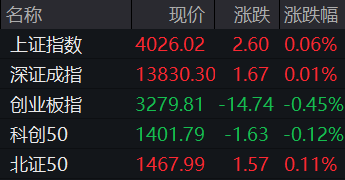
A股开盘,三大指数涨跌不一,沪指高开0.06%报4026.02点,深证成指高开0.01%,创业板指低开 0.45%。盘面上,脑机接口概念延续前日涨势,创新医疗、倍益康、三博脑科等涨停;多重利好消息提 振,碳酸锂期货今日大涨8%,锂矿股普遍高开。 ...
开盘:沪指高开 0.06%,创业板指跌0.45%,脑机接口概念股持续发酵,能源金属题材走强
Jin Rong Jie· 2026-01-06 01:34
Market Overview - The Shanghai Composite Index opened up 0.06% at 4026.02 points, while the Shenzhen Component Index rose 0.01% to 13830.3 points. The ChiNext Index fell by 0.45% to 3279.81 points, and the STAR Market 50 Index decreased by 0.12% to 1401.79 points. The total trading volume in both markets was 22.167 billion yuan, with nearly 2500 stocks rising [1][2]. Sector Performance - The brain-computer interface sector is gaining traction, with Neuralink, founded by Elon Musk, planning to significantly increase the production of brain-machine devices by 2026. Additionally, the National Medical Products Administration has established a priority approval list for high-end medical devices, which includes implantable brain-machine interface devices [2]. - The energy metals sector, particularly lithium mining, is leading the gains, with lithium carbonate prices rising over 4%. Other metals like silver, aluminum, and international copper also saw increases of over 2% [2]. Corporate Developments - ByteDance's AI glasses, branded "Doubao," are set to enter the shipping phase, with a no-screen version expected to launch in Q1 2026 and a display version anticipated in Q4 2026 [3]. - Nvidia's CEO Jensen Huang announced the arrival of a "ChatGPT moment" in robotics during a keynote at CES 2026, introducing a series of open-source "physical AI" models [4]. Analyst Insights - Everbright Securities predicts that external funds are likely to continue flowing back into the market, potentially pushing the Shanghai Composite Index to new highs. The index has seen a 12-day consecutive rise, nearing last year's peak [5]. - CITIC Securities notes that as the annual report disclosure season approaches, expectations for improvements in the fundamentals of technology assets are likely to strengthen, suggesting a focus on sectors like semiconductors, AI applications, and storage chips [6][7].


量能加持短线情绪高涨,市场热点轮番活跃, 脑机接口概念站上风口
Xin Lang Cai Jing· 2026-01-06 01:33
盘面上,脑机接口全线爆发,板块中近30股涨停一举成为昨日盘中最为火爆性题材。消息面上,马斯克 表示,其脑机接口公司Neuralink将于2026年开始对脑机接口设备进行"大规模生产"。相较于其余热门赛 道,脑机接口概念此前资金介入相对较少,更多的是零星短炒,而像昨日如此暴涨实属首次。在短线风 偏提升的当下,该题材方向或仍具一定预期博弈空间。不过需注意的是,脑机接口的容量相对较小,资 金容量有限也限制了更多的资金参与,结合其余方向市场反馈同样正向,所以还是先将其视为短线的风 口题材看待,想要成为市场新主线或仍需时间的验证。 商业航天昨日分化有所增加,一方面,雷科防务4连板,中国卫通5天3板,中国卫星、航天发展、信维 通信、通宇通讯等人气股也维持趋势上涨结构。另一方面,也出现个股掉队的情形,鲁信创投跌停,中 超控股、航天动力、大业股份等个股回调明显。商业航天经历了反复演绎后类似的分化仍会延续。对于 人气较高的前排标的而言或更多呈现缩容炒作态势。不过需留意的是,近期有关于商业航天首板或二板 的个股数量有所增加,部分资金还是热衷于在延伸细分中挖掘一些低位补涨机会。 AI应用方向再度活跃,蓝色光标、利欧股份等近10股涨 ...

