集成电路

Search documents
以先进制造业为骨干 打造世界级高端产业集群
Zhong Guo Zheng Quan Bao· 2026-01-19 21:11
Core Viewpoint - The "15th Five-Year Plan" for Shanghai aims to accelerate the construction of a world-class socialist modern international metropolis, emphasizing the importance of the "Five Centers" in enhancing the city's global influence and competitiveness [1][2]. Group 1: Five Centers Development - The "Five Centers" are crucial for Shanghai's modernization, focusing on enhancing the city's capabilities and core competitiveness through innovation and coordinated development [1][2]. - The plan emphasizes the integration of economic, financial, trade, shipping, and technological innovation functions to strengthen global resource allocation capabilities [2]. Group 2: Modern Industrial System - The proposal outlines the construction of a "2+3+6+6" modern industrial system, with advanced manufacturing as the backbone, aiming to create world-class high-end industrial clusters and promote the "Shanghai Manufacturing" brand [2]. - The focus will be on the digital and green transformation of traditional industries, leveraging artificial intelligence to enhance production processes and operational efficiency [3]. Group 3: Leading Industries - Shanghai will accelerate the development of three leading industries, including integrated circuit equipment, innovative pharmaceuticals, and artificial intelligence, to achieve breakthroughs across the entire industrial chain [3]. - The plan highlights the importance of agile layout in key areas such as quantum technology, brain-machine interfaces, and biomanufacturing to foster future growth [3].
上海“十五五”规划建议 以先进制造业为骨干 打造世界级高端产业集群
Zhong Guo Zheng Quan Bao· 2026-01-19 21:09
Core Viewpoint - The "15th Five-Year Plan" for Shanghai aims to accelerate the construction of a world-influential socialist modern international metropolis, emphasizing the importance of the "Five Centers" in achieving national strategies and ensuring national security [1][2]. Group 1: Five Centers Development - The "Five Centers" are crucial for Shanghai's modernization, focusing on enhancing the city's capabilities and core competitiveness through innovation and coordinated development [2][3]. - The plan outlines systematic deployments to elevate Shanghai's status as an international economic center, enhance its international financial competitiveness, upgrade its international trade center, build a leading global shipping center, and strengthen its role as an international technology innovation hub [2][3]. Group 2: Modern Industrial System - The proposal emphasizes constructing a "2+3+6+6" modern industrial system, with advanced manufacturing as the backbone, aiming to create world-class high-end industrial clusters and promote the "Shanghai Manufacturing" brand [4]. - Traditional industries are encouraged to undergo digital and green transformation, leveraging artificial intelligence to enhance design, optimize production processes, and improve operational efficiency [4]. - The plan highlights the development of three leading industries over the next five years, focusing on integrated circuit equipment, innovative pharmaceuticals, and comprehensive advancements in artificial intelligence [4].
上海未来五年怎么干? 加快建设“五个中心” 打好城市转型升级攻坚战
Shang Hai Zheng Quan Bao· 2026-01-19 18:45
Core Viewpoint - The "15th Five-Year Plan" for Shanghai emphasizes enhancing the city's role as a global economic and financial center, focusing on high-quality development and the construction of a modern industrial system [2][4][6]. Group 1: Five Centers Development - The plan outlines the construction of "five centers" as a key strategy for Shanghai's modernization, which includes enhancing its international economic, financial, trade, shipping, and technological innovation centers [6][7]. - Specific initiatives include building a world-class high-end industrial cluster, establishing a global RMB asset allocation center, and enhancing the city's trade hub functions [6][9]. Group 2: Economic and Social Development Goals - The main goals for the "15th Five-Year" period include achieving significant high-quality development, elevating urban core functions, and enhancing social civilization levels [4][5]. - By 2035, Shanghai aims to double its per capita GDP compared to 2020 and fully upgrade the functions of the "five centers" to reach international leading levels [4][5]. Group 3: Modern Industrial System - The plan emphasizes the importance of maintaining a reasonable proportion of manufacturing within Shanghai's economy, identifying it as a foundation for the city's international economic status [8]. - It outlines a modern industrial system framework categorized into traditional, leading, emerging pillar, and future industries, aiming for a robust manufacturing backbone [8][10]. Group 4: High-End Service Industry - The development of high-end service industries is highlighted as crucial for enhancing Shanghai's international influence, with specific measures to strengthen the global supply chain and trade hub functions [9]. - The plan also includes fostering world-class enterprises as a dedicated task, providing guidance for the growth of large, medium, and small enterprises [9].

上海“十五五”三大先导产业关键词:全产业链整体突破、全栈创新
第一财经· 2026-01-19 15:18
Core Viewpoint - Shanghai aims to build a world-class high-end industrial cluster with advanced manufacturing as the backbone, as outlined in the "15th Five-Year Plan" [3][4]. Group 1: Modern Industrial System - The "2+3+6+6" modern industrial system includes two transformations of traditional industries (digitalization and greening), three leading industries (integrated circuits, biomedicine, and artificial intelligence), six emerging pillar industries (new generation electronic information, smart connected vehicles, high-end equipment, advanced materials, new energy and green low-carbon, and fashion consumer goods), and six future industries (future manufacturing, future information, future materials, future energy, future space, and future health) [3][4]. Group 2: Traditional Industries - Shanghai's traditional industries show strong support, high efficiency, and high-tech characteristics, with a revenue profit margin of 6.2% in 2024, exceeding the national average by 0.8 percentage points [5]. Group 3: Leading Industries - The plan emphasizes the development of three leading industries: enhancing the integrated circuit industry's capabilities, promoting biomedicine through innovative drug development, and advancing artificial intelligence through comprehensive innovation [6][7]. Group 4: Service Industry Development - The plan focuses on the high-quality development of the service industry, aiming to extend the productive service sector towards specialization and high-value chains, while also enhancing the quality of life services [7]. Group 5: Artificial Intelligence Growth - By 2025, the annual tasks of the "Shanghai Plan" for artificial intelligence are expected to be completed, with the AI industry projected to exceed 550 billion yuan in scale, growing at over 30% [8].
【国资院动态】上海国资院拜访新微集团并商讨深化合作
Xin Lang Cai Jing· 2026-01-19 13:16
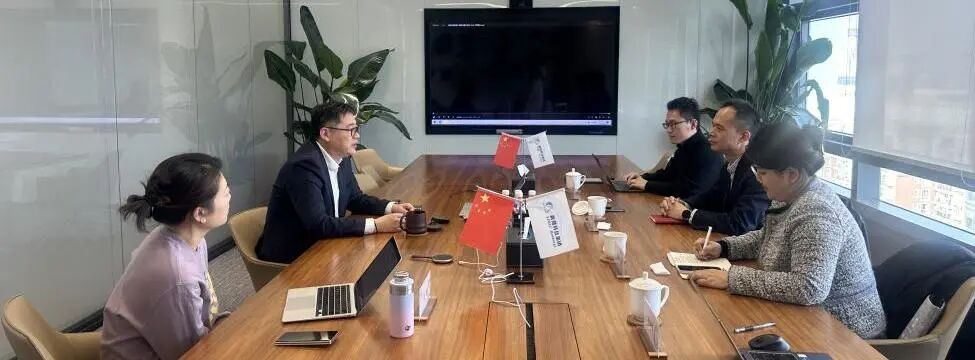
双方围绕产业发展、资本运作、深度合作等议题展开座谈交流。 内容来源 | 国资智库 2026年1月16日,上海国有资本运营研究院(以下简称"上海国资院")院长罗新宇带队拜访上海新微科技集团有限公司(以下简称"新微集 团"),双方围绕产业发展、资本运作、深度合作等议题展开座谈交流。新微集团总裁及公司相关负责人接待了罗新宇一行。 新微集团对上海国资院一行来访表示欢迎,并向上海国资院长期以来对集团改革发展的专业支持表示感谢。新微集团介绍了目前的混改成 效与未来发展战略,集团近期完成第二轮市场化战略融资,融资规模达25.7亿元人民币。本轮融资由原股东中国国有企业混合所有制基金 公司、工银投资、交银投资继续增持,并新引入国家绿色发展基金、上海国际集团、中电科投资、深投控资本等7家战略投资者,同步实 施总额2亿元人民币的核心员工持股计划,通过建立中长期激励,打造企业与员工的命运共同体,正式从"产创结合平台"升级为"产融控股 集团"。 未来,新微集团将依托上海工研院、新微半导体、易卜半导体及重庆万国四大制造平台,大力提升四大制造底座的核心竞争力与先进产 能,以保障"SIMIC for AI"战略全面落地,全力推动实现"全球超 ...
成都华微:预计扣非净利同比翻倍,已与燧原科技签署战略合作协议
Zheng Quan Shi Bao Wang· 2026-01-19 13:12
目前公司已形成了覆盖可编程逻辑器件(CPLD/FPGA)、数据转换(ADC/DAC)、存储芯片、总线接口、 电源管理、微控制器等多系列集成电路产品,这些产品可广泛应用于电子、通信、控制、测量等多个领 域。 公司在去年12月接待了招商证券、久联资管、云图启航、招银理财、申万菱信、西部利得、华宝基金、 人保资产、嘉实基金、柏骏资本、千泰投资等机构的调研,对于机构关注公司产品在端侧算力芯片的布 局情况,公司回应称,公司已经成功开发用于边缘计算领域的人工智能芯片,AI算力高达16Tops,可用 于人工智能设备的机器视觉识别、深度学习推理、各种大模型运算,且已在特种行业的多个客户小批量 试用。公司用于边缘计算领域,100Tops算力、视频编解码能力高达8K的人工智能芯片也正在研发中。 1月19日,成都华微(688709.SH)发布公告,预计2025年归属于上市公司股东的净利润盈利2.13亿至2.55 亿元,同比增长74.35%至108.73%;扣非净利润预计为1.83亿至2.20亿元,同比增幅达108.86%至 151.09%,盈利能力显著提升。 2024年,公司实现营业收入为6.04亿元,归属于母公司所有者的净利润为 ...
浦东打造百亿级国资运营平台,分步整合区属国企存量资产与股权
Di Yi Cai Jing· 2026-01-19 12:45
经过三年改革深化提升行动,浦东国资经济效益实现跨越增长,区属企业资产总额达1.15万亿元,营业 收入1153亿元,两项指标均实现两位数增长,为区域经济社会发展提供了有力支撑。 浦东新区国资委主任张福军表示,浦东国资布局持续优化完善,围绕产业发展与民生保障等领域,组建 浦东资本、浦盛集团,推动城市更新、养老、水务、土地征收等板块重组,有效促进了资源向优势主业 和优势企业集聚,提升了国有资本服务区域战略的整体效能。 同时,浦东国资的产业生态建设扎实推进,构建形成"2+X"国资创投矩阵,组建三大国资母基金群,管 理规模超600亿元,基金实现三大先导、六大硬核及类脑智能等未来产业全覆盖;在生物医药、集成电 路等重点产业领域布局8家产业平台公司,推动产业投资占比从10%提升至近40%,企业创新能力和产 业能级同步增强。 改革标志性项目亮点纷呈,成功推动张江公募REITs、外高桥工业厂房持有型不动产ABS、陆家嘴股份 定向增发等一批全国首批、首单资本运作标杆项目落地,进一步彰显了浦东国资国企在深化改革、转型 发展方面的活力。 浦东资本与浦发集团、创投集团交接标的资产 浦东新区最新成立一家注册资本达100亿元的专业化资本运 ...
从长三角一体化,看上海“十五五”规划建议
Guo Ji Jin Rong Bao· 2026-01-19 12:39
Core Viewpoint - The Shanghai Municipal Party Committee has released a proposal for the 15th Five-Year Plan, aiming to transform Shanghai into a world-class socialist modern international metropolis by 2035, with a focus on high-quality development and regional integration in the Yangtze River Delta [1]. Group 1: Five Centers Upgrade - Shanghai aims to upgrade its "Five Centers" by 2035, achieving international leading levels in key development indicators, including doubling per capita GDP from 2020 levels [2]. - During the 14th Five-Year Plan, Shanghai's GDP surpassed 5 trillion yuan, becoming the first city in China to achieve this milestone and ranking among the top five global cities [2]. - The upgrade of the "Five Centers" will enhance resource allocation for the Yangtze River Delta, transitioning from single-function enhancement to system integration [2][3]. Group 2: Implementation Paths - The proposal outlines three implementation paths: leveraging financial support for innovation, creating regulatory innovations, and fostering new productive forces to reshape industrial chains [3]. - Shanghai's economic growth is projected to remain reasonable and synchronized with national trends, with a steady increase in total factor productivity [3]. Group 3: Key Industries - The three leading industries—integrated circuits, biomedicine, and artificial intelligence—will further solidify their positions, focusing on overall breakthroughs in the industrial chain [4]. - The artificial intelligence sector is expected to grow significantly, with projected revenues exceeding 550 billion yuan by 2025, reflecting a growth rate of over 30% [4]. Group 4: Institutional Innovation - High-level openness is a core advantage for Shanghai, with institutional innovations aimed at enhancing regional development dynamics [6]. - The proposal emphasizes the role of the Pudong New Area and Lingang New Area in driving institutional innovation and creating replicable models for the Yangtze River Delta [6][7]. Group 5: Collaborative Development - The proposal aims to establish a "power community" in the Yangtze River Delta, focusing on collaborative technological innovation, ecological protection, and spatial optimization [10]. - Specific paths for collaboration include deepening the integration of innovation chains and enhancing cooperation in key technology areas [11]. Group 6: Environmental and Spatial Optimization - The proposal highlights the importance of ecological protection and spatial layout optimization to enhance collaborative capacity in the Yangtze River Delta [12]. - Shanghai will promote the construction of a metropolitan area with a multi-node structure, facilitating coordinated development with surrounding regions [12]. Group 7: Social Welfare and Integration - The proposal emphasizes the sharing of public services across the Yangtze River Delta, enhancing the quality of life for residents in education, healthcare, and other areas [13]. - Shanghai's successful experiences in community services will be extended to the Yangtze River Delta, ensuring that high-quality development benefits a broader population [13].
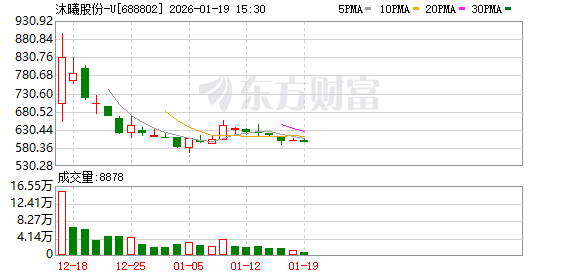
沐曦股份:公司构建了稳定的供应链体系,积累了丰富的供应链管理经验
Zheng Quan Ri Bao· 2026-01-19 12:37
Core Viewpoint - The company has established a stable supply chain system and has accumulated rich experience in supply chain management, ensuring high-quality and sustainable supply and delivery of products [2] Group 1: Supply Chain Management - The company possesses a dynamic and flexible inventory management mechanism [2] - It has initiated the layout of a domestic supply chain early and has planned and designed products based on this domestic supply chain [2] - The company has made certain breakthroughs in the localization of key processes such as wafer production, packaging and testing, storage particles, EDA, and IP [2] Group 2: Market Position and Strategy - As the company's market influence and industry chain resources gradually increase, it will continue to cultivate domestic suppliers [2] - The company aims to further promote the localization of key supply links, enhancing the competitiveness of the domestic integrated circuit industry chain [2]
【招银研究|宏观点评】圆满收官——中国经济数据点评(2025年全年及12月)
招商银行研究· 2026-01-19 12:29
Overview - The core viewpoint of the article is that China's economy in 2025 is characterized by a deepening supply-demand imbalance, with strong supply and weak demand, as well as a resilient external demand compared to internal demand. The GDP is projected to exceed 140 trillion yuan, with nominal growth of 4% and real growth of 5% [1][4]. Economic Structure - The economic operation in 2025 shows three main features: a deepening supply-demand imbalance, stronger external demand than internal demand, and initial success in price governance. The industrial added value increased by 5.9%, which is higher than GDP, investment, and consumption growth rates [4][5]. - The contribution rates to GDP growth from final consumption expenditure, capital formation, and net exports are 52%, 15.3%, and 32.7%, respectively [1]. Consumption - The total retail sales of consumer goods grew by 3.7% in 2025, with a "front high and back low" rhythm. The growth rates for goods and catering were 3.8% and 3.2%, respectively, indicating stronger performance in goods [12][15]. - In December, the retail sales growth rate dropped to 0.9%, reflecting a further weakening of growth momentum. Durable goods consumption faced significant pressure, with home appliances down by 14.3% [15][18]. Fixed Asset Investment - Fixed asset investment decreased by 3.8% in 2025, primarily due to declines in infrastructure (-1.5%) and real estate investment (-17.2%). Private investment continued to shrink for the third consecutive year, with a significant drop of 6.4% [18][20]. - Real estate sales showed a smaller decline compared to investment, with sales area and amount down by 8.7% and 12.6%, respectively, indicating a slight recovery in sales [20][21]. Foreign Trade - In 2025, exports maintained resilience with a cumulative growth of 5.5%, while imports showed no growth. Exports to the US fell by 19.9%, while exports to non-US regions grew by 9.9%, becoming the main support for overall export growth [29][30]. - In December, exports increased by 6.6%, driven by strong performance in automobiles and integrated circuits, which grew by 71.7% and 47.7%, respectively [29][30]. Supply Side - Industrial production growth accelerated in 2025, with the industrial added value increasing by 5.9%. The contribution rate of industry to economic growth reached 35%, up by 1.8% from 2024 [31][35]. - In December, industrial production showed a year-on-year growth of 5.2%, with a notable increase in high-tech industries [31][35]. Inflation - Inflation showed moderate recovery in 2025, with the CPI remaining flat year-on-year and core CPI rising to 1.2%. The PPI contracted by 2.6%, influenced by supply-demand balance and rising international metal prices [36][37]. - In December, CPI rose by 0.8%, marking the fourth consecutive month of increase, while PPI contracted by 1.9% [36][37]. Outlook - Looking ahead to 2026, it is expected to be a pivotal year for the "14th Five-Year Plan," with a GDP growth target of around 5%. Industrial production is anticipated to grow steadily, supported by resilient external demand and a recovery in consumption [40].