贸易等

Search documents
日本股市创历史新高 可持续性存疑
Qi Huo Ri Bao· 2026-02-12 01:30
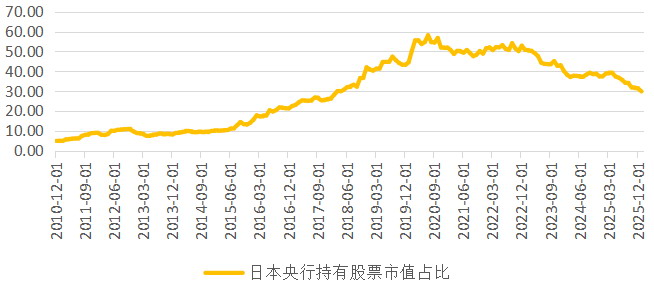
Group 1 - The recent Japanese House of Representatives election resulted in a ruling coalition led by the Liberal Democratic Party and the Japan Innovation Party securing a majority of seats, which has led to a strong rally in the Japanese stock market and a slight rebound in the yen [1][2] - The Nikkei 225 index reached a historical high of 57,960.19 points following the election, driven by expectations of policy continuity, overseas investments, yen arbitrage trading, and the Bank of Japan's asset purchase program [2][3] - The Japanese stock market's performance is not reflective of domestic economic improvement but is influenced by the government's commitment to fiscal policies, including increased spending in defense and semiconductor subsidies, and tax reductions to alleviate inflation impacts [2][3] Group 2 - Japanese companies are increasingly focusing on overseas investments, with 50% of their revenues coming from international markets, particularly in the top ten companies where this figure rises to 70% [3] - The low financing costs in Japan have facilitated yen arbitrage trading, making it an attractive tool for global capital operations, which has led to significant inflows into the Japanese stock market [3][5] - The Bank of Japan holds a substantial portion of Japanese stocks, with its holdings accounting for 29.8% of the total market capitalization, which has been a key driver of the stock market's rise [3][5] Group 3 - Long-term uncertainties include fiscal sustainability, inflation expectations, and potential geopolitical risks stemming from Japan's "Japan First" policy, which could destabilize the region and affect the yen's safe-haven status [5][6] - The expansionary fiscal policy may lead to rising inflation and increased debt levels, with the government needing to issue more bonds, which could negatively impact bond prices and yields [5][6] - If the Bank of Japan is forced to raise interest rates, it could lead to higher financing costs and a reduction in arbitrage trading, potentially causing significant issues for the stock market [6]

2026:观“物”察变 把握全球经济趋势
Jin Rong Shi Bao· 2026-02-09 01:28
Global Economic Outlook - The World Bank projects a global economic growth rate of 2.6% for 2026, indicating a moderate growth environment with significant challenges [1] - The chief economist of ICBC International emphasizes the importance of returning to a deep observation of "things" to understand structural shifts in the economy amidst a rapidly evolving macro landscape [2] Structural Changes in the Economy - The evolution of "things" is occurring across five dimensions: globalization, industrial chains, value chains, natural resources, and technology [3] - Globalization is undergoing a structural shift, balancing efficiency, safety, and stability due to geopolitical tensions and rising technological barriers [3] - The focus of industrial competition is shifting towards R&D capabilities, manufacturing precision, supply chain collaboration, and organizational capabilities [3] - Value chains are increasingly concentrating on knowledge-intensive segments such as R&D design and data elements, moving from quantity production to value creation [3] - Resource allocation is being reshaped by energy constraints and carbon emission pressures, necessitating more efficient and sustainable growth methods [3] - New technologies, particularly AI, are transforming production functions and the combination of labor, capital, and technology [3] Growth Divergence - Structural differences between developed economies and emerging markets are expected to persist, with developed economies facing challenges like aging populations and limited fiscal space [4] - The IMF forecasts economic growth rates of 1.8% for developed countries and 4.2% for emerging markets in 2026, highlighting the ongoing divergence [4] - Emerging markets are experiencing internal restructuring, with some economies transitioning from rapid expansion to efficiency and quality-driven growth [5] AI's Contribution to Economic Growth - AI is beginning to contribute positively to economic growth, but its macroeconomic effects will take time to materialize through industry diffusion and production restructuring [7] - The OECD estimates that AI could increase annual total factor productivity (TFP) growth by 0.25 to 0.6 percentage points over the next decade, depending on technology adoption and organizational adjustments [7] - The IMF projects a cumulative TFP increase of about 0.7% over the next ten years due to AI, translating to an annual increase of approximately 0.07 percentage points [7] Global Trade and Supply Chain Dynamics - Geopolitical uncertainties are expected to pose significant risks to global trade in 2026, with the IMF predicting a trade growth rate of 2.6%, lower than previous years [9] - The current supply chain adjustments are seen as a self-adaptive process within the global trade system, enhancing stability and predictability despite short-term efficiency losses [10] - The focus on regional trade, nearshoring, and diversified supply sources is expected to create new opportunities for emerging economies and mid-level manufacturing countries [10] Central Bank Policy Divergence - The Federal Reserve is likely to adopt a more accommodative monetary policy in 2026, influenced by structural changes in the labor market and the need for proactive risk management [11] - The European Central Bank's policy will be shaped by inflation dynamics and economic recovery, balancing the need for further easing with growth constraints [12] China's Role in the Global Economy - China is projected to contribute approximately 30% to global economic growth in 2026, acting as a stabilizer and driving force in the global economy [13] - The country is expected to transition from capacity output to standard-setting, influencing global industrial dynamics and promoting a multipolar division of labor [14] - Through initiatives like the Belt and Road Initiative, China aims to reshape global trade dynamics by enhancing connectivity and supporting countries facing technological barriers [14]
广东发布优化营商环境三大方案共50项措施 优化用地供应方式 试点“无事不扰”清单
Nan Fang Ri Bao Wang Luo Ban· 2026-02-03 01:31
Core Viewpoint - Guangdong has released three work plans aimed at optimizing the business environment by 2026, focusing on market-oriented, legal, and international aspects to enhance the province's economic development and attract investment [1][2]. Market-Oriented Plan - The market-oriented plan includes 18 specific measures across three areas: optimizing the industrial ecosystem, enhancing enterprise services, and improving the market system [3]. - Key initiatives include strengthening land and talent supply, improving the efficiency of enterprise approval services, and enhancing market-oriented transaction levels for property rights [3][4]. Legal Framework Plan - The legal framework plan aims to provide comprehensive legal protection for business operations, proposing 18 measures in five areas: improving the institutional system, ensuring fair law enforcement, creating an efficient judicial environment, enhancing legal services for enterprises, and fostering collaboration in optimizing the legal business environment [3][6]. - Emphasis is placed on strengthening legal protections in new sectors and ensuring fair administrative law enforcement [3][6]. Internationalization Plan - The internationalization plan outlines 14 measures focusing on internationalizing urban life, facilitating international trade and investment, and enhancing professional services [3]. - Notable initiatives include promoting Guangdong's "inbound tourism" and "inbound shopping" brands, optimizing cross-border trade services, and facilitating cross-border investment [3][7]. Key Achievements and Goals - Guangdong has achieved significant improvements in its business environment, with 891 provincial-level enterprise approval matters now processed in the shortest time nationwide [2]. - The province has been recognized for four consecutive years as having the best business environment in the country, with over 20 million business entities, including nearly 9.3 million enterprises [2]. Financial Support and Innovation - The market-oriented plan includes measures to enhance financial services for enterprises, such as establishing a "Financial Service Day" and promoting innovative financing models [5]. - The province aims to connect technology and industry through application scenarios, enhancing collaboration between state-owned and private enterprises [5]. Regulatory Innovations - Guangdong is implementing a more accommodating regulatory approach, including a non-intrusive inspection system and a public disclosure system for administrative checks [6]. - The province is exploring a "quiet production period" regulatory model to minimize disruptions to businesses [6]. Cross-Border Trade and Taxation - Guangdong has introduced measures to boost inbound shopping, including increasing the number of tax refund stores and enhancing service quality [7]. - The province aims for an 80% increase in tax refund stores and to optimize the structure of duty-free shops by 2026 [7].
GDP增长5%以上!2026年青岛要做好“九个新”
Qi Lu Wan Bao· 2026-01-20 14:33
Core Viewpoint - Qingdao aims for a GDP growth of over 5% in 2026, with a focus on enhancing public budget revenue, synchronizing resident income with economic growth, and maintaining reasonable consumer prices while achieving carbon reduction and environmental quality improvement goals [1][3]. Group 1: Economic and Social Development Goals - The "14th Five-Year Plan" period is crucial for Qingdao to enhance its economic strength, technological capability, competitiveness, and international influence, aiming for modernization by 2030 [2]. - Key areas for improvement include high-quality development, technological innovation, reform and opening-up, social civilization, quality of life, environmental sustainability, and safety development [2]. Group 2: Key Work Areas for 2026 - Qingdao will focus on nine key areas in 2026, including boosting GDP growth, increasing public budget revenue, synchronizing resident income with economic growth, and achieving carbon reduction targets [3]. - The city plans to enhance domestic demand by increasing consumption and effective investment, with initiatives such as opening 100 new brand stores and creating 30 service consumption hubs [4]. Group 3: Innovation and Industry Development - Qingdao aims to strengthen innovation by enhancing the role of enterprises in innovation, implementing "Artificial Intelligence+" initiatives, and fostering talent [5][6]. - The city will develop a modern industrial system, focusing on emerging industries and technological advancements, with significant investments in key projects [7]. Group 4: Marine Economy and International Cooperation - Qingdao will prioritize marine development, establishing international marine innovation centers and enhancing marine cooperation [8]. - The city plans to invest in marine technology and infrastructure, aiming to attract international organizations and enhance its marine economy [8]. Group 5: Reform and Open Economy - Qingdao will deepen reforms in key areas, promote the growth of the private economy, and enhance the business environment [9]. - The city will focus on cross-border e-commerce and optimize overseas business centers to boost trade [9]. Group 6: Rural Revitalization - Qingdao will enhance agricultural production, promote rural industry development, and improve rural governance [10][11]. - The city plans to build high-standard farmland and increase the number of quality agricultural products [11]. Group 7: Green and Low-Carbon Transition - Qingdao will advance carbon reduction and pollution control, aiming to become a model for ecological protection [12]. - The city plans to increase renewable energy capacity and implement numerous environmental projects [12]. Group 8: Urban Development and Public Services - Qingdao will improve urban living conditions, enhance cultural heritage, and develop health and wellness initiatives [13][14]. - The city aims to create more job opportunities, improve education and healthcare services, and strengthen social security systems [14].
上海“十五五”:增强内需主动力、壮大服贸优势
第一财经· 2026-01-19 15:24
Core Viewpoint - Shanghai's "15th Five-Year Plan" emphasizes high-quality development and the construction of five key centers to enhance its global economic and competitive standing [1][4]. Group 1: Economic Development Goals - The main goals of Shanghai's economic and social development include significant achievements in high-quality development, new advancements in urban core functions, breakthroughs in high-level reform and opening up, and improvements in social civilization [4]. - The plan highlights the importance of domestic demand as a primary driver of economic growth, with a focus on enhancing the international consumption center [4][5]. Group 2: Service Industry and Consumption - Shanghai aims to expand service consumption, particularly in cultural, tourism, sports, and health sectors, while promoting innovative consumption models and enhancing the quality of service supply [5][6]. - Recent policies emphasize the integration of service industry development with consumption growth, aiming to shift from scale expansion to value enhancement in the service sector [7]. Group 3: Trade and Global Positioning - The plan outlines strategies to strengthen Shanghai's role as a global trade hub, including optimizing trade structures and enhancing service trade capabilities [8][9]. - Shanghai's foreign trade statistics indicate a significant increase, with total foreign trade reaching 4.51 trillion yuan in 2025, a year-on-year growth of 5.6%, and exports growing by 10.8% [9][10]. Group 4: Shipping and Logistics - The "15th Five-Year Plan" includes initiatives to solidify Shanghai's status as a global shipping hub, focusing on modern shipping services and digital transformation [11]. - Plans to develop a world-class shipping exchange and enhance maritime services are part of the strategy to support the international trade center [11].
从长三角一体化,看上海“十五五”规划建议
Guo Ji Jin Rong Bao· 2026-01-19 12:39
Core Viewpoint - The Shanghai Municipal Party Committee has released a proposal for the 15th Five-Year Plan, aiming to transform Shanghai into a world-class socialist modern international metropolis by 2035, with a focus on high-quality development and regional integration in the Yangtze River Delta [1]. Group 1: Five Centers Upgrade - Shanghai aims to upgrade its "Five Centers" by 2035, achieving international leading levels in key development indicators, including doubling per capita GDP from 2020 levels [2]. - During the 14th Five-Year Plan, Shanghai's GDP surpassed 5 trillion yuan, becoming the first city in China to achieve this milestone and ranking among the top five global cities [2]. - The upgrade of the "Five Centers" will enhance resource allocation for the Yangtze River Delta, transitioning from single-function enhancement to system integration [2][3]. Group 2: Implementation Paths - The proposal outlines three implementation paths: leveraging financial support for innovation, creating regulatory innovations, and fostering new productive forces to reshape industrial chains [3]. - Shanghai's economic growth is projected to remain reasonable and synchronized with national trends, with a steady increase in total factor productivity [3]. Group 3: Key Industries - The three leading industries—integrated circuits, biomedicine, and artificial intelligence—will further solidify their positions, focusing on overall breakthroughs in the industrial chain [4]. - The artificial intelligence sector is expected to grow significantly, with projected revenues exceeding 550 billion yuan by 2025, reflecting a growth rate of over 30% [4]. Group 4: Institutional Innovation - High-level openness is a core advantage for Shanghai, with institutional innovations aimed at enhancing regional development dynamics [6]. - The proposal emphasizes the role of the Pudong New Area and Lingang New Area in driving institutional innovation and creating replicable models for the Yangtze River Delta [6][7]. Group 5: Collaborative Development - The proposal aims to establish a "power community" in the Yangtze River Delta, focusing on collaborative technological innovation, ecological protection, and spatial optimization [10]. - Specific paths for collaboration include deepening the integration of innovation chains and enhancing cooperation in key technology areas [11]. Group 6: Environmental and Spatial Optimization - The proposal highlights the importance of ecological protection and spatial layout optimization to enhance collaborative capacity in the Yangtze River Delta [12]. - Shanghai will promote the construction of a metropolitan area with a multi-node structure, facilitating coordinated development with surrounding regions [12]. Group 7: Social Welfare and Integration - The proposal emphasizes the sharing of public services across the Yangtze River Delta, enhancing the quality of life for residents in education, healthcare, and other areas [13]. - Shanghai's successful experiences in community services will be extended to the Yangtze River Delta, ensuring that high-quality development benefits a broader population [13].
海南自贸港各重点园区抢抓全岛封关新机遇
Hai Nan Ri Bao· 2025-12-25 02:27
Core Viewpoint - Hainan Free Trade Port's 13 key parks are crucial for the province's economic development, contributing over 20% of GDP, over 30% of investment, over 70% of total goods trade, and 50% of tax revenue, despite occupying less than 2% of the land area [2] Group 1: Development Opportunities - The official launch of the island-wide customs closure on December 18 presents a historic opportunity for the key parks to leverage open policy advantages and focus on building a modern industrial system [2][3] - Key parks are expected to enhance their operational management, improve service efficiency, and create a more attractive business environment to support high-quality development in Hainan [2][3] Group 2: Strategic Planning and Industry Strengthening - The Jiangdong New Area aims to integrate free trade policies with its industrial system, focusing on modern commerce and air economy as pillar industries, while also developing modern finance and professional services [3] - The Haikou National High-tech Industrial Development Zone plans to upgrade its biopharmaceutical industry and enhance food processing through favorable tariff policies [4] Group 3: Innovative Ecosystems and International Cooperation - The Wenchang International Aerospace City is set to develop a closed-loop system for satellite applications and promote aerospace tourism, aiming to become a global attraction [5] - The Boao Lecheng International Medical Tourism Pilot Zone will focus on high-end health services and international cooperation in medical research [5] Group 4: Policy Advantages and Development Drivers - New customs closure policies, including broader "zero tariff" coverage and reduced thresholds for tax-exempt processing, are expected to drive significant development in key parks [7][8] - The Haikou Fuxing City Internet Information Industry Park is focusing on artificial intelligence and data cross-border flow, signing agreements with 46 key enterprises to support their growth [7] Group 5: Management Mechanisms and Service Efficiency - Key parks are reforming their operational mechanisms to align with the customs closure, enhancing service efficiency and ensuring smooth flow of trade and investment [10][11] - The Sanya Yazhou Bay Science and Technology City is committed to improving its service model and integrating high-level open policies to attract top global innovation resources [11][12]
多股晋级三连板,这一板块再度走强
第一财经· 2025-12-24 02:33
Core Viewpoint - The article highlights the strong performance of local stocks in Fujian, with multiple stocks hitting the daily limit up, indicating a bullish sentiment in the market [1]. Group 1: Stock Performance - Several stocks in Fujian experienced significant gains, with Anji Food, Hexing Packaging, and Antong Holdings achieving a three-day consecutive rise [1]. - Notable stock performances include: - Kunxing Co., Ltd. (+10.01%, 8.24) - Xinha Co., Ltd. (+10.01%, 10.33) - Anji Food (+9.98%, 26.88) - Sanmu Group (+9.98%, 6.50) - Hexing Packaging (+9.98%, 5.95) - Antong Holdings (+9.96%, 5.41) - Dongbai Group (+9.69%, 21.39) - Nawang Technology (+8.10%, 15.62) - Xiamen International Trade (+7.48%, 7.04) - Jiaheng Home Care (+7.02%, 41.01) [2]. Group 2: Infrastructure Development - According to Fujian Daily, Pingtan in Fujian is making efforts to enhance its customs operations, focusing on upgrading both soft and hard infrastructure to support the new round of customs operations [3].




广州恒雅化工日用品有限公司成立 注册资本5万人民币
Sou Hu Cai Jing· 2025-11-13 10:27
Core Viewpoint - Guangzhou Hengya Chemical Daily Necessities Co., Ltd. has been established with a registered capital of 50,000 RMB, indicating a diversification into various sectors including chemical products, property management, and medical research [1] Group 1: Company Overview - The company is legally represented by Tao Sen and has a registered capital of 50,000 RMB [1] - The business scope includes property management, sales and production of chemical products (excluding licensed chemical products), and various service offerings such as labor services and human resources [1] Group 2: Business Activities - The company engages in investment activities with its own funds and provides enterprise image planning, procurement agency services, and advertising services [1] - It also focuses on technology-related services including research and development in biological chemical products, technical consulting, and technology transfer [1] Group 3: Product and Service Range - The company’s product offerings include a wide range of medical devices, personal hygiene products, daily chemical products, and cosmetics [1] - It is involved in both wholesale and retail of various consumer goods, including household appliances and electronic products [1]
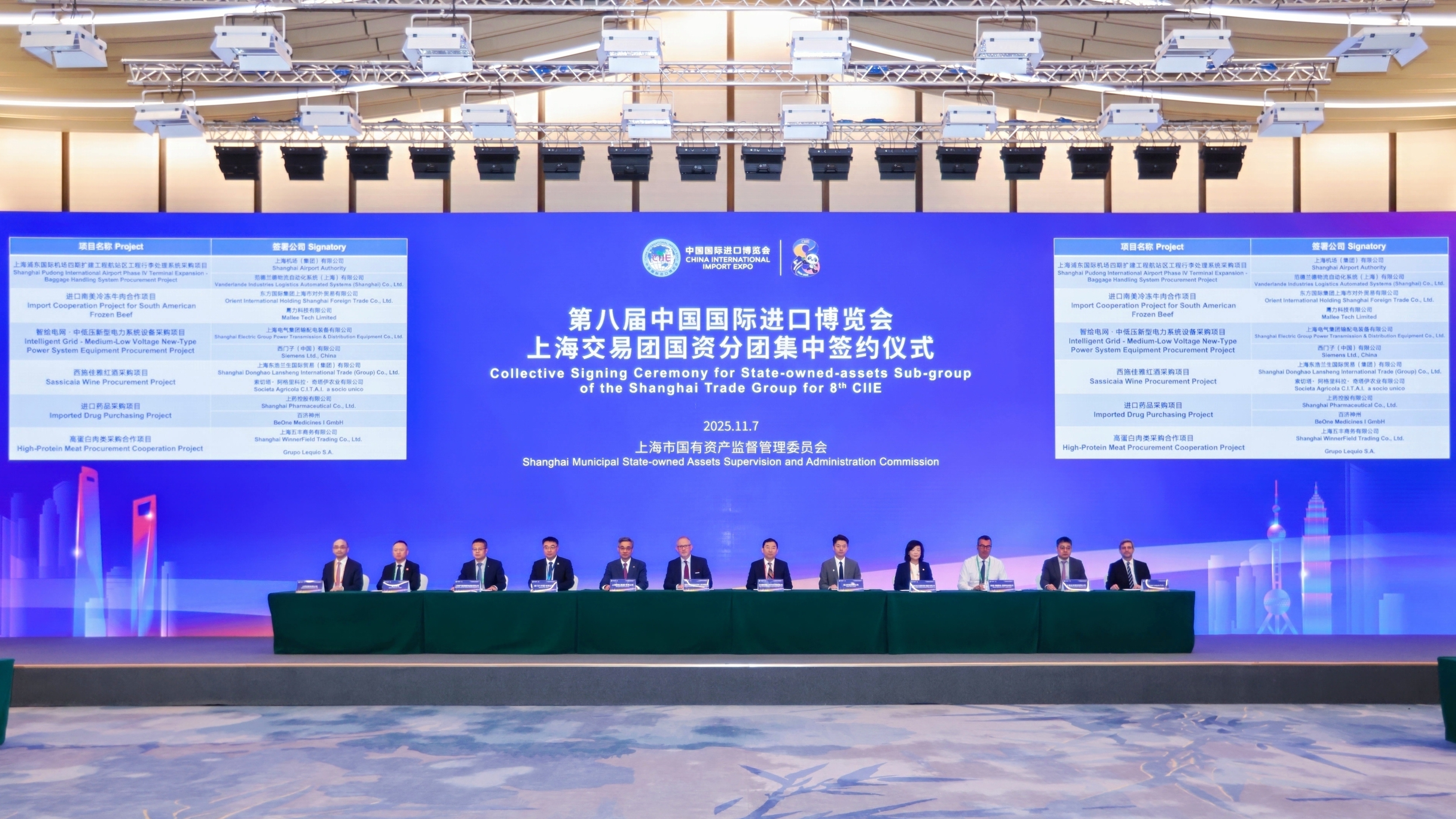
今年上海国资进博会意向采购超27亿美元,8年累计222亿美元
Di Yi Cai Jing· 2025-11-07 11:31
Core Insights - The Shanghai State-owned Enterprises (SOEs) group has achieved a total of 113 intended procurement orders worth $2.776 billion during the China International Import Expo, maintaining its leading position for eight consecutive years [1] - Since the first expo, Shanghai SOEs have reached intended procurement agreements totaling $22.2 billion with over 20 countries and regions, consistently ranking first among all Shanghai trading groups [1] Group 1: Procurement Achievements - The signing ceremony involved 12 projects from 11 major enterprises, with a total transaction amount of approximately 2.99 billion RMB [1] - The international cooperation network of Shanghai SOEs has expanded, including partnerships with companies from developed economies like the US, UK, Germany, and emerging markets such as Turkey, Argentina, and Thailand [5] Group 2: Strategic Collaborations - The cooperation covers various sectors, including energy security, innovative pharmaceuticals, stable supply chains for bulk minerals, and imported food to enrich the consumer market [5] - The agreements signify a shift from traditional buyer-seller relationships to strategic collaborations focused on shared development and future planning [5] Group 3: Future Outlook - Shanghai aims to enhance its role as an open platform for international businesses, facilitating smoother connections to the Chinese market and improving regional operations [6] - The Shanghai SOEs are actively planning a new round of reforms, focusing on optimizing state asset structures and fostering innovation to become a source of original technology [6]