加密货币

Search documents
加密货币市场上演大跳水!超21万人爆仓 比特币盘中跌破8.6万美元
Mei Ri Jing Ji Xin Wen· 2025-12-01 07:45
Market Overview - On December 1, the cryptocurrency market experienced a significant drop, with Bitcoin falling below $86,000 and Ethereum dropping below $2,900. As of the report, Bitcoin was down 4.99% at $85,800 and Ethereum down 5.41% at $2,829, while XRP and Dogecoin fell over 7% [1] - The total market capitalization of the cryptocurrency market was approximately $3.1 trillion over the weekend, with an average weekly trading volume of $127 billion. Bitcoin's weekly trading volume was $59.9 billion, which is 31% lower than the average [4] Liquidation Data - According to Coinglass, the number of liquidations in the last 24 hours reached 218,867, with a total liquidation amount of $640.28 million. The largest single liquidation occurred on Binance for ETHUSDC, valued at $14.48 million [3][4] Market Sentiment and Future Outlook - Hotcoin Research suggests that the market participant structure will change significantly by 2024-2025, with an increase in institutional funding. This shift is expected to make price fluctuations more driven by fundamentals and data, reducing the impact of short-term sentiment [5] - Bloomberg reports that the cryptocurrency market remains unstable, with a prolonged sell-off beginning in early October when leveraged positions worth approximately $19 billion were liquidated. Despite a recent recovery above $90,000, traders are preparing for potential larger declines following the latest sell-off [5] - FalconX's Sean McNulty noted that the market is currently characterized by heightened risk aversion, with low inflows into Bitcoin exchange-traded funds and a lack of buyers at lower prices. The focus is on the $80,000 support level for Bitcoin [5] Economic Indicators - CME Federal Funds futures indicate that the market is betting on an 80% probability of a 25 basis point rate cut by the Federal Reserve in December. The Fed is currently in a quiet period ahead of its meeting on December 9-10, with attention turning to the upcoming U.S. Personal Consumption Expenditures (PCE) price index report [6]

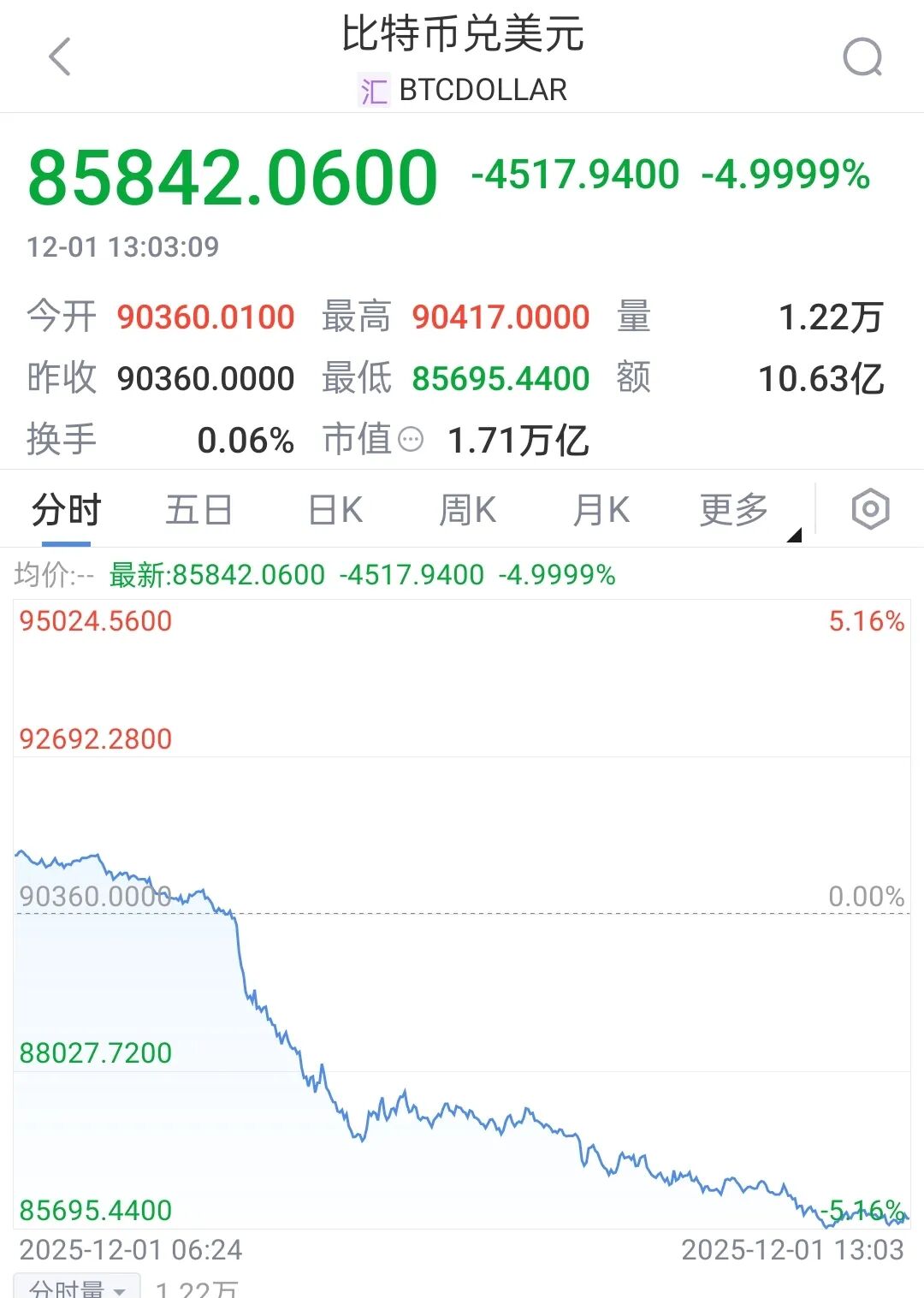
全线大跌!超21万人爆仓
Mei Ri Jing Ji Xin Wen· 2025-12-01 07:39
Market Overview - On December 1, the cryptocurrency market experienced a significant drop, with Bitcoin falling below $86,000 and Ethereum dropping below $2,900. As of the report, Bitcoin was down 4.99% at $85,800, and Ethereum was down 5.41% at $2,829, while XRP and Dogecoin fell over 7% [1][4]. Liquidation Data - According to Coinglass, the number of liquidations in the last 24 hours reached 218,800 [3]. - The total liquidation amount over 24 hours was approximately $640.28 million, with $577.51 million liquidated in the last 12 hours [4]. Market Capitalization and Trading Volume - The total market capitalization of the cryptocurrency market was around $3.1 trillion, with an average weekly trading volume of $127 billion. Bitcoin's trading volume for the week was $59.9 billion, which is 31% lower than the average [4]. Institutional Participation and Market Sentiment - Hotcoin Research suggests that the market participant structure will change significantly by 2024-2025, with an increase in institutional funding, leading to price fluctuations being more driven by fundamentals and data rather than short-term sentiment [5]. - Bloomberg noted that the cryptocurrency market remains unstable, with a prolonged sell-off beginning in early October, when leveraged positions worth approximately $19 billion were liquidated. Despite a recovery to above $90,000, the latest sell-off has traders bracing for further declines [5]. Key Support Levels and Economic Indicators - FalconX's Sean McNulty indicated that the market is currently characterized by heightened risk aversion, with concerns about low inflows into Bitcoin exchange-traded funds and a lack of buyers at lower prices. The $80,000 level is identified as a critical support point [5]. - The upcoming week is expected to provide key insights into U.S. economic momentum, as policymakers consider interest rate trajectories through 2026. The market is focused on the upcoming U.S. Personal Consumption Expenditures (PCE) price index report, which is a key inflation indicator for the Federal Reserve [6].
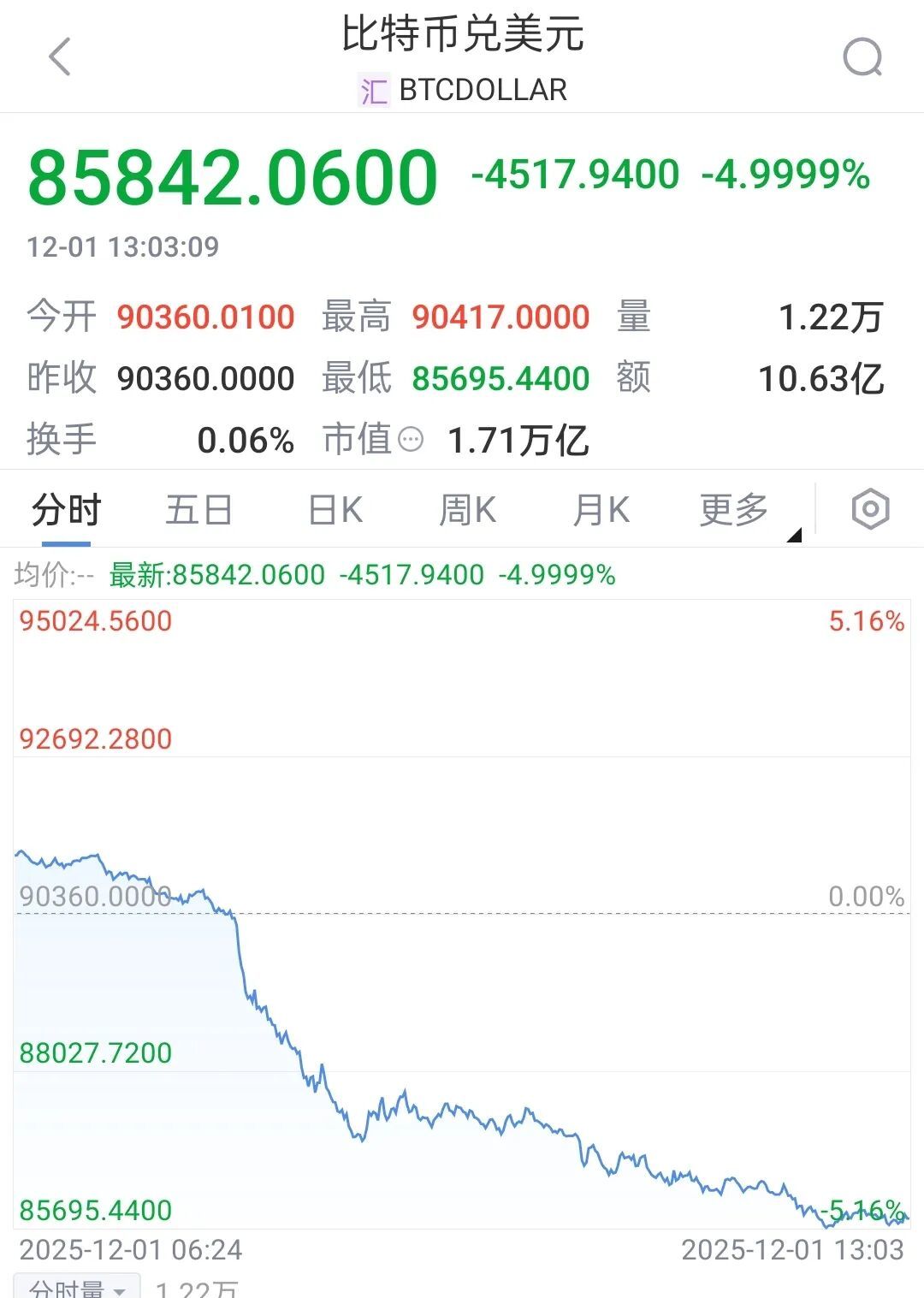
风投论加密市场回调与未来路径
Sou Hu Cai Jing· 2025-12-01 07:38
Group 1 - The core viewpoint of the article highlights that Bitcoin and Ethereum have completely retraced their gains for the year, occurring just two months after Bitcoin reached a historical high of $126,000 [2] - The broader market landscape for cryptocurrencies appears bleak, with data indicating that all 20 GMCI cryptocurrency indices have shown monthly declines [2]

狗狗币市场观察:巨鲸暂缓吸筹,散户期货占主导!跌破0.15美元的DOGE还有戏吗?
Sou Hu Cai Jing· 2025-12-01 07:37
Core Insights - Despite Dogecoin (DOGE) price dropping below the critical level of $0.15, its market capitalization remains within the top ten cryptocurrencies, currently around $22 billion, with a modest increase of about 4% during the last week of November [2] On-Chain Data - The number of large transactions (over $1 million) on the Dogecoin network has plummeted from 285 to less than 38 in the past two months, indicating a decline of over 85%, suggesting reduced participation from institutional and influential investors [3] - Since the price fell from a high of $0.271 to a low of $0.13, the market has not regained its activity levels seen before the 2024 elections [3] Investor Behavior Analysis - Currently, whales are more inclined to operate in the spot market rather than the futures market, indicating a slow accumulation of assets [5] - The futures market is primarily dominated by retail investors, which partially explains the market's lackluster performance, as retail capital is limited and insufficient to drive significant price increases [5] Market Sentiment Indicators - Sentiment indicators show a divergence: the futures market sentiment reading is at 1.31, indicating a bearish outlook, while savvy investors exhibit a slightly bullish tendency [7] Technical Outlook - From a technical analysis perspective, Dogecoin has breached key price levels. Historical data for Q4 2024 suggests that after breaking through two support levels, prices often rebound [9] - Analyst Tardigrade notes that based on this pattern, Dogecoin may initiate an upward trend, potentially breaking the $0.60 threshold [9] Market Outlook - Dogecoin faces dual pressures from declining trading volumes and falling prices, with a clear divergence in sentiment between whales and retail investors [11] - If historical patterns repeat, the current technical setup may indicate a brewing rebound; however, this is contingent on the overall direction of the cryptocurrency market [11] - After a prolonged period of stagnation, the recent pullback in on-chain activity and price may be nearing its end, with investors awaiting new catalysts to determine market direction [11]

Bitcoin, Ethereum fall sharply as crypto sell-off resumes
CNBC· 2025-12-01 07:30
Core Viewpoint - The cryptocurrency market experienced a significant sell-off, with Bitcoin and Ethereum dropping sharply, reflecting broader risk-off sentiment among investors [1][2]. Group 1: Market Performance - Bitcoin fell to approximately $86,435, marking a decline of 5.4% [1] - Ethereum decreased by around 6.1%, reaching $2,843 [1] - Solana dropped over 7% to about $127, while Dogecoin slipped around 8.6% [1] Group 2: Regulatory and Economic Influences - The People's Bank of China's warning regarding illegal activities related to digital currencies pressured Hong Kong-listed digital asset companies [2] - Macroeconomic concerns, including uncertainty over potential U.S. rate cuts, are affecting investor sentiment [6] Group 3: Market Dynamics and Leverage - A $400 million liquidation on exchanges contributed to the recent market reversal, indicating high levels of leverage in the crypto space [3][4] - The outstanding leverage in perpetual crypto futures is estimated at $787 billion, significantly higher than the $135 billion in ETFs [4] - The decentralized nature of crypto exchanges and the retail-driven market dynamics are causing increased volatility [5][6]

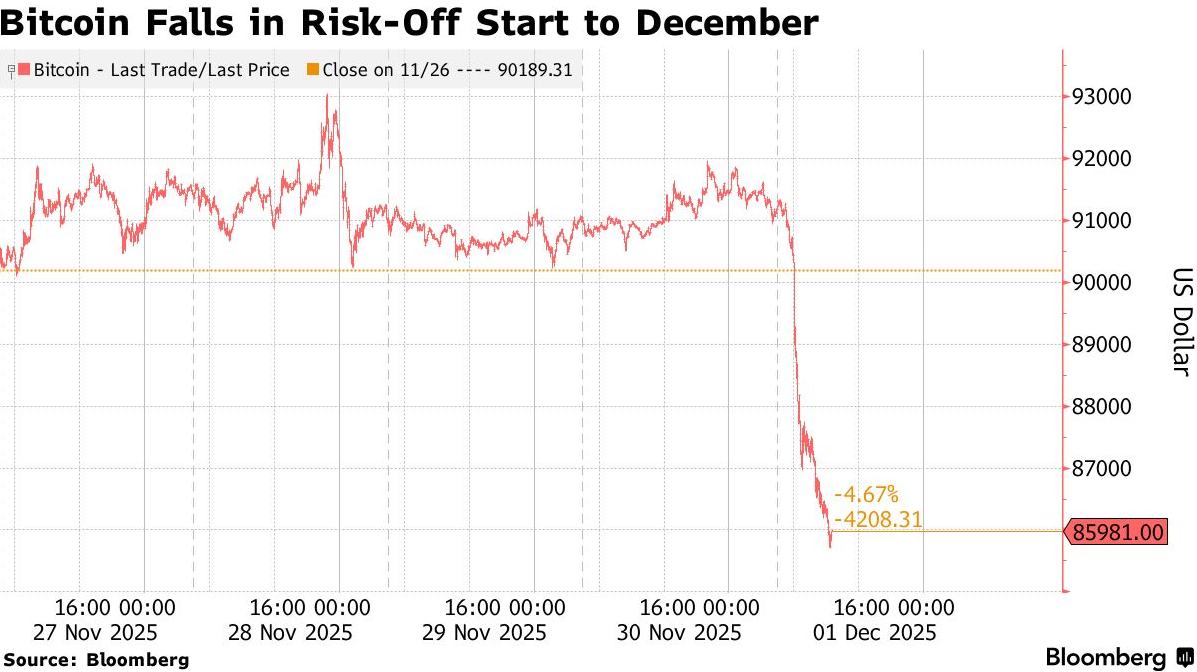
12月开局避险情绪弥漫 比特币跌超6%失守86,000美元
智通财经网· 2025-12-01 06:40
Market Overview - The cryptocurrency market experienced a significant downturn, reigniting a large-scale sell-off trend that had seemed to stabilize [1] - Bitcoin dropped over 6% during Asian trading, falling below $86,000, while Ethereum saw a decline of over 7%, reaching approximately $2,800 [1] - Most altcoins followed a similar trend, with Solana decreasing by 7.8% [1] Market Conditions - The cryptocurrency market has been unstable since early October, with a prolonged downtrend leading to the liquidation of approximately $19 billion in leveraged positions shortly after Bitcoin reached a historical high of $126,251 [4] - By November, Bitcoin's value had significantly decreased, with a drop of 16.7%, although it rebounded to above $90,000 last week due to reduced selling pressure [4] - Traders are preparing for further declines as a new wave of selling emerged [4] Key Indicators - Sean McNulty from FalconX noted a cautious outlook for December, highlighting minimal inflows into Bitcoin ETFs and a lack of buyers at lower prices, with a focus on the critical support level of $80,000 for Bitcoin [4] - Phong Le, CEO of Strategy, indicated that if the market value to Bitcoin holding ratio (mNAV) turns negative, the company may sell its Bitcoin holdings to pay dividends, with the current mNAV at 1.19 and holdings valued at $56 billion [4] Regulatory Environment - S&P Global Ratings downgraded the stability assessment of the largest stablecoin, USDT, to the lowest level, warning that a decline in Bitcoin prices could lead to insufficient collateral for the token [5] - The People's Bank of China issued a warning regarding the risks associated with virtual currencies, including stablecoins, emphasizing the need for government coordination to combat illegal activities, which adds to market uncertainty [5] Market Sentiment - Jeff Ko, Chief Analyst at CoinEx, attributed the pressure on the cryptocurrency market to a series of negative news, including the downgrade of USDT and the warning from the Chinese central bank [6] - Upcoming key economic data will provide insights into the short-term direction of the U.S. economy, influencing expectations regarding the Federal Reserve's interest rate adjustments [6]
港股午评:恒指涨0.81%、科指涨0.99%,有色金属板块爆发,加密货币及新消费概念股走低
Sou Hu Cai Jing· 2025-12-01 04:10
Market Overview - The Hong Kong stock market showed a mixed performance with the Hang Seng Index rising by 0.81% to 26,068.05 points, the Hang Seng Tech Index up by 0.99% to 5,654.62 points, and the National Enterprises Index increasing by 0.64% to 9,188.61 points [1] - Major technology stocks performed well, with Alibaba up 3.3%, Tencent up 0.82%, and JD Group up 1.29%, while Xiaomi and Meituan saw declines of 2% and 1.46% respectively [1] - The non-ferrous metals sector experienced significant gains, with Minmetals Resources and China Gold International leading the increases [1] - The People's Bank of China made a significant move to stabilize the currency, leading to declines in cryptocurrency-related stocks [1] Company News - Meituan reported third-quarter revenue of 95.5 billion yuan, a year-on-year increase of 2%, but its core local business operating profit turned negative with a loss of 14.1 billion yuan [2] - China Gas announced revenue of 34.481 billion HKD and a profit of 1.334 billion HKD for the six months ending September 30, 2025 [3] - Yingtong Holdings reported a revenue of 1.028 billion RMB, a decrease of 3.42%, but a net profit increase of 15.4% to 133 million RMB [3] - Jihai Resources achieved a revenue of 450 million RMB, a year-on-year increase of 23.41%, with a net profit of 88.127 million RMB, up 2.98% [3] - Yuhua Education reported an annual revenue of 2.497 billion RMB, a 5.4% increase, and a net profit of 930 million RMB, a significant increase of 133.2% [3] - Huitai Textile reported a revenue of 2.524 billion HKD, a decrease of 6.72%, and a net profit of 79.322 million HKD, down 25.77% [3] - New Higher Education Group reported an annual revenue of 2.599 billion RMB, a 7.78% increase, and a net profit of 829 million RMB, up 9.67% [3] - Huaxin Handbag International reported a revenue of 432 million HKD, a year-on-year increase of 22.55%, and a profit of 48.262 million HKD, up 78.88% [4] - Bay Area Development reported toll revenue for October from various highways, showing a year-on-year decrease [4] Institutional Insights - Huatai Securities indicated that the market is nearing a "bad news fully priced" state, suggesting limited downside potential and pointing to left-side layout opportunities [11] - GF Securities noted that the foundation of the Hong Kong bull market remains intact, with a potential for a "volatile upward" trend rather than a rapid increase, highlighting three key triggers for future performance [12] - Dongwu Securities mentioned that short-term risk factors in the Hong Kong market are decreasing, but a rebound confirmation requires catalysts, with current positions being attractive for long-term allocation [12]

美国机构资金持续回流加密市场,XBIT平台ETH多空比随美国买盘回暖
Sou Hu Cai Jing· 2025-12-01 02:40
Group 1 - The core viewpoint of the articles indicates a significant return of institutional funds to the U.S. cryptocurrency market, highlighted by net inflows into Bitcoin and Ethereum ETFs for the first time since late October [1][3][10] - The Ethereum ETF recorded a net inflow of $312.6 million, while the Bitcoin ETF saw $70.1 million in net inflows, reflecting a growing investor appetite [1] - Market sentiment indicators show an increase in buying willingness among U.S. investors, with heightened ETF buying activity [1][10] Group 2 - BlackRock's Bitcoin ETF has become a key focus for institutional allocation, with total assets nearing $100 billion across its U.S. and Brazilian funds [3] - The IBIT fund achieved $70.7 billion in net assets within just 341 days, marking the fastest growth in history for such a fund [3] - Despite recent outflows, BlackRock increased its allocation to the IBIT fund by 14%, indicating confidence in the long-term prospects of cryptocurrency ETFs [3] Group 3 - The regulatory environment is improving, with SEC officials emphasizing the importance of financial privacy and self-custody rights in the cryptocurrency space [5] - The postponement of the "Digital Asset Market Structure Clear Act" until 2026 is seen as a move towards a clearer regulatory framework, which could facilitate institutional investment [5] - Positive signals from regulators have influenced market sentiment, as indicated by changes in the ETH long-short ratio [5] Group 4 - Nasdaq is prioritizing the SEC approval of its tokenized stock proposal, aiming to responsibly integrate tokenized assets into the mainstream [6] - Galaxy Digital's recent tokenization of company equity on a major blockchain signifies a growing acceptance of crypto technology by traditional financial institutions [6] - There are cautious views regarding the potential value addition of tokenized stocks to the crypto ecosystem, particularly if they operate mainly on secondary networks [6] Group 5 - Visa's partnership with Aquanow aims to expand stablecoin settlement services across various regions, enhancing transaction efficiency [8] - Visa's annualized stablecoin settlement volume has reached $2.5 billion, with plans to support multiple stablecoins on various blockchains [8] - The entry of traditional financial institutions into the crypto space is viewed as a sign of increasing industry maturity, impacting market sentiment and liquidity [8] Group 6 - The U.S. market sentiment indicators turning positive is seen as a sign of restored investor confidence, with the premium index ending a month-long negative streak [10] - Ethereum's price is currently around $2,975, with market participants showing a mixed sentiment regarding future price movements [10] - The ongoing trend of institutional funds returning to the crypto market is driven by multiple factors, including improved regulatory conditions and the successful launch of ETF products [10]
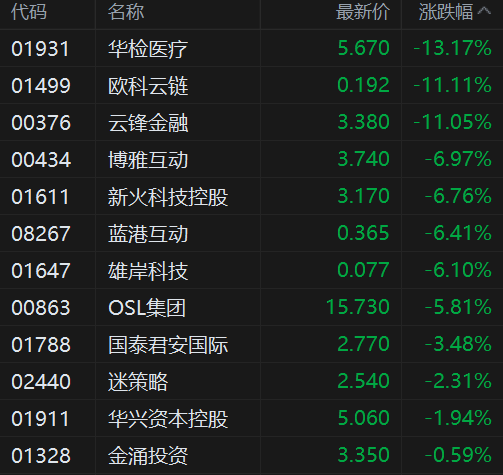
港股异动丨加密货币概念股下挫 中国央行首次重磅定调稳定币
Ge Long Hui· 2025-12-01 02:38
Core Viewpoint - The cryptocurrency concept stocks in Hong Kong experienced a collective decline following the People's Bank of China's recent statement on virtual currencies and stablecoins, which highlighted regulatory concerns and risks associated with these financial instruments [1]. Group 1: Market Reaction - Hong Kong cryptocurrency stocks saw significant drops, with Huajian Medical falling over 13%, OK Blockchain and Yunfeng Financial both declining over 11%, and several others like Boya Interactive and New Fire Technology Holdings dropping nearly 7% [2]. - The declines reflect market sentiment in response to regulatory developments regarding virtual currencies and stablecoins [1]. Group 2: Regulatory Developments - The People's Bank of China published an article discussing the coordination mechanism for combating virtual currency trading speculation, marking a significant regulatory stance on stablecoins [1]. - The article defined stablecoins as a form of virtual currency that currently fails to meet requirements for customer identity verification and anti-money laundering, posing risks of illegal activities such as money laundering and fundraising fraud [1]. - A prominent WEB 3 industry lawyer noted that this is the first official definition of stablecoins in a formal document, effectively categorizing them under the regulatory framework for illegal financial activities in mainland China [1]. Group 3: Implications for the Market - The regulatory stance is expected to indirectly affect the stablecoin market in Hong Kong, as mainland institutions may adopt a more cautious and low-profile approach to entering the Hong Kong stablecoin market [1].
华尔街日报:“特朗普交易”遭重创
美股IPO· 2025-11-30 22:44
Core Insights - The speculative assets directly related to Trump and his family have suffered significant losses, with Trump's media company stock down 75% and associated cryptocurrencies experiencing declines of 86% to 99% [1][3][4] - The market's speculative enthusiasm has cooled, leading to a broader sell-off of risk assets, including meme stocks and unprofitable tech companies [4][5] - Investors are shifting their focus from political speculation to actual company performance and fundamental risks, undermining previous optimistic expectations [3][4] Company Performance - Trump's media and technology group, which operates "Truth Social," has seen its stock price plummet, reflecting a broader trend of declining speculative investments [3][5] - The stock of the Trump media company has a staggering price-to-sales ratio of 1240, indicating extreme overvaluation prior to the downturn [5] - The performance of various sectors has been mixed, with healthcare stocks rising while regional banks and private prison stocks have lagged due to economic slowdown concerns [5][6] Market Trends - The cryptocurrency market, particularly Bitcoin, has faced a harsh sell-off, dropping 30% in less than two months, impacting Trump's business ventures in the crypto space [6] - Gold has emerged as a strong performer, with prices nearing $4200 per ounce, reflecting a nearly 60% increase this year as investors seek safe-haven assets amid economic uncertainty [5][6] - The upcoming release of the Personal Consumption Expenditures (PCE) price index is expected to shift investor focus towards inflation and interest rate outlooks [7][8]