芯片

Search documents
深夜,暴跌!芯片巨头,利空突袭!
券商中国· 2026-02-05 14:36
Core Viewpoint - The article highlights the significant impact of supply chain issues, particularly the shortage and price increase of memory chips, on the performance and outlook of major semiconductor companies like Qualcomm and Arm, leading to substantial stock price declines for both firms [1][6][9]. Qualcomm's Performance - Qualcomm's stock fell over 12% in pre-market trading due to disappointing earnings guidance, with a current decline of 11.18% [3][4]. - For Q1 of fiscal year 2026, Qualcomm reported revenue of $12.25 billion, a 5% year-over-year increase, slightly above market expectations [6]. - Adjusted net profit was $3.781 billion, a 1% decline year-over-year, with adjusted earnings per share at $3.50, up 3% and exceeding expectations [6]. - The mobile business generated $7.82 billion in revenue, a 3% increase, while the IoT and automotive segments saw revenue growth of 9% and 15%, respectively [6]. Earnings Guidance and Market Conditions - Qualcomm's guidance for Q2 of fiscal year 2026 is between $10.2 billion and $11 billion, with adjusted earnings per share projected between $2.45 and $2.65, falling short of analyst expectations of $11.11 billion in revenue and $2.89 in earnings per share [8]. - The company attributes the weak guidance to a global shortage of memory chips and rising prices, which are affecting smartphone manufacturers' order volumes [8]. - Qualcomm's CEO noted that while demand for high-end smartphones remains strong, the industry is facing severe memory shortages, leading to reduced production plans among manufacturers [8]. Arm's Performance and Market Impact - Arm's stock also dropped over 8% in pre-market trading, reflecting concerns about the smartphone market's challenges due to memory chip shortages [1][9]. - Arm reported a 26% year-over-year revenue increase to $1.24 billion for Q3 of fiscal year 2025, slightly above analyst expectations [9]. - However, the unexpected decline in licensing revenue, a key indicator of future design adoption, triggered a sell-off [9]. Broader Industry Implications - Counterpoint Research predicts that rising DRAM prices will increase the bill of materials (BoM) costs for smartphones by approximately 25% for low-end models, 15% for mid-range, and 10% for high-end models, with potential further increases of 10% to 15% by Q2 of 2026 [10]. - To offset memory price increases, mid-range smartphone manufacturers may need to raise prices by 17%, while flagship models may require a 7% increase [10]. - The ongoing memory chip supply constraints are expected to have a prolonged impact on the smartphone industry, with manufacturers already adjusting production strategies in response to rising costs [10].


Q2业绩指引疲软 高通(QCOM.US)盘前大跌超10%
Zhi Tong Cai Jing· 2026-02-05 14:17
周四,高通(QCOM.US)盘前大跌超10%,年内已累跌近13%,报133美元。消息面上,高通对当前财季 给出疲软的业绩预测,加剧了市场对存储芯片短缺导致价格上涨、并进一步抑制手机需求的担忧。财报 显示,在截至2025年12月28日的第一财季,高通当季营收同比增长5%至122.5亿美元,好于分析师平均 预期的121.8亿美元;调整后净利润为37.8亿美元,同比下降1%;调整后每股收益为3.50美元,好于分析师 平均预期的3.40美元。 高通表示,虽然高端手机仍有需求,但由于存储芯片供应紧张且价格大涨,部分客户的手机产量将低于 预期。尽管高通首席执行官克里斯蒂亚诺.阿蒙(Cristiano Amon)正在推动公司转型,增加面向汽车、个 人电脑和数据中心的芯片销售,使业务更加多元化,但这些新业务的规模仍不足以弥补手机芯片市场放 缓。不过,阿蒙在声明中表示:"尽管短期内我们的手机芯片业务展望受到全行业存储芯片供应受限的 影响,但我们仍对高端智能手机的需求感到鼓舞。" 展望未来,高通预计,在截至3月的第二财季,营收将处于102亿美元至110亿美元之间,这一预测不及 分析师平均预期的112亿美元;预计调整后每股收益将处 ...

三大股指期货齐跌,“软件股末日”论甚嚣尘上,亚马逊(AMZN.US)盘后公布财报
Zhi Tong Cai Jing· 2026-02-05 14:09
Market Overview - US stock index futures are all down, with Dow futures down 0.30%, S&P 500 futures down 0.52%, and Nasdaq futures down 0.68% [1] - European indices also show declines, with Germany's DAX down 0.63%, UK's FTSE 100 down 0.40%, France's CAC40 down 0.06%, and the Euro Stoxx 50 down 0.41% [2][3] - WTI crude oil prices fell by 2.15% to $63.74 per barrel, while Brent crude oil dropped by 2.06% to $68.03 per barrel [3][4] Software Sector - The software sector is experiencing significant declines, with Goldman Sachs' software index falling for the seventh consecutive day, down 19% year-to-date, contributing to a 1.4% drop in the Nasdaq 100 index [5] - Major software companies like Microsoft, Oracle, Salesforce, and Palantir have seen year-to-date declines exceeding 10%, with Adobe's stock plummeting by 20% [5] - The software sector has lost $2 trillion in market value from last year's peak, and hedge fund net positions have dropped to a historical low of 4.2% [5] Trade and Geopolitical Developments - The US is planning to establish a protected trade zone for rare earths, using tariffs to set price floors, as announced by Vice President Pence [6] - A recent Markets Pulse survey indicates that most respondents believe stock returns will outperform bonds due to international policy dynamics, with over half citing trade and geopolitical developments as the main catalysts for market volatility [6] Individual Company Updates - Amazon faces a $70 million fine from German antitrust regulators for price control practices, coinciding with its upcoming earnings report [8] - Barrick Gold reported a 64% increase in Q4 revenue and a 140% increase in dividends, announcing plans for an IPO to spin off its North American gold assets [9] - SiTime's Q4 revenue reached $113.3 million, a 66% year-over-year increase, with a strong performance in its communication and data center business [10][11] - Qualcomm's stock fell over 12% after it provided a weak earnings forecast, raising concerns about smartphone demand due to chip shortages [12] - Arm Holdings' stock dropped over 7% after its revenue forecast fell short of investor expectations, despite a 26% year-over-year revenue increase in Q3 [13] - BBVA's net profit grew by 4.1% to €2.53 billion, but increased provisions in emerging markets raised concerns about future growth [14] - Shell's Q4 adjusted profit fell to $3.26 billion, below market expectations, due to low oil prices and poor performance in its chemical business [15] - Vodafone's stock hit a one-year low despite a 6.5% increase in Q3 revenue, as growth in its key German market fell short of expectations [16] - NIO forecasts an operating profit of RMB 700 million to 1.2 billion for Q4 2025, marking its first anticipated quarterly operating profit [17]

恐慌蔓延,卖盘正引发更多卖盘
Hua Er Jie Jian Wen· 2026-02-05 13:26
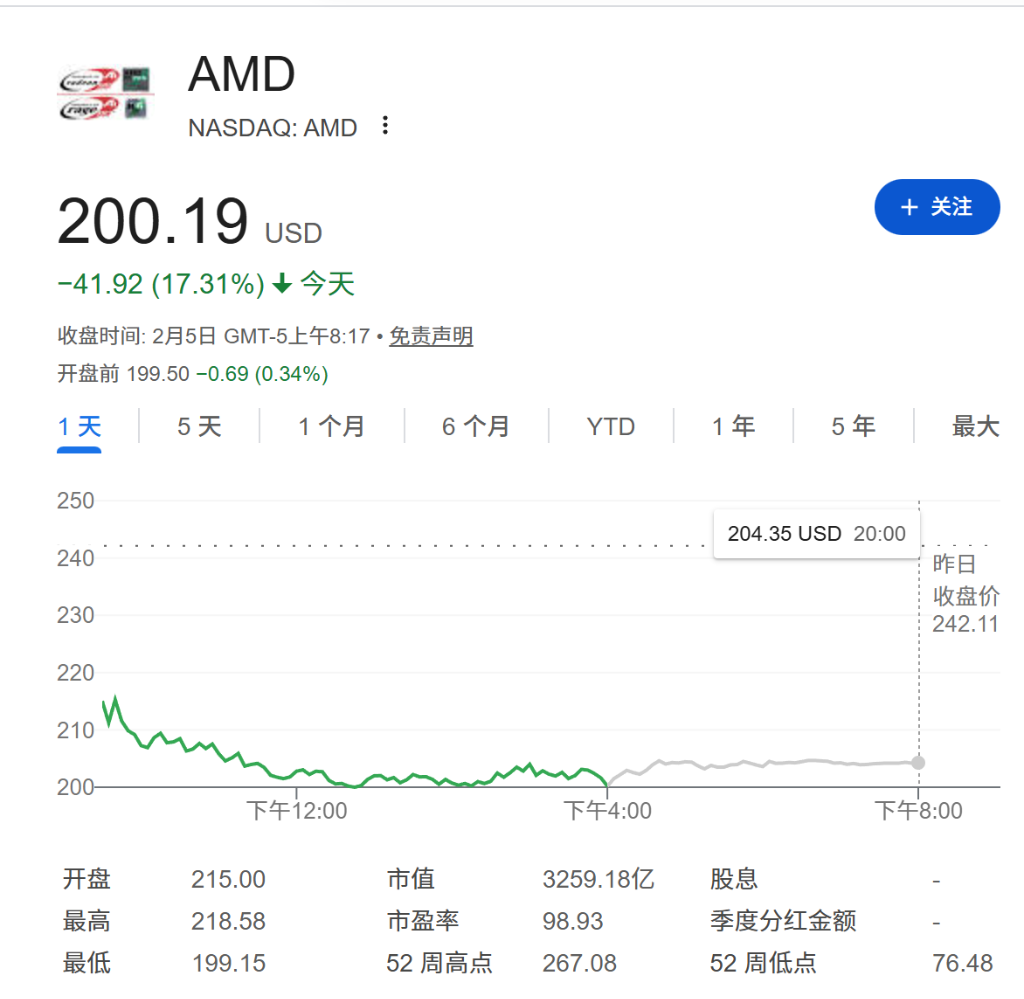
Core Viewpoint - The technology sector is experiencing heightened anxiety, leading to a reversal in investor sentiment regarding artificial intelligence (AI) and its disruptive impacts, resulting in increased market volatility [1] Group 1: Market Reactions - A significant sell-off in the software industry has rapidly spread to chip manufacturers and large tech stocks, creating a self-reinforcing selling pressure that has affected global stock markets, cryptocurrencies, and commodity markets [1] - The chip industry has been particularly hard hit, with AMD's stock plummeting by 17% and Palantir's shares dropping by 12% [1] - The Korean Kospi index fell nearly 4% due to the impact of Wall Street's chip stock declines, indicating a rapid spread of the sell-off to Asian markets [7] Group 2: AI Sentiment Shift - Investor sentiment towards AI has shifted from unconditional optimism to caution, as concerns grow over the potential threats AI poses to existing business models [8] - The software sector has seen a market capitalization loss of nearly $1 trillion within a week due to this anxiety, indicating a significant market reaction [7] Group 3: Capital Expenditure Concerns - Alphabet announced a capital expenditure plan that could reach between $175 billion and $185 billion this year, doubling previous estimates, which has raised concerns about the potential returns on such aggressive investments [9] - Despite the intention to alleviate computing bottlenecks and maintain a competitive edge in AI, the market reacted negatively, with Alphabet's stock declining by 2% in after-hours trading [9] Group 4: Economic Signals and Policy Focus - Mixed macroeconomic signals are emerging, with positive ISM data contrasted by lower-than-expected growth in ADP private sector employment, indicating ongoing recruitment challenges [12] - Investors are closely monitoring upcoming data releases, including job vacancy statistics and initial unemployment claims, as well as Amazon's earnings report, which will serve as a critical test for the performance of tech giants [12]



美股前瞻 | 三大股指期货齐跌,“软件股末日”论甚嚣尘上,亚马逊(AMZN.US)盘后公布财报
Zhi Tong Cai Jing· 2026-02-05 13:15
Market Overview - US stock index futures are all down, with Dow futures down 0.30%, S&P 500 futures down 0.52%, and Nasdaq futures down 0.68% [1] - European indices also show declines, with Germany's DAX down 0.63%, UK's FTSE 100 down 0.40%, France's CAC40 down 0.06%, and the Euro Stoxx 50 down 0.41% [2][3] - WTI crude oil prices fell by 2.15% to $63.74 per barrel, while Brent crude oil dropped by 2.06% to $68.03 per barrel [3][4] Software Sector - The software sector is experiencing a significant downturn, with Goldman Sachs' software index declining for the seventh consecutive day, down 19% year-to-date, impacting the Nasdaq 100 index which is down 1.4% [5] - Major software companies like Microsoft, Oracle, Salesforce, and Palantir have seen declines exceeding 10%, with Adobe's stock plummeting by 20% [5] - The software sector has lost $2 trillion in market value since last year's peak, with hedge fund net positions dropping to a historical low of 4.2% [5] Trade and Geopolitical Developments - The US is planning to establish a protected trade zone for rare earths, using tariffs to set price floors, as announced by Vice President Vance [6] - A recent survey indicates that most investors believe stock returns will outperform bonds due to international policy dynamics, with a majority expecting an increase in 10-year US Treasury yields [6] Company-Specific News - Amazon faces scrutiny from German antitrust authorities, resulting in a seizure of $70 million in earnings due to price control practices [8] - Barrick Gold reported a 64% increase in Q4 revenue and a 140% increase in dividends, announcing plans for an IPO to spin off its North American gold assets [9] - SiTime's Q4 revenue reached $113.3 million, a 66% year-over-year increase, with a strong performance in its communication and data center business [10] - Alphabet (Google) reported Q4 revenue growth of 18% to $113.8 billion, driven by its services and cloud business, although it faces concerns over high capital expenditures [11] - Qualcomm's weak Q2 guidance led to a pre-market drop of over 12%, raising concerns about the smartphone market's stability [12] - Arm Holdings' revenue forecast fell short of expectations, leading to a pre-market decline of over 7% [13] - BBVA's profits were impacted by increased provisions in emerging markets, despite a 4.1% increase in net profit [14] - Shell's Q4 adjusted profit fell to $3.26 billion, below market expectations, amid declining oil prices and weak chemical performance [15] - Vodafone's stock saw a significant drop despite revenue growth, due to underperformance in the German market [16] - NIO forecasts adjusted operating profit of RMB 700 million to 1.2 billion for Q4 2025, marking its first anticipated quarterly profit [17]

如果AI击溃了软件,“AI龙头”英伟达为何被软件股“拉下水”?
硬AI· 2026-02-05 12:32
Core Viewpoint - The article discusses the contradictory market narratives surrounding AI and software, particularly how the decline in AI chip stocks, represented by companies like Nvidia, is driven by fears of diminishing returns on AI investments while simultaneously suggesting that AI adoption will significantly increase productivity, which is logically inconsistent [3][7]. Group 1: AI and Software Market Dynamics - The narrative that "AI will defeat software" has led to a broad sell-off in the software sector, which has negatively impacted AI chip stocks as well [4][6]. - Nvidia's stock fell by 3.41%, Broadcom by 3.83%, Micron by 10%, and SanDisk by over 15%, indicating a significant market reaction [4]. - Bank of America analyst Vivek Arya argues that the simultaneous decline in chip and software stocks reflects an overreaction from the market, as the two outcomes cannot coexist [7][11]. Group 2: AI Investment Trends - Arya notes that despite the current market fears, AI spending is expected to increase, with cloud capital expenditures projected to grow by 69% year-over-year by 2025, significantly higher than the initial 20% to 30% growth expectations [9]. - The article emphasizes that even if AI models show impressive performance, it may take years to prove their value in terms of productivity, suggesting that AI investment is unlikely to slow down in the short term [9]. - The chip sector is expected to continue benefiting from the AI investment cycle, as enterprise-level AI adoption is still in its early stages, with more sovereign nations increasing their AI investments [9][10]. Group 3: Implications for Investors - The current market downturn appears to be driven by narrative-based correlations, where the simultaneous sell-off of software and AI chips reflects a risk-off sentiment rather than fundamental changes in AI capital spending and demand [11]. - Investors in Nvidia and similar companies need to discern whether price fluctuations are due to actual changes in AI capital expenditures or merely a reaction to the prevailing narrative of AI's impact on software [11].


多家外资机构发布2026年市场展望 投资中国意愿持续提升
Zheng Quan Ri Bao Wang· 2026-02-05 12:25
Core Viewpoint - Foreign institutions are optimistic about China's market outlook for 2026, citing strong manufacturing, exports, and improving corporate profits as key factors for economic resilience [1][2]. Economic Outlook - The International Monetary Fund (IMF) has raised its 2026 global economic growth forecast to 3.3%, with China's growth forecast increased by 0.3 percentage points [2]. - China's economy is expected to maintain a "dual-track growth" pattern, with weak domestic demand recovery and strong exports continuing [2]. - Exports are projected to grow at around 5% in 2026, driven by China's manufacturing competitiveness and undervalued currency [2]. Consumer Trends - Foreign investors have strong expectations regarding China's consumption policies, with government consumption expected to accelerate, potentially offsetting weak personal consumption [3]. - Fiscal policy is anticipated to remain "proactive and stable," with a fiscal deficit around 4% and a slight increase in local government special bond quotas to support key infrastructure investments [3]. Corporate Profitability - Corporate profits are expected to continue recovering, with significant improvements noted in traditional sectors such as materials, finance, and industry [3]. - The Producer Price Index (PPI) is expected to rebound, positively impacting corporate profitability in a manufacturing-driven economy [3]. Investment Focus - Foreign capital is increasingly focused on sectors such as AI, aerospace, and healthcare, with a structural emphasis on specific sectors like aviation and semiconductor industries [5]. - The Chinese government’s support for domestic AI models and chip manufacturing is expected to bolster technology stocks [5]. AI and Power Sector - The power sector is identified as the most certain investment direction within AI, driven by the need for sufficient energy supply for technological growth [6]. - The anticipated power shortages in the U.S. may lead to increased demand for Chinese-manufactured power equipment, enhancing investment opportunities in this area [6].


千亿元投资搁浅?摊上烧钱的OpenAI,黄仁勋也怕了
3 6 Ke· 2026-02-05 12:24
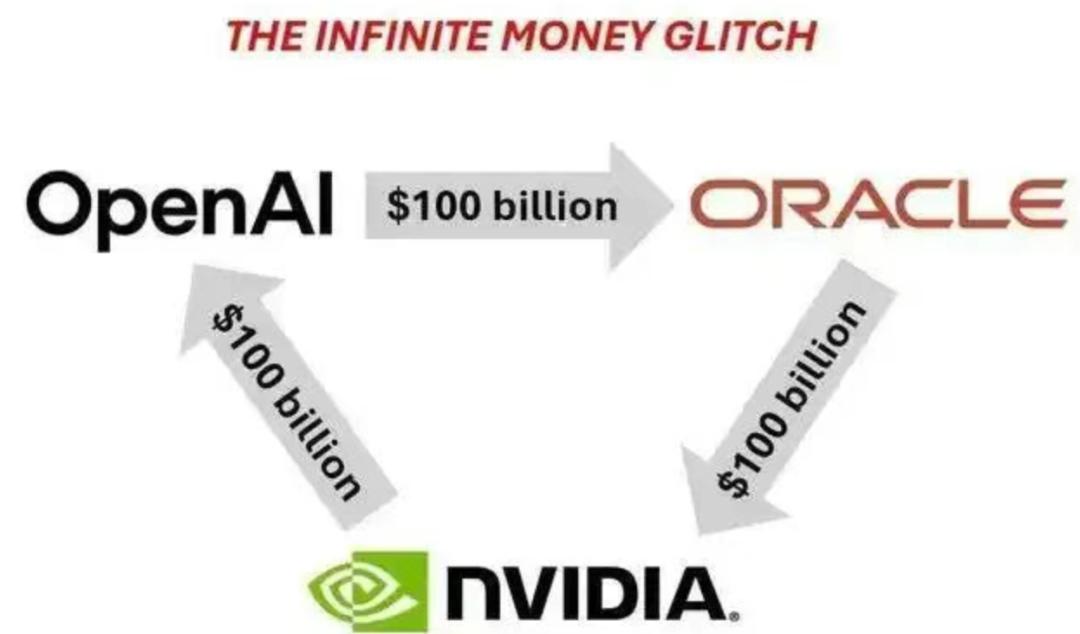
从"千亿神话"到"犹豫踟蹰",英伟达和OpenAI之间蔓延着无声的博弈。 近日,有传闻称芯片巨头英伟达将不会兑现此前承诺给OpenAI的1000亿美元投资。《华尔街日报》还援引知情人士消息透露,黄仁勋近几个月私下同业 内人士沟通时批评OpenAI在商业上缺乏纪律性,同时对OpenAI面临的来自谷歌和Anthropic等企业的竞争压力表示担忧。 多重因素叠加之下,有关英伟达和OpenAI关系"不合"的猜测走俏。 随后,英伟达创始人兼CEO黄仁勋公开否认了这一猜测,并表示不会放弃对OpenAI的投资,只是投资规模不会达到1000亿美元,但仍将是英伟达从未有 过的大规模投资。 OpenAI首席执行官Sam Altman(萨姆·奥尔特曼)就上述传闻做出回应,他表示"非常乐意与英伟达合作",称赞英伟达制造了世界上最好的AI芯片,并希 望能够长期保持英伟达大客户的身份。 截至北京时间5日上午,英伟达股价跌幅3.41%,是继本周以来连续第四天下跌,总市值表现为4.23万亿美元,距离巅峰时的5万亿美元,减少7700亿美 元。 彭博社4日援引知情人士消息称,英伟达将达成一项协议,将投资200亿美元入股 OpenAI,作为后者最 ...
半导体大厂英飞凌,部分产品涨价
财联社· 2026-02-05 12:21
Core Viewpoint - The semiconductor industry is experiencing a continuous price increase due to supply shortages and rising costs of raw materials and infrastructure, with major companies announcing price hikes for various products starting from 2026 [1][2][4]. Group 1: Price Increase Announcements - Infineon announced a price increase for power switches and related chips effective April 1, 2026, due to ongoing supply constraints and rising costs [1]. - The trend of price increases in the semiconductor industry is expected to persist, as indicated by various companies' announcements [2][4]. Group 2: Price Increase Details by Companies - **Chip Design Companies:** - Zhongwei announced price increases for MCU and Norflash products ranging from 15% to 50% starting January 27 [5]. - Guokewai increased prices for KGD products by 40% to 80% depending on the specifications starting January [5]. - Other companies like Zhongke Xinyi and Fumanwei also announced price hikes of 10% to over 10% for various chip products [5]. - **Memory Chip Manufacturers:** - Samsung Electronics plans to raise prices for NAND flash memory by over 100% and LPDDR memory used in iPhones by over 80% in Q1 2026 [6]. - SK Hynix is expected to increase prices for LPDDR memory used in iPhones by nearly 100% in Q1 2026 [6]. - **Wafer Manufacturing and Testing:** - ASE Group will increase prices for back-end wafer testing by 5% to 20% starting early 2026 [6]. - **Passive Components:** - Yageo announced a price increase of 15% to 20% for certain resistor products effective February 1 [7].


暴跌200点!外资,疯狂卖出!罕见一幕上演,韩国交易所最新发声
券商中国· 2026-02-05 12:10
韩国股市大跌超200点 2月5日,韩国股市低开低走。截至收盘,韩国Kospi指数下跌207.53点,报5163.57点,跌幅高达3.86%。AI芯 片股跌幅居前,SK海力士跌6.44%,三星电子跌5.80%,这两家芯片巨头对Kospi指数拖累最大。当天,外国投 资者净卖出价值4.99万亿韩元的韩国Kospi指数成份股,创出单日净卖出额新高。 日本股市当天也下跌。截至收盘,日经225指数下跌0.88%报53818点。权重股方面,软银集团下跌7%,爱德万 测试下跌4.81%,瑞可利控股下跌4.68%,基恩士、任天堂跌超2%,东京电子跌近2%。三菱商事上涨6.64%, 中外制药上涨4.86%。 科技股的恐慌情绪,蔓延到了亚太市场! 受隔夜美股科技股大跌影响,亚太股市今日(2月5日)也集体下跌。其中,韩国Kospi指数收盘大跌超200点, 跌幅接近4%。日经225指数收跌0.88%。 值得注意的是,今日,外国投资者净卖出价值4.99万亿韩元的韩国Kospi指数成份股,创出单日纪录新高。机 构投资者也净卖出2.07万亿韩元的Kospi指数成份股。 AT Global Markets首席市场分析师Nick Twidale ...