
低空经济

Search documents
解读|健全低空保险体系 筑牢安全发展基石
Zhong Guo Min Hang Wang· 2026-02-12 10:35
《关于推动低空保险高质量发展的实施意见》的出台,恰逢我国低空经济从技术验证与局部试点迈向规 模化、商业化发展的关键跃升期。面对航空器数量激增、运行环境日益复杂的现实背景,该文件以系统 化工作部署,精准回应新兴产业对系统性风险解决方案的迫切需求,为低空经济行稳致远筑牢市场化、 制度化的安全基石。 低空风险具有高度的飞行动态性、场景依赖性和技术关联性。当前,低空法律体系尚在构建过程中,责 任认定、损失评估与协同监管方式亟待创新。低空经济运营主体与保险业之间存在一定认知与业务隔 阂,传统航空保险的经验数据与风控模型在此面临"失灵",导致保险公司"不敢保、不会保、不愿保"。 同时,低空运营主体大多规模较小、分布分散、风险承受能力弱,运用金融工具管理风险的门槛较高, 风险量化与保险产品设计难度大。为此,文件从加快健全政策体系、推进强制投保制度、强化服务保障 体系、提升保险可持续经营能力四个方面,系统构建覆盖全链条、兼顾强制与创新、平衡安全与发展的 现代低空保险生态。 该文件的主要亮点体现在两大方面:一是强化保险服务保障体系,实现低空经济全场景全链条全覆盖。 根据文件要求,保险服务需贯穿低空经济"研发—制造—运营—基建" ...
解读|系统性保障护航低空经济高质量发展
Zhong Guo Min Hang Wang· 2026-02-12 10:35
Core Viewpoint - The development of the low-altitude economy is at a critical stage of transitioning from technological exploration to large-scale commercialization, with safety and risk assurance being essential for sustainable growth. The recent implementation of the "Implementation Opinions on Promoting High-Quality Development of Low-Altitude Insurance" by the National Development and Reform Commission, along with other regulatory bodies, aims to establish a comprehensive low-altitude insurance service system, which is crucial for the high-quality development of the low-altitude economy [1]. Group 1: Policy Framework - The primary task of the "Implementation Opinions" is to enhance the low-altitude insurance policy framework, creating a conducive institutional environment for standardized development through planning guidance, regulatory integration, and mechanism encouragement [2]. - The Opinions emphasize the inclusion of insurance in the overall planning and institutional construction of low-altitude economic development, encouraging local governments to formulate supportive policies tailored to their specific conditions [2]. - It mandates the integration of insurance mechanisms into the low-altitude safety regulatory system, using insurance as a tool to strengthen operational safety oversight and improve accident handling procedures [2]. Group 2: Mandatory Insurance System - A key highlight of the Opinions is the acceleration of establishing a mandatory liability insurance system to safeguard public safety in low-altitude operations, particularly for unmanned aerial vehicles [3]. - The Opinions propose strengthening management across the entire chain by incorporating mandatory insurance requirements into flight activity approval processes and developing related regulations for liability recognition and handling procedures [3]. - The establishment of this mandatory insurance system aims to effectively protect public safety and compel operators to enhance their safety management practices [3]. Group 3: Service Assurance - The Opinions focus on strengthening the service assurance system by optimizing insurance coverage across the entire industry chain and enhancing service applications, transitioning insurance from a "product supply" model to a "service empowerment" model [4]. - It calls for insurance companies to develop a comprehensive protection system covering research and development, manufacturing, flight operations, and infrastructure support, while also exploring innovative insurance products and services for new low-altitude risks [4]. - The Opinions advocate for targeted insurance coverage based on various application scenarios such as agricultural operations, low-altitude inspections, logistics, urban governance, and emergency management, ensuring precise alignment between service needs and insurance offerings [4]. Group 4: Sustainable Operational Capacity - The low-altitude economy presents complex risks and demands higher data and professional capabilities from insurance institutions, as outlined in the Opinions [5]. - It emphasizes the need to accelerate the construction of a low-altitude insurance information platform and develop a risk information-sharing database, utilizing big data and AI for precise risk pricing and monitoring [5]. - The Opinions also encourage insurance institutions to collaborate with manufacturers and operators of low-altitude aircraft to enhance their ability to identify and assess new risks, thereby improving the overall risk management quality [5]. Group 5: Organizational Support - To ensure the effective implementation of the Opinions, organizational support is reinforced through coordination, risk prevention, and promotional efforts, fostering a collaborative work environment [7]. - The Opinions specify that the National Development and Reform Commission will lead the establishment of a regular communication mechanism to guide local implementation and address challenges in advancing low-altitude insurance [7]. - It also encourages insurance institutions to enhance their risk control systems and consumer protection measures while promoting public awareness and understanding of low-altitude insurance [7].
湖北质量基础设施“硬实力”再升级
Xin Lang Cai Jing· 2026-02-12 06:09
Core Insights - Hubei Province aims to enhance its quality infrastructure by revising and formulating over 1,200 international and national standards by 2025, with a significant increase in the number of standards compared to the previous year [1] Group 1: Quality Infrastructure Development - The Hubei Market Supervision Administration plans to promote the formulation and revision of 37 international standards and 1,197 national standards in 2025, representing year-on-year growth of 48% and 47% respectively [1] - The province has accelerated the construction of the "Quality Three Strong" initiative, recognizing 161 "Hubei Quality" products and implementing 33 provincial projects aimed at enhancing quality across industrial chains [2] Group 2: Industry Chain Quality Improvement - Hubei has initiated 33 provincial projects focused on quality improvement in key industrial chains, which have collectively helped enterprises save over 6 billion yuan [2] - The province's quality enhancement projects have served 65,200 enterprises and resolved 39,600 quality issues, contributing to a total cost reduction and revenue increase exceeding 40 billion yuan [2] Group 3: Standard Supply Optimization - The Hubei Market Supervision Administration is optimizing the supply of standards in key areas, planning to release a technical standard system for phosphogypsum utilization and participating in the revision of 72 vehicle-related national standards [3] - The province has also engaged in the development of 109 national standards in artificial intelligence and integrated circuits, while eliminating 722 ineffective local standards, achieving a 42% reduction [3] Group 4: Quality Technical Service Platform - Hubei is advancing the construction of quality technical service platforms, with plans to establish 74 public service platforms for inspection and testing by 2025 [4] - The province has initiated 615 capability verification projects and developed 143 inspection and testing standards, significantly enhancing the capacity for quality inspection services [4] - Hubei has established 240 quality service stations and 446 service windows, achieving an 85% coverage rate for one-stop quality infrastructure services in county-level markets [4]
经济第一大省,再添一个“万亿级”
3 6 Ke· 2026-02-12 02:16
Core Insights - Guangdong's ultra-high-definition video industry cluster is projected to achieve a revenue of 1,080.306 billion yuan by 2025, marking it as the province's tenth trillion-level industry cluster and the first of its kind in the nation [1][2]. Group 1: Industry Development - The "chip shortage and screen shortage" previously hindered the development of China's electronic information industry, with display panels once ranking as the fourth largest import commodity [1]. - Since 2017, Guangdong has been at the forefront of developing the ultra-high-definition video industry, leveraging its comprehensive manufacturing supply chain and large-scale market [1]. - Guangdong has established a complete industry chain covering content production, network transmission, terminal presentation, core components, and industry applications, with over 60,000 related enterprises [1]. Group 2: Economic Impact - The trillion-level industry cluster is characterized by significant scale effects, outstanding innovation capabilities, and strong resilience in the supply chain, which can lower costs and enhance efficiency through upstream and downstream collaboration [1]. - The province has maintained a pace of one trillion-level industry cluster breakthrough per year, with the automotive industry becoming the eighth in 2023 and the new energy industry cluster surpassing one trillion yuan in 2024 [2]. Group 3: Future Prospects - The next potential trillion-level industry cluster is expected to be the biopharmaceutical and health industry cluster, aiming to exceed one trillion yuan by 2027, with the pharmaceutical industrial scale exceeding 500 billion yuan [3]. - Other industries such as semiconductors and integrated circuits, new energy storage, and low-altitude economy also show potential for advancement [3].
上海实施先进制造业转型升级三年行动方案
Ke Ji Ri Bao· 2026-02-12 02:01
Core Viewpoint - The "Three-Year Action Plan for Supporting the Transformation and Upgrading of Advanced Manufacturing in Shanghai (2026-2028)" aims to accelerate the establishment of a modern industrial system centered on advanced manufacturing, promoting green and intelligent transformation across various enterprises in Shanghai [1][2]. Group 1: Action Plan Overview - The action plan includes four major actions and 17 measures to enhance the development of advanced manufacturing [1]. - By 2028, Shanghai aims to add 100 manufacturing enterprises with an annual output value exceeding 1 billion yuan and increase the number of large-scale industrial enterprises in the supply chain by 500 [1]. Group 2: Industry Development Paths - The plan outlines three development paths: - For traditional advantageous industries, it emphasizes "optimization and enhancement" [1]. - For leading industries, it promotes "strategic guidance" [1]. - For key and emerging industries, it focuses on "expansion and development" [1]. Group 3: Innovation and Resource Support - The action plan supports enterprises in high-level R&D and high-value product transformation, addressing industry pain points and overcoming key core technologies [2]. - It encourages full-process upgrades, AI integration in manufacturing, and carbon footprint management to achieve quality and efficiency improvements [2]. Group 4: Financial Incentives - The plan provides substantial financial support for R&D, including: - A one-time subsidy of 10 million yuan for enterprises with annual R&D expenditures of 100 million yuan or more [2]. - A one-time subsidy of 5 million yuan for those spending between 50 million and 100 million yuan [2]. - A one-time subsidy of 2 million yuan for R&D expenditures between 1 million and 5 million yuan [2]. Group 5: Additional Financial Support Measures - The plan includes subsidies for fixed asset investment loans related to technology upgrades, with a maximum of 20 million yuan [3]. - Companies upgrading energy-saving processes and equipment can receive rewards based on coal consumption, up to 10 million yuan [3]. - A one-time reward of 200,000 yuan is available for enterprises recognized as national green factories [3].
上海市实施先进制造业转型升级三年行动方案
Ke Ji Ri Bao· 2026-02-12 00:55
Core Viewpoint - The "Three-Year Action Plan for Supporting the Transformation and Upgrading of Advanced Manufacturing Industry in Shanghai (2026-2028)" aims to accelerate the establishment of a modern industrial system centered on advanced manufacturing, promoting green and digital transformation across enterprises of all sizes [1][2]. Group 1: Action Plan Overview - The action plan includes four major actions and 17 measures to enhance the development of advanced manufacturing in Shanghai [1]. - By 2028, Shanghai aims to add 100 manufacturing enterprises with an annual output value exceeding 1 billion yuan and increase the number of industrial enterprises above designated size by 500 [1]. Group 2: Development Paths - The plan outlines three development paths: - For traditional advantageous industries, it emphasizes "optimization and enhancement" [1]. - For leading industries, it promotes "strategic guidance" [1]. - For key and emerging industries, it focuses on "expansion and development" [1]. Group 3: Innovation and Support Measures - The action plan supports enterprises in high-level R&D and high-value product transformation, addressing industry pain points and overcoming key core technologies [2]. - Financial support includes one-time subsidies for R&D investments, with amounts varying based on the level of investment [2]. Group 4: Financial Incentives - Companies investing in technology transformation projects can receive interest subsidies on loans or equipment financing leases, with a maximum subsidy of 20 million yuan [3]. - Additional rewards are available for energy-saving upgrades and for companies recognized as national green factories [3].
亿航智能华东总部落户合肥 低空经济布局深化
Jing Ji Guan Cha Wang· 2026-02-11 18:28
Group 1 - EHang Intelligent has established its East China regional headquarters in Hefei on February 9, 2026, and signed cooperation agreements with local enterprises to enhance collaboration in key aviation technologies, promoting the large-scale development of the low-altitude economy [1] - The cooperation involves the entire chain of technology research and development, production, and commercial operation, strengthening the company's positioning in the low-altitude economy sector [1] Group 2 - EHang Intelligent's stock price has shown volatility over the past week, with a 5.77% increase on February 6, 2026, but a decline of 1.56% on February 11, 2026, closing at $11.95, resulting in a cumulative increase of 0.76% and a trading volume of approximately $29.46 million [2] - The current market capitalization of EHang Intelligent is approximately $860 million, with a negative price-to-earnings ratio (TTM) [2] Group 3 - The low-altitude economy is gaining attention from institutions, with a report from CCID Research Institute on February 6, 2026, indicating that China's low-altitude economy will enter a critical phase of large-scale development in 2026, and the eVTOL market's commercialization is accelerating [3] - NexLead's investment guide on February 8, 2026, highlights the low-altitude economy as a key industry with policy support and commercialization potential, mentioning that companies like EHang Intelligent will benefit from the development of the industry chain [3]
五部门为低空经济基建划定硬指标
Mei Ri Jing Ji Xin Wen· 2026-02-11 13:50
Group 1 - The core viewpoint of the news is that the Chinese government is advancing the low-altitude economy through a series of policies aimed at establishing a comprehensive infrastructure by 2027, with a projected market size of 1.5 trillion yuan by 2025 [1][2][3] - The Ministry of Industry and Information Technology (MIIT) emphasizes that low-altitude infrastructure is crucial for the healthy development of the low-altitude economy, which includes both traditional aviation systems and new-generation communication facilities like 5G and satellite internet [3][4] - The implementation of the new policies is expected to create significant opportunities for various market players, including telecommunications companies, drone manufacturers, and low-altitude service providers, by establishing a complete support service system for low-altitude operations [5][6] Group 2 - The recent policies indicate a shift from conceptual exploration to practical implementation in the low-altitude economy, with cities like Shenzhen, Guangzhou, and Shanghai leading the way in infrastructure development and application testing [2][3] - The MIIT has outlined ten key tasks to enhance low-altitude communication network coverage and improve navigation services, which will involve leveraging existing 5G infrastructure and encouraging collaboration between telecom companies and government departments [4][5] - The low-altitude economy is expected to focus on urban air traffic applications, including urban governance, aerial transportation, and logistics, which are anticipated to be the first to achieve commercial viability [5][6]
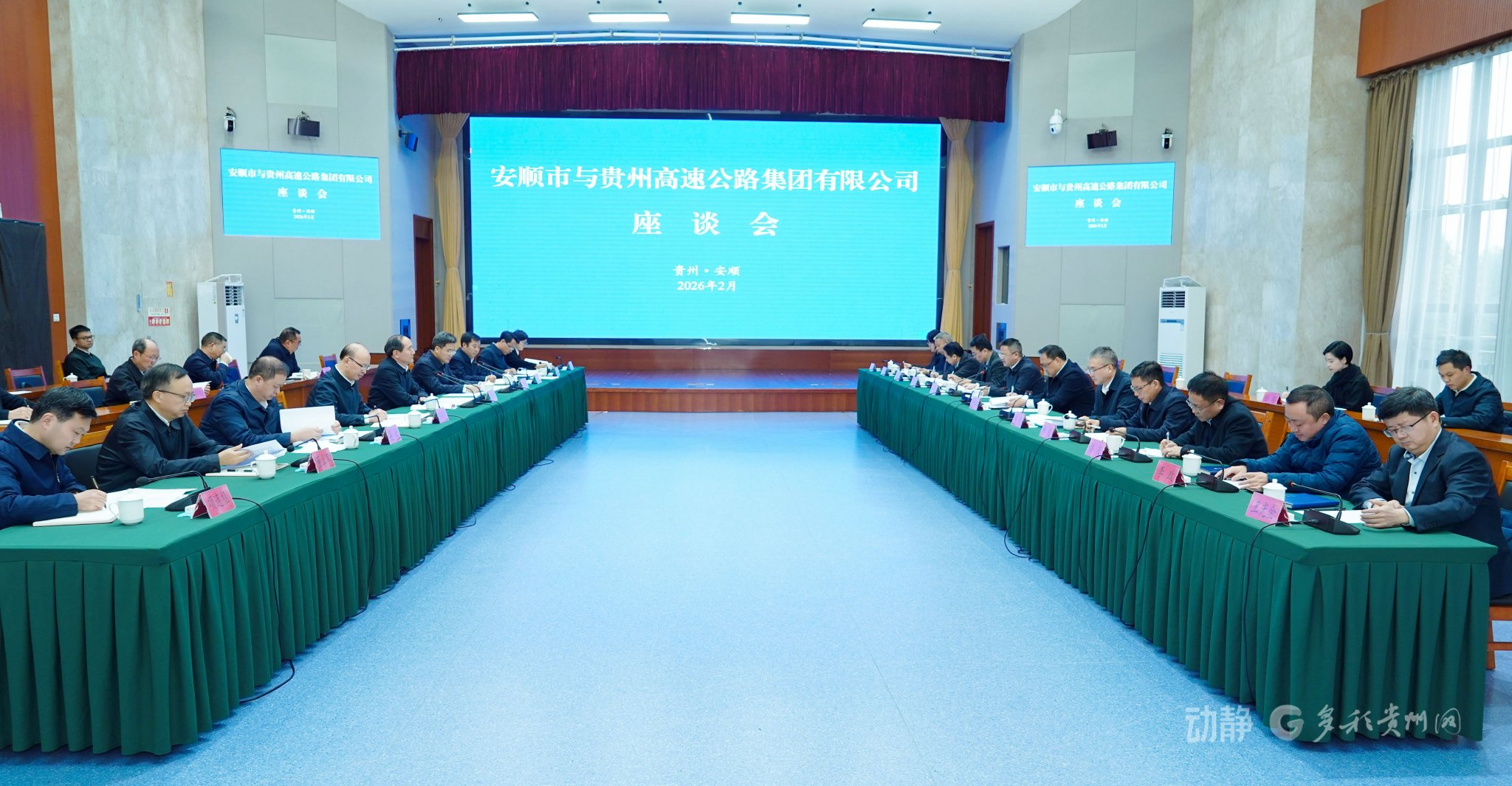
贵州又一城市加快“电动贵州”步伐
Xin Lang Cai Jing· 2026-02-11 08:24
Group 1 - The core viewpoint of the article is the strategic cooperation agreement signed between Guizhou Expressway Group and Anshun Municipal Government, focusing on collaboration in 18 areas including road network planning, bridge and travel integration, low-altitude economy development, and smart transportation [1][3] Group 2 - The agreement aims to create "zero-carbon expressways" and "zero-carbon service areas" as demonstration projects, promoting the development of charging infrastructure, LNG clean energy refueling stations, and hydrogen energy industries in Anshun [3] - The collaboration will explore the integration of expressways with low-altitude economy, focusing on developing new scenarios and business models for low-altitude applications along expressways [3] - A modern smart warehousing and logistics park will be established in Anshun, specializing in cold chain logistics and e-commerce logistics, utilizing idle land along expressways for storage and distribution services for local agricultural and industrial products [3]

天眼查报告:我国AI相关企业近230万家,去年新增超55万家,同比增长32.6%
Xin Lang Cai Jing· 2026-02-11 05:02
Group 1 - As of 2025, the total number of small and micro enterprises in China with registered capital of less than 5 million yuan has exceeded 130 million, accounting for 66% of all operating entities, with an annual increase of 7.68 million enterprises, averaging over 20,000 new enterprises daily [1][3] - The artificial intelligence sector is showing robust innovation capabilities, with nearly 2.3 million AI-related enterprises by 2025, including over 550,000 newly established enterprises in 2025, representing a 32.6% increase compared to the same period in 2024, covering over 20 fields such as smart manufacturing, smart transportation, and smart healthcare [1][3] - The low-altitude economy is emerging as a new industrial blue ocean, with a 135.6% increase in registered low-altitude economy enterprises in 2025, reaching a total of 157,000 enterprises, and financing for smart unmanned aerial vehicle manufacturing companies exceeding 17.4 billion yuan, a 45.9% increase from 2024 [1][3] Group 2 - The new energy vehicle industry has achieved a "qualitative leap," with the number of related enterprises reaching 1.079 million by 2025, and an increase of 381,000 enterprises in 2025, representing a year-on-year growth of 5.5% [2][4] - In the modern service industry, there are over 2.599 million existing tourism-related enterprises nationwide, with the cultural and tourism industry becoming a new growth engine for regional economic growth. In 2025, only in the four sectors of cultural and entertainment, leasing and business services, accommodation, and catering, Heilongjiang added 361,000 enterprises, accounting for 25% of all new enterprises in the province, meaning that for every four new enterprises, one is related to the cultural tourism industry [2][4]