快消品

Search documents
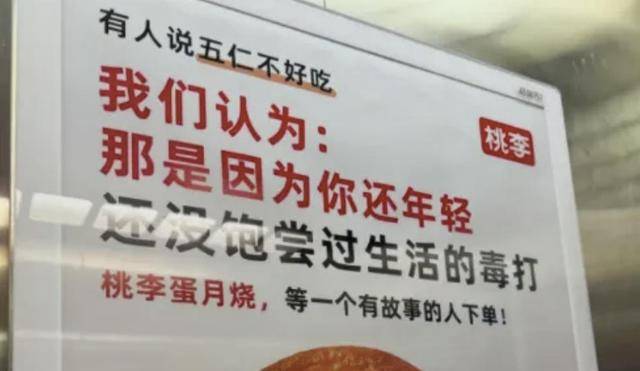
“没饱尝生活的毒打”,如此营销为何翻了车? | 中听
Sou Hu Cai Jing· 2025-09-05 13:17
Group 1 - The core issue is that the recent controversial advertisement by Tao Li Bread reflects a broader marketing anxiety within the fast-moving consumer goods (FMCG) industry, where companies are willing to exploit social emotions for attention [2][3] - The advertisement's attempt to link the taste of a traditional mooncake with life's hardships is seen as an insult to consumer intelligence, suggesting that only those who have experienced suffering deserve to enjoy traditional flavors [3] - The backlash from consumers highlights the dangers of using negative narratives to influence purchasing decisions, especially in an era of transparent social media where such tactics can lead to severe public backlash [3] Group 2 - The incident is not isolated; it follows a previous controversy in July where Tao Li Bread was reported for exceeding bacterial limits, indicating a systemic imbalance in the company's operations [3] - Despite facing declining revenue and profits in the first half of 2025, the company increased its advertising spending by 40%, reflecting a misguided approach to marketing that fails to address underlying product quality issues [3] - The FMCG industry is experiencing a widespread short-sightedness, where companies prioritize creating buzz over building brand reputation through consistent quality, which is ultimately unsustainable [5]


Unilever(UK)(UL) - 2025 FY - Earnings Call Transcript
2025-09-03 14:00
Financial Data and Key Metrics Changes - The company reported a revenue of $61 billion for 2024, with a profit of $11 billion and an underlying operating margin of 18.4% [3][4] - Cash generation was strong, with $7 billion in cash returned to shareholders, including $4.3 billion in dividends and $1.5 billion in share buybacks [4][5] - The return on invested capital was noted at 18.1%, indicating a strong competitive position [5] Business Line Data and Key Metrics Changes - The company operates five business groups: Youth and Wellbeing, Personal Care, Home Care, Foods, and a fifth group being separated, which generated $8.3 billion [4][7] - The focus is shifting towards 30 power brands that account for 75% of revenue, with a reported volume growth of 3.8% in these brands last year [9][10] - The gross margin is expected to approach 47% post-separation of the Ice Cream business, with an anticipated 100 basis points increase in return on invested capital [8] Market Data and Key Metrics Changes - The U.S. and India are identified as key growth markets, with the U.S. expected to contribute 21% and India 14% to revenue after recent acquisitions [17][18] - In the U.S., the company has seen significant growth, with a 20% increase in sales with Amazon and a strong performance in beauty and personal care [42] - India is projected to be a major growth driver, with over 50% market share in several categories and a focus on digitizing distribution [20][21] Company Strategy and Development Direction - The company is transitioning to a category-led organization, focusing on premiumization and reducing exposure to value segments [16][17] - There is a strong emphasis on building a marketing and sales machine, with a new philosophy centered around "desire at scale" [22][29] - The leadership team has been refreshed, with a focus on accountability and performance culture [15][36] Management's Comments on Operating Environment and Future Outlook - Management expressed confidence in achieving consistent volume growth, targeting 3% to 5% in the U.S. and a strong performance in India [41][49] - The company is addressing challenges in specific markets, such as Indonesia and Latin America, with strategic adjustments to improve performance [44][46] - Future expectations include a focus on beauty and personal care, with a commitment to maintaining a competitive edge in the market [36][37] Other Important Information - The company has reduced its white-collar workforce by 18% and is on track to achieve $800 million in savings by the end of 2026 [12] - Significant investments have been made in brand and marketing, with a 33% increase in marketing budgets over the last four to five years [12][13] - The company is leveraging influencer marketing, aiming for one influencer per zip code in India, with a robust screening process in place [54] Q&A Session Summary Question: Can the company continue to outperform in the U.S. market? - The company believes it can maintain consistent volume growth, with a strong portfolio and significant exposure to e-commerce [41] Question: What are the expectations for volume growth in the second half of the year? - Management anticipates acceleration in volume growth, particularly in Q4, with improvements noted in key markets like Indonesia and China [44][45] Question: How does the company plan to enhance desirability in its food segment? - The company aims to apply the concept of desirability across all categories, emphasizing indulgence in foods and premium experiences in home care [51]

2025七夕营销实战盘点:五大行业品牌如何抓住爱情经济新脉搏?
Sou Hu Cai Jing· 2025-09-01 18:44
Core Insights - The report by Yien analyzes the marketing strategies and effectiveness of leading brands across five industries during the Qixi Festival, highlighting new marketing trends and consumer demand changes [1][5][9] Luxury Goods - Chopard collaborated with DIMOO WORLD to launch a limited edition gift box, gaining attention on Xiaohongshu, but the integration was seen as forced and the target demographic unclear [1][5] - LOEWE created a micro-drama titled "The Love of Magpies," featuring celebrities and effectively expanded brand influence through joint promotions on Weibo and Xiaohongshu, although the "tacky" style raised concerns about brand image [1][5] - Tiffany's series "I Am the Subject of Love" explored individual value in love, collaborating with top podcasters and effectively conveying brand philosophy on Xiaohongshu [1] Beauty Industry - Chando returned to the Himalayas theme, partnering with intangible cultural heritage "Shuo Zhi Bang Dian" for an advertisement that established emotional connections with consumers through pre-launch activities and offline interactions on Douyin [2] - SK-II collaborated with Mayday to release a campaign titled "Loveing, Crystaling," featuring limited edition gift boxes and pop-up stores, successfully engaging users through emotional themes on Xiaohongshu and Douyin [2] Fast-Moving Consumer Goods (FMCG) - Yili focused on the elderly demographic, partnering with host Meng Fei for the "100 Reasons for Twilight Love" project, which resonated with children of elderly consumers on Douyin, though some felt the project's claims were unrealistic [4] - Bawang Tea Ji launched a limited edition series "Phoenix Flying," showcasing traditional wedding customs in collaboration with the She ethnic group, promoting it on Douyin and Xiaohongshu [4] E-commerce Platforms - Taobao Flash Sale collaborated with actor Lin Yi to launch an advertisement and the "City in Love" theme project, successfully driving user engagement through online and offline interactions, primarily using Xiaohongshu for promotion [4] Marketing Highlights and Challenges - The report highlights the innovative efforts and challenges faced by brands, such as Chopard's young demographic attempt with DIMOO WORLD, LOEWE's successful yet image-damaging micro-drama, and Yili's resonant project that diverged from reality [5]

欢乐家:渠道矩阵拓展加速,新品与IP联名释放增长动能
Zheng Quan Shi Bao Wang· 2025-08-26 12:53
Core Viewpoint - The company, Huanlejia, reported a revenue of 748 million yuan and a net profit of 18.55 million yuan for the first half of 2025, demonstrating positive results through channel expansion, product upgrades, and brand rejuvenation amidst changing consumer trends and raw material fluctuations [1]. Group 1: Channel Expansion - The company has accelerated its multi-channel layout, with direct sales and consignment businesses continuing to grow. The snack specialty chain channel generated revenue of 87.82 million yuan, expanding its coverage in emerging retail [2]. - The company achieved over 385 million yuan in revenue from the Central and Southwest regions, accounting for more than 50% of total revenue, while steadily increasing penetration in East and North China [2]. - The improved channel structure allows the company's products to enter more consumer scenarios, potentially enhancing brand influence and market share [2]. Group 2: Brand Renewal and Product Matrix Optimization - The company is focusing on health and differentiation trends, accelerating new product iterations and brand upgrades. In the first half of 2025, it revamped its coconut water series and launched reduced-sugar fruit cans and coconut water products [3]. - The supply chain is being developed with a layout of "domestic fruit production areas + factories in Southeast Asia," creating a closed loop from raw material procurement to terminal sales, enhancing supply stability and cost control [3]. - The company is leveraging the popularity of the national IP "Nailong," with over 38 million fans, to drive a comprehensive upgrade from products to consumer scenarios, targeting younger demographics [3]. - Future strategies include deepening marketing reforms, accelerating product and channel optimization, and expanding the snack specialty system while advancing overseas coconut processing projects [3].
尼尔森解读CBI指数:大促成为品牌增长关键驱动
Zheng Quan Ri Bao Wang· 2025-08-22 09:48
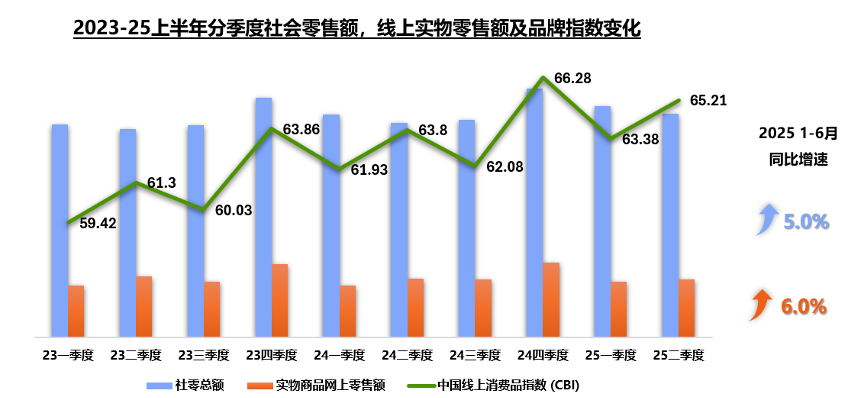
Group 1 - The core viewpoint of the report indicates that the "China Online Consumption Brand Index (CBI)" shows a continuous growth trend in brand consumption during the second quarter of 2025, driven by e-commerce promotions and the summer consumption peak [1][2] - The CBI index increased from 63.38 in Q1 2025 to 65.21 in Q2 2025, representing a year-on-year increase of 2.21% and a growth of 9.7% compared to the 2023 baseline, highlighting consumers' increasing preference for branded products during promotional periods [1][2] - The report emphasizes that consumers are not only increasing their total spending but are also more inclined to choose quality brand products over generic ones, making it crucial for global brands to seize e-commerce promotional opportunities in the Chinese market [1][2] Group 2 - The CBI series is developed in collaboration with Peking University and is the first brand value assessment system based on actual consumer purchasing behavior, updated quarterly [2] - In Q2 2025, online retail sales of physical goods grew by 6.0% year-on-year, outpacing the overall retail sales growth of 5.0%, indicating sustained online consumption activity [2] - E-commerce platforms have effectively stimulated brand consumption potential during major promotions like "618" by simplifying promotional rules, optimizing membership systems, and enhancing shopping experiences [2][3] Group 3 - The duration of e-commerce promotional periods has significantly increased, with some platforms extending their promotional periods from 17 days to 32 days, which, along with various incentives, has led to substantial growth in GMV (Gross Merchandise Value) [3] - Seasonal categories such as ice cream, beer, insecticides, and sunscreen saw significant year-on-year sales growth of 39.4%, 19.6%, 10.8%, and 9% respectively in Q2 2025 [3] - The fast-moving consumer goods (FMCG) sector in China experienced a 3.4% year-on-year growth across all channels in Q2 2025, with online channels growing by 16.2%, driven by double-digit growth in categories like beauty, beverages, and personal care [3] Group 4 - As competition in the Chinese FMCG market intensifies, the report identifies circle marketing strategies as a key path for brand growth, emphasizing the importance of understanding core circle needs and building trust [8] - Brands are encouraged to create an efficient marketing loop of "planting seeds—conversion—repurchase—viral growth" through multi-circle outreach, which enhances ROI and builds more loyal user assets [8]
尼尔森解读北大CBI指数:618、双11大促成为品牌增长关键驱动
Ge Long Hui· 2025-08-22 06:39
Group 1 - The core viewpoint of the report is that the Chinese online consumption brand index (CBI) shows a continuous growth trend driven by e-commerce promotions and the summer consumption peak, indicating that capturing growth opportunities during e-commerce events is crucial for global brands in the Chinese market [1][3] - The CBI index increased from 63.38 in Q1 2025 to 65.21 in Q2 2025, representing a year-on-year increase of 2.21% and a growth of 9.7% compared to the 2023 baseline, reflecting a sustained preference for branded products among Chinese consumers during promotional periods [1][3] - The report highlights that over the past ten quarters, the CBI data indicates a simultaneous increase in both the quantity and quality of consumption during e-commerce promotional periods, with consumers showing a stable expectation for shopping festivals and a preference for quality brands over generic products [1][3] Group 2 - According to the National Bureau of Statistics, the online retail sales of physical goods in Q2 2025 grew by 6.0% year-on-year, outpacing the overall retail sales growth of 5.0%, indicating sustained activity in online consumption [3] - The report notes that during major promotional events like "618", e-commerce platforms have effectively stimulated brand consumption potential by simplifying promotional rules, optimizing membership systems, and enhancing shopping experiences [3][5] - The duration of e-commerce promotional periods has significantly increased this year, with some platforms extending the promotion period from 17 days to 32 days, coupled with various incentives such as official discounts and platform red envelopes, leading to a notable increase in GMV (Gross Merchandise Value) [5] Group 3 - Nielsen's retail data shows that in Q2 2025, the fast-moving consumer goods (FMCG) sector in China experienced a 3.4% year-on-year growth across all channels, with online channels growing by an impressive 16.2% [8] - Categories such as beauty products, beverages, staple foods, and personal care items saw double-digit year-on-year growth in online sales, driving overall market growth [8] - The report emphasizes that as competition in the Chinese FMCG market intensifies, multi-layered marketing strategies have become essential for driving brand growth, focusing on understanding core consumer needs and building trust and recognition [10]
“枣二代” 石芳被否定:好想你电商营收和推广全面收缩
Sou Hu Cai Jing· 2025-08-19 05:58
Core Viewpoint - The company "Good Idea" is facing significant challenges in the fast-moving consumer goods (FMCG) sector, particularly in the e-commerce channel, which has led to declining revenues and profits, indicating a strategic misalignment in its operations [1][9]. Group 1: Financial Performance - In the first half of 2025, the company's revenue was 689 million yuan, a year-on-year decrease of 15.64%, with a net loss of 19.84 million yuan [1]. - E-commerce channel revenue dropped to 198 million yuan, accounting for 28.73% of total revenue, down 23.27% from the previous year [4][5]. - Cumulative losses from 2020 to 2024 reached approximately 313 million yuan, with continuous losses in net profit over five years totaling around 500 million yuan [11][12]. Group 2: E-commerce Challenges - The company has seen a significant reduction in online promotion expenses, with a 32.57% decrease in sales promotion costs, impacting product visibility and brand awareness on e-commerce platforms [7][8]. - The company struggles with intense competition in both shelf e-commerce and interest-based e-commerce, leading to low conversion rates and insufficient sales growth [6][9]. Group 3: Strategic Shift to Offline Channels - In response to declining e-commerce performance, the company has shifted focus to offline supermarket channels, with over 70% of revenue coming from this segment in the first half of 2025 [9][10]. - Collaborations with high-quality supermarkets have provided some revenue stability, but the associated costs and limited market reach pose significant challenges [10][11]. Group 4: Product and Operational Issues - Despite a slight improvement in gross margin due to a shift towards higher-margin products, the overall profitability remains insufficient to cover operational costs [12][13]. - The company needs to reassess its e-commerce strategy and optimize its offline channel operations to enhance product competitiveness and address market challenges effectively [13].


裕丰昌控股(08631)与智慧油客达成战略合作 共建加油站快消供应链新生态
智通财经网· 2025-08-15 08:47
Core Insights - The strategic cooperation agreement between Yufengchang Holdings and Smart Oil Customer marks a significant milestone in integrating resources to develop the fast-moving consumer goods (FMCG) supply chain market within China's gas station convenience system [1][2] Group 1: Company Overview - Yufengchang Holdings is an investment holding group based in mainland China and Hong Kong, with core businesses in the energy industry chain investment and FMCG e-commerce sales, supported by a robust production and supply chain system [2] - Smart Oil Customer is a leading digital service provider in the energy sector, focusing on providing advanced digital systems, operational services, and business development solutions for gas stations, with a service network covering over 30 provinces and 30,000 gas stations [2] Group 2: Strategic Cooperation Details - The partnership aims to deeply integrate Yufengchang's FMCG product lines, including packaged drinking water and alcoholic beverages, into Smart Oil Customer's extensive gas station service network, addressing the strong demand for standardized and branded FMCG products [2] - The collaboration is expected to generate over 100 million RMB in annual revenue growth for Yufengchang's related product lines, creating a new ecosystem for efficient and mutually beneficial gas station FMCG supply chains [2] Group 3: Industry Impact - The cooperation is anticipated to enhance market competitiveness for both companies and provide consumers at gas stations with a wider range of high-quality products, promoting the upgrade of the gas station convenience store model [3] - Smart Oil Customer's chairman emphasized that Yufengchang's strong FMCG capabilities are essential for enhancing the service ecosystem, enabling a one-stop solution for gas station clients that improves operational efficiency and profitability [3]
8月12日财经简报|比特币突破12万 哪吒汽车出现债务问题
Sou Hu Cai Jing· 2025-08-12 10:20
Market Performance - The Shanghai Composite Index rose by 0.34% to 3647.55 points, with the Shenzhen Component Index increasing by 1.46% and the ChiNext Index by 1.96%, marking a six-day consecutive rise and a new yearly high, driven by sectors such as semiconductors, lithium mining, and computing power [2] - Over 4000 stocks experienced gains, with significant net inflows from northbound funds, boosted by public fund purchases and simplified entry processes for foreign capital [2] Industry Dynamics - Lithium supply and demand tension arose as CATL's Yichun lithium mine halted production due to the expiration of its mining license, alongside issues with salt lake lithium extraction companies, leading to a surge in lithium carbonate futures prices, reaching a four-month high [3] - Huawei announced breakthroughs in AI inference technology, reducing reliance on HBM chips, while major US tech companies continued share buybacks exceeding $980 billion this year, supporting the global tech sector [3] Policy and Economic Factors - The Ministry of Finance introduced personal consumption loan interest subsidy policies covering sectors like automotive and home goods, while the implementation rules for the VAT law are under consultation to refine tax incentives [3] - The US and China have again postponed the imposition of a 24% tariff on $50 billion worth of goods for 90 days, retaining a 10% tariff, signaling a de-escalation in trade tensions [2] Corporate Developments - Neta Auto was listed as a dishonest executor due to debt issues, while Master Kong reported a decline in revenue for the first half of the year, facing transformation pressures in the traditional fast-moving consumer goods sector [4]



娃哈哈经销商渠道被传大洗牌,大经销商接管小经销商,砍掉年销300万元以下供应商
Sou Hu Cai Jing· 2025-08-11 15:51
Group 1 - Wahaha is implementing a strategy to eliminate distributors with annual sales below 3 million yuan, leading to sudden terminations and unresolved payment issues for some distributors [2][3] - The consolidation of smaller distributors into larger ones is aimed at addressing issues such as cross-regional sales and multi-party debts, with larger distributors expected to manage these challenges more effectively [2][5] - Distributors have reported significant sales growth prior to termination, indicating that the decision may be perceived as irresponsible, especially when prior investments in marketing equipment were made [3][5] Group 2 - The strategy of consolidating distributors is common in the fast-moving consumer goods (FMCG) industry, as it helps ensure the interests of larger distributors and stabilizes market channels [5] - Reducing the number of smaller distributors can lower management and operational costs, but it also increases the need for effective oversight of larger distributors to mitigate potential risks [5]