智能终端

Search documents
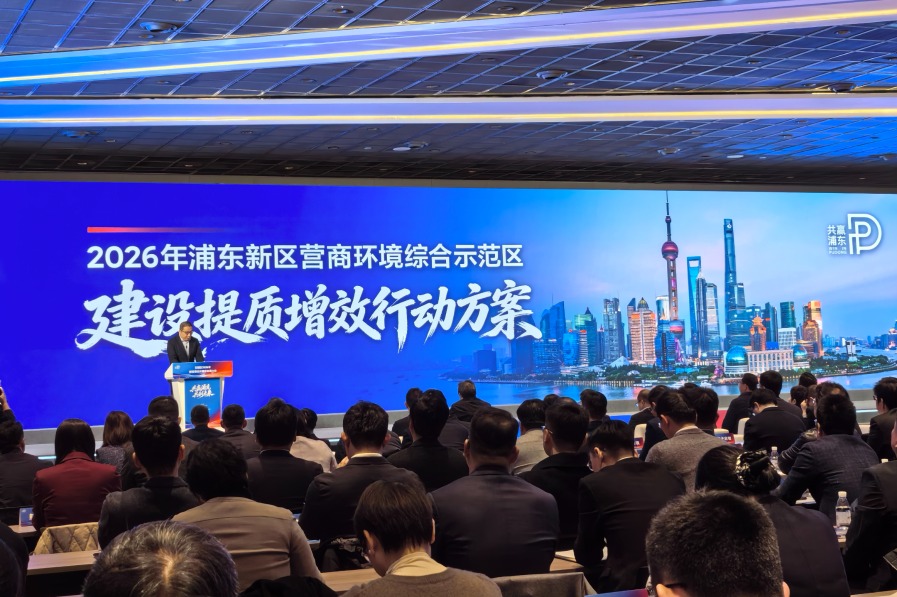
速览!政府工作报告中的能源要点
Zhong Guo Neng Yuan Wang· 2026-01-14 08:13
Core Insights - The government work report emphasizes the importance of pollution prevention, ecological construction, and the development of a green low-carbon economy, alongside the promotion of carbon peak and carbon neutrality initiatives. Energy Highlights from the Past Year - The production of new energy vehicles exceeded 13 million units [2] - The average concentration of PM2.5 in cities at the prefecture level and above decreased by 2.7%, with the proportion of days rated as good rising to 87.2%, and the proportion of surface water with good quality increasing to 90.4% [2] - The energy consumption per unit of GDP decreased by over 3% [2] - Renewable energy installations increased by 370 million kilowatts [3] Energy Work Highlights for This Year - The target for energy consumption per unit of GDP is a reduction of around 3%, with continuous improvement in ecological environment quality [12] - Structural monetary policy tools will be optimized and innovated to promote healthy development in the real estate and stock markets, with increased support for technological innovation, green development, and small and micro enterprises [12] - The government aims to enhance policy coordination across various sectors, including finance, employment, industry, and environmental protection [12] - The promotion of "Artificial Intelligence+" initiatives will integrate digital technology with manufacturing advantages, supporting the development of smart connected new energy vehicles and intelligent terminals [13][14] - The establishment of a comprehensive standard system for green finance, inclusive finance, and digital finance will be prioritized [15] - The government will continue to advance the construction of high-standard farmland and improve urban renewal projects [15] Green and Low-Carbon Development Initiatives - The government will accelerate the development of a green low-carbon economy and improve the policy and standard system supporting this sector [21][22] - The implementation of advanced technology demonstration projects for green low-carbon initiatives will be prioritized, fostering new growth points such as green buildings [23] - The promotion of waste recycling and the use of recycled materials will be emphasized [24] - A green consumption incentive mechanism will be established to encourage low-carbon production and lifestyle [25] - The government will actively promote carbon peak and carbon neutrality, establishing pilot projects for zero-carbon parks and factories [25] - The construction of a dual control system for carbon emissions will be accelerated, expanding the coverage of the national carbon trading market [26] - Initiatives for low-carbon transformation of coal and electricity will be launched, alongside planning for major projects addressing climate change [27]
超6000家企业参与,“广货行天下”春季行动将于明日启动
Nan Fang Nong Cun Bao· 2026-01-14 06:05
Core Viewpoint - The "Guangdong Goods Going Global" Spring Action aims to boost consumer spending and help over 6,000 enterprises expand their market presence and sales, laying a solid foundation for Guangdong's development during the 14th Five-Year Plan period [5][12]. Group 1: Event Overview - The Spring Action will officially launch on January 15, with a promotional event focused on home appliances taking place in Foshan [6]. - The initiative is organized by various provincial departments, including the Guangdong Provincial Committee of Propaganda and the Provincial Department of Commerce, to enhance the visibility and market influence of high-quality Guangdong products [7][8]. Group 2: Participation and Support - Over 6,000 enterprises from diverse sectors such as home appliances, mobile phones, clothing, food, smart devices, automotive, beauty products, and agriculture will participate in the event [12]. - Major commercial platforms, including Alibaba International, JD.com, and Douyin, among others, are supporting the initiative [13][14]. Group 3: Promotion Strategy - The event will select key industries and outstanding brand enterprises to promote their best and most cost-effective products on a weekly basis [15][16]. - There will be efforts to connect manufacturers with retailers, distributors, and buyers to facilitate sales and gather market demands [17][19]. Group 4: Local Engagement - Local cities will engage leading enterprises and industry clusters to participate, integrating local cultural and tourism activities into promotional efforts [20][21]. - Media will play a significant role in enhancing the brand and sales of Guangdong products through active participation in the Spring Action [22]. Group 5: Home Appliance Focus - The launch event will feature over 1,300 home appliance companies, with major brands like Midea, Gree, and Galanz showcasing their products and conducting live sales [24].


嘉兴国家高新区外向型经济强势领跑
Xin Lang Cai Jing· 2026-01-13 23:59
Core Insights - The article highlights the successful signing of three foreign investment projects in the Jiaxing National High-tech Zone, each with an investment exceeding $100 million, focusing on the fields of new energy, new materials, and low-altitude economy [1][2][3] Group 1: Investment Projects - The signed projects include a $100 million lithium battery production and assembly project, a smart terminal equipment and electronic integrated circuit board development project, and a liquid crystal display module production base project [1][2] - The lithium battery project is expected to have an annual output value of 1.1 billion yuan after an initial investment of $50 million, with plans for further capacity expansion in the second phase [2] - The smart terminal project, with a total investment of $100 million, aims for an annual output value of 700 million yuan, enhancing the region's capabilities in core components for smart terminals [2][3] - The liquid crystal display module project also has a total investment of $100 million, with an expected annual output value of 600 million yuan after the first phase [3] Group 2: Economic Development Strategy - The Jiaxing National High-tech Zone is focusing on enhancing its outward-oriented economy as a key driver for high-quality development, particularly in new energy, new materials, and low-altitude economy sectors [3][4] - The zone aims to increase the proportion of foreign investment in manufacturing, with a reported actual utilization of foreign capital reaching $218.26 million in 2025, a year-on-year increase of 54.98% [5] - The opening of Jiaxing Nanhu Airport is seen as a significant opportunity for the zone, providing logistical advantages for high-value and time-sensitive products, thereby facilitating quicker market access for companies [5]
江苏:推动消费产品与大模型融合创新,强化跨应用、跨系统、跨终端交互协作
Jin Rong Jie· 2026-01-13 07:19
Core Viewpoint - The Jiangsu Provincial Government has issued a notification regarding the "Artificial Intelligence +" action plan, emphasizing the acceleration of smart terminal product research and application [1] Group 1: Smart Terminal Development - The plan aims to promote the integration of consumer products with large models for innovative development [1] - It focuses on enhancing cross-application, cross-system, and cross-terminal interaction and collaboration [1] - New types of smart terminals will be developed targeting key industries such as industrial, commercial, financial, energy, logistics, medical, and education [1] Group 2: Application of AI Technology - The initiative includes the application of artificial intelligence technology to develop wearable terminals, unmanned aerial vehicles (boats), smart industrial terminals, and brain-computer interfaces [1] - There is an emphasis on optimizing existing terminals to be compatible with large models [1]
从AI眼镜到脑机接口 智能终端升级大有可为
Shang Hai Zheng Quan Bao· 2026-01-12 18:36
Core Insights - The news highlights the rapid development and investment in AI technologies, particularly in AI glasses, AI phones, and brain-computer interfaces, driven by policy support, technological breakthroughs, and market demand [1][2][4][6] AI Glasses - The 2026 International Consumer Electronics Show (CES) focuses on AI glasses, emphasizing lightweight design, strong interactivity, and full-scene applications as key trends [2] - Major companies are set to launch several AI glasses products in 2026, including Google's Project Aura and Apple's AI glasses, with IDC predicting a shipment volume of 4.508 million smart glasses in China, a 77.7% year-on-year increase [2] - The industry is witnessing increased orders, with companies like Visionary Technology and Huanxu Electronics ramping up production to meet rising demand for AI glasses [3] AI Phones - AI phones are expected to activate a new wave of device upgrades, with multiple Android manufacturers planning to release AI phones in early 2026 [4] - The evolution of AI phones is marked by a shift from mere computational upgrades to a fundamental restructuring of underlying systems, akin to past revolutions in computing and mobile operating systems [4] - The demand for AI phones is driving growth in the upstream supply chain, with companies like Bowei Alloy anticipating significant orders for components needed in high-end AI phone models [4] Brain-Computer Interfaces - The brain-computer interface sector is gaining momentum, with companies like Neuralink planning large-scale production starting in 2026 and Qiangnao Technology recently securing approximately 2 billion yuan in funding [6] - Government policies are increasingly supporting the development of brain-computer interfaces, with initiatives in cities like Beijing and Shanghai aimed at fostering innovation and establishing key enterprises in the sector [6] - Domestic companies are making significant technological advancements, such as Hanwei Technology's breakthroughs in non-invasive flexible brain-computer interface materials and collaborations with medical institutions [6]
上海先进制造业转型文件出炉,引导企业投资五大新增长点
Di Yi Cai Jing· 2026-01-11 12:12
Core Insights - Shanghai aims to accelerate the transformation and upgrading of its advanced manufacturing industry over the next three years, targeting the establishment of 100 new manufacturing enterprises with an annual output value exceeding 1 billion yuan by 2028 [2] - The plan emphasizes the development of emerging sectors such as low-altitude economy, commercial aerospace, embodied intelligence, biomanufacturing, and smart terminals, positioning them as new growth points for the industry [2][3] Group 1: Advanced Manufacturing Transformation - The action plan outlines structural optimization and upgrading actions, including enhancing traditional industries and promoting the growth of key and emerging sectors [2] - Shanghai has established five national-level industrial clusters and four trillion-yuan industrial clusters, focusing on integrated circuits, biomedicine, new energy vehicles, large aircraft, and marine engineering equipment [2][3] Group 2: New Growth Areas - The plan identifies five new growth areas: low-altitude economy, commercial aerospace, embodied intelligence, biomanufacturing, and smart terminals, with a goal for these sectors to reach a scale of 1 trillion yuan by the end of the 14th Five-Year Plan [3] - Specific targets include achieving a scale of 100 billion yuan in the low-altitude economy and 500 billion yuan in embodied intelligence by 2027, with projections of 1 trillion yuan by 2030 for the latter [3][4] Group 3: Financial Support and Innovation - The plan includes financial incentives for companies increasing their R&D investments, with subsidies ranging from 200,000 to 1 million yuan based on the level of investment [5] - It also promotes the "AI + manufacturing" initiative, aiming for full coverage of intelligent applications in large enterprises by 2027 and increasing robot density to 600 units per 10,000 people by 2028 [5][6] Group 4: Industrial Ecosystem and Talent Development - The Shanghai Industrial Internet Association emphasizes the need for collaboration among government, industry, academia, and research to tackle challenges in the "AI + manufacturing" sector [6] - The initiative aims to build a comprehensive standard system for "AI + manufacturing" and enhance the cultivation of industrial intelligent talent [6]
八部门联合印发《意见》——促进人工智能技术与制造业应用“双向赋能”
Ke Ji Ri Bao· 2026-01-09 00:56
Core Viewpoint - The "Artificial Intelligence + Manufacturing" initiative aims to deeply integrate AI technology with the manufacturing industry, enhancing innovation and application capabilities by 2027 [1] Group 1: Key Objectives - By 2027, China aims to achieve reliable supply of key AI technologies, maintain a leading position in industry scale and empowerment, and promote the application of 3-5 general large models in manufacturing [1] - The initiative plans to launch 1000 high-level industrial intelligent entities and create 100 high-quality datasets in industrial fields, along with promoting 500 typical application scenarios [1] - The goal includes nurturing 2-3 globally influential ecosystem-leading enterprises and a number of specialized small and medium-sized enterprises, while establishing 1000 benchmark enterprises [1] Group 2: Key Tasks - The initiative outlines seven key tasks including innovation foundation, intelligence upgrade, product breakthroughs, entity cultivation, ecosystem expansion, safety protection, and international cooperation [1] - In the area of innovation foundation, there will be a focus on enhancing AI computing power, supporting the development of high-end training chips, and creating high-performance algorithm models tailored for manufacturing [2] - The intelligence upgrade will involve empowering key industries, promoting smart factory development, and encouraging leading enterprises to implement AI applications [2] Group 3: Product Development - The initiative emphasizes the iteration of smart equipment, integrating AI technology into the development and manufacturing of major technical equipment like aircraft and ships, and advancing smart low-altitude equipment [3] - There will be a push for upgrading smart terminals, fostering innovation in AI-enabled products such as smartphones and smart home devices, and establishing testing bases for humanoid robots [3] - Policies will be reinforced to guide enterprises in differentiated development, prevent "involution" competition, and attract more social capital for investment in AI and manufacturing technologies [3]
“万里长江第一城”产业焕新擦亮生态底色
Xin Hua She· 2026-01-08 07:39
Core Insights - The article highlights the transformation of Yibin's industrial landscape from traditional coal and liquor industries to emerging sectors like power batteries, crystalline silicon photovoltaics, and smart terminals, reflecting a shift towards green and digital economies [1][2]. Group 1: Industrial Transformation - In 2015, the coal and liquor industries accounted for over 40% of Yibin's industrial output; by the first three quarters of 2025, the new energy and digital sectors are projected to represent nearly half of the city's industrial output [1]. - The power battery industry achieved an output value of 86.07 billion yuan in the first three quarters of 2025, marking a year-on-year growth of 14.6%, with expectations to exceed 130 billion yuan for the entire year [2]. - The crystalline silicon photovoltaic industry saw an increase in value added by 35.1% during the same period, while high-tech manufacturing's value added grew by 13.5% [2]. Group 2: Environmental Improvements - Yibin has established a water environment governance framework that promotes upstream and downstream collaboration, as well as coordinated management of rivers and tributaries [2]. - The proportion of Class II water bodies in the Yangtze River mainstream in Yibin increased from 0% in 2015 to 100% by 2025, with the proportion of water quality meeting national and provincial standards rising from 80% to 100% [2]. - The number of fish species monitored in the Yangtze River segment of Yibin has increased to 92, indicating improved ecological conditions [2].
三力齐发 助中国科技勇立潮头
Zheng Quan Ri Bao· 2026-01-06 23:31
Core Viewpoint - The International Consumer Electronics Show (CES) showcases China's technological advancements, highlighting a transition from "smart creation" to "ecological leadership" in the tech industry [1] Group 1: Technological Advancements - The exhibition features next-generation personal terminals with multi-modal interaction capabilities and embodied intelligent robots entering homes and businesses [1] - Smart vehicles are transforming driving experiences and reshaping human-vehicle relationships, while core computing chips and advanced solutions empower various industries [1] - Chinese tech companies are evolving from mere technology integrators to global leaders, launching defining technological architectures and open platforms [1] Group 2: Key Dimensions for Future Growth - Strengthening foundational research and frontier exploration is essential for maintaining a competitive edge in global technology, particularly in artificial intelligence, quantum information, and life sciences [2] - Enhancing the resilience and collaboration of the industrial chain is crucial, focusing on upgrading to high-end, intelligent, and green manufacturing, while addressing gaps in key components and advanced materials [2] - Optimizing capital supply to support technological innovation involves fostering "patient capital," ensuring smooth capital circulation, and enhancing global investment capabilities [2] Group 3: Future Outlook - The trajectory from "Made in China" to "Created in China" and now to "Leading in China" indicates a clear upward trend, positioning Chinese technology to significantly contribute to global economic development [3]
“十五五”开局破局!浦东发布52条硬核举措 700亿元项目签约激活引领区新动能
Guo Ji Jin Rong Bao· 2026-01-05 16:09
Core Insights - The Shanghai Pudong New Area held a conference to promote investment and improve the business environment, unveiling the "2026 Action Plan for Enhancing the Comprehensive Business Environment" [1] Group 1: Business Environment Initiatives - The action plan includes five key areas: government services, market competition, industrial ecology, legal protection, and social governance, with a total of 52 specific measures [2] - In government services, initiatives include enhancing service levels for enterprises and launching actions to support companies going global [2] - The market competition area focuses on high-level intellectual property protection and creating a fair market environment [2] Group 2: Industrial Development - Pudong aims to develop ten major industrial clusters, targeting a scale of 500 billion yuan for integrated circuits, biomedicine, and smart connected vehicles, and 200 billion yuan for artificial intelligence and smart terminals [3] - Each industrial cluster will focus on core areas to enhance quality and efficiency, such as design leadership in integrated circuits and global outreach in biomedicine [3] Group 3: Investment and Policy Support - A new policy package was introduced to shift from "blood transfusion" support to "blood production" ecological cultivation, including a 100 billion yuan industry guidance fund [4] - The Pudong New Area is home to 25% of Shanghai's foreign-funded enterprises and nearly 50% of regional headquarters of multinational companies, positioning it as a strategic hub for global resources [4] Group 4: Future Goals - Pudong aims to enhance its global resource allocation and innovation capabilities, supporting both large enterprises and small businesses [6] - The conference marks the beginning of a focused effort on investment attraction and environmental improvement, aligning with the goals of the "14th Five-Year Plan" [6]