
服务贸易

Search documents
“全球近20%进口商品受到关税等措施影响”
第一财经· 2025-12-04 03:26
Core Viewpoint - The WTO's annual report indicates a significant increase in global trade protectionism, with the impact of new tariffs and measures on imports growing over fourfold compared to the previous year, marking the highest level in over 15 years [3][6]. Group 1: Trade Measures and Impact - From mid-October 2024 to mid-October 2025, $2.64 trillion of global imports will be affected by tariffs and other trade measures, a fourfold increase from $611 billion in the previous period [6]. - The total trade affected, including export measures, is approximately $2.966 trillion, compared to $888 billion recorded in the last report, indicating a threefold increase [6]. - WTO members initiated an average of 32.3 trade remedy investigations per month during the review period, slightly lower than the peak of 37.3 expected in 2024, suggesting potential for more measures to be implemented [6]. Group 2: Trade Growth Projections - The WTO projects a 2.4% growth rate for global goods trade in 2025, with a further slowdown to 0.5% in 2026, driven by early imports and strong demand for AI-related products [7]. - The first half of 2025 is expected to see stronger trade growth due to sustained trade increases among most WTO members, particularly developing economies [7]. Group 3: Services Trade - The WTO forecasts that global commercial services trade volume will grow by 4.6% in 2025 and 4.4% in 2026, outpacing goods trade growth [3]. - Digital services are highlighted as the most dynamic sector, with growth rates projected at 6.1% for 2025 and 5.6% for 2026, driven by the digital revolution [9]. - The importance of integrating services into national development strategies is emphasized, as services are crucial for economic diversification and resilience [10]. Group 4: Challenges in Services Trade - Despite its economic significance, services trade has not received adequate policy attention, with barriers often being more challenging to identify compared to goods trade [11]. - Many developing and least developed countries continue to be marginalized in global services trade, missing opportunities for growth and employment [11].

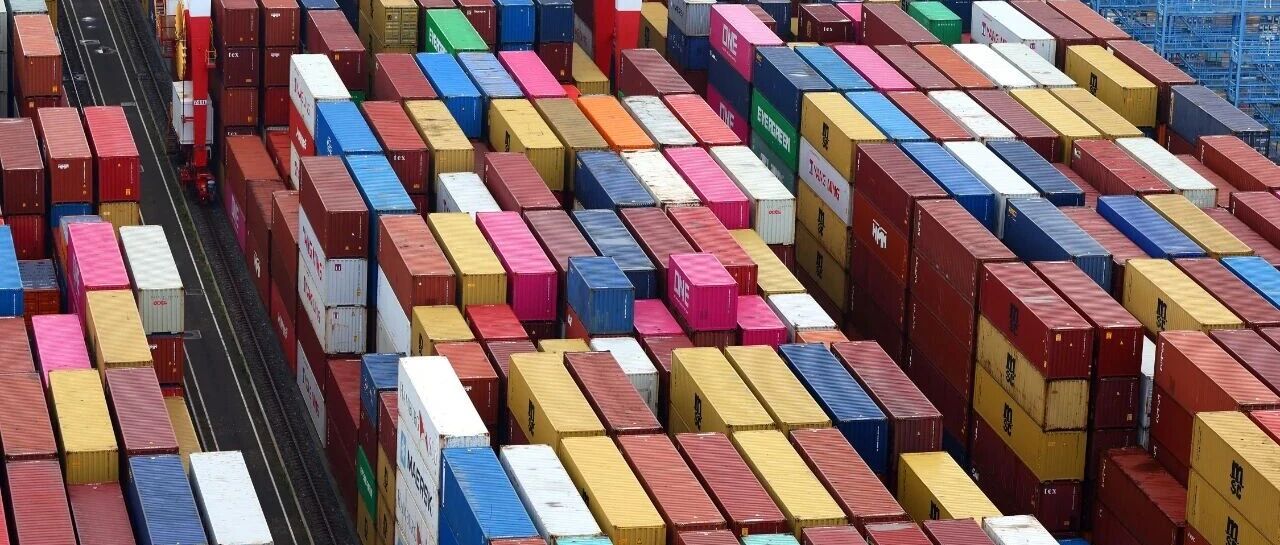
前10个月我国服务进出口总额同比增长7.5%
Zheng Quan Ri Bao· 2025-12-03 16:12
Core Insights - China's service trade has shown steady growth, with total service trade volume reaching 65,844.3 billion yuan, a year-on-year increase of 7.5% [1] - The export of services grew by 14.3% to 29,090.3 billion yuan, while imports increased by 2.6% to 36,754 billion yuan, resulting in a reduced service trade deficit of 7,663.7 billion yuan, down by 2,693.9 billion yuan from the previous year [1] - Knowledge-intensive services are the main driver of China's service trade, with imports and exports totaling 25,121.5 billion yuan, a growth of 6.4% [1] Service Trade Dynamics - The travel service sector has experienced significant growth, with exports reaching 18,125.4 billion yuan, an increase of 8.5%, and exports alone growing by 52.5% [2] - Policy measures such as visa facilitation have been key drivers for the growth in travel services, significantly lowering entry barriers for international tourists [2] - The overall recovery of the global tourism market has also positively impacted China's travel service exports [2] Policy Initiatives - Various regions have introduced policies to enhance service trade development, such as Jiangxi Province's action plan focusing on institutional openness and resource flow [3] - Recommendations for fostering new growth points in service trade include strengthening policy support, addressing cross-border data flow issues, and leveraging platforms for market expansion [3] - Emphasis on aligning with international trade standards and optimizing financial policies to support service trade growth [3]
扩张、增长、突破……透过多维经济数据看中国经济的“稳”与“进”
Yang Shi Wang· 2025-12-03 16:08
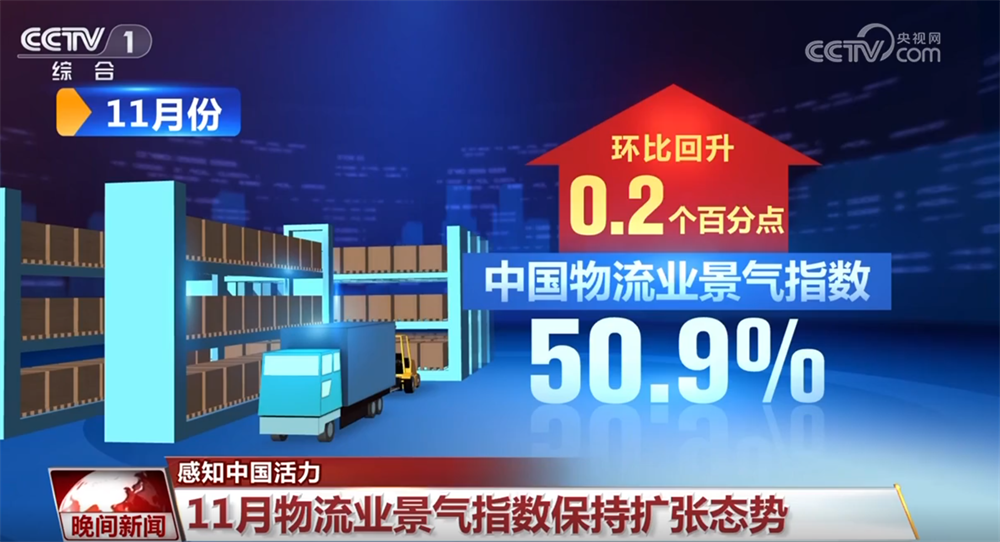
Economic Overview - China's economy shows a steady growth trend, with the logistics industry maintaining an expansionary stance in November [1] - The logistics industry prosperity index for November is reported at 50.9%, reflecting a month-on-month increase of 0.2 percentage points [3] Logistics Industry Insights - The logistics business volume index across eastern, central, and western regions of China is relatively balanced [3] - Demand sectors indicate a rebound in manufacturing, a slowdown in energy, and stable consumption [3] - Key industries such as transportation equipment, home appliances, smart devices, and automotive parts are experiencing strong demand [3] - The postal and express delivery business volume index for November stands at 70.2%, with offline entities, social e-commerce platforms, and comprehensive e-commerce platforms performing steadily [3] Service Trade Performance - In the first ten months, China's service trade imports and exports totaled 65,844.3 billion yuan, marking a year-on-year growth of 7.5% [5] - Service exports reached 29,090.3 billion yuan, growing by 14.3%, while the service trade deficit decreased by 2,693.9 billion yuan [5] - Knowledge-intensive service trade continues to grow, with imports and exports amounting to 25,121.5 billion yuan, a 6.4% increase [5] - The surplus in knowledge-intensive services expanded by 1,036 billion yuan compared to the previous year, reaching 4,254.3 billion yuan [5] Consumer Goods Market - From January to November, the "old-for-new" consumption policy has driven sales of related goods exceeding 25,000 billion yuan, benefiting over 360 million people [7] - The automotive sector saw over 11.2 million vehicles replaced, while home appliances and digital products also experienced significant upgrades [7] - The government has allocated 300 billion yuan in special long-term bonds to support the "old-for-new" consumption initiative [7] Telecommunications Sector - The telecommunications industry has shown overall stability in the first ten months of the year [9] - The user base for 5G, gigabit broadband, and the Internet of Things continues to expand, with 5G mobile phone users reaching 1.184 billion, accounting for 64.7% of mobile phone users [9] - Mobile internet traffic has seen a robust growth, exceeding 320 billion GB, with a year-on-year increase of 16.8% [9]
深圳发布全市首个口岸经济发展措施
2 1 Shi Ji Jing Ji Bao Dao· 2025-12-03 10:53
Core Viewpoint - The Shenzhen Luohu District has officially released measures to promote high-quality development of the port economy, aiming to create a distinctive port economic belt that integrates trade, inbound consumption, demonstration scenarios, and talent exchange. Group 1: Measures Overview - The measures consist of 12 key initiatives across four main areas: industrial development, cross-border consumption, technological innovation, and cultural exchange [2]. - The port economy aims to attract high-value-added products and bulk commodity trade headquarters, develop a digital supply chain platform, and promote cross-border e-commerce [2][3]. Group 2: Trade and Consumption - In goods trade, the focus is on attracting high-value products and establishing a digital supply chain, while in service trade, the goal is to introduce financial institutions and knowledge-intensive service enterprises [2]. - The measures emphasize enhancing cross-border consumption by introducing international flagship stores, developing high-end medical and health management products, and improving cross-border payment systems [2][3]. Group 3: Innovation and Technology - The measures propose the establishment of an AI digital human at the port, promoting services like biometric recognition and smart guidance, and exploring AI applications in customer service and cross-border consumer rights protection [3]. - The low-altitude economy will be developed through drone logistics and high-value low-altitude transportation, optimizing tourism products and creating new business models [3]. Group 4: Cultural and Educational Exchange - The measures aim to create a cultural tourism district and enhance cooperation with Hong Kong educational institutions, establishing a comprehensive cooperation system across various education levels [3]. - A cross-border talent aggregation plan will be implemented, including the establishment of service stations and innovation incubators to foster a vibrant community for young people [3].
10月份我国国际收支货物和服务贸易进出口规模42858亿元
Jin Rong Shi Bao· 2025-12-01 01:09
Core Insights - In October 2025, China's international balance of payments for goods and services trade reached a total scale of 42,858 billion yuan [1] - The goods trade saw exports of 21,630 billion yuan and imports of 15,217 billion yuan, resulting in a surplus of 6,413 billion yuan [1] - The services trade recorded exports of 2,607 billion yuan and imports of 3,404 billion yuan, leading to a deficit of 797 billion yuan [1] Goods Trade - Exports amounted to 21,630 billion yuan, while imports were 15,217 billion yuan, resulting in a surplus of 6,413 billion yuan [1] - In USD terms, exports were valued at 3,416 million USD and imports at 2,625 million USD, yielding a surplus of 792 million USD [1] Services Trade - The main components of services trade included travel services with a total scale of 1,751 billion yuan, transportation services at 1,705 billion yuan, other commercial services at 992 billion yuan, and telecommunications, computer, and information services at 658 billion yuan [1] - The services trade recorded a deficit of 797 billion yuan, with imports exceeding exports [1]
国家外汇管理局:10月我国国际收支货物和服务贸易进出口规模为42858亿元
Sou Hu Cai Jing· 2025-11-28 10:27
Core Insights - In October, China's international balance of payments for goods and services trade reached a scale of 42,858 billion yuan [1] - The goods trade saw exports of 21,630 billion yuan and imports of 15,217 billion yuan, resulting in a surplus of 6,413 billion yuan [1] - The services trade recorded exports of 2,607 billion yuan and imports of 3,404 billion yuan, leading to a deficit of 797 billion yuan [1] Goods Trade - Exports amounted to 21,630 billion yuan, while imports were 15,217 billion yuan, resulting in a surplus of 6,413 billion yuan [1] - In USD terms, exports were 3,416 million USD and imports were 2,625 million USD, yielding a surplus of 792 million USD [1] Services Trade - The main components of services trade included travel services with a total scale of 1,751 billion yuan, transportation services at 1,705 billion yuan, other commercial services at 992 billion yuan, and telecommunications, computer, and information services at 658 billion yuan [1] - The services trade recorded a deficit of 797 billion yuan, with imports exceeding exports [1]
制度红利释放服务出口潜能
Sou Hu Cai Jing· 2025-11-24 22:29
Core Insights - China's service trade has shown steady growth, with total service trade reaching 59,362.2 billion yuan in the first three quarters of this year, a year-on-year increase of 7.6% [2] - The government has implemented a series of policies to support service trade, including the recent issuance of 20 tasks and over 70 specific policy measures aimed at promoting high-quality service trade development [3] - The China Council for the Promotion of International Trade (CCPIT) has organized initiatives to help enterprises expand into international markets, including the "Thousand Groups Going Abroad" campaign [5][6] Service Trade Growth - In the first three quarters, service exports amounted to 26,015 billion yuan, growing by 14.4%, while imports reached 33,347.2 billion yuan, increasing by 2.8% [2] - The increase in service trade is attributed to the implementation of policies that enhance the business environment and promote service industry openness [2] Policy Support - The State Council's recent opinion emphasizes five areas for service trade development, including institutional opening and resource flow, with specific measures to support knowledge-intensive service sectors like digital services and intellectual property [3] - New policy measures include optimizing zero tax rate declaration procedures and enhancing inbound consumption facilitation [3] International Market Expansion - The CCPIT has facilitated 2,249 delegations to 102 countries for market exploration last year, with 1,623 exhibition projects approved this year, covering an exhibition area of 950,000 square meters [5] - The organization aims to enhance international cooperation and support enterprises in participating in global markets [6] Legal Services Enhancement - The revised arbitration law, effective from March 2026, aims to improve China's arbitration system, enhancing its international competitiveness and supporting high-quality development [7] - The establishment of the International Mediation Institute, which focuses on resolving international disputes through mediation, is expected to enhance the legal framework for international trade [8]
中英服务贸易工作组第二次会议在京召开
Shang Wu Bu Wang Zhan· 2025-11-24 12:09
Group 1 - The second meeting of the China-UK Services Trade Working Group was held in Beijing on November 20, 2025, co-chaired by senior officials from the Chinese Ministry of Commerce and the UK Department for Business and Trade [1] - Representatives from various Chinese government departments and local business bureaus, as well as UK trade representatives, participated in the meeting to discuss the current state and key areas of China-UK services trade [1] - The meeting facilitated in-depth exchanges on domestic regulations regarding services trade and the future cooperation prospects between China and the UK [1] Group 2 - The meeting included participation from representatives of service sector enterprises from both countries, fostering dialogue between government and businesses, which yielded positive outcomes [1]
每经记者专访中国(海南)改革发展研究院院长迟福林: 扩大内需发展实体经济 重在大幅降低企业成本
Mei Ri Jing Ji Xin Wen· 2025-11-24 04:09
Group 1 - The service industry contributed 60.5% to economic growth in the first half of the year, an increase of 1.4 percentage points compared to the same period last year, indicating a solidifying role as an economic "ballast" and further optimization of industrial structure [1] - The current consumption structure in China is undergoing rapid upgrades, driven by continuously evolving consumer demand, which strongly supports the growth of the service industry [1][2] - The potential for economic transformation in China is significant, with the service sector having at least 20 percentage points of growth potential, translating to trillions of yuan in consumer demand [4] Group 2 - The key to expanding domestic demand lies in optimizing the business environment, as a poor environment can lead to capital outflow [5] - Reducing corporate costs, particularly tax and institutional transaction costs, is essential for economic transformation and upgrading, as these costs are currently at high levels [5] - The development of the service industry is not yet aligned with the needs of the real economy and the transformation of manufacturing, indicating a need for further adaptation [5] Group 3 - There is a significant gap in service trade between China and the global average, with China's service trade accounting for only 14.5% compared to the global average of 23.8% in 2016, highlighting the need for accelerated market opening in the service sector [6]

服务贸易8年来首次半年度逆差收窄 新兴服务贸易出口大增成重要“推手”
Mei Ri Jing Ji Xin Wen· 2025-11-24 04:09
每经记者|张怀水 每经编辑|王可然 服务贸易一直是我国对外贸易的短板,尽管我国对外贸易总体保持顺差,但服务贸易却长期保持逆差。 然而,今年上半年,我国服务贸易不仅进出口规模创新高,而且逆差出现收窄的趋势。 8月7日,商务部公布2018年上半年我国服务贸易运行情况。商务部服贸司副司长李元介绍,2018年上半 年,我国服务贸易保持平稳较快增长态势,进出口规模创历史新高,结构持续优化,质量和效益进一步 提高,稳中向好势头继续巩固,为服务贸易高质量发展奠定了坚实的基础。"服务贸易逆差规模较上年 同期收窄26.6亿元,是2010年以来的首次半年度逆差收窄。" 据商务部统计,今年1-6月,我国服务进出口总额为25313.3亿元人民币,同比增长8.5%。其中,服务出 口8415.7亿元,同比增长13.6%;服务进口16897.6亿元,同比增长6.1%;逆差8481.8亿元。 李元表示,上半年,服务贸易占对外贸易总额(货物贸易和服务贸易)的比重达15.2%,比上年同期提 升0.1个百分点。服务进出口增速高于同期货物进出口增速0.6个百分点,高于同期服务业增加值增速0.9 个百分点,高于同期国民经济增速1.7个百分点。 值得关 ...