
氨纶

Search documents
氨纶行业的投资机会:“反内卷”背景下
Tianfeng Securities· 2025-08-13 05:43
Investment Rating - Industry rating is Neutral (maintained rating) [1] Core Viewpoints - The domestic spandex industry is highly concentrated, with a current price running at a relatively low level. China is the largest producer and consumer of spandex globally, with production capacity increasing from 89,000 tons in 2003 to 1.35 million tons by 2024, accounting for 77% of global capacity [4][15]. - The industry is currently experiencing an average loss, with the average gross profit per ton of spandex showing a loss of approximately 6,000 yuan, marking a cumulative loss period of 3.5 years [6][24]. - The demand for spandex has been growing rapidly, with the apparent consumption increasing from 121,000 tons in 2005 to 1.027 million tons in 2024, reflecting a CAGR of 11.9% from 2005 to 2024 [8][30]. Summary by Sections 1. Industry Overview - The spandex industry in China is highly concentrated, with the top five producers (CR5) accounting for 79% of the total capacity, which has increased from 61% in 2019 [5][18]. - The industry has faced challenges due to increased supply and tariff policies affecting downstream demand, leading to prices reaching historical low levels [6][24]. 2. Production and Capacity - As of 2024, the total spandex production capacity in China is approximately 1.07 million tons, with major producers including Huafeng Chemical, Xiaoxing China, and New Xiang Chemical [5][18]. - New capacity additions are being delayed or reduced, and there is an expectation of continued capacity elimination in the industry [7][28]. 3. Demand Dynamics - The demand for spandex has been robust, driven by trends in fashion and comfort, with a significant increase in consumption over the years [8][30]. - The spandex market is characterized by a strong growth trajectory, with increasing penetration in various applications [8][30]. 4. Cost Structure and Competitive Landscape - The production cost of spandex varies significantly among companies, with energy consumption and depreciation being key factors affecting cost differences [9][40]. - Companies like Huafeng Chemical and New Xiang Chemical are highlighted as having competitive advantages due to their scale and cost structure [39][41].


政策东风起,化工逆市起舞,细分行业多点开花!机构:“反内卷 ”或仍将是贯穿市场行情的主题
Xin Lang Ji Jin· 2025-08-08 12:46
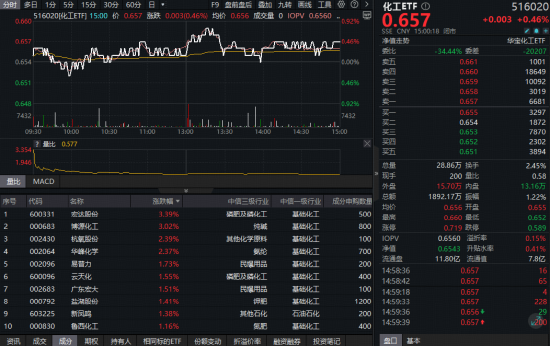
Group 1 - The chemical sector showed resilience on August 8, with the chemical ETF (516020) fluctuating in the red zone, ultimately closing up by 0.46% [1] - Key stocks in the sector, including phosphate fertilizers, soda ash, and spandex, saw significant gains, with Hongda Co. and Boyuan Chemical both rising over 3% [1] - Since July, the chemical ETF has recorded an impressive cumulative increase of 8.3%, outperforming major A-share indices like the Shanghai Composite Index (5.54%) and the CSI 300 Index (4.29%) [4] Group 2 - The chemical sector's price-to-book ratio stands at 2.06, which is at a low point historically, indicating a favorable long-term investment opportunity [5] - The government has been actively addressing "involution" in competition, with multiple departments signaling a crackdown on low-price disorderly competition, which may impact the chemical industry positively [3][6] - Analysts suggest that the chemical sector is likely to experience a replenishment cycle due to anticipated fiscal policy boosts in China and the U.S., alongside a recovery in demand [6] Group 3 - The chemical ETF (516020) tracks the sub-sector chemical industry index, with nearly 50% of its holdings in large-cap leading stocks, providing investors with a strong investment opportunity [7] - The sub-sector chemical index has shown varied annual returns over the past five years, with a notable decline in 2022 and 2023, but a recovery trend is expected [2][8]

ETF盘中资讯|盐湖股份锂盐项目冲刺试车!化工板块逆市飘红,化工ETF(516020)盘中涨近1%!低位迎布局时机?
Sou Hu Cai Jing· 2025-08-08 06:27
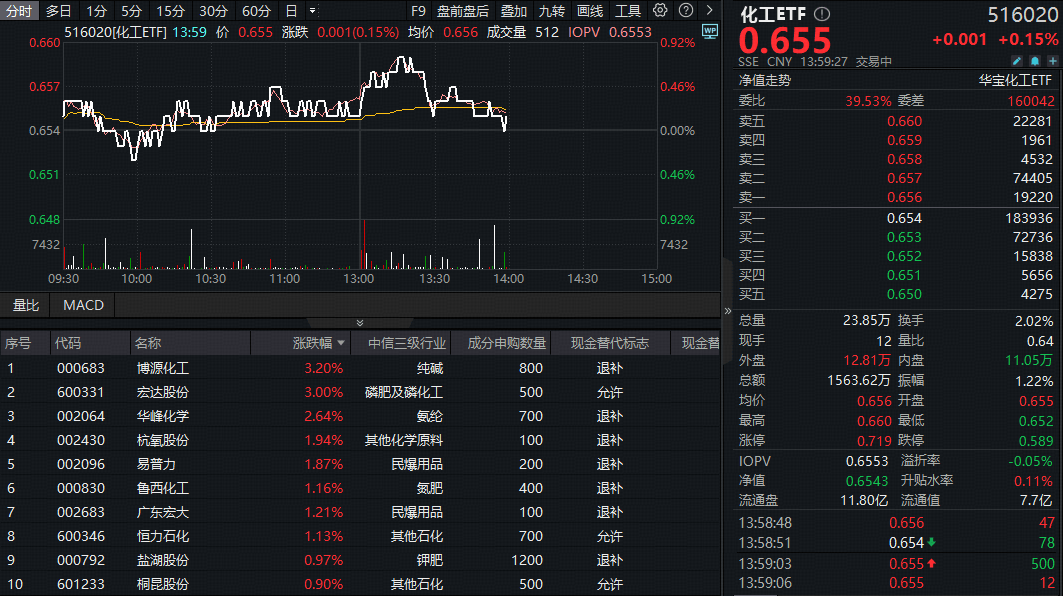
Group 1 - The chemical sector is experiencing an upward trend, with the chemical ETF (516020) showing a slight increase of 0.15% despite market fluctuations [1][4] - Key stocks in the sector, such as Biyuan Chemical and Hongda Co., have seen significant gains, with increases of 3% and 3% respectively, while Huafeng Chemical and others also reported gains exceeding 1% [1][2] - Salt Lake Co. is actively advancing its 40,000-ton lithium salt integration project, aiming to meet its annual construction goals, which reflects the company's commitment to enhancing its industry positioning [3][4] Group 2 - The chemical ETF (516020) is heavily invested in major stocks, with nearly 50% of its portfolio allocated to large-cap leaders like Wanhua Chemical and Salt Lake Co., providing investors with opportunities to capitalize on strong market players [4][5] - The chemical industry is expected to enter a replenishment cycle due to anticipated fiscal policy support from China and the U.S., alongside the exit of certain European facilities, which may boost demand and improve market conditions [4][5] - The valuation of the chemical ETF indicates a favorable long-term investment opportunity, with the index's price-to-book ratio at 2.06, suggesting a low valuation compared to historical levels [3][4]

2025年化工行业“反内卷”系列电话会议—氨纶
2025-08-05 03:15
Summary of the Spandex Industry Conference Call Industry Overview - The spandex market has experienced a price decline since its peak in 2021, with current prices for 40D specifications ranging from 22,000 to 24,000 yuan per ton, indicating intense competition within the industry [1][3][4] - The spandex industry has seen significant capacity expansion since Q4 2021, with total capacity expected to reach 1.54 million tons by the end of 2025, although market oversupply may delay some new capacity from coming online [1][5] - The industry is facing challenges such as slowing demand growth, product homogenization, and difficulties in cost control, leading to significant losses due to high depreciation costs [1][6][7] Key Market Dynamics - The average operating rate in the spandex industry for the first seven months of 2025 was 81.8%, a year-on-year decrease, with leading companies maintaining high utilization rates while others operated at lower rates [1][8] - Spandex production growth slowed to 1.3% in the first half of 2025, with total production nearing 530,000 tons [1][9] - Demand growth during the 13th Five-Year Plan period averaged around 12%, with fluctuations influenced by factors such as the pandemic and changing consumer preferences [1][10] Supply and Demand Trends - Global spandex capacity is projected to reach 1.95 million tons by the end of 2025, with China accounting for approximately 80% of this supply [3][13] - The import volume of spandex yarn decreased by about 30% in the first half of 2025, primarily due to the U.S.-China trade war and increased domestic production capacity [14] - The spandex market is expected to see demand growth of 8% to 9% in the coming years, driven by population growth and trends in health and fitness [24][26] Financial Performance and Challenges - The cash flow situation in the spandex industry has been under pressure, with average cash flows for key products declining from 2021 to 2025 [22] - The average cash flow for 40D spandex is close to the breakeven point, with processing fees varying significantly among companies [4][22] - The industry is experiencing a significant inventory level, with stocks close to 50 days, similar to historical lows [16] Future Outlook - The spandex industry is expected to see a capacity growth rate of around 12% during the 14th Five-Year Plan, but this growth is anticipated to slow down in subsequent years [23][26] - The industry may face further consolidation, with older production facilities being phased out and new investments focusing on differentiated products and cost management [19][27] - The potential for the spandex industry to recover from its current low point and return to a high-growth cycle is acknowledged, with a focus on upstream investment opportunities [27][28]
天风证券:化工子行业“反内卷”关注纯碱、煤化工、有机硅等
Xin Lang Cai Jing· 2025-07-31 00:33
Core Viewpoint - The report from Tianfeng Securities indicates that the chemical industry, particularly segments with high loss levels, high industry concentration, high proportion of outdated capacity, and high operating rates, may serve as a breakthrough point for "anti-involution" in the chemical sector, achieving goals through the shortest path [1] Group 1: Industry Characteristics - Segments such as soda ash, spandex, dyes (including reactive and disperse dyes), coal chemicals (including DMF, caprolactam, octanol, urea, acetate, etc.), polyurethane (TDI, MDI), titanium dioxide, and organic silicon are highlighted as key areas of focus [1] - These segments meet at least two of the specified screening criteria, suggesting they are more likely to experience significant changes [1]

ETF盘中资讯|行情回归!卫星化学飙涨6%,化工ETF(516020)盘中猛拉超2%!超20亿主力资金杀入
Sou Hu Cai Jing· 2025-07-30 02:23
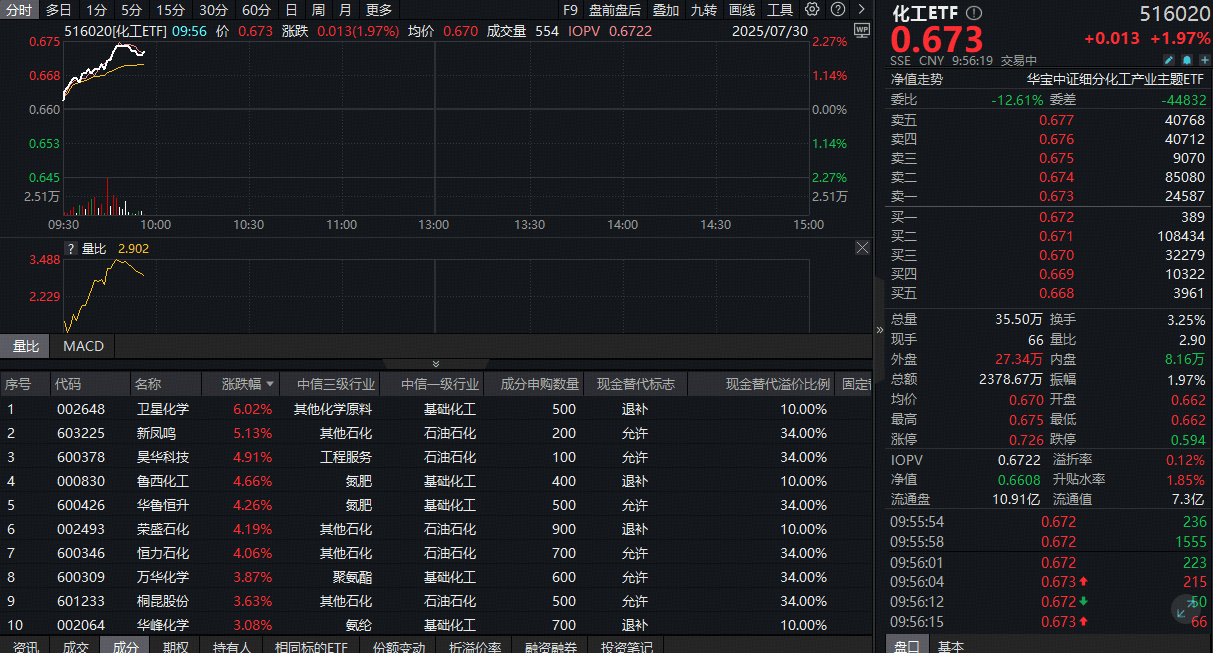
Group 1 - The chemical sector experienced a strong opening on July 30, with the chemical ETF (516020) rising over 2% during intraday trading, reflecting overall positive momentum in the sector [1] - Key stocks in the sector, including Satellite Chemical, Xin Fengming, and others, saw significant gains, with Satellite Chemical surging over 6% and several others rising more than 4% [1][2] - The basic chemical sector attracted substantial capital inflow, with net inflows exceeding 2.2 billion yuan, ranking second among 30 major sectors [1][3] Group 2 - The domestic chemical industry is facing a cycle of "expansion-price suppression-loss," leading to deteriorating profitability and a need for capacity constraints to break this cycle [3] - Leading companies in the chemical sector are expected to benefit significantly due to their lack of obsolete capacity, cost advantages, and high market share, which positions them well for profitability [3] - Current valuation metrics suggest that it may be an opportune time to invest in the chemical sector, with the chemical ETF's price-to-book ratio at 2.08, indicating a low valuation relative to historical levels [4] Group 3 - The market anticipates a policy shift towards "de-involution," which could lead to a re-pricing of cost factors in the chemical sector, similar to the effects seen during the supply-side reform period [4] - Investors are encouraged to focus on cyclical basic chemical products and leading companies with cost advantages as potential investment opportunities [4] - The chemical ETF (516020) provides a diversified investment approach, covering various sub-sectors and concentrating on large-cap leading stocks, which enhances investment efficiency [5]



北交所策略专题报告:氨纶行业竞争格局进一步改善,关注北交所美邦科技
KAIYUAN SECURITIES· 2025-07-20 14:44
Group 1 - The spandex industry is experiencing significant capacity exits, which is expected to alleviate the oversupply situation. Korean Taekwang Group announced the suspension of some spandex production lines at its Chinese subsidiary starting July 14, 2025, marking the first closure of a spandex plant in China by the group [1][10][11] - Xiaoxing Spandex has already shut down 8 production lines by the end of 2023, with plans to close 2 more in July 2025 and an additional 2 by March 2026, ultimately ceasing operations by the end of 2026. The core raw material PTMG (polytetramethylene ether glycol) has seen a 23% year-on-year increase in costs due to high international oil prices, but domestic companies have achieved over 80% localization of PTMG, reducing costs to 60% of imported products [1][11][12] - In 2024, the proportion of domestic spandex procurement by Chinese sports brands surpassed 75% for the first time, with leading companies like Anta and Li Ning collaborating with spandex manufacturers to create a closed-loop ecosystem from R&D to production. Foreign brands have seen their market share shrink to less than 12% [2][11][12] Group 2 - The chemical new materials sector on the North Exchange saw a weekly increase of 0.10%, ranking third among five major industries. The rubber and plastic products sector rose by 1.36%, while textile manufacturing fell by 3.08% [3][19][20] - Notable individual stock performances included Guangxin Technology (+8.66%), Kaida Catalysis (+8.26%), and Yinuowei (+8.16%), indicating strong market activity within the chemical new materials sector [3][23][24] - The price trends for chemical products showed a 1.5% decrease in Brent crude oil prices, while TDI prices surged by 23% and MDI prices increased by 1.8% [27][29][35]
兴业证券:化工行业仍处底部区间 建议主要聚焦具相对确定性领域
智通财经网· 2025-05-20 06:10
Core Viewpoint - The chemical industry is currently at the bottom of its cycle, with prices and spreads still stabilizing, while demand is expected to improve with government policies aimed at economic recovery [1] Group 1: Industry Overview - The chemical industry is experiencing a bottoming phase, with most chemical prices and spreads still in a stabilization process [1] - Domestic capacity is gradually being released, leading to a significant slowdown in supply growth [1] - The report suggests focusing on sectors with relatively certain demand, such as agricultural chemicals and the civil explosives industry benefiting from western development [1] Group 2: Key Recommendations - Emphasis on long-term value of leading companies in the chemical sector, as core assets are expected to see profit and valuation recovery [1] - Recommended leading companies include Wanhua Chemical, Hualu Hengsheng, Huafeng Chemical, Longbai Group, Yangnong Chemical, New Hecheng, Satellite Chemical, Baofeng Energy, Hengli Petrochemical, and Rongsheng Petrochemical [1] Group 3: Subsector Insights - Agricultural chemicals show rigid demand, with steady growth in grain planting area and recovery in compound fertilizer volume and profit [2] - The civil explosives industry is driven by domestic demand, particularly in regions like Xinjiang and Tibet, with increasing concentration benefiting leading companies [2] Group 4: New Material Opportunities - The domestic replacement of chemical new materials is accelerating due to trade tariffs and anti-monopoly pressures [3] - Key areas include adsorption separation materials, lubricating oil components, OLED materials, and high-end photoresists, with specific companies recommended for investment [3] Group 5: Price Recovery Potential - Certain sectors may see profit improvements as supply growth slows and policy constraints are anticipated, particularly in organic silicon and spandex industries [4] - The petrochemical sector may present strategic opportunities following a potential bottoming of oil prices, with recommendations for strategic layouts in refining and downstream polyester filament industries [4]


5月14日早间重要公告一览
Xi Niu Cai Jing· 2025-05-14 04:00
Group 1: 华峰化学 - Company decided to terminate the acquisition of 100% equity in Zhejiang Huafeng Synthetic Resin Co., Ltd. and Zhejiang Huafeng Thermoplastic Polyurethane Co., Ltd. due to insufficient shareholder approval [1] - The decision was made based on prudence, as the proposal did not receive more than two-thirds of the valid voting rights at the shareholders' meeting [1] - Company will continue to promote related equity injection work and strictly fulfill asset injection commitments [1] Group 2: 中荣股份 - Actual controller and chairman Huang Huanran has been placed under residential surveillance by the police [2] - Other board members and senior management are performing their duties normally, and the board of directors is operating as usual [2] - Company specializes in the research, design, production, and sales of paper printing and packaging products [2] Group 3: 密尔克卫 - Three shareholders plan to reduce their holdings by a total of up to 2% of the company's shares through block trading [3] - The reduction includes 143.63 million shares, 97.65 million shares, and 75.03 million shares, representing 0.91%, 0.62%, and 0.47% of the total share capital respectively [3] - The reduction period is from June 6, 2025, to September 5, 2025, due to personal funding needs [3] Group 4: 舒泰神 - Subsidiary Jiangsu Beijietai Biotechnology Co., Ltd. has obtained a drug production license from the Jiangsu Provincial Drug Administration [4] - The license allows for the production of therapeutic biological products, specifically for registered declaration use [4] - The license is valid until May 7, 2030, and is not expected to have a significant impact on the company's current performance [4] Group 5: 捷顺科技 - Company won the bid for the "Chongqing Beautiful Sunshine Home and other public rental housing supporting parking space operation project" [5] - The project includes four public rental housing supporting parking lots with a total of 13,335 parking spaces [5] - The minimum guaranteed revenue for the project is quoted at 40.43 million yuan per year, with a total contract amount expected to exceed 100 million yuan [5] Group 6: 综艺股份 - Company signed an investment cooperation intention agreement to acquire control of Jiangsu Jilai Microelectronics Co., Ltd. through cash capital increase or share transfer [6] - Jilai Micro primarily engages in the research, production, and sales of power semiconductor chips and devices [6] - The transaction is expected to constitute a major asset restructuring [6] Group 7: 东山精密 - Subsidiary DSBJ PTE. LTD. plans to acquire 100% equity of French GMD Group for approximately 100 million euros (about 814 million yuan) [7] - The acquisition aims to advance the company's globalization strategy and enhance its market share in the automotive parts sector [7] - The company specializes in the research, production, and sales of electronic circuit products and precision components [7] Group 8: 诺诚健华 - Company reported a net profit of 17.97 million yuan for the first quarter of 2025, a significant turnaround from a loss of 142 million yuan in the same period last year [8] - The first quarter revenue reached 381 million yuan, representing a year-on-year growth of 129.92% [8] - The company focuses on the research, production, and commercialization of innovative drugs [8] Group 9: 凯美特气 - Shareholders plan to reduce their holdings by up to 3% of the company's shares through centralized bidding and/or block trading [9] - The total number of shares to be reduced is 20.86 million [9] - The reduction is due to personal funding needs [9] Group 10: 海创药业 - Controlling shareholder plans to reduce holdings by up to 2% of the company's shares through centralized bidding and block trading [10] - The total number of shares to be reduced is 1.98 million [10] - The reduction is due to personal funding needs [10] Group 11: 高争民爆 - Controlling shareholder plans to reduce holdings by up to 3% of the company's shares through centralized bidding and block trading [11] - The total number of shares to be reduced is 828,000 [11] - The reduction is due to the company's funding needs [11] Group 12: 金埔园林 - Two shareholders plan to reduce their holdings by a total of up to 1.91% of the company's shares [12] - The reductions include 183.93 million shares and 167.73 million shares [12] - The reasons for the reductions are asset optimization and personal funding needs [12] Group 13: 掌趣科技 - The largest shareholder plans to reduce holdings by up to 1% of the company's shares through centralized bidding or block trading [13] - The total number of shares to be reduced is 27.2 million [13] - The reduction is due to personal funding needs [13] Group 14: 美凯龙 - Company announced that its director and general manager has been placed under investigation and detention by the local supervisory committee [14] - Other board members and senior management are performing their duties normally, and daily operations are unaffected [14] - The company specializes in managing and operating self-operated and franchised shopping malls [14] Group 15: 新强联 - Major shareholder plans to reduce holdings by up to 1.89% of the company's shares through centralized bidding and block trading [15] - The total number of shares to be reduced is 717,490 [15] - The reduction is due to operational needs [15] Group 16: 日月明 - Shareholder plans to reduce holdings by up to 1% of the company's shares through centralized bidding [16] - The total number of shares to be reduced is 80,000 [16] - The reduction is due to personal funding needs [16] Group 17: 同有科技 - Major shareholder and vice president plan to reduce their holdings by up to 1.53% of the company's shares [17] - The total number of shares to be reduced is 730,850 [17] - The reduction is due to personal funding needs [17] Group 18: 爱尔眼科 - Subsidiary successfully acquired 60% equity and specific debt of Shenzhen Guangsheng Digital Technology Co., Ltd. for 650 million yuan [18] - The transaction constitutes a related party transaction [18] - The acquired asset will serve as long-term medical premises for the subsidiary [18]


化工行业周报2025年5月第1周:活性染料、PTA价格涨幅居前,建议关注机器人相关化工材料-20250506
CMS· 2025-05-06 06:02
Investment Rating - The report maintains a recommendation for the chemical industry, indicating a positive outlook for the sector [6]. Core Viewpoints - The report highlights the significant price increases in active dyes (+10%) and PTA (+3.17%), suggesting potential investment opportunities in companies related to these products [4][20]. - It recommends focusing on companies like Huaitong Co., which is expected to benefit from the application of modified plastics in the robotics sector, and Runtong Co., which may gain from the rising prices of active dyes [5]. Industry Performance - In the first week of May, the chemical sector (Shenwan) experienced a decline of 0.50%, slightly underperforming the Shanghai A-share index, which fell by 0.49% [2][12]. - The dynamic PE ratio for the chemical sector stands at 24.05, which is lower than the average PE of 11.90 since 2015 [2][12]. Sub-industry Trends - Among the 15 sub-industries, five saw increases, with daily chemical products leading at +8.85%, while five sub-industries experienced declines, with synthetic leather dropping by -8.89% [3][15]. Price and Spread Trends - The report lists the top five products with the highest weekly price increases: active dyes (+10%), PTA (+3.17%), and butadiene (+2.86%) [4][20]. - The report also notes significant changes in price spreads, with the melamine spread increasing by +73.47% and the PTA spread by +39.52% [4][36]. Inventory Changes - Key products with notable inventory changes include potassium chloride (-17.88%) and epoxy propane (-8.96%), indicating shifts in supply dynamics [5][56].


