
种植业

Search documents
抓春管 抢农时 希望的田野万象“耕”新描绘振兴新图景
Yang Shi Wang· 2026-02-25 01:48
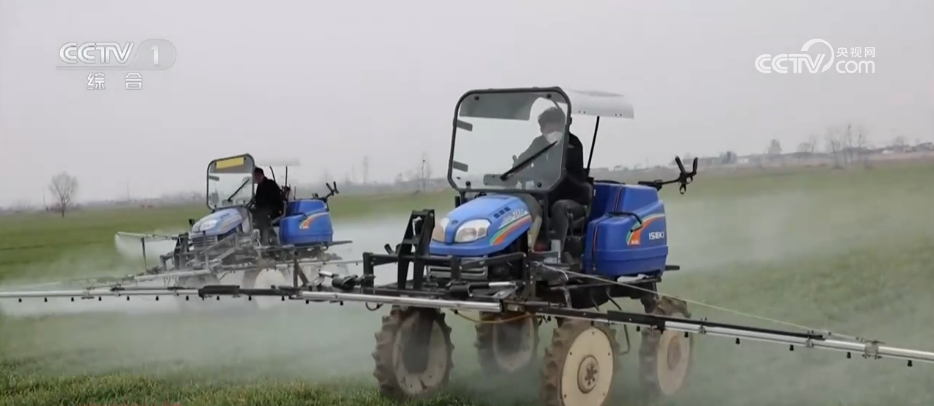
Group 1 - The winter wheat in Anhui province's Ying Shang County, covering 1.5 million acres, is entering the greening period, which is critical for water and fertilizer demand and yield formation [4] - Due to last year's autumn floods, over 80% of the winter wheat was sown late, resulting in generally weak seedling growth [4] - A total of 30 specialized pest control service teams and over 360 agricultural technicians are providing guidance to farmers in the region [4] Group 2 - The early rice seedling preparation is currently in a crucial phase in Jiangxi's Xinyu, where multiple agricultural service teams are assisting farmers in seedling cultivation [6] - In Guangdong, the area for centralized early rice seedling preparation has exceeded 2 million acres, with intensive efforts underway post-Chinese New Year [7][9] - Automated seedling production lines in newly established greenhouses are enhancing seedling quality and reducing costs per acre, with the first batch of seedlings expected to be transplanted after the Spring Festival [9]

今年农业主导品种和主推技术发布
Liao Ning Ri Bao· 2026-02-25 00:57
Core Insights - The provincial agricultural department has released the leading agricultural varieties and promoted technologies for 2026, aiming to guide local agricultural production [1][2] - The selected leading varieties include 88 types such as corn, rice, peanuts, and fruits, while the promoted technologies encompass 90 items including rice straw returning and high-efficiency production techniques for mushrooms [1] Group 1 - The highlighted variety, Salt Jiang 219, is recognized for its strong resistance to rice blast disease and excellent rice quality, achieving an average yield of 600 to 650 kilograms per mu, with a significantly higher purchase price compared to ordinary rice [1] - The initiative aims to leverage technology to enhance the yield of major grain and oil crops, support the development of specialty industries, and ensure stable supply of important agricultural products [1] - The provincial agricultural department encourages localities to select and announce their annual leading agricultural varieties and promoted technologies based on the needs of local agricultural producers [1] Group 2 - The provincial agricultural department emphasizes the importance of demonstration bases and leading entities to implement the selected varieties and technologies for improving agricultural quality and efficiency [2] - There is a focus on mobilizing public agricultural technology promotion institutions and social service organizations to enhance technical guidance and training [2] - The goal is to continuously improve the rate of technology adoption and implementation, facilitating agricultural transformation and high-quality development [2]
打好备耕春播主动仗
Xin Lang Cai Jing· 2026-02-24 18:21
本报黄南讯 (记者 芈峤) 2月24日,记者从黄南藏族自治州农牧局了解到,当地围绕农牧业农牧区高 质量发展,早谋划、早动员、早部署,多措并举抓实备耕春播各项工作,全力推进重点任务落地,奋力 实现一季度经济和农业生产"开门红"。 为夯实生产基础,黄南州深入实施"四良两优"工程,将省上既定的种植任务细化分解至市县、乡镇、村 组,严格落实"日调度、周督查、月通报"机制,每月开展实地督导,力争一季度完成粮食播种5666公 顷、油料播种1666公顷、蔬菜种植53公顷。 在提升生产质量和激活生产动力上,黄南州双管齐下。一方面选派技术骨干下沉一线开展指导,统筹乡 镇、农业农村、供销等部门做好农资具储备,目前已储备各类优势农作物良种98.8万公斤;另一方面足 额落实强农惠农补贴,首批农机购置、耕地地力保护、小麦"一喷三防"等补贴资金已全部下拨,同时完 成2600台农机具检修保养,切实激发农民种粮积极性。 当地强化监管守牢生产安全底线,开展"春季农资打假护农百日行动",加强农资市场监管,严厉打击制 假售假行为,同步关注天气预警、开展灾害防范指导,目前已下派农技人员20余人次。此外,以项目建 设为抓手,落实第一批衔接资金2865 ...
人勤春来早·抓春管 抢农时
Yang Shi Wang· 2026-02-24 18:11
Group 1 - The article highlights the arrival of spring and the busy agricultural activities, particularly focusing on the growth of winter wheat and the critical period for early rice seedling cultivation [1] - It emphasizes the role of technology in enhancing seedling quality and strength during the early rice cultivation phase [1]
美国农业部(USDA)月度供需报告数据分析专题:美国 2026 年牛价景气预计维持,基于南美丰产再上调全球大豆期末库存-20260224
Guoxin Securities· 2026-02-24 12:54
Investment Rating - The report maintains an "Outperform" rating for the agricultural sector [1][5][7] Core Insights - The agricultural sector is expected to experience a cyclical recovery, with specific commodities showing signs of price stabilization and potential upward trends [1][3][4] - The USDA's February supply and demand report indicates adjustments in global inventory levels for various crops, impacting market dynamics [1][2][3][4] Summary by Relevant Sections Corn - Global corn production is forecasted to decrease by 1 million tons to 1.296 billion tons, with a reduction in ending stocks ratio by 0.17 percentage points to 22.21% [14][15] - Domestic corn prices are at historical lows, with a current price of 2318 CNY/ton, showing a month-on-month increase of 0.56% and a year-on-year increase of 7.12% [17] Soybeans - The USDA report predicts a 2.5 million ton increase in global soybean production, with ending stocks rising by 1.1 million tons to 126 million tons, resulting in a stocks-to-use ratio of 29.55% [33][34] - Domestic soybean meal prices are showing strong support, with expectations for Brazilian soybean supply to increase post-March 2026 [35] Wheat - Global wheat production is expected to decrease by 370,000 tons, with ending stocks ratio down by 0.10 percentage points to 33.68% [47][48] - Domestic wheat prices are currently at 2531 CNY/ton, reflecting a month-on-month increase of 0.78% [50] Sugar - The market anticipates a stable supply of sugar due to favorable weather conditions, with prices expected to remain weak [2][4] Cotton - Global cotton production is projected to decline, while demand is expected to rise, maintaining a loose supply-demand balance [2][4] Beef - The report forecasts a stable upward trend in U.S. beef prices, with a projected decrease in production for 2026 [3][4] - Domestic beef prices are expected to stabilize due to reduced supply and increased demand [3] Dairy - U.S. milk ending stocks are slightly adjusted upwards, with expectations for domestic milk prices to rise due to supply constraints [3][4] Pork - U.S. pork production is expected to increase slightly, with prices anticipated to remain high [4][6] Poultry - The U.S. chicken market is expected to recover, with domestic demand supporting price stabilization [6][4] Investment Recommendations - Recommended stocks include leading companies in livestock, pork, poultry, and feed sectors, such as YouRan Agriculture and MuYuan [5][7]
行业轮动ETF策略周报-20260224
金融街证券· 2026-02-24 12:53
Core Insights - The report emphasizes the construction of a strategy portfolio based on industry and thematic ETFs, leveraging insights from previous strategy reports on industry rotation and ETF market overview [2]. Strategy Update - The strategy portfolio includes various ETFs with specific holdings and weightings, such as: - Wine ETF with a market value of 184.16 billion, holding a significant position in the liquor industry (84.84%) [3]. - Real Estate ETF valued at 6.61 billion, fully invested in real estate development (100%) [3]. - Tourism ETF at 88.57 billion, primarily focused on the aviation and airport sector (33.21%) [3]. - New additions include Agriculture and Fishery ETF and Grain ETF, with respective holdings in aquaculture (46.89%) and planting (49.63%) [3]. - The strategy's performance for the period from February 9 to February 13, 2026, showed a cumulative net return of approximately -0.38%, underperforming the CSI 300 ETF by about -0.85% [3]. Performance Tracking - Since October 14, 2024, the strategy has achieved a cumulative return of approximately 37.93%, outperforming the CSI 300 ETF by about 14.43% [3][4]. - The report includes a performance chart illustrating the cumulative return of the industry rotation ETF strategy since its inception [4]. Weekly Holdings and Performance - The report details the weekly performance of various ETFs, indicating that the strategy will continue to hold Wine, Real Estate, Tourism, and Traditional Chinese Medicine ETFs while adding Agriculture and Grain ETFs [11]. - The average return of the ETF portfolio for the week was -0.38%, with a notable underperformance compared to the CSI 300 ETF [11].
广东省加快建设农业强省 农民收入增速连续16年跑赢城镇居民
Zhong Guo Fa Zhan Wang· 2026-02-24 09:39
Group 1: Agricultural Development in Guangdong - Guangdong has implemented the "Hundred Counties, Thousand Towns, and Ten Thousand Villages High-Quality Development Project" to achieve significant agricultural growth, with the primary industry value ranking second nationally and rural incomes outpacing urban residents for 16 consecutive years [1] - The agricultural output value of five major industries in Qingyuan has increased by 15.1%, with Qingyuan chicken, bamboo shoots, and Yingde black tea each exceeding 10 billion yuan in output value [1] - The province has created 12 national advantageous characteristic industrial clusters and 24 national modern agricultural parks, focusing on cultivating agricultural industry clusters worth hundreds of billions and tens of billions [6] Group 2: Food Security and Grain Production - Guangdong has achieved record-high grain yields, with rice production exceeding 500 kg per mu for four consecutive years, contributing to local food security [2][3] - The province's comprehensive grain production capacity has increased from 12.38 million tons in 2021 to 12.98 million tons by 2025, marking a continuous increase in grain output [3] - Guangdong is enhancing its food supply system by developing marine ranches and modernizing fishing ports, leading the nation in total aquatic product output and marine fish farming [3] Group 3: Rural Infrastructure and Living Conditions - Guangdong has made significant improvements in rural living conditions, with 90% of natural villages achieving wastewater treatment and 97% of rural households having sanitary toilets [8][9] - The province has constructed or renovated approximately 46,000 green houses and planted over 42 million trees in villages, enhancing the rural environment [9] - Rural infrastructure has been upgraded, with 99.3% of rural areas having access to tap water and 83.5% of administrative villages connected to dual-lane roads [9] Group 4: Rural Industry and Employment - The development of the Baijiao sea bass industry in Zhuhai has created an agricultural value chain worth over 18 billion yuan, benefiting over 2,000 farming households [5] - The cultivation of lychee in Guangdong has reached the highest area, output, and value in the country, contributing to the growth of the Lingnan fruit industry cluster [7] - The "Meizhou pomelo" brand has achieved a public brand value of 22.75 billion yuan, showcasing the successful establishment of a complete industrial chain for local agricultural products [6][7]
超大现代(00682.HK)发盈警 预计中期股东应占亏损约1000万元
Sou Hu Cai Jing· 2026-02-24 09:38
超大现代(00682.HK)发布公告,集团预期截至2025年12月31日止期间取得公司拥有人应占亏损约人民币 1000万元,而截至2024年12月31日止六个月期间则取得公司拥有人应占亏损约人民币700万元。董事会 认为该预期亏损增加主要由于与去年同期相比较,预期应收贸易款项减值亏损增加约人民币300万元。 截至2026年2月24日收盘,超大现代(00682.HK)报收于0.27港元,下跌10.17%,成交量10.51万股,成交 额2.83万港元。投行对该股关注度不高,90天内无投行对其给出评级。 超大现代港股市值5833.01万港元,在种植业行业中排名第2。主要指标见下表: 以上内容为证券之星据公开信息整理,由AI算法生成(网信算备310104345710301240019号),不构成 投资建议。 ...

【新春走基层】黑龙江宝清县:产业园里春意浓 乡村振兴硕果丰
Zhong Guo Fa Zhan Wang· 2026-02-24 08:32
Core Insights - The agricultural industrial park in Baoqing Town, built with over 5.22 million yuan of government investment, utilizes advanced greenhouse technology to cultivate strawberries and persimmons during winter, enhancing local agricultural productivity [1][2] - The park is expected to generate an annual revenue of 1.25 million yuan, benefiting local villages and over 900 impoverished households, while also providing numerous job opportunities for local residents [2] Summary by Sections Agricultural Production - The industrial park covers an area of 70,000 square meters and includes 6 warm greenhouses and 2 cold greenhouses, officially operational since October 2025 [1] - Expected yields include 5,000 jin (2,500 kg) of strawberries per warm greenhouse at a pre-sale price of 50 yuan per jin, and 10,000 jin (5,000 kg) of persimmons per warm greenhouse at a pre-sale price of 20 yuan per jin [1] Economic Impact - The park will increase the annual income of the collective in Baoqing Town by over 1.05 million yuan, and contribute an additional 75,000 yuan to neighboring villages [2] - It is projected to provide a total of 120,000 yuan in annual income for over 900 impoverished households, supporting local infrastructure and public welfare initiatives [2] Employment and Skill Development - The agricultural park prioritizes hiring local villagers and impoverished households for construction, management, and sales roles, facilitating "employment at the doorstep" [2] - Local residents are receiving training in advanced agricultural techniques from professional technicians, laying the groundwork for future independent agricultural development [2]
诺普信:蓝莓出口东南亚市场机会巨大,公司正在全力布局与开拓
Zheng Quan Ri Bao Wang· 2026-02-24 06:50
Core Viewpoint - The company is focusing on expanding its blueberry export opportunities in the Southeast Asian market and is prioritizing variety innovation through strategic partnerships [1] Group 1 - The company has identified significant opportunities for blueberry exports in the Southeast Asian market [1] - The company is actively working on layout and expansion strategies to tap into these opportunities [1] - The company has signed a licensing agreement with MBO to optimize its variety resource structure [1] Group 2 - The partnership with MBO is aimed at enhancing the company's competitiveness and sustainability in the blueberry industry chain [1]
