能源电力

Search documents
盘后,深圳发布重大利好!
摩尔投研精选· 2025-10-22 10:54
Core Viewpoint - The article discusses the current state of the A-share market, highlighting a mixed adjustment with all three major indices experiencing slight declines. It emphasizes the importance of foreign investment perspectives and recent policy initiatives in Shenzhen aimed at promoting mergers and acquisitions for high-quality development. Group 1: Market Performance - The A-share market showed a mixed adjustment with all three major indices slightly down, with the Shanghai Composite Index down 0.07%, the Shenzhen Component Index down 0.62%, and the ChiNext Index down 0.79%. Nearly 3000 stocks closed in the red [1] - The trading volume in the Shanghai and Shenzhen markets was 1.67 trillion yuan, reflecting a decrease of 206 billion yuan compared to the previous trading day, marking the first drop below 1.7 trillion yuan since August 5 [1] Group 2: Foreign Investment Insights - Goldman Sachs analysts predict a slow bull market for Chinese stocks, suggesting that investors should shift their mindset from "selling on highs" to "buying on lows." They forecast a 30% upside for the MSCI China Index over the next two years, driven by a 12% trend in earnings growth and a 5% to 10% potential for further revaluation [2][3] Group 3: Economic Growth Factors - The article outlines four key reasons for the optimistic outlook on the Chinese market: 1. A favorable policy window has opened, combining demand-side stimulus measures with the new five-year plan to rebalance economic growth and mitigate external risks [3] 2. Accelerated economic growth in China, driven by AI-related capital expenditures and counter-cyclical policies, is expected to boost corporate earnings growth rates to a range of 10% to 15% [4] 3. Current valuations of Chinese stocks are attractive, with the price-to-earnings ratio in the medium range and lower yields on bonds, making them appealing compared to global stocks [5] 4. Strong capital flows into the stock market, with a structural shift in domestic capital and renewed interest from global investors seeking diversification [6] Group 4: Shenzhen Policy Initiatives - On October 22, Shenzhen released a significant policy document aimed at promoting high-quality development through mergers and acquisitions, targeting a total market capitalization of over 20 trillion yuan for listed companies by 2027 and fostering 20 companies with a market value of over 100 billion yuan [7][8] - The plan emphasizes mergers and acquisitions in strategic emerging industries such as integrated circuits, AI, new energy, and biomedicine, encouraging companies to enhance their capabilities through acquisitions [8][9] - Financial support mechanisms for mergers and acquisitions include loans, bonds, and insurance solutions to facilitate the process and ensure operational stability [9][10]


重磅!南网数研院在京成立新公司
中国能源报· 2025-10-21 13:45
Core Viewpoint - The establishment of the Digital Consulting Company by the Southern Power Grid aims to support state-owned enterprises in their digital transformation, addressing challenges such as organizational support and short-term profit focus [1][2]. Group 1: Company Establishment and Purpose - The Digital Consulting Company was inaugurated on October 19, focusing on digital transformation and cybersecurity as core strategic directions for central state-owned enterprises [1]. - The company has developed a comprehensive set of methodologies and solutions for digital transformation, leveraging Southern Power Grid's experience in digital grids and artificial intelligence [1][2]. - The establishment is a strategic move by Southern Power Grid to enhance its brand and expand its market presence nationally [2]. Group 2: Consulting Services and Framework - The company has organized a consulting service framework consisting of 15 product categories to assist clients in defining transformation directions and ensuring effective implementation [2]. - The consulting services cover strategic planning, top-level design, implementation control, and system construction, aimed at systematic advancement of digital transformation [2]. Group 3: Talent Development and Future Goals - Talent is identified as the core competitive advantage for consulting services, with the company focusing on building a high-quality professional team through internal knowledge transfer and market recruitment [2]. - The future goal is to enhance the operational efficiency of state-owned assets and contribute to the high-quality development of digital transformation in China, starting from the energy and power sector [3].
南方电网能源发展研究院2026年校园招聘公告
中国能源报· 2025-10-21 09:57
Company Overview - Southern Power Grid Energy Development Research Institute (referred to as "Southern Power Energy Institute") is a wholly-owned subsidiary of China Southern Power Grid Co., Ltd. It serves as a think tank and planning research center for the Southern Power Grid Company, focusing on energy strategy and policy research, operational management, investment and finance, and consulting services [3][4] - The institute is recognized as a national high-tech enterprise and is a key member of various associations, including the China Electricity Council and the China Energy Research Society. It has also established the first domestic academic organization for electricity-carbon coupling technology [4] Career Development - The energy and electricity industry presents vast development opportunities, driven by the "dual carbon" goals and the construction of a new power system. The institute offers a platform for career advancement and specialized training for high-level talents [5] - A comprehensive training system is in place to facilitate rapid growth from new employees to industry experts [5] - The performance evaluation system rewards contributions, ensuring that every effort is recognized and compensated [5] Recruitment Needs - The institute is recruiting graduates from major universities for the 2026 academic year, focusing on positions in power production, management, and various specialized fields [6][7] - Specific educational and professional requirements are outlined for various roles, including electrical engineering, energy technology, civil engineering, and international relations [7][8] Recruitment Process - The recruitment process includes resume submission, qualification review, written tests, interviews, and background checks [10][11] - Candidates must submit their resumes through the Southern Power Grid recruitment system, ensuring all information is accurate and complete [11] - The written test and interview notifications will be communicated via phone, SMS, or email to selected candidates [12][13] Important Notes - Candidates are responsible for the accuracy of their application information, and any discrepancies may lead to disqualification [14] - The recruitment process does not involve any fees, and the institute does not endorse any external training or materials related to the recruitment [14]

国际产业新闻早知道:市场聚焦中美贸易磋商, IMF上调全球经济成长展望
Chan Ye Xin Xi Wang· 2025-10-21 06:04
Group 1: US-China Trade Relations - The US has identified rare earths, fentanyl, and soybeans as key issues in its negotiations with China [2] - China's stance on trade issues emphasizes that trade wars are not in the interest of either party and should be resolved through equal and respectful negotiations [2] Group 2: Impact of US Tariffs on India - Following the implementation of a 50% tariff on Indian goods, India's exports to the US have declined significantly, with a 37.5% drop over the past four months [7] - The textile and pharmaceutical industries are among the most affected, with the textile sector expecting a further decline of over 25% in exports [8] - In response to the tariff impacts, India is seeking to increase exports to non-US markets, with a reported 10.9% growth in exports to these markets in September [10] Group 3: Semiconductor Industry Developments - Nvidia announced the production of its first Blackwell chip wafer in the US, marking a significant step in reshaping the domestic semiconductor supply chain [47][55] - The US government is considering new regulations requiring semiconductor manufacturers to match domestic production with imports, aiming to reduce reliance on foreign supply chains [49][50] Group 4: AI and Semiconductor Innovations - Arm is expanding its AI licensing program to attract startups and device manufacturers by lowering entry barriers [32] - A new mixed CMOS chip with six-layer stacking has been developed, enhancing performance and miniaturization of electronic devices [51][52] Group 5: Global Supply Chain Challenges - The semiconductor supply chain is facing uncertainty due to the ongoing situation with ASML, which is critical for automotive chip production [70] - The Dutch government is seeking to resolve the impasse with China regarding ASML, emphasizing the need for cooperation to stabilize the global semiconductor supply chain [70][72]


多家公司并购项目三季度“落地”“业绩增厚+产业协同”效应可期
Shang Hai Zheng Quan Bao· 2025-10-19 18:49
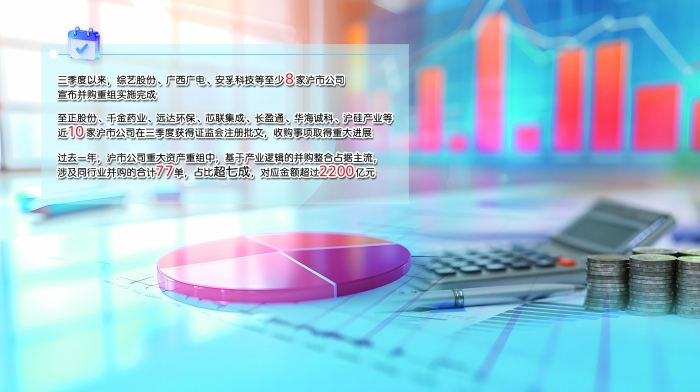
Core Viewpoint - The M&A market is experiencing a surge, with multiple companies completing significant transactions in the third quarter, which is expected to enhance their annual performance and inject vitality into the capital market [2][3][4]. Group 1: Completed M&A Transactions - Aikodi has successfully completed the acquisition of 71% of Zhaolbo's shares, with the transaction process advancing as of late September [2]. - Anfu Technology completed the acquisition of a 31% stake in Anfu Energy, increasing its ownership from 62.25% to 93.26%, with projected net profit rising from 168 million to 253 million yuan for 2024 [3]. - Jiangtong Equipment, formerly known as Anyuan Coal Industry, completed a major asset restructuring to shift its focus from coal to magnetic selection equipment [3]. Group 2: Regulatory Approvals - Nearly ten companies, including Zhizheng Co., Qianjin Pharmaceutical, and Yuanda Environmental Protection, received registration approvals from the China Securities Regulatory Commission (CSRC) for their M&A plans in the third quarter [4]. - Yuanda Environmental Protection announced on October 1 that it received CSRC approval for its acquisition of 100% of Wuling Power and 64.93% of Changzhou Hydropower [4]. Group 3: Industry Integration - The trend of horizontal and vertical integration is evident, with companies acquiring peers or upstream/downstream businesses to enhance product offerings and operational efficiency [5]. - Aikodi's acquisition of Zhaolbo aims to improve its automotive parts supply chain, while Changying Tong's acquisition of Shengyisheng Optoelectronics focuses on upstream and downstream synergy in the optical communication sector [5]. - Over the past year, over 70% of major asset restructurings in the Shanghai market were based on industry logic, involving 77 transactions worth over 220 billion yuan [5]. Group 4: Transformation Restructuring - Companies are rapidly progressing with transformation restructurings to create more growth opportunities, such as Jiangtong Equipment's exit from coal and Guangxi Broadcasting's divestment of its broadcasting business [6]. - ST Songfa's restructuring involved divesting traditional ceramic products to transition into high-end equipment manufacturing [6].

专访黄群慧:推进产业基础高级化,加大新基建投资
2 1 Shi Ji Jing Ji Bao Dao· 2025-10-19 12:15
Core Insights - The article discusses the transition from the "14th Five-Year Plan" to the "15th Five-Year Plan" in China, emphasizing the need for economic growth and industrial transformation during this critical period [1][6]. Economic Growth and Modernization - The "15th Five-Year Plan" requires a higher economic growth target compared to the "14th Five-Year Plan," aiming for around 5% growth to achieve a middle-income level by 2035 [6][7]. - As a country approaches modernization, its potential economic growth rate tends to decline, necessitating a focus on high-quality development rather than just quantitative growth [6][7]. Industrial Transformation - Traditional industries must undergo deep transformation, particularly through the integration of artificial intelligence in key sectors such as manufacturing, energy, and consumer goods [2][12]. - The construction of new infrastructure, particularly in computing power, is essential to support the transformation of traditional industries and enhance their competitiveness [2][13]. Technology and Innovation - There is a pressing need to enhance the integration of technological innovation and industrial innovation, focusing on upgrading the industrial foundation and increasing high-quality technological supply [7][8]. - The proportion of basic research funding in overall R&D investment should increase from 8% to around 12% by the end of the "15th Five-Year Plan" to align with international standards [8]. New Infrastructure Investment - Investment in new infrastructure should be accelerated, particularly in areas that support the digital and green transformation of industries [11][13]. - A unified national computing power trading market is proposed to optimize resource allocation and support industrial upgrades [13]. Addressing "Involution" in Emerging Industries - The "15th Five-Year Plan" emphasizes the need to combat "involution" in emerging industries by promoting innovation and limiting subsidies that encourage capacity expansion [15][16]. - A focus on enhancing market regulation and preventing monopolistic practices is crucial to ensure fair competition and protect smaller enterprises [16][17]. Expanding Domestic Demand - Expanding domestic demand is essential to alleviate capacity issues in certain industries, with a shift from investment-driven growth to consumption-driven growth [17]. - The establishment of a unified national market is necessary to facilitate resource integration and collaboration across regions, enhancing overall economic stability [17].
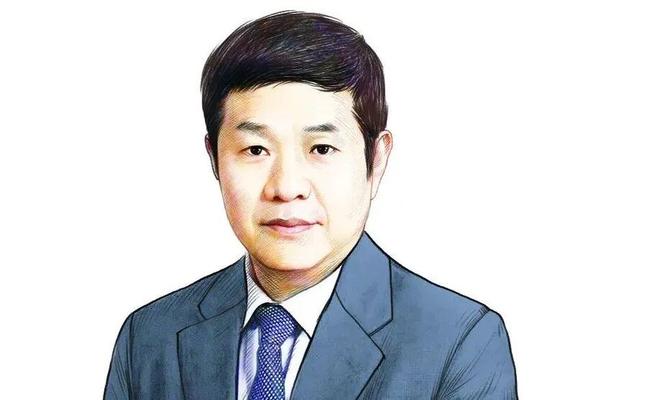
专访黄群慧:推进产业基础高级化,加大新基建投资
21世纪经济报道· 2025-10-19 12:04
Core Viewpoint - The article discusses the transition from the "14th Five-Year Plan" to the "15th Five-Year Plan" in China, emphasizing the need for high-quality economic growth and the transformation of traditional industries while avoiding "involution" in emerging industries [1][5]. Economic Growth and Modernization - The "15th Five-Year Plan" period is crucial for solidifying the foundation for achieving socialist modernization by 2035, requiring an economic growth rate of around 5% to reach the level of moderately developed countries [5]. - As a country approaches modernization, its potential economic growth rate tends to decline, necessitating higher growth expectations for the "15th Five-Year Plan" compared to the "16th Five-Year Plan" [2][5]. Technology and Industry Innovation - There is a pressing need to integrate technological innovation with industrial innovation, focusing on enhancing the modernization of industrial foundations, which includes key components, software, and materials [6]. - The article suggests increasing the proportion of basic research funding from 8% to around 12% by the end of the "15th Five-Year Plan" to enhance high-quality technological supply [6]. Traditional Industry Transformation - The "15th Five-Year Plan" requires a deep transformation of traditional industries, particularly through the empowerment of artificial intelligence, focusing on sectors like equipment manufacturing, electronic information, and energy [10]. - New infrastructure, particularly in computing power, should be prioritized to support the innovation and development of traditional industries [11]. Emerging Industry Development - The article highlights the need for a "反内卷" (anti-involution) approach in emerging industries, emphasizing the importance of directing industrial subsidies towards technological innovation rather than capacity expansion [12][13]. - It advocates for a shift from low-end capacity expansion to creating brand value and enhancing service experiences, thereby fostering a competitive edge based on quality rather than quantity [13]. Market and Regulatory Environment - The establishment of a robust market regulatory framework is essential to prevent monopolistic behaviors in the platform economy and ensure fair competition for small and medium enterprises [14]. - The article calls for a unified national market to facilitate resource integration and collaboration across regions, enhancing the overall business environment for manufacturing companies [14][15].

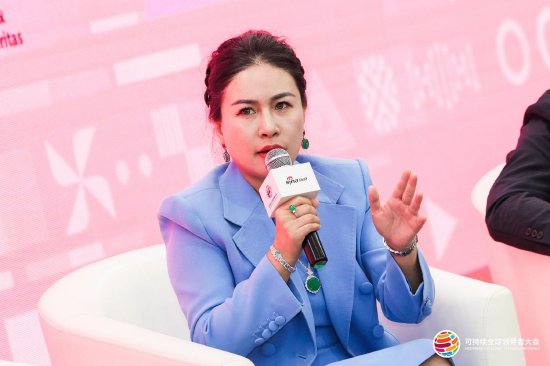
必维集团张莉莉:可持续发展报告是企业“体检单”,推动绿色转型需战略协同与全球视野
Xin Lang Zheng Quan· 2025-10-18 10:46
Group 1: Conference Overview - The 2025 Sustainable Global Leaders Conference will be held from October 16 to 18 in Shanghai, focusing on "Collaborating to Address Challenges: Global Action, Innovation, and Sustainable Growth" [1] - The conference is co-hosted by the World Green Design Organization (WGDO) and Sina Group, with support from the Shanghai Huangpu District Government, and aims to explore new paths for sustainable development [1] - Approximately 500 prominent guests, including 100 international attendees, will participate, featuring politicians, Nobel laureates, and leaders from Fortune 500 companies [1] Group 2: Insights on ESG Practices - Zhang Lili, Vice President of Government Affairs and Public Relations at Bureau Veritas, emphasized that sustainable development should be viewed as a driver of technological innovation and market competitiveness rather than a cost burden [2][4] - Companies should treat sustainability reports as "health check-ups" rather than "report cards," highlighting both achievements and areas for improvement [4][8] - There is a call for companies to establish transparent and verifiable data systems to build trust in sustainability efforts, avoiding "greenwashing" practices [4][6] Group 3: Strategic Recommendations for Companies - Companies are encouraged to align their sustainability strategies with overall business strategies, integrating sustainability into corporate governance and management structures [6][9] - Successful companies have demonstrated that technology innovation and supply chain collaboration are crucial for sustainable development [7][9] - The importance of third-party certifications is highlighted, as they can enhance trust and facilitate access to international markets [10][11] Group 4: Global Engagement and Leadership - Chinese private enterprises are encouraged to expand internationally and participate in global energy systems, leveraging the established reputation of state-owned enterprises [4][11] - There is a push for Chinese companies to share their experiences and contribute to international standard-setting, transitioning from "followers" to "rule-makers" in sustainability [4][11] - The need for inclusivity in sustainable development is emphasized, with a focus on supporting developing countries in their sustainability efforts [4][11]
专访黄群慧:推进产业基础高级化 加大新基建投资丨四中全会预热
2 1 Shi Ji Jing Ji Bao Dao· 2025-10-17 15:32
Core Viewpoint - The transition from the "14th Five-Year Plan" to the "15th Five-Year Plan" marks a critical juncture for China's economic development, emphasizing the need for deep transformation of traditional industries and avoiding "involution" in emerging industries [1][2][3]. Economic Growth Requirements - The "15th Five-Year Plan" period will require higher economic growth expectations compared to the "14th Five-Year Plan," aiming for a growth rate around 5% to achieve a level comparable to that of moderately developed countries [3][4]. - Economic growth must align with high-quality development principles, addressing imbalances and inadequacies in China's development [3]. Industry Transformation - Traditional industries must undergo deep transformation, particularly through the integration of artificial intelligence, focusing on key sectors such as equipment manufacturing, electronic information, and energy [2][8]. - The construction of new infrastructure, particularly in computing power, is essential to support traditional industries' innovation and development [9]. Technology and Innovation - There is a pressing need for the integration of technological innovation and industrial innovation, with a focus on enhancing the modernization of industrial foundations [4][5]. - The proportion of basic research funding in overall R&D investment should increase from 8% at the end of the "14th Five-Year Plan" to around 12% by the end of the "15th Five-Year Plan" [5]. New Infrastructure Investment - Significant investment in new infrastructure is necessary, particularly in information, integration, and innovation infrastructure, to support the digital and green transformation of traditional industries [9]. - A unified national computing power trading market should be established to optimize resource allocation and pricing mechanisms [9]. Addressing Involution in Emerging Industries - The "15th Five-Year Plan" must focus on "anti-involution" strategies, emphasizing technological innovation and limiting subsidies that promote capacity expansion [10][11]. - A collaborative innovation ecosystem should be built, encouraging large state-owned enterprises and research institutions to focus on common technological challenges [11]. Market Regulation and Demand Expansion - A robust market regulation system is needed to prevent monopolistic behaviors in platform economies and ensure fair competition for small and medium enterprises [11][12]. - Expanding domestic demand through improved public services and social security systems is crucial to alleviate capacity issues in certain industries [12].
专访黄群慧:推进产业基础高级化,加大新基建投资丨四中全会预热
2 1 Shi Ji Jing Ji Bao Dao· 2025-10-17 10:56
Core Viewpoint - The article discusses the transition from the "14th Five-Year Plan" to the "15th Five-Year Plan" in China, emphasizing the need for deep transformation of traditional industries and the avoidance of "involution" in emerging industries, while focusing on high-quality economic growth and technological innovation [1][4]. Economic Development Context - The "15th Five-Year Plan" is seen as a critical period for solidifying the foundation for achieving socialist modernization by 2035, requiring an economic growth rate of around 5% to reach the level of middle-developed countries [4]. - As a country approaches modernization, its potential economic growth rate tends to decline, necessitating higher growth expectations for the "15th Five-Year Plan" compared to the "14th" [2][4]. Technological and Industrial Innovation - There is a pressing need to integrate technological innovation with industrial innovation, focusing on enhancing the modernization of industrial foundations, which includes key components, software, and materials [5][6]. - The goal is to increase the proportion of basic research funding from 8% to around 12% of total R&D investment by the end of the "15th Five-Year Plan" [6]. Modern Industrial System Development - The "15th Five-Year Plan" aims to accelerate the construction of a modern industrial system supported by the real economy, emphasizing advanced, digital, green, and integrated development [7]. - The integrity of the industrial system is crucial, with a focus on maintaining key manufacturing capabilities and ensuring a collaborative mechanism for orderly domestic industrial transfer [7]. Traditional Industry Transformation - Traditional industries must undergo deep transformation, particularly through the empowerment of artificial intelligence, focusing on key sectors such as equipment manufacturing and consumer goods [8][9]. - Investment in new infrastructure, particularly in computing power, is essential to support the innovation and development of traditional industries [9][10]. Emerging Industry "Anti-Involution" Strategies - The "15th Five-Year Plan" emphasizes the need for a technology innovation mechanism that shifts enterprise behavior towards value creation, limiting subsidies for capacity expansion and encouraging innovation in standards and branding [11]. - A collaborative innovation ecosystem is encouraged, with large state-owned enterprises and research institutions focusing on key common technologies [11][12]. - The establishment of a market regulatory system is necessary to prevent monopolistic behaviors and ensure fair competition, particularly in the platform economy [12][13].