ETF基金

Search documents
2026开门红叠加资金热捧!创业板50ETF(159949)单日成交25亿居首 科技成长赛道成机构共识
Xin Lang Cai Jing· 2026-01-05 08:40
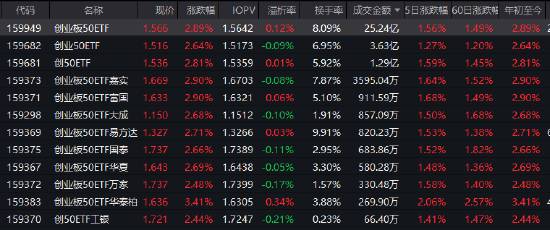
Market Overview - The A-share market opened positively on January 5, 2026, with the ChiNext Index leading the gains and the Shanghai Composite Index returning above 4000 points, recording twelve consecutive days of gains [1][11] - The ChiNext 50 ETF (159949) closed up 2.89% at 1.566 yuan, with a turnover rate of 8.09% and a trading volume of 2.524 billion yuan, ranking first among similar ETF products [1][11] Fund Performance - The ChiNext 50 ETF (159949) has seen a net inflow of over 4.3 billion yuan in the last 20 trading days, indicating strong confidence from institutional and individual investors in the technology growth sector [12][13] - As of January 5, 2026, the ETF's cumulative trading amount over the past 20 days reached 36.621 billion yuan, with an average daily trading volume of 1.831 billion yuan [12][13] - The ETF's liquidity is supported by a circulating scale of 30.652 billion yuan as of December 31, 2025 [12][13] Industry Allocation - The ETF closely tracks the ChiNext 50 Index, with a concentration in manufacturing (78.75%), finance (11.18%), and information technology services (5.79%), aligning with China's core themes of technological self-reliance and high-end manufacturing transformation [15][4] - Since Q3 2025, sectors such as AI computing power, new energy, and commercial aerospace have been active, effectively driving the index upward [15][4] Investment Outlook - Analysts suggest that the A-share market in 2026 will be supported by the restructuring of international order and China's industrial innovation, with a focus on three main themes: AI growth, cyclical reversal, and overseas expansion [17][19] - The technology sector is expected to maintain high profit growth, while traditional sectors like consumption and manufacturing are anticipated to see a gradual recovery in profit growth [18][19] - The ChiNext 50 ETF has shown impressive historical performance, with returns of 22.07% over five years, 48.12% over three years, and 93.36% over two years, significantly outperforming its benchmark [20]


2026年开门红,科创综指ETF富国(589600)与科创50ETF富国(588940)双双涨超3%!
Mei Ri Jing Ji Xin Wen· 2026-01-05 06:11
Group 1 - The core viewpoint of the articles highlights the strong performance of the Sci-Tech Innovation Board (科创板) at the beginning of 2026, with significant gains in related ETFs, indicating a bullish market trend [1] - The Sci-Tech Innovation Index (科创综指) achieved a remarkable annual increase of 46.3% in 2025, outperforming major indices such as the Shanghai Composite Index and CSI 300 [1] - The revenue and net profit of the Sci-Tech 50 Index constituent stocks grew by 12.5% and 15.2% year-on-year respectively in the first three quarters of 2025, reflecting a sustained improvement in profitability for hard-tech companies [1] Group 2 - The Sci-Tech Innovation Index ETF (富国589600) closely tracks the Sci-Tech Innovation Index, covering both industry leaders and growth potential companies, thus providing comprehensive exposure to China's strategic technological innovation sectors [2] - The Sci-Tech 50 ETF (富国588940) focuses on core hard-tech enterprises within the Sci-Tech 50 Index, emphasizing strategic emerging fields such as semiconductors, next-generation information technology, and high-end manufacturing, enabling investors to capture investment opportunities in the hard-tech sector [2] Group 3 - Emerging industries such as commercial aerospace, AI, brain-computer interfaces, and nuclear fusion are expected to see breakthroughs, contributing to a positive start for the industry in 2026 [1] - The implementation of the "14th Five-Year Plan" is anticipated to drive new productive forces (emerging and future industries) as a primary development direction, supported by comprehensive development plans and rapid technological and capital advancements [1]
自由现金流ETF(159201)冲击3连涨,近8个交易日内合计“吸金”3.62亿元
Xin Lang Cai Jing· 2026-01-05 02:10
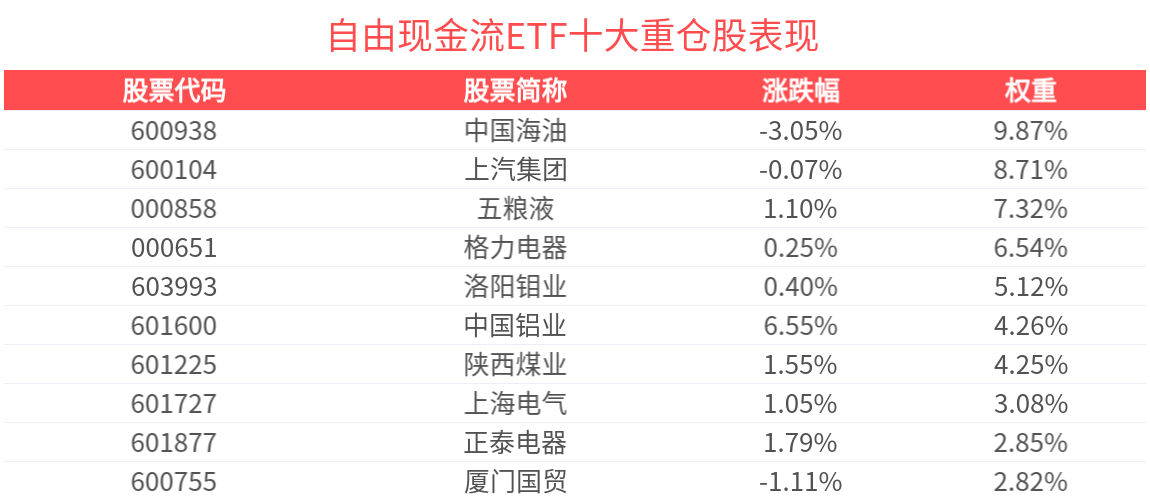
Core Viewpoint - The Free Cash Flow ETF has shown significant growth, with a recent increase in net inflows and a strong performance in the market, indicating a favorable investment environment for the upcoming year [1][2]. Group 1: ETF Performance - As of December 31, the Free Cash Flow ETF has seen a net value increase of 20.63% over the past six months [2]. - The ETF's highest single-month return since inception was 7%, with the longest consecutive months of gains being six, and the maximum gain during this period was 22.69% [2]. - The ETF has a historical monthly profit probability of 78.97% and a 100% probability of profitability over a six-month holding period [2]. Group 2: Market Environment - The year 2026 is expected to be favorable for the market due to the introduction of supportive industrial policies and investment plans, alongside coordinated fiscal and monetary policies [2]. - Institutional funds have shown a trend of early entry into the market, with expectations of increased foreign capital inflow driven by currency appreciation [2]. - Both manufacturing and non-manufacturing PMI have returned to the expansion zone, providing fundamental support for the spring market trend [2]. Group 3: Index Composition - The Free Cash Flow ETF closely tracks the National Index of Free Cash Flow, which reflects the price changes of listed companies with high and stable free cash flow levels [3]. - As of December 31, 2025, the top ten weighted stocks in the index include China National Offshore Oil Corporation, SAIC Motor, Gree Electric Appliances, and others, collectively accounting for 51.95% of the index [3]. Group 4: Fund Details - The Free Cash Flow ETF has a management fee rate of 0.15% and a custody fee rate of 0.05%, making it one of the lowest fee options available [5].
2025年格隆汇十大核心ETF跑赢市场10%,A500ETF基金(512050)上涨25%,12月“吸金”193亿元
Ge Long Hui· 2025-12-31 09:19
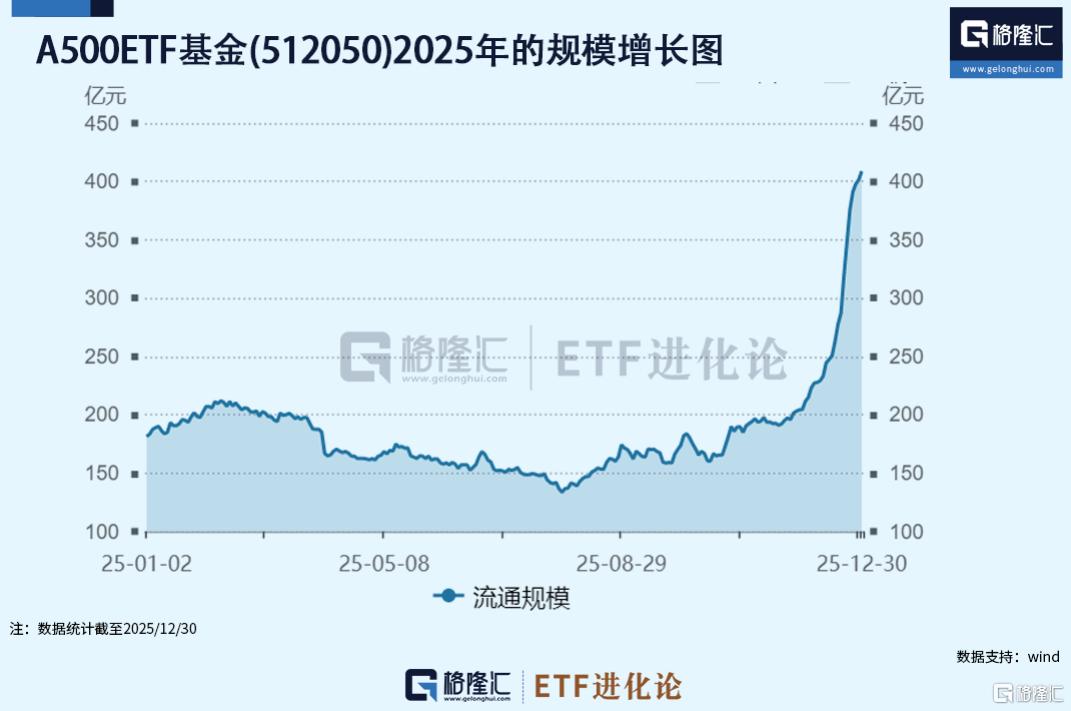
Group 1 - The Chinese stock market concluded 2025 with the Shanghai Composite Index rising 0.09%, marking an 11-day winning streak and an annual increase of 18.41%, the highest in a decade [1] - The Shenzhen Component Index rose 29.87% for the year, while the ChiNext Index saw a decline of 1.23% but still achieved a significant annual increase of 49.57% [1] - The Wind Micro Index led with an 81.65% increase, while the ChiNext 50 Index and the Sci-Tech 100 both recorded a 57.45% annual rise [1] Group 2 - The Hong Kong stock market saw the Hang Seng Index increase by 27.77%, achieving its best annual performance since 2017 [2] - The Hang Seng Tech Index and the Hang Seng China Enterprises Index rose by 23.45% and 22.27%, respectively [2] - The A500 ETF (512050) experienced a net inflow of 184.8 billion yuan for the year, with a significant 193.49 billion yuan inflow in December alone [2] Group 3 - The A500 Index has rapidly gained market recognition since the release of the New National Nine Articles, becoming the second-largest broad-based index in A-shares by the end of 2024 [4] - The A500 ETF's latest scale reached 408.75 billion yuan, a 122% increase from the beginning of the year [2][4] - The index employs an "industry-neutral" methodology, effectively avoiding overexposure to specific sectors and mitigating risks during market style shifts [4] Group 4 - The index significantly overweights emerging industries such as electronics, renewable energy, and pharmaceuticals, while underweighting traditional sectors like finance, aligning with China's economic upgrade direction [4] - The index selects leading companies based on their growth potential and profitability rather than solely on market capitalization, showcasing stronger growth elasticity compared to mainstream broad-based indices [4] - The index's compilation incorporates criteria such as connectivity and ESG, facilitating long-term capital allocation in A-shares [4] Group 5 - The Consumer ETF (159928) was the only ETF to decline in 2025, falling by 2.94%, focusing on essential consumer sectors [5] - The top holdings in the Consumer ETF include industry leaders like Kweichow Moutai and Yili, which possess strong brand barriers and cash flow generation capabilities [5] - Analysts suggest that after a period of adjustment, some consumer stocks may present valuation switching opportunities by the end of the year [5] Group 6 - Analysts highlight potential turning points in the white liquor, dairy, and large dining sectors in 2026, emphasizing the importance of the health and wellness sector [6] - The aging population and the expansion of younger consumer demographics are expected to drive innovation and growth in these sectors [6]
港股震荡分化,恒生科技ETF易方达(513010)、港股通互联网ETF(513040)助力布局港股核心资产
Sou Hu Cai Jing· 2025-12-30 10:17
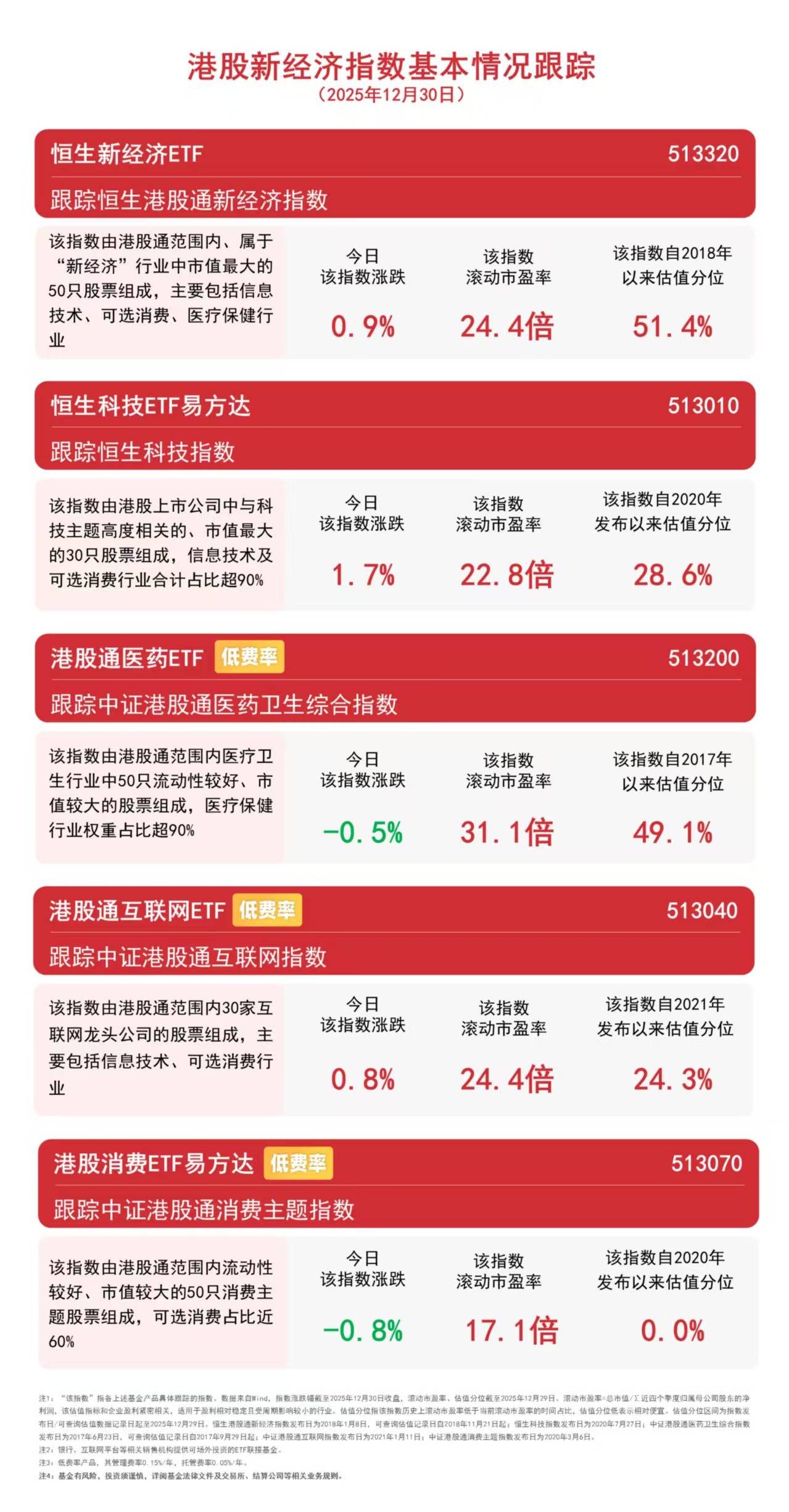
Group 1 - The core viewpoint of the article highlights the mixed performance of the Hong Kong stock market, with technology stocks leading gains while consumer and pharmaceutical stocks experienced declines [1] - The Hang Seng Technology Index rose by 1.7%, the Hang Seng Hong Kong Stock Connect New Economy Index increased by 0.9%, and the China Securities Hong Kong Stock Connect Internet Index went up by 0.8%. In contrast, the China Securities Hong Kong Stock Connect Pharmaceutical and Health Comprehensive Index fell by 0.5%, and the China Securities Hong Kong Stock Connect Consumer Theme Index decreased by 0.8% [1] - The article notes significant net inflows into related ETFs, with the Hang Seng Technology ETF (513010) and the Hong Kong Stock Connect Internet ETF (513040) attracting net inflows of 2.33 billion and 1.08 billion respectively in the month [1] Group 2 - China Galaxy Securities projects that by 2026, macroeconomic policies in China will remain consistent and stable, with resilient economic growth and inflation expected to recover from low levels. The fundamentals of the Hong Kong stock market will depend on the domestic macro economy [1] - According to Bloomberg consensus forecasts, the expected year-on-year earnings growth for the Hang Seng Index, Hang Seng Technology Index, and Hang Seng China Enterprises Index in 2026 is 9.64%, 34.63%, and 9.90% respectively. Investment opportunities in themes such as technological innovation, cycles, and consumption are recommended [1]
6,513 Shares in SPDR Portfolio S&P 500 Growth ETF $SPYG Acquired by Annex Advisory Services LLC
Defense World· 2025-12-30 08:21
Group 1: Institutional Holdings - Allworth Financial LP increased its position in SPDR Portfolio S&P 500 Growth ETF by 1.2%, owning 11,348,851 shares valued at $1,081,773,000 after acquiring an additional 131,104 shares [1] - Envestnet Asset Management Inc. raised its stake by 77.6%, now holding 10,227,943 shares worth $974,928,000 after acquiring 4,470,135 shares [1] - Ameriprise Financial Inc. boosted its position by 12.8%, owning 9,853,254 shares valued at $938,988,000 after acquiring 1,120,425 shares [1] - JPMorgan Chase & Co. increased its position by 3.6%, now holding 5,642,681 shares worth $537,860,000 after acquiring 198,401 shares [1] - Orgel Wealth Management LLC grew its stake by 5.5%, owning 3,895,752 shares valued at $371,343,000 after acquiring 202,804 shares [1] - Annex Advisory Services LLC acquired a new position with 6,513 shares valued at approximately $681,000 during the 3rd quarter [5] Group 2: Price Performance - SPDR Portfolio S&P 500 Growth ETF shares opened at $107.64, with a 50-day moving average of $106.42 and a 200-day moving average of $101.87 [2] - The ETF has a market capitalization of $45.24 billion, a price-to-earnings ratio of 32.28, and a beta of 1.11 [2] - The ETF's fifty-two week low is $68.65 and the high is $109.63 [2] Group 3: Company Profile - SPDR S&P 500 Growth ETF aims to provide investment results that correspond to the total return performance of an index tracking equity securities [3] - The ETF matches the returns and characteristics of the S&P 500 Growth Index, which measures the performance of the growth sector in the U.S. equity market [3] - The selection universe for the S&P 500 Index includes all common equities in the United States [3]
1-3月是居民资金容易出现季节性脉冲的阶段,聚焦自由现金流ETF(159201)布局机会
Mei Ri Jing Ji Xin Wen· 2025-12-30 06:42
Group 1 - The core viewpoint of the news highlights a positive trend in the National Securities Free Cash Flow Index, which rose approximately 0.5%, with significant gains in constituent stocks such as Nanjing Xinbai and others [1] - The largest free cash flow ETF (159201) has attracted over 375 million yuan in the last 10 trading days, bringing its total size to 8.299 billion yuan, indicating strong capital inflow [1] - According to Xinda Securities, both internal and external uncertainties are easing, and positive factors catalyzing the year-end market rally are increasing, including rebounds in U.S. tech stocks, appreciation of the yuan, and rising prices of non-ferrous metals [1] Group 2 - The free cash flow ETF (159201) and its linked funds are closely tracking the National Securities Free Cash Flow Index, selecting stocks with positive and high cash flow after liquidity, industry, and ROE stability screening, making it suitable for long-term investment [2] - The fund management fee is set at an annual rate of 0.15%, and the custody fee at 0.05%, both of which are among the lowest in the market, maximizing benefits for investors [2]





最高涨102%!这些ETF今年赚翻了
Sou Hu Cai Jing· 2025-12-30 04:05
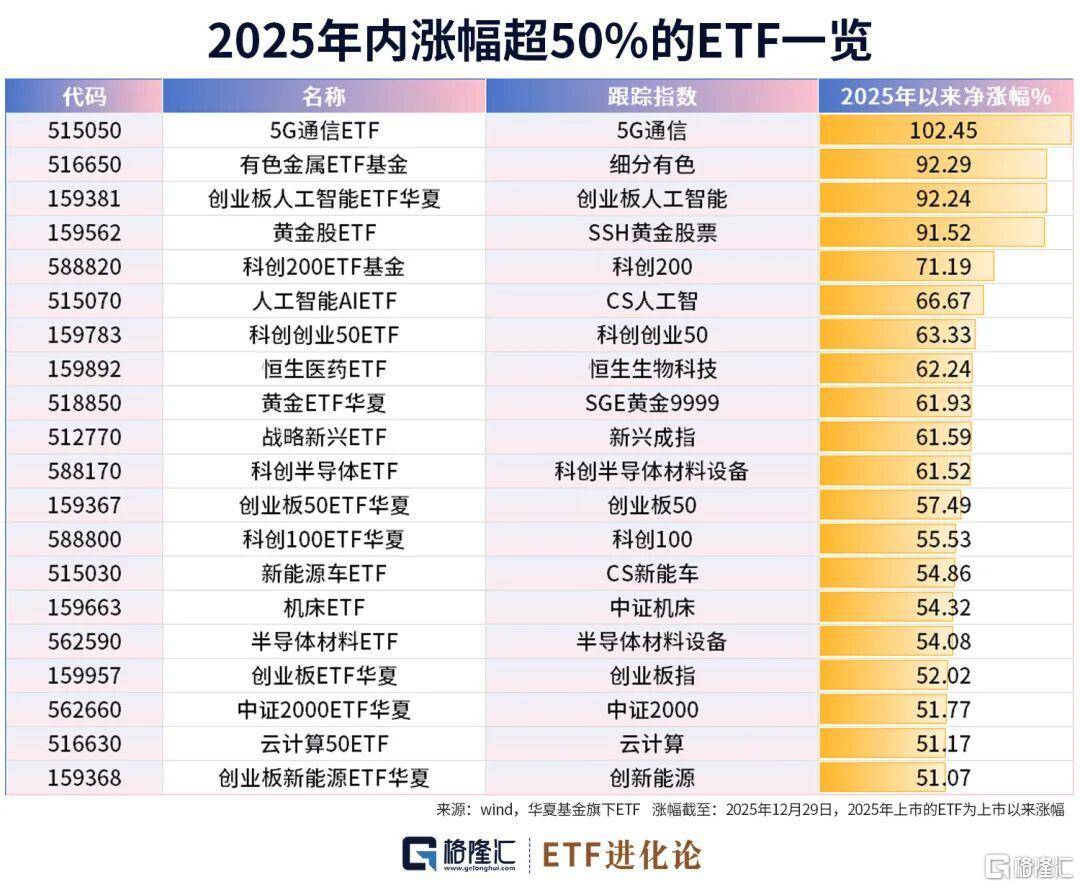
Core Insights - 2025 marks a pivotal year for the global economy, characterized by significant technological advancements and a shift in investment paradigms, particularly in China [2][3] - The Chinese ETF market has reached a milestone of 6 trillion yuan, reflecting a 60.86% increase from the beginning of the year, indicating a fundamental change in investment strategies [5][6][7] ETF Market Growth - The Chinese ETF market grew from 3.73 trillion yuan to 6 trillion yuan, with an increase of 2.27 trillion yuan [6] - A total of 1,385 ETF products are now available, demonstrating the extensive reach of ETFs in the market [6] - ETFs have become essential tools for investors, marking a significant shift in investment practices [7] Performance of ETFs - The 5G Communication ETF saw a remarkable increase of 102% year-to-date, while several other ETFs, including those focused on metals and AI, also reported gains exceeding 90% [9][11] - Notable ETFs include: - 5G Communication ETF: 102.45% increase [11] - Non-ferrous Metals ETF: 92.29% increase [11] - AI ETFs: Various funds reported increases between 60% to 92% [11] - Over 100 billion yuan has flowed into ETFs since the beginning of 2025, with significant inflows into major ETFs like the CSI 300 ETF and the Hang Seng Technology Index ETF [12][14] Investment Strategies - A "barbell strategy" has emerged among top global investment institutions, focusing on technology and gold as key assets to balance growth and risk [15] - The technology sector, particularly AI, has been a major driver of investment, with significant inflows into ETFs focused on robotics and AI [15][16] - Gold has also gained prominence due to geopolitical tensions and monetary policy shifts, with gold ETFs experiencing substantial inflows and price increases [17][19] A-share Market Dynamics - The A-share market saw the Shanghai Composite Index surpass 4,000 points, with a total market capitalization exceeding 100 trillion yuan [21] - Core broad-based ETFs have become the main avenue for capital entering the market, with significant net inflows into the CSI 300 ETF and A500 ETF [22] Hong Kong Market Activity - The Hong Kong stock market has transitioned into a high-activity phase, with ETFs serving as a bridge for mainland capital to invest in Hong Kong [25][26] - The Hang Seng Technology Index ETF has attracted over 220 billion yuan in net inflows, highlighting its role in connecting investors to leading tech companies [31] Conclusion - The year 2025 has been marked by a dual transformation in market sentiment and structure, with ETFs playing a crucial role in capturing and reflecting these changes [33] - The ETF market continues to evolve, with a focus on low-cost, efficient investment options for both individual and institutional investors [38]
影响市场重大事件:央行已出台数字人民币行动方案,明年1月1日正式启动实施;中国诚通、联通等新设科创投资基金,出资额100亿元
Mei Ri Jing Ji Xin Wen· 2025-12-29 22:09
Group 1 - The People's Bank of China has introduced an action plan for digital RMB management and infrastructure, set to officially launch on January 1, 2026, with significant transaction volumes already recorded [1] - As of November 2025, digital RMB has processed 3.48 billion transactions, amounting to 16.7 trillion yuan, with 230 million personal wallets opened through the digital RMB app [1] - The mBridge platform has handled 4,047 cross-border payment transactions, totaling approximately 387.2 billion yuan, with digital RMB accounting for about 95.3% of the transaction volume [1] Group 2 - China Chengtong and China Unicom have established a new technology innovation investment fund with a total investment of 10 billion yuan, focusing on venture capital for unlisted companies [2] - Dongguan Jimu Machinery Co., a Huawei subsidiary, has increased its registered capital from 3.89 billion yuan to approximately 4.689 billion yuan, marking a 21% increase [3] - Guangzhou Huitian Flying Car Manufacturing Co., a subsidiary of Xiaopeng Motors, has raised its registered capital from 650 million yuan to 900 million yuan, reflecting a 38% increase [4] Group 3 - Two ETFs from China have been listed in Thailand using the DR model, marking a significant step in the collaboration between Chinese and Thai capital markets [5] - Guangzhou Yu Xin Integrated Circuit Manufacturing Co. has increased its registered capital from 6.5 billion yuan to 7.5 billion yuan, a 15% increase [6] Group 4 - AI² Robotics has launched the world's first modular embodied intelligent service space, "Zhi Mo Fang," in Beijing and Shenzhen, with plans to deploy 1,000 units across various commercial and cultural locations in the next three years [8] Group 5 - The Ministry of Finance and the State Taxation Administration have announced that tobacco companies cannot deduct advertising expenses from taxable income, tightening regulations on advertising expenditures [9] - The State Administration for Market Regulation has introduced new regulations to oversee food contract manufacturing, effective December 1, 2026, emphasizing the responsibilities of both parties involved [10] Group 6 - Yang Gongyifan, CEO of Zhonghao Xinying, announced that the second generation of TPU products is set to launch next year, following the successful rollout of the first generation in 2023 [11]

喜娜AI速递:今日财经热点要闻回顾|2025年12月29日
Xin Lang Cai Jing· 2025-12-29 12:14
Group 1: Stock Market Dynamics - The Shanghai Composite Index recorded a slight increase of 0.04%, achieving a nine-day winning streak, the longest of the year [2][7] - Various sectors showed mixed performance, with the commercial aerospace sector leading, while others like lithium batteries experienced declines [2][7] - Market sentiment remains divided regarding the future trajectory of the index and leading sectors [2][7] Group 2: Fiscal Policy Developments - The National Fiscal Work Conference highlighted significant achievements in 2025, focusing on active fiscal policies and high-quality development [2][7] - For 2026, the conference plans to implement more proactive fiscal policies, including expanding expenditure and optimizing bond tools, with a focus on six key areas [2][7] Group 3: Commodity Market Insights - Silver prices reached historical highs, with a notable increase of over 6% before experiencing a rapid decline, resulting in a volatility of over 10% [2][7] - The price of silver has surged approximately 180% this year, influenced by geopolitical risks and supply shortages [2][7] Group 4: Industry-Specific Challenges - Chinese online lending companies faced significant challenges in India, with a bad debt rate exceeding 80% due to language barriers and regulatory hurdles [3][8] - Despite the potential of the Indian online lending market, many Chinese platforms have exited due to compliance issues and high bad debt rates [3][8] Group 5: ETF Market Growth - The total scale of domestic ETFs surged by 200.4 billion, surpassing 6 trillion for the first time, with stock ETFs leading the growth [3][8] - The CSI A500 index-linked ETFs saw a monthly increase of 106.6 billion, contributing to the growth of other indices [3][8] Group 6: Corporate Transactions - Tongye Technology announced plans to acquire a 91.69% stake in Silin Technology for 561 million, aiming to enter the power IoT communication chip market [3][9] - The acquisition is expected to enhance market expansion and product competitiveness for Tongye Technology [3][9] Group 7: Robotics Industry Outlook - The humanoid robot industry is projected to experience a significant commercial breakthrough by 2026, with global shipments expected to increase over sevenfold [4][9] - Cities like Shanghai, Nanjing, and Hangzhou are developing plans to establish themselves as industry hubs, with ambitious growth targets [4][9] Group 8: Corporate Financial Moves - Xiaomi's Vice Chairman plans to sell up to 2 billion dollars in company B shares to establish an investment fund focused on emerging technologies [4][9] - Following the announcement, Xiaomi's stock experienced a temporary decline but later rebounded, indicating mixed market reactions to the news [4][9] Group 9: Currency Market Trends - The offshore RMB exchange rate against the US dollar has strengthened, surpassing the 7.0 mark, influenced by expectations of US Federal Reserve rate cuts [5][10] - Experts caution about the uncertainties in the RMB's future trajectory, highlighting potential risks from political changes in the US and fluctuations in the dollar index [5][10] Group 10: Stock Performance Alerts - Several high-performing stocks issued warnings about significant deviations from their fundamental values, indicating potential rapid declines [5][10] - Companies like Victory Energy and Jia Mei Packaging have alerted investors to the risks associated with their stock performance [5][10]