
渔业

Search documents
常州在全省率先建成运行农业绿色发展在线监测平台
Xin Hua Ri Bao· 2025-10-21 23:15
Core Insights - Jiangsu Province has implemented an online monitoring system for agricultural green development, focusing on water quality in various agricultural sectors to mitigate environmental impacts [1][2][3] Group 1: Online Monitoring System - The online monitoring system includes 38 monitoring stations across the city, covering aquaculture, agricultural runoff, and livestock rainwater quality [1] - Key water quality indicators such as total nitrogen, total phosphorus, pH, and suspended solids are continuously monitored to address potential agricultural pollution risks [1] Group 2: Regulatory Framework - Starting June 1, 2023, Jiangsu Province has enforced the "Pond Aquaculture Tail Water Discharge Standards," integrating tail water monitoring into routine regulatory practices [2] - The online monitoring significantly enhances regulatory efficiency, allowing for real-time water quality assessments and early detection of potential exceedances [2] Group 3: Expansion and Future Plans - The monitoring system will expand with an additional 12 monitoring points this year, aiming to strengthen data collection and risk assessment capabilities [3] - The integration of monitoring data into a graphical interface will facilitate precise risk warnings for agricultural pollution, contributing to the "Beautiful Rivers and Lakes" initiative in Changzhou [3]
投资结构继续优化
Jing Ji Ri Bao· 2025-10-21 03:20
Core Insights - The overall fixed asset investment in China for the first three quarters of the year reached 371.535 billion yuan, showing a year-on-year decline of 0.5%, primarily influenced by the real estate sector. Excluding real estate, the investment grew by 3.0% year-on-year [1] Group 1: Industrial Investment - Industrial investment demonstrated a robust growth of 6.4% year-on-year, contributing 2.1 percentage points to the overall investment growth [1] - Mining investment increased by 3.7%, with a 0.7 percentage point acceleration compared to the period from January to August [1] - Manufacturing investment rose by 4.0%, contributing 1.0 percentage point to total investment growth [1] - Investment in electricity, heat, gas, and water production and supply surged by 15.3%, adding 1.1 percentage points to overall investment growth [1] Group 2: Infrastructure Investment - Infrastructure investment grew by 1.1% year-on-year, contributing 0.2 percentage points to total investment growth [2] - Private investment in infrastructure increased by 7.0%, accounting for 20.0% of total infrastructure investment, up by 1.1 percentage points from the previous year [2] - Notable growth was observed in internet and related services investment at 20.6%, water transport investment at 12.8%, and railway transport investment at 4.2% [2] Group 3: Equipment Investment - Equipment and tool purchase investment maintained a growth rate above 10%, with a year-on-year increase of 14.0%, contributing 2.0 percentage points to overall investment growth [3] - This segment accounted for 16.6% of total investment, an increase of 2.2 percentage points compared to the previous year [3] Group 4: High-Tech Service Investment - Investment in high-tech services grew by 6.1% year-on-year, representing 5.3% of total service investment, an increase of 0.5 percentage points from the previous year [4] Group 5: Agricultural Investment - Investment in the primary industry rose by 4.6% year-on-year, with forestry investment soaring by 40.0% [5] - Fisheries investment increased by 12.9%, and livestock investment grew by 4.3% [5] - Related sectors such as agricultural and sideline food processing investment grew by 14.3%, and food manufacturing investment increased by 10.8% [5]
龙羊峡畔的高原“渔光曲”
Ren Min Wang· 2025-10-21 01:41
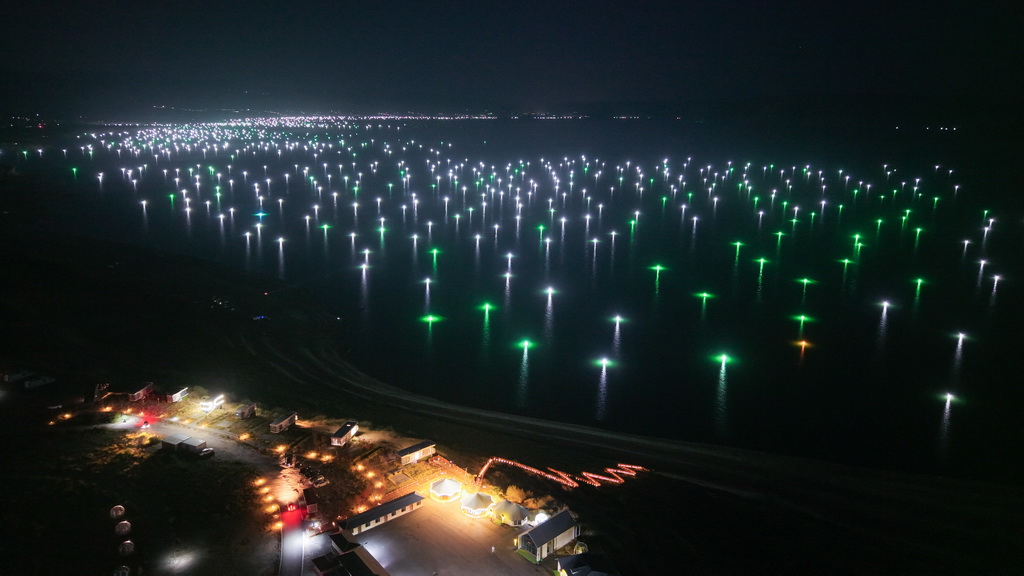
10月18日,在青海省海南藏族自治州共和县龙羊新村龙羊峡海湖渔业捕捞合作社,一名工人在铺晒小银鱼。 10月17日拍摄于青海省海南藏族自治州共和县的恰恰湾沙滩旅游度假村(无人机照片)。 10月18日,库区渔民将一箱刚捕捞的小银鱼上秤称重。 10月18日,在青海省海南藏族自治州共和县龙羊新村龙羊峡海湖渔业捕捞合作社,工人收拾新捕的小银鱼。 10月18日,在青海省海南藏族自治州共和县龙羊新村龙羊峡海湖渔业捕捞合作社,一名工人过筛新捕的小银鱼。 10月17日拍摄于青海省海南藏族自治州共和县恰恰湾沙滩旅游度假村的一间民宿。 10月17日,在青海省海南藏族自治州共和县恰恰湾沙滩旅游度假村,游客在民宿内拍照。 10月17日,一名库区渔民在下网。 10月18日拍摄于青海省海南藏族自治州共和县龙羊新村龙羊峡海湖渔业捕捞合作社的小银鱼晾晒网(无人机照片)。 10月18日,在青海省海南藏族自治州共和县龙羊新村龙羊峡海湖渔业捕捞合作社,一名工人将晒好的小银鱼抖散,以防在后续加工中出现粘连。 ...

省农业农村厅部署海上渔船回港避风和农业防涝
Hai Nan Ri Bao· 2025-10-21 01:23
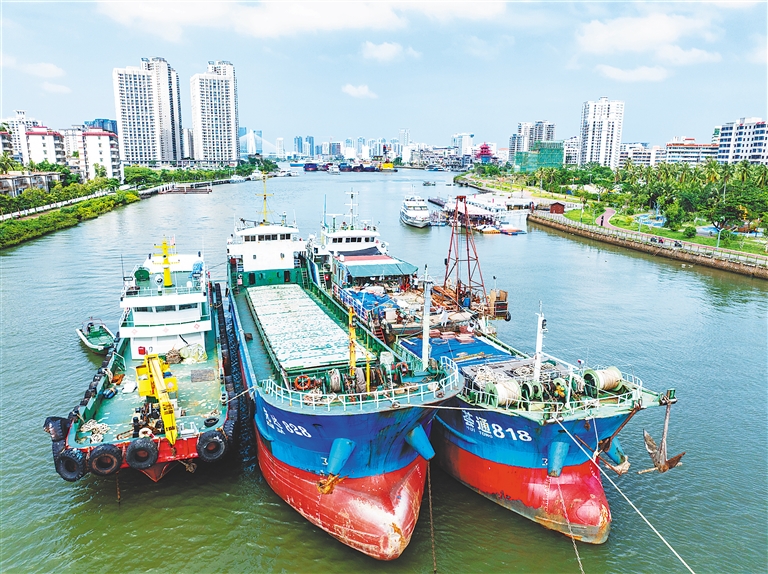
Group 1 - The province is preparing for strong wind and rain due to Typhoon "Fengshen" and cold air, with measures in place to ensure the safety of people's lives and property [2][3] - The Hainan Provincial Department of Agriculture and Rural Affairs has issued a notification for fishing vessels to return to port by specific deadlines to avoid the typhoon, ensuring the safety of fishermen [2] - Agricultural departments are instructed to take proactive measures, including harvesting mature crops, reinforcing agricultural facilities, and preventing waterlogging [3] Group 2 - The department emphasizes the importance of monitoring geological disaster prevention and ensuring the safety of livestock by relocating them from low-lying areas [3] - Continuous tracking of the typhoon's progress will be conducted, with real-time weather information being disseminated through various channels [3] - The focus is on strengthening flood and wind prevention measures in aquaculture and ensuring the integrity of temporary construction facilities [3]
加快农业数智化转型升级
Ke Ji Ri Bao· 2025-10-20 23:56
Core Viewpoint - The Chinese government has issued opinions on accelerating the digital and intelligent transformation of agriculture, emphasizing the necessity of this transformation for rural revitalization and the establishment of a modern agricultural powerhouse [1] Summary by Sections Agricultural Digital Transformation Progress - During the "14th Five-Year Plan" period, China's agricultural digital transformation has encompassed the entire industry chain, including smart breeding, precision planting, intelligent breeding, digital marketing, and smart logistics [2] - The informationization rate of agricultural production increased from 25.4% in 2021 to 27.6% in 2023, with the aquaculture sector reaching a digitalization rate of 35% and field crop informationization at 26.4% [2] - The market size of China's marine smart ranching is projected to reach 60 billion yuan in 2024, with a year-on-year growth of over 30% [2] Agricultural Equipment Digitalization - China has over 100,000 demonstration sites for agricultural IoT applications, with drone application areas exceeding 2.1 billion acres [3] - The market size for smart agricultural equipment is expected to reach 11.8 billion yuan in 2024, with a year-on-year growth of 122.64% [3] - By February 2025, over 1,000 unmanned farms are expected to be established, facilitating the last mile of agricultural digitalization [3] Data Platform Development - Provincial agricultural big data platforms have been established in major agricultural production areas, integrating various data types to support agricultural production [3] - The Ministry of Agriculture and Rural Affairs has supported the establishment of 34 national digital agriculture innovation centers and 116 smart agriculture innovation application projects [3] Support for Agricultural Digitalization - Over 50 agricultural universities have established smart agriculture programs, with central government funding exceeding 50 billion yuan for smart agriculture infrastructure [4] Focus Areas for Future Development - The "15th Five-Year Plan" period will require breakthroughs in core technologies and equipment autonomy, addressing challenges in application promotion and data sharing [5] - Key focus areas include accelerating intelligent variety breeding, targeted digital transformation in specific agricultural sectors, and expanding the scale of autonomous smart agricultural equipment [6][7] - The development of facility agriculture and the establishment of high-quality smart agricultural data sets are also emphasized [8][9] Resilience Against Extreme Weather - The establishment of climate-smart agriculture demonstration zones and the development of intelligent crop breeding technologies are crucial for enhancing resilience against extreme weather [9]
韩公布新一批创新经济先导项目
Ke Ji Ri Bao· 2025-10-20 23:42
Group 1 - The South Korean government has announced new innovation economy pilot projects, focusing on smart agriculture, smart fisheries, ultra-high-resolution satellite utilization, AI bio-ecosystem establishment, and K-beauty integrated cluster creation [1][2] - In smart agriculture, the government aims to increase the adoption rate from 16% in 2024 to 35% by 2030, with an investment of 70.5 billion KRW in the national agricultural module platform and an additional 50 billion KRW for a smart farm comprehensive fund [1] - For smart fisheries, the government plans to raise the penetration rate from 2.7% this year to 10% by 2030, designating one smart fisheries innovation pilot area and establishing a testing platform [1] Group 2 - In the satellite sector, the government is promoting the development of core technologies for ultra-high-resolution optical satellites and creating AI-based climate prediction models [1] - In the bio sector, the government plans to create an ecosystem that connects AI biotechnology accumulation, talent cultivation, and industrial expansion to better utilize existing medical data and biotechnological research capabilities [2] - The government also plans to allocate 3 billion KRW by 2026 to develop a K-beauty integrated cluster that combines experience, tourism, and industry [3]
惠农“税费通”|支持乡村振兴系列税费优惠政策(31)从事农、林、牧、渔业项目减免企业所得税
蓝色柳林财税室· 2025-10-20 13:56
Core Viewpoint - The article discusses the tax exemption policies for agricultural, forestry, animal husbandry, and fishery projects, highlighting the benefits for farmers and businesses engaged in these sectors [4][5]. Tax Exemption Policies - Tax exemption applies to the cultivation of vegetables, grains, tubers, oilseeds, legumes, cotton, hemp, sugar crops, fruits, and nuts [4]. - Other exempt activities include the breeding of new crop varieties, cultivation of medicinal herbs, forestry, livestock and poultry farming, collection of forest products, and various agricultural services [4]. - Half tax rate applies to the cultivation of flowers, tea, and other beverage and spice crops, as well as marine and inland aquaculture [4]. Eligibility Criteria - To qualify for tax benefits, projects must adhere to the standards set by the National Economic Industry Classification [5]. - Projects listed in the restricted and eliminated categories of the Industrial Structure Adjustment Guidance Catalog are not eligible for tax exemptions [5]. - Businesses engaged in multiple projects with different tax treatments must calculate their exempt projects separately and allocate expenses reasonably [5].

拉丁美洲危机加剧,欧美基金组织引爆经济!小国被迫卖地还债
Sou Hu Cai Jing· 2025-10-20 13:28
Core Viewpoint - The International Monetary Fund (IMF) has been overly optimistic about the debt stability in emerging markets and developing economies, particularly in the Latin America and Caribbean (ALC) region, where rising debt burdens, climate vulnerabilities, and stagnant development goals are creating a potential crisis [1][3]. Debt Situation - The total public external debt in the ALC region has surpassed $1 trillion, with an average debt-to-GDP ratio of approximately 70% [3]. - In Small Island Developing States (SIDS) within the Caribbean, this ratio exceeds 100%, indicating severe financial strain [3]. - Rising global interest rates and depreciating local currencies are significantly increasing the cost of debt repayment [3]. Impact on Public Spending - Between 2021 and 2023, debt repayment expenditures in eight ALC countries have exceeded their public health spending [4]. - The region is highly susceptible to climate change, with natural disasters since 2000 causing over $110 billion in economic losses [4][5]. Climate Change and Debt Cycle - A vicious cycle is forming where disasters increase debt, leading to reduced investment in disaster resilience, which in turn exacerbates future losses [6][7]. - Caribbean nations contribute less than 1% to global greenhouse gas emissions but are among the most affected by climate change [8]. Innovative Solutions - Some countries, like Belize, have initiated innovative debt-for-nature swaps, reducing debt by 12% of GDP while funding marine conservation [11]. - Other nations, such as Grenada and Barbados, have issued bonds with "disaster clauses" allowing for debt repayment suspension in the event of severe natural disasters [12]. Need for Systemic Reform - A new framework is needed that includes comprehensive debt restructuring involving all creditors, alongside preferential financing for green infrastructure and climate adaptation projects [13][14]. - Countries with liquidity issues should focus on reducing debt costs and expanding fiscal space through multilateral development bank financing and climate-sensitive financial instruments [15][17]. Urgency for Action - Without systemic reforms, climate financing and green investments will not provide substantial help to heavily indebted economies [18]. - The upcoming international meetings present opportunities to address the debt crisis and climate change, emphasizing the need for political and financial support from Europe [17][18]. Consequences of Inaction - Failure to act could lead to a "lost decade" for many ALC countries, resulting in deteriorating fiscal conditions and regression in development achievements [19][20]. - The real impact of debt is felt in everyday life, affecting essential services and infrastructure in vulnerable regions [19][20]. Call to Action - Urgent action is required from global leaders to prevent further entrenchment of these countries in debt and climate crises [22].
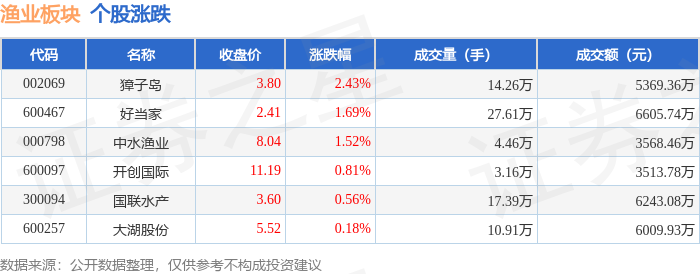
渔业板块10月20日涨1.18%,獐子岛领涨,主力资金净流入88.83万元
Zheng Xing Xing Ye Ri Bao· 2025-10-20 08:21
Core Insights - The fisheries sector experienced a rise of 1.18% on October 20, with Zhangzidao leading the gains [1] - The Shanghai Composite Index closed at 3863.89, up 0.63%, while the Shenzhen Component Index closed at 12813.21, up 0.98% [1] Fisheries Sector Performance - Zhangzidao (002069) closed at 3.80, with an increase of 2.43% and a trading volume of 142,600 shares, amounting to a transaction value of 53.69 million yuan [1] - Haodangjia (600467) closed at 2.41, up 1.69%, with a trading volume of 276,100 shares and a transaction value of 66.06 million yuan [1] - Zhongshui Fisheries (000798) closed at 8.04, increasing by 1.52%, with a trading volume of 44,600 shares and a transaction value of 35.68 million yuan [1] - Kaichuang International (600097) closed at 11.19, up 0.81%, with a trading volume of 31,600 shares and a transaction value of 35.14 million yuan [1] - Guolian Aquatic Products (300094) closed at 3.60, with a slight increase of 0.56%, trading 173,900 shares for a total of 62.43 million yuan [1] - Dahuhua (600257) closed at 5.52, up 0.18%, with a trading volume of 109,100 shares and a transaction value of 60.10 million yuan [1] Capital Flow Analysis - The fisheries sector saw a net inflow of 888,300 yuan from institutional investors, while retail investors contributed a net inflow of 1,009,320 yuan [1] - Speculative funds experienced a net outflow of 1,098,150 yuan [1] - Specific stock capital flows included: - Haodangjia (600467) had a net inflow of 8.02 million yuan from institutional investors, but a net outflow of 6.36 million yuan from speculative funds [2] - Dahuhua (600257) saw a net inflow of 495,700 yuan from retail investors despite a net outflow from institutional and speculative funds [2] - Zhangzidao (002069) experienced a net outflow of 998,300 yuan from institutional investors, but a net inflow of 1.71 million yuan from retail investors [2] - Guolian Aquatic Products (300094) had a significant net inflow of 4.89 million yuan from retail investors despite outflows from other investor types [2]


前三季度项目投资保持增长,投资结构继续优化
Guo Jia Tong Ji Ju· 2025-10-20 02:38
Core Insights - The overall fixed asset investment in China for the first three quarters of the year reached 371.535 billion yuan, showing a year-on-year decline of 0.5%, primarily influenced by the real estate sector [1] - Excluding real estate development investment, project investment increased by 3.0% year-on-year [1] Group 1: Industrial Investment - Industrial investment grew by 6.4% year-on-year, contributing 2.1 percentage points to total investment growth [1] - Mining investment increased by 3.7%, while manufacturing investment rose by 4.0%, with consumer goods manufacturing up by 6.3% and equipment manufacturing up by 1.6% [1] - Investment in electricity, heat, gas, and water production and supply surged by 15.3%, contributing 1.1 percentage points to total investment growth, with renewable energy investments (solar, wind, nuclear, and hydropower) collectively growing by 13.9% [1] Group 2: Infrastructure Investment - Infrastructure investment saw a year-on-year increase of 1.1%, contributing 0.2 percentage points to total investment growth [1] - Private investment in infrastructure grew by 7.0%, accounting for 20.0% of total infrastructure investment, an increase of 1.1 percentage points from the previous year [1] - Notable growth in private investment was observed in water management (42.4%) and air transport (24.4%) [1] Group 3: Equipment Investment - Equipment purchase investment maintained a growth rate of over 10%, with a year-on-year increase of 14.0%, contributing 2.0 percentage points to total investment growth [2] - This segment accounted for 16.6% of total investment, an increase of 2.2 percentage points compared to the previous year [2] Group 4: High-Tech Service Investment - Investment in high-tech services grew by 6.1% year-on-year, representing 5.3% of total service investment, an increase of 0.5 percentage points from the previous year [3] - Information service investment experienced significant growth of 33.1% [3] Group 5: Agricultural and Related Investment - Investment in the primary industry increased by 4.6% year-on-year, with forestry investment growing by 40.0% and fishery investment by 12.9% [4] - The food processing industry saw a 14.3% increase in investment, while food manufacturing grew by 10.8% [4] - Investment in electricity and heat production and supply rose by 17.9% [4] Future Outlook - The focus will be on implementing new policy financial tools to accelerate project construction and stimulate private investment in new productivity, emerging services, and new infrastructure [4]