
化妆品

Search documents
珀莱雅拟港股上市 中国证监会要求补充说明关于外资准入等事项
Zhi Tong Cai Jing· 2025-12-26 13:23
Group 1 - The China Securities Regulatory Commission (CSRC) issued supplementary material requirements for 19 companies, including Proya Cosmetics Co., Ltd. (603605.SH), which is seeking to list on the Hong Kong Stock Exchange [1][2] - Proya is required to clarify the use of funds raised in the issuance, particularly regarding any overseas investments and compliance with relevant approval procedures [1] - The company must also provide details on its subsidiaries' operations related to apps and data collection, including the scale of user information collected and stored [1][2] Group 2 - Proya is a domestic multi-brand beauty group in China, aiming to build a world-class cosmetics industry platform and provide high-quality cosmetic products to global consumers [2] - The company has established a diverse portfolio covering skincare, makeup, and personal care, and ranks fifth among the top five cosmetic groups in China by retail sales, according to Frost & Sullivan [2] - Proya has been the largest domestic cosmetics group in China by retail sales for four consecutive years from 2021 to 2024 [2]

2025年,203家化妆品工厂“消失”
Xin Lang Cai Jing· 2025-12-26 12:24
Core Insights - The cosmetics industry is experiencing an intensified wave of factory closures, with at least 203 companies having canceled their production licenses in 2025, marking a significant increase in the trend of closures [2][7] - A notable trend is that 93% of these closures are voluntary, indicating a strategic withdrawal from the market rather than forced exits [2][13] Group 1: Industry Overview - The number of companies canceling their licenses has been on a continuous rise over the past three years, with 150 closures in 2023 and 185 in 2024, reflecting a sustained double-digit growth rate [7] - The closures are concentrated in 15 provinces, with Guangdong leading at 105 closures, accounting for 51.7% of the total, followed by Shandong with 37 closures [8][11] Group 2: Company Characteristics - Companies established between 2010 and 2019 represent the majority of closures, totaling 115, which is 56.7% of the total [11] - A significant number of closures involve small and micro enterprises, with 98 companies having registered capital between 1 million and 5 million yuan, and 36 companies with capital of 500,000 yuan or less, making up over 88% of the total [12] Group 3: Reasons for Closure - The primary reason for the closures is the inability of small and micro enterprises to withstand market pressures, leading to a significant number of voluntary withdrawals [13][16] - The market has shifted from "incremental expansion" to "stock competition," intensifying the competition among factories as they vie for limited orders [17] Group 4: Market Dynamics - The industry is witnessing a price war as some factories lower prices to secure orders, while others are diversifying their services to include brand consulting and sales channel planning [19] - The shift in order structure, with an increase in white-label orders, is forcing factories to adjust their production capacities and find a balance between large-scale production and flexible customization [19]

自然堂不分红,61岁辽阳首富郑春颖身家110亿
Sou Hu Cai Jing· 2025-12-26 11:22
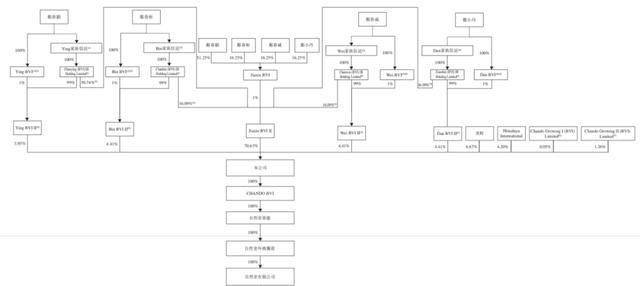
Core Viewpoint - The article discusses the journey of the Chinese cosmetics brand, Chando, founded by Zheng Chunying and his siblings, highlighting its growth, IPO preparations, and strategic investments from major players like L'Oréal and Himalaya International. Group 1: Company Background and Ownership - Chando was established in 2001 and has grown to become the second-largest domestic cosmetics brand in China, following Proya [1][12] - The Zheng siblings collectively control 87.82% of the voting rights in Chando, with Zheng Chunying holding 55% of the shares [2][12] - Zheng Chunying is recognized as the wealthiest individual in Liaoyang, with a net worth of 11 billion RMB, ranking 2448th on the 2025 Hurun Global Rich List [2] Group 2: IPO and Strategic Investments - Prior to its IPO filing, Chando raised over 700 million RMB by bringing in strategic investors, including L'Oréal and Himalaya International, which provided both capital and technical support [4][5] - The post-investment valuation of Chando is approximately 6.826 billion RMB [4] Group 3: Financial Performance - Chando's revenue has shown consistent growth, with total revenues of 42.92 billion RMB in 2022, 44.42 billion RMB in 2023, and 46.01 billion RMB in 2024 [16] - The skincare segment contributes approximately 90% of Chando's total revenue, with the main brand Chando generating 94.6% to 95.9% of total income during the reporting periods [12][14] - Despite revenue growth, net profit has fluctuated, with a significant drop of 37.09% in 2024 to 1.9 billion RMB [16] Group 4: Marketing and Sales Strategy - Chando has invested heavily in marketing, with total marketing expenses reaching 6.534 billion RMB over three and a half years, accounting for over 50% of total revenue during the reporting periods [17][18] - The company has shifted its sales strategy towards online channels, increasing online revenue from 59.7% in 2022 to 68.8% in 2025 [20][21] Group 5: Operational Insights - Chando operates three factories in China, maintaining a high capacity utilization rate of 95.7% and 82.5% for its Shanghai and Linzhi factories, respectively [23] - The company has not declared any dividends since its inception and has a cash-to-short-debt ratio of 10.53, indicating a strong liquidity position [25][26]
韩束两款面膜被指“非法添加”!客服回应已下架 正启动自查
Nan Fang Du Shi Bao· 2025-12-26 11:17
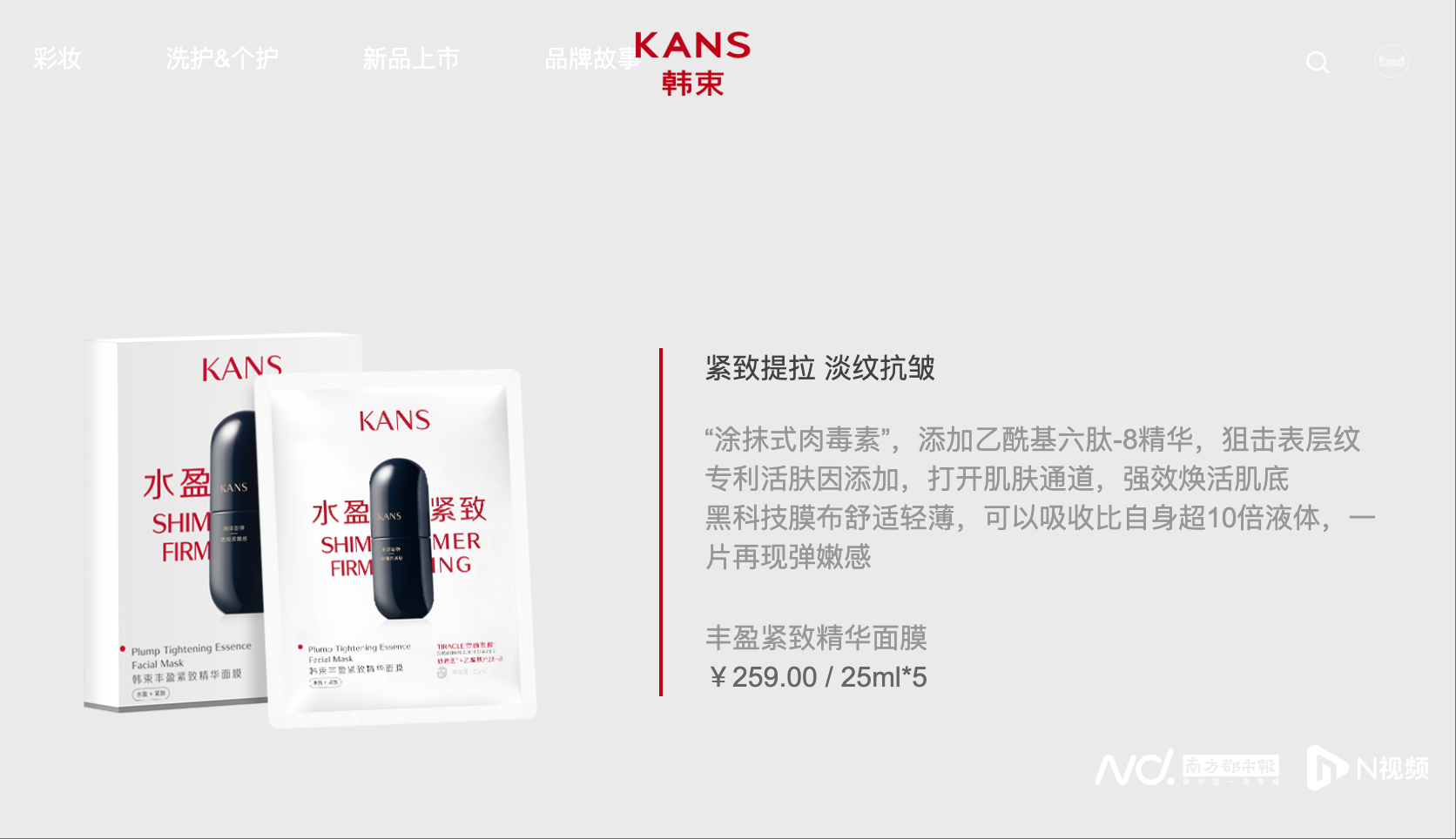
近日,关于韩束部分面膜产品被指"非法添加"表皮生长因子(EGF)的情况引发关注。 12月25日,据央视《经济半小时》栏目,记者将市面上多款热门化妆品送往具有检验资质的第三方检测机构进行检测。结果显示,在韩束丰盈紧致精华面膜 中,检测出0.07pg/g的表皮生长因子;在另一款韩束嫩白透亮面膜中,这一数值更高,表皮生长因子达到3.21pg/g。 资料显示,韩束于2003年由上美股份推出,专注于满足各年龄段亚洲女性不断变化的护肤诉求。2024年,该品牌收入同比增长80.9%至55.91亿元,在上美股 份整体收入中的占比达82.3%。近日该品牌宣布,青年演员刘浩存担任其品牌全球代言人。 目前韩束官方旗舰店中,涉事的"丰盈紧致精华面膜"和"嫩白透亮面膜"均已无法搜索购买,客服回应称相关产品已下架,品牌已启动全面自查程序,正在核 查和追溯具体情况。韩束官方旗舰店显示,其拥有粉丝926万,店铺年销量超1000万件。 韩束丰盈紧致精华面膜检出0.07pg/g的表皮生长因子。 韩束嫩白透亮面膜检出3.21pg/g的表皮生长因子。 据悉,由于分子量较大,EGF在正常皮肤屏障条件下较难被吸收,一旦皮肤屏障功能不全,可能会引发其他潜 ...
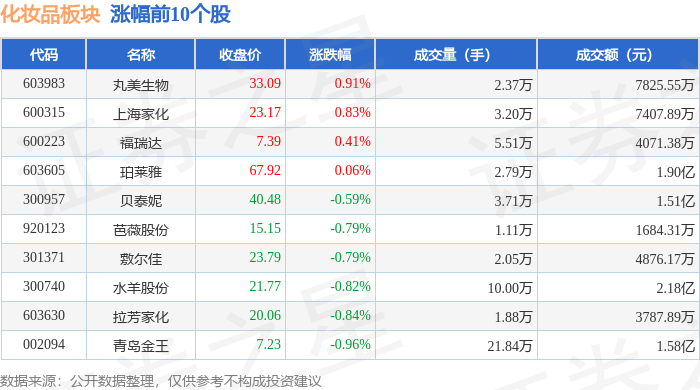
化妆品板块12月26日跌0.13%,青松股份领跌,主力资金净流出8046.54万元
Zheng Xing Xing Ye Ri Bao· 2025-12-26 09:14
Market Overview - The cosmetics sector experienced a slight decline of 0.13% on December 26, with Qingsong Co. leading the drop [1] - The Shanghai Composite Index closed at 3963.68, up 0.1%, while the Shenzhen Component Index closed at 13603.89, up 0.54% [1] Individual Stock Performance - Marubi Biotechnology (603983) closed at 33.09, up 0.91% with a trading volume of 23,700 shares and a turnover of 78.26 million yuan [1] - Shanghai Jahwa (600315) closed at 23.17, up 0.83% with a trading volume of 32,000 shares and a turnover of 74.08 million yuan [1] - Furuida (600223) closed at 7.39, up 0.41% with a trading volume of 55,100 shares and a turnover of 40.71 million yuan [1] - Proya Cosmetics (603605) closed at 67.92, up 0.06% with a trading volume of 27,900 shares and a turnover of 20.06 million yuan [1] - Betaini (300957) closed at 40.48, down 0.59% with a trading volume of 37,100 shares and a turnover of 151 million yuan [1] - Other notable declines include Qingsong Co. (300132) down 1.57% and Jinsong New Materials (300849) down 1.55% [2] Capital Flow Analysis - The cosmetics sector saw a net outflow of 80.47 million yuan from institutional investors, while retail investors contributed a net inflow of 70.02 million yuan [2] - The overall capital flow indicates a mixed sentiment, with institutional investors withdrawing funds while retail investors increased their positions [2] Detailed Capital Flow for Selected Stocks - Furuida (600223) had a net inflow of 7.77 million yuan from institutional investors, but a net outflow of 4.35 million yuan from retail investors [3] - Huaye Fragrance (300886) saw a net inflow of 3.30 million yuan from institutional investors, while retail investors had a net outflow of 1.01 million yuan [3] - Marubi Biotechnology (603983) experienced a net inflow of 1.22 million yuan from institutional investors, with retail investors also seeing a net outflow [3] - Qingsong Co. (300132) had a significant net outflow of 1.57 million yuan from institutional investors [3]


防脱发市场迎规范新篇章,化妆品监管步入“功效实证”时代
Xin Lang Cai Jing· 2025-12-26 06:36
2026年的钟声即将敲响,对于中国庞大的防脱发化妆品市场而言,这声钟响也标志着一个旧时代的结束 与一个新时代的开启。自2026年1月1日起,根据国家相关法规的过渡期安排,原先宣称具有"育发"功效 的化妆品将不得继续生产、进口或销售。 与此同时,国家药品监督管理部门近期连续发布《防脱发化妆品研究技术指导原则(试行)》等技术文 件,为"防脱发"这一功效宣称设立了前所未有的明确科学与实证门槛。这一系列举措并非简单的产品下 架,而是一次深刻的行业范式转移,意味着过往模糊的"育发"概念被精准拆分,市场宣传的"狂欢"将让 位于产品研发的"内功",中国化妆品监管正坚定地迈入以"安全"与"功效"为基石的新阶段。 此番调整的核心在于对"防脱发"产品定义的廓清与要求的细化。根据新规,以往笼统的"育发"概念被科 学地区分为三类:有助于减少头发脱落的产品,仍归属特殊化妆品管理,但只能宣称"防脱发",且必须 通过严格的人体功效评价试验获取注册批件;宣称防断发的产品,被划归为普通化妆品管理;而宣称有 助于毛发生长的产品,则将逐步纳入药品监管范畴。 尤其值得注意的是,新规明确禁止防脱发化妆品使用"生发"、"育发"等医疗术语或引人误解的宣称 ...
广西造“良药好械美妆”不断走向市场
Guang Xi Ri Bao· 2025-12-26 03:16
药品安全监管方面,广西推动监管机制更好适应医药创新发展需求。政策加持下,2025年广西获国 家药监局批准上市药品10个,其中1个为全球首个仿制药,仿制药品种从"十三五"末的1个增长至42个; 109个第二类医疗器械填补广西空白;3个化妆品新原料通过国家药监局备案,实现零的突破。广西 造"良药好械美妆"正在不断走向市场。 通过综合运用监督检查、抽检监测等强化监管,"十四五"期间,全区实现药品安全事件"零发生", 药品评价性抽检合格率稳定在99%以上。 医药产业促进有力——自治区医疗器械检测中心检测能力覆盖区内生产90%的第二、三类医疗器 械;十米法电磁兼容实验室填补全区大型高端医疗器械检测能力的空白。《广西海洋中药材标准》完成 编制。药物临床试验机构数量从12家增长至54家。2025年,38家区外医药企业入驻重点园区,全区新增 第二类医疗器械注册证472张、普通化妆品备案2266个,分别同比增长11.06%和19.8%。 2025年前三季度,广西还为88个药品、136个医疗器械产品出具出口销售证明,销售额分别同比增 长27.23%和16.25%,更多广西产品首次走出"国门"。(刘冬莲) 12月25日,自治区政府 ...
万联证券:26年零售业消费分级时代开启 情绪消费带动潮玩、黄金珠宝与国货美妆产业新机遇
智通财经网· 2025-12-26 02:13
Core Viewpoint - China's consumption is transitioning into a new phase of "consumption stratification," characterized by a pursuit of cost-effectiveness for mass-market products while consumers are willing to pay a premium for innovative products and services that provide emotional value [1][2] Group 1: Consumption Stratification - The current consumption landscape in China has shifted from "consumption upgrading" to "consumption stratification," where consumers are more rational and seek cost-effectiveness for traditional, low-tech, and highly homogeneous products [2] - Emotional consumption is on the rise, driven by fast-paced lifestyles and information overload, leading to increased interest in sectors such as trendy toys, traditional gold, and beauty skincare [2] Group 2: Trendy Toys Market - The trendy toy market in China is rapidly expanding, with market size projected to grow from 22.9 billion yuan in 2020 to 76.3 billion yuan by 2024, reflecting a CAGR of 35.11% [3] - The market is currently fragmented, with the top five companies holding only 20.8% market share in 2024, indicating potential for leading companies with comprehensive supply chains and strong IP resources to strengthen their market positions [3] Group 3: Gold and Jewelry Sector - The gold and jewelry sector is shifting from channel-driven growth to product-driven strategies, with some companies achieving rapid growth through superior craftsmanship and marketing despite a slowdown in store expansion due to rising gold prices [4] - The demand for gold jewelry is expected to increase as craftsmanship improves and the "self-indulgence" consumption trend gains traction, particularly in non-wedding scenarios [4] Group 4: Cosmetics Industry - The domestic cosmetics market is showing a strong recovery, with local brands performing well during promotional events like "Double 11," driven by increased R&D investment and effective marketing strategies [5] - Young consumers are increasingly accepting domestic beauty brands, allowing these brands to capture market share from foreign competitors [5]
万联晨会-20251226
Wanlian Securities· 2025-12-26 00:41
Core Insights - The A-share market saw collective gains on Thursday, with the Shanghai Composite Index rising by 0.47%, the Shenzhen Component Index by 0.33%, and the ChiNext Index by 0.3%. The total trading volume in the Shanghai and Shenzhen markets reached 1,924.381 billion yuan [2][8]. Market Review - The leading sectors included defense and military, light industry manufacturing, and machinery equipment, while the comprehensive, non-ferrous metals, and commercial retail sectors lagged behind. Concept stocks such as Chengfei Concept, aviation engines, and commercial aerospace saw significant gains, whereas Hainan Free Trade Zone, lead metal, and zinc metal concepts experienced declines [2][8]. Important News - The National Development and Reform Commission and the Ministry of Commerce released the "Encouragement Directory for Foreign Investment Industries (2025 Edition)," effective from February 1, 2026. Key changes include encouraging foreign investment in advanced manufacturing and modern service industries, as well as in the central and western regions, Northeast China, and Hainan Province [3][9]. - The People's Bank of China emphasized the need for robust monetary policy adjustments to maintain ample liquidity, suggesting a comprehensive use of various tools to manage policy implementation effectively [3][9]. Industry Analysis - The retail industry is shifting towards emotional consumption, with a focus on consumer sentiment driving demand for related sectors. The current consumption landscape in China has transitioned from "consumption upgrade" to "consumption stratification," where consumers are increasingly seeking value for money while also willing to pay a premium for certain new products or services [10]. Specific Sector Insights - **Trendy Toys**: The trendy toy market in China is rapidly expanding, with market size projected to grow from 22.9 billion yuan in 2020 to 76.3 billion yuan by 2024, reflecting a CAGR of 35.11%. The market is currently fragmented, and companies with comprehensive supply chains and strong IP resources are expected to thrive [11]. - **Gold and Jewelry**: The sector is transitioning from channel-driven to product-driven strategies. Despite rising gold prices suppressing consumer demand, some companies are achieving rapid growth through superior craftsmanship and marketing. The demand for gold jewelry is expected to increase as consumer preferences evolve [13]. - **Cosmetics**: The rise of domestic brands is evident, with local companies focusing on R&D and successfully capturing market share from foreign brands. The demand for domestic beauty products is increasing among younger consumers, suggesting a positive outlook for strong domestic brands [13].
央视曝光美妆背后的消费陷阱女子1.3万元买祛痘神品越用痘越多
Xin Lang Cai Jing· 2025-12-26 00:35
(来源:河北长城网) 【#央视曝光美妆背后的消费陷阱##女子1.3万元买祛痘神品越用痘越多#】我国化妆品市场连续两年破 万亿元,但虚假宣传、违规添加等乱象正在消耗信任。北京杨先生被直播宣称"买一送一"吸引,收到货 才知是买化妆品送盒子;刘女士花1.3万买"祛痘神品",越用痘越多,客服还称是"排毒",维权因举证 难无果。社交平台上,"烂脸""过敏"相关笔记年增68.7万篇,背后是行业套路连环套:直播里"三天见 效""孕妇可用"标签满天飞,实则用"K老""抗火火"等谐音词规避监管;专柜宣称"绝对安全"的产品,备 案仅是普通化妆品,而我国从未批准过"孕妇、哺乳期专用化妆品"。更触目惊心的是成本猫腻:399元 套装料体仅12元、包材14元。当行业陷入价格内卷,牺牲的往往是安全标准和研发投入。好消息是, 2025年化妆品新规已落地,功效宣称需有科学依据,原料管控更严。#经济半小时#为您讲述! 转自:河北长城网 ...