啤酒

Search documents
华润啤酒侯孝海:啤酒消费品如果被年轻人抛弃,那就没有发展的可能性了
Xin Lang Cai Jing· 2025-12-10 09:05
Core Insights - The 2025 China Entrepreneur Influence Entrepreneur Conference emphasizes the theme "Emergence·Infinity - Co-creating New Forms of Intelligent Business" [1][6] Group 1: Changes in the Business Environment - The beer industry is undergoing significant transformation, with declining competitive capabilities and increasing pressure on business growth, leading to a need for companies to rethink their strategies [3][8] - The concept of "New World" was introduced to signify the necessity for companies to break away from outdated business models and embrace new opportunities [3][8] Group 2: Technological Advancements - Rapid technological development is a double-edged sword for businesses, presenting both opportunities and challenges, particularly with the rise of artificial intelligence [4][9] - The shift towards automation has drastically reduced the workforce in manufacturing, as exemplified by a 2016 factory that required 500-600 workers for a capacity of 1 million tons [4][9] Group 3: Changing Consumer Demographics - There has been a significant generational shift in consumer demographics over the past decade, with the current consumer base showing over 50% difference from that of ten years ago [5][10] - The new generation of consumers possesses distinct values, consumption habits, and a strong sense of individuality, which companies must adapt to in order to remain relevant [5][10] - The importance of appealing to younger consumers is highlighted, as losing their interest can jeopardize a product's future [5][10]


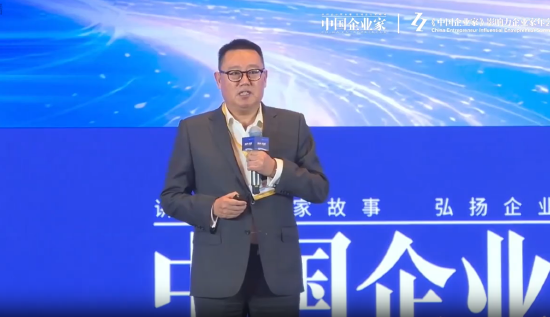
侯孝海强调关注消费人群的迭代:现在的消费人群,与10年前的区别度已超50%
Xin Lang Cai Jing· 2025-12-10 09:05
Core Insights - The event "2025 China Entrepreneur Influence Entrepreneur Annual Conference" focuses on the theme "Emergence·Infinity - Co-creating New Forms of Intelligent Business" [1][6] - Huo Xiaohai, former chairman and executive director of China Resources Beer, emphasized the concept of "New World" in his speech, reflecting on the significant changes in the beer industry and the need for transformation [3][8] Group 1: Changes in the Business Environment - The external environment for businesses has undergone significant changes, necessitating a clear understanding of these shifts to keep pace with industry developments [9] - The beer industry is experiencing a transformation where traditional products and services are being abandoned by consumers, indicating a need for companies to adapt [3][8] Group 2: Technological Advancements - Rapid technological advancements, particularly in artificial intelligence, are reshaping industries, presenting both opportunities and challenges for companies [4][9] - Huo noted that in 2016, a factory with a capacity of 1 million tons employed around 500-600 people, highlighting the shift towards automation and the impact of technology on workforce dynamics [4][9] Group 3: Changing Consumer Demographics - The primary consumer demographics for many products have significantly evolved over the past decade, with a notable generational shift affecting consumer preferences and behaviors [5][10] - Huo pointed out that the similarity rate between consumers from the 1960s and 1970s was around 90%, while the similarity with 1990s consumers dropped to 70%, and with post-2000 consumers, it is below 50% [10] - The new generation of consumers possesses distinct values, perspectives, and consumption habits, making it crucial for companies to engage with them to avoid being left behind [5][10]
啤酒概念板块领涨,上涨1.19%
Di Yi Cai Jing· 2025-12-10 08:19
Group 1 - The beer sector leads the market with an increase of 1.19% [1] - Huichuan Brewery saw a significant rise of 10.02% [1] - Zhongyao Holdings increased by 9.94% [1] - Pinwo Foods experienced a growth of 7.61% [1]


西部证券:消费行业呈现底部特征 看好红利+优势全球资产及红利+修复
智通财经网· 2025-12-10 07:25
Group 1 - The consumption industry is showing bottom characteristics, with fundamental recovery acting as a catalyst for stock prices [2] - The policy environment is leading the financial environment, which in turn leads the fundamental environment, indicating a positive trend in the consumption sector [2] - Increasing focus on dividends and buybacks by companies, along with improved transparency and governance, are contributing to a more favorable competitive landscape [2] Group 2 - "Dividend +" is a short-term stable allocation strategy, favored for the first wave of returning consumer funds, with a focus on high-end consumption and certain mass-market products [3] - The market is expected to gradually refocus on the consumption sector, although there are still concerns regarding valuation and the performance of non-mainstream sectors [3] - Companies in the white goods sector are expected to benefit from increased long-term capital allocation, leading to high dividends and valuation improvements [3] Group 3 - New demographics, scenarios, and channels are driving long-term structural growth in domestic demand, with the "Z generation" and "new middle class" significantly influencing quality consumption [4] - High-repurchase emotional value consumption in areas like travel, health products, and smart technology is expected to see strong growth [4] - New retail brands, exemplified by companies like October Rice Field, are characterized by high management efficiency and growth potential [4] Group 4 - The theme of going overseas is expected to be a significant trend over the next 2-3 years, with high-quality outbound supply replacing overseas brands [5] - Companies like Anker and Spring Breeze are viewed positively for their long-term competitiveness in branding and channels [5] - The valuation of these companies is considered to have a significant safety margin for potential investment [5] Group 5 - Scarce overseas assets, such as those listed in Hong Kong like Xirui and Jinjie, are gradually gaining attention from domestic funds [6]

与庄同甘:6股争王,12月10日中低位暴动股风云录(一)
Sou Hu Cai Jing· 2025-12-10 05:38
Market Overview - On December 10, 2025, the A-share market experienced a downturn, with the Shanghai Composite Index falling by 0.72%, the Shenzhen Component Index down by 0.56%, and the ChiNext Index declining by 1.23% [1] - The total market turnover was 1.15 trillion yuan, a decrease of over 100 billion yuan compared to the previous trading day, indicating cautious market sentiment and reduced active investment momentum [1] - There was significant sector divergence, with regional and consumer themes performing well, while previously high-performing sectors like PCB and photovoltaic saw notable adjustments [1] "Bull Stocks" Performance - Six "bull stocks" emerged as market highlights, successfully closing at their daily limit despite the overall market decline, suggesting potential for becoming future market focal points [2] Common Characteristics of "Bull Stocks" - The six companies share key common traits that may indicate underlying investment trends in the current market environment [3] Focus on "Cross-Strait" Themes - Three companies, Xinlong Health, Xinhao Co., and Huiquan Beer, are closely linked to the "Cross-Strait" concept, reflecting market expectations for the development of cross-strait relations and regional economic integration [4] State-Owned Enterprise Reform and Local State Capital - Meikailong's controlling entity has changed to the Xiamen State-owned Assets Supervision and Administration Commission, and Huiquan Beer is ultimately controlled by Beijing State Capital, highlighting the appeal of state-owned enterprises amid ongoing reforms [5] Industrial Upgrading and New Productive Forces - Companies like Yueling Co. and Tiantong Co. are involved in high-end manufacturing, semiconductors, and commercial aerospace, indicating a shift towards industries representing "new productive forces" [6] Individual Company Analysis 1. **Xinlong Health (002105)** - Core drivers include the "Cross-Strait" theme and expectations for its smart rehabilitation equipment, with revenue of approximately 2.35 billion yuan and a net profit of about 180 million yuan for the first three quarters of 2025 [7][8] - The company has a strong market position in bicycle parts, but faces risks related to its smart rehabilitation products still being in the research phase [9] 2. **Yueling Co. (002725)** - The focus is on its stake in Zhongshi Guangxin's optical chip assets, with revenue of about 700 million yuan and a net profit of approximately 30 million yuan for the first three quarters of 2025 [10][11] - The optical chip business is not consolidated into the listed company, posing risks to its direct contribution to earnings [11] 3. **Xinhao Co. (003016)** - The company turned a profit in 2025, with revenue of 1.055 billion yuan and a net profit of approximately 10.4 million yuan, indicating a recovery trend [12][13] - The apparel industry faces intense competition, and the sustainability of its profit growth remains uncertain [13] 4. **Tiantong Co. (600330)** - The company operates in commercial aerospace and high-end materials, with revenue of about 3.2 billion yuan and a net profit of approximately 350 million yuan for the first three quarters of 2025 [14][15] - Concerns exist regarding its diverse business segments and the time required for new projects to yield results [15][16] 5. **Meikailong (601828)** - The entry of Xiamen State Capital is a significant highlight, with revenue of about 8.5 billion yuan and ongoing pressure on net profit due to the real estate sector [17] - The company is undergoing transformation into a multi-format retail model, but faces challenges related to the housing market [17] 6. **Huiquan Beer (600573)** - The company reported revenue of approximately 1.5 billion yuan and a net profit of about 98.56 million yuan, with a notable growth rate of 23.7% [18][19] - It faces competition from larger national brands, and the sustainability of its growth is under scrutiny [19]






百威“双轮驱动”激活城市夜经济,国际IP与本土生态共舞
Jing Ji Guan Cha Wang· 2025-12-10 05:06
Core Viewpoint - Budweiser Group is actively engaging in China's night economy through its "Megabrands & Mega Platforms" strategy, redefining the nighttime consumption ecosystem in the country [1][3][10]. Group 1: Night Economy and Beer's Role - The night economy is a significant driver of urban economic growth, with nearly 60% of global consumption occurring after 6 PM, and cities with active night economies experiencing GDP growth rates approximately 4 percentage points higher than those without [2]. - In Shanghai, the night economy is projected to see 4.03 million active trips in 2024, positioning the city as a benchmark for nighttime economic activity in China [2]. - Beer, unlike liquor which is often associated with business banquets, has a "social gene" that fits naturally into nighttime scenarios, evolving from a mere beverage to an "emotional carrier" in various social settings [2][3]. Group 2: Strategic Initiatives by Budweiser - Budweiser China is strategically focusing on the "music + sports" night economy scene, enhancing brand visibility and emotional connection through immersive experiences at major music festivals and sports events [3][8]. - The company is actively establishing brand experience stores and hosting pop-up events in vibrant nightlife areas to deepen consumer interaction and make beer an integral part of urban nightlife [3][5]. Group 3: Collaboration and Local Adaptation - The successful introduction of the Tomorrowland festival in Shanghai involved nearly two years of preparation, showcasing the importance of government and corporate collaboration to adapt global IP to local markets [4]. - Budweiser's understanding of both global operational logic and local consumer needs has enabled it to effectively integrate international IPs into the Chinese market, enhancing nighttime cultural consumption [4]. Group 4: Financial Performance and Market Position - In 2024, Budweiser's flagship brands contributed 57% of its revenue, with a growth rate of 4.6%, underscoring its dominance in the global beer market [7]. - The company's focus on high-end market positioning and deep penetration into consumption scenarios has driven significant sales growth, particularly through innovative product offerings [7][9]. Group 5: Future Outlook - Budweiser Group remains optimistic about the long-term potential of China's night economy, planning to deepen its "Megabrands & Mega Platforms" strategy by introducing more international top-tier IPs and developing local "beer + cultural tourism" projects [10][11]. - The company aims to enhance the international visibility of China's nighttime activities and cultural landscapes, contributing to the growth of the night economy [10][11].

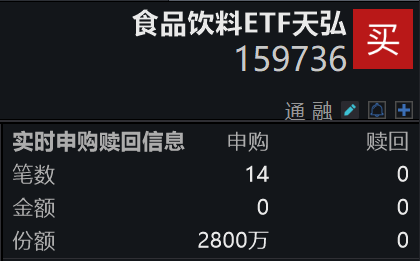
白酒政策暖风叠加猪肉价格低点!食品饮料ETF天弘(159736)实时净申购2800万份,农业ETF天弘(512620)跟踪指数逆市红盘
Sou Hu Cai Jing· 2025-12-10 02:36
Core Insights - The Tianhong Food and Beverage ETF (159736) has seen significant trading activity, with a transaction volume of 27.0065 million yuan and a net inflow of 15.2008 million yuan as of December 9, indicating strong investor interest in the sector [1][2]. Group 1: ETF Performance - The Tianhong Food and Beverage ETF (159736) tracked the CSI Food and Beverage Index (930653), which rose by 0.42% [1]. - Notable constituent stocks include Huanlejia (300997) with a 12.83% increase, XinNuoWei (300765) up by 9.28%, and Huaiqi Mountain (601579) rising by 3.91% [1]. - Over the past five trading days, the ETF has attracted a total of 13.7841 million yuan in net inflows [1]. Group 2: Product Highlights - The Tianhong Food and Beverage ETF (159736) primarily invests in high-end and mid-range liquor stocks, with approximately 60% of its portfolio allocated to leading liquor brands and 40% to beverages, dairy, and seasoning sectors [3]. - The top ten weighted stocks in the ETF include major brands such as Moutai, Wuliangye, and Yanghe, as well as dairy giant Yili and seasoning leader Haitian [3]. Group 3: Market Events - The Guizhou Provincial Government has proposed measures to boost liquor sales, including enhancing online promotions and creating diverse consumption scenarios [6]. - The measures aim to increase the market presence of Guizhou liquor through initiatives like issuing consumption vouchers and supporting financial collaborations with liquor companies [6]. Group 4: Agricultural Sector Insights - The Tianhong Agricultural ETF (512620) has also shown positive performance, with the CSI Agricultural Theme Index (000949) increasing by 0.49% [2]. - Key stocks in the agricultural ETF include Luoniushan (000735) with a 7.76% rise and Shengnong Development (002299) up by 3.59% [2]. - The agricultural sector is currently experiencing a decrease in pork prices, with the national average price at a five-year low, indicating a potential shift in market dynamics [7]. Group 5: Institutional Perspectives - Dongwu Securities has expressed a cautiously optimistic outlook for consumer spending, suggesting that while consumption has been under pressure, there are signs of marginal improvement expected by 2026 [8]. - The report highlights the importance of recent government policies aimed at stimulating consumption, including subsidies for various sectors [8].
西部证券晨会纪要-20251210
Western Securities· 2025-12-10 02:29
Group 1: Consumer Industry Outlook - The consumer industry is showing signs of bottoming out, with fundamental recovery acting as a catalyst for stock prices. Positive information is increasing, and companies are focusing more on dividends and buybacks, improving the competitive landscape [1][5] - The "dividend +" strategy is recommended as a short-term stable allocation strategy, with a focus on high-end consumption and certain mass-market products showing signs of recovery [5] - The market is expected to gradually return its focus to the consumer sector, although there are still concerns regarding valuation and the performance of non-mainstream sectors [5] Group 2: Insurance Industry Strategy - The insurance sector is expected to be a growth area in the financial industry, with leading companies benefiting from scale effects, brand recognition, and customer loyalty [10] - The insurance stocks' performance in 2025 was driven by asset performance, with distinct phases observed throughout the year, including periods of market volatility and policy support [8][10] - Key metrics for insurance companies include asset under management (AUM) growth and interest spread improvement, which are essential for stable investment returns [9][10] Group 3: Biotechnology Company - Baiaosaitu - Baiaosaitu is an innovative biotechnology company focused on drug development, utilizing proprietary gene editing technology to create various therapeutic antibodies [12][14] - The company has seen significant revenue growth, with projections indicating revenues of 1.387 billion, 1.809 billion, and 2.306 billion yuan for 2025-2027, representing year-on-year growth rates of 41.5%, 30.4%, and 27.4% respectively [13][14] - The company has established a global presence with its animal model sales, which have increased from 50 million yuan in 2019 to 389 million yuan in 2024, reflecting a strong demand for its innovative models [13][14] Group 4: Domestic Policy Insights - The central government's focus for 2026 emphasizes a balanced approach to economic development, with a strong emphasis on enhancing quality and efficiency [16][17] - Policies will likely prioritize expanding domestic demand and optimizing supply, with specific measures expected to support consumption and innovation [17][18] - The government aims to address risks in key areas while ensuring the stability of people's livelihoods, indicating a comprehensive approach to economic governance [18]
贵州省又出新招!白酒大面积上攻,食品ETF(515710)逆市飘红!机构:白酒长期配置价值凸显
Xin Lang Cai Jing· 2025-12-10 02:19
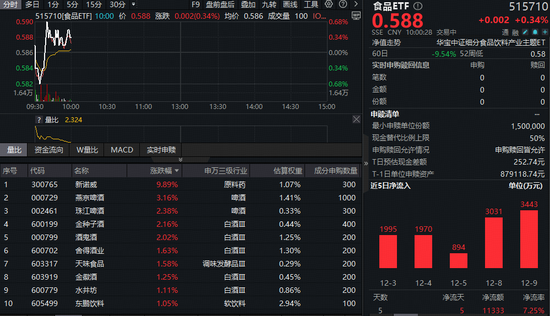
Core Viewpoint - The food and beverage sector experienced a rise against the market trend, with the Food ETF (515710) showing a recovery after a brief dip, indicating potential investment opportunities in this sector [1][7]. Group 1: Market Performance - The Food ETF (515710) opened lower but quickly rebounded, achieving a maximum intraday increase of 0.68% and closing up by 0.34% [1][7]. - Key stocks in the sector, particularly in the liquor category, saw significant gains, with New Noble rising over 9%, Yanjing Beer increasing by over 3%, and several others like Jiu Gui Jiu and Jin Zhong Zi Jiu rising over 2% [1][7]. Group 2: Policy Impact - On December 9, a draft policy from Guizhou Province aimed at promoting liquor sales was released, focusing on enhancing online sales and expanding market reach through various channels, including supermarkets and convenience stores [3][9]. - This policy is expected to directly benefit Guizhou liquor companies by creating new sales opportunities and stabilizing market expectations [3][9]. Group 3: Valuation Insights - The food and beverage sector is currently at a historical low in terms of valuation, with the Food ETF's underlying index PE ratio at 19.93, placing it in the 4.11% percentile of the last decade, suggesting a favorable long-term investment opportunity [3][9]. - Analysts recommend focusing on companies with strong demand stability and risk resilience, as well as those actively exploring new products and sales channels [10]. Group 4: Investment Recommendations - It is suggested to consider the Food ETF (515710) for exposure to core assets in the food and beverage sector, which includes a significant allocation to leading high-end and mid-range liquor stocks [10]. - The ETF also diversifies into beverage, dairy, seasoning, and beer sectors, with top holdings including renowned brands like Moutai and Yili [10].
智通港股沽空统计|12月10日
智通财经网· 2025-12-10 00:25
Group 1 - The top short-selling stocks include Sun Hung Kai Properties-R (80016), China Resources Beer-R (80291), and AIA Group-R (81299), all with a short-selling ratio of 100.00% [1][2] - The highest short-selling amounts are from Xiaomi Group-W (01810) at 2.161 billion, Alibaba-SW (09988) at 793 million, and Tencent Holdings (00700) at 733 million [1][2] - The highest deviation values are from China Resources Beer-R (80291) at 39.83%, followed by Jianfa Property (02156) at 37.09%, and AIA Group-R (81299) at 35.65% [1][2] Group 2 - The top ten short-selling ratio rankings show that all stocks listed have significant short-selling activity, with Anta Sports-R (82020) also at 100.00% [2] - The top ten short-selling amounts highlight Xiaomi Group-W leading significantly, with a short-selling ratio of 28.48% [2] - The top ten deviation values indicate that China Resources Beer-R (80291) has the highest deviation, suggesting a notable difference from its historical short-selling average [2]