航空航天

Search documents
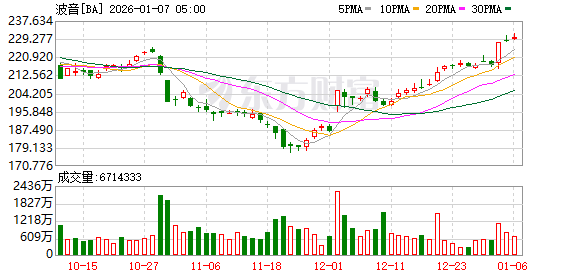
【环球财经】平安降落“敞门”飞机反遭指责 美国机长起诉波音公司
Xin Hua She· 2026-01-07 08:02
Core Viewpoint - Captain Brandon Fischer has filed a lawsuit against Boeing, claiming that the company implied "operational misconduct" after a door seal fell off during a flight, causing him significant emotional distress [2][3] Group 1: Incident Details - On January 5, 2024, Captain Fischer was piloting Alaska Airlines Flight 1282, a Boeing 737 MAX 9, with approximately 180 passengers on board when a door seal detached shortly after takeoff, leaving a large hole [2] - The aircraft returned to Portland after 6 minutes in the air, landing safely 20 minutes later, with 7 passengers and 1 crew member sustaining minor injuries, but no fatalities [2] - Passengers reported that a boy's shirt was torn by the wind from the hole, and some mobile phones were sucked out of the cabin [2] Group 2: Investigation Findings - The National Transportation Safety Board (NTSB) stated that the incident was a miracle as it did not result in fatalities or serious injuries, praising Fischer and the crew for their performance [3] - An investigation revealed that four bolts securing the door seal were removed during maintenance but not reinstalled, with Boeing's inadequate employee training and FAA's insufficient oversight identified as primary causes of the incident [3] Group 3: Legal Implications - Fischer's attorney claims that despite the NTSB's findings, Boeing is attempting to shift blame onto Fischer, suggesting the incident was due to "improper maintenance or misuse" of the aircraft [3] - The attorney argues that Boeing's statements are aimed at making Fischer a scapegoat for the company's own failures, causing him significant emotional distress [3] - Alaska Airlines has not commented on the lawsuit but expressed gratitude for the crew's courage and quick response during the incident, which ensured the safety of all on board [3]


高毅、淡水泉、景林、葛卫东旗下私募大动作!盯上商业航天、脑机接口概念股?
私募排排网· 2026-01-07 03:47
Core Viewpoint - The article emphasizes the significance of private equity fund research activities as a predictive signal for future market trends, especially as the private equity industry in China is projected to exceed 22 trillion yuan by 2025, reflecting macroeconomic recovery and structural transformation [2]. Group 1: Private Equity Research Activities - In 2025, a total of 4,527 private equity institutions conducted research on 4,611 A-share listed companies, with the top five companies being Crystal Optoelectronics, Zhongkong Technology, Huichuan Technology, Huaqin Technology, and Nine Company-WD [2]. - The article highlights the active research frequency of leading private equity firms such as Gao Yi, Dan Shui Quan, and Jing Lin, particularly in December, as they prepare for future investments [2]. Group 2: Performance of Companies Under Research - The top 20 A-share companies by the number of private equity research visits include Crystal Optoelectronics with 340 visits and a 2025 price increase of 14.65%, and Huichuan Technology with 314 visits and a 29.41% increase [6]. - The average stock price increase for companies researched in December 2025 was 12.67%, with notable performers like Xiangyu Medical and Boying Special Welding achieving increases of 86.39% and 42.97%, respectively [11]. Group 3: Notable Private Equity Firms - Gao Yi Asset conducted 515 research visits covering 305 listed companies in 2025, maintaining a high level of research activity [9]. - Dan Shui Quan completed 430 research visits covering 306 companies, with an average stock price increase of 13.90% since December 2025, highlighting significant gains for companies like Guanglian Aviation and Yongding Co., which saw increases of 105.10% and 59.44% [15][16]. - Jing Lin Asset conducted 222 research visits covering 162 companies, with an average stock price increase of 11.83% since December 2025, led by companies like Pulit and Zhongfu Shenying, which increased by 52.96% and 30.18% respectively [17].

低空行业政策前瞻
2026-01-07 03:05
Summary of Low Altitude Economy Conference Call Industry Overview - The low altitude economy is overseen by the Central Air Traffic Control Commission, the National Development and Reform Commission's Low Altitude Economy Department, and the Ministry of Public Security. The policy documents from Shanghai are considered to be of a lower tier [1][2] - The target for the core industry of the low altitude economy in Shanghai is set at 80 billion yuan by 2028, which requires an investment of 8 billion yuan. This target is viewed with cautious optimism as it currently lacks realistic support [1][2] Core Points and Arguments - The core industries of the low altitude economy include: 1. Physical space release (airspace management) 2. Information platforms supporting industry operations 3. Infrastructure construction 4. Manufacturing and application scenarios [2] - Support for eVTOL drones is capped at 100 million yuan, which is deemed insufficient for large aircraft that require tens of billions for production and airworthiness [1][2] - The development of the low altitude economy is slow due to a lack of understanding among management and industry personnel. The government is committed to promoting this sector, but there are significant cognitive barriers to overcome [1][3] - Public fear regarding the safety of low altitude flights is a major bottleneck, necessitating improved public awareness and psychological readiness [1][5] - The current classification policies for the low altitude industry are temporary and not well understood, which hinders development [5] Important but Overlooked Content - The integration of low altitude data and safety issues should not be the sole focus; instead, the industry must first address flight conditions and locations before discussing data collection and application [6][7] - The application of satellite technology in low altitude economy is currently limited due to technical challenges, and there is a need to rely on other reliable data sources, such as meteorological services [8][9] - The future of the low altitude economy is expected to be driven by the younger generations (post-00s and post-10s), who will bring innovative changes to various industries [14] - The core competitiveness of companies in airspace planning lies in their ability to integrate ground and air planning, which is currently a challenge [15] Future Trends - The low altitude economy is anticipated to transform production and operational modes across various industries, similar to the impact of the internet [13][14] - The development of low altitude insurance is crucial for addressing safety concerns and clarifying liability, which could alleviate pressure on government entities [12] This summary encapsulates the key insights and discussions from the conference call regarding the low altitude economy, highlighting both the potential and the challenges faced in this emerging sector.
海内外利好共振,航空航天ETF(159227)交投活跃
Xin Lang Cai Jing· 2026-01-07 02:57
Core Viewpoint - The aerospace industry is undergoing a structural transformation akin to the Age of Exploration, driven by the rise of commercial space enterprises like SpaceX, with China’s commercial space sector transitioning from a policy incubation phase to an industrial explosion phase by 2026, marking a pivotal year for investment based on supply chain performance rather than mere thematic speculation [1][2]. Group 1: Market Performance - As of January 7, 2026, the CN5082 aerospace industry index showed mixed performance among its constituent stocks, with North Navigation (600435) leading gains at 9.99%, followed by Changying Tong (688143) at 4.75%, and Guanglian Aviation (300900) at 4.10%, while Shanghai Hanyun (300762) experienced a decline [1]. - The aerospace ETF (159227) was quoted at 1.42 yuan, with an intraday turnover of 9.77% and a transaction volume of 1.87 billion yuan. Over the past week, the average daily transaction volume reached 5.11 billion yuan [1]. Group 2: Industry Developments - SpaceX is planning to establish a massive GigaBay factory aimed at achieving an annual production capacity of up to 1,000 Starships [1]. - Domestic private rocket company Xinghe Power Aerospace announced the launch of the Gushenxing-1 sea-launched (Yaoqi) rocket badge and plans to conduct a commercial launch mission soon, code-named "Wanghai Tide" [1]. - According to Guojin Securities, the global aerospace industry is experiencing a significant transformation with the emergence of commercial space companies, and 2026 is anticipated to be a landmark year for China's commercial aerospace industry [1]. Group 3: ETF Composition - The aerospace ETF (159227) closely tracks the CN5082 aerospace index, covering key segments such as aerospace equipment, space equipment, satellite navigation, and new materials, with commercial aerospace concepts accounting for 70% of its weight [2]. - The top ten holdings include industry leaders such as Aerospace Development, China Satellite, Aerospace Electronics, AVIC Aircraft, and AVIC High-Tech [2].
从创新突破看发展突围(评论员观察)
Ren Min Ri Bao· 2026-01-07 02:46
Group 1 - China's high-speed rail operating mileage has surpassed 50,000 kilometers, establishing the world's largest and most advanced high-speed rail network [1] - By 2025, China's grain production is expected to reach 1,429.75 billion jin, setting a new record [1] - Shandong's GDP is projected to exceed 10 trillion yuan by 2025, showcasing the province's economic strength [1] Group 2 - The new round of technological revolution and industrial transformation is accelerating, emphasizing the importance of both immediate and long-term innovation efforts [2] - China's high-speed rail has evolved from non-existence to the world's most advanced level through consistent planning and execution from the "11th Five-Year Plan" to the "14th Five-Year Plan" [2] - International media highlights that China's technological innovation benefits from a carefully designed long-term national strategy [2] Group 3 - China possesses all industrial categories recognized by the United Nations, with a complete manufacturing scale and ecosystem, although high-end manufacturing still has weaknesses [3] - In the past five years, China has ranked first globally in the number of patents related to humanoid robots, indicating a surge in intelligent manufacturing [3] - Key core technologies cannot be acquired through purchase or negotiation, necessitating domestic innovation [3] Group 4 - The development of major scientific and technological projects requires both independent efforts and systematic integration, emphasizing regional collaboration [4] - The C919 aircraft project involved over 30,000 people from more than 1,000 research institutions, universities, and enterprises across 20 provinces [4] - China's innovation index has entered the world's top ten, with four Chinese achievements listed among the top ten scientific breakthroughs for 2025 [4]
任务代号:望海潮!又一商业运载火箭将择机发射,航空航天ETF天弘(159241)盘中交易价格再创新高,跟踪指数暴力拉升收涨3.56%
Sou Hu Cai Jing· 2026-01-07 01:37
Core Viewpoint - The aerospace ETF Tianhong (159241) has seen significant trading activity, reaching a new high since its listing, with a turnover of 20.17% and a transaction volume of 120 million yuan, indicating a vibrant market engagement [1] Product Highlights - The aerospace ETF Tianhong (159241) tracks the National Aerospace Index, with a high defense and military weight of 96.2%, making it the index with the highest military content in the market. The top ten holdings include key suppliers for fighter jets such as AVIC Chengfei, AVIC Shenyang, AVIC Xifei, and Aero Engine Corporation of China [1] Hot Events - Star River Dynamics is set to launch the "Vesta I Sea Launch Type (Remote Seven)" commercial rocket under the mission code "Wanghai Tide" in the near future [1][2] Industry Insights - In 2025, China's aerospace technology group completed 73 space launch missions, setting a historical record. The commercial aerospace sector is entering a new phase driven by technological iteration and industrial implementation, supported by favorable policies and initiatives from local governments [3]


从创新突破看发展突围
Ren Min Ri Bao· 2026-01-07 00:57
Group 1 - China's high-speed rail operating mileage has surpassed 50,000 kilometers, establishing the world's largest and most advanced high-speed rail network [1] - By 2025, China's grain production is expected to reach 1,429.75 billion jin, setting a new record [1] - Shandong's GDP is projected to exceed 10 trillion yuan by 2025, showcasing the province's economic strength [1] Group 2 - The new round of technological revolution and industrial transformation is accelerating, emphasizing the importance of both immediate and long-term innovation efforts [2] - China's high-speed rail has evolved from non-existence to the world's most advanced level through consistent planning and execution from the "11th Five-Year Plan" to the "14th Five-Year Plan" [2] - International media highlights that China's technological innovation benefits from a carefully designed long-term national strategy [2] Group 3 - China possesses all industrial categories recognized by the United Nations, with significant advantages in manufacturing scale and industrial ecosystem completeness [3] - The country leads the world in the number of relevant patents in humanoid robotics over the past five years, indicating a surge in intelligent manufacturing [3] - Key core technologies cannot be acquired through purchase or negotiation, necessitating a focus on independent innovation [3] Group 4 - Innovation thrives on collaboration, with significant projects requiring systematic thinking and regional cooperation [4] - The C919 aircraft project involved over 30,000 people from more than 1,000 research institutions, universities, and companies across 20 provinces [4] - The Beidou satellite navigation system achieved breakthroughs in over 160 key technologies, showcasing the effectiveness of coordinated national efforts [4] Group 5 - China's innovation index has entered the world's top ten for the first time, with four Chinese achievements listed among the top ten scientific breakthroughs for 2025 by *Science* magazine [5] - The term "Chinese innovation" has gained global recognition, reflecting the country's ambition to drive economic growth through innovative breakthroughs [5]
突发特迅!有消息称:中国正研究收紧对日稀土出口许可审查,引发全球高度关注
Sou Hu Cai Jing· 2026-01-06 21:46
Core Insights - China is considering tightening export license reviews for seven types of heavy rare earth elements, which are crucial for Japan's industries, in response to Japan's recent negative actions [1][7] Group 1: Heavy Rare Earth Elements - The seven key resources, referred to as "vitamins for the technology industry," include samarium, gadolinium, terbium, dysprosium, lutetium, scandium, and yttrium, which are essential for high-end manufacturing and defense technology [1][3] - Heavy rare earths like terbium and dysprosium are critical additives for high-performance neodymium-iron-boron magnets used in electric vehicle motors and wind turbines [3] - In the nuclear energy sector, gadolinium and samarium are core materials for control rods in nuclear reactors, directly impacting the safety of nuclear power plants [3] Group 2: Japan's Dependency - Japan has reduced its overall dependence on Chinese rare earths from 90% to 60%, but remains nearly 100% reliant on China for key categories like dysprosium and terbium used in electric vehicle motors [5] - If export reviews are tightened, Japan's automotive, electronic components, wind power, medical equipment, and aerospace sectors will be significantly affected, with potential losses of 660 billion yen (approximately $4.5 billion) over three months and 2.6 trillion yen (approximately $17.5 billion) over a year, equating to a 0.43% reduction in annual GDP [5] Group 3: China's Strategic Response - China's consideration to tighten export reviews is framed as a justified response to Japan's recent provocative actions, including comments on Taiwan and increased military spending [7] - The tightening of export controls aligns with China's export control laws and international practices, aimed at safeguarding national security and fulfilling non-proliferation obligations [7] - This move reflects China's growing influence in the strategic resource sector, as it holds 40% of global rare earth reserves and 67% of production, transitioning from a low-cost exporter to a key player in resource security [8][9]

高盛看好欧洲股市 科技与成本优化助力长期增长
Ge Long Hui A P P· 2026-01-06 15:20
Group 1 - Goldman Sachs analysts have raised the 12-month target price for the STOXX Europe 600 index, prompting U.S. clients to seek value in European equities [1] - After significant sell-offs in European stocks from 2022 to 2024, investor crowding is no longer a concern [1] - The strengthening euro and weak oil prices are expected to weigh on European stocks this year, but these factors will not be obstacles by 2027 [1] Group 2 - Analysts recommend focusing on stocks in the banking, aerospace, and alternative asset management sectors [1] - Companies with high labor costs are expected to benefit from slowing wage growth and technological replacements for labor [1]

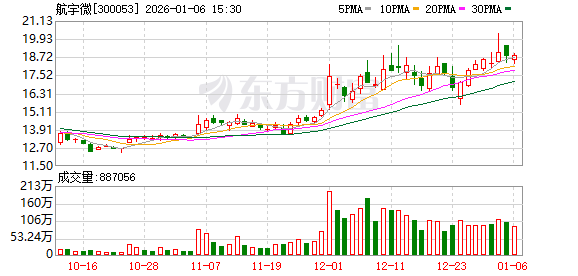
航宇微:公司深耕航空航天领域二十余年
Zheng Quan Ri Bao· 2026-01-06 14:17
(文章来源:证券日报) 证券日报网讯 1月6日,航宇微在互动平台回答投资者提问时表示,公司深耕航空航天领域二十余年, 主要技术和产品包括宇航电子核心元器件(嵌入式SOC芯片、立体封装SIP模块/系统等)、"珠海一 号"遥感微纳卫星星座以及"玉龙"AI芯片等。 ...