制造业

Search documents
马斯克预警:留给旧世界的时间只剩2000天,而中国握着唯一的“王牌”……
创业邦· 2026-01-17 03:23
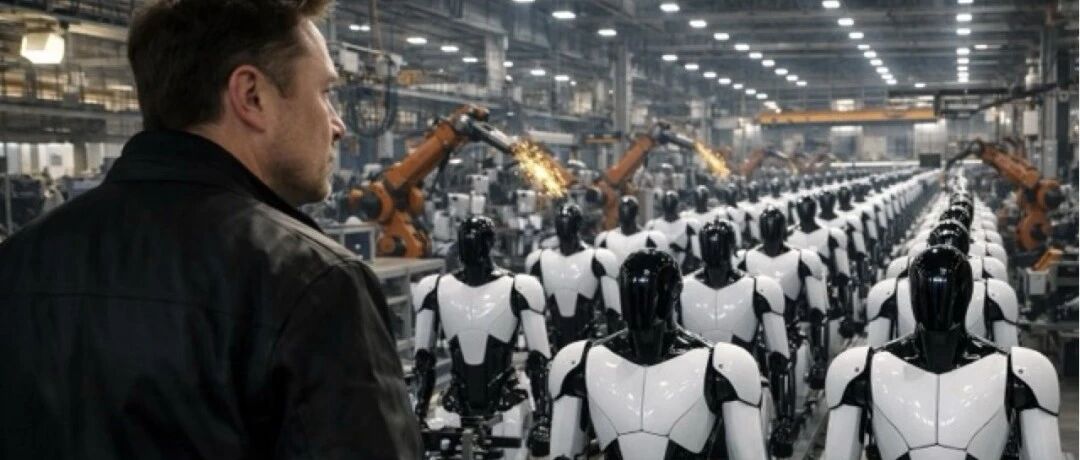
Core Insights - The article emphasizes the urgency of the next 3 to 7 years in the context of technological advancements and their implications for various sectors, particularly in China and the U.S. [5] Group 1: Key Predictions from Musk's Dialogue - Musk asserts that we are currently in a "singularity," with AI intelligence expected to surpass the smartest human individuals by 2026, and the total intelligence of AI surpassing that of all humanity by 2029 [9] - He warns that the upcoming crisis will revolve around transformers and electricity, highlighting China's significant advancements in energy infrastructure, which he claims are far ahead of the U.S. [11] - The job market will undergo a major transformation, with white-collar jobs being the first to be affected by AI, while blue-collar jobs will face a delay in impact until the widespread deployment of advanced robots [13] Group 2: Economic and Educational Implications - Musk predicts the end of traditional economic models, suggesting that saving for retirement will become irrelevant due to extreme deflation driven by AI and robotics, leading to a future of Universal High Income (UHI) [13] - He critiques the current education system, stating that schools will primarily serve social functions, as AI tutors will render traditional knowledge acquisition obsolete [16] - The future of education will focus on human-AI collaboration, with students needing to develop skills in directing AI rather than rote memorization [36] Group 3: Competitive Landscape and Manufacturing - Musk identifies three main players in the future of AGI: xAI, Google, and "China Inc.," emphasizing that only those with significant infrastructure and talent will compete effectively [40] - He highlights the impending obsolescence of the "population dividend" in China due to advancements in robotics, which will drastically reduce labor costs and challenge the current manufacturing paradigm [32] - Musk argues that the U.S. will struggle to compete in the energy sector, as China has significantly increased its power generation capacity, with projections indicating that by 2026, China's electricity output will be three times that of the U.S. [29][31]

今年首场赴外劳务协作招聘启动
Mei Ri Shang Bao· 2026-01-16 22:18
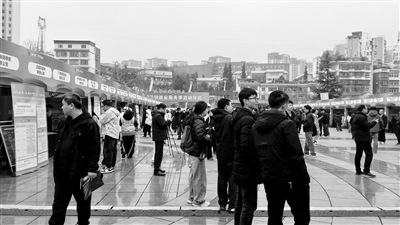
Group 1 - The core initiative "Spring Breeze Sends Jobs, Happy Employment in Hangzhou" aims to provide job opportunities and meet labor demand, contributing to regional economic development and employment growth [2][3] - The first recruitment event in the series took place in Bijie, Guizhou, with 15 companies from Hangzhou offering 2,157 job positions, primarily in the manufacturing sector [2] - Job positions include roles such as operators, assemblers, and quality inspectors, with monthly salaries ranging from 4,500 to 15,000 yuan, and most positions have relaxed educational and skill requirements [2] Group 2 - The Hangzhou Human Resources and Social Security Bureau is enhancing collaboration with regions like Henan, Guizhou, and Sichuan to organize labor cooperation activities, aiming to facilitate labor transfer and employment [2] - The city plans to conduct over 40 labor cooperation recruitment events outside the province by the end of March, capitalizing on the peak recruitment period before and after the Spring Festival [2] - The initiative is seen as a crucial measure for promoting rural revitalization and ensuring a strong start for the 14th Five-Year Plan [3]


际华集团:公司在发展过程中高度关注新质生产力建设
Zheng Quan Ri Bao· 2026-01-16 15:17
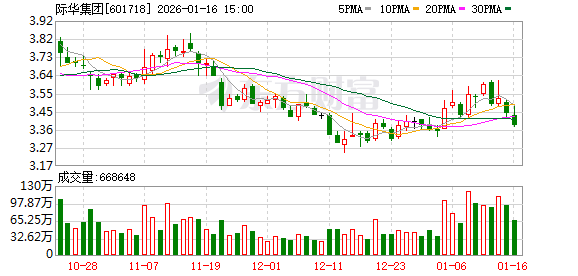
Core Viewpoint - The company is focusing on the construction of new productive forces and aims to enhance its production capabilities through smart factory initiatives and technological upgrades [2] Group 1 - The company has multiple subsidiaries that have been awarded provincial-level smart factory titles, indicating recognition of its advanced production capabilities [2] - The company plans to continue emphasizing the upgrade and transformation of production lines towards automation and intelligence [2] - The introduction of advanced software technologies and automated equipment is part of the company's strategy to optimize production processes [2] Group 2 - The company aims to comprehensively improve product quality, technical standards, and production efficiency through its initiatives [2]

美国制造业产出在2025年最后几个月增长
Sou Hu Cai Jing· 2026-01-16 15:00
Core Insights - The article highlights that U.S. manufacturing output unexpectedly increased in December, following a 0.3% growth in November, indicating a stabilization in the manufacturing sector at year-end [1] - Overall industrial production, which includes factories, mines, and utilities, experienced a consecutive growth of 0.4% for two months [1] Manufacturing Sector - December saw a 0.2% increase in manufacturing output, reflecting an improvement in the production of consumer goods and business equipment [1] - The previous month's data was revised upward, further supporting the positive trend in manufacturing [1] Industrial Production - The mining and energy extraction sectors experienced a decline, while utility output showed an increase [1] - The overall industrial production growth of 0.4% indicates resilience in the sector despite challenges in specific areas [1]
美国12月制造业产值环比增长0.2%,预期为下降0.1%
Mei Ri Jing Ji Xin Wen· 2026-01-16 14:28
每经AI快讯,1月16日,美国12月制造业产值环比增长0.2%,预期为下降0.1%。 ...
华翔股份:控股股东权益变动,持股比例降至52.97%
Xin Lang Cai Jing· 2026-01-16 13:10
Group 1 - The core point of the announcement is that the controlling shareholder, Shanxi Linfen Huaxiang Industrial Co., Ltd., plans to reduce its stake in Huaxiang Co., Ltd. by up to 16.2051 million shares, which is no more than 3% of the total share capital within three months [1] - On January 16, 2026, Huaxiang Industrial reduced its holdings by 263,000 shares through block trading, decreasing its shareholding ratio from 53.01% to 52.97%, which is a change that touches the 1% threshold [1] - The reduction is part of the disclosed plan and does not trigger a mandatory tender offer, nor will it lead to changes in the controlling shareholder or actual controller [1]

顺威股份:拟定增募资不超3亿元
Xin Lang Cai Jing· 2026-01-16 10:30
Group 1 - The company plans to issue shares through a simplified procedure to specific targets, raising a total of no more than 300 million yuan, which does not exceed 20% of the company's net assets at the end of the most recent fiscal year [1] - The number of shares to be issued will not exceed 30% of the total share capital before the issuance, with the final issuance price determined through consultation with the lead underwriter based on inquiry results, but not lower than 80% of the average trading price of the company's shares over the 20 trading days prior to the pricing benchmark [1] - The raised funds, after deducting issuance costs, will be fully allocated to the wind blade automation intelligent manufacturing technology transformation project, the high-performance modified composite materials production construction project, and to supplement working capital [1]

韶关召开一季度政银企融资对接会 授信签约金额超47亿元
Nan Fang Ri Bao Wang Luo Ban· 2026-01-16 07:53
1月15日上午,韶关市2026年一季度政银企融资对接会在市区举行,会议由市政府办公室、韶关金融监 管分局主办,市银行业公会承办,相关行业主管部门、11家银行机构与44家企业代表参加会议。 本次政银企对接会聚焦"做大工业、做强主城、做优县域"三大重点,围绕金融支持"百县千镇万村高质 量发展工程",着力搭建政银企沟通平台,赋能韶关经济高质量发展。 据了解,韶关金融监管分局联合韶关市政府办公室谋划建成了"金融管理部门牵头+行业主管部门协同 +银行对接服务+企业融资发展"常态化政银企融资对接机制,并成立金融专班,于每季度在韶关市区和 7个县(市)同步召开政银企对接会,通过常态化对接、问题协调解决、产品服务创新等务实举措,"一 企一策"解决企业融资难题。 现场分三批次完成12轮授信签约,涵盖大数据、科技创新、制造业、农业等重点领域,现场签约授信金 额达30.68亿元。与此同时,全市7个县(市)同步举办对接活动,全市现场授信签约金额达47.46亿元。 ...
【数说经济】“公共服务随人走”意味什么
Jing Ji Ri Bao· 2026-01-16 07:22
Core Insights - The State Council's recent meeting emphasizes the transition from household registration-based public service provision to residence-based services, aiming to address the urgent needs of the unregistered permanent population [1][2] - The shift will allow unregistered residents to access equal public services in education, healthcare, social security, and housing, breaking the rigid link between public services and household identity [1][2] Group 1: Demographics and Needs - The unregistered permanent population is primarily composed of new-generation migrant workers who are better educated and more eager to integrate into urban life [2] - There is a growing trend of families migrating together rather than individuals, leading to increased demand for comprehensive public services related to education, healthcare, and housing [2] - Major inflow areas include developed eastern coastal regions and key city clusters, resulting in significant public service supply-demand imbalances in these regions [2] Group 2: Economic Implications - Providing public services based on residence is crucial for unlocking domestic demand and increasing investment in human capital [3] - Research indicates that once farmers transition to urban permanent residents, their per capita consumption can increase by 30%, with an additional 30% increase after settling in urban areas [3] - A 1% increase in urbanization rate can generate over 200 billion yuan in consumer demand and more than 1 trillion yuan in investment demand [3] Group 3: Policy Implementation - The meeting outlines targeted measures to address pressing issues in education, housing, and social security, including improving policies for the education of migrant children and expanding public rental housing [3][4] - Emphasis is placed on a scientific and regionally tailored approach to policy implementation, allowing for local exploration while maintaining a unified national policy framework [3][4] - The reform aims to enhance the attractiveness and livability of cities, shifting the focus from GDP and large projects to human-centric development and overall quality of life [4]
全世界都没想到, 3年全面战争, 俄罗斯经济竟越挫越勇?欧洲反倒先撑不住了
Sou Hu Cai Jing· 2026-01-16 06:16
2026年初的布鲁塞尔寒夜,街道被拖拉机堵得水泄不通,欧盟总部周围弥漫着紧张的气息。愤怒的农民将土豆狠狠砸向警察的盾牌,抗议声像雷霆般撕裂了 欧洲政治的体面——这一幕,成为西方制裁俄罗斯四年后最讽刺、最讽刺的注脚。寒风中,怒吼与呐喊交织,街头的混乱仿佛在无声地质问那些制定制裁政 策的人:你们真的算计对了吗? 谁能料到呢?当俄罗斯超市的货架依旧琳琅满目,卢布汇率稳得如泰山般不动时,欧洲的工厂却因为能源价格飙升而纷纷外迁,德国制造业连续数月萎缩。 这场经济博弈的结果,让所有曾经预测俄罗斯会迅速崩溃的专家哑口无言,连他们的脸色也因意外而有些扭曲。曾经的战略自信,如今在现实面前显得脆弱 而讽刺。 俄罗斯的绝地反击堪称教科书级别。当西方切断SWIFT系统时,普京迅速推出天然气卢布令,强制要求不友好国家必须用卢布购买能源。这一操作不仅稳住 了卢布汇率,还让卢布一度成为全球最强货币。如今,俄罗斯与友好国家的贸易额已占其进出口总额的77%,稳固了经济底盘,也让国际金融市场为之一 振。 更令人瞩目的,是俄罗斯向东看的战略。欧洲在是否全面禁运俄罗斯油气的问题上犹豫不决,而印度和中国则成为急切的大买家。2025年第一季度, 俄罗斯 ...