
能源基建

Search documents
欧美电荒,中国有方
吴晓波频道· 2026-01-21 00:20
Core Viewpoint - The article discusses the future energy crisis, emphasizing that while chip shortages may become a thing of the past, the real challenge will be related to transformers and electricity supply, with China leading the way in energy infrastructure development [3][10]. Group 1: Energy Crisis and AI - The future competition in AI will fundamentally be about energy supply capabilities, as both AI and robots are significant energy consumers [9][15]. - In the U.S., data centers consume 5% of the national electricity, a significant increase from 2% a decade ago, and this is projected to rise to 10% by 2030 [15][18]. - The construction of data centers is quick, but the associated power plants and transmission lines take years to plan and build, leading to a prolonged electricity shortage in the U.S. [18]. Group 2: North America and Europe Energy Challenges - Residents in data center-heavy regions of the U.S. have seen electricity bills rise by an average of 25% over the past three years [21]. - The aging U.S. power grid, with 60-70% of transmission lines over 30 years old, is contributing to increased failure rates and regional blackouts [21]. - In Europe, energy crises are exacerbated by extreme weather and outdated infrastructure, with average power outages increasing by 150% [25]. Group 3: China's Energy Advantage - By 2025, China's total electricity consumption is projected to reach 10,368.2 billion kWh, more than double that of the U.S. and surpassing the combined consumption of the EU, Russia, India, and Japan [28]. - China has the world's largest energy system, with a total installed power generation capacity exceeding 3.72 billion kW, and renewable energy sources accounting for over 60% of this capacity [29]. - Chinese power equipment companies are transitioning from domestic suppliers to global challengers, leveraging high delivery efficiency and cost advantages [32]. Group 4: Innovative Energy Solutions - Chinese companies are developing smart energy solutions that allow households to become energy producers, moving beyond traditional power supply models [34]. - The focus is on creating a comprehensive ecosystem for home energy management, integrating solar power, storage, and smart technology [34]. - The article highlights the introduction of innovative products like the solar-powered robot that can autonomously manage energy production and storage [39][42].


26年经济有何期待?——12月经济数据解读
陈兴宏观研究· 2026-01-19 09:50
Economic Overview - The national economy achieved a GDP growth of 5% for the year, successfully meeting the target [2][11] - Exports continued to support growth, benefiting from reduced trade disruptions post the China-US Kuala Lumpur Agreement, with strong growth in the electronic and high-tech product sectors [2] - Investment saw a further decline, with all three major investment categories experiencing downward trends, particularly in manufacturing and real estate [2][4] Industrial Production - Industrial production showed signs of recovery, with the industrial added value for December increasing by 5.2% year-on-year [3] - The mining, manufacturing, and electricity sectors reported growth rates of 5.4%, 5.7%, and 0.8% respectively [3] - Exports contributed positively to industrial production, with a year-on-year increase in export delivery value of 3.2% [3] Investment Trends - Fixed asset investment saw a year-on-year decline of 15.1%, with private investment dropping by 17.2% [4] - Real estate investment experienced a significant decline of 35.8%, while manufacturing investment fell by 10.5% [4] - Infrastructure investment also faced challenges, with traditional and new standards showing declines of 15.9% and 12.2% respectively [4] Consumer Behavior - Retail sales growth slowed to 0.9% in December, marking a new low since 2023, influenced by the real estate cycle and consumer debt [7] - Service consumption showed resilience, with a year-on-year growth rate of 5.5%, supported by policy initiatives [7] - Essential consumer goods saw a decline in growth, while discretionary goods showed a narrowing decline [7] Real Estate Market - Real estate sales area saw a year-on-year decline of 15.6%, although the rate of decline improved compared to November [8] - New construction area decreased by 19.4%, while the completion area also faced a decline [8] - Housing prices continued to drop across various city tiers, with both new and second-hand residential prices decreasing [8] Employment and Economic Stability - The urban unemployment rate remained stable at 5.1%, consistent with previous months [11] - Overall, the economy is facing challenges from external uncertainties and ongoing structural adjustments, with a focus on expanding consumption as a key growth strategy for 2026 [11]

——12月经济数据解读:2026年经济有何期待?
Huafu Securities· 2026-01-19 09:06
Economic Performance - In December, the national GDP growth for the year reached 5%, successfully meeting the target[10] - The fixed asset investment in December saw a year-on-year decline of 15.1%, an increase of 3.1 percentage points from the previous month[4] - The manufacturing investment dropped by 10.5%, while real estate investment fell by 35.8%[4] Consumption Trends - Retail sales growth in December decreased by 0.4 percentage points to 0.9%, marking the lowest level since 2023[19] - Service retail sales continued to rise, with a cumulative year-on-year growth of 5.5%, indicating strong resilience in service consumption[19] - The average growth rate of essential consumer goods increased to 3.2%, while discretionary goods saw a decline of 4.4%[22] Industrial Production - The industrial added value in December grew by 5.2% year-on-year, with significant contributions from equipment manufacturing and high-tech industries[11] - The mining, manufacturing, and electricity sectors reported growth rates of 5.4%, 5.7%, and 0.8% respectively[11] Real Estate Market - The sales area of real estate in December experienced a year-on-year decline of 15.6%, although this was an improvement from November[25] - Housing prices continued to decline, with both new and second-hand residential prices showing a widening year-on-year drop[10] Employment and Future Outlook - The urban unemployment rate remained stable at 5.1%, consistent with the previous month and year[26] - The report emphasizes that expanding consumption is crucial for stabilizing growth in 2026, with "new infrastructure" and "energy infrastructure" as potential short-term strategies[26]
高低切换已成定局!下一个抱团方向,基本明牌了
Sou Hu Cai Jing· 2026-01-19 04:20
Core Viewpoint - The market is currently experiencing a typical oscillation and differentiation pattern, with a cautious balance between traditional stable growth and high-elasticity growth sectors, as evidenced by the performance of various indices [1] Market Performance - As of the midday close, the Shanghai Composite Index rose by 0.13% to 4107.18 points, while the Shenzhen Component Index remained nearly flat, and the ChiNext and STAR Market indices fell by 0.64% and 0.60%, respectively [1] - The half-day trading volume was 1.81 trillion yuan, indicating a significant decrease compared to the previous day, suggesting a temporary pause in market momentum as both bulls and bears adopt a wait-and-see approach [1] Sector Analysis - The leading sector, ultra-high voltage (UHV), surged over 5%, with a wave of stocks hitting the daily limit, followed by sectors like aviation and petrochemicals [1] - In contrast, the technology sector, including optical modules, optical circuit switches, and semiconductor silicon wafers, experienced collective pullbacks, indicating a clear divide in sector performance [1][2] Investment Drivers - The UHV sector is viewed as a "safe haven" in the current macro environment, characterized by high policy visibility and strong counter-cyclical attributes, making it a preferred investment destination amid uncertainties [2] - UHV is essential for China's energy revolution, addressing the challenges of power transmission and consumption from renewable energy sources, thus ensuring its long-term viability and demand [2] - The market is undergoing a structural rebalancing, with funds shifting from high-valuation growth sectors to high-prospect value sectors, reflecting a tactical migration in risk preferences [2] Market Outlook - The UHV sector's performance in both A-shares and Hong Kong stocks reinforces its status as a cross-market leader, indicating broader institutional recognition of its driving logic [3] - The structural market trend focusing on "certainty" and "prospect" is expected to dominate for some time, with limited systemic risks but potential for increased sector differentiation and rotation [3] - Investors are advised to focus on energy infrastructure themes represented by UHV, which may extend to related sectors like charging stations and smart grids, while remaining cautious of overvalued tech sectors [3]
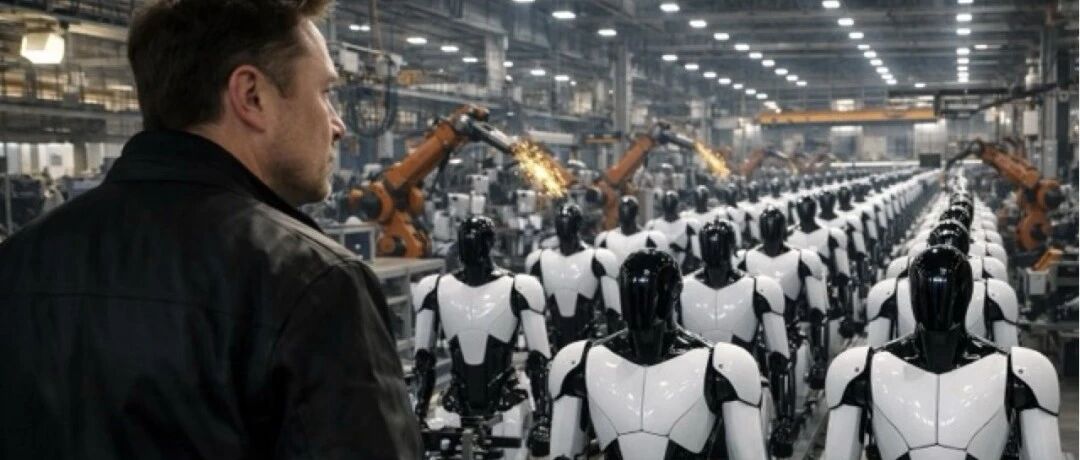
马斯克预警:留给旧世界的时间只剩2000天,而中国握着唯一的“王牌”……
创业邦· 2026-01-17 03:23
Core Insights - The article emphasizes the urgency of the next 3 to 7 years in the context of technological advancements and their implications for various sectors, particularly in China and the U.S. [5] Group 1: Key Predictions from Musk's Dialogue - Musk asserts that we are currently in a "singularity," with AI intelligence expected to surpass the smartest human individuals by 2026, and the total intelligence of AI surpassing that of all humanity by 2029 [9] - He warns that the upcoming crisis will revolve around transformers and electricity, highlighting China's significant advancements in energy infrastructure, which he claims are far ahead of the U.S. [11] - The job market will undergo a major transformation, with white-collar jobs being the first to be affected by AI, while blue-collar jobs will face a delay in impact until the widespread deployment of advanced robots [13] Group 2: Economic and Educational Implications - Musk predicts the end of traditional economic models, suggesting that saving for retirement will become irrelevant due to extreme deflation driven by AI and robotics, leading to a future of Universal High Income (UHI) [13] - He critiques the current education system, stating that schools will primarily serve social functions, as AI tutors will render traditional knowledge acquisition obsolete [16] - The future of education will focus on human-AI collaboration, with students needing to develop skills in directing AI rather than rote memorization [36] Group 3: Competitive Landscape and Manufacturing - Musk identifies three main players in the future of AGI: xAI, Google, and "China Inc.," emphasizing that only those with significant infrastructure and talent will compete effectively [40] - He highlights the impending obsolescence of the "population dividend" in China due to advancements in robotics, which will drastically reduce labor costs and challenge the current manufacturing paradigm [32] - Musk argues that the U.S. will struggle to compete in the energy sector, as China has significantly increased its power generation capacity, with projections indicating that by 2026, China's electricity output will be three times that of the U.S. [29][31]
铜、白银等需求暴涨,马斯克AI+能源叙事下有色金属资源战略
高工锂电· 2026-01-14 12:48
Core Viewpoint - The future of AI development is closely tied to energy infrastructure and the demand for colored metals, with a significant shift towards renewable energy sources like solar power and the need for efficient cooling systems in AI factories [4][5][11]. Energy Infrastructure - High-performance AI chips are experiencing exponential growth in computational power, which directly correlates with increased electricity consumption [4]. - The current state of the U.S. power grid is a bottleneck for AI development due to lengthy construction and expansion timelines [5]. - Elon Musk is independently building power plants that utilize solar energy and energy storage systems to create a self-sufficient power grid for AI operations [5]. Cooling Systems - Traditional air cooling methods are becoming ineffective due to increased chip density, necessitating the use of liquid cooling systems in AI factories [5]. - The failure of cooling components, such as liquid cooling plates, can lead to significant financial losses, emphasizing the importance of reliable cooling systems [5]. Demand for Colored Metals - The construction of AI factories and energy infrastructure will significantly increase the demand for copper, which is essential for heat conduction and system stability [5]. - Silver is highlighted as a critical material in the photovoltaic industry, particularly for its use in solar cells, with each gigawatt of solar capacity requiring approximately 15-20 tons of silver [9][10]. - The recent surge in silver prices, reaching historical highs, reflects the growing demand driven by the expansion of the solar energy sector [10]. Solar Energy Initiatives - Musk is advocating for a large-scale solar energy initiative that involves launching numerous solar satellites to create a vast solar energy collection network in space [8]. - The efficiency and cost-effectiveness of solar energy are emphasized as key factors in its future adoption [8].

热点思考 | 设备投资,能否“持续高增”?(申万宏观·赵伟团队)
赵伟宏观探索· 2026-01-06 16:03
Core Viewpoint - The article argues that the high growth in equipment investment is not primarily driven by the "Two New" policies or the manufacturing Juglar cycle, but rather by strong investment in broad infrastructure and the service sector [2][9][71]. Group 1: Misconceptions about Equipment Investment Growth - Misconception 1: The strong equipment investment is attributed to the "Juglar cycle"; however, it is actually driven by robust growth in broad infrastructure and service sector investments. In 2024, the growth rates for equipment purchases in construction (65.5%), narrow infrastructure (46.1%), public utilities (16.5%), and services (13.9%) significantly outpaced manufacturing (6.5%), contributing an additional 8.1 percentage points to overall equipment investment [2][9][71]. - Misconception 2: The strong equipment investment is influenced by the "Two New" policies; however, the investment rhythm and structure contradict this view. Special government bonds supporting the "Two New" policies will intensify in the second half of 2024, but by February 2024, manufacturing investment and equipment purchase investment had already surged significantly [2][9][71]. - Misconception 3: The strong manufacturing investment is a result of strong equipment investment; in reality, it stems from construction and installation investments (expansion investments). Since 2024, while manufacturing and equipment purchase investments have grown simultaneously, the growth in equipment investment is not solely derived from manufacturing [3][21][71]. Group 2: Drivers of High Equipment Investment Growth - Reason 1: The establishment of a modern industrial system has driven strong digital infrastructure growth, combined with natural renewal cycles and recovery in travel demand, boosting narrow infrastructure and construction equipment investments. In 2024, narrow infrastructure equipment purchases contributed 4.3 percentage points to total equipment investment, exceeding manufacturing's contribution [4][25][77]. - Reason 2: The acceleration of energy transition and thermal power renovation investments in the central and western regions has strengthened public utility equipment investments, particularly since the intensification of the "dual carbon" policy in 2021. Public utility equipment investment has consistently outpaced construction investment by nearly 10 percentage points since 2021 [4][32][77]. - Reason 3: Increased fiscal spending on research and improvement in travel chain demand have boosted service sector equipment investments. Since 2023, service sector equipment investments have shown a trend of being stronger than construction investments, with significant growth in sectors like leasing and scientific research [5][42][77]. Group 3: Sustainability of High Equipment Investment Growth - Main Line 1: Narrow infrastructure is expected to rebound significantly, especially in digital infrastructure and hub-type investment construction. Recent policy measures, including the issuance of special bonds and financial tools, are set to support new infrastructure investments [6][48][79]. - Main Line 2: The "dual carbon" policy is expected to enhance investments in equipment for carbon reduction, including renovations in high-energy-consuming industries and investments in renewable energy [6][53][79]. - Main Line 3: Policies related to "investment in people" are likely to be significantly intensified, with service sector equipment investments related to consumer infrastructure expected to recover actively [6][58][79]. - Main Line 4: Equipment investments related to external demand are expected to remain resilient, particularly in sectors supporting the industrialization of emerging economies [6][63][79].

国内高频 | 假期提振下人流出行走强(申万宏观·赵伟团队)
赵伟宏观探索· 2026-01-06 16:03
Group 1: Industrial Production Trends - The industrial production shows a mixed trend, with an increase in high furnace operation and steel consumption. The high furnace operating rate increased by 0.7% week-on-week and rose by 1.3 percentage points year-on-year to 90% [2] - Steel apparent consumption increased by 0.9% week-on-week and rose by 4.4 percentage points year-on-year to 220 million tons [2] - The social inventory of steel continued to decline, down by 2.5% [2] Group 2: Weakness in Petrochemical and Consumer Chains - In the petrochemical chain, the soda ash operating rate decreased by 1.7% week-on-week and fell by 4.3 percentage points year-on-year to -2.4% [6] - The PTA operating rate saw a slight increase of 0.2% week-on-week but decreased by 1.8 percentage points year-on-year to -8.4% [6] - In the consumer chain, the polyester filament operating rate increased by 0.3% week-on-week and rose by 0.8 percentage points year-on-year to 1.8%, while the operating rate of automotive semi-steel tires decreased by 2.7% week-on-week and fell by 2.1 percentage points year-on-year to -9.2% [6] Group 3: Construction Industry Insights - Cement demand showed marginal improvement, with the national grinding operating rate decreasing by 3.8% week-on-week and falling by 3.9 percentage points year-on-year to 4.7% [11] - The cement shipment rate decreased by 1.1% week-on-week but increased by 0.4 percentage points year-on-year to -1.4% [11] - Cement inventory continued to decline, down by 1.7% week-on-week and up by 0.1 percentage points year-on-year to 0.5% [11] Group 4: Demand Tracking - The average daily transaction area of commercial housing in 30 major cities decreased by 26.1% week-on-week and fell by 0.5 percentage points year-on-year to -26% [20] - First and second-tier cities saw improvements in transactions, with year-on-year increases of 1% and 7.6% respectively, while third-tier cities experienced a year-on-year decline of 21.2% to -50.8% [20] - Port cargo throughput showed a recovery, with a year-on-year increase of 3.7 percentage points to 3.2% [25] Group 5: Price Trends - Agricultural product prices showed divergence, with egg and vegetable prices decreasing by 0.8% and 2.8% respectively, while fruit prices increased by 0.8% [48] - The industrial product price index increased by 0.6% week-on-week, with the energy and chemical price index decreasing by 0.2% and the metal price index increasing by 1.9% [54]
美国向尼泊尔MCC项目追加5000万美元赠款
Shang Wu Bu Wang Zhan· 2025-11-20 07:57
Core Points - The United States and Nepal announced an additional $50 million grant for the Millennium Challenge Corporation (MCC) Nepal project, raising the total project amount to $747 million, making it the largest single international grant in Nepal's infrastructure sector [1] - The U.S. contribution will increase to $550 million, while the Nepalese government will maintain its contribution at $197 million [1] - The additional funding will focus on three core projects: the construction of a 315-kilometer 400 kV transmission backbone and key substations, strengthening Nepal's domestic grid system to enhance power supply reliability, and expanding cross-border electricity trade to facilitate Nepal's export of surplus hydropower to India and Bangladesh [1] Industry Impact - The U.S. Embassy in Nepal stated that this initiative reflects the U.S. long-term commitment to Nepal's economic transformation [1] - MCC officials noted that the additional funding will effectively address rising construction costs and ensure the timely advancement of this flagship energy project while introducing advanced U.S. technologies and expertise in energy infrastructure [1] - The Nepalese government welcomed the funding decision, believing it will accelerate the country's goal of becoming a regional power exporter [1]
品牌工程指数 上周收报2021.77点
Zhong Guo Zheng Quan Bao· 2025-11-09 22:51
Market Performance - The market experienced a volatile upward trend last week, with the Shanghai Composite Index rising by 1.08%, the Shenzhen Component Index by 0.19%, and the ChiNext Index by 0.65% [2] - The China Securities Index reported a decrease of 0.40%, closing at 2021.77 points [2] Strong Stock Performances - Notable strong performers included Zhongwei Company, which increased by 10.66%, and Darentang, which rose by 8.80% [2] - Other significant gainers were Yangguang Electric Power and Yiwei Lithium Energy, with increases of 5.90% and 5.04% respectively [2] Year-to-Date Stock Gains - Since the beginning of the second half of the year, Zhongji Xuchuang has surged by 236.32%, leading the gains [3] - Yangguang Electric Power follows with a rise of 198.52%, while Yiwei Lithium Energy, Zhaoyi Innovation, and Zhongwei Company have increased by 91.34%, 75.11%, and 69.86% respectively [3] Market Outlook - Short-term market sentiment is expected to remain volatile, with basic economic factors potentially having a reduced impact on stock structure [4] - Long-term perspectives suggest that the current market risk premium is at a historical median level, with equity asset valuations remaining reasonable [4] - The market is anticipated to shift from valuation-driven growth to fundamental-driven growth as domestic economic stability improves [4] Investment Focus - Investment strategies should focus on sectors with structural growth potential, particularly in emerging growth areas such as AI technology innovation, energy infrastructure, and semiconductors [4] - Additionally, attention should be given to cyclical sectors that may benefit from "anti-involution" policies and leading companies actively expanding into overseas markets [4]



