铝业

Search documents
铸造铝合金产业链周报-20260104
Guo Tai Jun An Qi Huo· 2026-01-04 08:44
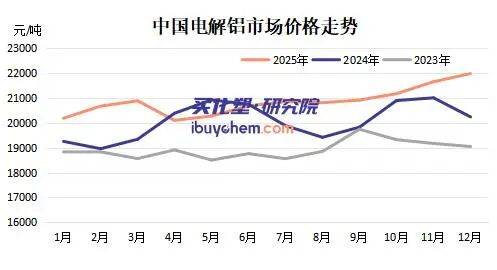
1. Report Industry Investment Rating - Not provided in the given content 2. Core Viewpoints of the Report - The price of cast aluminum alloy follows the aluminum price and fluctuates upward, with a neutral - to - strong strength analysis. The short - term scrap - refined price difference and ADC12 - A00 price difference are strengthening. Before the holiday, the price of cast aluminum alloy remained relatively strong, reaching a high of 21,865 yuan/ton. The short - term price may show a high - level oscillation due to the tight supply of scrap aluminum and weakening demand [2][6] - As of December 26, the inventory of aluminum alloy ingot factories and social inventory decreased by 0.15 million tons to 12.91 million tons compared with the previous week. From December 1 - 28, the retail sales of the national passenger car market were 1.928 million vehicles, a year - on - year decrease of 17% and a month - on - month decrease of 3%. The cumulative retail sales this year were 23.411 million vehicles, a year - on - year increase of 4%. In 2026, the policy subsidy will be more targeted, benefiting mid - to - high - end cars [6] 3. Summary by Relevant Catalogs 3.1 Transaction End - Quantity and Price - The document presents data such as the price difference between different contracts, capital precipitation, trading volume, and holding volume, but no specific conclusions are drawn from these data [9] 3.2 Transaction End - Arbitrage 3.2.1 Inter - period Positive Arbitrage Cost Calculation - For the cast aluminum alloy inter - period spread cost calculation (inside the warehouse receipt system), the total cost is 104 yuan/ton, including fixed costs of 14.13 yuan/ton and floating costs of 90.25 yuan/ton [12] 3.2.2 Spot - Futures Arbitrage Cost Calculation - The market's actual spot quotation fluctuates around the Baotai price. The spot price is 22,000 yuan/ton, and the total cost of the warehouse receipt, including storage, handling fees, and capital costs, is 22,961.3 yuan/ton [14] 3.3 Supply End - Scrap Aluminum - Scrap aluminum production is at a high level, and social inventory is continuously decreasing. Scrap aluminum imports are also at a high level, with a relatively fast year - on - year growth rate [16][20] 3.4 Supply End - Recycled Aluminum - The price of Baotai ADC12 has been raised, and the price difference between recycled and primary aluminum has strengthened. The regional price difference of cast aluminum alloy shows certain seasonal patterns. The weekly operating rate of cast aluminum alloy remains flat, while the monthly operating rate has declined. The current cost calculation of ADC12 shows a loss. The factory inventory of cast aluminum alloy has slightly increased, while the social inventory has decreased, and the import window for cast aluminum alloy is currently closed [30][35][40] 3.5 Demand End - Terminal Consumption - Terminal consumption: Fuel vehicles are in the year - end sales push phase, which has an impact on die - casting consumption. The document also presents the production data of new energy vehicles, fuel vehicles, motorcycles, and small household appliances [64]
氧化铝有必要设置产能天花板吗?
Xin Lang Cai Jing· 2026-01-04 01:29
Core Viewpoint - China's aluminum oxide industry is facing a significant challenge of overcapacity, despite being the largest producer globally, with major companies dominating the market [1][8]. Group 1: Current Capacity and Demand - China's aluminum oxide production capacity has reached 110.85 million tons, a 66.82% increase since 2015, and is expected to see an additional 10 million tons by 2026, exacerbating the overcapacity issue [2][9]. - Approximately 95% of aluminum oxide is used for producing electrolytic aluminum, with a theoretical maximum demand of about 86.63 million tons based on a consumption rate of 1.925 tons of aluminum oxide per ton of electrolytic aluminum [4][11]. - The current overcapacity stands at approximately 2.42 million tons, leading to an expected operating rate of 81% in 2024, indicating that nearly 20% of the capacity will remain idle [4][11]. Group 2: Historical Context and Policy - The historical development of China's electrolytic aluminum industry has seen significant growth, with a production increase from 342,000 tons in 2001 to a controlled capacity of around 4.5 million tons due to government policies aimed at curbing overcapacity [5][12]. - The introduction of policies in 2013 and subsequent years established a capacity ceiling for electrolytic aluminum, effectively controlling the expansion of production and ensuring a more stable industry environment [6][12]. Group 3: Industry Response and Future Considerations - There is a call for intervention in the aluminum oxide sector to prevent blind investments and promote consolidation among major enterprises to enhance competitiveness [13]. - However, the necessity of establishing a capacity ceiling for aluminum oxide is debated, as the existing demand already reflects a "hidden" ceiling based on electrolytic aluminum production needs [13][14].


滨州马上红:产业骏马强根基,“铝都”扛牢发展大任
Xin Lang Cai Jing· 2026-01-03 01:43
Core Viewpoint - The article emphasizes the strategic importance of Binzhou, known as "China's Aluminum Capital," in leading the aluminum industry through innovation and deepening the aluminum processing industry chain, as outlined in Shandong Province's 14th Five-Year Plan [1] Group 1: Industry Position and Economic Impact - Binzhou holds the largest aluminum industry cluster globally, with significant contributions: one-third of China's bauxite imports, one-quarter of alumina production, one-eighth of electrolytic aluminum output, and nearly one-tenth of aluminum profile processing [1] - The high-end aluminum industry cluster in Binzhou is projected to generate revenue of 471.1 billion yuan in 2024 [1] Group 2: Innovation Ecosystem - The transformation of Binzhou's aluminum industry is driven by a systematic reconstruction of its innovation ecosystem, breaking the traditional silos among government, enterprises, and research institutions [3] - Weiqiao Group leads the establishment of a high-end aluminum manufacturing and application innovation community, collaborating with 62 universities and research institutes on 42 key projects [3] - The "chain innovation" model covers the entire process from bauxite import to recycled aluminum utilization, resulting in over 20 national and industry standards [3] Group 3: Research and Development Infrastructure - Weiqiao Guokai invested 180 million yuan to build 16 laboratories, enhancing research capabilities and establishing a regional public technology service platform [4] - The technology transfer mechanism in Binzhou is efficient, with a 1.2 million square meter technology achievement transformation park facilitating the transition from research to production [4] Group 4: Financial Support for Innovation - Seven innovation funds in Binzhou have invested a total of 3 billion yuan, supporting 15 projects in cutting-edge fields like aluminum matrix composites [5] - The combination of government-led funds and social capital effectively addresses the funding bottleneck for early-stage technology transfer [5] Group 5: Talent Strategy - Binzhou's aluminum industry has implemented a comprehensive talent strategy, focusing on attracting, retaining, and nurturing talent [7] - The establishment of a talent efficiency enhancement platform and flexible recruitment mechanisms has attracted 460 high-level talents, with nearly 90% holding master's or doctoral degrees [7][8] Group 6: Green and Intelligent Manufacturing - Binzhou's aluminum industry is leading the green transformation, with six companies recognized as national green factories and Weiqiao Group achieving the lowest energy consumption in electrolytic aluminum production globally [9] - The integration of clean energy and innovative recycling technologies has significantly improved production efficiency and product quality [9] Group 7: Future Prospects - Binzhou aims to leverage the 2026 Aluminum Expo to enhance its global cooperation, transitioning from "China's Aluminum Capital" to "World Aluminum Valley" [12] - The city has achieved 53 national firsts and 15 global firsts in the aluminum industry, showcasing its robust capabilities and setting a model for high-quality development in traditional industries [12]
欧盟“碳关税”落地 钢铝产业影响几何?
2 1 Shi Ji Jing Ji Bao Dao· 2025-12-31 23:12
Core Viewpoint - The EU's Carbon Border Adjustment Mechanism (CBAM) will officially enter its "charging period" on January 1, 2026, initially covering six product categories: steel, cement, aluminum, fertilizers, electricity, and hydrogen. By 2028, the scope is expected to expand to approximately 180 downstream products, including washing machines and automotive parts, creating a comprehensive "green bill" that impacts both raw materials and finished products [1][2][4]. Group 1: CBAM Implementation and Scope - The CBAM's product coverage and execution timeline have become clearer, with a transitional phase from 2023 to 2025 focusing on carbon data research, leading to formal implementation in 2026 [2][3]. - The CBAM will charge for direct and indirect emissions from cement and fertilizers, while steel, aluminum, and hydrogen will not incur charges for indirect emissions [3][4]. - The EU plans to expand the CBAM to include downstream products related to steel and aluminum, with a total of 180 new products expected to be added by 2028 [3][4]. Group 2: Impact on Chinese Enterprises - Chinese enterprises exporting to the EU will need to establish differentiated carbon emission data management systems to comply with CBAM, particularly focusing on direct and indirect emissions [7][10]. - The introduction of a 50-ton annual import exemption threshold will significantly reduce the compliance burden for small and medium-sized enterprises, with approximately 90% of importers expected to be exempt from CBAM obligations [4][5]. - Major Chinese suppliers of steel and aluminum, such as China Aluminum and Nanshan Aluminum, may not be significantly impacted by CBAM due to their limited export volumes and ability to track production data [6][10]. Group 3: Carbon Footprint Regulations - The EU has introduced new battery regulations that require carbon footprint labeling, which will become another compliance requirement for exporting companies [8][9]. - The carbon footprint label will consist of four components, including a declaration of the battery's lifecycle carbon footprint, although the specific accounting methodology is still not defined [9][10]. Group 4: Strategic Responses and Advantages - Chinese companies are encouraged to adapt to EU standards and establish low-carbon supply chains to mitigate compliance risks while actively participating in international carbon rule-making [10][11]. - China's proactive approach to low-carbon transformation, including significant progress in energy structure and early adoption of low-carbon practices in industries like steel, positions it favorably against stricter EU regulations [10][11].
有色金属与贵金属板块走低:美铝等跌超2%,期银跌超9%
Sou Hu Cai Jing· 2025-12-31 16:02
Group 1 - The non-ferrous metal sector experienced a decline on December 31, with significant drops in companies such as Alcoa and Century Aluminum, both falling over 2%, while Kaiser Aluminum and Southern Copper saw declines exceeding 1% [1] - The Chicago Mercantile Exchange raised margin requirements for precious metal futures for the second time this week, aiming to cool down the recently surging precious metals market [1] - As a result of the increased margin requirements, precious metals experienced a substantial drop, with New York silver futures falling over 9% and dropping below $71 per ounce [1]



南华期货2026年铝产业链年度展望:冰火两重天
Nan Hua Qi Huo· 2025-12-31 11:46
Report Industry Investment Rating No relevant content provided. Core Views of the Report Alumina - The core contradiction in alumina prices lies in the supply side. In 2026, the oversupply situation may continue, and the cost line may become the price game line. The price center of alumina is expected to shift downward compared to this year [2]. - It is recommended to pay attention to news related to alumina enterprise maintenance and production, and adopt a short - selling approach when the fundamentals remain unchanged [2]. Electrolytic Aluminum - In 2026, macro and supply conditions will be important factors affecting electrolytic aluminum prices. The macro environment is expected to remain loose, highlighting the anti - depreciation financial attribute of aluminum. With limited domestic supply increment and uncertain overseas supply, aluminum prices are expected to remain strong [3]. - It is recommended to go long on dips [3]. Summary by Relevant Catalogs Chapter 2: Market Review Alumina - In 2025, the actual supply increase of alumina exceeded expectations, while the demand increment was limited. The price first declined, then rebounded due to supply disruptions, and finally returned to a weak trend [5]. Electrolytic Aluminum - In 2025, the electrolytic aluminum market showed a pattern of "oscillating upward and rising center of gravity", reaching a new high since 2022 at the end of the year [7]. Chapter 3: Core Focus Points Alumina - Bauxite: In 2025, bauxite supply was sufficient, with high imports and inventory accumulation, and weak prices. In 2026, the supply is expected to remain abundant, and the price may continue to be weak, with a trading range of 60 - 75 dollars/ton [11][13]. - Alumina: In 2025, global alumina supply expanded significantly, and the oversupply situation continued. In 2026, there are many planned new production increments at home and abroad, and the average industry cost may decline [15][17]. Electrolytic Aluminum - China's supply: China's electrolytic aluminum is subject to a 45 - million - ton/year capacity ceiling. In 2025, production mainly came from the resumption of previous - reduced production capacity. In 2026, the capacity increment is small, and the import of Russian aluminum is expected to continue [21][25]. - Overseas supply: In 2025, overseas electrolytic aluminum had both production increases and decreases. In 2026, the supply is expected to be in a state of slow recovery and limited expansion, with Indonesia being the main source of new capacity, but there are uncertainties in power supply [27][29]. - Macro environment: In 2026, the macro environment is expected to remain loose, and the financial attribute of aluminum against depreciation will be prominent, providing upward momentum for aluminum prices [33]. Chapter 4: Supply - Demand Outlook Alumina - Supply: Bauxite supply is expected to remain abundant in 2026, and the oversupply of alumina is predictable, with new production capacity concentrated in Indonesia, India, and southern China [35]. - Demand: The downstream demand for alumina is mainly for electrolytic aluminum smelting. With limited supply increment of domestic electrolytic aluminum, the demand for alumina is difficult to find bright spots [36]. Electrolytic Aluminum - Supply: Domestic supply increment is limited due to the capacity ceiling, and overseas supply is in a state of slow recovery and limited expansion, with uncertainties in new production capacity and possible production cuts [36][37]. - Demand: - Real estate: The drag on aluminum consumption from real estate is expected to slow down in 2026, with a narrowing decline in the completion side [38]. - New energy vehicles: Although the growth rate of the new energy vehicle market may slow down in 2026, the future aluminum consumption increment is still considerable [40]. - Power grid investment: Power grid investment is expected to maintain stable growth during the 15th Five - Year Plan period [42]. - Photovoltaic: Photovoltaic installation is expected to experience negative growth in 2026, dragging down aluminum consumption [44].
铝类市场周报:需求转淡VS宏观向好,铝类或将震荡运行-20251231
Rui Da Qi Huo· 2025-12-31 08:57
1. Report Industry Investment Rating - Not provided in the content 2. Core Views of the Report - For Shanghai Aluminum main contract, conduct light - position oscillatory trading and pay attention to operation rhythm and risk control [6] - For Alumina main contract, conduct light - position short - term long trading on dips and pay attention to operation rhythm and risk control [7] - For Cast Aluminum main contract, conduct light - position oscillatory trading and pay attention to operation rhythm and risk control [9] - Given that the aluminum price will oscillate in the future and volatility may converge, consider constructing a double - selling strategy to short volatility [75] 3. Summary by Relevant Catalogs 3.1. Weekly Key Points Summary - **Electrolytic Aluminum**: Raw material alumina price is low, smelting profit of aluminum plants is good, and overall start - up is active. Supply increases steadily but increment is small. Demand is in the off - season, and industrial inventory accumulates slightly. Aluminum price remains high and oscillates due to positive macro - expectations [6] - **Alumina**: Raw material bauxite price is stable, and port inventory rises slightly. Supply may gradually decrease under policy guidance, and demand is stable. It is in a stage of slightly decreasing supply and stable demand [7] - **Cast Aluminum Alloy**: Cost support is strong, but there is pressure to reduce production. Demand is weak in the off - season, and spot market transactions are light. It is in a stage of decreasing supply and weakening demand [9] 3.2. Futures and Spot Markets - **Price Trends**: As of December 31, 2025, Shanghai Aluminum closed at 22,950 yuan/ton, up 3.12% from December 24; LME Aluminum closed at 2,986.5 US dollars/ton, up 1.41% from December 22. Alumina futures price was 2,602 yuan/ton, up 2.12%; Cast Aluminum alloy main contract closed at 21,855 yuan/ton, up 1.75% [12][16] - **Ratio and Spread**: As of December 31, 2025, the Shanghai - LME ratio of electrolytic aluminum was 7.54, down 0.31 from December 24. Aluminum - zinc futures spread was 350 yuan/ton, down 550 yuan/ton; Copper - aluminum futures spread was 75,315 yuan/ton, up 1,545 yuan/ton [13][22] - **Inventory and Position**: As of December 31, 2025, Shanghai Aluminum position was 665,773 lots, up 0.54%; the net position of the top 20 was 4,602 lots, up 15,645 lots [19] - **Spot Market**: As of December 31, 2025, the average price of alumina in Henan, Shanxi and Guiyang decreased. The national average price of cast aluminum alloy was 22,450 yuan/ton, up 2.28%. The spot price of A00 aluminum ingot was 22,520 yuan/ton, up 2.18%, and the spot discount was 220 yuan/ton, down 30 yuan/ton [27][30] 3.3. Industry Situation - **Inventory**: As of December 30, 2025, LME electrolytic aluminum inventory decreased 1.03%; as of December 26, SHFE inventory increased 6.64%; as of December 29, domestic social inventory increased 9.68%. As of December 31, SHFE electrolytic aluminum warehouse receipts increased 6.85%; as of December 30, LME registered warehouse receipts increased 0.38% [34] - **Bauxite**: The import volume in November 2025 was 15.109 million tons, up 9.76% month - on - month and 22.5% year - on - year. The nine - port inventory was 26.19 million tons, up 30,000 tons month - on - month [38] - **Scrap Aluminum**: The price in Shandong increased 100 yuan/ton week - on - week. The import volume in November 2025 was 162,756.17 tons, up 17.7% year - on - year; the export volume was 71.53 tons, down 1.7% year - on - year [44] - **Alumina**: The output in November 2025 was 8.138 million tons, up 7.6% year - on - year. The import volume was 232,400 tons, up 22.74% month - on - month and 134.12% year - on - year; the export volume was 170,000 tons, down 5.56% month - on - month and 10.53% year - on - year [47] - **Electrolytic Aluminum**: The import volume in November 2025 was 146,100 tons, down 2.79% year - on - year. The output in November was 3.792 million tons, up 2.5% year - on - year. The in - production capacity was 44.434 million tons, with no change month - on - month and up 1.13% year - on - year [50][54] - **Aluminum Products**: The output in November 2025 was 5.931 million tons, down 0.4% year - on - year. The import volume was 240,000 tons, down 14% year - on - year; the export volume was 570,000 tons, down 14.8% year - on - year [58] - **Cast Aluminum Alloy**: The built - in capacity in November 2025 was 1.26 million tons, up 15.96% year - on - year. The output was 700,000 tons, up 7.12% year - on - year [61] - **Aluminum Alloy**: The output in November 2025 was 1.739 million tons, up 17% year - on - year. The import volume was 73,200 tons, down 28.2% year - on - year; the export volume was 30,600 tons, up 51.56% year - on - year [64] - **Real Estate**: In November 2025, the real estate development climate index was 91.9, down 0.52 from last month and 0.61 from the same period last year. From January to November 2024, the new housing start - up area decreased 20.58% year - on - year, and the housing completion area decreased 17.58% year - on - year [67] - **Infrastructure and Automobiles**: From January to November 2025, infrastructure investment increased 0.13% year - on - year. In November 2025, automobile sales were 3,428,998 units, up 3.4% year - on - year; production was 3,531,579 units, up 2.76% year - on - year [70] 3.4. Option Market Analysis - Given the future oscillatory movement of aluminum price and possible convergence of volatility, consider constructing a double - selling strategy to short volatility [75]
欧盟碳关税来了,钢铝产业影响几何
2 1 Shi Ji Jing Ji Bao Dao· 2025-12-31 06:44
Core Viewpoint - The EU's Carbon Border Adjustment Mechanism (CBAM) will officially enter its charging phase on January 1, 2026, initially covering six product categories: steel, cement, aluminum, fertilizers, electricity, and hydrogen. By 2028, the scope is expected to expand to approximately 180 downstream products, including washing machines and automotive parts [1][3]. Group 1: Implementation and Coverage - The CBAM's product coverage has been clarified, with a temporary agreement reached on December 12, 2022, confirming the initial six product categories [3]. - The implementation of CBAM will follow a phased approach, with a transition period from 2023 to 2025 focusing on carbon data research, leading to formal legislation in 2026 [14]. - The actual payment obligations will primarily affect companies collaborating with large EU importers due to exemption thresholds, which will significantly reduce compliance burdens for small and medium-sized enterprises [17]. Group 2: Product Specifics and Emission Accounting - Different products under CBAM will have varying emission coverage; for instance, indirect emissions from steel and aluminum will not incur charges, while cement and fertilizers will be charged for both direct and indirect emissions [14]. - The CBAM will expand its coverage to include downstream products by 2028, with the cost burden depending on the proportion of steel and aluminum in those products [15]. Group 3: Impact on Chinese Enterprises - Chinese enterprises exporting to the EU, particularly in the steel and aluminum sectors, will need to establish differentiated carbon emission data management systems to comply with CBAM [20]. - The majority of Chinese exporters affected by CBAM will be larger companies, as many small exporters will fall below the 50-ton exemption threshold [17]. - The actual impact on major Chinese aluminum exporters is expected to be limited due to their ability to track production data and lower actual emissions compared to default values set by CBAM [19]. Group 4: Broader Implications and Strategic Responses - The introduction of CBAM and other EU regulations signals a growing trend of green trade barriers, pushing for low-carbon transitions globally [24]. - Chinese companies are encouraged to adapt to EU standards and develop low-carbon supply chains to mitigate compliance risks while participating in international carbon rule-making [24][25]. - China's proactive approach to low-carbon transformation and its relatively better energy structure compared to other developing countries may provide a competitive advantage in the face of stringent EU regulations [25].
欧盟碳关税来了,钢铝产业影响几何
21世纪经济报道· 2025-12-31 06:33
Core Viewpoint - The European Union's Carbon Border Adjustment Mechanism (CBAM) will officially enter its charging phase on January 1, 2026, initially covering six product categories: steel, cement, aluminum, fertilizers, electricity, and hydrogen. By 2028, the scope is expected to expand to approximately 180 downstream products, including washing machines and automotive parts, creating a comprehensive "green bill" for trade [1][3][14]. Group 1: CBAM Implementation and Product Scope - The CBAM's product coverage has been clarified, with a focus on six primary products, each defined by specific EU customs tariff codes [3][12]. - The implementation of CBAM will occur in phases, with a transitional period from 2023 to 2025 for carbon data research, followed by formal legislation in 2026 [13][12]. - The product scope will expand to include downstream products by 2028, with the cost burden depending on the embedded emissions from steel and aluminum used in these products [14][15]. Group 2: Compliance and Impact on Chinese Enterprises - A significant exemption threshold of 50 tons for imports will reduce compliance burdens for small and medium-sized enterprises, with approximately 90% of importers expected to be exempt while still covering about 99% of related carbon emissions [15]. - Major Chinese steel and aluminum suppliers exporting to the EU will be primarily affected, while many smaller exporters may not face direct CBAM payment obligations due to the exemption threshold [15][17]. - Chinese enterprises are advised to establish differentiated carbon emission data management systems to comply with CBAM, focusing on direct and indirect emissions based on product categories [18][21]. Group 3: Broader Implications and Strategic Responses - The emergence of green trade barriers, exemplified by CBAM and the EU's battery regulations, indicates a trend towards stricter carbon management in global trade [21][20]. - Chinese companies are encouraged to adapt to EU standards and develop low-carbon supply chains to mitigate compliance risks while participating in international carbon rule-making [21][22]. - China's proactive low-carbon transition and early industry adjustments position it favorably against stricter EU regulations, potentially allowing it to maintain a competitive edge in the global market [22].
价格突破2.2万元/吨!电解铝价格创3年新高
Sou Hu Cai Jing· 2025-12-31 05:49
Core Viewpoint - The electrolytic aluminum market has entered a strong upward trend since 2025, driven by tight supply-demand dynamics, with domestic and international prices reaching new highs [1][3]. Supply Side Summary - The domestic electrolytic aluminum industry has entered a "stock replacement" era, with a production capacity ceiling set at approximately 45 million tons due to dual constraints from industry consensus on "anti-involution" and "carbon peak" policies [3]. - It is estimated that net new production capacity in China will only increase by 200,000 tons by 2025, with a total foreseeable increase of only 560,000 tons, making it difficult to effectively supplement market supply [3]. - Although countries like India and Indonesia are advancing new capacity construction, factors such as unstable power supply will hinder full production capacity by 2026, exacerbating the tight supply situation in the domestic market [3]. Demand Side Summary - Structural upgrades in demand are providing sustained upward momentum for electrolytic aluminum prices, with traditional construction sector demand stabilizing while the new energy sector becomes the core growth engine [5]. - The demand from the new energy vehicle industry continues to grow, with increased aluminum usage per vehicle due to lightweight trends; the acceleration of ultra-high voltage construction is significantly boosting demand for aluminum cables [5]. - The "aluminum replacing copper" trend in the power and electronics sectors is further expanding the application space for electrolytic aluminum, with projected demand growth rates of 2.1% in 2025 and 2026, outpacing supply growth of 1.6% [5]. Cost Side Summary - The release of cost dividends is a significant driver of profit expansion in the electrolytic aluminum industry, with key raw material prices, such as alumina, experiencing a decline due to ample supply [6]. - For instance, the domestic alumina futures price fell below 2,500 yuan/ton, nearly halving from its peak a year ago, contributing to an expanding profit margin for the industry [6]. - Major companies are showing stable profitability and improved cash flow, with China Aluminum leading the industry with a net profit of 10.872 billion yuan, a historical high for the same period, reflecting a year-on-year growth of 20.65% [6]. Industry Outlook - The tight supply-demand balance in the electrolytic aluminum industry is expected to persist, with demand growth in the new energy sector being a core driver for long-term industry development [6]. - Leading companies are likely to benefit from their production capacity advantages, industry chain layout, and cost control capabilities during this high-profit cycle [6]. - The acceleration of the "aluminum replacing copper" process and gradual recovery in overseas markets will further open up growth space for the electrolytic aluminum industry, with increasing industry concentration expected during the stock replacement phase [6].