
医疗设备

Search documents
宝莱特跌4.59%,成交额1127.97万元,主力资金净流出208.95万元
Xin Lang Cai Jing· 2025-10-13 02:09
Core Viewpoint - Baolait's stock price has experienced a decline recently, with a year-to-date increase of 22.91% but a notable drop in the last 60 days of 13.46% [1] Group 1: Stock Performance - On October 13, Baolait's stock fell by 4.59%, trading at 8.10 yuan per share, with a total market capitalization of 2.143 billion yuan [1] - The stock has seen a net outflow of 2.0895 million yuan in principal funds, with large orders accounting for 20.69% of sales [1] - Over the past five trading days, the stock has decreased by 3.91%, and over the last 20 and 60 days, it has dropped by 8.37% and 13.46%, respectively [1] Group 2: Company Overview - Guangdong Baolait Medical Technology Co., Ltd. was established on June 28, 1993, and listed on July 19, 2011 [1] - The company specializes in the research, production, sales, and service of medical device products, with revenue composition: 77.51% from blood dialysis products, 21.39% from monitoring devices, and 1.10% from other products [1] - Baolait is classified under the pharmaceutical and biological industry, specifically in medical devices [1] Group 3: Financial Performance - As of June 30, Baolait reported a decrease in operating revenue to 523 million yuan, down 2.43% year-on-year, while net profit attributable to shareholders increased by 152.22% to 1.3134 million yuan [2] - The company has distributed a total of 244 million yuan in dividends since its A-share listing, with 35.1578 million yuan distributed in the last three years [3] Group 4: Shareholder Information - As of June 30, 2025, Baolait had 18,400 shareholders, a decrease of 6.12% from the previous period, with an average of 11,477 circulating shares per shareholder, an increase of 6.50% [2] - Among the top ten circulating shareholders, Jin Yuan Shun An Yuan Qi Flexible Allocation Mixed Fund increased its holdings by 259,800 shares, while Hua Xia Zhong Zheng 500 Index Enhanced A became a new shareholder with 1,228,900 shares [3]

瑞迈特10月10日获融资买入1219.67万元,融资余额1.08亿元
Xin Lang Cai Jing· 2025-10-13 01:41
Core Viewpoint - On October 10, 2023, Ruimait experienced a 2.91% increase in stock price with a trading volume of 123 million yuan, indicating positive market sentiment towards the company [1]. Financial Performance - For the first half of 2025, Ruimait achieved a revenue of 544 million yuan, representing a year-on-year growth of 42.30%. The net profit attributable to shareholders was 131 million yuan, also reflecting a growth of 42.19% [2]. - Cumulative cash dividends distributed by Ruimait since its A-share listing amount to 228 million yuan [3]. Shareholder and Market Activity - As of June 30, 2025, the number of shareholders in Ruimait decreased by 24.87% to 6,850, while the average circulating shares per person increased by 33.11% to 8,251 shares [2]. - On October 10, 2023, Ruimait's financing buy-in amounted to 12.20 million yuan, with a net buy of 3.00 million yuan, indicating strong investor interest [1]. - The total balance of margin trading for Ruimait reached 109 million yuan, accounting for 2.25% of its market capitalization, which is above the 50th percentile level over the past year [1]. Business Overview - Ruimait, established on July 27, 2001, specializes in the research, production, and sales of medical devices and consumables in the respiratory health sector, primarily targeting patients with obstructive sleep apnea syndrome (OSA) and chronic obstructive pulmonary disease (COPD) [2]. - The revenue composition of Ruimait includes 64.19% from home respiratory therapy products, 32.67% from consumables, 3.05% from medical products, and 0.10% from other sources [2]. Institutional Holdings - As of June 30, 2025, Hong Kong Central Clearing Limited has exited the list of the top ten circulating shareholders of Ruimait [3].
联影医疗-亚洲医疗行业考察要点
2025-10-13 01:00
Summary of United Imaging Conference Call Company Overview - **Company**: United Imaging - **Industry**: Medical Supplies & Devices - **Headquarters**: Shanghai, China - **Ticker**: 688271 CH - **Market Cap**: RMB 125.1 billion [7][32] Key Takeaways Competitive Strategy - United Imaging differentiates itself from global competitors (GE, Philips, Siemens) by maintaining R&D spending above 20% of revenue, enabling faster product launches at lower costs [2][5] - The company focuses on feature-rich products with competitive pricing approximately 15% lower than peers, emphasizing strong service packages over pure price competition [2][5] Growth and Expansion - International sales accounted for nearly 20% of total sales by 1H25, with a target of 50% by 2030, particularly strong growth in Europe with triple-digit growth rates [3][25] - The company is investing in local manufacturing, R&D, and service teams to support overseas expansion, with a new regional HQ in Rotterdam [3][25] Domestic Market Dynamics - China remains a core market, supported by government-backed hospital CAPEX programs with annual incentives ranging from RMB 1 to 1.3 trillion [4][21] - United Imaging holds the 1 domestic market share, with stable gross margins around 50% and potential upside from high-end product mixes [4][23] Financial Projections - Revenue projections for FY 2024A to FY 2027E are as follows: - FY 2024A: RMB 10,300.1 million - FY 2025E: RMB 11,946.6 million - FY 2026E: RMB 15,264.3 million - FY 2027E: RMB 19,119.8 million - Net profit projections for the same period are: - FY 2024A: RMB 1,261.9 million - FY 2025E: RMB 1,720.3 million - FY 2026E: RMB 2,258.4 million - FY 2027E: RMB 2,888.3 million [6][8] Investment Thesis - The company is rated a "Buy" with a price target of RMB 218.00, representing a potential upside of 44% [7][10] - Key growth drivers include localized supply chain efficiency, improved service offerings, and AI-driven competitive advantages in medical imaging [10][19] Risks and Challenges - Risks include policy changes in the medical equipment industry, intense market competition, and challenges in overseas network expansion [33] - The impact of anti-corruption measures has been managed well, allowing the company to maintain its leading market position [23] Sustainability and Social Responsibility - United Imaging aims to reduce carbon emission intensity by 50% by 2035 and extend healthcare access to a broader population [17][18] Market Outlook - The company expects hospital CAPEX in China to drive demand, with government support playing a critical role [20] - The anticipated growth in overseas markets is expected to outpace domestic growth, with a projected 50% year-over-year profit growth for this year [25][26] Conclusion - United Imaging is positioned for significant growth both domestically and internationally, leveraging its competitive advantages in R&D, pricing, and service offerings while navigating potential risks in the market environment [10][19]

“制造+服务”,如何“+”出新动能新活力?
Xin Hua She· 2025-10-13 00:56
Core Viewpoint - The article discusses the emergence and significance of service-oriented manufacturing as a new industrial form that integrates manufacturing and services, aiming to enhance productivity and competitiveness in the manufacturing sector [1][4]. Group 1: Definition and Importance of Service-Oriented Manufacturing - Service-oriented manufacturing involves the integration of service elements into manufacturing, transitioning from merely selling products to offering "products + services" [1]. - The approach is becoming a crucial direction for manufacturing development, as evidenced by various companies implementing customized services and solutions [2]. Group 2: Current Applications and Impact - Companies like Shaanxi Blower (Group) Co., Ltd. and Haier Smart Home Co., Ltd. have successfully transitioned to providing engineering design and customized smart home solutions, respectively, with significant revenue contributions from service offerings [2]. - Data from the Ministry of Industry and Information Technology indicates that service business contributions to revenue growth for selected service-oriented manufacturing enterprises reached 60% [2]. Group 3: Challenges in Transition - The transition to service-oriented manufacturing is complex, facing challenges such as weak supply capabilities for key technologies, lack of a robust standard system, and difficulties in statistical monitoring [3]. Group 4: Policy Support and Future Goals - The government has emphasized the importance of policy innovation to support the development of service-oriented manufacturing, with specific goals set for 2028, including the establishment of 20 standards and the creation of 50 leading brands [4]. - The implementation plan outlines seven main tasks and three special actions to address technological, standardization, and application challenges [4]. Group 5: Potential for Growth - Service-oriented manufacturing holds significant potential for stabilizing growth and expanding domestic demand, as it enhances manufacturing competitiveness and meets evolving consumer preferences for experience over mere functionality [5]. - Experts suggest that the shift towards service-oriented manufacturing can provide consumers with a more comprehensive and convenient experience, thereby stimulating consumption [5]. Group 6: Need for Collaborative Efforts - To fully realize the potential of service-oriented manufacturing, a collaborative effort is required, particularly in shifting manufacturing companies' operational mindset from product-centric to customer-centric approaches [6].
医药行业周报:本周申万医药生物指数下跌1.2%,关注三季报发布-20251012
Shenwan Hongyuan Securities· 2025-10-12 11:13
Investment Rating - The report maintains a positive outlook on the innovative drug sector, suggesting it will continue to show high revenue growth and reduce losses [4][16]. Core Insights - The pharmaceutical sector experienced a decline of 1.2% this week, ranking 25th among 31 sub-industries [5][7]. - The overall valuation of the pharmaceutical sector is at 30.9 times earnings, placing it 10th among 31 primary industries [8][15]. - Notable transactions include the licensing agreement between Innovent Biologics and Zenas BioPharma, valued at over $2 billion, which includes a $100 million upfront payment [4][14]. - The report highlights the importance of monitoring the performance of innovative drug companies in the upcoming quarterly reports, particularly those showing consistent high growth [4][16]. Market Performance - The pharmaceutical index decreased by 1.2%, while the Shanghai Composite Index increased by 0.4% during the same period [5][7]. - The performance of various sub-sectors includes: - Raw materials: -0.7% - Chemical preparations: -2.5% - Traditional Chinese medicine: +1.5% - Blood products: +1.4% - Vaccines: +0.7% - Other biological products: -1.7% - Medical devices: -0.2% - Medical consumables: +0.2% - In vitro diagnostics: -0.6% - Pharmaceutical distribution: +0.8% - Offline pharmacies: +0.3% - Medical R&D outsourcing: -5.3% - Hospitals: +1.8% [8][12]. Key Events - The National Medical Products Administration released a draft for further promoting post-marketing research and evaluation of traditional Chinese medicine injections [4][16]. - The report notes the upcoming IPOs in the sector, including He Yuan Biology and Biotech [19].




撕开铁幕裂缝:国产手术机器人的千亿逆袭
Tai Mei Ti A P P· 2025-10-12 10:47
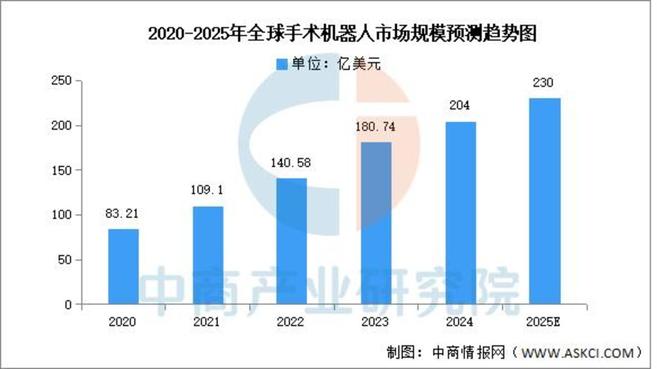
Core Insights - The article discusses the shift in the surgical robot market in China from being dominated by foreign brands to a more competitive landscape with domestic companies making significant advancements in technology and clinical applications [1][2][3]. Market Overview - The global surgical robot market is projected to grow from approximately $18.074 billion in 2023 to $20.4 billion in 2024, with a compound annual growth rate (CAGR) of 23.75% over the next five years [1]. - The Chinese surgical robot market is expected to reach approximately 9.59 billion yuan in 2024, with a CAGR of 34.5%, and is projected to grow to 11.03 billion yuan by 2025 [2]. Competitive Landscape - Currently, the domestic surgical robot market is characterized by a "foreign dominance, domestic pursuit" trend, with the top eight brands in sales being evenly split between imported and domestic brands [3]. - As of 2025, the market share of domestic brands in the surgical robot sector is approximately 29.82%, while imported brands hold 70.18% [4]. Brand Performance - Intuitive Surgical's Da Vinci system maintains a leading position in the laparoscopic surgical robot market with a market share of 53.8% as of Q2 2025, generating revenue of $2.44 billion (approximately 17.5 billion yuan) with a year-on-year growth of 21.4% [5][7]. - Domestic brands are gaining traction, with a significant increase in the number of Da Vinci robots installed in China, rising from a 42% market share to 62% [7]. Growth of Domestic Brands - From January to May 2025, the number of domestic surgical robots awarded contracts increased by 82.9%, indicating a strong competitive push against foreign brands [9]. - The domestic market for laparoscopic surgical robots has seen a domesticization rate of approximately 44.4% in Q1 2025, meaning nearly 4.5 out of every 10 new installations are from domestic brands [9]. Pricing Dynamics - Domestic surgical robots are priced significantly lower than their foreign counterparts, with prices for domestic laparoscopic robots typically ranging from 12 million to 18 million yuan, compared to the Da Vinci system's price range of 14.99 million to 24.92 million yuan [13][14]. - The price competition has intensified, with some domestic brands offering robots at prices as low as 5.38 million yuan, while the Da Vinci system averages around 23 million yuan [25]. Challenges and Opportunities - Despite rapid growth, domestic surgical robot manufacturers face challenges such as reliance on imported core components, which account for 70-80% of the total cost [17]. - The technological gap between domestic brands and international leaders like Intuitive Surgical remains significant, with the latter holding over 700 patents that create a strong barrier to entry [20]. Future Directions - To succeed, domestic surgical robot companies must innovate through technology upgrades and business model transformations, such as integrating 5G and AI technologies to enhance operational efficiency and reduce costs [38][40]. - The Chinese government has introduced supportive policies, including insurance coverage for surgical robots, which could facilitate market penetration and adoption [44][45]. Conclusion - The future of domestic surgical robots hinges on achieving technological independence, leveraging AI and 5G, and establishing sustainable business models to transition from merely entering the operating room to securing a stable presence within it [46].


创新药延续高增,关注业绩边际改善的设备、CXO及上游板块:医药生物行业25Q3业绩前瞻
Shenwan Hongyuan Securities· 2025-10-12 08:09
Investment Rating - The report indicates a positive investment outlook for the innovative pharmaceutical sector, suggesting a focus on companies with sustained high growth in performance [3][4][11]. Core Insights - The innovative pharmaceutical industry is expected to continue its high revenue growth trend, with specific attention on companies in the medical devices, CXO, and upstream sectors [3][4]. - The report highlights the performance forecasts for 22 pharmaceutical companies, with several expected to achieve significant profit growth in Q3 2025 [3][4]. - The report emphasizes the importance of monitoring companies that consistently maintain high growth rates, such as 恒瑞医药 (Hengrui Medicine), 迈瑞医疗 (Mindray), and others [3][4][11]. Performance Forecasts - As of October 11, 2025, two pharmaceutical companies have released their Q3 2025 performance forecasts, with 重药控股 (Zhongyao Holdings) expecting a profit growth rate between 39.89% and 117.47%, and ST 诺泰 (ST Nuotai) expecting a growth rate between 5.62% and 13.74% [4]. - The report predicts that five companies will achieve profit growth rates of 40% or more, including 以岭药业 (Yiling Pharmaceutical) and 福瑞股份 (Furui Co.) [3][4]. - Revenue forecasts for 33 pharmaceutical companies indicate that seven companies are expected to achieve revenue growth rates of 40% or more, including 三生国健 (3SBio) and 艾迪药业 (Eddie Pharmaceuticals) [3][4]. Company-Specific Insights - The report provides detailed profit and revenue forecasts for various companies, indicating significant expected growth for companies like 以岭药业 (Yiling Pharmaceutical) with a projected profit increase of 1150% year-on-year [6][9]. - Specific revenue growth rates are forecasted for companies such as 恒瑞医药 (Hengrui Medicine), which is expected to achieve a revenue increase of 12% to 17% [10][11]. - The report includes a valuation table for key companies, indicating projected earnings per share (EPS) and price-to-earnings (PE) ratios for the coming years [11].



医药生物行业25Q3业绩前瞻:创新药延续高增,关注业绩边际改善的设备、CXO及上游板块
Shenwan Hongyuan Securities· 2025-10-12 06:43
Investment Rating - The industry investment rating is "Overweight," indicating that the industry is expected to outperform the overall market [18]. Core Insights - The report emphasizes the sustained high growth of innovative drugs and suggests focusing on companies with consistently high performance in the innovative drug sector, as well as those in the medical devices, CXO, and upstream segments that are showing significant improvement [3][4]. Performance Forecast - As of October 11, 2025, two pharmaceutical companies have released performance forecasts for Q3 2025, with Heavy Drug Holdings expecting a profit growth rate between 40% and 117%, and ST Nuotai expecting a growth rate between 6% and 14% [4]. - For Q3 2025, the report predicts the following net profit growth rates for 22 pharmaceutical companies: - 5 companies with growth rates of 40% and above: Yiling Pharmaceutical, Furuide, Huakang Clean, Haitai New Light, and Beida Pharmaceutical - 3 companies with growth rates between 20% and 35%: Heng Rui Pharmaceutical, Jianyou Pharmaceutical, and Zuoli Pharmaceutical - 7 companies with growth rates between 10% and 20%: Wo Wu Biological, Jingxin Pharmaceutical, Enhua Pharmaceutical, Xinmai Medical, Kaiyin Technology, Huaxia Eye Hospital, and Qianyuan Pharmaceutical - 6 companies with growth rates between 0% and 10%: Aier Eye Hospital, Kangchen Pharmaceutical, Renfu Pharmaceutical, Weier Pharmaceutical, Jiuzhitang, and Guangyuyuan - 1 company is expected to turn a profit: New Mileage [3][4][6]. Revenue Forecast - The report forecasts revenue growth for 33 pharmaceutical companies in Q3 2025 as follows: - 7 companies with growth rates of 40% and above: San Sheng Guo Jian, Aidi Pharmaceutical, Xinmai Medical, Zejing Pharmaceutical-U, Huakang Clean, Dize Pharmaceutical-U, and Haitai New Light - 9 companies with growth rates between 20% and 40%: Nuo Cheng Jian Hua-U, Bai Ji Shen Zhou-U, Wei Xin Biological, Jun Shi Biological-U, Furuide, Kang Huo Nuo, Meng Ke Pharmaceutical-U, Ke Xing Pharmaceutical, and Qianyuan Pharmaceutical - 10 companies with growth rates between 10% and 20%: Olin Biological, Beida Pharmaceutical, Xinlitai, Wo Wu Biological, Guangyuyuan, Heng Rui Pharmaceutical, Kaili Medical, Kangchen Pharmaceutical, Kaiyin Technology, and Wu Ming Kang De - 3 companies with growth rates between 5% and 10%: Enhua Pharmaceutical, Mai Rui Medical, and Aier Eye Hospital - 4 companies with growth rates between 0% and 5%: Changchun High-tech, Runda Medical, Weier Pharmaceutical, and Yiling Pharmaceutical [3][7][9]. Key Companies to Watch - The report suggests focusing on companies that are expected to maintain high growth in Q3 2025, including Heng Rui Pharmaceutical, Changchun High-tech, Kelong Pharmaceutical, Enhua Pharmaceutical, Mai Rui Medical, Furuide, Xiangsheng Medical, Huakang Clean, Wu Ming Kang De, Kanglong Huacheng, Kailai Ying, Pruisi, and Hanbang Technology [3][4].
“制造+服务”,如何加出新活力?
Xin Hua Wang· 2025-10-11 13:40
Core Viewpoint - The article discusses the concept of service-oriented manufacturing as a new industrial form that integrates manufacturing and services, aiming to enhance productivity and innovation in the manufacturing sector [1]. Group 1: Definition and Importance of Service-Oriented Manufacturing - Service-oriented manufacturing involves the integration of service elements into manufacturing, transitioning from merely selling products to offering "products + services" [2]. - This approach has become a significant direction for the development of the manufacturing industry, as evidenced by various applications such as customized services and lifecycle management [2]. - The contribution of service business to revenue growth among selected service-oriented manufacturing enterprises is reported to be 60% [3]. Group 2: Challenges in Transitioning to Service-Oriented Manufacturing - The transition to service-oriented manufacturing is complex, facing challenges such as weak supply capabilities for key technologies and an incomplete standard system [4]. - The implementation of service-oriented manufacturing requires overcoming difficulties in statistical monitoring and measurement [4]. Group 3: Policy Support and Future Goals - The government has emphasized the importance of policy innovation to support the development of service-oriented manufacturing, with specific goals set for 2028, including the establishment of 20 standards and the creation of 50 leading brands [5]. - The implementation plan outlines seven main tasks and three special actions to enhance the integration of advanced manufacturing and modern services [5]. Group 4: Potential and Consumer Experience - Service-oriented manufacturing has significant potential for stabilizing growth and expanding domestic demand, as it enhances the competitiveness and innovation of the manufacturing sector [6]. - It addresses the shift in consumer demand from mere functionality to prioritizing experience, thereby improving overall consumer satisfaction [7]. - Companies are encouraged to shift their operational mindset from product-centric to customer-centric approaches to fully leverage the potential of service-oriented manufacturing [7].
第138届广交会要来了 将首次举办外贸优品拓内销对接活动
Guang Zhou Ri Bao· 2025-10-11 05:54
Core Insights - The 138th Canton Fair will be held from October 15 to November 4 in Guangzhou, featuring a record exhibition area of 1.55 million square meters and over 74,600 booths, with more than 32,000 participating companies, including approximately 3,600 first-time exhibitors [1] Group 1: Exhibition Highlights - The fair will showcase 353,000 smart products, with over 10,000 high-quality enterprises recognized as high-tech, specialized, or champions in their fields, accounting for 34% of the total export exhibitors [2] - A new smart medical area will be introduced, featuring 47 companies showcasing advanced medical products and technologies, including surgical robots and wearable devices [2] - The fair has expanded its global partnerships to 227, covering 110 countries and regions, and aims to attract over 400 leading purchasing companies [2][4] Group 2: Trade Promotion Activities - The fair will host over 600 new product launch events and 13 thematic forums to assist companies in brand building and industry trend analysis [3] - Approximately 3,000 square meters will be dedicated to foreign trade product promotion for domestic sales, enhancing the integration of domestic and international trade [3] - The fair will provide comprehensive trade services through 240 trade service institutions, supporting companies in market expansion and order acquisition [3] Group 3: Enhanced Procurement Engagement - The number of pre-registered professional buyers has increased by 14.1%, with significant growth from the EU, the US, and Belt and Road countries [4] - Notable head procurement companies, including 270 from various sectors, have confirmed attendance, reflecting a 9.1% increase compared to the previous fair [4] - The fair aims to increase the proportion of professional buyers by targeting specific industry associations and media for direct invitations [4] Group 4: Service Improvements in Guangzhou - Guangzhou will implement optimized entry services, including dedicated channels at Baiyun International Airport and other ports, with multilingual support and smart robots for guidance [5] - A new "Departure Tax Refund Service Area" will be established within the exhibition hall, allowing for convenient tax refunds for international visitors [6] - Enhanced transportation connectivity will be provided, with new intercity rail and metro lines facilitating access to the fair venue from surrounding cities [5]