
软件

Search documents
固收专题报告:追风不如乘风
ZHONGTAI SECURITIES· 2026-01-25 08:53
Report Industry Investment Rating - The industry rating is "Overweight", expecting a gain of more than 10% relative to the benchmark index in the next 6 - 12 months [19] Core Viewpoints of the Report - Since the beginning of 2026, the A - share market style has changed from unilateral upward movement to high - frequency rotation. It is better to hold the core main line firmly than to chase the market in high - frequency rotation. The AI industry chain remains the market consensus, and the current market cooling is a "slope adjustment" rather than a "trend end" [3] - The acceleration of industry rotation is a benign spread of funds from "point" to "surface". The market is seeking a pricing balance between technology and prosperous industries [3] - The net inflow of industry ETFs has increased, showing a configuration pattern of "cycles as shields and technology as spears". It is recommended to adopt a "dumbbell - shaped" configuration strategy [3] Summary by Directory Market Focus Always on the Main Line, AI Industry Chain Remains the Consensus - From the perspective of trading volume proportion, industries such as electronics, computers, and national defense and military industry have always been at the core of the market. Even with short - term disturbances, the electronics sector's trading volume proportion remains at a high level of 17% - 20%, and that of national defense and military industry has gradually recovered, indicating strong capital stickiness [3][8] - The current market cooling is a "slope adjustment" rather than a "trend end". The high concentration of the chip structure proves that the AI industry chain is an investment main line with in - depth consensus, and high activity provides strong resilience and upward elasticity [3][8] Liquidity Spillover, the Advantage of "Technology + Prosperity" Portfolio Highlights - As the market enters the adjustment period, liquidity begins to spread from high - consensus varieties to prosperous industries with catch - up logic. When the technology main line adjusts, funds flow to industries such as chemicals, non - ferrous metals, and banks [10] - This shows that it is not the ebb of the main line but the natural spread of liquidity from "point" to "surface". The market is seeking a pricing balance between technology and prosperous industries [11] - Since the beginning of the year, some sectors have shown high weekly and year - to - date excess returns. The strategy of holding the AI bottom position and combining bull - market varieties has a higher winning rate than blind rotation [12] ETF Fund Flows: Driven by the Resilience of Prosperity and Technology - Although the broad - based ETFs are still experiencing net outflows (the weekly outflow of CSI 300ETF is 724.2 billion yuan), the industry ETFs are in a state of net buying, with a cumulative net inflow of 78.82 billion yuan [13] - There has been a significant pulsed inflow of funds into the non - ferrous sector without siphoning other sectors. The technology sector also has a large net inflow, especially software and satellite sub - industries, showing a configuration pattern of "cycles as shields and technology as spears" [14] It's Better to Be Part of the Wind Than to Chase It - The main line of this bull market is clear, with technology being the best offensive variety. It is recommended to adopt a "dumbbell - shaped" configuration and hold firmly [3][17] - One end of the "dumbbell" is the technology main line, including storage, equipment, advanced packaging, AI applications, commercial aerospace, and robots. The other end is the prosperous cyclical sectors such as non - ferrous metals and chemicals, and also pay attention to stable sectors like home appliances and transportation [3][17]
丹麦消费者抵制美货,“没有美国”App在丹麦火了
Mei Ri Jing Ji Xin Wen· 2026-01-24 09:20
Core Viewpoint - The dissatisfaction among Danish citizens regarding the U.S. demand for Greenland is manifesting in consumer behavior, leading to the popularity of a mobile application designed to help identify the origin of products to avoid American goods [1] Group 1: Application Development - The application named UdenUSA, meaning "No USA," was developed by 21-year-old Dane Jonas Pieper and his friend Malte Hensbel [1] - The app addresses consumer demand for avoiding American food products by providing information on the origin of each item in supermarkets [1] Group 2: Consumer Behavior - Many consumers in Denmark are eager to avoid purchasing American-made food products but find it challenging to identify the origin of products while shopping [1] - The UdenUSA app has gained significant popularity in Denmark, indicating a shift in consumer preferences towards local products [1]
Breakout in regional banks is good news, says Renaissance Macro's Jeff deGraaf
Youtube· 2026-01-23 21:22
Group 1: Regional Banks and Small Caps - Regional banks are crucial for small-cap companies, indicating a positive correlation between their performance and the health of small caps [2] - The breakout in regional banks suggests that concerns regarding auto loans and credit quality are stabilizing, which is a positive sign for the overall market [3] - Small caps are outperforming major indices like the Russell 1000 on a long-term trend basis, indicating strength in this segment [4] Group 2: Market Trends and Mega Caps - The recent performance of mega-cap stocks, particularly the MAG7, has shown signs of recovery after a period of underperformance, which is viewed positively [5][6] - Despite some tactical oversold conditions in software stocks, the overall market transition is seen as healthy rather than distressed [9][10] Group 3: Gold Market Insights - Gold has reached levels comparable to its previous highs from 1979-1980, suggesting it may be in bubble territory [11] - A recommendation for clients is to engage in dollar-cost selling to gradually book gains, as a 30-50% correction in gold prices is anticipated over the next six months [12][13] - The current unsustainable rise in gold prices is creating a vacuum that may lead to a significant pullback, despite the underlying trend remaining strong [14][15]


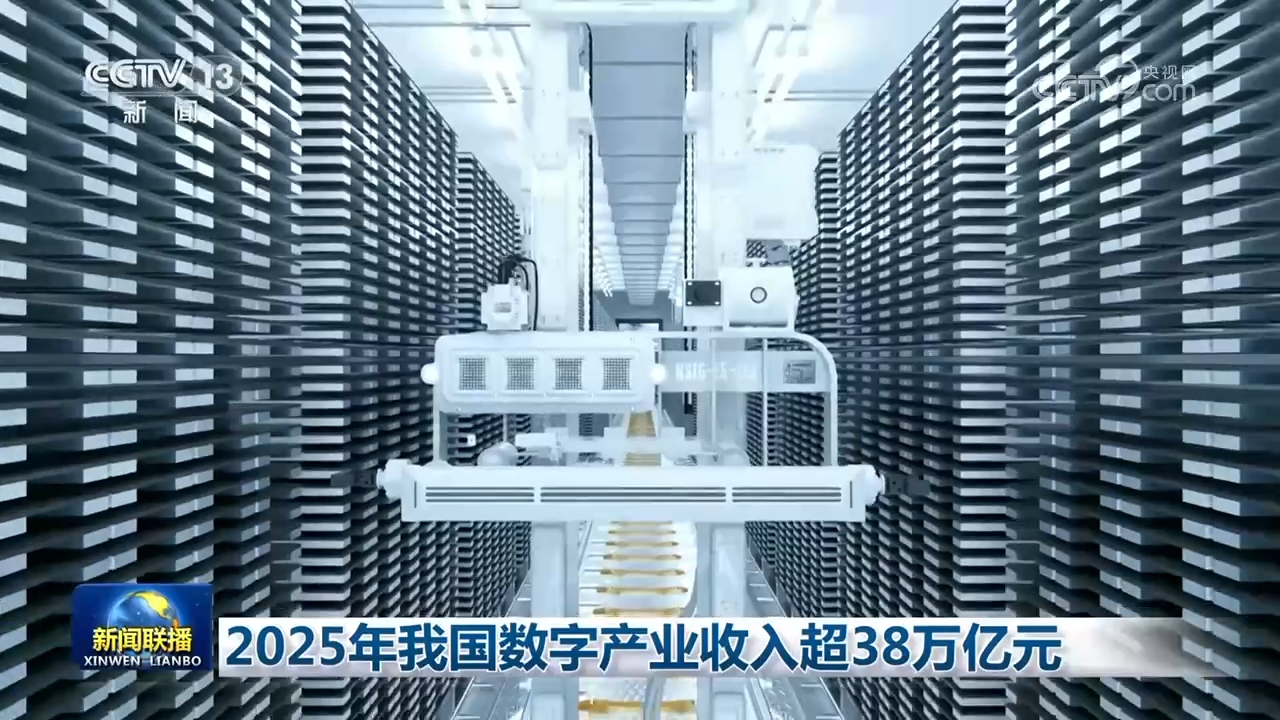
2025年我国数字产业收入超38万亿元
Yang Shi Wang· 2026-01-23 11:58
Core Insights - The digital industry in China is experiencing rapid growth during the "14th Five-Year Plan" period, with projected revenue of approximately 38.3 trillion yuan and profits of 3.1 trillion yuan by the end of 2025, representing cumulative growth of about 39.5% and 48.4% respectively compared to the end of the "13th Five-Year Plan" [1][3]. Group 1 - The scale of the digital industry is expanding, with accelerated innovation capabilities being released. The ecosystem of basic software is continuously improving, and the open-source Harmony operating system has been installed on nearly 1.2 billion devices [3]. - The artificial intelligence industry is thriving, with a diverse range of terminal products such as AI smartphones, AI computers, and AI glasses, driving a new wave of consumer upgrades [3]. Group 2 - The digital industry is increasingly serving as a "connector" for real economy integration. Current industrial internet applications cover all major industrial categories, with 100 high-level 5G factories achieving global leadership, resulting in an average capacity increase of 25%, product quality improvement of 21%, and operational cost reduction of 19% [5]. - Future efforts will focus on accelerating technological innovation and empowering applications, strengthening standard leadership and ecosystem development, and promoting high-quality development of the digital industry [5].
万兴科技旗下绘图创意线品牌升级 提升全球用户AI绘图体验
Zheng Quan Ri Bao Wang· 2026-01-23 11:41
Core Insights - Wankang Technology has upgraded its drawing and creative software products, integrating the original Yitu product line into a global innovation ecosystem and rebranding them as "Wankang Diagram" and "Wankang Mind Map" [1][2] - The brand upgrade aims to enhance product synergy and improve the intelligent experience of Wankang's creative products, empowering global individual creators and enterprise users with an AI drawing experience that aligns with their expectations [1] - The integration will include Wankang's multimedia model and leading third-party models to enhance capabilities in chart understanding, logic recognition, and visual generation [1] Group 1 - The rebranding is a strategic move towards the AI era, leveraging a unified AI capability foundation and global infrastructure [1] - Wankang's products have a strong user base in visualization and structured thinking, which will be further enhanced through this integration [1] - The company emphasizes compliance and efficiency in AI-generated content to meet global user requirements [1] Group 2 - The mission of Wankang Diagram and Wankang Mind Map is to drive AI, professionalism, and global co-creation, helping creators enhance their creativity [2] - Wankang Technology will continue to focus on AI as a core driving force, improving its "creativity + efficiency" product matrix and capability foundation [2] - The company aims to empower global users through continuous innovation and product development [2]

微软(MSFT.US)领跑AI应用浪潮! 法巴银行押注云计算巨头乃软件投资主线
智通财经网· 2026-01-23 09:48
Core Viewpoint - BNP Paribas believes that while major cloud computing giants like Microsoft and Google continue to dominate the AI application market, companies like ServiceNow and SAP will show "growth resilience" but will lag behind in stock price performance compared to these cloud leaders [1][2]. Group 1: Cloud Computing Giants - BNP Paribas maintains a strong bullish stance on Microsoft, viewing it as one of the biggest beneficiaries of the AI application wave, with a target price of $632 [3][4]. - The bank's enterprise spending trend survey indicates that companies are more optimistic about spending on major cloud platforms like Microsoft Azure, Amazon AWS, and Google GCP, which are seen as resilient in terms of customer spending [4][5]. Group 2: ServiceNow and SAP - ServiceNow and SAP are considered to have good fundamental resilience and improved demand, but their future outlook is not as positive as that of the major cloud computing giants [4][5]. - BNP Paribas has significantly lowered its target price for ServiceNow from $186 to $120, reflecting a cautious stance on its stock price outlook [3][4]. Group 3: Market Trends and Predictions - The bank's analysis suggests that traditional cloud software companies are facing more cautious IT spending from enterprises, especially in uncertain macroeconomic and geopolitical conditions [5][6]. - Analysts expect Microsoft to report a Q2 EPS of approximately $3.92, a 34% year-over-year increase, with total revenue around $80.28 billion, indicating a 30% year-over-year growth [7]. - ServiceNow is projected to report an EPS of about $0.89 and revenue of approximately $3.53 billion, reflecting a 19% year-over-year growth [7].

中望软件:总经理、副总经理离任,聘任新总经理和副总经理
Xin Lang Cai Jing· 2026-01-23 08:33
中望软件公告称,近日收到总经理杜玉林、副总经理王长民的书面辞职报告,二人分别于2026年1月23 日、1月22日因工作调整离任,离任后仍在公司任职。截至公告披露日,杜玉林持股36.16%,王长民持 股0.20%。2026年公司召开董事会,审议通过变更总经理和聘任副总经理的议案,同意聘任刘玉峰为总 经理、冯征文为副总经理,任期至第六届董事会任期届满。刘玉峰持股0.9220%,冯征文获授限制性股 票17,567股,已归属5,361股。 ...

软件ETF(515230)涨超2%,近10日资金净流入超28亿元,多模态预计在2026年进一步迭代
Mei Ri Jing Ji Xin Wen· 2026-01-23 07:16
Core Viewpoint - The software ETF (515230) has seen a significant increase of over 2% on January 23, with a net inflow of over 2.8 billion yuan in the past 10 days, indicating strong investor interest in the sector. The multi-modal technology is expected to be a key factor in AI applications by 2026, benefiting primarily AI video and robotics/autonomous driving sectors [1]. Group 1: Multi-modal Technology - Multi-modal technology is anticipated to be a decisive factor in AI applications by 2026, with direct beneficiaries being AI video and robotics/autonomous driving [1]. - In the AI video sector, advancements such as the resolution of physical consistency issues with Sora2 and Veo3 are expected to lead to a generative environment by Q4 2025, with further acceleration anticipated as domestic multi-modal models catch up in Q1 2026 [1]. - The robotics/autonomous driving field is expected to see practical applications in experimental environments by 2026, driven by advancements in world models like Google's Genie and Tesla's iterations [1]. Group 2: Domestic and International Developments - Internationally, multi-modal technology is projected to evolve further in 2026, moving towards a unified tokenized world model [1]. - Domestic models such as Byte's Seed and Minimax's Hai Luo are expected to catch up quickly, with related products likely to be released in the first half of 2026 [1]. - The demand for computing power and storage is expected to benefit from the implementation of multi-modal and long-memory technologies [1]. Group 3: Software ETF Overview - The software ETF (515230) tracks the software index (H30202), which reflects the market performance of the software industry, covering companies involved in application software, system software development, and related services [1]. - The index focuses on technology innovation and high-growth companies, with a concentration in the information technology sector, leaning towards a growth-oriented style [1].
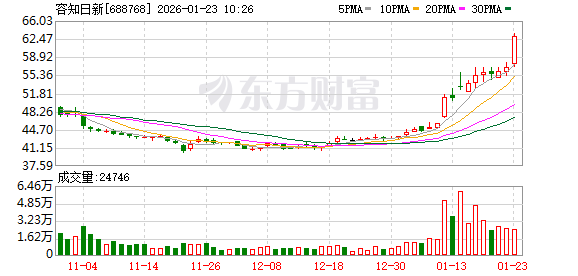
工业软件概念震荡走高,容知日新涨超11%
Mei Ri Jing Ji Xin Wen· 2026-01-23 02:25
Group 1 - The industrial software sector experienced a notable increase on January 23, with several companies showing significant gains [2] - Rongzhi Rixin saw its stock price rise by over 11%, indicating strong market interest [2] - Other companies in the sector, such as Aerospace Software, Yingjianke, Jinxiandai, and Huiguang Technology, also reported substantial increases in their stock prices [2]

琼海:初步谋划“十五五”重大项目146个
Hai Nan Ri Bao· 2026-01-23 01:31
Group 1 - The core objective for Qionghai is to achieve a GDP of over 55 billion by 2030, with an average annual growth rate of over 6% [2] - Qionghai aims to build a "1+2+N" industrial system focusing on the integration of the "medical, conference, and tourism" industries, targeting a trillion-level industry cluster [2] - A total of 146 major projects have been preliminarily planned for the "14th Five-Year Plan," with an estimated total investment of approximately 118.4 billion [2] Group 2 - The city will implement comprehensive free trade port policies and create an economic ecosystem centered around a "forum+" permanent venue [2] - Qionghai plans to enhance innovation and become a hub for technological innovation and talent aggregation in the eastern region [2] - The city will promote ecological priorities by implementing zero-carbon experiences and building a "waste-free city" [2][3]