养老金融

Search documents
养老金融周报(2025.07.14-2025.07.20):美国将允许401(k)进行私募股权投资-20250721
Ping An Securities· 2025-07-21 09:30
Key Insights - The report highlights three significant events in the global pension sector during the week, including the U.S. allowing 401(k) plans to invest in private equity, the University of California's decision to eliminate hedge fund allocations, and its consideration to increase investments in China [1][6][10]. Group 1: U.S. Pension Policy Changes - The U.S. government is set to allow 401(k) plans to invest in private equity, marking a major policy shift aimed at expanding retirement investment options for American workers [6][7]. - This policy change is expected to facilitate greater asset diversification for more Americans, potentially leading to wealth accumulation and successful retirements [6][7]. - Financial institutions are already preparing to launch retirement products that include private market components, indicating a proactive approach to this policy change [6][7]. Group 2: University of California's Investment Strategy - The University of California announced it will no longer allocate funds to hedge funds starting July 1, 2025, reallocating those funds to public equities instead [1][6][9]. - The decision stems from a lack of effective hedging during market downturns over the past two decades, with the university's hedge fund holdings significantly reduced from $4.4 billion at the end of 2022 to $892 million by June 2025 [8][9]. - The university's new investment policy increases the allocation to public equities from 53% to 57%, while reducing private market investments from 30% to 25% [8][9]. Group 3: Increased Focus on China - The University of California is considering expanding its international investment opportunities, particularly in China, despite previous cautious stances due to geopolitical tensions [10]. - The university acknowledges that while the U.S. remains a leader in disruptive technologies, China is developing its own independent systems in artificial intelligence and economic growth [10]. - The recent tariff reduction agreement between the U.S. and China is seen as a new opportunity for investment in the Chinese market [10]. Group 4: Performance Metrics - The University of California's pension fund achieved a net return of 12.7% for the fiscal year ending June 30, 2025, driven by strong performance in the U.S. stock market [12]. - CalPERS reported a preliminary net investment return of 11.6% for the 2025 fiscal year, with total managed assets reaching approximately $556.2 billion [12][13]. - Public equities represented about 39% of CalPERS' total assets, yielding a return of 16.8%, which was the highest among asset classes [13][15].
银发经济半年观察:政策力挺服务消费与金融创新,上半年关键指标增长强劲|2025中国经济半年报
Hua Xia Shi Bao· 2025-07-18 10:04
Core Viewpoint - The silver economy in China is becoming a significant driver for domestic demand and industrial upgrading as the population aged 60 and above surpasses 300 million, with policies being implemented to support its development [2][7]. Policy Support - A series of policies have been introduced at both central and local levels to promote the silver economy, including financial innovations and subsidies for age-friendly product modifications [2][8]. - The implementation of the "High-Quality Development Plan for Pension Finance" aims to establish a robust pension financial system over the next five years [7][8]. Economic Data Highlights - In the first half of 2025, the silver economy showed strong growth, with pension service sales revenue increasing by over 40% year-on-year, and the number of age-friendly products rising by 28,700, reflecting a 255.2% growth [2][5]. - The silver economy index has risen by 17.43% this year, indicating positive market sentiment [2]. Supply and Demand Trends - The supply of elderly care services and age-friendly products has significantly increased, with sales revenues for various services growing by 40.9% for elderly care services and 14.1% for age-friendly household services [4][5]. - The demand from the elderly population is diverse, with core drivers being essential needs, health, and self-enjoyment, leading to substantial growth in health-related products and services [6]. Digital Empowerment - The integration of new technologies such as 5G, AI, and big data is transforming the silver economy, with a 16.9% increase in IT service purchases by silver economy enterprises [6][7]. Future Outlook - The silver economy is expected to experience breakthroughs in technology integration, industry ecosystem restructuring, and accelerated globalization, driven by both policy and market forces [9].


爱网购、爱旅游、拥抱新技术......广州银发新势力正打破刻板印象
Guang Zhou Ri Bao· 2025-07-16 17:02
Core Insights - The survey conducted by Guangzhou Statistical Bureau reveals that the elderly population in Guangzhou is increasingly open to new consumption patterns and financial products, indicating a significant shift in the silver economy landscape [1][2][4]. Group 1: Consumer Behavior - 90% of respondents shop online, with 59.0% shopping frequently and 31.4% occasionally [2] - 71.1% of respondents base their consumption decisions on actual needs, while 51.2% prioritize product quality [2] - Nearly 90% are willing to use smart products, showing a strong openness to new technologies [2] Group 2: Spending Preferences - 66.7% of respondents plan to spend more on travel after retirement, making it the top non-essential spending category [3] - 42.2% are inclined towards health and wellness expenditures, followed by 35.3% for elder care services [3] - Younger respondents show a greater willingness to spend on health and travel, while higher income individuals are more likely to invest in wellness and travel [3] Group 3: Interest in Financial Products - 77.8% of the elderly population is interested in trying pension financial products, with 42.6% willing to consider health and accident insurance [4] - Safety of principal is the primary concern for 83.6% of respondents when investing in pension financial products [4] - Women show a higher willingness to engage with pension financial products compared to men [4] Group 4: Technological Integration - 86.8% of respondents are open to using smart products, and 96.8% hope technology will enhance their quality of life [5] - Key areas for technological improvement include health monitoring (67.2%), rehabilitation care (58.6%), and home convenience (51.9%) [5] - The positive attitude towards smart technology indicates a potential new market in the silver economy [5]
衍生品业务服务中国特色养老金融的探索|财富与资管
清华金融评论· 2025-07-13 09:10
Core Viewpoint - The article emphasizes the need to accelerate the development of the third pillar of pension insurance and implement a personal pension system in China, addressing structural challenges in pension finance and advocating for an increased allocation of equity assets in pension investments while utilizing derivatives for risk management [2][4]. Group 1: Structural Challenges in Pension Finance - China's aging population poses significant structural challenges to pension finance, with over 310 million people aged 60 and above by the end of 2024, accounting for 22% of the total population [5]. - The reliance on government funding is substantial, with over two-thirds of pension funds coming from government-led basic pensions and social security funds, while enterprise annuities and personal commercial insurance account for only 32.7% [6]. - The investment structure is heavily concentrated in fixed-income assets, with over 85% of pension products invested in such assets from 2021 to 2024 [6]. Group 2: Need for Increased Equity Investment - The current pension finance system is characterized by low marketization and a predominance of fixed-income assets, leading to low returns. As of June 2024, the actual contribution rate for personal pensions was only 22%, with only 25% of contributions being invested [8]. - The potential for the silver economy is significant, with projections indicating that its contribution to GDP will rise from 6% to 9% by 2035, necessitating an increase in equity asset investment to enhance overall pension returns and alleviate government financial pressure [9]. Group 3: Risk Management through Derivatives - Equity investments exhibit greater short-term volatility compared to fixed-income investments, which has contributed to the current focus on fixed-income assets in pension products [13]. - To mitigate risks associated with increased equity investments, it is essential to enhance the performance evaluation period for pension products and utilize financial derivatives for risk management, thereby improving the stability and growth of investment portfolios [12][13].
首届“长江养老杯”养老金融模拟投资大赛来了!
2 1 Shi Ji Jing Ji Bao Dao· 2025-07-04 09:14
Core Insights - The article discusses the increasing concern among young people in China regarding retirement planning due to the challenges of high housing prices, fast-paced lifestyles, and difficulties in parenting. This concern is seen as proactive planning for a high-quality later life rather than mere anxiety [2][3]. Group 1: Demographic Trends - By the end of 2024, the elderly population (aged 60 and above) in China is projected to reach 310 million, accounting for 22% of the total population. This demographic shift is driven by both declining birth rates and increasing longevity, marking the arrival of the "silver economy" earlier than expected [2]. Group 2: Retirement Planning Initiatives - The "Changjiang Pension Cup" retirement financial simulation investment competition has been launched to educate young people about retirement planning and investment strategies. This initiative is supported by the Shanghai Financial Industry Association and Fudan University's Insurance Application Innovation Research Institute [2][3]. Group 3: Investment Philosophy - The competition emphasizes the importance of long-term investment strategies, with the Ministry of Human Resources and Social Security reporting a cumulative return of 7.46% for enterprise annuities over the past three years. This shift in focus from annual returns to cumulative returns reflects a regulatory push towards long-term investment [3]. Group 4: Company Profile - Changjiang Pension, a subsidiary of China Pacific Insurance (Group), is dedicated to pension financial services and manages assets totaling 1.34 trillion yuan. The company has generated 340 billion yuan in investment returns for clients, with its performance in enterprise annuities ranking in the top half of the industry [3].
养老金融提质扩面 上海发力银发经济全链条支持
Zhong Guo Jing Ying Bao· 2025-07-03 00:29
Group 1 - The People's Bank of China and various Shanghai authorities have jointly issued a work plan to enhance financial services for the elderly and promote the high-quality development of the silver economy, outlining 14 specific measures [1] - The work plan emphasizes increasing the supply of pension finance, broadening financing channels for the silver economy, and expanding credit support for the development of silver economy entities and industrial clusters [1] - Financial institutions are required to provide diversified pension financial services tailored to different elderly groups, support retirement fund preparation and wealth planning, and enhance financial literacy and consumer rights protection for the elderly [1] Group 2 - Experts at the "Second China Inclusive Pension Finance Forum" highlighted the need to learn from global experiences to address population aging and accelerate the construction of a multi-tiered pension system, particularly promoting the development of enterprise annuities and personal pensions [2] - The design of the pension system should focus on innovation and collaboration, while investment strategies should advocate for long-term capital operation to enhance the risk resistance and stability of pension reserves [2] - Comprehensive planning of pension finance should integrate the asset-liability statements of families, enterprises, financial institutions, and local governments, effectively stimulating savings and investment vitality [2]
中国人民银行上海市分行等十部门联合印发《上海养老金融服务银发经济高质量发展的工作方案》。
news flash· 2025-07-02 06:10
Core Viewpoint - The People's Bank of China, along with ten other departments, has jointly issued a work plan aimed at promoting high-quality development of the silver economy in Shanghai through pension financial services [1] Group 1: Policy Initiatives - The work plan outlines specific measures to enhance the financial services available for the elderly population in Shanghai [1] - It emphasizes the importance of integrating financial services with the needs of the aging population to foster sustainable economic growth [1] Group 2: Economic Impact - The initiative is expected to stimulate the silver economy, which refers to economic activities related to the elderly, thereby contributing to overall economic development in Shanghai [1] - The plan aims to create a supportive environment for businesses targeting the elderly demographic, potentially leading to increased investment opportunities in this sector [1]
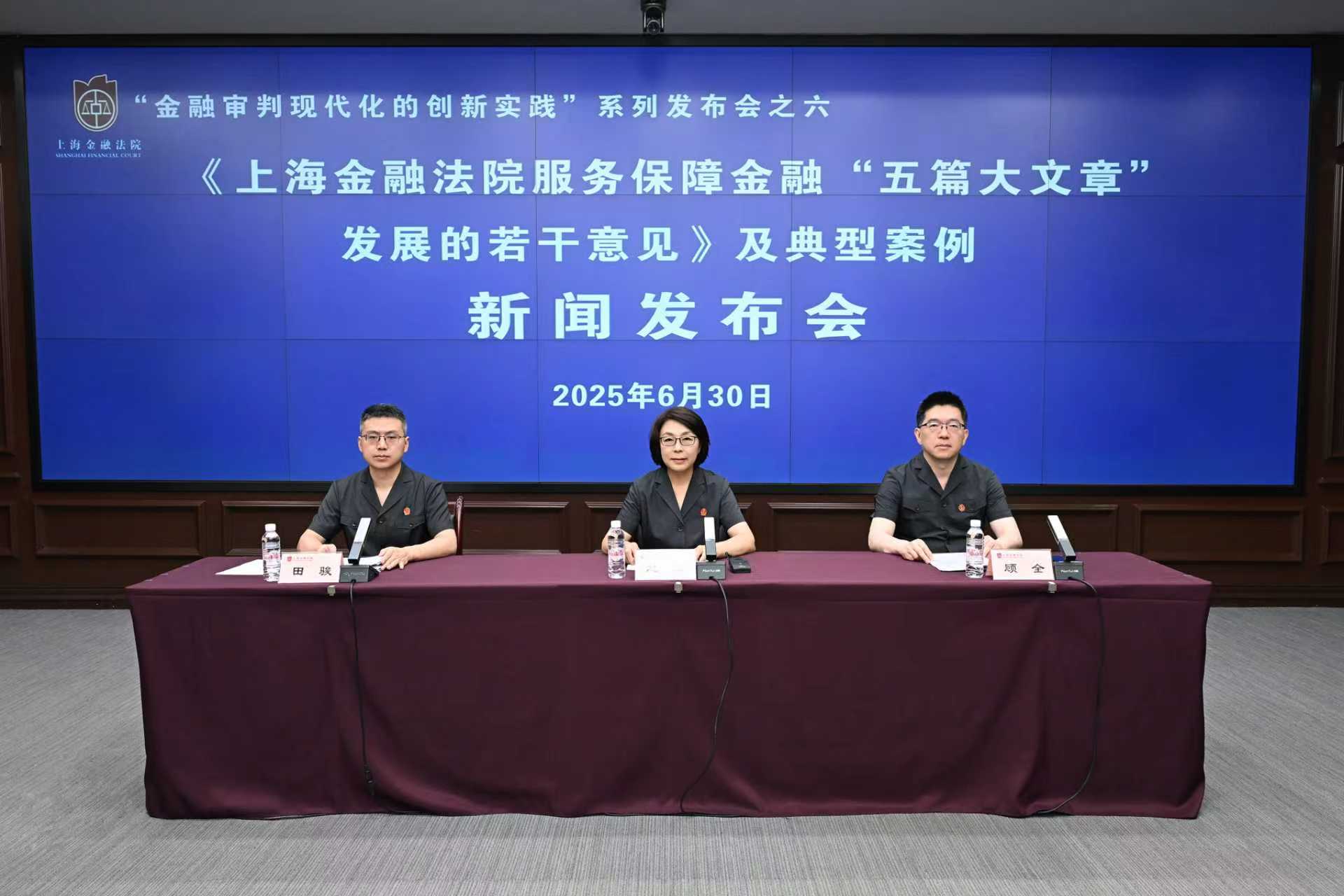
聚焦金融“五篇大文章” 上海金融法院发布重磅文件和典型案例
Zheng Quan Shi Bao Wang· 2025-06-30 13:40
Core Viewpoint - The Shanghai Financial Court introduced the "Several Opinions on Serving and Guaranteeing the Development of Financial 'Five Major Articles'" to enhance judicial support for financial development, focusing on specific measures for various financial sectors [1][4]. Group 1: Overall Requirements - The "Several Opinions" consist of three main parts: overall requirements, specific measures, and supporting guarantees, totaling 18 articles [1]. - The document emphasizes the need to elevate judicial support capabilities, particularly in the technology finance sector, by improving the special trial mechanism for the Sci-Tech Innovation Board [1][6]. Group 2: Specific Measures - The "Several Opinions" outline specific measures for five financial sectors: technology finance, green finance, inclusive finance, pension finance, and digital finance, detailing 35 types of new financial dispute adjudication concepts and 21 actionable judicial support mechanisms [4][6]. - In technology finance, the focus is on enhancing the special trial mechanism for the Sci-Tech Innovation Board and streamlining loss assessment procedures for third-party institutions [1][6]. - In green finance, collaboration with the Shanghai Environment Energy Exchange is planned to explore new carbon trading models, ensuring maximum value realization of carbon trading products [7]. - For inclusive finance, mechanisms to incentivize trust and credit repair will be established to support small and micro enterprises in obtaining loans [7]. Group 3: Supporting Guarantees - The "Several Opinions" stress the need to improve financial trial execution mechanisms, support temporary arbitration, and enhance execution collaboration to create an optimal international financial dispute resolution environment [8]. - The document aims to balance financial innovation with risk prevention through regular publication of typical financial cases and legal risk prevention reports [8]. - It also emphasizes the importance of cultivating financial trial talent to build a highland of composite financial trial professionals [8]. Group 4: Typical Cases - Ten typical cases were released, reflecting potential risk issues in the development of the financial "Five Major Articles," particularly in technology finance where financing difficulties exist due to stringent buyback obligations [9][10]. - The cases illustrate the integration of political, legal, and social effects, showcasing innovative dispute resolution models in green finance [10].

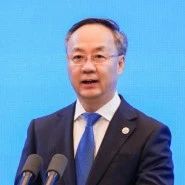
李云泽:中国已成为全球第二大财富管理市场,支持外资加大布局
Sou Hu Cai Jing· 2025-06-18 10:05
Group 1 - The core viewpoint is that China's wealth management sector is entering a golden period due to the continuous expansion of the middle-income group and the increasing demand for diversified and professional asset allocation [3][4] - China's household cash and savings account for over half of their financial assets, significantly higher than the OECD average of about one-third [3][4] - The average annual growth rate of entrusted assets in trust, wealth management, and insurance asset management in China has been approximately 8% over the past five years, making it the second-largest asset and wealth management market globally [2][3] Group 2 - The aging population presents significant opportunities in the silver economy, with projections indicating that the population aged 60 and above will exceed 400 million by 2035, leading to a silver economy scale of approximately 30 trillion yuan [3][6] - The development of a multi-pillar pension system is underway, with efforts to expand pension financial products and encourage foreign institutions to participate in the market [4][5] - The green finance sector in China is robust, with the largest scale of green credit globally and significant growth potential, especially with the goal of achieving carbon peak by 2030 [6][8] Group 3 - The establishment of Financial Asset Investment Companies (AIC) is being encouraged, with banks in Shanghai being supported to set up these companies to enhance their capabilities in equity investment [8][9] - The Chinese financial industry is committed to high-level opening-up, with plans to replicate successful experiences from free trade zones and support foreign institutions in participating in more financial business trials [9]
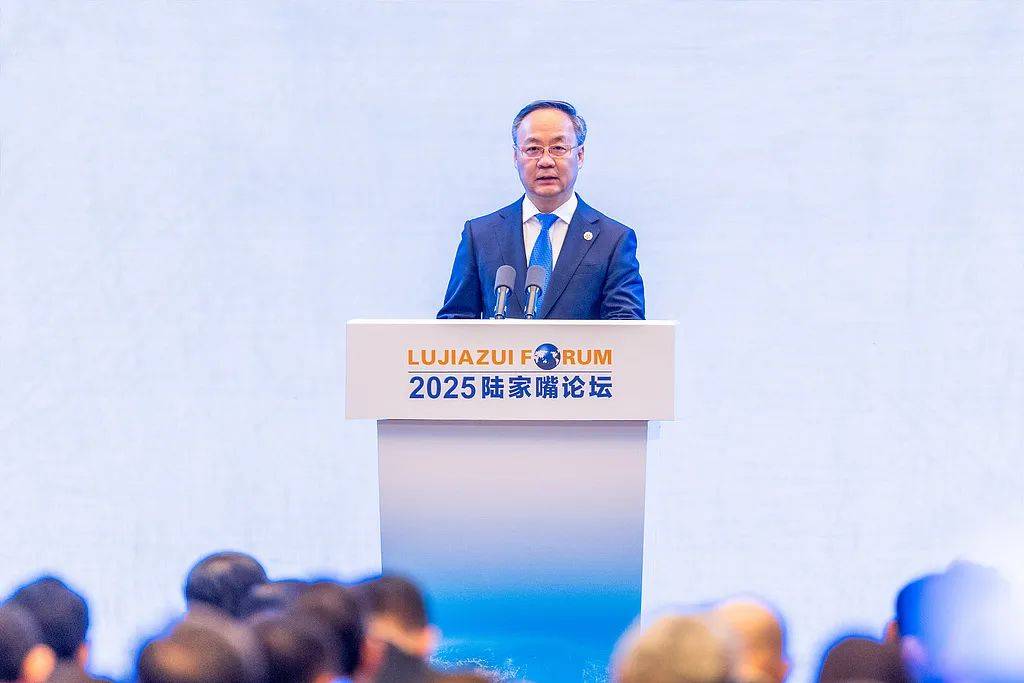
李云泽,重磅发声!
中国基金报· 2025-06-18 04:45
Core Viewpoint - The speech emphasizes the importance of high-level financial openness in China, highlighting the potential for mutual benefits and cooperation in the global financial landscape [2][4]. Group 1: Current State of Financial Openness - 42 out of the world's top 50 banks have established operations in China, and nearly half of the 40 largest insurance companies have entered the market [4][10]. - Foreign banks and insurance institutions have total assets exceeding 7 trillion yuan, with foreign insurance companies' market share increasing from 4% in 2013 to 9% currently [4][10]. - Chinese institutions are actively operating in over 70 countries, promoting trade and investment [4][10]. Group 2: Consumer Market and Financial Services - China's consumer market has become the second largest globally, with significant growth in sectors like automobiles, mobile phones, and home appliances [4][12]. - The shift towards service consumption presents vast opportunities for financial services, with foreign institutions expected to thrive in consumer finance and inclusive finance [4][12]. Group 3: Technological and Green Finance - China is a leader in technological innovation, with significant advancements in fields like aerospace and artificial intelligence, attracting international investment [4][13]. - The green finance sector is expanding, with China holding the largest green credit market globally and a projected funding need exceeding 25 trillion yuan to meet carbon peak goals by 2030 [4][13]. Group 4: Aging Population and Wealth Management - By 2035, the population aged 60 and above in China is expected to exceed 400 million, creating a silver economy valued at approximately 30 trillion yuan [4][14]. - The wealth management market is growing, with an annual asset management growth rate of about 8% over the past five years, positioning China as the second-largest asset and wealth management market globally [4][14]. Group 5: Future Directions for Financial Openness - The financial regulatory authority plans to replicate successful practices from free trade zones to enhance financial openness and support foreign institutions in more financial business trials [4][15]. - Continuous efforts will be made to optimize the business environment for foreign entities, ensuring a transparent and stable policy framework [4][15]. - China aims to strengthen its role in global financial governance and enhance international financial regulatory cooperation [4][16].