船舶

Search documents
5.4%!增速高于全国!上海2025年经济“交卷”
Zheng Quan Shi Bao· 2026-01-21 04:38
Economic Overview - In 2025, Shanghai's GDP reached 56,708.71 billion yuan, with a year-on-year growth of 5.4%, surpassing the national growth rate [1] - Shanghai's economic total ranked fifth among global cities for the first time [1] Industry Performance - The primary industry added value was 99.39 billion yuan, growing by 2.0%; the secondary industry added value was 11,650.62 billion yuan, growing by 3.5%; and the tertiary industry added value was 44,958.70 billion yuan, growing by 6.0% [1] - Industrial added value in Shanghai increased by 5.0%, with total industrial output value growing by 4.6% [1] - Notable growth in specific sectors included transportation equipment manufacturing (15.8%), electrical machinery (11.1%), automotive manufacturing (7.8%), and electronics (7.7%) [1] Leading Industries - The three leading industries in Shanghai—integrated circuits, artificial intelligence, and biomedicine—saw a manufacturing output growth of 9.6%, with integrated circuits growing by 15.1% and artificial intelligence by 13.6% [2] - Strategic emerging industries in Shanghai's industrial sector grew by 6.5%, with new energy industries increasing by 12.9% and high-end equipment industries by 11.1% [2] Service Sector Growth - The tertiary sector's added value grew by 6.0%, with information transmission, software, and IT services increasing by 15.3% and the financial sector by 9.7% [2] Consumer Market - Shanghai's total retail sales of consumer goods reached 16,600.93 billion yuan, with a year-on-year growth of 4.6%, improving by 0.3 percentage points compared to the first three quarters [2] Trade Performance - The total import and export value in Shanghai was 4.51 trillion yuan, growing by 5.6%, with exports at 2.02 trillion yuan (10.8% growth) and imports at 2.49 trillion yuan (1.8% growth) [2] - Exports of "new three samples" products reached 0.16 trillion yuan, growing by 17.4%, with electric vehicle exports increasing by 13.8% [2] Future Development Plans - The "14th Five-Year Plan" suggests that by 2035, Shanghai aims to enhance its five central functions and achieve international leading levels in key development indicators, doubling per capita GDP from 2020 [3] - The plan emphasizes agile development in quantum technology, brain-computer interfaces, controlled nuclear fusion, biomanufacturing, and sixth-generation mobile communications [3] - It also supports the establishment of an international financial asset trading platform and the development of market-oriented merger funds, venture capital funds, and foreign investment funds [3]
5.4%!增速高于全国!上海2025年经济“交卷”
证券时报· 2026-01-21 04:25
Core Viewpoint - In 2025, Shanghai's GDP reached 56,708.71 billion yuan, growing by 5.4% year-on-year, surpassing the national growth rate, marking Shanghai as the fifth largest economy among global cities [1] Economic Performance - Shanghai's primary industry added value was 99.39 billion yuan, growing by 2.0% - The secondary industry added value was 11,650.62 billion yuan, growing by 3.5% - The tertiary industry added value was 44,958.70 billion yuan, growing by 6.0% [1] Industrial Production - In 2025, Shanghai's industrial added value grew by 5.0% - The total industrial output value above designated size increased by 4.6% - Notable growth in specific sectors: - Railway, shipbuilding, aerospace, and other transport equipment manufacturing grew by 15.8% - Electrical machinery and equipment manufacturing grew by 11.1% - Automobile manufacturing grew by 7.8% - Computer, communication, and other electronic equipment manufacturing grew by 7.7% [1] Leading Industries - The three leading industries in Shanghai are integrated circuits, artificial intelligence, and biomedicine, with manufacturing output growing by 9.6% - Integrated circuit manufacturing grew by 15.1% - Artificial intelligence manufacturing grew by 13.6% - Strategic emerging industries in Shanghai saw a 6.5% increase in output, with new energy industries growing by 12.9% and high-end equipment industries growing by 11.1% [2] Service Sector Growth - The tertiary sector's added value grew by 6.0% - Information transmission, software, and IT services added value reached 7,139.93 billion yuan, growing by 15.3% - Financial services added value was 8,979.66 billion yuan, growing by 9.7% [2] Consumption and Trade - Shanghai's total retail sales of consumer goods reached 16,600.93 billion yuan, growing by 4.6% - The total import and export value of goods was 4.51 trillion yuan, growing by 5.6% - Exports reached 2.02 trillion yuan, growing by 10.8%, while imports were 2.49 trillion yuan, growing by 1.8% - "New three samples" products exports reached 0.16 trillion yuan, growing by 17.4%, with electric vehicle exports growing by 13.8% [2] Future Development Plans - The "14th Five-Year Plan" suggests that by 2035, Shanghai aims to upgrade its "five centers" functions to international leading levels, doubling per capita GDP from 2020 [3] - The plan emphasizes agile development in quantum technology, brain-computer interfaces, controlled nuclear fusion, biomanufacturing, and sixth-generation mobile communications [4]


韩国1月出口强势开局!半导体需求强劲抵消汽车关税冲击
智通财经网· 2026-01-21 02:09
Core Insights - South Korea's exports accelerated in the first 20 days of January, primarily driven by strong semiconductor demand, while automotive exports weakened due to increased tariffs in the U.S. [1] - The export growth rate reached 14.9% year-on-year, surpassing the revised 13.3% growth for the entire month of December [1] - Semiconductor exports surged by 70.2%, supported by global AI and data center investment trends, while automotive exports fell nearly 11% [1] Export Performance - The total export value for the first 20 days of January was 14.9% higher year-on-year, with imports increasing by 4.2%, resulting in a trade deficit of $626 million [1] - Wireless communication devices and petrochemical products also saw significant export growth, increasing by 48% and 18% respectively [1] - The decline in automotive exports reflects a slowdown in global demand and the impact of U.S. tariffs, with shipbuilding exports also down by 18% [1] Economic Context - The strong export growth is seen as a key driver for South Korea's economy in 2023, with semiconductor demand expected to offset declines in other sectors [1] - The recent trade agreement with the U.S. set a tariff cap of 15% on imported goods, including automobiles, which has raised concerns about long-term export challenges for the economy [2] - The depreciation of the Korean won against the U.S. dollar has improved price competitiveness for exports but has also increased inflationary pressures [2] Monetary Policy - The Bank of Korea maintained the benchmark interest rate at 2.5% for the fifth consecutive meeting, signaling a neutral stance amid mixed economic growth risks [2] - Core inflation and overall inflation have exceeded the central bank's target of 2%, raising concerns about rising import costs due to a weak won [2] Trade Partner Dynamics - Exports to China and the U.S. grew by 30.2% and 19.3% respectively, while exports to the EU and Japan declined by approximately 15% and 13% [2]
上海:2025年GDP同比增长5.4%
第一财经· 2026-01-21 01:28
Economic Overview - In 2025, Shanghai's GDP reached 56,708.71 billion yuan, reflecting a year-on-year growth of 5.4% at constant prices [1] - The primary industry added value was 99.39 billion yuan, growing by 2.0%; the secondary industry added value was 11,650.62 billion yuan, growing by 3.5%; and the tertiary industry added value was 44,958.70 billion yuan, growing by 6.0% [1][3] Industrial Production - The industrial added value in Shanghai grew by 5.0% year-on-year, with total industrial output value increasing by 4.6% [6] - Key sectors such as railway, shipbuilding, aerospace, and other transportation equipment manufacturing saw a 15.8% increase in output value, while electrical machinery and equipment manufacturing grew by 11.1% [6] - The three leading manufacturing industries experienced a 9.6% increase, with integrated circuit manufacturing growing by 15.1% and artificial intelligence manufacturing by 13.6% [6] Service Sector Growth - The tertiary industry added value increased by 6.0%, with the information transmission, software, and IT services sector growing by 15.3% [9] - The financial sector's added value reached 8,979.66 billion yuan, marking a 9.7% increase [9] Fixed Asset Investment - Fixed asset investment in Shanghai grew by 4.6%, with industrial investment surging by 20.0%, significantly outpacing the overall investment growth [12] - Urban infrastructure investment increased by 11.2% [12] Market Consumption - The total retail sales of consumer goods reached 16,600.93 billion yuan, with a year-on-year growth of 4.6% [15] - Categories such as cultural and office supplies saw a retail growth of 30.4%, while home appliances and audio-visual equipment grew by 24.3% [15] Financial Market Activity - Major financial markets in Shanghai achieved a transaction volume of 40,589.5 billion yuan, reflecting an 11.2% year-on-year increase [18] - The balance of deposits in financial institutions reached 24.50 trillion yuan, growing by 11.3% [18] Trade Performance - The total import and export volume reached 4.51 trillion yuan, with exports growing by 10.8% to 2.02 trillion yuan [21] - The "new three types" of products saw an export growth of 17.4%, with electric vehicle exports increasing by 13.8% [21] Consumer Prices and Income - The consumer price index (CPI) rose by 0.1%, while the core CPI increased by 0.7% [24] - The per capita disposable income reached 91,987 yuan, growing by 4.1% year-on-year [25]

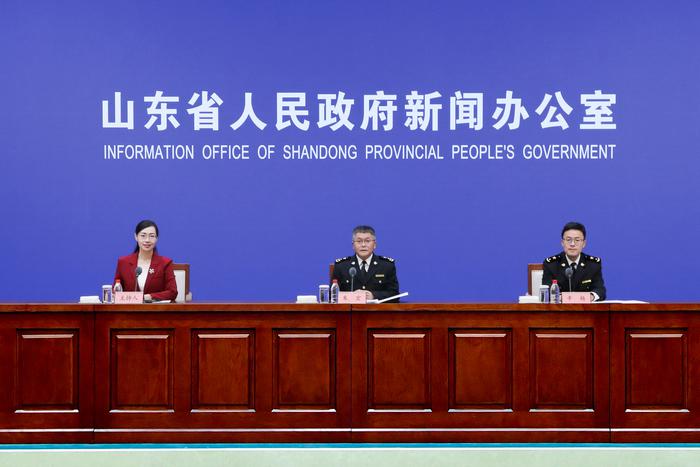
山东外贸“朋友圈”已遍及全球,与超过250个国家和地区有贸易往来
Feng Huang Wang Cai Jing· 2026-01-21 00:06
Core Insights - In 2025, Shandong Province's foreign trade achieved a historical high, demonstrating resilience against external challenges with stable volume and improved quality [1] Group 1: Market Diversification - Shandong Province engaged in trade with over 250 countries and regions, with nine foreign trade markets exceeding 100 billion yuan and 53 exceeding 10 billion yuan [3] - The Belt and Road Initiative significantly boosted trade with partner countries, accounting for 64.1% of Shandong's total exports and 74.7% of imports, showing an increase from 2024 [3] - Notably, 58.5% of Shandong's automobile exports were directed to the African market, establishing a strong presence there [3] Group 2: New Industries and High-Tech Exports - Exports of Shandong's "new three samples" products reached 14.23 billion yuan, marking a 37% increase, with electric vehicle exports alone totaling 8.81 billion yuan and growing by 126% [3] - High-tech product exports saw a significant rise, with shipbuilding and marine engineering equipment exports increasing by 90.5% to 57.06 billion yuan, alongside double-digit growth in other sectors [3] Group 3: Private Sector Contribution - The private economy contributed 92.9% of Shandong's foreign trade market entities and 76.3% of the total import and export value, with private enterprises accounting for 77.4% of total exports and 74.4% of imports [4] - Shandong hosts numerous leading private enterprises in sectors such as crude oil, metal ores, and marine engineering equipment, holding significant positions nationally [4] Group 4: Future Outlook - The customs authority plans to continue supporting foreign trade enterprises in international market expansion, enhancing technological innovation, and developing measures to support private enterprises for high-quality foreign trade growth in Shandong [4]
常州之道:于不确定中,定义确定性成长
Shang Hai Zheng Quan Bao· 2026-01-20 18:53
中简科技总经理李辉:"中国碳纤维产业的竞争赛道已然升级,未来的比拼早已跳出'有没有'的范畴, 迈入'好不好、强不强'的高质量竞争新阶段。" 今创人曾深切体会"求技之难",对海外技术心怀羡慕却不甘于只是仰望。这份不甘转化为攻坚克难的动 力,推动他们在每一扇车门、每一套风挡、每一套电气控制系统的研发中精益求精 "我们不会将精力集中于传统环保项目。"维尔利总经理李遥表示,公司转型方向明确,将坚定不移地向 工业项目、生物燃料项目发力。 "我现在每天最大的精力,就是聚焦于具身智能领域。"鼎智科技创始人、总经理丁泉军说,每天早上八 点他便和机器人产品团队开例会,"项目什么情况、进度到哪儿,每天都要过一遍" ...
威奥股份:公司存在对欧盟成员国的出口业务
Zheng Quan Ri Bao Wang· 2026-01-19 13:47
Group 1 - The company, Weiao Co., Ltd. (605001), has export business to EU member countries, which accounts for approximately 20% of its total revenue [1] - The company employs a direct sales model primarily based on domestic entities, supplemented by subsidiaries in EU member countries [1]

国防军工行业投资策略周报:商业航天高景气可期,大飞机和军贸关注度提升-20260118
GF SECURITIES· 2026-01-18 08:26
Core Insights - The report highlights the promising outlook for the commercial aerospace sector and increased attention on large aircraft and military trade [2][3] - The construction of a space power is accelerating, with a focus on breakthroughs in reusable rocket technology and the development of new industries such as commercial aerospace and low-altitude economy [5][13] - Airbus has set a record for civil aircraft orders, with a total of 8,754 aircraft in backlog by the end of 2025, indicating strong market demand [5][13] - Military trade is expected to improve, with significant defense export growth reported in the UK, reaching over £20 billion in 2025 [5][14] Investment Strategy - The report recommends focusing on companies that align with the "S-curve" evolution, emphasizing supply chain reform and automation trends, with specific recommendations for companies like Aero Engine Corporation and AVIC [5][15] - It also suggests targeting companies involved in military trade, large aircraft, and low-altitude economy, highlighting firms such as Guorui Technology and China Power [5][15] - New emerging industries such as commercial aerospace, AI, and quantum computing are also identified as key areas for investment, with recommendations for companies like Ruichuang Micro-Nano and Ziguang Guowei [5][15] Company Valuation and Financial Analysis - The report provides detailed financial metrics for key companies in the defense and aerospace sector, including expected earnings per share (EPS) and price-to-earnings (PE) ratios for 2025 and 2026 [6] - For instance, Aero Engine Corporation is projected to have an EPS of 0.22 CNY in 2025, with a PE ratio of 184.41x, indicating strong growth potential [6] - Other companies like AVIC Heavy Machinery and Guorui Technology are also highlighted for their expected profitability and market positioning [6][25][27]


机械行业研究:看好商业航天、工程机械和工业互联网
SINOLINK SECURITIES· 2026-01-18 08:24
Investment Rating - The SW Machinery Equipment Index increased by 1.91% during the week of January 12-16, 2026, ranking 5th among 31 primary industry categories [3][13]. - Year-to-date, the SW Machinery Equipment Index has risen by 7.40%, ranking 7th among the same categories, while the CSI 300 Index increased by 2.20% [16]. Core Insights - Emphasis on the potential of SpaceX's chain and 3D printing in rocket technology, with a significant increase in satellite frequency resource applications in China [5][23]. - The engineering machinery sector is expected to experience a major upward cycle, with December sales figures exceeding expectations for both domestic and export markets [5][24]. - The AI upgrade potential in CNC systems is highlighted, particularly with the domestic leader Huazhong CNC, which is positioned to leverage AI for performance improvements [5][24]. Summary by Sections Market Review - The SW Machinery Equipment Index's performance during the week and year-to-date is noted, with specific rankings against the CSI 300 Index [3][16]. Core Insights Update - The report discusses the advancements in 3D printing technology in the aerospace sector, the robust demand for engineering machinery, and the growth potential of AI in CNC systems [5][24]. Key Data Tracking - General machinery sector remains under pressure, while engineering machinery shows accelerated growth, and railway equipment maintains steady growth [25][35][45]. - The shipbuilding sector is experiencing a slowdown, while oil service equipment is stabilizing at the bottom [49][51]. Industry Dynamics - The report outlines significant developments in various sectors, including the successful launch of new technologies and projects in the general machinery and robotics fields [60][62][64].




民营商业航天发射失利致歉,估值150亿元,二级市场炒作已过度
Xin Lang Cai Jing· 2026-01-18 02:02
Core Viewpoint - The recent failure of Beijing Xinghe Power Aerospace Technology Co., Ltd. in a launch mission has led to an apology from the company, emphasizing the high-risk nature of the aerospace industry and the need for continued efforts despite setbacks. The market speculation surrounding commercial aerospace has been deemed excessive, with investors needing to bear the consequences of overvaluation [1][9]. Company Overview - Beijing Xinghe Power Aerospace Technology Co., Ltd. was established on February 6, 2018, with a registered capital of 43.287 million yuan. The company is primarily focused on commercial aerospace launch services, particularly in the development and launch of rockets [7][16]. - The company has successfully launched its "Gushenxing" series of small solid launch vehicles 20 times, deploying 85 satellites. The "Zhishenxing" series, a medium reusable liquid launch vehicle, has also made progress with successful testing of its second-stage propulsion system [8][17]. Financing and Valuation - As of September 2025, the company completed a D-round financing of 2.4 billion yuan, with total financing exceeding 5.3 billion yuan since its inception. The current valuation stands at approximately 15 billion yuan, placing it in the second tier of commercial aerospace companies, following Tianbing Technology and Blue Arrow Aerospace, which are valued at 22.5 billion and 22 billion yuan, respectively [8][17]. Industry Context - The commercial aerospace sector is experiencing a surge in IPO activities, with several companies, including Xinghe Power, initiating or advancing their listing guidance. Recent regulatory measures have been introduced to ensure transparency and prevent speculative practices in the market [10][18]. - The China Securities Regulatory Commission has expanded the application of the fifth set of standards for the Sci-Tech Innovation Board to support companies in the commercial aerospace sector, indicating a favorable policy environment for industry growth [7][10].