
餐饮业

Search documents
跨年的仪式感拉满了
Xin Lang Cai Jing· 2026-01-03 05:55
Group 1: Cultural and Tourism Activities - Unique cultural activities were held in Guizhou and Zhejiang, showcasing local traditions and attracting tourists for a distinctive New Year experience [3] - In Guizhou, over 800 non-heritage craft vendors participated in a market, offering various cultural products and experiences [3] - In Zhejiang, traditional games and local cuisine were featured, enhancing the cultural immersion for visitors [3] Group 2: Technological Integration in Tourism - The integration of technology in tourism has created new experiences, such as a 14-meter tall light installation in Ningxia and interactive AR features [4] - Robots were actively engaged in retail services, significantly reducing customer wait times in Suzhou [4][5] - Mechanical dogs designed for snowy conditions became popular attractions in Harbin, enhancing the winter tourism experience [5] Group 3: Transportation and Travel Trends - China's high-speed rail network has surpassed 50,000 kilometers, facilitating increased travel during the New Year holiday [6] - Popular travel routes included major cities like Beijing, Shanghai, and Guangzhou, with a high occupancy rate of 90% on special holiday trains [6] - The expansion of visa-free travel for Chinese citizens to Turkey has made it easier for tourists to visit, with the first flights arriving on the day the policy took effect [7] Group 4: Incentives for Consumer Spending - A pilot program for prize-linked receipts will be launched in about 50 cities, encouraging consumer spending in retail, dining, and tourism sectors [8] - The program allows consumers to win up to 800 yuan for eligible receipts, aiming to stimulate economic activity [8]


文明在心亦践于行
Xin Lang Cai Jing· 2026-01-03 01:44
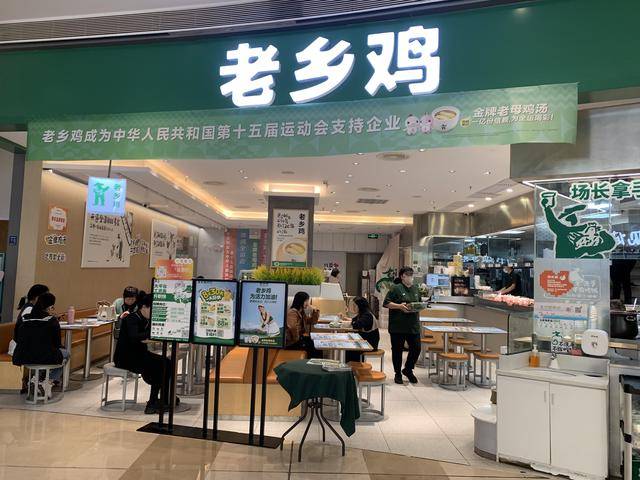
Group 1 - The core message highlights the festive atmosphere in Nanning during the New Year holiday, showcasing the city's commitment to civilized tourism and community engagement [1][2] - Nanning's popular dining spots, such as Nanning Mixc, experienced high foot traffic, with customers demonstrating orderly behavior while waiting for their meals, reflecting a culture of respect and patience [1] - Restaurants prominently displayed messages promoting the "Clean Plate Campaign" and encouraging customers to order appropriately based on their group size, contributing to a reduction in food waste [1] Group 2 - In the historical cultural district of Yongzhou Ancient City, visitors exhibited courteous behavior, such as queuing patiently and being considerate of others while taking photos, enhancing the overall experience [2] - The orderly environment in dining establishments, where patrons waited patiently to place their orders, contributed to a comfortable and pleasant atmosphere for both locals and tourists [2] - The collective small actions of citizens and visitors in maintaining order and caring for the environment created a warm and harmonious ambiance during the holiday season in Nanning [2]
2025年全国餐饮收入6057亿元,同比增长3.2%,餐饮业仍面临“供强需弱”的挑战
Sou Hu Cai Jing· 2026-01-01 21:13
Core Viewpoint - The Chinese catering industry is experiencing a mixed growth scenario, with a notable increase in revenue but facing challenges related to supply and demand dynamics, competition, and market saturation [3][11]. Group 1: Industry Performance - In November 2025, the national catering revenue reached 605.7 billion yuan, marking a year-on-year growth of 3.2%, while the cumulative revenue from January to November was 522.45 billion yuan, up 3.3% year-on-year [1]. - The catering industry is characterized by a "strong supply but weak demand" situation, indicating a shift in competition from product and service advantages to a comprehensive battle involving supply chains, digitalization, and capital strength [3][11]. Group 2: Capitalization Trends - A wave of capital market activity is observed in the Chinese catering industry, with leading brands like Mixue Ice City and others going public in 2025, aiming to leverage capital for rapid expansion and brand building [4]. - The IPO frenzy in the Hong Kong market is particularly appealing for Chinese consumer brands looking to establish a global presence, reflecting both policy alignment and the inherent strengths of these companies [5]. Group 3: Online Growth Channels - Online channels have emerged as a significant growth driver, with a 9.1% increase in national online retail sales from January to November 2025, and a remarkable 14.9% surge in sales of food-related products [6]. - The competition in the online food delivery market has intensified, leading to substantial financial losses for major platforms like Alibaba and Meituan due to aggressive subsidy wars [6][8]. Group 4: Market Dynamics - The catering industry is witnessing a dual trend of rapid chain expansion alongside a wave of closures, with 161,000 closures reported in the first half of 2025, surpassing the 159,900 new openings [10]. - The chain restaurant sector is accelerating, with several brands achieving over 10,000 stores, while the overall chain rate is projected to rise from 19% in 2019 to 23% in 2024 [10]. Group 5: Regional Insights - Shenzhen's catering sector has shown resilience, with a 14.3% increase in catering revenue, reflecting a broader trend of consumer spending recovery [12]. - Companies in Shenzhen are adapting to market pressures by innovating their business models, such as shifting to community-based stores to enhance operational efficiency and reduce costs [14].
跨境游娱购 600余俄罗斯游客饶河迎新年
Xin Lang Cai Jing· 2026-01-01 06:24
Group 1 - The article highlights the arrival of over 600 Russian tourists at the Raohe border, marking the beginning of a cross-border New Year celebration [1] - Russian tourists are engaging in local culture by tasting Chinese cuisine, shopping for various products, and enjoying the festive atmosphere in Raohe [3][5] - The influx of Russian tourists is boosting local industries such as commerce, dining, and accommodation, contributing to the high-quality development of Raohe [6]

江西咖茶文化科技有限公司成立,注册资本200万人民币
Sou Hu Cai Jing· 2025-12-31 16:51
企业名称江西咖茶文化科技有限公司法定代表人徐永注册资本200万人民币国标行业住宿和餐饮业>餐 饮业>正餐服务地址江西省九江市八里湖新区中奥广场三期沿湖商业不分单元1015号门面企业类型有限 责任公司(非自然人投资或控股的法人独资)营业期限2025-12-31至无固定期限登记机关八里湖新区市 场监督管理局 天眼查显示,近日,江西咖茶文化科技有限公司成立,法定代表人为徐永,注册资本200万人民币,由 九江市鸿腾达应用材料研究有限公司全资持股。 序号股东名称持股比例1九江市鸿腾达应用材料研究有限公司100% 经营范围含许可项目:餐饮服务(不产生油烟、异味、废气)(依法须经批准的项目,经相关部门批准 后在许可有效期内方可开展经营活动,具体经营项目和许可期限以相关部门批准文件或许可证件为准) 来源:市场资讯 ...
横琴“一签多行”政策实施一周年成效显著
Zhong Guo Xin Wen Wang· 2025-12-31 13:31
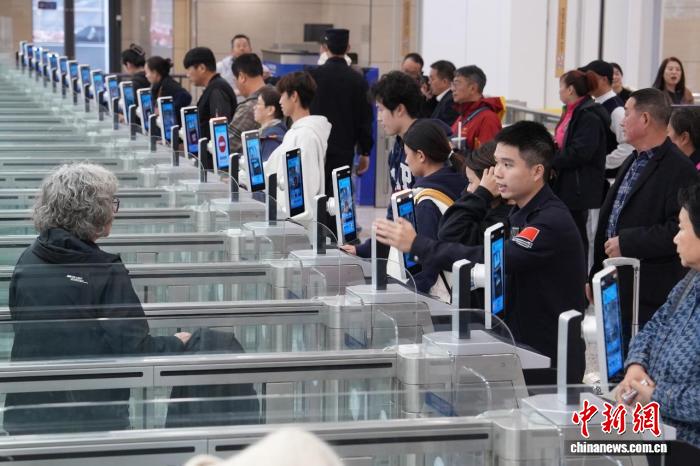
Core Insights - The "One Permit, Multiple Entries" policy in Hengqin has shown significant results one year after its implementation, with over 830,000 people using the permit to cross the border into Macau [1][3]. Group 1: Policy Impact - The policy has activated new momentum for integrated development between Hengqin and Macau, with a notable increase in cross-border travel [1]. - As of September 2025, the resident population in the Hengqin Guangdong-Macau Deep Cooperation Zone reached 46,000, a year-on-year increase of 20.4% [3]. - Approximately 60% of eligible residents have successfully applied for the "One Permit, Multiple Entries" permit, indicating a strong alignment between the policy and public demand for cross-border convenience [3]. Group 2: Usage Statistics - The usage of the "One Permit, Multiple Entries" permit has shown a steady growth trend, with monthly crossings increasing from 32,000 in January to over 120,000 in December, representing a growth of over 275% [3]. - Most permit holders travel to Macau at least once a month, with some residents making weekly trips for various purposes such as tourism, shopping, and visiting friends [3]. Group 3: Future Projections - The Hengqin border inspection station anticipates that daily passenger flow during the New Year holiday in 2026 will exceed 100,000, a year-on-year increase of over 30% [4]. - Peak outbound traffic is expected between 9:00 AM and 2:00 PM, while peak inbound traffic will occur from 4:00 PM to 10:00 PM [4].
2025年12月PMI点评:大幅高于季节性
CMS· 2025-12-31 10:01
Manufacturing Sector - December manufacturing PMI increased to 50.1, up 0.9 from the previous month, indicating a significant recovery above the seasonal level[1] - The production index rose to 51.7, an increase of 1.7, while the new orders index improved to 50.8, up 1.6[1] - The increase in manufacturing PMI is attributed to the implementation of the "two 500 billion" growth stabilization policies and year-end demand release[1] Service Sector - December service PMI recorded at 49.7, a slight increase of 0.2, but still below the neutral level of 50[1] - Consumer-related services remain weak due to seasonal effects, with retail, accommodation, and entertainment sectors below 50[1] - Financial activities continue to be robust, providing essential support for year-end economic performance[1] Construction Sector - December construction PMI rose to 52.8, an increase of 3.2 percentage points, marking a significant recovery after four months below 50[1] - The acceleration in construction activity is linked to increased investment in affordable housing and infrastructure projects[1] - Construction firms maintain optimistic market expectations, with the business expectation index remaining above 57 for two consecutive months[1] Overall Economic Outlook - The overall economic environment is characterized by a year-end push across sectors, supported by policy implementation and capital investment[1] - The manufacturing sector's recovery in December is seen as a corrective rebound after a weaker performance in November[1] - Anticipated consumer demand during the upcoming New Year and Spring Festival is expected to boost service sector performance in early next year[1]
美联储的两大误判(国金宏观钟天)
Xin Lang Cai Jing· 2025-12-29 03:11
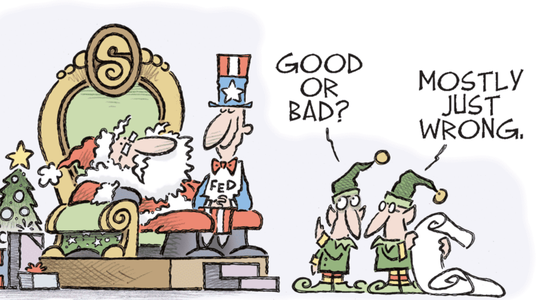
Group 1 - The Federal Reserve's two major misjudgments this year are overestimating the weakening of labor supply and the inflation level transmitted by tariffs, reflecting a lack of clarity regarding the "K-shaped economy" and the impact of AI [3][34] - The economic landscape shows a coexistence of "summer growth" and "winter employment," with increasing pressure on small and medium-sized enterprises and a growing consumption divide among different income levels [3][38] - The Fed's decisions have been influenced by a "data dependency syndrome," where both the Fed and the market rely heavily on upcoming data releases to adjust their views, indicating a diminishing effectiveness of experiential knowledge [3][34] Group 2 - The labor supply issue was first mentioned by Powell on June 18, 2025, attributing the decline to a significant drop in immigration numbers [7][39] - The perception that labor supply began to weaken only after Trump's presidency is a misconception, as the Biden administration had already tightened illegal immigration by May 2024 [9][39] - Despite expectations of a labor supply decrease due to reduced illegal immigration, the unemployment rate has continued to rise, indicating that labor supply has not significantly decreased compared to the previous two years [11][41] Group 3 - The Fed's misjudgment regarding labor supply is attributed to three objective factors: cautious evaluation of immigration policies, the ineffectiveness of Trump's policies in significantly altering labor supply, and a weakening of domestic demand [16][47] - The current decline in illegal immigration numbers makes it difficult to see new marginal changes in labor supply in the short term, suggesting a need to refocus on demand-side stimulus rather than supply-side measures [18][49] Group 4 - The overestimation of tariff-induced inflation is another misjudgment by the Fed, linked to the further weakening of the U.S. real economy [18][49] - As of November, the U.S. has collected an additional $164 billion in tariffs compared to the previous year, but many exemptions and "import rushes" mean that these tariffs are not entirely borne by U.S. importers [18][49] - The weak U.S. economy is reflected in various sectors, with hotel occupancy rates and restaurant profits showing declines, indicating that tariff-sensitive industries are absorbing some of the tariff increases [19][50][54] Group 5 - The burden of tariffs varies significantly across different categories of goods, and this could amplify economic fluctuations in 2026, with potential increases in layoffs if the economy weakens further [25][56] - As of the end of 2025, the focus has shifted from tariff inflation to the overall weakness of the real economy, raising concerns about potential misjudgments by the Fed in 2026 amid new variables like midterm elections and AI industry trends [29][60]
40名公职人员被问责!辽阳重大火灾事故调查报告发布
Xin Lang Cai Jing· 2025-12-28 13:11
Core Viewpoint - The investigation report on the major fire accident at the Sanli Chuniang Restaurant in Liaoyang's Baita District highlights significant failures in safety management and regulatory oversight, leading to a tragic incident that resulted in 22 deaths and 3 injuries [2][4]. Group 1: Accident Details - The fire occurred on April 29, 2025, due to an unattended cigarette butt discarded by a customer, which ignited flammable materials stored improperly [2]. - The restaurant's use of substandard materials, such as ordinary plastic core aluminum-plastic panels, and the improper storage of combustible waste contributed to the rapid spread of the fire [2]. Group 2: Accountability and Response - A total of 40 public officials have been held accountable for their roles in the incident, with a special investigation team established to address the failures in safety management [4]. - The report recommends legal action against the restaurant's operators and suggests that the local government and relevant departments failed to effectively manage safety risks [3][4].

哥伦比亚餐饮协会称对酒类加税将冲击餐饮业
Shang Wu Bu Wang Zhan· 2025-12-25 18:05
Core Viewpoint - The Colombian Restaurant Association warns that proposed tax increases on alcoholic beverages could negatively impact the formal restaurant industry, particularly affecting small and medium-sized enterprises [1] Group 1: Tax Implications - The Ministry of Finance plans to raise the financial transaction tax from 0.4% to 0.5%, which will directly increase operational costs for businesses [1] - The new tax measures are expected to further compress profit margins for companies in the restaurant sector, which is already facing challenges from rising operational costs and a slowdown in consumer spending [1] Group 2: Industry Impact - The association highlights that the tax increases could weaken the competitiveness of the restaurant industry and encourage informal operations [1] - There is a call for the government to carefully consider the significant role of the restaurant industry and assess the long-term sustainability impacts of the tax measures [1]