
乳业

Search documents
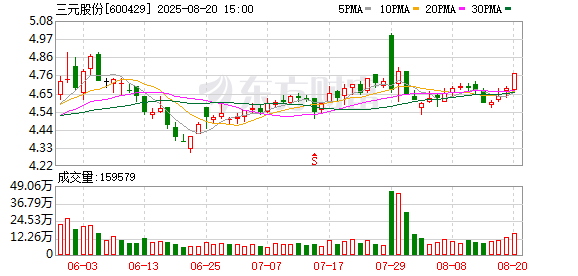
三元股份:公司及全资、控股子公司对控股子公司提供的担保余额折合人民币约7231.52万元
Mei Ri Jing Ji Xin Wen· 2025-08-20 12:21
Core Points - The company and its subsidiaries have provided guarantees totaling approximately RMB 72.31 million, which accounts for 1.46% of the company's audited net assets attributable to shareholders for the year 2024 [1] - In the fiscal year 2024, the revenue composition of Sanyuan Co., Ltd. is 98.01% from the dairy industry and 1.99% from other businesses [2] - Sanyuan Co., Ltd. announced plans for its subsidiary, Ailefaxi New Zealand, to apply for a one-year working capital loan of RMB 50 million from either China Merchants Bank or CITIC Bank, with the loan secured by its factory and land [4] - The board of directors has approved the guarantee for the loan, with Ailefaxi providing a guarantee based on its 70% ownership stake, while a minority shareholder will provide a guarantee based on its 30% stake [4]


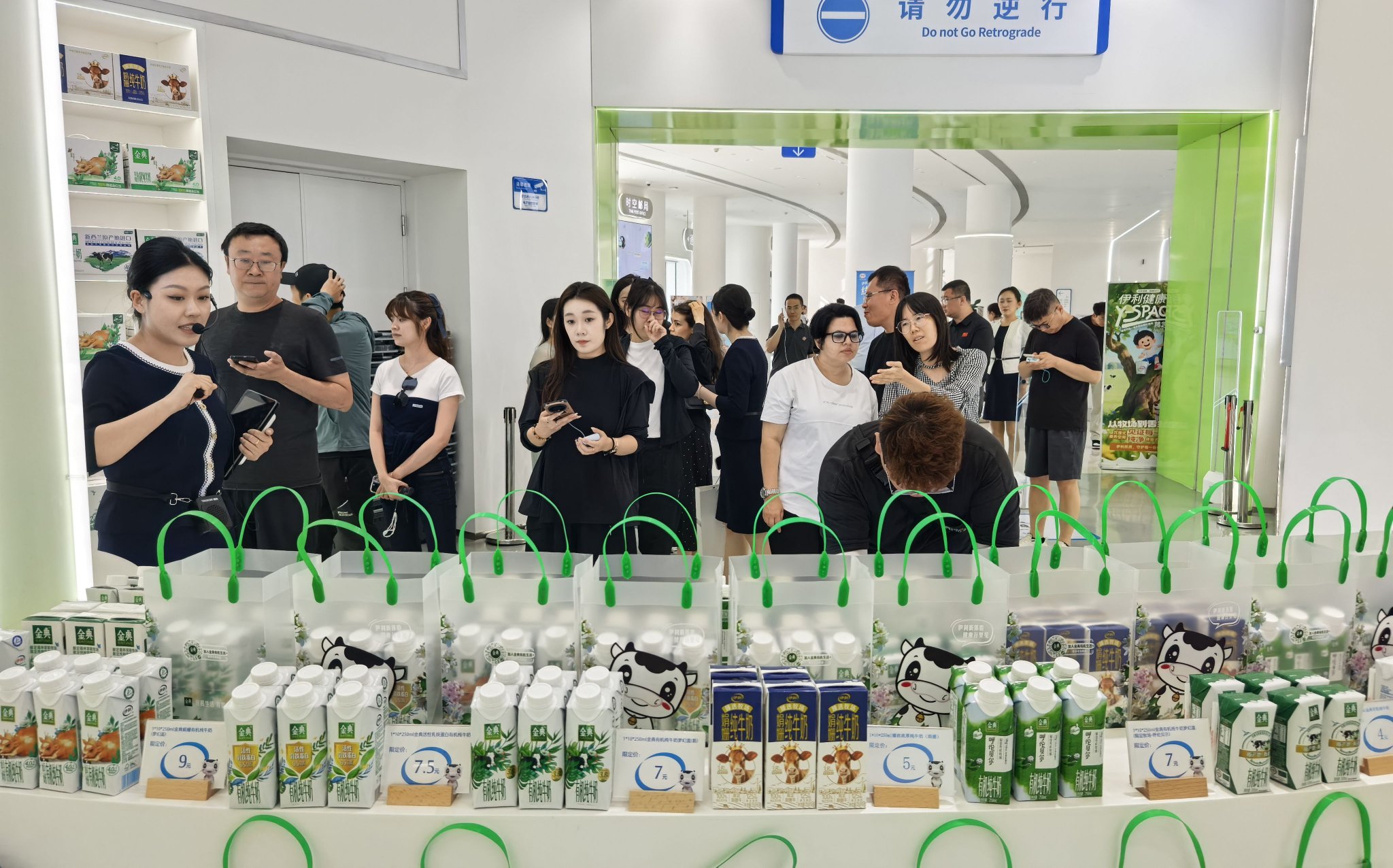
茶咖日报|曾刷爆朋友圈的网红咖啡,无锡唯一门店本月底闭店
Guan Cha Zhe Wang· 2025-08-20 12:05
Group 1: %Arabica Coffee Closure - %Arabica's first store in Wuxi will close by the end of August due to contract expiration, marking the only store of the brand in the city since its opening in 2020 [1] - The brand does not plan to exit the Wuxi market and may appear in a pop-up format while actively seeking a new location [1] - The brand's popularity has declined, with several stores, including those in Shanghai and Xiamen, closing after only a short period of operation [1] Group 2: Yiming Foods Performance - Yiming Foods reported a revenue of 1.401 billion yuan for the first half of 2025, a year-on-year increase of 2.12%, and a net profit of 32.22 million yuan, up 21.73% [2] - The company closed 104 stores in the first half of 2025, reducing the total number of stores from 1,968 to 1,864 [2] - The decline in revenue from both franchise and direct stores indicates a challenging market environment, prompting the company to seek changes [2] Group 3: New Brand Launches by Yiming Foods - Yiming Foods launched two new brands, "Yicheng Coffee" and "Thick Pizza," with plans to expand their presence in the market [3] - The company aims to open 600 Thick Pizza stores and enter 200 locations with Yicheng Coffee, collaborating with 500 external terminals [3] Group 4: Wanglaoji's International Expansion - Wanglaoji has established a production line in Malaysia and signed a global strategic cooperation agreement with Baosteel Packaging for local production in Southeast Asia [4][5] - The company is launching new international cans and plans to expand its market presence in Southeast Asia, North America, Europe, and Oceania [5] - The global plant-based beverage market is experiencing significant growth, with Southeast Asia showing a 25% growth rate in 2023, prompting Wanglaoji to accelerate its international strategy [5] Group 5: Hainan International Coffee Conference - The first Hainan International Coffee Conference will be held in Haikou on August 22-23, 2025, focusing on global coffee industry trends and opportunities [6] - The conference will feature participants from 13 coffee-producing countries and cover various aspects of the coffee industry, including brand value and market opportunities [6] - A product showcase will feature 20 innovative products, highlighting Hainan's unique coffee offerings [6] Group 6: PinkShake's Closure - The tea brand PinkShake has closed all its stores, with reports indicating that the management has gone missing and employees have not been paid for two months [7] - The brand, which focused on healthy and trendy milk drinks, had only opened its first store in June 2022 [7]


虹摹生物A轮融资在即 蒙牛合成生物布局获资本认可
Zheng Quan Ri Bao Wang· 2025-08-20 04:03
Core Insights - China Mengniu Dairy Company Limited is actively advancing the A-round financing for its synthetic biology subsidiary, Hongmo Biotechnology, with a significantly increased valuation compared to the previous round [1][2] - The strategic focus on Human Milk Oligosaccharides (HMO) and innovative product development positions Mengniu favorably in the dairy industry [2] Group 1: Financing and Valuation - Hongmo Biotechnology is undergoing A-round financing, attracting multiple investment institutions for due diligence, indicating strong market interest [1] - The company completed a Pre-A round financing of over 100 million yuan in June 2024, led by CICC Qide Fund, with funds allocated for new product development and commercialization [1][2] Group 2: Strategic Development and Innovation - Mengniu's strategic layout for HMO dates back to 2016, establishing a comprehensive innovation system from basic research to industrialization [2] - Hongmo Biotechnology won the "Best Startup Brand Award" at the 2025 World Dairy Innovation Awards, marking a significant achievement for Chinese functional nutrition technology [2] - Mengniu has successfully integrated HMO technology into various products, including the Ruibaoen series of milk powder and the Future Star HMO children's liquid formula, demonstrating a proactive response to nutritional demands in the new health era [2]

新中有你丨何以“乳”此精彩
Zhong Guo Jing Ji Wang· 2025-08-20 02:16
Group 1 - The core viewpoint of the articles highlights the advancements and innovations in the dairy industry in Inner Mongolia, particularly focusing on the integration of technology and research to enhance dairy production and quality [2][4][7]. - Hohhot is recognized as a major dairy production area in China, leading in various metrics such as dairy cow inventory, milk production, and processing capacity [2]. - The "High-end Dairy Cattle Breeding and Key Technology Innovation" project led by Saikexing aims to break industry technical barriers through the integration of resources from universities and research institutions [4][5]. Group 2 - The National Dairy Technology Innovation Center is set to deepen the integration of smart digital technologies, including AI and digital twins, to establish a flexible pilot platform for future dairy development [7][9]. - Since its establishment in 2022, the center has gathered over 10 academicians and 100 senior industry experts, achieving significant breakthroughs in areas such as sex control technology and food safety risk analysis [9]. - The evolution of Yili Group from a small cooperative to one of the top five dairy companies globally demonstrates the industry's shift towards product innovation and high-value-added offerings [9].

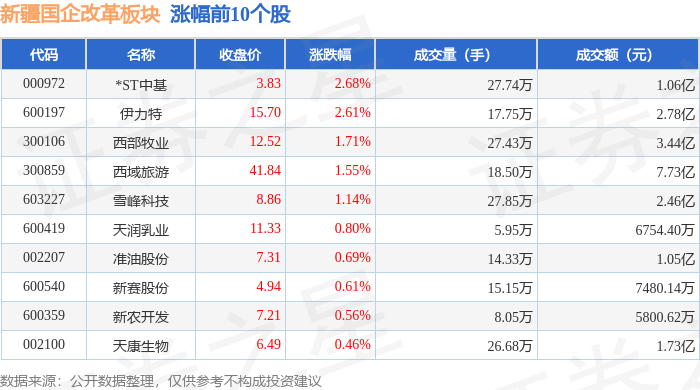
新疆国企改革板块8月19日跌0.1%,新疆交建领跌,主力资金净流出2.54亿元
Sou Hu Cai Jing· 2025-08-19 08:49
Market Overview - On August 19, the Xinjiang state-owned enterprise reform sector fell by 0.1% compared to the previous trading day, with Xinjiang Jiaojian leading the decline [1] - The Shanghai Composite Index closed at 3727.29, down 0.02%, while the Shenzhen Component Index closed at 11821.63, down 0.12% [1] Stock Performance - Notable gainers in the Xinjiang state-owned enterprise reform sector included: - *ST Zhongji (000972): Closed at 3.83, up 2.68% with a trading volume of 277,400 shares and a turnover of 106 million yuan - Yili Special (600197): Closed at 15.70, up 2.61% with a trading volume of 177,500 shares and a turnover of 278 million yuan - Western Animal Husbandry (300106): Closed at 12.52, up 1.71% with a trading volume of 274,300 shares and a turnover of 344 million yuan [1] - Conversely, Xinjiang Jiaojian (002941) led the declines, closing at 15.48, down 2.82% with a trading volume of 691,700 shares and a turnover of 1.086 billion yuan [2] Capital Flow - The Xinjiang state-owned enterprise reform sector experienced a net outflow of 254 million yuan from institutional investors, while retail investors saw a net inflow of 276 million yuan [2] - Key stocks in terms of capital flow included: - Western Tourism (300859): Net outflow of 34.89 million yuan from institutional investors - Yili Special (600197): Net inflow of 33.36 million yuan from institutional investors [3] - Overall, retail investors contributed positively to the capital flow in the sector, contrasting with the outflows from institutional and speculative investors [2][3]

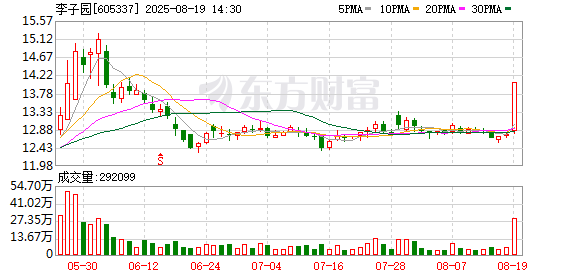
乳业概念涨1.85%,主力资金净流入这些股
Zheng Quan Shi Bao Wang· 2025-08-19 08:34
Group 1 - The dairy sector saw a rise of 1.85% as of the market close on August 19, ranking 6th among concept sectors, with 30 stocks increasing in value [1] - Leading stocks included Li Ziyuan, which hit the daily limit, and others like Huanlejia, Zhuangyuan Pasture, and Beingmate, which rose by 6.39%, 4.97%, and 3.91% respectively [1] - The sector experienced a net inflow of 342 million yuan from main funds, with 18 stocks receiving net inflows, and 9 stocks seeing inflows exceeding 10 million yuan [1] Group 2 - The top net inflow stocks included Beingmate with 125 million yuan, followed by Li Ziyuan, Yili, and Pinwa Foods with net inflows of 110 million yuan, 68.46 million yuan, and 24.45 million yuan respectively [1][2] - Li Ziyuan led in net inflow ratio at 26.34%, followed by Pinwa Foods at 8.98% and Junyao Health at 7.34% [2] - The trading volume for major stocks showed significant turnover rates, with Beingmate at 23.19% and Li Ziyuan at 7.93% [2][3] Group 3 - Stocks with notable declines included Yisheng Shares and Jinjian Rice Industry, which fell by 0.66% and 0.14% respectively [1][4] - Other stocks like Guangming Dairy and Yisheng Shares also reported negative net inflows, with Guangming Dairy at -930.35 thousand yuan and Yisheng Shares at -1,130.53 thousand yuan [4] - The overall market sentiment in the dairy sector appears positive despite some individual stock declines, indicating potential investment opportunities [1][4]


乳业概念震荡走高 李子园涨停
Mei Ri Jing Ji Xin Wen· 2025-08-19 06:29
Group 1 - The dairy industry concept experienced a significant upward trend on August 19, with notable stocks such as Li Ziyuan hitting the daily limit increase [2] - Other companies in the sector, including Zhuangyuan Pasture, Knight Dairy, and Beingmate, also saw their stock prices rise in response to the market movement [2]
莫迪三记重拳打向特朗普!50%关税战背后,印度为何敢掀翻美国牌桌?
Sou Hu Cai Jing· 2025-08-19 05:13
Core Points - The unprecedented trade war between the US and India was ignited by President Trump's executive order raising tariffs on Indian goods to 50%, leading to a significant drop in India's annual export value by 30% [1] - India's economy, particularly its manufacturing sector, faces severe challenges as the "Make in India" initiative struggles, with manufacturing's GDP contribution declining from 16% to 14% over the past decade [5] - India's retaliatory measures, including halting a $3.6 billion arms deal and imposing high tariffs on US bourbon, have impacted US companies and highlighted the interconnectedness of the two economies [3][5] Group 1: Trade Impact - The 50% tariff increase has caused a drastic reduction in India's exports to the US, which account for 18% of its total exports [3] - The textile industry has been particularly hard hit, with orders being diverted to Vietnam, and the pharmaceutical sector facing losses due to increased costs [3] - The trade conflict has led to protests in India, with farmers expressing their discontent over the economic fallout [3] Group 2: Economic Structure - The "Make in India" initiative, aimed at boosting manufacturing, has not achieved its goals, with a decline in manufacturing's share of GDP [5] - The dependency on Chinese components for mobile phone assembly has increased costs for Indian manufacturers, making them less competitive [5] - The energy sector has seen a strategic shift, with India initiating oil transactions in yuan to mitigate the impact of US sanctions [3] Group 3: Geopolitical Dynamics - The trade war has prompted India to strengthen ties with other nations, as evidenced by increased military cooperation with Russia and diplomatic engagements with China [8] - The postponement of US-India tariff negotiations indicates ongoing tensions and uncertainty in trade relations [6] - The geopolitical landscape is shifting, with India seeking to assert itself as a strong player despite external pressures [8]
胖东来下场造奶粉,于东来会不会成为乳业雷军?
Sou Hu Cai Jing· 2025-08-18 23:15
Core Insights - The implementation of the national childcare subsidy policy is causing significant changes in the Chinese milk powder market, with initial reactions including price increase rumors that have sparked public debate [2][3] - Major milk powder brands have denied these price increase claims, asserting that their products have not seen any price hikes [3][5] - The entry of retail giant Pang Donglai into the milk powder market is expected to disrupt the industry dynamics, leveraging its successful self-brand strategy [7][9] Market Dynamics - The national childcare subsidy policy, effective from July 28, 2025, will provide 3,600 yuan annually to families with one to three children, benefiting over 20 million families [2] - Following the announcement, social media saw a surge in posts claiming price increases of 5% to 10% for various milk powder brands, leading to public outcry [3][5] - Investigations revealed that the perceived price increases were largely due to the end of promotional discounts rather than actual price hikes, with some products even decreasing in price post-announcement [5][6] Industry Challenges - The milk powder industry faces a complex pricing structure, with significant price discrepancies between online and offline channels, complicating consumer understanding of true pricing [6][12] - The market is currently experiencing a dual trust crisis, with consumers questioning both the quality of domestic milk powder and the integrity of pricing practices [10][11] Pang Donglai's Strategy - Pang Donglai's announcement to accelerate its milk powder and dairy product business has generated excitement among consumers, indicating a potential shift in market dynamics [7][10] - The company plans to implement a transparent pricing model, aiming to reduce prices significantly compared to existing high-end brands, thereby addressing consumer concerns over affordability [9][10] - Pang Donglai's strategy includes potential collaborations with established dairy companies to leverage their production capabilities while maintaining control over product design and pricing [10][11] Future Trends - The combination of the childcare subsidy, Pang Donglai's entry, and a shift towards service-oriented business models is expected to reshape the milk powder industry towards a more sustainable and consumer-friendly direction [13][14] - Companies are increasingly recognizing the need to move away from price wars and focus on value creation through product innovation and enhanced services [14][15]
瞄准中国奶粉市场份额,a2牛奶公司收购蒙牛雅士利新西兰工厂
Bei Ke Cai Jing· 2025-08-18 15:00
Core Viewpoint - The a2 Milk Company announced the acquisition of the Pokeno factory in New Zealand for NZD 282 million to secure registration opportunities for two new Chinese label formula milk products, aiming for broader market access in China [1][2]. Group 1: Acquisition Details - The acquisition of the Pokeno factory is based on a "debt-free, cash-free" structure, with a planned investment of approximately NZD 100 million to enhance production capacity and create over 100 new jobs [2]. - The Pokeno factory, established in 2015, has experience in producing formula milk and will utilize A2 protein source milk from New Zealand's Waikato region for a2 brand products [9]. Group 2: Strategic Implications - The acquisition and the planned divestment of Mataura Valley Milk are seen as milestones in optimizing the supply chain and providing further growth opportunities for the company [3][8]. - The company aims to obtain regulatory approval in China to register the new products under the a2 brand, potentially expanding its product offerings and market presence [9]. Group 3: Market Context - The Chinese infant formula market has undergone significant changes, with a2 Milk Company shifting focus from cross-border purchases to securing local registrations for its products [5][10]. - The company has seen a steady increase in revenue from the Chinese market, with a reported 13.9% growth in revenue from China and other Asian regions in the 2025 fiscal year [10]. Group 4: Competitive Landscape - The company has been diversifying its supply chain to reduce reliance on Synlait Milk, which has been a key partner in obtaining Chinese registration for its products [6][7]. - The divestment of the Pokeno factory by Mengniu is part of a broader strategy to manage capital expenditures and optimize asset portfolios, indicating a shift in focus towards more efficient operations [1][11].