
智能制造

Search documents
山东威达股价涨5.2%,诺安基金旗下1只基金重仓,持有10.48万股浮盈赚取7.23万元
Xin Lang Cai Jing· 2025-09-26 06:40
Group 1 - Shandong Weida's stock increased by 5.2% to 13.97 CNY per share, with a trading volume of 240 million CNY and a turnover rate of 4.22%, resulting in a total market capitalization of 6.154 billion CNY [1] - The company, established on July 8, 1998, and listed on July 27, 2004, operates in the electric tools, machine tools, and intelligent manufacturing sectors, with main business revenue composition: electric tool accessories 52.00%, other products 26.29%, powder metallurgy parts 6.90%, automation equipment 4.63%, machine tools 3.04%, others 2.86%, new energy vehicle battery swap stations 2.26%, and saw blade products 2.01% [1] Group 2 - Noan Fund holds a significant position in Shandong Weida, with its Noan Hongxin Mixed A Fund (000066) owning 104,800 shares, accounting for 2.9% of the fund's net value, ranking as the tenth largest holding [2] - The Noan Hongxin Mixed A Fund was established on May 3, 2013, with a latest scale of 43.7198 million CNY, achieving a year-to-date return of 54.96%, ranking 929 out of 8171 in its category, and a one-year return of 74%, ranking 1403 out of 8004 [2]

1至8月共建成渝地区双城经济圈重点项目完成投资超3300亿元
Xin Hua Cai Jing· 2025-09-26 06:27
Core Insights - The Sichuan Provincial Development and Reform Commission reported that from January to August this year, 320 key projects in the Chengdu-Chongqing economic circle completed an investment of 332.36 billion yuan, achieving an investment completion rate of 75.29%, exceeding the scheduled progress by 8.62 percentage points [1] Investment Breakdown - Modern infrastructure projects completed an investment of 193.36 billion yuan, with an investment completion rate of 67.88%. Key developments include the completion of the first traction substation for the Chengdu-Chongqing high-speed railway and the opening of the Yuxiang high-speed railway segment [1] - Modern industry, technological innovation, and ecological protection projects completed an investment of 126.66 billion yuan, achieving a completion rate of 90.00%. Notable projects include the completion of the first phase of the Liangjiang Longxing intelligent manufacturing base and the production launch of the 8-inch silicon carbide chip project [1] - Cultural tourism, openness, and public service projects completed an investment of 12.34 billion yuan, with a completion rate of 77.88%. Significant progress includes the completion of the core area of the Chengdu Pujiang Railway Logistics Port [1]
“十四五”以来中国城镇新增就业累计达5921万人
Zhong Guo Xin Wen Wang· 2025-09-26 05:31
Core Points - The employment situation in China during the "14th Five-Year Plan" period has been generally stable, with a cumulative urban new employment of 59.21 million, exceeding the target of 55 million [1][2] - The Ministry of Human Resources and Social Security has spent over 470 billion RMB on employment subsidies and issued 138.9 billion RMB in stability return funds [1] - The average urban survey unemployment rate over the past four years was 5.3%, lower than the expected control target of 5.5% [1] Employment Services - The Ministry has strengthened comprehensive employment services and improved human resource matching efficiency, establishing a five-level service network covering provinces, cities, counties, and rural areas [2] - Nearly 9,000 gig markets have been established to extend service resources to grassroots and rural areas [2] - A total of 72 new occupations have been published during the "14th Five-Year Plan," covering industries such as digital economy, modern services, and intelligent manufacturing [2]
“数字信用标签”来了
Ren Min Ri Bao Hai Wai Ban· 2025-09-26 03:50
Core Viewpoint - The National Market Supervision Administration has issued guidelines to accelerate the digitalization of quality certification, leveraging AI and big data to enhance the credibility of agricultural products, smart products, and digital services [1][2]. Group 1: Goals and Timeline - The guidelines set specific goals in two phases: by 2030, to improve the top-level institutional design for quality certification digitalization and establish digital evaluation rules; by 2035, to fully develop a clear and innovative quality certification digital technology system [2]. Group 2: Focus Industries - The digital certification will initially focus on industries such as industrial internet, smart manufacturing, green low-carbon initiatives, and industrial software, promoting the transition from traditional to smart and green manufacturing [3]. - In agriculture, the guidelines encourage integrating quality certification into smart farms and fisheries, enhancing intelligent perception, precise control, and full-chain traceability management [3]. - The service sector will also be targeted, with a focus on creating a systematic service certification support system for education, healthcare, elderly care, smart cities, digital communities, and fintech [3]. Group 3: Consumer Experience - The ultimate goal of digital quality certification is to make trust transmission more efficient and consumer choices simpler, allowing consumers to scan a QR code to access comprehensive information about a product's supply chain [4]. - This system aims to eliminate concerns about product origins and quality, providing transparency through a single code that reveals all relevant information [4].
特色活动打造“科普盛宴”
Ke Ji Ri Bao· 2025-09-26 01:24
Group 1 - The "National Science Popularization Month" is marked by various engaging activities across the country, showcasing scientific knowledge and innovations to the public [1][2] - The event features interactive exhibits and hands-on experiences, making advanced technologies more accessible and relatable to the audience [2][3] - The activities aim to bridge the gap between scientific concepts and everyday life, enhancing public understanding of science [3][4] Group 2 - The "Marine Science Popularization Caravan" initiative aims to bring marine biology education to inland areas, fostering interest in oceanic life among youth [4][5] - The collaboration between coastal and inland regions enhances the sharing of scientific resources, expanding the reach and impact of science education [5]
上海杨浦:百强企业区级税收总量四年增长109%
Shang Hai Zheng Quan Bao· 2025-09-25 09:58
Core Insights - Yangpu District has made significant progress in economic development and innovation since the start of the 14th Five-Year Plan, focusing on enhancing the quality of life and urban transformation [1] Group 1: Innovation and Economic Development - Yangpu District has activated innovation momentum and strengthened development capabilities through collaboration with universities and research institutions, aiming to establish a leading area for basic research and original innovation [1][2] - The district has built a modern industrial system centered on the digital economy, with key focuses on "Artificial Intelligence+" and "Internet+", leading to the emergence of numerous digital economy enterprises [2] - From 2020 to 2024, the tax revenue from the top 100 enterprises in Yangpu is projected to increase from 3.011 billion to 6.294 billion yuan, representing a growth rate of 109% [3] Group 2: Talent and Ecosystem Development - Yangpu District promotes the free flow and efficient allocation of various factors such as talent, capital, technology, and data, creating a favorable environment for innovation [2] - The district has implemented 734 reform measures to improve the business environment, enhancing its attractiveness for investment and innovation [2] Group 3: Achievements in Science and Technology - Since the beginning of the 14th Five-Year Plan, Yangpu has produced 18 national science and technology awards and over 40% of municipal science and technology awards, showcasing its strong capabilities in scientific innovation [1][2]
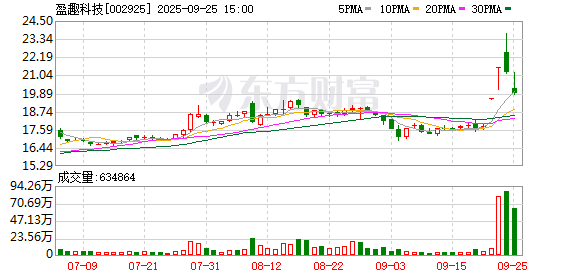
盈趣科技:公司一直十分注重与国内科研院所和重点院校的产学研合作
Zheng Quan Ri Bao· 2025-09-25 08:08
Group 1 - The company emphasizes its commitment to collaboration with domestic research institutions and key universities [2] - Partnerships have been established with several universities, including Tianjin University, Tsinghua University, Zhejiang University, and others [2] - The collaborations focus on areas such as postdoctoral talent cultivation, international exchange, IoT innovation technology, and advanced technologies in industrial internet and smart manufacturing [2]


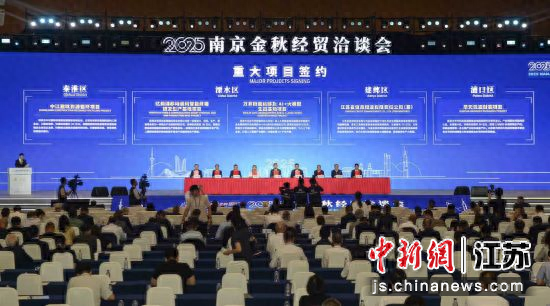
南京金洽会的"链式反应":从一棵梧桐树长成产业森林
Zhong Guo Xin Wen Wang· 2025-09-25 07:34
Core Insights - The 2025 Nanjing Golden Autumn Economic and Trade Fair (referred to as "Golden Fair") resulted in the signing of 59 projects with a total planned investment of 891.87 billion yuan, showcasing a long-term "chain reaction" of industrial growth in Nanjing [1][3]. Group 1: Major Projects and Investments - The signed projects at the Golden Fair are aligned with Nanjing's "4+6" advantageous industries, indicating a strategic focus on key sectors [3]. - Siemens has a historical presence in Nanjing, having established its first digital factory in 2022 and recently unveiling the Siemens Xcelerator Yangtze River Delta Innovation Empowerment Center [3]. - New entrants like Beijing Geling Deep Vision Technology Co., Ltd. are also establishing a presence in Nanjing, attracted by the city's industrial support and talent resources [3]. Group 2: Financial and Digital Transformation - Eight fund projects were signed at the fair, with a total scale of 89.66 billion yuan, focusing on new-generation information technology and biomedicine, reflecting a targeted investment strategy [5]. - The addition of 15 global digital service providers, including BASF's digital center, signifies Nanjing's role as a testing ground for digital innovation [5]. - The prominence of projects in smart manufacturing, artificial intelligence, and biomedicine at the fair highlights Nanjing's forward-looking industrial layout, which facilitates connections between businesses and quality clients [5]. Group 3: Ecosystem and Collaboration - The Golden Fair has evolved over 36 years into a platform that fosters a symbiotic relationship between the city and numerous enterprises, transcending traditional investment dynamics [6]. - The collaborative ecosystem in Nanjing is characterized by a shared vision among businesses and the city, enhancing its attractiveness beyond just policies and market opportunities [5].

利和兴股价跌5.02%,鹏华基金旗下1只基金位居十大流通股东,持有266.62万股浮亏损失378.61万元
Xin Lang Cai Jing· 2025-09-25 07:09
Group 1 - The core point of the news is that Lihua Xing's stock price dropped by 5.02% to 26.86 CNY per share, with a trading volume of 1.024 billion CNY and a turnover rate of 19.69%, resulting in a total market capitalization of 6.278 billion CNY [1] - Lihua Xing, established on January 9, 2006, and listed on June 29, 2021, is primarily engaged in the research, production, and sales of automation and intelligent equipment, with revenue composition as follows: 43.58% from intelligent manufacturing equipment, 31.43% from electronic components, 23.82% from specialized accessories, and 1.16% from other sources [1] Group 2 - Among Lihua Xing's top ten circulating shareholders, Penghua Fund's carbon neutrality theme mixed fund (016530) reduced its holdings by 2.3173 million shares in the second quarter, now holding 2.6662 million shares, which accounts for 1.41% of the circulating shares, resulting in an estimated floating loss of approximately 3.7861 million CNY [2] - The Penghua carbon neutrality theme mixed fund (016530) was established on May 5, 2023, with a latest scale of 2.08 billion CNY, achieving a year-to-date return of 112.81% and ranking 33 out of 8173 in its category, while its one-year return is 224.75%, ranking 10 out of 8003 [2]
构建企业主导的融合型人才培育生态
Xin Hua Ri Bao· 2025-09-25 00:09
Group 1: Core Insights - The integration of technological innovation and industrial innovation is crucial for high-quality regional economic development, as emphasized in the 2025 Government Work Report and by President Xi Jinping [1] - For Jiangsu, seamless integration of the innovation chain and industrial chain is key to advancing intelligent manufacturing and moving up the global industrial chain [1] - The shortage of interdisciplinary talent is a significant challenge in Jiangsu's industrial upgrade, affecting efficiency in smart manufacturing, innovation speed in emerging industries, and equipment utilization in traditional industries [1] Group 2: Challenges in Talent Development - The cultivation of integrated talent faces challenges such as institutional barriers that limit the full potential of enterprises, including overlapping responsibilities in policies and cumbersome approval processes for faculty to engage with businesses [2] - There is a mismatch between educational supply and industrial demand, with higher education institutions lagging in setting up new programs that align with industry upgrades [2] - Jiangsu's talent cultivation efforts need to establish a more mature and efficient closed-loop system between enterprise demand and talent supply [2] Group 3: Advantages of Integrated Talent - Integrated talent serves three core functions: acting as a "converter" for technology commercialization, a "glue" for promoting talent flow between academia and industry, and a "catalyst" for enhancing management and technical integration [3] - Establishing an enterprise-led talent cultivation system is essential to ensure that training aligns closely with market needs and enhances practical experience [3] Group 4: Building an Enterprise-led Ecosystem - To enhance integrated talent cultivation, it is necessary to strengthen the role of enterprises, creating a new ecosystem that forms a "demand-supply" closed loop [4] - Implementing a model where enterprises present challenges, universities solve them, and market validation occurs is crucial for effective talent development [4] - Initiatives such as establishing shared training centers and expanding the coverage of industry professors are recommended to improve training outcomes [4] Group 5: Incentive Systems for Talent Development - An innovative talent incentive system that emphasizes market recognition is proposed, including a four-dimensional evaluation method in key sectors [5] - The system aims to eliminate rigid academic requirements in talent evaluation and focus on industry relevance, providing comprehensive support for integrated talent cultivation [5] - Establishing collaborative innovation frameworks among leading enterprises, supporting small and medium-sized enterprises, and creating shared training resources are essential for overcoming talent development challenges [5][6] Group 6: Practical Experience in Talent Development - Integrated talent is best developed through practical engagement with real industry challenges rather than traditional classroom settings [7] - Jiangsu's enterprise-led talent cultivation ecosystem is positioned to seize opportunities in the new technological revolution and industrial transformation, contributing to national and global supply chain stability [7]