
半导体制造

Search documents
英诺赛科(02577.HK)完成配售合共2070万股新H股
Ge Long Hui· 2025-10-17 09:49
Core Viewpoint - InnoCare Pharma (02577.HK) has successfully completed a placement of 20.7 million new H-shares at a price of HKD 75.58 per share, raising approximately HKD 1.5504 billion, which will enhance the company's financial strength and market competitiveness [1] Group 1 - The placement agreement conditions have been fully met, and the placement was completed on October 17, 2025 [1] - A total of 20.7 million new H-shares were issued, representing about 3.94% of the total issued H-shares and approximately 2.26% of the total issued shares after the placement [1] - The net proceeds from the placement are approximately HKD 1.5504 billion, which will further strengthen the group's financial position and support its long-term sustainable development [1]
小摩维持意法半导体(STM.US)“中性”评级:短期业绩无虞 2026年汽车阴霾难散
Zhi Tong Cai Jing· 2025-10-17 08:35
Core Viewpoint - Morgan Stanley maintains a "neutral" rating on STMicroelectronics (STM.US) with a target price of €26.40, citing uncertainty in growth expectations for fiscal year 2026 primarily due to the ongoing weakness in the automotive sector [1][2]. Group 1: Q3 Performance Expectations - STMicroelectronics is expected to report Q3 revenue of $3.17 billion, reflecting a quarter-over-quarter increase of 14.6% but a year-over-year decline of approximately 2.5%, aligning with market consensus and company guidance [1]. - The Analog, Power and Discrete (APMS) segment is projected to decline by about 9.9% year-over-year, while the Microcontrollers, Digital Integrated Circuits, and RF Products (MDRF) segment is expected to grow by approximately 9.4% year-over-year [1]. - Q3 gross margin is anticipated to be 33.5%, consistent with consensus expectations, while EBIT is projected at $202 million with an EBIT margin of 6.4% [1]. Group 2: Q4 Outlook - Market consensus expects Q4 revenue for STMicroelectronics to be $3.35 billion, representing a quarter-over-quarter increase of 5.6% and a year-over-year increase of 1.0% [2]. - Gross profit for Q4 is projected at $1.17 billion, with a quarter-over-quarter increase of 10.3% but a year-over-year decline of 6.4%, leading to an expected gross margin of 35.0% [2]. - The company anticipates growth in automotive and industrial segments in Q4, supported by improved capacity utilization and production efficiency [2]. Group 3: Long-term Concerns - Morgan Stanley expresses caution regarding STMicroelectronics' performance in 2026, highlighting persistent issues in the automotive market and high inventory levels, which may hinder capacity utilization unless a significant economic recovery occurs [3]. - The current market consensus predicts a 12.5% year-over-year sales growth for STMicroelectronics in 2026, along with a gross margin increase of 273 basis points, but Morgan Stanley considers these projections overly optimistic [2][3].

作妖自毙!车企警告:缺少中资芯片伤害美国
Guan Cha Zhe Wang· 2025-10-17 07:59
Core Viewpoint - The article discusses the escalating tensions between China and the Netherlands regarding the semiconductor industry, particularly focusing on the actions taken against Nexperia, a subsidiary of Chinese semiconductor company Wingtech Technology, which could disrupt the automotive supply chain in the U.S. [1][3][8] Group 1: Impact on Automotive Industry - Major automotive manufacturers in the U.S. have warned that the chip supply disruption due to the China-Netherlands dispute could significantly affect production [1][2] - The American Automotive Innovation Alliance (AAI) has urged for a swift resolution to the issue, indicating that U.S. automotive factories may face impacts as early as next month [2] Group 2: Actions by the Dutch Government - The Dutch government has frozen the assets and intellectual property of Nexperia for one year, citing national security concerns, which has been criticized as excessive interference based on geopolitical bias [3][4][8] - Nexperia's management has faced internal challenges, with foreign executives requesting court investigations and the appointment of a foreign director with decisive voting rights [3][7] Group 3: U.S. Involvement and Regulatory Actions - The U.S. government has been involved in expanding its entity list, which includes companies like Nexperia, and has pressured the Dutch government to take action against the company [7][8] - The timing of the Dutch government's actions closely followed new U.S. export control regulations, raising suspicions of coordinated efforts between the two countries [5][7] Group 4: Reactions from China - The Chinese semiconductor industry association has expressed strong support for Wingtech Technology, condemning the Dutch government's actions as discriminatory [8][9] - Chinese officials have reiterated their opposition to the broad application of national security concepts and emphasized the need for fair market practices [9]


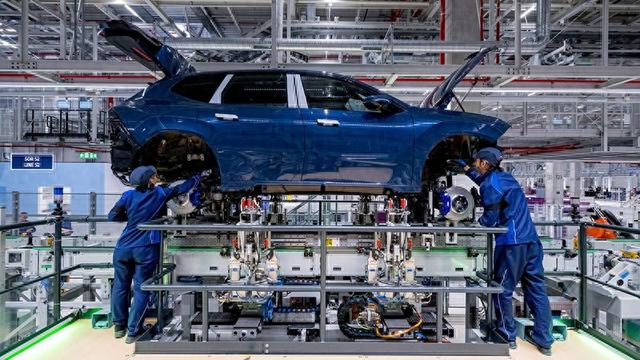
第一创业晨会纪要-20251017
First Capital Securities· 2025-10-17 05:26
Group 1: Semiconductor Industry - TSMC reported Q3 revenue of $33.1 billion, slightly above the previous guidance of $31.8-33 billion, with a year-on-year growth of 40.8% [4] - Wafer shipments, equivalent to 12-inch wafers, reached 4.085 million units, a year-on-year increase of 22.4%, with a gross margin of 59.5%, exceeding the guidance of 55.5%-57.5% [4] - The company expects Q4 revenue to be between $32.2-33.4 billion, indicating a year-on-year growth of 22%, with a gross margin guidance of 59%-61% [4] - The strong demand for AI is driving growth in the semiconductor industry, indicating a sustained high level of industry activity [4] Group 2: Optical Communication Industry - Shijia Photon reported a significant revenue increase of 114.0% year-on-year for the first nine months of 2025, totaling 1.56 billion yuan, with a net profit of 300 million yuan, up 727.7% [4] - The growth is primarily driven by the rapid increase in optical communication demand due to AI [4] - The outlook for the optical communication industry remains positive, supported by TSMC's Q4 performance and the push for a 1ms latency metropolitan optical network in China [4] Group 3: New Energy Vehicle Industry - In September, exports of new energy passenger vehicles reached 217,000 units, a year-on-year increase of 100%, while commercial vehicle exports grew by 35.2% [7] - The total export volume of new energy vehicles for the first nine months was 1.758 million units, a year-on-year increase of 89.4%, with an expected total of around 2.5 million units for the year [7] - The increase in exports is attributed to rising tariffs and non-tariff barriers in the EU, prompting companies to shift focus to regions like the Middle East and Latin America [7] - A new plan aims to build 28 million charging facilities by 2027, supporting over 80 million electric vehicles, indicating sustained growth in the charging infrastructure sector [7] Group 4: Energy Storage Industry - Nanjing Power Storage reported a revenue of 5.32 billion yuan for the first nine months, a year-on-year increase of 17.72%, with a net profit of 1.433 billion yuan, up 37.13% [8] - The growth is mainly driven by increased hydropower generation and the operational mechanisms of pumped storage [8] - The profitability is expected to be influenced by the performance of new energy storage projects and the operational mechanisms in the fourth quarter [8] Group 5: Gaming Industry - Gibit announced a significant increase in revenue for the first three quarters of 2025, with net profit expected to be between 1.032 billion to 1.223 billion yuan, a year-on-year growth of 57% to 86% [10] - The third quarter alone is projected to show a net profit increase of 177% to 286%, driven by new game launches such as "Staff Sword Legend" and "Question Sword Longevity" [11] - The successful performance of these games in both domestic and overseas markets has significantly contributed to the company's revenue growth [11] - The company is also expanding its global presence with upcoming game launches planned for various regions [11]


押中长江存储让股价“尝甜头” 养元饮品再投10亿元加码私募
Shang Hai Zheng Quan Bao· 2025-10-17 01:55
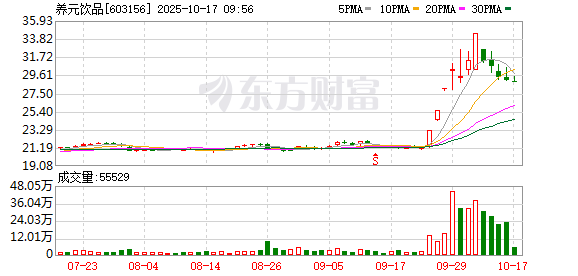
Core Viewpoint - Yangyuan Beverage is increasing its investment in its private equity fund, Wuhu Wenming Qianhong Investment Management Partnership, by 1 billion yuan, raising the fund's total size from 3 billion yuan to 4 billion yuan, with Yangyuan's contribution reaching 3.997 billion yuan, accounting for 99.925% of the fund [2] Investment Performance - The most successful investment of the fund is in Yangtze Memory Technologies Co., Ltd., where it invested 1.6 billion yuan for a 0.99% stake, valuing the company at 161.6 billion yuan, making it the highest-valued new unicorn in the semiconductor industry [4] - As of June 2025, this investment represents 12.52% of Yangyuan's total assets, although the fund has not yet achieved profitability, reporting a net loss of 9.03 million yuan in 2024 and a continued loss of 288,900 yuan in the first half of 2025 [4] Stock Performance - Following the investment in Yangtze Memory, Yangyuan's stock price surged significantly, rising from 21.14 yuan per share to a peak of 34.42 yuan, marking a 63% increase over two weeks [5] - As of October 16, the stock closed at 29.02 yuan, bringing the company's total market capitalization close to 37 billion yuan [5] Business Challenges - Despite the investment successes, Yangyuan's core business is facing challenges, with revenue declining from a peak of 9.117 billion yuan to 6.058 billion yuan in 2024, primarily relying on its walnut milk product for 88.70% of revenue [7] - The company's diversification strategy has not yielded significant results, with new products contributing only slightly over 10% of total revenue [7] Financial Health - Yangyuan's cash flow remains strong, with a cash balance of 1.459 billion yuan as of the first half of 2025, reflecting a year-on-year increase of 58.96%, and it plans to distribute 630 million yuan in dividends, representing 84.7% of net profit [8] Strategic Outlook - The company's reliance on cross-industry investments highlights a broader trend among traditional fast-moving consumer goods companies seeking growth avenues as their core businesses plateau [9] - Balancing the pursuit of investment opportunities with strengthening the core business will be a long-term challenge for Yangyuan, as sustainable growth relies on product innovation and brand rejuvenation [9]

安世被禁,欧洲车厂预警
半导体行业观察· 2025-10-17 01:12
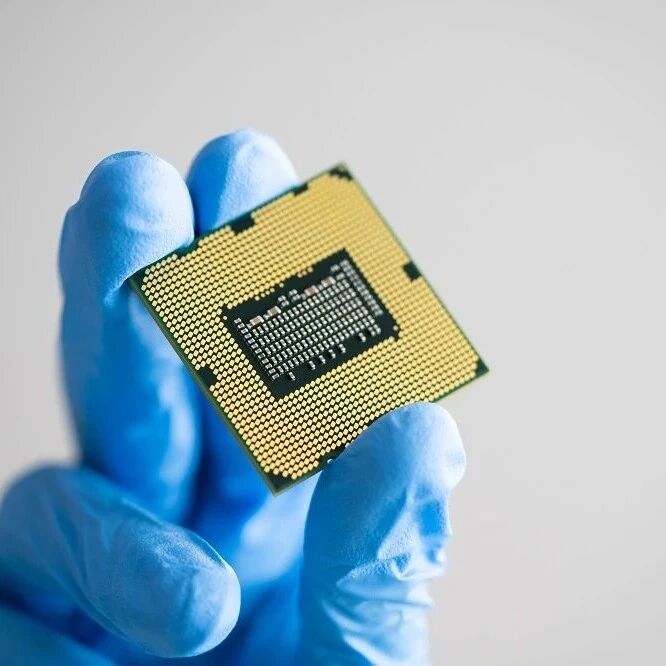
公众号记得加星标⭐️,第一时间看推送不会错过。 来 源: 内容来自半导体行业观察综合 。 一家鲜为人知的芯片供应商威胁要引发连锁反应,可能导致全球汽车生产线停止。 上周,汽车制造商及其供应商收到芯片制造商 Nexperia 的通知,由于中国和荷兰政府之间的争端, 该公司无法再保证芯片的交付。 代表通用汽车、丰田、大众、现代和几乎所有其他主要汽车制造商的汽车创新联盟警告称,芯片供应 中断可能会迅速扰乱美国汽车生产。 该组织首席执行官约翰·博泽拉表示:"如果汽车芯片的出货不能迅速恢复,美国和许多其他国家的汽 车生产将会受到干扰,并对其他行业产生溢出效应。" 与此同时,据知情人士透露,欧洲汽车制造商正在召开紧急会议,以应对可能在一个月内发生的潜在 停产。 德国电气和数字行业协会 ZVEI 主席沃尔夫冈·韦伯表示:"如果政治层面的局势不能迅速得到解决, 全球大部分汽车生产和许多其他工业部门都有可能陷入停滞。" 中国"坚决反对"荷兰接管 荷兰政府援引冷战时期的一项法律,以国家安全为由接管了这家总部位于荷兰的电子元件公司。 这一不同寻常的决定在半导体这一地缘政治敏感领域引发了质疑。 中国商务部发言人何咏前周四回应称:"中 ...
启东经济开发区超八成项目深度嵌入上海产业链、创新链跳出市域“延链” 跨过长江“壮群”
Xin Hua Ri Bao· 2025-10-16 23:17
Core Insights - The signing of five projects in the semiconductor sector at the Qidong Economic Development Zone marks a significant step in enhancing the region's industrial capabilities and supporting Shanghai's large semiconductor enterprises [1][3] Group 1: Industrial Development - The Qidong Economic Development Zone is positioned as a key area for the Yangtze River Delta's industrial innovation and green development, with a focus on semiconductor and biopharmaceutical industries [2][4] - The zone aims to integrate closely with Shanghai's industrial and innovation chains, leveraging its proximity to the city to attract high-quality projects [1][2] Group 2: Strategic Initiatives - Qidong has established the Qidong Life and Health Technology Park, which has already attracted over 60 pharmaceutical companies, with a high occupancy rate in its initial phases [3][4] - The park is designed to facilitate rapid commercialization of innovative drugs, providing tailored facilities for companies to quickly set up operations [3][4] Group 3: Investment and Growth Targets - The Qidong Economic Development Zone aims to achieve a high-tech industry scale of 30 billion yuan and over 130 high-tech enterprises by 2027 [5] - In the first half of the year, high-tech industry investment in the park accounted for 63.8% of total investments, significantly higher than the city average [4]
台积电:美股周四早盘股价跌0.7%,Q3业绩超预期
Xin Lang Cai Jing· 2025-10-16 14:07
美股周四早盘,台湾积体电路制造公司(TSM)股价下跌0.7%,此前该公司报告称,第三季度按公认会计 准则计算的每股稀释后收益(EPADR)为2.92美元,超出预期0.32美元,营收为331亿美元,同比增长 40.8%。 来源:视频滚动新闻 ...
通富微电控股股东华达集团拟减持不超1%股份
Zhi Tong Cai Jing· 2025-10-16 13:45
通富微电(002156)(002156.SZ)公告,公司控股股东南通华达微电子集团股份有限公司(简称"华达集 团")计划在2025年11月10日至2026年2月7日以集中竞价方式减持持有的公司股份不超过1517.6万股(即不 超过公司股份总数的1%)。 ...

通富微电:控股股东华达集团计划减持不超1%公司股份
Xin Lang Cai Jing· 2025-10-16 13:02
通富微电10月16日公告,持股19.79%的控股股东南通华达微电子集团股份有限公司计划在本减持计划 公告发布之日起15个交易日后的3个月内,以集中竞价方式减持持有的公司股份不超过1517.6万股,即 不超过公司股份总数的1%。减持主要是出于自身经营管理需要,股份来源为首次公开发行前股份。减 持价格将按照减持实施时的市场价格确定。 ...