
国家安全泛化

Search documents
冯九飞:达尔文港争议带来深刻警示
Xin Lang Cai Jing· 2026-02-10 23:13
Core Viewpoint - The Darwin Port, once a commercial lease, is now a focal point of geopolitical tension between Australia and China, influenced by the AUKUS alliance and shifting national security priorities [1][2]. Group 1: Historical Context - The lease of Darwin Port to China's Landbridge Group in 2015 for AUD 506 million was seen as a mutually beneficial commercial agreement during a period of strong Australia-China trade relations [2]. - The port's role has shifted from a trade hub to a military outpost, with U.S. military presence increasing in the region, reflecting a broader trend of prioritizing national security over traditional business practices [2]. Group 2: Recent Developments - The Australian government has announced intentions to reclaim control of Darwin Port, which has recently turned a profit under Landbridge's management, raising concerns about the integrity of Australia's market [3]. - The timing of Australia's decision to reclaim the port has been criticized as opportunistic, especially since it coincides with the port's profitability, suggesting a departure from fair business practices [3]. Group 3: Legal and Economic Implications - The potential for international arbitration exists if Australia proceeds with the reclamation, which could lead to significant financial liabilities based on projected future earnings from the port [4]. - The controversy surrounding Darwin Port may hinder the recovery of Australia-China trade relations, as it signals a risk to international investors regarding the stability of contracts in critical infrastructure [4]. Group 4: Broader Impact on International Relations - The Darwin Port case exemplifies the dangers of politicizing business agreements, potentially damaging Australia's reputation for a transparent legal market and affecting future foreign investments [4]. - The situation highlights the need for companies to develop robust political risk mitigation strategies in overseas investments, including third-party arbitration and diversified ownership structures [4].
中方敦促美方停止错误做法
第一财经· 2025-12-23 14:26
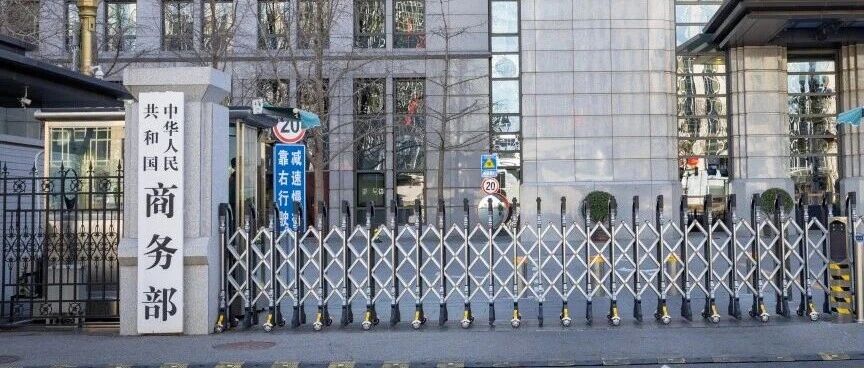
Core Viewpoint - The Chinese government strongly opposes the U.S. decision to include all foreign-produced drone systems and their key components in the "Covered List" of untrusted suppliers, arguing that this action distorts the market and represents unilateral bullying by the U.S. government [1]. Group 1 - The U.S. Federal Communications Commission (FCC) has announced the inclusion of all foreign-produced drone systems and key components in the "untrusted suppliers list" citing national security concerns [1]. - The Chinese government criticizes the U.S. for disregarding normal business transactions and trade relations between Chinese and American companies, as well as the strong voices from the industry [1]. - China urges the U.S. to stop its erroneous actions and immediately revoke the related measures, warning that it will take necessary actions to protect the legitimate rights and interests of Chinese companies if the U.S. persists [1].

商务部:坚决反对美针对无人机领域增列“不可信供应商清单”
Xin Hua Wang· 2025-12-23 14:08
Core Viewpoint - The Chinese government strongly opposes the U.S. decision to list all foreign-produced drone systems and their key components as "untrusted suppliers" under the guise of national security [1] Group 1: U.S. Actions - The U.S. has been expanding the concept of national security to undermine normal business transactions and trade between Chinese and American companies [1] - This approach has been met with strong opposition from the industry in both countries, indicating a significant backlash against U.S. policies [1] Group 2: Chinese Response - The Chinese government urges the U.S. to cease its erroneous actions and immediately revoke the related measures [1] - Should the U.S. persist in its unilateral actions, China will take necessary measures to firmly protect the legitimate rights and interests of Chinese enterprises [1]
正听 | FCC泛化国家安全威胁中美用户正常通信
Ke Ji Ri Bao· 2025-12-11 23:57
Core Viewpoint - The FCC has mandated Chinese telecom operators to resolve certification issues within 14 days, threatening to cut them off from the U.S. telecom network if they fail to comply, which could severely disrupt communication between the U.S. and China [1] Group 1: FCC Actions and Implications - The FCC has increasingly used national security as a justification for actions against Chinese telecom companies, including denying operational applications and revoking licenses from 2019 to 2022 [2] - In 2023, the FCC has intensified its scrutiny of Chinese telecom firms, establishing a National Security Committee and launching investigations into multiple Chinese tech companies [2] - The potential removal of Chinese operators from the RMD could lead to a complete blockage of voice calls from China to the U.S., further escalating the decoupling of telecom networks between the two countries [1][2] Group 2: Broader Context and Consequences - The actions taken by the FCC are seen as part of a broader strategy to contain and restrict Chinese technology, which could lead to increased operational costs for U.S. telecom networks and inconvenience for American consumers [3] - The FCC's restrictions on Chinese products and services are likely to disrupt international supply chains and increase costs, ultimately affecting U.S. consumers [3] - The ongoing tensions and regulatory actions could hinder the necessary interconnectivity of global telecom networks, which is essential in the context of a rapidly evolving digital economy [3]
中经评论:泛化“国家安全”撑不起欧洲经济
Jing Ji Ri Bao· 2025-10-28 00:08
Group 1 - The EU's recent actions to broaden the concept of "national security" through various policy tools are unlikely to boost the current weak economic situation and may exacerbate internal imbalances and weaken innovation vitality [1][2] - The establishment of a "trade bottleneck" database by the EU aims to counteract "economic coercion" faced by member states, reflecting the impact of U.S. tariffs and unilateral protectionist actions on global supply chains [1][2] - The Netherlands' recent takeover of the Chinese company Nexperia highlights the EU's anxiety and its struggle in key technology sectors, leading to supply chain disruptions, particularly in the automotive chip sector [1][2] Group 2 - The EU's push for "absolute security" is a response to multiple crises, including the Eurozone crisis, refugee influx, Brexit, the pandemic, and the Ukraine crisis, which have hindered economic growth and competitiveness in digital and green energy sectors [2][3] - Internal divisions among EU member states regarding "de-risking" measures and industrial subsidies are causing inefficiencies and rising costs, further complicating the EU's economic security strategy [2][3] Group 3 - The key issue facing the EU economy is a decline in competitiveness rather than security shortcomings, with insufficient investment in research and innovation leading to commercialization challenges and a sluggish digital transformation [3][4] - The EU's focus on "security-first" resource allocation may undermine long-term growth potential by diverting funds from education and research, which are crucial for sustained competitiveness [3][4] Group 4 - To genuinely maintain security, the EU should return to multilateralism and cooperation, precisely defining security boundaries and reforming the single market to encourage innovation without distorting competition through subsidies [4] - The EU must seek diversified cooperation and avoid the pitfalls of a zero-sum mindset, balancing security and efficiency to navigate out of its current economic challenges [4]
专访彼得森研究所杰弗里·肖特:美国关税大棒之下WTO何去何从
2 1 Shi Ji Jing Ji Bao Dao· 2025-10-27 11:34
Core Insights - The core motivation behind the U.S. government's tariff policies is domestic political considerations rather than economic efficiency [1][4][5] - Tariff policies are leading to increased costs for imported components, which suppresses competition and raises domestic production costs, ultimately weakening market demand [1][4] - The uncertainty surrounding these policies is causing stagnation in investments in key industries such as automotive and steel [6][10] Trade Policy and Economic Impact - The U.S. government aims to attract foreign investment into manufacturing and agriculture to bolster Trump's political base [1][6] - Current tariffs are expected to be passed on to consumers, which will squeeze corporate profits and reduce investment willingness, creating a vicious cycle [1][4] - The concept of "national security" has been overly extended to include ordinary commercial activities, undermining international trade rules and providing a convenient excuse for protectionist policies [2][5] Multilateral Trade System Challenges - The absence of the U.S. would make a multilateral trade system like the WTO ineffective, necessitating a combination of multilateral, regional, and bilateral trade frameworks [2][8] - The WTO's credibility is being challenged as the U.S. employs unilateral trade policies, making it less reliable as a mechanism for market openness [7][8] - Short-term strategies should focus on controlling damage to the multilateral system while allowing for the development of new effective policies [8][9] Regional Trade Agreements and Supply Chains - Regional agreements like CPTPP and RCEP are becoming new testing grounds for trade rules, with the potential to influence future multilateral frameworks [3][10] - The trend of regionalization in supply chains is particularly evident in the Asia-Pacific region, with mechanisms like RCEP reshaping supply chain dynamics [3][10] - Developing countries need to implement more productive domestic economic policies to attract international investment and avoid resource misallocation [11]
中企计划投资海外风电基地引英方舆论担忧?外交部回应
Guan Cha Zhe Wang· 2025-10-23 12:10
Core Viewpoint - The Chinese government supports its enterprises in international cooperation based on mutual benefit and market principles, while emphasizing the importance of investment security [1]. Group 1: Investment Plans - Mingyang Smart Energy plans to invest £1.5 billion (approximately ¥142.10 billion) to establish the UK's first integrated wind turbine manufacturing base in Scotland, focusing on offshore and floating wind turbine production [4]. - The project will be executed in three phases: the first phase involves building advanced wind turbine nacelle and blade manufacturing facilities, with the first production expected by the end of 2028; the second phase will expand production lines for floating wind technology; the third phase will further extend to the production of control systems, electronic devices, and other key components [4]. Group 2: Political and Regulatory Environment - There are concerns in the UK regarding national security related to the investment, with the UK government having previously blocked or conditioned over ten investments from Chinese companies since the National Security and Investment Act was enacted in 2022 [1]. - The Chinese government opposes the politicization of economic issues and the broadening of national security concepts, warning that such trends could negatively impact Chinese companies' assessments of the UK investment environment [1]. Group 3: Risks and Challenges - Mingyang Smart Energy acknowledges uncertainties regarding the investment, including the possibility of not obtaining necessary approvals, and highlights potential challenges in overseas market competition, talent acquisition, and internal management [5].

欧盟打来电话,苦求两个小时,稀土出口这件事,中国还是没松口
Sou Hu Cai Jing· 2025-10-23 06:08
Group 1 - The EU has expressed concerns over China's rare earth export controls, but China remains firm on its strategic position [1][3] - A video meeting lasting approximately 120 minutes took place between China's Commerce Minister Wang Wentao and EU economic official Šefčovič, discussing key trade issues including rare earth export controls and the EU's anti-subsidy investigation into Chinese electric vehicles [3] - China will implement new export restrictions on five rare earth elements starting November 8, 2025, with stricter approvals required for rare earth and permanent magnet exports from December 1, 2025 [5] Group 2 - Despite the restrictions, China continues to export rare earths to the EU, with the export volume to the EU being three times that to the US [5] - The acquisition of the Dutch company Nexperia by China's Wingtech Technology has led to tensions, with the Netherlands taking control of the company under US pressure due to national security concerns [6] - The EU's increasing trade protectionism and its broad interpretation of "national security" are causing friction, particularly in the context of the Nexperia issue [8] Group 3 - The relationship between China and the EU is facing challenges due to rising trade protectionism and accusations of unfair competition, particularly regarding electric vehicles [8] - The EU's linkage of economic issues with geopolitical concerns, such as the Ukraine war and China's relationship with Russia, is exacerbating trade tensions [8][10] - The underlying issues stem from the EU's "double standards" and external pressures, which could shift the relationship from cooperation to confrontation, impacting global economic stability [10]

作妖自毙!车企警告:缺少中资芯片伤害美国
Guan Cha Zhe Wang· 2025-10-17 07:59
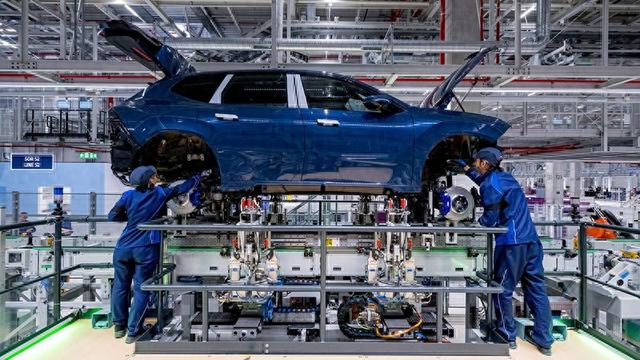
Core Viewpoint - The article discusses the escalating tensions between China and the Netherlands regarding the semiconductor industry, particularly focusing on the actions taken against Nexperia, a subsidiary of Chinese semiconductor company Wingtech Technology, which could disrupt the automotive supply chain in the U.S. [1][3][8] Group 1: Impact on Automotive Industry - Major automotive manufacturers in the U.S. have warned that the chip supply disruption due to the China-Netherlands dispute could significantly affect production [1][2] - The American Automotive Innovation Alliance (AAI) has urged for a swift resolution to the issue, indicating that U.S. automotive factories may face impacts as early as next month [2] Group 2: Actions by the Dutch Government - The Dutch government has frozen the assets and intellectual property of Nexperia for one year, citing national security concerns, which has been criticized as excessive interference based on geopolitical bias [3][4][8] - Nexperia's management has faced internal challenges, with foreign executives requesting court investigations and the appointment of a foreign director with decisive voting rights [3][7] Group 3: U.S. Involvement and Regulatory Actions - The U.S. government has been involved in expanding its entity list, which includes companies like Nexperia, and has pressured the Dutch government to take action against the company [7][8] - The timing of the Dutch government's actions closely followed new U.S. export control regulations, raising suspicions of coordinated efforts between the two countries [5][7] Group 4: Reactions from China - The Chinese semiconductor industry association has expressed strong support for Wingtech Technology, condemning the Dutch government's actions as discriminatory [8][9] - Chinese officials have reiterated their opposition to the broad application of national security concepts and emphasized the need for fair market practices [9]

荷兰将会对闻泰科技旗下安世半导体采取限制措施,中方回应
Huan Qiu Wang· 2025-10-13 07:46
Core Viewpoint - The Chinese government expresses strong opposition to discriminatory practices against specific national enterprises, emphasizing the importance of adhering to market principles and avoiding the politicization of economic issues [3]. Group 1: Government Response - The Chinese Foreign Ministry spokesperson Lin Jian suggested that inquiries regarding the Dutch government's restrictions on Nexperia, a subsidiary of Wingtech Technology, should be directed to the relevant Chinese authorities [3]. - Lin Jian reiterated that China firmly opposes the broadening of the "national security" concept and the implementation of discriminatory measures against specific companies from certain countries [3]. Group 2: Market Principles - The spokesperson highlighted that relevant countries should adhere to market principles and refrain from politicizing trade and economic matters [3]. - The Chinese government remains resolute in safeguarding its legitimate rights and interests in the face of such actions [3].
