
核电

Search documents
促民间投资发展“13条”发布!多位权威专家解读
Zheng Quan Shi Bao· 2025-11-11 05:09
Core Viewpoint - The State Council has issued measures to stimulate private investment, addressing key issues such as market access, fair competition, and service optimization, which will significantly impact the development of the private economy [1] Group 1: Market Access and Investment Opportunities - The measures aim to eliminate hidden barriers to private investment, encouraging participation in key sectors like railways and nuclear power, with a minimum private capital stake of over 10% for eligible projects [2] - The initiative opens up opportunities for private capital in urban infrastructure projects, reflecting a strong commitment from the state to support private enterprises in this area [2][3] Group 2: Focus on Investment and Financing - The measures emphasize addressing the core concerns of private investment, particularly in the areas of investment and financing, by enhancing support for eligible projects through central budget investments and new policy financial tools [4] - It includes provisions for improving access to financing for private enterprises, such as implementing inclusive credit policies and supporting the issuance of real estate investment trusts (REITs) [4][5][6] Group 3: Economic Impact and Development - Private capital contributes to half of fixed asset investments and over 80% of urban employment, indicating that stimulating private investment is crucial for economic growth and industrial transformation [7] - The measures are expected to enhance the role of private investment in driving economic growth and supporting structural reforms, thereby promoting sustainable economic development [7]
鼓励支持民资参与铁路、核电等项目,13条新举措扩大民资准入
第一财经· 2025-11-11 05:07
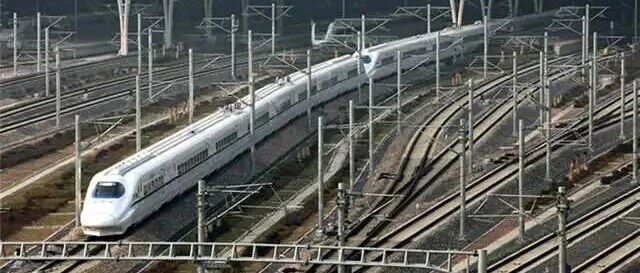
Core Viewpoint - The article discusses the recent policy measures introduced by the State Council to stimulate private investment in China, highlighting 13 targeted initiatives aimed at enhancing the participation of private capital in various sectors [3][4]. Group 1: Expansion of Access - The measures encourage private capital participation in key sectors such as railways and nuclear power, which have traditionally been dominated by state-owned enterprises, by setting minimum shareholding requirements [4][5]. - Private capital is now allowed to enter previously restricted areas, transforming from a "bystander" to an "active participant" in sectors with stable returns and manageable risks [5]. Group 2: Addressing Bottlenecks - The measures ensure the protection of private enterprises' legal rights in areas like electricity grid access and oil and gas pipeline usage [6]. - Support is provided for private enterprises to establish significant pilot platforms and to receive market-oriented trial services from state-owned enterprises and research institutions [6]. Group 3: Strengthening Support - Increased support for qualifying private investment projects through central budget investments and new policy financial tools is emphasized [6]. - The National Development and Reform Commission (NDRC) has reported that 500 billion yuan in new policy financial tools has been fully allocated, supporting over 2,300 projects with a total investment of approximately 7 trillion yuan [6]. Group 4: Current Investment Trends - Recent statistics indicate a decline in private fixed asset investment, with a 3.1% year-on-year decrease in the first three quarters of the year [8]. - Despite challenges, the NDRC maintains that the long-term conditions for private investment growth remain favorable, supported by ongoing improvements in the investment environment [8][9]. Group 5: Future Outlook - The NDRC plans to implement practical measures to further stimulate private investment, emphasizing the importance of regular communication with enterprises to address their concerns [9].

13条新举措进一步促进民间投资发展
Chang Jiang Shang Bao· 2025-11-11 04:41
Core Viewpoint - The Chinese government has introduced significant policy measures to stimulate private investment, focusing on market access, fair competition, resource support, and optimized financing services for private enterprises [1][2][3] Group 1: Market Access and Fair Competition - The new measures encourage private capital participation in key sectors such as railways and nuclear power, specifying shareholding requirements for projects requiring national approval [1] - Local governments are urged to allow private capital in new urban infrastructure projects with profit potential [1] - The government aims to eliminate unreasonable restrictions on service industry access for private enterprises and revise the list of projects for public-private partnerships to support private participation [1] Group 2: Support for Digital Transformation and Innovation - The measures promote the establishment of major pilot platforms by private enterprises and encourage collaboration with state-owned enterprises and research institutions for market-oriented pilot services [2] - There is a focus on supporting leading private enterprises in building comprehensive digital empowerment platforms to facilitate the digital transformation of small and medium-sized enterprises [2] Group 3: Financial Support and Investment - The central government plans to allocate 500 billion yuan in new policy financial tools by 2025, targeting technology innovation, consumption upgrades, and foreign trade stability, while also supporting traditional infrastructure [3] - For engineering procurement projects exceeding 4 million yuan, at least 40% of the budget must be reserved for procurement from small and medium-sized enterprises [3] - Financial institutions are encouraged to set annual service goals for private enterprises and meet their reasonable credit needs [2][3]
中广核陆丰核电公司增资至121.65亿元,增幅约9%
Xin Lang Cai Jing· 2025-11-11 04:05
Core Insights - The registered capital of China General Nuclear Power Corporation's subsidiary, Longfeng Nuclear Power Co., Ltd., increased from 11.195 billion RMB to 12.165 billion RMB, representing an approximate 9% growth [1] Company Overview - Longfeng Nuclear Power Co., Ltd. was established in February 2008 and is fully owned by China General Nuclear Power Corporation (stock code: 003816) [1] - The company's business scope includes investment, construction, and operation of nuclear power plants and related facilities, production and sale of electricity and related products, as well as sales of spare parts for nuclear power units and related technical services and consulting [1]

十月行业动态报告-Q3火电业绩增长,核电、绿电业绩承压 | 投研报告
Zhong Guo Neng Yuan Wang· 2025-11-11 03:35
Core Insights - The report indicates that the performance of nuclear and wind power sectors is under pressure, while thermal power shows growth [1][2] Group 1: Financial Performance - In the first three quarters of 2025, the net profits for SW thermal, hydro, nuclear, wind, and solar power sectors were 69.69 billion, 51.32 billion, 16.58 billion, 12.91 billion, and 2.57 billion yuan respectively, with year-on-year growth rates of 16.8%, 3.3%, -12.4%, -16.4%, and 86.0% [1][2] - In Q3 2025, the net profits for SW thermal, hydro, nuclear, wind, and solar power sectors were 36.01 billion, 28.29 billion, 8.45 billion, 2.45 billion, and 1.35 billion yuan respectively, with year-on-year growth rates of 34.3%, -1.6%, -16.5%, -35.6%, and 169.5% [1][2] Group 2: Electricity Generation - In September, the total industrial electricity generation was 826.2 billion kWh, showing a year-on-year increase of 1.5%, with a slight deceleration compared to August [3] - The generation from thermal, hydro, nuclear, wind, and solar power in September changed by -5.4%, 31.9%, 1.6%, -7.6%, and 21.1% year-on-year, with respective changes in growth rates compared to August of -7.1 percentage points, +43.0 percentage points, -5.9 percentage points, -27.8 percentage points, and +5.2 percentage points [3] Group 3: Electricity Consumption - In September, the total electricity consumption was 888.6 billion kWh, with a year-on-year growth of 4.5%, showing a slowdown compared to August [4] - The electricity consumption for primary, secondary, tertiary industries, and residential use was 12.9 billion, 570.5 billion, 176.5 billion, and 128.7 billion kWh respectively, with year-on-year changes of 7.3%, 5.7%, 6.3%, and -2.6% [4] Group 4: Investment Strategy - The report suggests that the demand for green electricity is expected to be catalyzed by energy consumption targets for the 14th Five-Year Plan, and the establishment of a sustainable pricing mechanism for new energy will clarify future revenue expectations [5] - For thermal power, coal production has declined year-on-year from July to September, and the market price for coal has rebounded, indicating a potential opportunity for investment [5][6] - The report highlights the long-term value of hydropower and nuclear power during a declining interest rate cycle, with specific stock recommendations for leading companies in these sectors [6]
“十四五”时期我国核电总体规模跃居世界第一
Ren Min Ri Bao Hai Wai Ban· 2025-11-11 03:31
Core Viewpoint - Nuclear power is a high-quality and efficient clean energy source, with China prioritizing nuclear safety and adopting advanced technologies and strict standards for its development [1][3]. Group 1: Development and Achievements - During the 14th Five-Year Plan period, China has successfully launched several landmark nuclear power projects, including the domestically developed third-generation nuclear power technologies "Hualong One" and "Guohe One," contributing significantly to energy security and low-carbon transition [1][2]. - The "Hualong One" technology has achieved over 1,000 days of continuous safe operation at the Fuqing Nuclear Power Plant Unit 5, delivering more than 37 billion kilowatt-hours of clean electricity [2]. - The domestic equipment localization rate for "Hualong One" has exceeded 88%, with over 700 patents and 120 software copyrights obtained [2]. Group 2: Technical Innovations - "Hualong One" is based on over 30 years of Chinese nuclear research and development, featuring advanced pressurized water reactor technology with complete independent intellectual property rights [3]. - The design incorporates the highest international safety standards, including a seismic resistance requirement of 0.3g, allowing it to withstand earthquakes of magnitude 9 or higher [3]. - The equipment localization rate for "Hualong One" has reached over 95%, with key components designed and manufactured domestically [4]. Group 3: Industry Growth and Capacity - During the 14th Five-Year Plan, China has approved the construction of 46 new nuclear power units, adding 54.5 million kilowatts of capacity, with operational capacity and annual electricity generation both increasing by approximately 30% [6]. - As of now, China has 59 operational nuclear power units with a total capacity of 62.48 million kilowatts, and 53 units under construction with a capacity of 62.93 million kilowatts, maintaining the world's largest nuclear power scale [6]. Group 4: Safety and Environmental Impact - China's operational nuclear power units have accumulated over 600 reactor years of safe and stable operation, achieving the highest score in the World Association of Nuclear Operators (WANO) comprehensive index for nine consecutive years [10]. - In 2024, nuclear power generation in China is expected to reach 446.9 billion kilowatt-hours, accounting for 4.5% of the national total, equivalent to a reduction of approximately 370 million tons of carbon dioxide emissions [12].
锡装股份:已与国内核聚变领域权威科研院所签署开发框架协议,开发聚变应用大型低温泵产品
Zheng Quan Shi Bao Wang· 2025-11-11 03:26
Core Viewpoint - The company emphasizes the importance of controlled nuclear fusion as a significant development direction in the nuclear power sector and is actively integrating its existing technological, market, and management resources to expand its nuclear power business, including controlled nuclear fusion [1] Group 1: Company Initiatives - The company is increasing its research and development investment in the field of nuclear fusion [1] - A framework agreement for joint development has been signed with authoritative research institutions in the domestic nuclear fusion field to collaboratively develop large low-temperature pump products, which are essential equipment for controlled nuclear fusion [1]
自主核电点亮千家万户
Huan Qiu Wang· 2025-11-11 02:38
Core Viewpoint - Nuclear power is recognized as a high-quality and efficient clean energy source, with China prioritizing nuclear safety as a lifeline for its development, employing advanced technology and strict standards [1] Summary by Sections Nuclear Power Development in China - During the 14th Five-Year Plan, China has successfully launched several landmark projects, including the domestically developed third-generation nuclear power technologies "Hualong One" and "Guohe One," contributing significantly to energy security and low-carbon transition [1][11] - China's nuclear power capacity has become the largest in the world, with 59 operational nuclear reactors and a total installed capacity of 62.48 million kilowatts [11][18] Hualong One Technology - "Hualong One" is based on over 30 years of Chinese nuclear research and development, designed to meet the highest international safety standards, and has achieved over 88% localization in its first unit [8][9] - The technology has demonstrated significant safety enhancements, including a seismic resistance standard of 0.3g, allowing it to withstand earthquakes of magnitude 9 or higher [9] - The equipment localization rate for "Hualong One" has reached over 95%, showcasing China's industrial capabilities in manufacturing key components [9] Achievements and Innovations - The first unit of "Hualong One" has operated safely for over 1,000 days, generating over 37 billion kilowatt-hours of clean electricity, and has established international cooperation with over 20 countries [8][11] - The "Linglong One" project represents another significant achievement, being the world's first modular small reactor to pass international safety reviews, emphasizing China's innovative capabilities in nuclear technology [13] Safety and Environmental Impact - China's operational nuclear reactors have accumulated over 600 reactor years of safe operation, consistently ranking first in global safety performance according to the World Association of Nuclear Operators (WANO) [14] - In 2024, nuclear power generation is expected to account for 4.5% of China's total electricity output, equivalent to a reduction of approximately 370 million tons of CO2 emissions [17] Investment and Future Prospects - The 14th Five-Year Plan has seen the approval of 46 new nuclear units, with an additional installed capacity of 54.5 million kilowatts, indicating a robust growth trajectory for the nuclear sector [18] - Major nuclear equipment manufacturers in China have significantly enhanced their research and manufacturing capabilities, contributing to a comprehensive nuclear supply chain [11][18]
干货满满,促进民间投资13条解读来了
21世纪经济报道· 2025-11-11 02:02
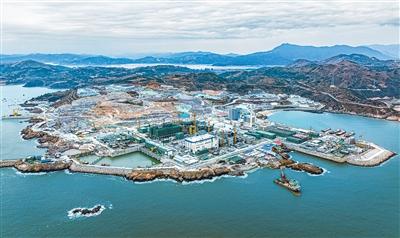
Core Viewpoint - The article discusses the release of the "Several Measures to Further Promote the Development of Private Investment," which includes 13 key support measures aimed at expanding market access, promoting fair competition, strengthening resource support, and optimizing investment and financing services for private enterprises [1][5]. Group 1: Expansion of Market Access - The measures aim to broaden the investment scope for private capital, including support for private enterprises to invest in major projects such as railways and nuclear power, as well as new urban infrastructure projects and emerging sectors like low-altitude economy and commercial aerospace [5][6]. - Special feasibility studies are required for private capital participation in projects needing national approval, ensuring that private investment can be effectively integrated into traditionally state-dominated sectors [6][7]. Group 2: Removal of Hidden Barriers - The measures focus on eliminating unreasonable entry restrictions for service industry operators and prohibiting the imposition of additional conditions on private enterprises in bidding processes [8][9]. - There is a commitment to protect the legal rights of private enterprises in network infrastructure operations, ensuring fair competition and reducing transaction costs for private firms [8][9]. Group 3: Increased Policy Support - A series of initiatives are outlined to support private enterprises, including leading national major technology research tasks, increasing government procurement support for small and medium-sized enterprises (SMEs), and facilitating the construction of major pilot platforms [11][12]. - The measures specify that for engineering procurement projects exceeding 4 million yuan, at least 40% of the budget should be reserved for SMEs, with encouragement for local governments to increase this proportion [12][13]. - The government plans to allocate 500 billion yuan in new policy financial tools to support important industry projects, with a significant portion directed towards private investment [13].

政策红利就位!“破壁垒、降门槛”民间投资机会以来 | 解读梳理↓
Yang Shi Wang· 2025-11-11 01:56
Core Viewpoint - The State Council has issued measures to further promote private investment, focusing on breaking barriers and lowering thresholds for private capital entry into various sectors [5] Group 1: Policy Measures - The document outlines 13 policy measures aimed at addressing the pain points of private investment [1] - The government has opened up sectors that were previously difficult for private enterprises to enter, such as railways, nuclear power, hydropower, and oil and gas pipelines, allowing private capital to hold at least 10% in qualifying projects [8] Group 2: Opportunities for Small and Medium Enterprises (SMEs) - For SMEs, the government procurement policy reserves a portion of projects for them, mandating that at least 40% of the budget for engineering procurement projects over 4 million yuan must be allocated to SMEs [11] - This allows smaller companies to compete for government contracts without having to compete directly with larger enterprises [11] Group 3: Investment in Emerging Technologies - The measures also encourage investment in emerging technology sectors, such as drone logistics and commercial space, with optimized entry policies for satellite communication and launch approvals [14]
