债券

Search documents
刺激计划震动市场,汇市股市同步承压,内外因素加剧“抛售日本”潮
Huan Qiu Shi Bao· 2025-11-20 22:49
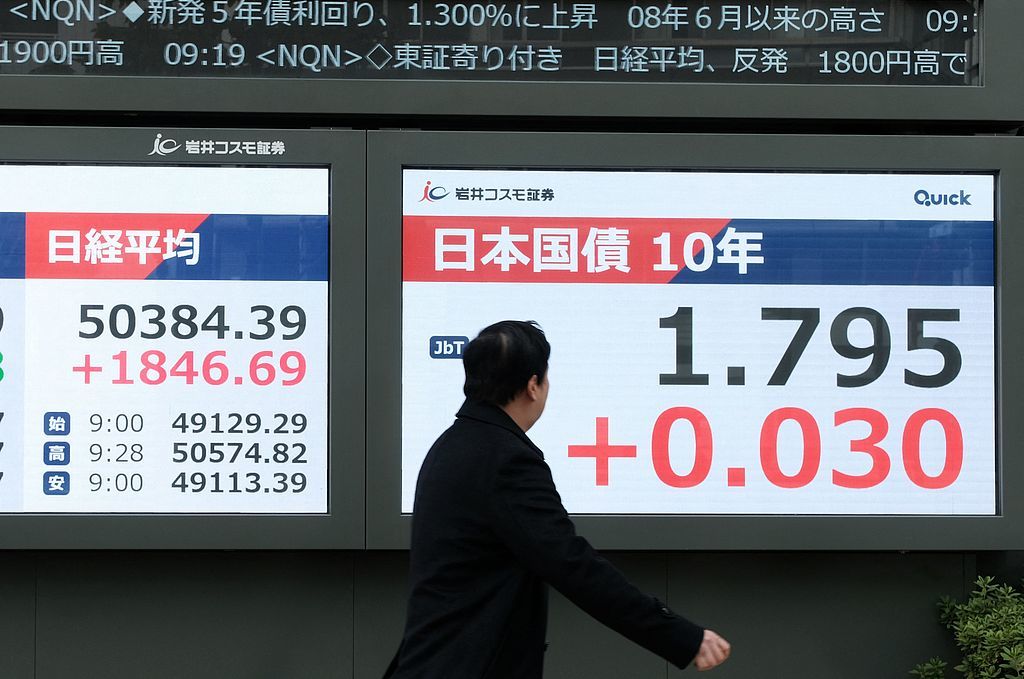
Core Viewpoint - Japan's bond market is facing significant turmoil as the government prepares a large-scale economic stimulus plan, raising concerns about fiscal health and leading to a sell-off in government bonds [1][3][6] Group 1: Bond Market Dynamics - The yield on Japan's 10-year government bonds has risen to 1.8%, the highest level since 2008, indicating a significant sell-off in the bond market [1][3] - The 40-year bond yield reached a historical peak of 3.695%, while the 20-year bond yield hit 2.815%, the highest since 1999 [1] - The anticipated issuance of long-term bonds to finance the stimulus plan is seen as a primary driver for the rising yields [3][6] Group 2: Economic Stimulus Plan - The Japanese government is finalizing a stimulus plan exceeding 20 trillion yen (approximately 135 billion USD) to boost the economy [1] - Reports suggest that the supplementary budget could be at least 25 trillion yen (approximately 168 billion USD), raising concerns about the sustainability of Japan's fiscal position [3][6] Group 3: Market Reactions - The Japanese yen has depreciated against the US dollar, falling below 157 yen per dollar, reflecting market anxiety [3] - The Nikkei 225 index has experienced significant declines, erasing most gains since the new Prime Minister's election [3][4] Group 4: Broader Economic Concerns - Japan's GDP contracted by an annualized rate of 1.8% in the third quarter, indicating ongoing economic challenges [4] - Investor sentiment has been further dampened by the cancellation of the primary fiscal balance target and proposed changes to corporate governance rules [5] Group 5: Future Outlook - Analysts warn that the upcoming announcement of the fiscal stimulus plan could trigger further sell-offs in Japanese assets, highlighting the fragility of the current market [6] - Concerns are growing that Japan may face a scenario similar to the UK under Liz Truss, with simultaneous declines in the stock market, bond market, and currency [6]

你抛美债,我抛中债?境外纷纷减持中国债,大量资金流向美国?
Sou Hu Cai Jing· 2025-11-20 22:41
Core Insights - The trend of foreign investors reducing their holdings in Chinese bonds while increasing their investments in U.S. Treasuries is noteworthy and reflects underlying economic factors [1][3][10] Group 1: Data Analysis - As of October 2025, foreign institutions held approximately 3.2 trillion yuan in Chinese bonds, a decrease of about 11.1% from 3.6 trillion yuan in the same period of 2024 [1] - In contrast, foreign investors net increased their holdings of U.S. Treasuries by approximately 280 billion dollars in the first three quarters of 2025, with a significant portion coming from Asia [1][3] Group 2: Economic Factors - The divergence in interest rate policies between China and the U.S. is a primary factor influencing this trend, with U.S. 10-year Treasury yields around 4.2% compared to China's 2.8%, creating a yield spread of 1.4 percentage points [3] - Currency fluctuations also play a critical role, as the Chinese yuan has depreciated by about 3.5% against the dollar since the beginning of 2025, impacting the total returns for foreign investors [3][10] Group 3: Investor Behavior - The reduction in Chinese bond holdings is primarily driven by hedge funds and short-term investment funds, which are more sensitive to yield changes [4] - Approximately 60% of the foreign investors reducing their Chinese bond holdings are private investment institutions, while 40% are official institutions, indicating that market-driven factors are predominant [4] Group 4: Market Fundamentals - The fundamentals of the Chinese bond market remain robust, with stable economic growth, sound fiscal conditions, and low default risk supporting the attractiveness of Chinese bonds [5][10] - The ongoing improvement of market access mechanisms, such as Bond Connect and QFII, is expected to enhance the investment environment for foreign investors [6][7] Group 5: Long-term Outlook - Historical trends suggest that the current adjustments may be temporary fluctuations within a longer-term upward trajectory of foreign participation in the Chinese bond market [4][10] - The internationalization of the yuan and its increasing use in global trade may enhance the demand for Chinese assets in the future [9] Group 6: Market Dynamics - The competition and cooperation between the Chinese and U.S. bond markets are likely to persist, fostering improvements in both markets [8] - The stability and predictability of regulatory policies are crucial for maintaining investor confidence in the Chinese bond market [8][10]
上周外国央行持有美国国债减少78.79亿美元
Mei Ri Jing Ji Xin Wen· 2025-11-20 22:00
每经AI快讯,上周外国央行持有美国国债减少78.79亿美元,前值减少238.05亿美元。 ...
时报观察 主权债券屡受热捧 中国资产“圈粉”全球
Zheng Quan Shi Bao· 2025-11-20 18:26
Group 1 - The Ministry of Finance successfully issued €4 billion in sovereign bonds in Luxembourg, attracting over 1,000 institutional investors with a subscription rate of 25 times, setting a record for China's euro-denominated sovereign bond issuance [1] - Two weeks prior, a $4 billion sovereign bond issuance also saw strong market demand with a subscription rate of nearly 30 times, indicating unprecedented global investment demand for Chinese sovereign bonds [1] - The distribution of international investors shows a significant presence of long-term investors such as central banks and sovereign wealth funds, with over 60% of allocations going to regions outside Asia, reflecting confidence in the safety and sustainability of Chinese assets [1] Group 2 - In 2023, China has significantly expanded its overseas sovereign bond issuance, surpassing the total amount issued in the previous year, supported by a favorable global financing environment due to central bank interest rate cuts [1] - The increasing overseas bond issuance is also driven by the rising financing needs of Chinese enterprises expanding internationally, providing a pricing benchmark for their offshore financing and helping to reduce costs and uncertainties [1] - The inflow of foreign capital into Chinese assets is also evident domestically, with the State Administration of Foreign Exchange reporting a record $31 billion in securities investment settlement in October, indicating a positive outlook for China's stock and foreign exchange markets [2]
10年期法债收益率涨约3个基点
Sou Hu Cai Jing· 2025-11-20 18:06
Core Viewpoint - The article discusses the recent movements in European government bond yields, highlighting increases in various countries' long-term and short-term bond yields, indicating a trend of rising interest rates in the region [1] Group 1: France - The yield on France's 10-year government bonds rose by 2.8 basis points to 3.489% [1] - The yield reached a daily high of 3.507% before retracting some gains [1] - The 2-year and 30-year French bond yields increased by 0.6 basis points and 4.0 basis points, respectively [1] Group 2: Italy - Italy's 10-year government bond yield increased by 2.0 basis points, reaching 3.473% [1] Group 3: Spain - Spain's 10-year government bond yield rose by 1.6 basis points to 3.225% [1] Group 4: Greece - Greece's 10-year government bond yield increased by 1.5 basis points, reaching 3.343% [1]
香港发行百亿数字绿债
Zhong Guo Jing Ying Bao· 2025-11-20 15:21
Core Insights - The green bond market has significant growth potential, as evidenced by the Hong Kong SAR government's successful issuance of its third batch of digital green bonds totaling HKD 10 billion, setting a record for the largest digital bond issuance globally [1] - This issuance includes four currency types: Hong Kong Dollar, Renminbi, US Dollar, and Euro, with maturities ranging from 2 to 5 years, providing diverse investment options for various regional and investor types [1] - The offering received over HKD 130 billion in subscriptions, indicating an oversubscription of approximately 12 times, highlighting strong investor interest [1] - This issuance follows two successful digital green bond issuances in 2023 and 2024, marking another significant breakthrough in the Hong Kong SAR government's efforts to promote bond tokenization [1] - The experience gained from pioneering digital green bonds in Hong Kong is expected to guide the bond market's resources towards green bonds, potentially injecting new momentum into the credit bond market with future innovative products [1]
半年净融资逼近1.5万亿,政策驱动下科创债市场呈现三大结构性特征
Xin Lang Cai Jing· 2025-11-20 13:05
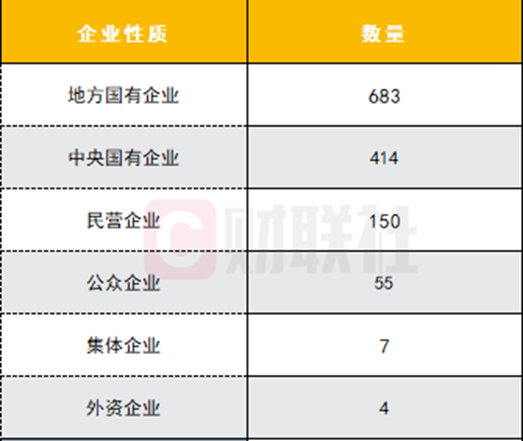
智通财经梳理发现,当前发行利率较高的品种集中于民营企业和地方国有企业,其中发行利率高于4%的分别有4家和3 家,民企深圳市东阳光实业发展有限公司以5.65%的发行利率居首,而发行利率较高的地方国有企业,则集中在安阳 钢铁集团有限责任公司、陕西建工集团股份有限公司等产业主体。若从市场整体来看,科创债平均票面利率仍低于同 期一般信用债,政策红利带来的利率优惠已初步显现,Wind数据显示,近半数(670只)科创债发行利率低于2%,民 企中利率分化现象较为凸显,剔除可交换债,民企发行利率最低为比亚迪股份有限公司的1.47%。 图:科创债主体发行利率分布 | 发行利率 企业性质 | 2%以下 | 2%-3% | 3%-4% | 4%以上 | | --- | --- | --- | --- | --- | | 地方国有企业 | 311 | 340 | 19 | 3 | | 中央国有企业 | 247 | 157 | 1 | | | 民营企业 | 73 | 53 | 10 | র্ব | | 公众企业 | 36 | 15 | 1 | | | 集体企业 | 1 | ব | 2 | | | 外资企业 | 2 | 1 | 1 | ...
资金面有所缓和,债市整体走弱
Dong Fang Jin Cheng· 2025-11-20 11:36
1. Report Summary - On November 19, the funding situation eased, with major repo rates declining; the bond market weakened overall; the convertible bond market rebounded, with most convertible bond issues rising; yields on U.S. Treasuries across various tenors generally increased, and the yields on 10-year government bonds of major European economies showed divergent trends [1][2] 2. Bond Market News 2.1 Domestic News - The Ministry of Finance issued 4 billion euros of sovereign bonds in Luxembourg on November 18, with a subscription total exceeding 100 billion euros. The 4-year and 7-year bonds were issued at rates of 2.401% and 2.702% respectively, and all bonds will be listed on the Hong Kong Stock Exchange and the Luxembourg Stock Exchange [5] - The Ministry of Finance advanced the budget for part of the central government's urban affordable housing project subsidies for 2026 on November 19 to support related work [6] - The Bond Connect's October 2025 report showed that northbound trading volume reached 572.3 billion yuan, and northbound swap trading reached 410.4 billion yuan [6][7] 2.2 International News - The Fed's meeting minutes on November 19 revealed significant differences among policymakers regarding a December rate cut, with many believing it may not be appropriate [8] 2.3 Commodities - On November 19, WTI December crude oil futures fell $1.30, or 2.14%, to $59.44 per barrel; COMEX gold futures rose 0.36% to $4081.10 per ounce; NYMEX natural gas prices rose 4.44% to $4.564 per ounce [9] 3. Funding Situation 3.1 Open Market Operations - On November 19, the central bank conducted 310.5 billion yuan of 7-day reverse repurchase operations at a fixed rate, resulting in a net injection of 115 billion yuan after 195.5 billion yuan of reverse repos matured [11] 3.2 Funding Rates - On November 19, as the impact of tax payments diminished, the funding situation eased, and major repo rates declined. DR001 dropped 10.64bp to 1.422%, and DR007 fell 1.08bp to 1.513% [12] 4. Bond Market Dynamics 4.1 Interest Rate Bonds - **Spot Bond Yields**: On November 19, the bond market weakened due to the rise of heavyweight sectors in the stock market. The yield on the 10-year Treasury bond active issue 250016 rose 0.20bp to 1.8070%, and the yield on the 10-year CDB bond active issue 250215 rose 0.15bp to 1.8695% [15] - **Bond Tenders**: Details of several bond tenders on November 19 were provided, including the 25 Attached Coupon Treasury Bond 20 (Reissued) and others [17] 4.2 Credit Bonds - **Secondary Market Transactions**: On November 19, the trading price of one industrial bond, "H0 Zhongjun 02," deviated by more than 10%, dropping by more than 75% [17] - **Credit Bond Events**: Several companies announced events, such as New World Development increasing the issuance cap of new perpetual bonds and Qiandongnan Investment being listed as a dishonest被执行人 [18] 4.3 Convertible Bonds - **Equity and Convertible Bond Indexes**: On November 19, the A-share market was divided, and the convertible bond market rebounded. The CSI Convertible Bond Index, Shanghai Stock Exchange Convertible Bond Index, and Shenzhen Stock Exchange Convertible Bond Index rose 0.24%, 0.21%, and 0.29% respectively [19] - **Convertible Bond Tracking**: Several companies announced events related to convertible bonds, such as Baolong Industry suspending trading of four domestic corporate bonds and Guangzhou Metro Group canceling the issuance of "25 Guangzhou Metro SCP011" [20] 4.4 Overseas Bond Markets - **U.S. Bond Market**: On November 19, yields on U.S. Treasuries across various tenors generally increased, with the 10-year yield rising 1bp to 4.13% [22] - **European Bond Market**: On November 19, the yields on 10-year government bonds of major European economies showed divergent trends [25] - **Daily Price Changes of Chinese Dollar Bonds**: As of the close on November 19, price changes of various Chinese dollar bonds were reported [26]
日本长期债券遭抛售
第一财经· 2025-11-20 09:44
基准10年期日本国债收益率19日一度攀升0.04个百分点至1.78%,为2008年6月全球金融危机以来 的最高水平。20年期日本国债收益率升至2.795%,为1999年以来最高。30年期日本国债收益率盘 中甚至升至3.35%的历史新高。 2025.11. 20 本文字数:2516,阅读时长大约4分钟 作者 | 第一财经 后歆桐 封面图来源 | 新华社 随着日本政府公布1100亿美元规模的财政刺激计划,"高市交易"升级,日本长期债券遭抛售,10年 期日债收益率飙升至2008年金融危机以来最高水平,30年期日债收益率更创盘中历史新高。 这可能再次引发约20万亿美元的日元套利交易反转,威胁全球风险资产。 日本长债收益率升至数十年高位 分析师表示,推动日本国债收益率飙升的根本原因在于高市政府的财政刺激政策。18日,一个由与 高市关系密切的议员组成的日本执政党委员会小组提议编制一项超过25万亿日元(约合1610亿美 元)的补充预算,以资助高市计划推出的刺激方案。该提案称,政府"应当毫不犹豫地发行更多债 券",以资助在经济增长领域和危机管理方面的投资。该提议的金额将远远超过去年额外预算的13.9 万亿日元。一些日本官员随 ...

日本长期债券遭抛售,日元套利交易若反转,恐殃及全球流动性
Di Yi Cai Jing· 2025-11-20 09:33
Group 1 - The Japanese government has announced a $110 billion fiscal stimulus plan, leading to a sell-off of long-term Japanese bonds and a surge in yields, with the 10-year bond yield reaching its highest level since the 2008 financial crisis [1][4] - The proposed supplementary budget of over 25 trillion yen (approximately $161 billion) aims to fund the stimulus plan, significantly exceeding last year's additional budget of 13.9 trillion yen [4] - Analysts express concerns that the rising bond yields reflect a lack of confidence in Japan's sovereign debt sustainability, as the country's debt burden is about 250% of its GDP [5] Group 2 - The depreciation of the yen and rising bond yields may trigger a reversal of approximately $20 trillion in yen carry trades, posing a threat to global risk assets [3][7] - The yen has weakened against the dollar, falling below 155 yen for the first time since February, while the Nikkei 225 index experienced its largest single-day drop since April [5][6] - The Bank of Japan's potential delay in interest rate hikes, combined with fiscal expansion, could further pressure the yen and increase import costs, complicating the government's efforts to manage inflation [6][7] Group 3 - The rise in long-term Japanese bond yields could lead to forced liquidation of yen carry trades, which may impact global liquidity and risk assets [7][8] - Historical correlations suggest that unwinding yen carry trades could lead to declines in the S&P 500 and emerging market currencies, with potential drops of 1% to 3% in the latter within 30 days [8] - The tightening of liquidity may adversely affect all risk assets, including technology stocks and cryptocurrencies, as investors begin to hedge risks [8]