
潮玩

Search documents
泡泡玛特如何逃离“LABUBU悖论”?
财富FORTUNE· 2025-12-12 13:02
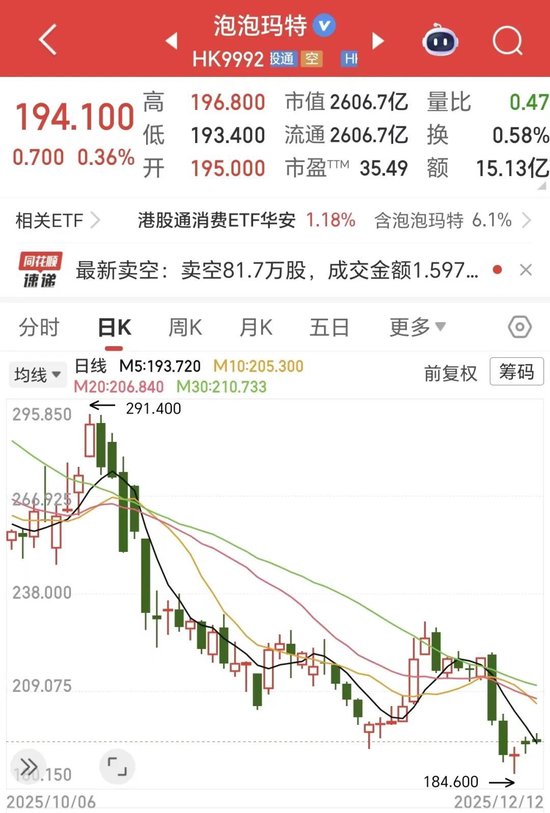
Core Viewpoint - The stock price of Pop Mart has been on a continuous decline for nearly four months, dropping over 40% from its mid-year peak, raising concerns among multiple institutions about the company's future prospects [1][4]. Group 1: Stock Performance and Market Sentiment - As of December 12, Pop Mart's market capitalization has evaporated by nearly 200 billion HKD since its high in August [1]. - Despite a significant increase in stock price earlier this year, the company is now facing skepticism from various foreign institutions, which have issued bearish reports [4]. - The stock price fell over 8% on the day the company announced a 245% year-on-year revenue growth for Q3 2025, indicating a disconnect between performance and market perception [4][5]. Group 2: Product Supply and Demand Dynamics - The stock price decline coincided with a supply increase of the LABUBU product, which led to a decrease in its market value and a cooling of consumer demand [3][6]. - The company increased LABUBU's production capacity from an average of 10 million units per month in the first half of the year to 50 million units by year-end, impacting its scarcity premium [6]. Group 3: Strategic Changes and Future Outlook - A recent appointment of a former LVMH executive as a non-executive director suggests a potential shift towards exploring higher-end collaborations [7]. - Pop Mart has not engaged in stock buybacks during the recent downturn, contrasting with its previous actions during past low points, indicating a different approach to market confidence and capital allocation [7][9]. - The company is at a crossroads, with analysts providing two valuation scenarios: a bearish outlook if LABUBU's popularity declines without new IPs, and a bullish scenario if existing IPs maintain their appeal and new ones emerge [9].

300万港元年薪!泡泡玛特“挖”来奢侈品教父
Guo Ji Jin Rong Bao· 2025-12-12 12:42
Core Insights - Pop Mart has appointed Wu Yue, the President of LVMH Greater China, as a new non-executive director, effective December 10, signaling the company's intent to strengthen its presence in the luxury market [1][2] Group 1: Leadership and Strategy - Wu Yue brings over 20 years of experience from LVMH, which will aid Pop Mart in talent acquisition, fashion jewelry, and global store location strategies [2] - The company is offering a competitive compensation package of HKD 1.2 million in cash and HKD 1.8 million in stock-based remuneration to attract Wu Yue, indicating a commitment to a mutually beneficial relationship [1] Group 2: Financial Performance - For the first half of 2025, the MEGA COLLECTION series is expected to generate over CNY 1 billion in revenue, accounting for 7.3% of total revenue [3] - In the first half of the year, Pop Mart reported revenue of CNY 13.88 billion, a year-on-year increase of 204.4%, with adjusted net profit rising 362.8% to CNY 4.71 billion and a gross margin of 70.3% [3] Group 3: Market Expansion - Pop Mart's international strategy has shown significant growth, with revenue from the Asia-Pacific region increasing by 257.8% to CNY 2.85 billion, and revenue from the Americas soaring by 1142.3% to CNY 2.26 billion [4] - The company anticipates strong sales growth in the fourth quarter due to seasonal demand from Halloween, Black Friday, and Christmas, particularly in the overseas markets [5]

抢跑千亿赛道!超百位行业大咖共绘广州潮玩产业新图景
3 6 Ke· 2025-12-12 09:09
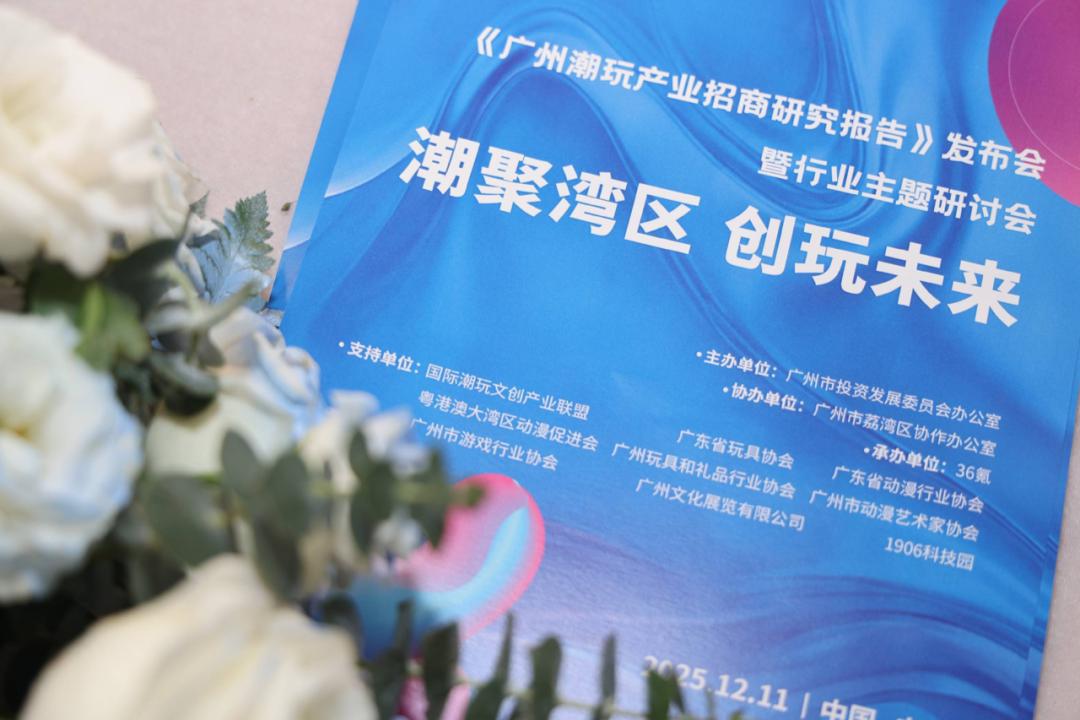
Core Insights - The event held on December 11 showcased the "Guangzhou潮玩产业招商研究报告" and aimed to discuss the transition of the潮玩 industry from niche to mass consumption, highlighting opportunities and pathways for growth [1][3]. Group 1: Industry Growth and Trends - The潮玩 industry is experiencing a remarkable annual compound growth rate of 35.1%, even amidst an economic downturn, indicating its resilience and potential for expansion [6]. - The official mascot of the Fifteenth Games, known as "大湾鸡," generated over 800 million yuan in sales, demonstrating the significant market impact of cultural IP [3]. - The潮玩 industry has evolved into a complex ecosystem integrating cultural content, industrial manufacturing, digital marketing, and community economy, forming a complete industrial loop [5]. Group 2: Cultural and Economic Impact - Guangzhou's rich cultural resources provide a strong foundation for潮玩 IP development, supported by a complete supply chain and a vast market [3][5]. - The event served as a platform for industry stakeholders to connect, share insights, and promote resource aggregation, aiming to enhance the潮玩 industry's development in Guangzhou [1][3]. Group 3: Challenges and Opportunities - The潮玩 market faces challenges such as intensified competition, IP homogenization, and inventory buildup, necessitating innovative strategies for differentiation [6]. - The integration of潮玩 with artificial intelligence is seen as a crucial trend, expected to meet diverse consumer needs across different age groups [6]. Group 4: Future Directions and Strategies - Future潮玩 development will focus on creating "super IPs" that possess high recognition, emotional connections, and cross-media monetization capabilities [7]. - The industry is shifting towards a model that emphasizes content over products, aiming for sustainable IP ecosystems that foster continuous innovation and growth [7][9]. Group 5: Local Cultural Integration - The潮玩 industry is transitioning from "wild growth" to "refined cultivation," supported by high-quality spatial carriers and local cultural expressions [8][9]. - Companies are leveraging local cultural elements to create unique潮玩 products, enhancing their appeal to younger consumers and promoting cultural heritage [10]. Group 6: Collaborative Ecosystem - The event highlighted the importance of collaboration among government, capital, and enterprises to foster a sustainable潮玩 industry ecosystem [13]. - The successful hosting of the event is expected to inject new momentum into Guangzhou's潮玩 industry, positioning it favorably in the competitive landscape [13].
300万请来的LV总裁,泡泡玛特的投资者们为何不买账?
Xin Lang Cai Jing· 2025-12-12 08:52
Core Viewpoint - The appointment of Wu Yue, the president of LVMH Greater China, as a non-executive director of Pop Mart has not been positively received by investors, despite being seen as a significant move to inject luxury brand expertise into the toy industry. The company's stock price has significantly declined over the past months, reflecting investor skepticism about its future prospects [1][6]. Group 1: Appointment and Compensation - Pop Mart announced the appointment of Wu Yue as a non-executive director for a three-year term, with an annual compensation of 3 million HKD, which includes a fixed cash salary of 1.2 million HKD and a share-based salary of 1.8 million HKD [1][6]. - The market reaction to this appointment has been lukewarm, with only a slight increase in stock price following the announcement, and a significant drop of over 40% from its historical high in August, resulting in a market capitalization loss of more than 250 billion HKD [1][6]. Group 2: Background and Challenges - Wu Yue is recognized as a veteran in the luxury goods industry, having joined LVMH in 1993 and played a crucial role in expanding luxury brands in China [3][8]. - Pop Mart has faced multiple operational challenges, including a significant increase in the production of its core IP, Labubu, which has led to a decline in perceived scarcity and a drop in secondary market prices [3][9]. - Recent controversies regarding product quality and pricing have further impacted the brand's reputation, with notable incidents including employee comments on product pricing and issues with product consistency [4][9]. Group 3: Market Sentiment and Institutional Response - The high compensation for Wu Yue has sparked debate, as it exceeds the combined annual salary of three independent non-executive directors at Pop Mart and is higher than some executive directors' salaries [4][9]. - Institutional responses are mixed; Morgan Stanley views Wu Yue's appointment as a positive recognition of Pop Mart's IP in the fashion sector, while Deutsche Bank has downgraded its rating to "hold," emphasizing the need for the company to diversify beyond its single blockbuster IP strategy [4][9]. Group 4: Investor Dynamics - The recent board changes coincide with the exit of a key investor, He Yu, who sold shares at 32.32 HKD each, missing out on a subsequent 489% increase in stock price, which some interpret as a cautious stance on the company's long-term development [5][10].
大行评级丨招银国际:对明年中国可选消费行业持“与大市同步”评级
Ge Long Hui· 2025-12-12 06:29
Core Viewpoint - CMB International maintains a "market perform" rating for China's discretionary consumption sector for 2026, expecting overall retail sales growth of approximately 3.5% with a cautious outlook [1] Sector Summaries Preferred Sub-sectors - The company is optimistic about the following sub-sectors: 1) Tea and coffee, 2) Trendy toys, 3) Apparel, 4) Textiles [1] Neutral Outlook Sub-sectors - The company maintains a "market perform" view on the following sub-sectors: 5) Dining, 6) Sports goods, 7) Travel and hotel, 8) Home appliances [1] Consumption Types - In a basic scenario, the company favors: 1) Survival consumption (frugality, low price, high cost-performance), with related companies including: Guoquan, Yum China, Luckin Coffee, Dashihua, Bosideng [1] - 2) Compensatory consumption (small pleasures, affordable entertainment, emotional value, experiential) [1] - 3) Defensive consumption (gold, silver, high dividends), with related companies including: Bosideng, Jiangnan Buyi, Li Lang, Tabo [1] Optimistic Scenario - In an optimistic/bull market scenario (strong stock market, stabilizing real estate), large-ticket consumption will benefit more, with related companies including: Haier Smart Home, Midea Group, Hai Di Lao, Anta Sports [1]
招银国际:对中国可选消费行业持“同步大市”评级 展望偏向谨慎
智通财经网· 2025-12-12 05:53
Core Viewpoint - The report from CMB International indicates a cautious outlook for China's discretionary consumption sector in 2026, with an expected overall retail sales growth of approximately 3.5%, a slight decrease from about 4% in 2025, influenced by factors such as the delayed Spring Festival, extended holidays, potential recovery in the real estate sector, and a thriving stock market [1] Group 1: Industry Overview - The industry valuation is likely to have bottomed out this year, currently at around 15 times the price-to-earnings ratio, which is still not expensive compared to the average of about 20 times over the past eight years [1] - The overall view remains conservative due to potential slowing growth in the next 12 months and high geopolitical risks, suggesting that valuations may not rise quickly without significant positive policies or a clear recovery in real estate [1] Group 2: Subsector Ratings - CMB International prioritizes the following subsectors for 2026: 1) Tea and coffee, 2) Trendy toys, 3) Apparel, 4) Textiles; maintaining a "market perform" rating for: 5) Dining, 6) Sports goods, 7) Travel and hotel, 8) Home appliances [2] - The ratings for the tea and coffee sector and trendy toys are maintained at "outperform," while the apparel and textile sectors have been upgraded to "outperform" [2] Group 3: Investment Themes - The investment themes are categorized into different types of consumption, with a focus on: 1) Essential consumption (frugality, low price, high cost-performance), related companies include: Guoquan (02157), Yum China (09987), Luckin Coffee (LKNCY.US), Dashihua (01405), Bosideng (03998) [2] - Other themes include compensatory consumption (small pleasures, affordable entertainment, emotional value, experiential) and defensive consumption (gold, silver, high dividends), with related companies such as Bosideng (03998), Jiangnan Buyi (03306), Li Lang (01234), and Taobo (06110), all rated as "buy" [2] Group 4: Large-ticket Consumption - CMB International is less optimistic about large-ticket consumption (durables, real estate-related, luxury goods, high-end tourism), but in a bullish scenario (if wealth effects are strong with a thriving stock market and stabilizing real estate), it could benefit large-ticket consumption, with related companies including Haier Smart Home (06690, 600690.SH), Midea Group (00300, 000300.SH), Haidilao (06862), and Anta Sports (02020), all rated as "buy" [3]
潮玩2025:游戏才真正开始?
Xin Lang Cai Jing· 2025-12-12 03:52
Core Insights - The Chinese潮玩 (Pop Toy) industry is experiencing a significant transformation, with 2025 marking a milestone year as leading player泡泡玛特 (Pop Mart) achieves global recognition through its LABUBU搪胶毛绒 series, breaking out of niche markets and gaining traction in overseas regions, particularly in Europe and America [1][8][51] - Despite a subsequent decline in stock price and market capitalization, the enthusiasm for investment in the潮玩 sector remains strong, indicating a robust interest in the industry [3][51] - The潮玩 industry has evolved from a niche market to a global phenomenon, driven by the rise of emotional consumption and the integration of various cultural elements [8][51] Industry Developments -泡泡玛特's market capitalization peaked at 450 billion HKD in August, with annual revenue expected to surpass 40 billion RMB [1] - The LABUBU series significantly boosted泡泡玛特's net profit, which soared by 188.8% to 3.13 billion RMB in 2024, with its IP THE MONSTERS revenue increasing by 726% to 3.04 billion RMB [11] - The潮玩 industry is entering a new phase characterized by increased competition and the influx of capital and cross-industry players [4][51] Investment Activities - A series of significant capital events in the潮玩 sector are scheduled for 2025, including布鲁可's listing on the Hong Kong Stock Exchange and元气玛特's C-round financing [4] - Notable investments include 52TOYS receiving 144 million RMB from Wanda Films and HiTOY being acquired by TOP TOY for 5.1 million RMB [4] Marketing Strategies - The industry is witnessing a shift towards celebrity marketing, with companies leveraging star power to enhance brand visibility and sales [19][20] - AYOR TOYS exemplifies this trend, achieving rapid sales growth through strategic partnerships with celebrities, resulting in significant online sales figures [20][28] - HERE奇梦岛 has also engaged in extensive celebrity collaborations, enhancing its brand's reach and influence across various cultural sectors [23][33] Global Expansion - The潮玩 industry is increasingly focusing on international markets, with泡泡玛特's overseas revenue reaching 5.59 billion RMB in the first half of 2025, a fourfold increase from the previous year [39] - JOTOYS is targeting the U.S. market, expecting overseas GMV to reach 240 million RMB, with a significant portion coming from the American market [39][42] - HIDDEN WOOO is also making strides in international markets, participating in exhibitions and launching products that resonate with global audiences [45][49] Future Outlook - The潮玩 industry is poised for continued growth, with companies exploring innovative marketing and operational strategies to enhance their global presence [51] - The focus on long-term sustainability and user-centric approaches will be crucial for navigating the challenges of market saturation and IP longevity [18][51]

泡泡玛特董事会换人:69岁LV高管吴越加入,年薪300万港元
新华网财经· 2025-12-12 01:48
泡泡玛特(09992.HK)10日晚间公告称,何愚因其他工作安排已辞任非执行董事,曾担任LVMH大中华区集团总裁的吴越已获委任为公司非执行董事。 公开资料显示,何愚是黑蚁资本管理合伙人。据黑蚁资本微信公众号,今年3月,何愚曾发文称:"从2017年到2025年,对泡泡玛特投资的价值,不仅在于 财务回报,更在于参与了一段激动人心的创造历程。我们的团队与企业一同成长,从2019年-2020年的运营效率提升,2021年-2022年的新业务发展支持, 到2023年-至今的商品管理能力升级。" 来源:红星新闻 关注" 新华网财经 "视频号 更多财经资讯等你来看 往期推荐 据报道,2024年4月,何愚曾以32.32港元/股的价格卖出了208.83万股泡泡玛特股份,套现金额约为6749.39万港元。 公告显示,新任非执行董事吴越今年69岁,自2005年11月起担任LVMH大中华区集团总裁,负责监督LVMH多品牌组合在华业务。在此之前,他于2000年 2月至2005年10月担任索尼国际音乐娱乐集团亚洲区副总裁,负责在华业务;1993年8月至2000年2月,担任LVMH集团旗下Parfums Christian Dior品牌的总 ...

信达证券:中国制造业进入全球化发展周期 结构性发展领域涌现更多机会
智通财经网· 2025-12-12 01:31
Core Viewpoint - The pricing logic of Chinese stocks is subtly changing, with China taking a more proactive role in global trade, and the manufacturing sector entering a globalization development cycle. The real estate market is stabilizing, leading to a shift in economic thinking, while macro tail risks are decreasing. New technologies and industries are emerging, creating more opportunities in structural development areas [1]. Group 1: New Consumption Trends - The pet food industry is experiencing a simultaneous increase in volume and price, driven by diversified growth and strong brand loyalty, suggesting significant potential for leading brands [2]. - The gold and jewelry sector is expected to maintain a favorable outlook through 2026, with a focus on the value retention of gold jewelry and the strengthening of leading brands [2]. - The collectible toy market is evolving towards a global business model, transitioning from a single product focus to an integrated IP and ecosystem approach, highlighting the importance of strong brand positioning [2]. - The new tobacco sector is seeing stricter regulations but a steady recovery in the compliant market, with increased penetration of heated tobacco products (HNB) [2]. - The AI smart glasses market is projected to grow significantly, with sales expected to reach 1.8 million units by 2026, indicating a shift in product development priorities [2]. - The two-wheeler market is undergoing regulatory changes that are optimizing the industry structure, with leading companies expected to benefit from improved product offerings [2]. Group 2: Cyclical Opportunities - The home furnishings sector is anticipated to remain in an adjustment phase until 2026, with growth driven by demand for soft and smart home products [3]. - The paper industry is facing a tightening supply of wood chips, which may support a gradual recovery in pulp prices, with leading companies expected to enhance their competitive advantages [3]. - The metal packaging industry is seeing increased concentration, with expectations of slight price increases in 2026, while the paper and plastic packaging sectors are maintaining stable demand [3]. Group 3: Export Dynamics - Following the US interest rate cuts, expectations for real estate improvement are rising, and corporate orders are showing signs of recovery, with leading companies benefiting from localized production strategies [5]. - Companies with global layouts, such as home furnishings and automotive brands, are demonstrating resilience and expanding their brand influence through mature local operations [5]. Group 4: Textile and Apparel - The outdoor apparel market is projected to grow significantly, with a CAGR of 9.6% for outdoor clothing and 9.2% for footwear from 2025 to 2029, driven by product innovation [6]. - The men's clothing and home textile sectors are showing resilience, with leading companies benefiting from high dividend yields and online sales growth [6]. - The textile manufacturing sector is optimistic about external demand, with healthy channel inventories and improving orders, particularly in Indonesia as a key production destination [6].

泡泡玛特与LV再连接:一场彼此需要的结盟
Hua Er Jie Jian Wen· 2025-12-11 15:53
Core Viewpoint - Pop Mart's trendy toy business is increasingly connecting with the luxury goods sector, as evidenced by the appointment of LVMH's Greater China President, Wu Yue, to its board of directors [2][5]. Group 1: Strategic Developments - Wu Yue's appointment may indicate Pop Mart's further exploration into the core circle of international fashion trends [3]. - The company has been compared to luxury brands like Hermes due to its high gross margin of nearly 70% since its performance explosion [3]. - Pop Mart's collaboration with LVMH and its luxury brands could signify a shift from mere marketing to deeper strategic interactions [13]. Group 2: Market Dynamics - The demand for scarcity is a common pursuit in both the trendy toy and luxury goods industries, where exclusivity enhances social status and identity recognition [6]. - Pop Mart's products, particularly in the secondary market, have seen a decline in premium pricing, indicating a cooling of consumer interest compared to previous "one toy hard to find" scenarios [4][11]. - The company aims to balance IP value, scarcity, and revenue scalability, which remains a long-term challenge [15]. Group 3: Financial Performance and Challenges - In the first half of 2025, the MEGA series generated nearly 1 billion yuan, accounting for 7% of total revenue [10]. - Pop Mart's stock price has dropped over 45% since its peak, with a market capitalization loss exceeding 200 billion HKD, reflecting investor concerns over declining resale prices and market sentiment [16][17]. - The company is facing a "availability paradox," where increased production capacity is transforming its core IP LABUBU from a scarce trend symbol to a mass-market product, potentially signaling a decline in popularity [19]. Group 4: Future Prospects - Pop Mart is expanding its international presence, with plans to open 200 new stores by the end of the year, maintaining a pace of approximately three new stores per week [14]. - The company is also diversifying its IP portfolio, with notable growth from new IPs like CRYBABY and Star People, which are expected to contribute significantly to revenue [14]. - Collaborations with major brands and the development of immersive experiences are part of Pop Mart's strategy to deepen emotional connections with consumers [27].