脑机接口

Search documents
陈天桥再投资,押注中国首家→
第一财经· 2026-01-01 04:05
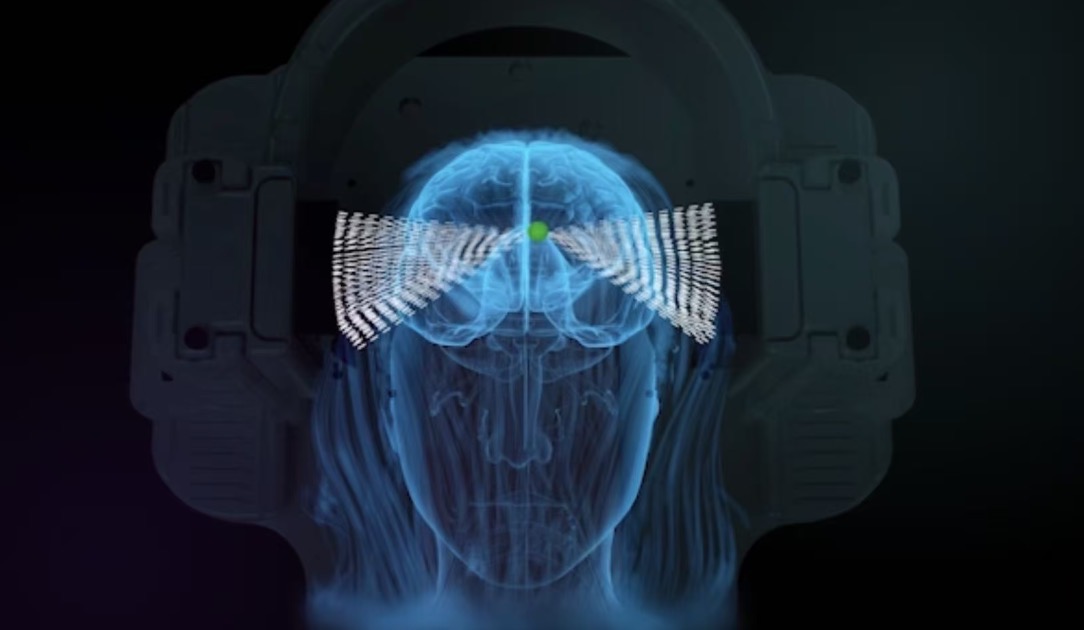
Core Viewpoint - The article discusses the establishment of Gestalt (Chengdu) Technology Co., Ltd., a company focused on ultrasound brain-computer interface technology, aiming to advance the understanding and treatment of brain-related diseases through innovative non-invasive methods [3][5]. Group 1: Company Overview - Gestalt is the first domestic company specializing in ultrasound brain-computer interface technology in China, with a goal to explore next-generation brain signal reading, writing, and analysis [3][5]. - The company was co-founded by Peng Lei, former co-founder and CEO of Brain Tiger Technology, and Chen Tianqiao, founder of the Tianqiao Brain Science Research Institute [3]. Group 2: Technology and Innovation - The ultrasound brain-computer interface aims to provide non-invasive methods for precise modulation of specific brain regions, which could lead to innovative treatments for various brain diseases [5]. - The technology is based on the concept of "Gestalt," emphasizing that the whole is greater than the sum of its parts, and it seeks to understand the brain as an integrated system rather than isolated regions [5]. Group 3: Clinical Applications - Clinical studies have shown that ultrasound modulation of the anterior cingulate cortex (ACC) can significantly reduce pain intensity in chronic pain management, with effects lasting approximately one week [5]. - The company plans to develop multiple generations of products, starting with a bench-top device for chronic pain management, with registration processes expected to begin this year [6].


陈天桥再投资!押注中国首家超声波脑机接口公司
Di Yi Cai Jing· 2026-01-01 03:22
Core Insights - The article discusses the establishment of Gestalt (Chengdu) Technology Co., Ltd., a brain-computer interface (BCI) company focused on ultrasound technology, marking a new direction in China's BCI field [1][3] Company Overview - Gestalt is the first domestic company specializing in ultrasound brain-computer interface technology, aiming to explore next-generation full-brain signal reading, writing, and analysis [1][3] - The company was co-founded by Peng Lei, former co-founder and CEO of Brain Tiger Technology, and Chen Tianqiao, founder of Tianqiao Brain Science Research Institute [1][3] Technology and Innovation - The core philosophy of Gestalt is based on the German concept of "Gestalt," emphasizing that the whole is greater than the sum of its parts [1][3] - Ultrasound BCI technology is seen as the most promising direction for achieving full-brain reading and writing capabilities, allowing for non-invasive precision modulation of specific brain areas [3] - The technology aims to provide innovative treatment for various neurological disorders by enabling multi-target modulation of brain circuits [3] Clinical Applications - Clinical interventions using ultrasound BCI have shown effectiveness in managing chronic pain, stroke-related functional impairments, and depression [3] - Research indicates that modulation of the anterior cingulate cortex (ACC) through ultrasound significantly reduces pain intensity, with effects lasting approximately one week [3] Product Development - Gestalt plans to develop its products in multiple generations, starting with a bench-top device followed by a wearable device, focusing on medical applications [4] - The first product, a magnetic resonance-guided bench-top device, will target chronic pain management, with registration processes expected to begin this year [4]
开启星际巡航,速览2025年最具潜力的产业新“星”
2 1 Shi Ji Jing Ji Bao Dao· 2026-01-01 00:09
2025年,中国经济向新而行 低空飞行器划破长空 商业航天赛道形成万亿级生态 人机交互突破想象边界 …… 新兴产业与未来产业 正重塑中国经济的增长坐标 "十五五"规划建议明确提出 "培育壮大新兴产业和未来产业" 更让2025年的坚实步伐 成为未来五年产业升级的精彩序章 让我们启动这场"星际巡航" 一同探寻"星标"产业 低空经济爆发式发展 01乘势而飞 ↓↓↓ 02太空新基建 商业航天提速 03新能源 发电装机容量快速增长 04脑机接口 规模持续增长 05人工智能 专利领跑全球,算力扩容提速 06具身智能 中国市场占全球近三成 回望2025,群"星"闪耀 勾勒产业新图景 2026,再赴新程 续写高光! 策划出品|经济政声工作室《经济有数》栏目 21创意工作室 总统筹|祝乃娟 执行统筹|林虹张星林军明 视频|白宇航谢和洋实习生吴思远胡梓颖李思远 文案|周亦洋黄兰雯实习生李茗萱 审校|陈晶晶黄志明 ...
未来产业:如何前瞻布局
Xin Lang Cai Jing· 2025-12-31 21:05
Core Insights - The article discusses the importance of future industries as a core competitive arena for countries to seize technological leadership and cultivate new growth drivers, as outlined in China's 15th Five-Year Plan [10][11][12]. Group 1: Global Competition in Future Industries - Future industries such as quantum technology, bio-manufacturing, and brain-computer interfaces are seen as key areas for countries to gain competitive advantages and enhance national strength [10][11]. - The global R&D expenditure as a percentage of GDP has increased significantly from 2013 to 2022, indicating strong resilience in technology investment despite economic downturns [10]. Group 2: China's Progress in Future Industries - China is transitioning from technology catch-up to proactive layout in future industries, with strengths in quantum communication, 6G, brain-computer interfaces, hydrogen energy, and nuclear fusion [13][14]. - By 2024, China's total R&D investment is expected to exceed 3.6 trillion yuan, a 48% increase from 2020, with R&D intensity reaching 2.69%, surpassing the EU average [14]. Group 3: Funding Support for Future Industries - Future industries require substantial investment and long-term capital support, necessitating a multi-faceted funding structure that includes government, state-owned, and social capital [20][21]. - The establishment of a future industry fund in Shanghai, with a total scale of approximately 15 billion yuan, aims to support the growth of future industries through a structured investment approach [21]. Group 4: Application Scenario Innovation - Application scenarios are crucial for connecting technology with market needs, serving as testing grounds for new technologies and driving industrialization [24][25]. - The Ministry of Industry and Information Technology emphasizes the need for scenario-driven innovation to accelerate the commercialization of future industries [24].
脑机接口产业更新及观点汇报
2025-12-31 16:02
Summary of Brain-Computer Interface Industry Update and Insights Industry Overview - The brain-computer interface (BCI) industry is in its early stages, with significant product approvals expected post-2028 and commercialization anticipated by 2030. Both China and the U.S. have implemented supportive policies for the sector, providing a crucial foundation for development [1][2][3]. Key Insights and Arguments - **Technological Advancements**: Continuous upgrades in technology, such as increased electrode channel counts, improved AI decoding algorithms, and the application of 5G and edge computing, are accelerating industry maturation. However, commercialization is primarily focused on non-invasive methods, resulting in low revenue for related companies [1][4]. - **Clinical Trials and Company Progress**: Companies like Neuralink, Syncro, Ladder Medical, and Borui Kang are under observation for their clinical trial advancements. Neuralink has accelerated its clinical trials, aiming to complete 20 trials by 2025, with 19 already enrolled. Borui Kang's Neo system has entered a special review process, achieving 1,312 implants with 100% improvement in hand function for all patients [1][6][7][10][11]. - **Market Risks and Investment Strategies**: While the long-term outlook for the BCI industry is positive, short-term bubble risks exist. Investors are advised to adopt a trading strategy and closely monitor national policy developments and key clinical trial progress from major companies [1][6]. Important but Overlooked Content - **Policy Support**: Both China and the U.S. have shown strong commitment to the BCI field, with China announcing a two-step strategy for the next five years and the U.S. providing policy and funding support. This guidance is crucial for the development of both invasive and non-invasive BCIs [3]. - **Company Comparisons**: Internationally, Neuralink and Syncro are benchmarks, with Neuralink focusing on invasive methods and Syncro offering a hybrid approach. Domestically, Ladder Medical and Borui Kang are making significant strides, with Ladder Medical's flexible electrode technology showing promise in clinical trials for high-level paraplegia and ALS [13][24]. Company-Specific Developments - **Neuralink**: Aims to enable paralyzed patients to perform physical actions independently by 2025, with ongoing clinical trials showing progress [8]. - **Singular**: Released a new model in 2025 that effectively decodes brain signals, enhancing the prediction of cognitive intentions [9]. - **Borui Kang**: The Neo system is on a fast track for commercialization, with significant clinical trial achievements [10][11]. - **Ladder Medical**: Demonstrated stability in signal transmission during clinical trials, with advancements in electrode technology [12]. - **New Wei Medical**: Expected to achieve over 40% revenue growth in 2025, targeting 1 billion RMB in revenue by 2028 [21]. Future Considerations - Investors should focus on policy directions and significant clinical trial outcomes, including the scale of trials and data disclosures from overseas companies, as well as the potential for multi-center trials from domestic firms like Ladder Medical [14]. Conclusion The BCI industry is poised for growth, driven by technological advancements and supportive policies. However, investors should remain cautious of short-term risks while keeping an eye on key developments within leading companies and the overall market landscape [6][24].
“意念下棋”成现实,非侵入式脑机接口破局
2 1 Shi Ji Jing Ji Bao Dao· 2025-12-31 12:49
人机交互 相应地,早期的脑机接口公司大多为硬件公司,专注于电极、芯片与外设的研发,从数据分析角度切入 的团队仍属少数。 然而,随着脑电大模型等先进算法的引入,这一认知边界在被打破。信号算法、模型能力的飞跃,正持 续推高非侵入式技术的性能上限。 岩思类脑将重心放在解码大脑意图的通用算法与模型上,视硬件为信号的载体,而算法才是理解大 脑"意图语言"的灵魂。岩思类脑在2023年确立了以脑电大模型为核心的技术路线,目前,该模型参数量 已达50亿。 脑机接口发展到什么程度了? 12月29日,在海南举行的"天天象棋杯"中国象棋协会年度总决赛中,脑瘫棋手韩彬彬佩戴非侵入式脑机 接口设备,通过意念控制棋子,与象棋特级大师孟辰完成对弈。这是非侵入式脑机接口首次应用于国家 级体育赛事。 如何实现"意念落子"?一种常见实现方式是基于稳态视觉诱发电位。 在这个案例中,不同棋子与落子位置会在操作阶段以不同频率闪烁,当人眼注视一个以特定频率闪烁的 光源时,大脑视觉皮层会产生与该刺激频率同步的微弱电信号。脑机接口系统可以通过分析从头皮采集 到的脑电信号,精确判断出用户正在注视哪个选项,从而将其意图转化为计算机指令。 岩思类脑首席科学家李孟 ...
「十五五」时期重点产业前瞻与发展路径研究丨36氪研究院
36氪· 2025-12-31 00:14
Core Insights - The "14th Five-Year Plan" period prioritizes the construction of a modern industrial system, marking a strategic shift from single-point technological breakthroughs to systematic industrial upgrades [6][19]. - The new energy industry is transitioning from a focus on installed capacity to building a "source-grid-load-storage" collaborative system, emphasizing dynamic balance between production and consumption [7]. - The aerospace sector is developing a dual-driven model of national engineering and commercial space, with large aircraft industrialization and commercial space driving the scale and capability of the industry chain [8]. - Future industries such as 6G and quantum technology place China in the global leading tier of R&D, aiming to seize the high ground in technology standards and industrial ecosystems through forward-looking layouts [9]. - The transformation of traditional industries emphasizes not only greening and intelligentization but also explicitly promotes "service-oriented manufacturing," guiding the manufacturing sector to extend services throughout the product lifecycle [10]. Group 1: Modern Industrial System - The construction of a modern industrial system is the primary task of the "14th Five-Year Plan," highlighting its core position as a foundation for new era development [19][20]. - The modern industrial system consists of three parts: upgrading traditional industries, developing emerging pillar industries, and strategically laying out future industries [20]. Group 2: Emerging Pillar Industries - The cultivation of emerging pillar industries is positioned as the strategic core of the modern industrial system, providing a strong new growth engine for high-quality development [23]. - Key emerging pillar industries include new energy, new materials, aerospace, and low-altitude economy, which are expected to drive explosive growth in multiple trillion-level markets [23]. Group 3: New Energy - The new energy sector has evolved into a comprehensive ecosystem encompassing "production, storage, transmission, and application," with a strategic significance in ensuring national energy security and achieving carbon neutrality [24]. - As of the end of 2024, China's cumulative installed capacity of new energy reached 1.41 billion kilowatts, maintaining a global leading position [25]. - The annual new installed capacity during the "14th Five-Year Plan" period is expected to remain around 30 million kilowatts [25]. Group 4: New Materials - The new materials industry in China has rapidly grown, with total output value exceeding 8 trillion yuan in 2024, but still faces structural challenges with about 30% of key high-end materials relying on imports [34]. - Significant breakthroughs are being made in various fields, including third-generation semiconductor materials and high-end alloys for aerospace applications [39]. Group 5: Aerospace - The aerospace sector has formed a dual-driven model of national major projects and commercial markets, with the C919 large aircraft and commercial space rapidly developing [42]. - The market size of China's aerospace manufacturing industry is expected to reach 601.7 billion yuan by 2025, with a compound annual growth rate of approximately 14.05% [42]. Group 6: Low-altitude Economy - The low-altitude economy, driven by various manned and unmanned aerial vehicles, is expected to reach a scale of 505.95 billion yuan in 2023, with a year-on-year growth of 33.8% [50]. - The market is projected to exceed 1 trillion yuan by 2026, with a compound annual growth rate of approximately 29.6% from 2021 to 2026 [50]. Group 7: Future Industries - Future industries represent cutting-edge technological and industrial development directions, including quantum technology, biomanufacturing, hydrogen energy, and brain-computer interfaces [61]. - The quantum technology sector is expected to grow significantly, with the industry scale projected to reach approximately 80 billion USD by 2024 and potentially near 1 trillion USD by 2035 [64].

脑机接口2025:政策定调、技术破局、资本涌入,医疗刚需率先落地
Tai Mei Ti A P P· 2025-12-31 00:14
Group 1 - The brain-computer interface (BCI) industry in China is entering a historic turning point in 2025, driven by a combination of policy, capital, and technological advancements [2][3][5] - The Chinese government has significantly strengthened its top-level design for the BCI industry, with the first implementation opinions issued by multiple ministries and its inclusion in the national "14th Five-Year Plan" [5][6] - The successful clinical trial of China's first invasive BCI marks a critical milestone, indicating significant progress in the field [6][7] Group 2 - Investment in the BCI sector is surging, with financing amounts increasing nearly fourfold year-on-year in 2025, reflecting a fundamental recovery in capital confidence [2][7][10] - The number of financing events in the BCI field has risen sharply, with 16 events totaling 983 million yuan in 2025, compared to only 6 events totaling 201 million yuan in 2024 [7][10] - The financing structure shows a trend towards earlier rounds of investment, with over 75% of events occurring in the angel to A rounds, indicating a growing willingness to support early-stage projects [10][12] Group 3 - The BCI industry is characterized by a unique "asymmetric advantage" in China, driven by large clinical needs, efficient transformation systems, and comprehensive policy support [2][21][22] - The medical application of BCI is recognized as a priority, with the healthcare sector accounting for 56% of the BCI market, while consumer applications are still developing [25][28] - The market for serious medical applications is projected to reach between 15 billion to 85 billion USD globally, while the consumer medical market could reach between 25 billion to 60 billion USD [25] Group 4 - The BCI industry faces challenges in proving medical value, establishing payment models, and addressing ethical issues, necessitating a pragmatic evolution from "spectacle" to "utility" [3][30][33] - The industry must overcome three interconnected challenges: clinical validation, building trust among medical professionals and patients, and demonstrating economic value to healthcare systems [33][36] - The commercial path for consumer-grade BCI products requires addressing issues of device invisibility, establishing essential demand, and achieving affordable pricing [34][35]
把握未来五年中国经济蕴藏的新机遇
Jing Ji Ri Bao· 2025-12-30 23:58
Core Viewpoint - The "14th Five-Year Plan" outlines strategic opportunities and challenges for China's economic and social development, emphasizing high-quality growth and a focus on various key sectors [2][3]. Economic Opportunities - The plan identifies numerous new opportunities, including the development of a modern industrial system and the strengthening of the real economy, with specific mentions of sectors such as mining, metallurgy, chemicals, and advanced technologies [3]. - The goal is to achieve significant results in high-quality development, with economic growth maintained within a reasonable range and an increase in domestic consumption driving economic growth [2][3]. Economic Challenges - Challenges include unbalanced development, insufficient effective demand, and pressures on employment and income growth, which need to be addressed to convert challenges into opportunities [4]. - The plan sets a target for per capita GDP to reach the level of moderately developed countries by 2035, requiring an average annual GDP growth of approximately 4.17% from 2025 to 2035 [4]. Consumer Income and Spending - The plan aims to increase residents' income through various channels, including wage, operational, property, and transfer income, with a focus on enhancing the share of labor remuneration in national income distribution [7][11]. - There is an emphasis on improving the structure of income distribution to promote a more reasonable allocation of income among residents [7]. Investment and Consumption - The plan suggests that increasing government spending on social welfare and implementing direct consumer support policies will enhance residents' consumption capacity [8][11]. - The importance of stabilizing the stock market to increase residents' property income and subsequently boost consumption is highlighted [14]. Capital Market Development - The stability of the capital market is crucial for enhancing investor confidence and ensuring sustainable income growth, which in turn affects consumer behavior [14][15]. - Encouraging long-term funding sources for technological innovation is essential for fostering a robust capital market and supporting economic growth [15][18]. Technological Innovation and Global Competitiveness - The plan emphasizes the need for China to cultivate high-quality listed companies with international competitiveness, particularly in the technology sector, to participate in global competition [18]. - The focus is on creating a favorable investment environment for companies to grow and attract long-term capital into the market [18].
视频丨当脑机接口走入生活 会为我们带来哪些新可能?
Yang Shi Xin Wen Ke Hu Duan· 2025-12-30 09:37
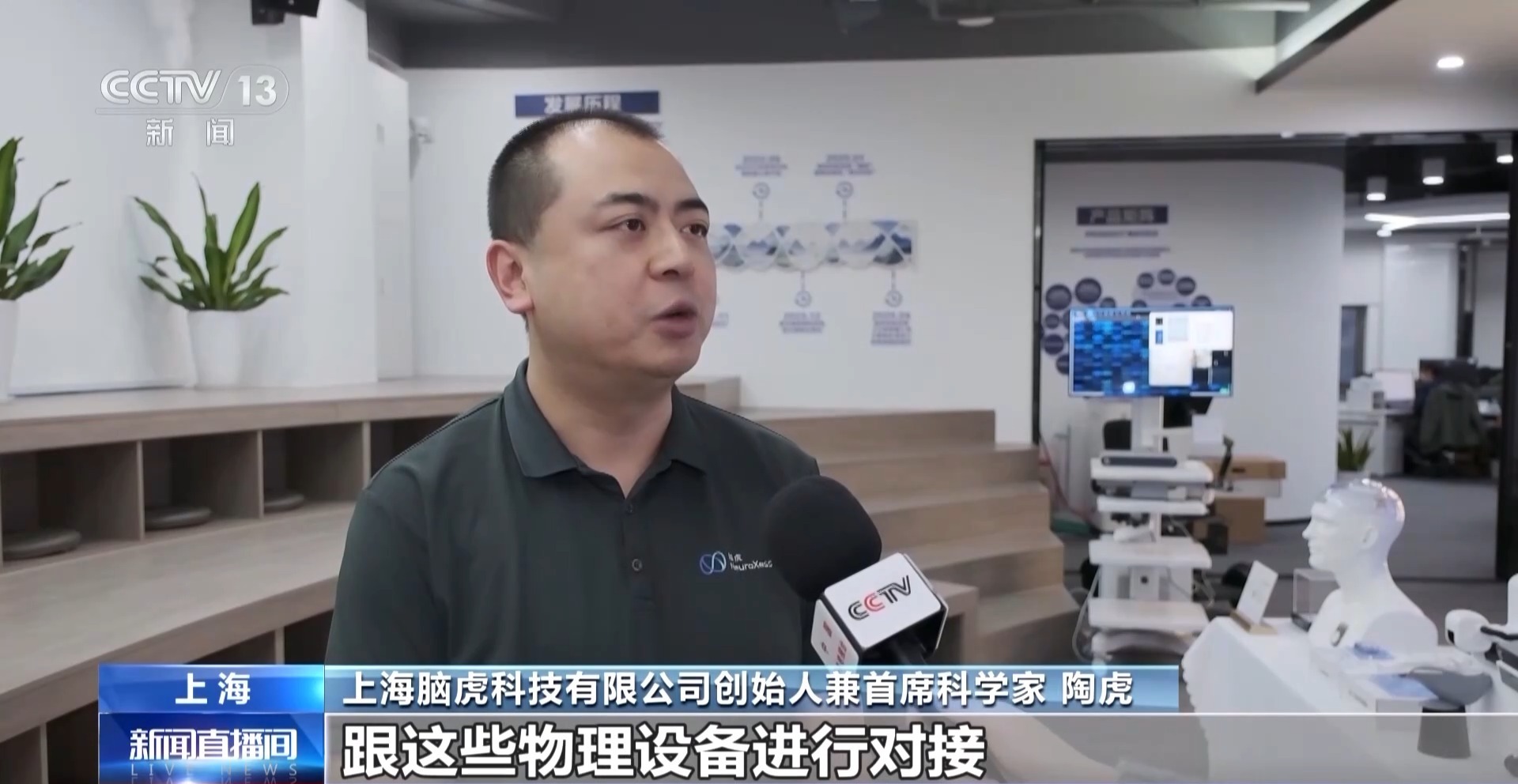
"十五五"规划建议明确将脑机接口作为前瞻布局的未来产业。作为交叉学科,脑机接口涉及神经科学、材料、芯片、AI、临床医学等多领域深度协同, 经过多年培育发展,正从实验室迈向临床应用。脑机接口将会为我们带来哪些新可能? 0:00 / 1:46 画面上这位年仅28岁的高位截瘫患者,正在通过意念操控光标,浏览网页、游戏互动等,还可以连接控制气囊手套、智能轮椅、智能家居甚至人形机器 人等多类物理设备。 全植入无线脑机接口 完成首例临床试验 近日,由我国科研人员自主研发的国内首款、国际第二款内置电池的全植入、全无线、多功能脑机接口产品,在复旦大学附属华山医院成功完成首例临 床试验,为一名肩部以下完全不能动的高位截瘫8年的患者带来了生活新希望。 上海脑虎科技有限公司创始人兼首席科学家 陶虎:病人都能很好地通过他们的意念,跟这些物理设备进行对接。这样的话也可以从患者本身的意念世 界到数字世界,也可以到我们真实的三维的物理世界。 作为国内首款,全球第二款内置电池的脑机接口产品,所有的核心模块,包括电池都被完全植入患者体内,体表没有任何线缆接口,团队介绍,这是为 了在物理层面避免外露系统可能导致的感染风险。同时,团队还将无线供能 ...