稀土

Search documents
盛和资源:公司以稀土生产加工为业务重心
Zheng Quan Ri Bao Wang· 2025-11-17 14:13
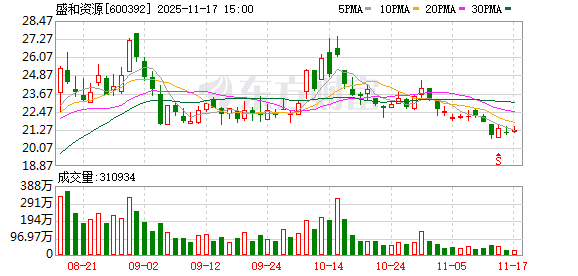
证券日报网讯盛和资源(600392)11月17日在互动平台回答投资者提问时表示,公司以稀土生产加工为 业务重心,将持续聚焦并做强做优主业。 ...

盛和资源:经营业绩与去年同期相比取得大幅度增长
Zheng Quan Ri Bao Wang· 2025-11-17 13:53
证券日报网讯盛和资源(600392)11月17日在互动平台回答投资者提问时表示,今年前三季度受市场供 需格局变化等因素影响,稀土主要产品市场需求整体向好、产品价格同比上涨。公司紧抓市场机遇,优 化产品生产及市场营销,加强管理赋能及成本管控,经营业绩与去年同期相比取得大幅度增长。 ...
每日投行/机构观点梳理(2025-11-17)
Jin Shi Shu Ju· 2025-11-17 11:35
Group 1: Oil Demand and Market Predictions - Goldman Sachs predicts global oil demand will continue to grow, reaching 113 million barrels per day by 2040, up from 103.5 million barrels per day last year, driven by energy demand and challenges in low-carbon technology scaling [1] - Morgan Stanley forecasts the Hang Seng Index to have a base target of 27,500 points by the end of next year, with optimistic and pessimistic scenarios set at 34,700 points and 18,700 points respectively [1] - Barclays anticipates the Federal Reserve will begin purchasing Treasury bonds in February next year, following indications from key officials about expanding the balance sheet [1] Group 2: Currency and Economic Outlook - The Dutch International Group suggests that the decline in the GBP/EUR exchange rate may be reversed if the UK government maintains fiscal discipline in the upcoming budget [1] - A Bank of America survey reveals a split among investors regarding the impact of AI on future interest rates, with 27% expecting lower rates and a steeper yield curve, while 24% foresee higher rates and a steeper curve [2] Group 3: Gold Market and Investment Strategies - China International Capital Corporation (CICC) believes the current gold bull market may not be over, with potential for prices to exceed $5,000 per ounce next year, driven by macroeconomic uncertainties and structural adjustments in global reserves [4] - CICC also sees no signs of a peak in the Chinese stock market, recommending an overweight position due to benefits from the AI technology wave and ample liquidity [5] - Guotai Junan reports that liquidity issues are easing, allowing gold to return to an upward trend following the end of the U.S. government shutdown [6] Group 4: Sector-Specific Insights - Macquarie Bank highlights that concerns over fiscal policies in the UK and France are likely to strengthen the U.S. dollar by year-end, as uncertainty in the UK budget raises sustainability concerns for the GBP [3] - Guotai Junan notes that the NAND Flash industry is entering a super cycle driven by AI applications, with SSD market capitalization expected to surpass HDD [7] - Zhongtai Securities indicates that the aviation sector is entering an upward cycle, with improved supply-demand dynamics and expectations for reduced losses in Q4 2025 [8]
盛和资源(600392.SH):公司稀土业务主要产品为稀土氧化物及金属,不直接供货给汽车整车生产企业
Ge Long Hui· 2025-11-17 10:48
Group 1 - The core viewpoint of the article is that Shenghe Resources (600392.SH) primarily produces rare earth oxides and metals, and does not supply directly to automotive manufacturers [1] Group 2 - The company's rare earth business focuses on specific products rather than direct sales to complete vehicle production enterprises [1]
中国稀土集团召开改革深化提升行动高质量收官推进会
Zheng Quan Shi Bao Wang· 2025-11-17 10:20
Core Viewpoint - The China Rare Earth Group is focusing on deepening reforms and enhancing quality in its operations, aiming for high-quality completion of all reform tasks by 2025 [1] Group 1 - The meeting emphasized the importance of highlighting key areas, penetrating grassroots levels, and ensuring the effectiveness of reforms [1] - The company plans to utilize deepening reform as a "key move" to closely integrate reform enhancement with production and operations [1] Group 2 - The company outlined six key focuses: ensuring closure, quality, priorities, responsibilities, planning, and integration [1] - These focuses are intended to ensure the successful completion of the reform enhancement actions by 2025 [1]


“断臂”贸易,营收瘦身,利润扭亏:广晟有色的舍与得
市值风云· 2025-11-17 10:12
Group 1 - The core viewpoint of the article highlights the gradual realization of value in the entire rare earth industry chain [1] - China's rare earth resources exhibit a "light in the north and heavy in the south" distribution characteristic, with ongoing industry consolidation [4] - Following the establishment of the China Rare Earth Group in 2021, the industry landscape has become clearer [5] Group 2 - In 2024, Guangsheng Nonferrous (600259.SH) will transfer control and officially become a core listed company under the China Rare Earth Group [6] - The company has a long history, originating from the Guangdong Metallurgical Bureau and others in 1953, and was listed through a backdoor listing in 2009, with its business historically relying on low-margin trading [7] - Recent financial data indicates that the company is undergoing a strategic transformation: actively reducing revenue scale while improving profitability [8]



盛和资源:目前公司以控股或参股的方式对稀土下游产业进行投资布局
Mei Ri Jing Ji Xin Wen· 2025-11-17 09:49
Core Viewpoint - The company is focusing on expanding its investment in high-value-added rare earth products, which currently account for approximately 70% of its revenue, through strategic investments in downstream industries [1] Group 1: Company Strategy - The company is investing in downstream industries related to rare earths, including catalysis, magnetic materials, polishing, and alloys [1] - The company aims to continue its development strategy of coordinating and extending the industrial chain to promote high-quality business growth [1]
盛和资源:公司稀土业务主要产品为稀土氧化物及金属,不直接供货给汽车整车生产企业
Mei Ri Jing Ji Xin Wen· 2025-11-17 09:44
Group 1 - The core viewpoint of the article highlights the increasing demand for rare earth permanent magnet materials driven by the growth of the electric vehicle industry, particularly in relation to companies like Tesla and BYD [2] - The company, Shenghe Resources (600392.SH), stated that its main products in the rare earth business are rare earth oxides and metals, and it does not supply directly to automotive manufacturers [2]
有色金属行业深度分析:金属牛市或延续,业绩弹性仍可期
Guotou Securities· 2025-11-17 05:04
Investment Rating - The report maintains an investment rating of "Outperform the Market - A" [4] Core Views - The report is optimistic about the continuation of the metal bull market in 2026, particularly for precious metals, industrial metals (copper, aluminum, tin), rare earths, tungsten, and uranium [1][2] - Gold is expected to rise due to increased demand for hedging against dollar credit and policy uncertainties, with a focus on the potential for new highs in gold prices [1][18] - Industrial metals like copper and aluminum are facing supply constraints, while tin demand is on the rise, indicating a favorable outlook for these metals [2][8] Summary by Sections Gold - The report highlights the strengthening of gold prices driven by concerns over U.S. dollar credit and rising geopolitical uncertainties, with gold prices reaching $3999.4 per ounce as of November 7, 2025, a 52% increase from the previous year [17][18] - The Federal Reserve's interest rate cuts are expected to further support gold prices, with a projected decline in the policy rate to 3-3.25% by the end of 2026 [21][22] - Key stocks to watch include Shandong Gold, Shandong International, and China National Gold [1] Copper - The report notes increasing supply constraints in copper mining, with production disruptions leading to a downward revision of copper output forecasts for 2025 [1][2] - Demand for copper is expected to grow significantly due to the rise of electric vehicles and investments in global power grids, with a notable increase in demand from AI data centers [1][2][18] - Key stocks to monitor include Luoyang Molybdenum, Jinchuan Group, and Jiangxi Copper [1] Aluminum - The aluminum market is characterized by tight supply and strong demand, with domestic production nearing capacity limits and a projected price increase to around 21,500 yuan per ton by 2026 [2] - The report anticipates a supply-demand gap in the aluminum market, supporting price increases [2] - Key stocks to consider include Nanshan Aluminum, China Hongqiao, and Yunnan Aluminum [2] Tin - The tin market is expected to see price increases driven by stable supply and rising demand from sectors like semiconductors and consumer electronics, with global refined tin consumption projected to grow by 3.1% in 2026 [8] - Key stocks to watch include Yunnan Tin and Hunan Tin [8] Rare Earths - The report indicates a slowdown in supply quota growth for rare earths, but strong demand from the renewable energy sector is expected to improve the supply-demand balance [8] - The global demand for neodymium-iron-boron is projected to grow significantly, with a compound annual growth rate of 8.83% from 2020 to 2028 [8] - Key stocks to monitor include China Rare Earth and Northern Rare Earth [8] Tungsten - The tungsten market is expected to remain tight, with prices likely to continue rising due to limited supply and stable demand [8] - Key stocks to consider include Xiamen Tungsten and Zhongtung High-tech [8] Cobalt - The cobalt market is facing supply constraints, with a significant drop in imports of cobalt intermediates into China, leading to a tight supply situation [10] - Demand from the electric vehicle sector is expected to support cobalt prices [10] - Key stocks to watch include Luoyang Molybdenum and Huayou Cobalt [10] Uranium - The uranium market is entering a new cycle of growth due to supply constraints and a revival in nuclear power, with a projected supply-demand gap of approximately 7,452 tons by 2030 [11] - Key stocks to monitor include China National Nuclear Corporation [11]
一周机会抢先看 | 本周有超16个事件将要发生,或将影响这些板块
Mei Ri Jing Ji Xin Wen· 2025-11-17 03:49
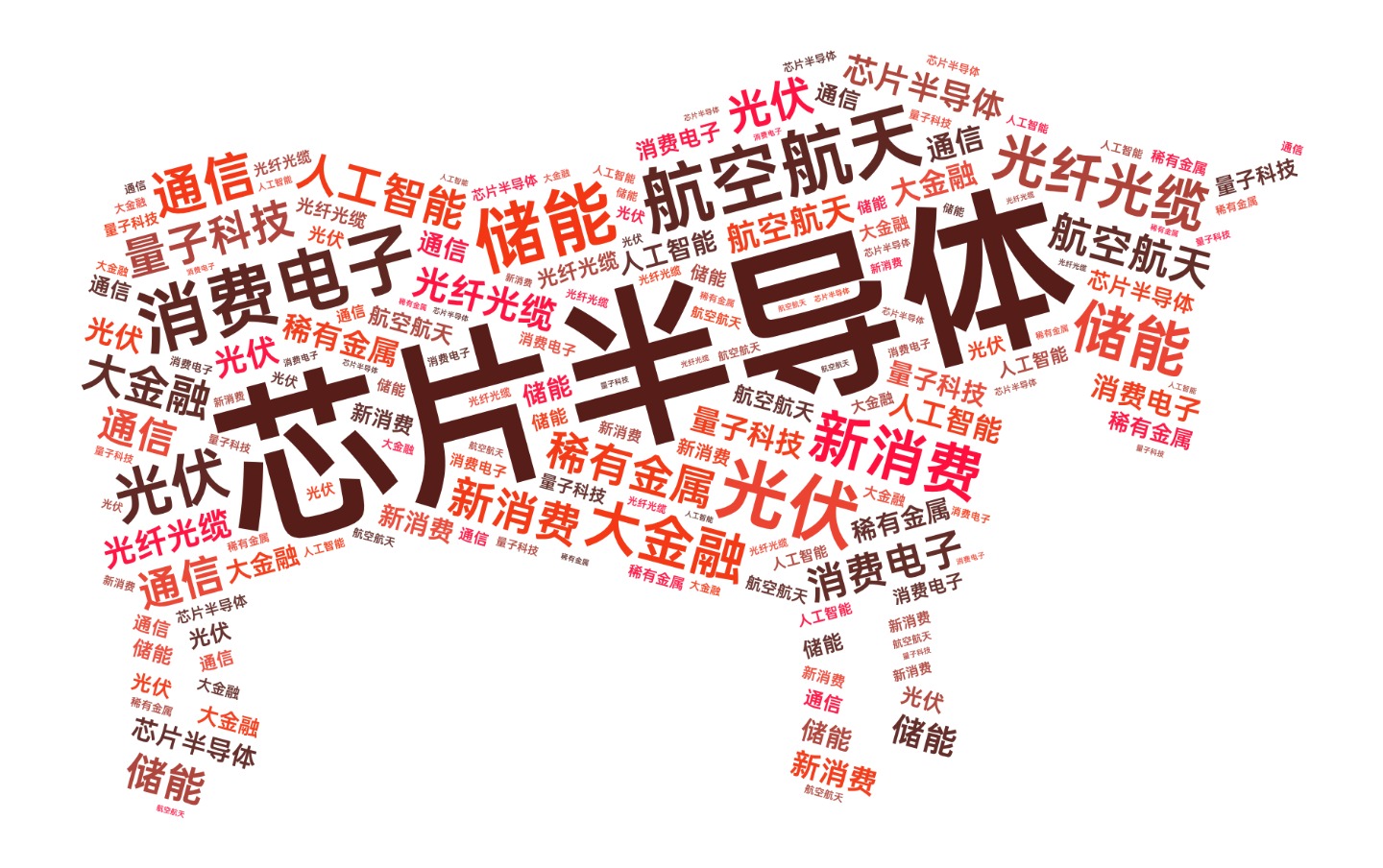
Key Events Summary - The 2025 Guangzhou International Home Appliances and Consumer Electronics Expo will take place from November 17 to 19, impacting the consumer electronics sector [1] - The 2025 China International Photovoltaic and Energy Storage Industry Conference is scheduled for November 17 to 20, affecting the photovoltaic industry [1] - The 2025 Dubai Airshow will feature the debut of China's C919 passenger aircraft in the Middle East from November 17 to 21, influencing the aerospace sector [1] - The 2025 Shanghai International Energy Storage Technology Application Exhibition will occur from November 18 to 20, impacting the energy storage industry [1] - The 2025 China International Retail Innovation Conference is set for November 18 to 20, affecting the new consumption sector [1] - The 2025 APC Global Fiber Optic Cable Conference will take place from November 19 to 21, impacting the fiber optic cable industry [1] - The 2025 Shenzhen International Financial Conference is scheduled for November 19 to 21, influencing the financial sector [1] - The 2025 Data Storage Industry Conference will be held on November 19, impacting the semiconductor industry [1] - The initial public offering (IPO) preliminary inquiry date for Moore Threads is set for November 19, with the subscription date on November 24, affecting the semiconductor sector [1] - NVIDIA will release its Q3 2025 financial report on November 20, impacting the semiconductor and artificial intelligence sectors [1] - The 2025 World Computing Conference will take place from November 20 to 21, influencing the semiconductor industry [1] - The 2025 Quantum Technology and Industry Conference is scheduled for November 20 to 21, impacting the quantum technology sector [1] - The 2025 China 5G + Industrial Internet Conference will occur from November 21 to 23, affecting the telecommunications sector [1] - The 2025 Academic Annual Meeting of the China Rare Earth Society is set for November 21 to 24, impacting the rare metals sector [1] - Huawei will announce breakthrough technologies in AI on November 21, enhancing computing resource utilization in the semiconductor sector [1] - The 2025 China International Semiconductor Expo will take place from November 23 to 25, impacting the semiconductor industry [1]