
油气

Search documents
奋力当好能源保供“顶梁柱”
Sou Hu Cai Jing· 2025-09-26 00:56
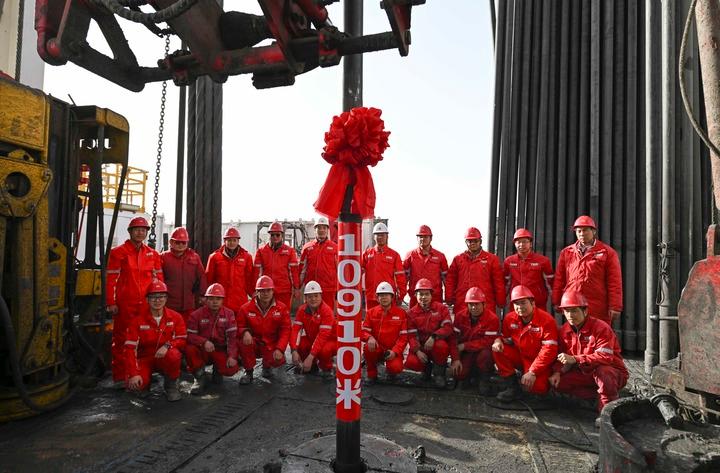
Group 1 - The core viewpoint emphasizes the significant role of China National Petroleum Corporation (CNPC) in ensuring energy security and its commitment to enhancing energy supply capabilities, with a target of surpassing 500 million tons of oil and gas production by 2024 [1][4] - CNPC has established a robust operational presence with nearly 90 oil and gas cooperation projects across over 120 countries, reflecting its steady international expansion [1][3] - The company has achieved a "three 100 million tons" production structure, which includes domestic crude oil, domestic natural gas, and overseas oil and gas equity production [3] Group 2 - Over the past 75 years, CNPC has made significant advancements in oil and gas exploration and development technologies, contributing to national energy security [4] - The company has successfully drilled Asia's first and the world's second deepest well, reaching a depth of 10,910 meters, showcasing its technical capabilities [2] - CNPC is actively pursuing clean energy development, with a target for renewable energy to account for 7% of its domestic energy supply by 2024, and plans to generate 4.8 billion kilowatt-hours of green electricity [3]

中国石油持续完善绿色低碳业务布局
Xin Hua She· 2025-09-26 00:47
Group 1 - The global energy revolution is driving the growth of green and low-carbon industries, with China National Petroleum Corporation (CNPC) transitioning from a traditional oil and gas company to a comprehensive energy supplier focusing on "oil, gas, heat, and hydrogen" [1] - CNPC has integrated new energy business into its main operations, implementing a three-step strategy of "clean substitution, strategic replacement, and green transformation," and is actively developing the carbon capture, utilization, and storage (CCUS) industry chain [1] - The company's new energy development and utilization capacity now accounts for 7% of its domestic energy supply [1] Group 2 - CNPC has established a new oil and gas supply pattern characterized by "three 100 million tons," which includes domestic crude oil, domestic natural gas, and overseas oil and gas equity production [2] - The company has achieved significant breakthroughs in shale oil and gas revolution, ultra-deep drilling, and high-end chemical new materials, while also advancing digital transformation and intelligent development [2] - CNPC's self-developed "Kunlun Model" with 300 billion parameters is expected to reshape the future landscape of the energy industry [2]
中国石油成立七十五年——奋力当好能源保供“顶梁柱”
Zhong Guo Jing Ji Wang· 2025-09-26 00:29
Group 1 - The core viewpoint emphasizes the significant role of China National Petroleum Corporation (CNPC) in ensuring energy security and its commitment to enhancing energy supply capabilities, with a target of surpassing 500 million tons of oil and gas production by 2024 [1][4] - CNPC has established a robust operational presence in over 120 countries, managing nearly 90 oil and gas cooperation projects, reflecting its steady international expansion [1][3] - The company has achieved a "three 100 million tons" production structure, which includes domestic crude oil, domestic natural gas, and overseas oil and gas equity production [3] Group 2 - Over the past 75 years, CNPC has made significant advancements in oil and gas exploration and development technologies, contributing to national energy security [4] - The company has successfully drilled Asia's first and the world's second deepest well, demonstrating its technical capabilities in deep drilling [2] - CNPC is actively pursuing clean energy development, with renewable energy accounting for 7% of its domestic energy supply by 2024, and plans to generate 4.8 billion kilowatt-hours of green electricity [3] Group 3 - The company is undergoing a transformation towards becoming a comprehensive international energy and chemical company, focusing on oil, gas, thermal energy, hydrogen, and refined products [3] - CNPC is enhancing its international cooperation, particularly in the context of the Belt and Road Initiative, with a more flexible and diverse international operation model [3] - The company is committed to promoting low-carbon development and ecological civilization, aligning with national energy transition goals [3]
菲佐:进口俄罗斯能源是斯洛伐克最经济选择
Yang Shi Xin Wen Ke Hu Duan· 2025-09-25 23:09
Core Viewpoint - Slovakia's Prime Minister Heger stated that the country imports only 2% of its energy raw materials from Russia, indicating that Slovakia's purchases do not significantly contribute to funding the war [2] Group 1: Energy Imports - Slovakia's energy imports from Russia are minimal, constituting only 2% of total energy needs [2] - The Prime Minister emphasized that energy supply is a geographical reality for Slovakia, not an ideological issue [2] - Slovakia's refineries require substantial investment and time for equipment modifications, limiting the country's ability to switch to alternative oil sources [2] Group 2: Financial Impact - Since January 1, when Ukraine ceased gas transit through Slovakia, the country has incurred a loss of 500 million euros in transit fees [2] - The Slovak Foreign Ministry's State Secretary is scheduled to visit the U.S. to explain the actual oil and gas supply situation in Slovakia [2]


中国石油成立七十五年—— 奋力当好能源保供“顶梁柱”
Ren Min Ri Bao· 2025-09-25 22:03
Core Insights - The article highlights the significant achievements and future goals of China National Petroleum Corporation (CNPC) in the oil and gas sector, emphasizing its role in ensuring energy security and contributing to national development [1][4]. Group 1: Production and Capacity - Domestic oil and gas production accounts for approximately 50% and 66% of the national total, respectively, indicating a strong energy supply foundation [1]. - By 2024, CNPC aims to achieve an oil and gas supply capacity exceeding 500 million tons, with overseas oil and gas equity production remaining stable at 100 million tons for six consecutive years [1]. Group 2: Technological Innovation - Continuous innovation in oil and gas exploration and development technologies has led to the establishment of a "three 100 million tons" production pattern for domestic crude oil, domestic natural gas, and overseas oil and gas equity [3]. - The implementation of the "Smart Petroleum" strategy has introduced intelligent inspection, production, and sales technologies, enhancing operational efficiency [3]. Group 3: Clean Energy Development - CNPC is committed to improving energy structure and promoting ecological civilization, with renewable energy development accounting for 7% of domestic energy supply by 2024 [3]. - The company plans to generate 4.8 billion kilowatt-hours of green electricity in 2024 as part of its low-carbon development initiatives [3]. Group 4: International Cooperation - CNPC is expanding its international operations, covering the entire oil and gas exploration and development value chain, and enhancing its international cooperation capabilities [3]. - The company is focused on upgrading its "Belt and Road" energy cooperation, reflecting a strategic shift from "going out" to "going up" in international markets [3].
加速绿色转型,中国石油持续完善新能源业务布局
Xin Hua She· 2025-09-25 12:16
Group 1 - The global energy revolution is driving the growth of green and low-carbon industries, with China National Petroleum Corporation (CNPC) transitioning from a traditional oil and gas company to a comprehensive energy supplier focusing on "oil, gas, heat, and hydrogen" [1] - CNPC has integrated new energy business into its main operations, implementing a three-step strategy of "clean substitution, strategic replacement, and green transformation," while actively cultivating the carbon capture, utilization, and storage (CCUS) industry chain [1] - The company's new energy development and utilization capacity now accounts for 7% of its domestic energy supply [1] Group 2 - CNPC has significantly increased its oil and gas exploration and development efforts, establishing a new supply pattern of "three 100 million tons" for domestic crude oil, domestic natural gas, and overseas oil and gas equity production [3] - The company has achieved a historic breakthrough in ethylene production capacity, surpassing 10 million tons per year, and has built five global oil and gas cooperation zones and four major international oil and gas transportation corridors [3] - CNPC is advancing digital transformation and intelligent development, with its self-developed "Kunlun Model" comprising 300 billion parameters, which is expected to reshape the future landscape of the energy industry [3]
经济“硬支撑”更稳!多个大国工程智慧与实力兼具 新突破、新纪录成亮点
Yang Shi Wang· 2025-09-25 08:03
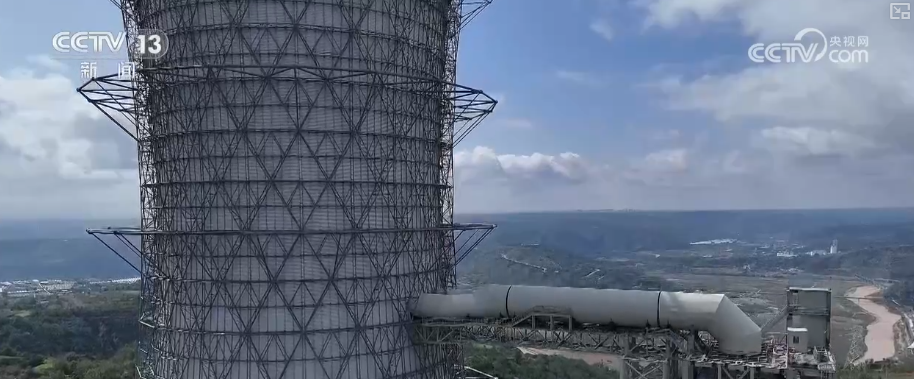
Group 1: CCUS Project Overview - The world's largest coal-fired carbon capture demonstration project at Huaneng Gansu Zhengning Power Plant has successfully completed a 72-hour trial run and is now in commercial operation, marking a historic leap in CCUS technology from "ten-thousand-ton demonstration" to "million-ton industrial application" [1][3] - The project is a major national technology demonstration project and one of the first green low-carbon demonstration projects approved by the National Development and Reform Commission, achieving a CO2 capture rate of over 90% with a purity of over 99% [3][5] - The facility can capture 1.5 million tons of CO2 annually, equivalent to the carbon emissions of 600,000 cars in a year, significantly contributing to deep emission reductions in coal-fired power plants and supporting carbon neutrality goals [5][8] Group 2: Technological Innovations - The project has overcome multiple technical bottlenecks in carbon capture, compression, and storage, creating several "global firsts" and "domestic innovations," with 100% of the core equipment being domestically produced [3][5] - Key technological achievements include the world's first "dual-tower integrated" absorption tower and the first domestic eight-stage supercritical CO2 compressor, which set new benchmarks for the coal power industry [3][5] Group 3: Broader Implications - The captured CO2 can be utilized in various applications, including enhanced oil recovery, green fuel synthesis, food processing, and mineralized building materials, thus establishing a complete "capture-utilization-storage" industrial chain [3][5] - The project positions China's CCUS technology at a world-leading level and sets a new standard for low-carbon transformation in the coal power sector [3][5]

阿里云:超70%能源央企接入阿里云AI
Zheng Quan Shi Bao Wang· 2025-09-25 07:23
Core Insights - Over 70% of China's energy state-owned enterprises have integrated with Alibaba's AI technology [1] - Key companies involved include State Grid, Southern Power Grid, Sinopec, National Pipeline Network, China Energy Group, and China Coal Technology [1] - The application of AI spans across the entire energy spectrum, including electricity, oil and gas, and coal [1]

俄罗斯能源大门向美国敞开!中美俄大三角关系再现微妙变化
Sou Hu Cai Jing· 2025-09-24 20:41
Core Viewpoint - Russia has extended an olive branch to the U.S. by expressing willingness to discuss energy cooperation, including the potential revival of the Sakhalin-1 oil and gas project, amidst complex geopolitical dynamics involving the U.S., Europe, and China [1][3]. Group 1: Energy Cooperation - Russian Deputy Foreign Minister Ryabkov has publicly stated readiness to discuss energy cooperation with the U.S., and President Putin has signed a decree allowing ExxonMobil to regain a 30% stake in the Sakhalin-1 project, which had been stalled since the Ukraine conflict [3]. - Energy exports account for over 40% of Russia's fiscal revenue, highlighting the critical need for foreign exchange as the country faces economic difficulties, with a projected GDP growth of only 1.5% by 2025 and a second-quarter growth rate of just 1.1% [3]. Group 2: Geopolitical Strategy - Russia's move to engage with the U.S. is seen as a strategic maneuver to create divisions within the U.S.-EU alliance, especially as the U.S. pushes for increased tariffs on China while potentially engaging in energy trade with Russia [5]. - The ongoing informal contacts between Russia and the U.S. may be a preparatory step for future relations, particularly if Trump were to return to the White House, which could lead to a thaw in U.S.-Russia relations [7]. Group 3: Implications for Global Energy Market - The U.S. is motivated to engage in energy cooperation with Russia to stabilize global energy markets and mitigate oil price volatility that could impact the U.S. economy, while also increasing its influence over Russia [13]. - The response from the EU will be crucial, as internal divisions may arise regarding acceptance of U.S.-Russia energy cooperation [14]. Group 4: China's Position - China maintains a strategic stance, continuing normal trade relations with Russia, unaffected by the U.S.-Russia rapprochement, and has become Russia's largest energy buyer, with trade expected to exceed $240 billion in 2024 [10]. - The dynamics of U.S.-Russia energy cooperation are unlikely to alter the fundamental strategic triangle involving China, the U.S., and Russia, as long as China continues to strengthen its position [16].

周松解读《关于推进“人工智能+”能源高质量发展的实施意见》
Zhong Guo Dian Li Bao· 2025-09-24 06:26
Core Viewpoint - The article emphasizes the importance of innovation, particularly through artificial intelligence (AI), as a driving force for the transformation and sustainable development of energy enterprises in China, guided by the recent implementation opinions from the National Development and Reform Commission and the National Energy Administration [1] Group 1: Implementation of AI in Energy Sector - The implementation opinions outline a phased approach with significant breakthroughs in AI core technologies by 2027 and achieving world-leading AI applications in the energy sector by 2030 [2] - The focus is on integrating AI with traditional and emerging industries, enhancing strategic and systematic thinking to foster collaboration [2][3] - The company aims to deepen the integration of AI across the entire energy value chain, enhancing production, marketing, management, and governance [3] Group 2: Key Technological Foundations - The article highlights the need for high-quality data sets, emphasizing the importance of data collection, processing, and quality improvement to support AI model training [4] - It discusses the establishment of a robust computing power foundation, including the development of green computing centers and diverse computing resources to support AI applications [4] - The evolution of industry-specific AI models is crucial, focusing on enhancing capabilities in knowledge questioning, deep reasoning, and multi-modal understanding [5][6] Group 3: Innovation Applications in Oil and Gas - The company is set to enhance the intelligence level across research, production, and service sectors, creating typical cases with significant industry characteristics [7] - There is a focus on expanding the depth and breadth of AI applications in oil and gas, including intelligent evaluation and optimization of exploration and production processes [7] - The development of embodied intelligence technologies, such as intelligent drilling machines and robots, is prioritized to advance the smart construction of the oil and gas industry [8] Group 4: Data Management and Talent Development - The article stresses the importance of optimizing data sharing mechanisms and ensuring the security of energy data throughout its lifecycle [8] - The company aims to build a robust talent pool with expertise in both energy systems and AI algorithms, fostering collaboration between education and industry [9] - Continuous improvement of the innovation organizational structure and mechanisms is essential to attract and develop talent in AI and oil and gas sectors [9]