种业

Search documents
影响市场重大事件:我国科学家实现全球首颗二维-硅基混合架构闪存;工信部等三部门调整2026-2027年减免车辆购置税新能源汽车产品技术要求
Mei Ri Jing Ji Xin Wen· 2025-10-10 00:20
Group 1 - Chinese scientists have achieved the world's first two-dimensional silicon-based hybrid architecture flash memory, addressing key challenges in the engineering of new two-dimensional information devices [1] - The research on two-dimensional materials is still in its early stages internationally, with large-scale applications yet to be realized [1] Group 2 - SEMI's latest report forecasts that global spending on 300mm wafer fab equipment will reach $374 billion from 2026 to 2028, with spending exceeding $100 billion for the first time in 2025, growing by 7% to $107 billion [2] - The total equipment spending in the storage sector over the next three years is expected to reach $136 billion, with DRAM-related equipment investment exceeding $79 billion and 3D NAND investment reaching $56 billion [2] Group 3 - The National Healthcare Security Administration and the National Administration of Traditional Chinese Medicine have announced a pilot program for fee-for-service payment for traditional Chinese medicine in about 15 provinces or cities [3] Group 4 - The Ministry of Industry and Information Technology and other departments have adjusted the technical requirements for new energy vehicles eligible for vehicle purchase tax exemptions for 2026-2027 [4] Group 5 - The stock ETF market in September attracted over $111.3 billion, marking a significant inflow of funds, with notable contributions from ETFs tracking Hong Kong stock indices and other sectors [5] Group 6 - IDC reported that the accelerated server market in China reached $16 billion in the first half of 2025, more than doubling compared to the same period in 2024, with projections to exceed $140 billion by 2029 [6] Group 7 - The Ministry of Industry and Information Technology and the National Standardization Administration have announced plans to establish over 30 new national and industry standards for cloud computing by 2027 [7][8] Group 8 - Shanghai's agricultural authorities have launched a joint breeding project with a maximum funding of $5 million per year, aimed at innovative breeding aligned with national strategic needs [9] Group 9 - The margin trading rates for SMIC and Bawen Storage have been adjusted to zero due to their static price-to-earnings ratios exceeding 300, a regulation aimed at enhancing risk control in margin trading [10] Group 10 - During the National Day and Mid-Autumn Festival, key monitored commercial enterprises in Inner Mongolia reported a 3.5% year-on-year increase in sales, driven by various consumer promotion activities [11]
进博会“全勤生”剧透今年参展亮点
Zhong Guo Xin Wen Wang· 2025-10-09 13:33
Group 1: Core Insights - The 8th China International Import Expo (CIIE) is approaching, with companies like Kao and Bayer showcasing their innovations and commitment to the Chinese market [1][2][3] - Kao has localized production for several brands, including Freeplus and Curel, and aims to respond quickly to market changes by moving its global headquarters for Freeplus to China [1][2] - Bayer will present approximately 26 highlight exhibits, including 5 global debuts and 8 China debuts, focusing on innovations in pharmaceuticals, consumer health, and crop science [3][4] Group 2: Company Strategies - Kao's participation emphasizes a "global innovation + local implementation" model, adapting products to meet local agricultural needs and consumer preferences [1][2] - Bayer's strategy includes showcasing advancements in oncology, cardiovascular health, and agricultural innovations, with a focus on integrating global knowledge into local agricultural development [3][4] - Both companies are leveraging the CIIE as a strategic platform to connect with the Chinese market and enhance their brand presence [2][4]

荃银高科(300087.SZ):公司荃研2001等品种有一定的耐涝或耐旱效果
Ge Long Hui· 2025-10-09 07:53
Group 1 - The company, Qianyin High-Tech (300087.SZ), stated on its investor interaction platform that its varieties, including Qianyan 2001, Qianyan 588, and Qianyan 656, exhibit certain drought and flood resistance effects [1]

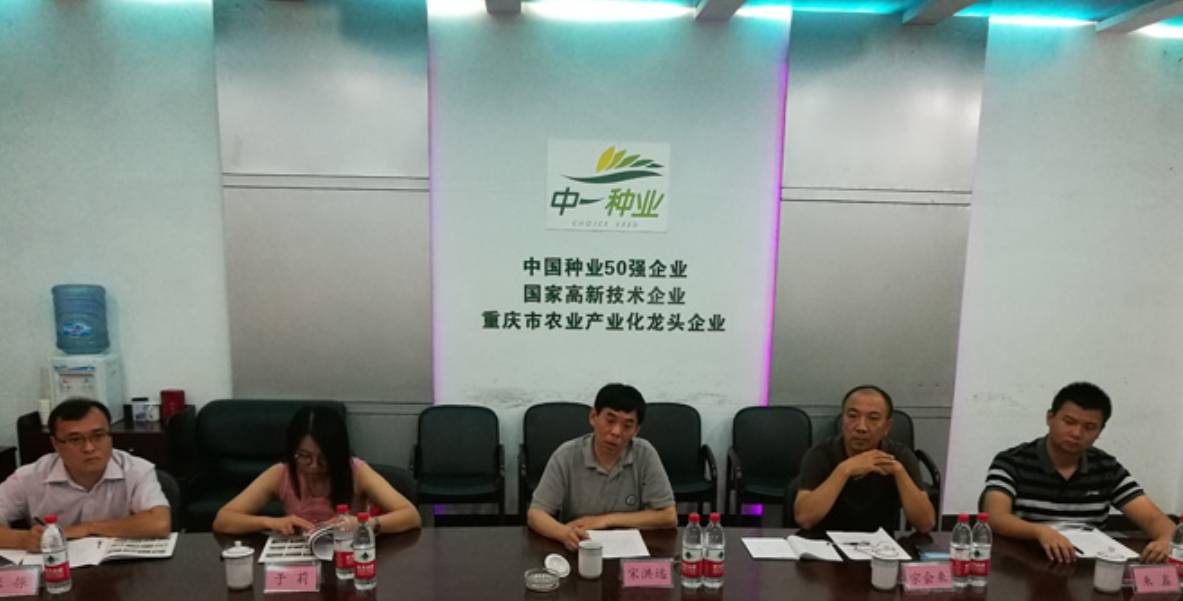
三农专家宋洪远到种业企业被调研|农业经济专家邀请
Sou Hu Cai Jing· 2025-10-09 06:48
Group 1 - The core viewpoint emphasizes the strategic importance of the agricultural sector's international cooperation under the "Belt and Road" initiative, particularly focusing on the seed industry transitioning from "product export" to "rule export" [1][3]. - The agricultural sector is prioritized for international expansion, with a focus on collaborative approaches such as "enterprise-led" and "business-to-business" strategies, enhancing the credibility of companies' overseas assets through government backing [3][5]. - A new "China-ASEAN Variety Rights Service Station" will be established to address the challenges of protecting variety rights abroad, significantly reducing the cost of rights protection by 60% [4][6]. Group 2 - A financing memorandum was signed to provide targeted support for projects included in the "Two Zones" list, offering a 100 basis points reduction in benchmark interest rates and a 30% decrease in insurance rates, with an initial credit limit of 2 billion yuan [5][6]. - The establishment of a "Belt and Road Hybrid Rice Joint Research Center" aims to create a collaborative framework involving research, seed production, and market integration, with plans to promote 800,000 acres of self-developed varieties in Myanmar and Bangladesh over three years [6][7]. - A risk compensation fund will be created to mitigate political and exchange rate risks for companies operating abroad, providing up to 30% financial compensation for losses due to uncontrollable factors [7].

上海开展联合育种攻关项目 原则上财政支持资金每年不超过500万元
Xin Hua Cai Jing· 2025-10-09 02:42
(文章来源:新华财经) 新华财经上海10月9日电上海市农业农村委员会、上海市财政局9日发布《上海市农业科技创新项目及资 金管理细则》。其中提出,开展联合育种攻关项目。支持种业企业与科研院校协同创新,围绕国家战略 需求和本市种业发展目标,聚焦重点物种,开展突破性重大品种选育。优先支持国家种业阵型企业、种 业育繁推一体化企业、国家农业科技创新联盟牵头企业、国家核心育种场和自主品种获得国家审定且达 到一定推广面积(量)的种业创新企业。联合育种攻关项目原则上财政支持资金每年不超过500万元, 实施周期不超过5年。 ...
光耀太行·红土巨变 | 新绛:风华越千年,古城展新姿
Yang Guang Wang· 2025-10-09 01:25
Group 1: Agricultural Development - Xinjiang is a key county for vegetable production in China, with a projected vegetable sales revenue of 2.35 billion yuan and an annual production of 700 million kilograms by the end of 2024 [2] - Companies like Shanxi Ruiheng Agricultural Co., Ltd. focus on the research and development of vegetable varieties, providing training for over 4,000 farmers annually [2] - The introduction of modern agricultural technologies, such as intelligent greenhouses, has significantly increased production efficiency and reduced labor intensity for farmers [4] Group 2: Economic Growth and Industrial Transformation - Xinjiang has transitioned from a traditional agricultural county to a modern agricultural powerhouse, with a focus on five major industries: grain, vegetables, fruits, livestock, and medicine [5] - The county's industrial landscape is evolving, with the establishment of 62 industrial enterprises and 20 high-tech companies by the end of 2024 [16] - Shanxi Yinshi Chemical Co., Ltd. is a major player in the dye industry, producing approximately one-third of the global demand for sulfur black dye, with annual sales exceeding 300 million yuan [16] Group 3: Tourism and Cultural Heritage - Xinjiang's tourism sector has seen significant growth, with ticket revenue from tourist attractions reaching 1.2142 million yuan from January to July, a year-on-year increase of 138.41% [10] - The region is home to 16 national protected cultural heritage sites, showcasing its rich historical legacy [10] - The promotion of traditional crafts, such as the production of Jingzhou inkstones and brushes, has contributed to the cultural tourism appeal of Xinjiang [11]

荃银高科9月30日获融资买入1001.63万元,融资余额5.08亿元
Xin Lang Cai Jing· 2025-10-09 01:24
Group 1 - The core viewpoint of the news highlights the trading performance and financial metrics of Qianyinhigh-tech, indicating a net financing outflow and low financing balance relative to market capitalization [1] - On September 30, Qianyinhigh-tech's financing buy amounted to 10.02 million yuan, while financing repayment reached 23.39 million yuan, resulting in a net financing outflow of 13.37 million yuan [1] - As of September 30, the total margin balance for Qianyinhigh-tech was 509 million yuan, with the financing balance accounting for 5.85% of the circulating market value, which is below the 20th percentile level over the past year [1] Group 2 - Qianyinhigh-tech, established on July 24, 2002, and listed on May 26, 2010, focuses on the research, breeding, promotion, and service of major crop seeds such as rice, corn, and wheat [2] - The company's main business revenue composition includes: order grain and silage corn at 44.79%, rice seeds at 25.38%, and other agricultural products at 15.26% [2] - For the first half of 2025, Qianyinhigh-tech reported operating revenue of 1.436 billion yuan, a year-on-year increase of 1.81%, while the net profit attributable to shareholders was -41.33 million yuan, a decrease of 85.85% year-on-year [2] Group 3 - Since its A-share listing, Qianyinhigh-tech has distributed a total of 446 million yuan in dividends, with 210 million yuan distributed over the past three years [3] - As of June 30, 2025, the top ten circulating shareholders of Qianyinhigh-tech included Wanjiapinzhi Life A, which held 17.41 million shares, a decrease of 2.31 million shares from the previous period [3] - New shareholders include the Southern CSI 1000 ETF, which held 6.14 million shares, while some other funds reduced their holdings [3]
中经评论:“藏粮于技”关乎农业发展方式变革
Jing Ji Ri Bao· 2025-10-09 00:09
Core Insights - The "Grain Storage in Technology" strategy has yielded significant results, with agricultural technology contribution rate reaching 63.2% by the end of 2024, mechanization rate exceeding 75%, and good seed coverage surpassing 96% [1][2][4] - This shift marks a transition from resource and labor-driven food production to innovation-driven methods, enhancing food security through technological advancements [1][2] Agricultural Technology Contribution - The agricultural technology contribution rate of 63.2% signifies a departure from extensive growth models towards intensive, modern development, with technology becoming the primary driver of agricultural growth [2] - Systematic breakthroughs in resource and environmental constraints are being achieved through technologies such as smart irrigation and pest control, which enhance efficiency and sustainability [2] Mechanization in Agriculture - The comprehensive mechanization rate for crops has surpassed 75%, with key staples like wheat, corn, and rice achieving rates of over 97%, 91%, and 88% respectively, indicating a new norm of "machine replacing labor" in food production [3] - The rise in mechanization not only upgrades production tools but also transforms production relations and resource utilization, facilitating labor transfer to urban areas [3] Seed Coverage and Quality - Good seed coverage has exceeded 96%, with self-sufficiency in major crop varieties reaching 100%, ensuring that food sources are domestically controlled and reducing strategic risks from external supply disruptions [4] - The focus of breeding has expanded from merely increasing yield to enhancing quality, with modern varieties exhibiting traits that support sustainable agricultural practices [4] Future of Agricultural Development - The "Grain Storage in Technology" strategy is guiding China's agriculture towards high-quality development, establishing a resource-efficient, environmentally friendly, and high-output agricultural model [4]
中原粮仓怎样更稳
He Nan Ri Bao· 2025-10-08 23:26
Core Viewpoint - The article highlights the agricultural strength of Henan province, emphasizing its role in ensuring food security and its contributions to national and international agricultural cooperation, particularly with ASEAN countries [1][6]. Group 1: Agricultural Development - Henan has established itself as a strong agricultural province, successfully ensuring local food supply while exporting high-quality agricultural products to the national market and ASEAN countries [1]. - The province has implemented high-standard farmland construction, resulting in significant improvements in crop yields, such as wheat production exceeding 1300 jin per mu [2]. - The innovative "investment, construction, operation, and management" model has been adopted to ensure sustainable management of agricultural resources, leading to 1.14 billion jin of summer grain production [2]. Group 2: Technological Advancements - The province has made significant strides in agricultural technology, with a total agricultural machinery power of 1.1 million kilowatts, achieving full mechanization in wheat and corn production [3]. - The establishment of a crop germplasm resource protection center has strengthened the breeding capabilities, with Henan accounting for 40% of the national seed supply for wheat [3]. - The expected contribution rate of agricultural technology progress is projected to exceed 67% by the end of the 14th Five-Year Plan, with a stable coverage rate of quality seeds at 97% [3]. Group 3: Storage and Marketing Innovations - The grain storage system in Henan has transitioned to a smart era, with real-time temperature monitoring and low loss rates of 0.3%, significantly below national standards [4]. - The province has initiated a market support program for wheat, providing timely information to alleviate farmers' concerns about low prices [4][5]. - Agricultural public brands like "Yunong Youpin" and "Meiyu Grain and Oil" have been developed to enhance market access for local agricultural products [4][5]. Group 4: International Cooperation - Henan has a long-standing relationship with ASEAN, with agricultural cooperation expanding beyond product exchange to include technology sharing and joint construction of agricultural parks [6]. - In 2023, the province's agricultural exports to ASEAN reached $640 million, accounting for 30% of its total agricultural exports [6]. - The ongoing efforts aim to upgrade agricultural trade to a full industry chain, fostering a two-way trade channel between Henan and ASEAN [6].
“藏粮于技”关乎农业发展方式变革
Jing Ji Ri Bao· 2025-10-08 22:36
Core Viewpoint - The "storing grain in technology" strategy is essential for addressing risks and challenges, as well as seizing the initiative for future development [2] Group 1: Agricultural Technology and Innovation - The contribution rate of agricultural technology progress is projected to reach 63.2% by the end of 2024, indicating a shift from extensive to intensive agricultural growth [3] - The comprehensive mechanization rate for crop farming has exceeded 75%, with major grains like wheat, corn, and rice achieving mechanization rates of over 97%, 91%, and 88% respectively [4] - The coverage rate of quality seeds has surpassed 96%, with self-sufficiency in major crop varieties reaching 100%, ensuring food security through domestic seed sources [4][5] Group 2: Environmental and Resource Management - Technological advancements are systematically breaking through resource and environmental constraints, allowing for more efficient agricultural practices [3] - Intelligent irrigation systems and green pest control technologies are being implemented to enhance resource efficiency and reduce ecological damage [3] - The shift towards data-driven agriculture is being facilitated by high-end machinery equipped with GPS and sensors, improving monitoring and disaster response capabilities [4] Group 3: Sustainable Development and Food Security - The focus of breeding goals has expanded from merely increasing yield to improving quality, with modern varieties exhibiting traits that reduce the need for chemical inputs [5] - The "storing grain in technology" strategy is reshaping traditional agricultural practices towards a more sustainable and efficient model [5] - This strategic approach aims to ensure that food security remains firmly in the hands of the nation, mitigating risks associated with external supply disruptions [5]