
二手房

Search documents
2026春节假期二手房楼市报告
安居客· 2026-03-15 01:27
Investment Rating - The report indicates a downward trend in the second-hand housing market, with an overall rating reflecting caution due to the expected decline in market activity [4][36]. Core Insights - The second-hand housing market is projected to see a 5.48% decrease in activity during the 2026 Spring Festival compared to 2025, with first-tier cities experiencing the largest drop of 15.46% [4][36]. - Despite the overall decline, certain new first-tier cities like Hangzhou and Nanjing are expected to grow by over 35%, indicating structural differentiation within the market [4][20][36]. National Market Analysis - From 2023 to 2026, the average second-hand housing search heat shows significant fluctuations, with a peak in 2024 and a decline in subsequent years, reaching 113.42 in 2026 [5][36]. - The average search heat for the Spring Festival in 2026 is forecasted to be 113.42, down from 120.00 in 2025, reflecting a 5.48% year-on-year decrease [5][31]. City-Level Analysis - First-tier cities are facing the most significant declines, with a 15.46% drop in search heat during the Spring Festival of 2026, while third and fourth-tier cities show a smaller decline of 4.55% [14][36]. - Among first-tier cities, Shanghai is the only one to show a slight increase of 1.29%, while Beijing, Guangzhou, and Shenzhen all experienced declines [18][36]. Key City Performance - The top five cities with the highest growth rates during the Spring Festival include Hangzhou (+67.43%), Shaoxing (+56.38%), Kunming (+48.98%), Nanjing (+37.96%), and Tianjin (+35.07%) [20][22]. - Conversely, cities like Weifang, Xi'an, and Shenyang are among those with the largest declines, with Weifang experiencing a drop of 37.93% [23][24]. Time Period Analysis - The average search heat for the seven days before the Spring Festival in 2026 is projected to be 98.04, nearly unchanged from 98.07 in 2025, indicating stable pre-holiday market conditions [28][36]. - The post-holiday period is expected to see a rebound, with predictions indicating a search heat of 169.73, which is 1.50 times the Spring Festival heat [32][36]. Market Dynamics and Policy Analysis - The market is characterized by active promotional strategies during the Spring Festival, with many real estate companies and agencies continuing operations to capitalize on buyer interest [33][34]. - Positive policy signals, including tax incentives and interest rate cuts, are expected to support market stabilization and recovery [35][36].
房价打5折,客户一周“下单”?深圳二手房“以价换量”,抄底时刻到了?
新浪财经· 2026-03-06 09:29
Core Viewpoint - The second-hand housing market in core cities like Shanghai and Shenzhen is showing signs of recovery at the beginning of 2026, with increased transaction volumes compared to the same period last year [2][4]. Market Activity - The transaction volume in Shenzhen's second-hand housing market has increased, with agents reporting a significant rise in customer inquiries and transactions compared to the previous year [4][6]. - In January 2026, Shenzhen recorded 5,281 second-hand residential transactions, a year-on-year increase of 15.96% and a month-on-month increase of 6.88%, marking the third consecutive month of growth [6]. Price Dynamics - Despite the increase in transaction volume, the market is still characterized by a "price-for-volume" strategy, with prices remaining under pressure. For instance, in January 2026, Shenzhen's second-hand residential prices fell by 0.97% month-on-month [10][14]. - The average transaction price for a property in Shenzhen was significantly lower than historical highs, indicating a price adjustment phase [10]. Regional and Product Differentiation - The recovery in the second-hand housing market is not uniform but shows clear regional and product differentiation, with smaller units and affordable housing seeing more activity, while larger units remain less popular [13][14]. - The market is experiencing a shift where second-hand housing is increasingly preferred over new housing, particularly in core cities, due to better value propositions [14]. Policy and Market Confidence - The recovery is attributed to a combination of policy support and improved market confidence, with measures such as optimizing purchase restrictions and enhancing transaction efficiency being implemented [14][17]. - Experts suggest that the first quarter of 2026 will be crucial for determining the market's trajectory, with potential for a significant turning point if supportive policies are enacted [15][17].

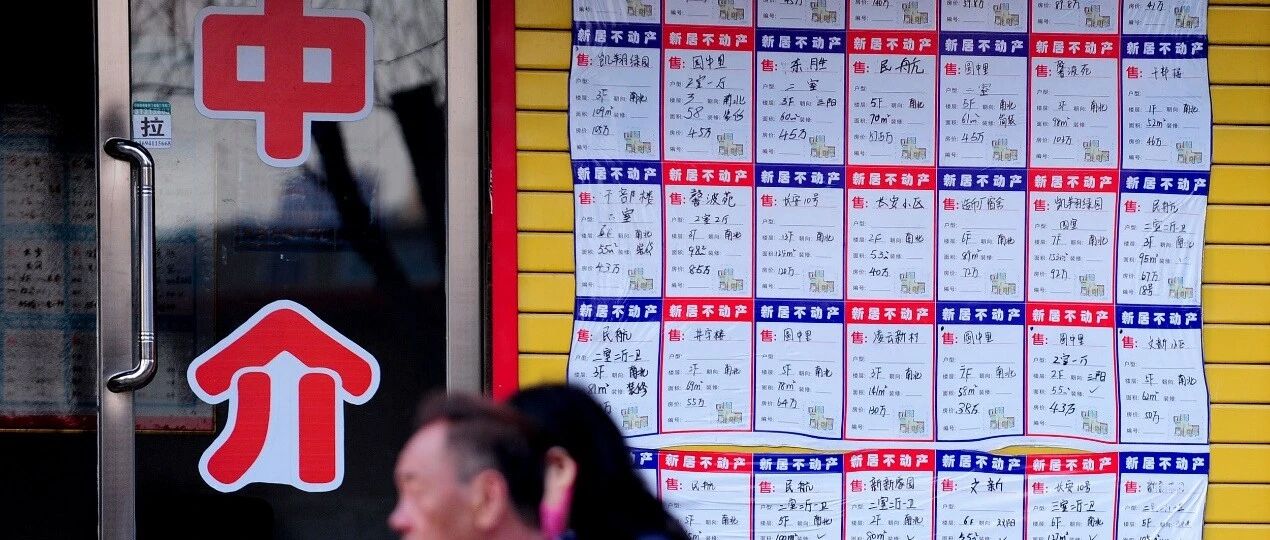
2026 年02月百城二手房市场月报-20260305
58安居客研究院· 2026-03-05 02:27
Investment Rating - The report indicates a cautious outlook on the second-hand housing market, suggesting a "bottoming out and accumulation of strength" phase, with a focus on structural differentiation among cities [10][11]. Core Insights - The second-hand housing market in 35 cities is experiencing marginal improvements in transaction volume, with prices fluctuating as they seek a bottom, highlighting a disparity in market conditions across different city tiers [10][11]. - The report emphasizes that while first-tier cities are facing significant pressure, some second-tier cities are showing resilience, indicating a complex market landscape influenced by policy changes and buyer sentiment [10][11]. Summary by Sections 1. Monthly Trends in Listing Volume - In February 2026, the total listing volume for second-hand homes in 100 cities was 2.3815 million units, reflecting a month-on-month decrease of 5.62% but a year-on-year decrease of only 0.02% [13][14]. - First-tier cities saw the most significant month-on-month decline of 8.55%, with Beijing and Shenzhen experiencing drops exceeding 11% [13][14]. 2. Housing Search Heat Index - The housing search heat index for February 2026 was 68.36, showing a slight month-on-month decrease of 1.08% and a year-on-year decrease of 0.11% [24][26]. - First-tier cities experienced an average decline of 2.05% in search heat, with Beijing leading the decline at 3.83% [24][26]. 3. Listing Duration - The average listing duration for second-hand homes was 104.56 days in February 2026, reflecting a month-on-month increase of 8.40% and a year-on-year increase of 0.04% [34][35]. - Notably, first-tier cities showed a range of increases in listing duration, with Shanghai experiencing the highest increase at 9.35% [34][35]. 4. Average Listing Price - The average listing price for second-hand homes in first-tier cities was 44,281 yuan per square meter, with a month-on-month decrease of 0.21% and a year-on-year decrease of 9.07% [9]. - New first-tier cities had an average listing price of 14,995 yuan per square meter, reflecting a month-on-month increase of 10.07% but a year-on-year decrease of 9.47% [9].
二手房市场有哪些边际变化
2026-03-01 17:23
Summary of Key Points from the Conference Call Industry Overview - The conference call discusses the second-hand housing market in 2025 and early 2026, highlighting significant changes in supply, demand, and pricing dynamics in key cities [1][2][3]. Core Insights and Arguments - **Market Characteristics in 2025**: The second-hand housing market experienced increased supply pressure with a 9% rise in listings compared to the beginning of the year. The price index for key cities fell by 14%, indicating a trend of "price for volume" [1][2]. - **Quarterly Trends**: By Q4 2025, listings in key cities began to decline, with first-tier cities experiencing a greater drop than second-tier cities. Notably, Shenzhen saw a significant increase in listings due to the cancellation of sales restrictions [1][3]. - **Transaction Volume**: There was a notable year-on-year decline in transaction volume in Q4 2025, but absolute values remained stable. January 2026 saw a rebound in transaction volume, although February experienced a seasonal decline due to the Spring Festival [1][4][5]. - **Price Trends**: The decline in prices slowed in early 2026, with a marginal recovery in listing prices observed. This change may be influenced by lower transaction volumes and requires further monitoring [1][8]. - **Market Dynamics**: The marginal improvement in volume and price is driven by external policies and internal supply-demand dynamics. Sellers are becoming more reluctant to sell, leading to a reduction in listings [1][8]. Important but Overlooked Content - **Regional Variations**: The decline in listings varied significantly across cities, with Beijing and Shanghai showing substantial decreases. In contrast, Shenzhen's listings increased significantly due to policy changes [3][4]. - **Future Market Expectations**: The "small spring" in early 2026 is expected to perform well, supported by high viewing levels throughout 2025 and a positive trend in post-holiday transactions [6][9]. - **Long-term Outlook**: The industry is likely in the "second half" of its adjustment phase, with a potential for self-repair. However, systemic price stabilization will depend on improvements in employment and income expectations [10]. - **Investment Strategy**: The investment framework for real estate stocks suggests a focus on high turnover and inventory clearance, undervalued stocks with significant land acquisition, and quality asset management leaders [10]. This summary encapsulates the key points discussed in the conference call, providing insights into the current state and future expectations of the second-hand housing market.
【广发宏观贺骁束】高频数据下的2月经济:价格篇
郭磊宏观茶座· 2026-03-01 10:05
Core Viewpoint - The article discusses the fluctuations in various commodity prices and indices in February, highlighting the impact of geopolitical events, seasonal trends, and market dynamics on pricing across different sectors. Group 1: Commodity Price Trends - The BPI index recorded 947 points as of February 27, reflecting a 1.0% decrease from the end of January, with energy and non-ferrous metal indices showing month-on-month changes of -0.1% and -6.1% respectively [1][5][6] - In the industrial construction sector, prices for thermal coal, rebar, and glass increased, while coking coal and chemical products adjusted downwards, with the cement price index slightly declining by 1.1% month-on-month [9][10] - The South China Sea thermal coal spot price increased by 6.8%, rebar by 1.2%, while coking coal decreased by 5.7% and glass by 0.3% month-on-month [9][10] Group 2: Real Estate Market - The second-hand housing prices in major cities like Beijing, Shanghai, and Shenzhen showed signs of recovery, with Shanghai and Shenzhen experiencing price increases for two consecutive months [12] - As of February 16, the second-hand housing price indices for Beijing, Shanghai, Guangzhou, and Shenzhen recorded changes of 0.9%, 0.3%, -0.8%, and 0.6% respectively compared to the last week of January [12] Group 3: Emerging Manufacturing Prices - Prices for lithium carbonate and rare earths in the emerging manufacturing sector remained strong, while the photovoltaic industry composite index fell by 1.7% month-on-month [2][10] - The lithium carbonate futures price increased by 11.5% month-on-month, influenced by export policies from Zimbabwe [13] Group 4: Electronics Pricing Trends - There is a trend of price increases for electronic products, with new smartphone models expected to rise by 100-600 yuan compared to previous generations, and mid-range models also seeing price hikes [16] - Major brands are likely to initiate a new round of price adjustments for their entire product lines starting in early March [16] Group 5: Shipping and Logistics - The export shipping sector saw a decline in prices, with the CCFI index dropping by 11.1% as of the fourth week of February [16][17] - The WCID container freight indices for routes from Shanghai to Los Angeles and New York decreased by 10.3% and 6.7% respectively [16][17] Group 6: Food Prices - Food prices exhibited mixed trends, with the average wholesale price of pork falling by 4.9% and key vegetable prices decreasing by 5.7% month-on-month [20][21] - The average wholesale price of seven monitored fruits remained stable, while yellow corn futures increased by 2.8% [20][21] Group 7: Consumer Price Index Trends - The ICPI index, representing non-food prices, showed a seasonal decline, recording a value of 99.93 as of the fourth week of February, down from 100.21 in January [24] - The BCI index for intermediate goods prices showed a decrease, while the consumer goods price index rose significantly, indicating a shift in price expectations in the consumer sector [25]

湾财晚报 | 深沪再划黄金交易红线;琼州海峡明日或因大雾停运;多地市监喊话外卖平台
Sou Hu Cai Jing· 2026-02-13 17:24
Group 1: Financial Data and Trends - As of the end of January 2026, the total social financing scale was 449.11 trillion yuan, with a year-on-year growth of 8.2% [1] - The broad money supply (M2) increased by 9.0% year-on-year, significantly outpacing the nominal GDP growth, supporting stable growth in the real economy [1] - In January, resident deposits decreased by 3.39 trillion yuan year-on-year, while non-bank financial institutions saw an increase of 2.56 trillion yuan in deposits [1] Group 2: Robotics Rental Industry - The Chinese robot rental platform, Qingtian Rental, reported over 1,000 orders received for the Spring Festival period, with total orders expected to exceed 5,000, representing an 80% increase in overall GMV [2] - Qingtian Rental is implementing a "City Partner Strategy" to address delivery challenges due to explosive growth and is maintaining a monthly financing rhythm to adapt to market changes [2] Group 3: Beer Industry Performance - Anheuser-Busch InBev's Budweiser Asia and Heineken both reported declines in sales revenue, net profit, and volume for 2025, indicating a common trend of underperformance [3][4] - Heineken's 2025 net revenue was 28.75 billion euros (approximately 235.53 billion yuan), with a net profit of 1.88 billion euros (approximately 15.44 billion yuan), both showing consecutive declines [3] - Budweiser Asia's revenue for 2025 was 5.764 billion USD (approximately 40.31 billion yuan), down about 11.59% year-on-year, with a net profit of approximately 489 million USD (about 3.42 billion yuan), marking a 35.47% decline [3] Group 4: Real Estate Market - In January, the second-hand residential sales prices in first-tier cities decreased by 0.5% month-on-month, with specific declines in Beijing, Shanghai, Guangzhou, and Shenzhen [9] - The price adjustments in the second-hand housing market have been ongoing for over four years, with recent data indicating a narrowing of the decline, suggesting improved price-performance ratios for buyers [9] - Notably, cities like Yangzhou and Zhanjiang experienced a month-on-month increase in second-hand residential prices in January [9] Group 5: Gold Market Regulation - Shenzhen's financial management authorities issued a set of ten prohibitive measures to regulate gold market activities, following previous incidents and market volatility [11] - The Shanghai Gold Exchange also announced adjustments to margin requirements and trading limits for gold and silver contracts to manage risks during the Spring Festival [11] - As of February 13, the spot gold price fluctuated between 4,900 and 5,000 USD per ounce, down approximately 10% from a previous high of 5,595 USD [11]


二手房回暖能带动“小阳春”吗?
3 6 Ke· 2026-02-06 02:26
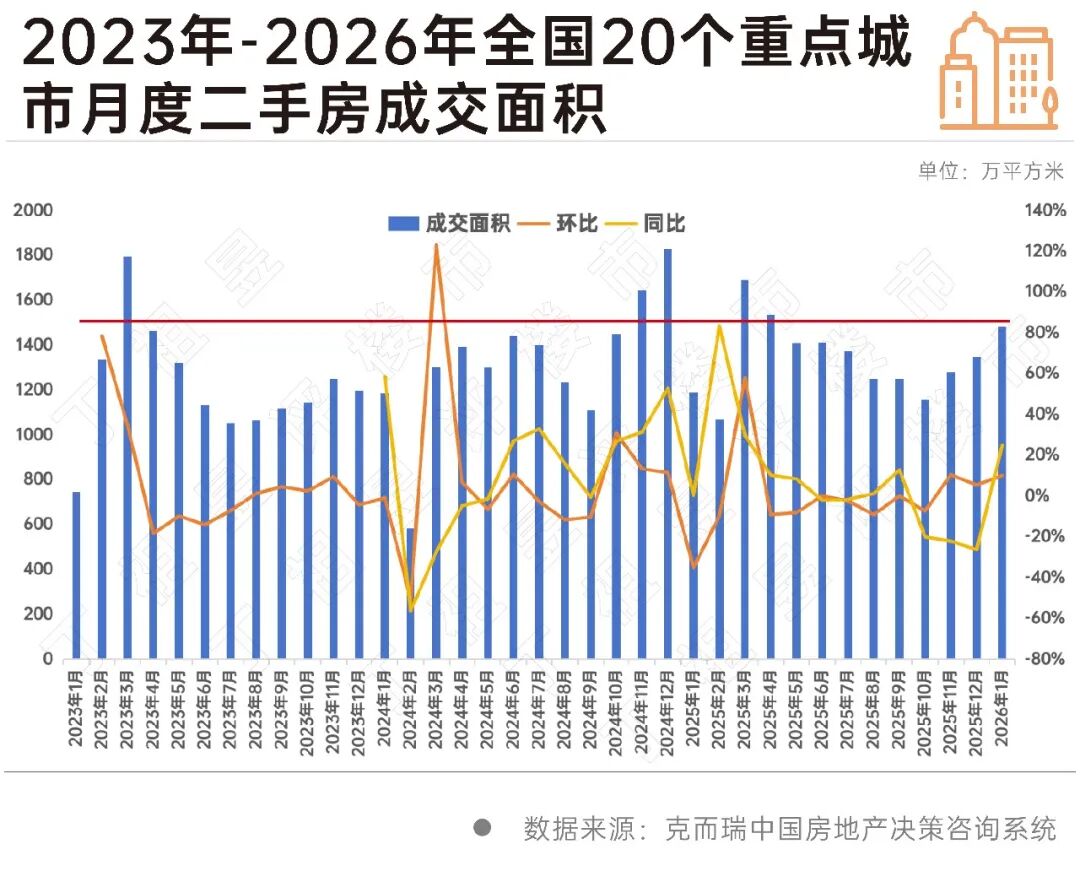
Core Insights - The second-hand housing market is showing independent trends, with a significant increase in transaction volume during the traditional off-season of January 2026, indicating a potential recovery in the overall real estate market [1][2][3] Market Performance - In January 2026, the transaction area of second-hand houses in 20 key cities reached 14.83 million square meters, representing a 10% month-on-month increase and a 25% year-on-year increase [2] - The transaction volume has been rising for three consecutive months since November 2025, suggesting a recovery trend after a period of decline [4] Price Trends - Most cities are still adopting a "price for volume" strategy, but the decline in prices for second-hand houses in core cities is slowing down, indicating a stabilization in the market [4] - In January 2026, cities like Beijing and Shanghai showed varying trends in transaction volumes and prices, with Beijing experiencing an 8% month-on-month decline but a 15% year-on-year increase, while Shanghai's transaction volume remained stable [8][9] City-Specific Insights - Chengdu led the transaction volume among the 20 key cities with 2.15 million square meters in January 2026, reflecting a 16% month-on-month increase and a 61% year-on-year increase, supported by a large population and favorable supply-demand dynamics [7] - The reduction in listings for low-priced properties (under 3 million) in cities like Beijing and Shanghai indicates a tightening supply, which may contribute to price stabilization [12][15] Market Dynamics - The decrease in low-priced property listings is attributed to both the absorption of existing inventory and a reluctance among some sellers to engage in price competition, particularly for well-located older properties [12] - The stability in transaction volumes and prices in the second-hand market is seen as a positive signal, potentially leading to a virtuous cycle in the overall real estate market [18]
楼市回暖?1月二手房成交量同比涨两成
3 6 Ke· 2026-02-02 02:47
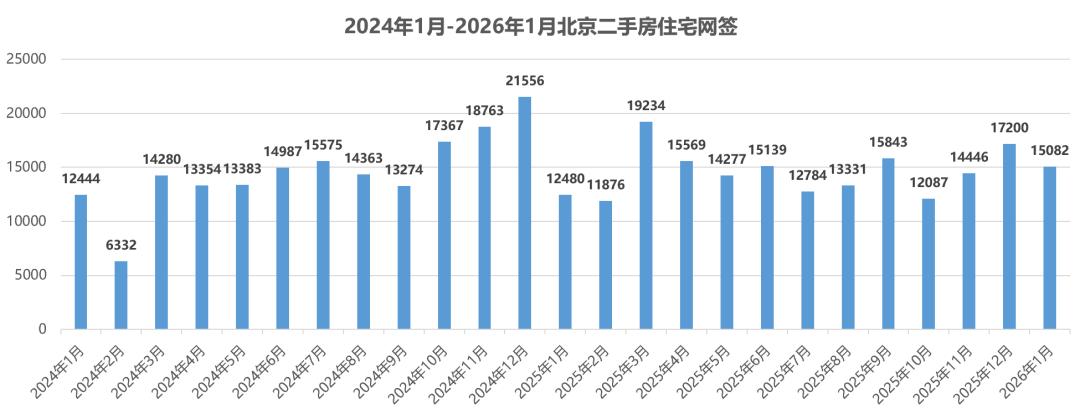
Core Viewpoint - The recent data indicates a mixed performance in Beijing's real estate market, with signs of warming but also notable declines in month-over-month transactions [1] Group 1: Transaction Data - In January, Beijing's second-hand housing transaction volume was 15,082 units, which represents a 12% decrease compared to December [2] - However, when compared year-over-year to January of the previous year, the transaction volume increased by approximately 21% [4] - The current listing volume for second-hand homes in Beijing is around 140,000 units, down by over 20,000 units from the peak in 2024 [4] Group 2: Market Influences - The changes in January's transaction volume can be attributed to recent policy adjustments, including the optimization of social security and tax requirements for non-local buyers, as well as reductions in down payment ratios for second homes [5] - The decline in housing prices over the past two years has also made second-hand homes more attractive to buyers [5] - Additionally, some families are purchasing or swapping properties for educational purposes, and the later timing of the Spring Festival this year has led to earlier purchases in January [5] Group 3: Future Outlook - The overall transaction volume of over 15,000 units in January is considered normal for Beijing's real estate market [5] - The real estate market's performance in February is expected to be subdued due to the Spring Festival, with more significant insights likely to emerge in March [5]
美联:上周末香港10大二手屋苑录20宗成交,创22个月新高
Jin Rong Jie· 2026-02-02 01:23
Core Insights - The Hong Kong property market is experiencing a significant increase in transaction activity, with the top ten secondary housing estates recording approximately 20 transactions over the weekend of January 31 to February 1, marking a 67% increase from about 12 transactions the previous weekend [1] - This surge represents the highest level of activity in nearly 22 months, surpassing the previous high of approximately 21 transactions recorded on March 23-24, 2024, and maintaining double-digit activity for the sixth consecutive weekend [1] - In January, the top ten housing estates recorded a total of approximately 252 transactions, a 22.9% increase from about 205 transactions in December 2023, also marking a new high since March 2024 when 359 transactions were recorded [1] Market Outlook - The current trends indicate a positive start for the Hong Kong real estate market in 2026, suggesting a potential recovery and growth in the sector [1]
北京二手房市场回暖,1月网签量15082套
Xin Lang Cai Jing· 2026-02-01 14:08
Core Viewpoint - The Beijing second-hand housing market is showing signs of recovery despite a decline in transaction volume in January 2026, with a total of 15,082 units signed, indicating a potential upward trend in the market [1] Group 1: Market Performance - In January 2026, the net signing volume of second-hand residential properties in Beijing was 15,082 units, reflecting a decline both year-on-year and month-on-month [1] - The January figure represents a drop of over 12% compared to December 2025, which had a signing volume of 17,200 units [1] - The decline in January is attributed to seasonal factors, including the traditional Spring Festival holiday and the end-of-year rush effect leading to temporary over-exhaustion [1] Group 2: Market Trends - Since November 2025, the Beijing second-hand housing market has maintained a relatively high transaction volume for three consecutive months [1] - The market remains active in early 2026, with transaction volumes showing a continuous increase over the past two weeks [1] - The recent recovery in transaction volume is believed to be influenced by policy measures and a "self-repair" characteristic in pricing, as evidenced by a significant reduction in the number of listings [1] Group 3: Listing Data - The number of second-hand housing listings in Beijing has decreased significantly, currently around 144,000 units, which is over 20,000 units lower than previous market peaks [1]