
奶制品

Search documents
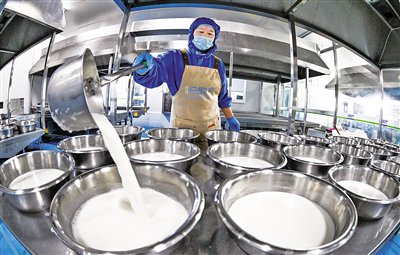
奶制品产业提档升级
Xin Lang Cai Jing· 2026-01-12 20:05
Group 1 - The core viewpoint of the article highlights the rapid development and upgrading of the traditional dairy product industry in Kezuohouqi, Inner Mongolia, focusing on the production of dairy products like milk skin [3] - Inner Mongolia has established 79 local specialty dairy processing enterprises and 2,053 handmade workshops, indicating a significant growth in the dairy sector [3] - The annual processing capacity of fresh milk in Inner Mongolia has reached 900,000 tons, generating an output value exceeding 5 billion yuan [3]

港股奶制品股震荡走高,现代牧业(01117.HK)、中国旺旺(00151.HK)双双涨超2%,中国圣牧(01432.HK)、中国飞鹤(06186.HK)...
Jin Rong Jie· 2025-12-24 02:29
Group 1 - The core viewpoint of the article highlights the positive movement in Hong Kong dairy stocks, with companies like Modern Dairy (01117.HK) and China Wangwang (00151.HK) both rising over 2% [1] - Other dairy stocks such as China Shengmu (01432.HK) and China Feihe (06186.HK) also experienced gains, indicating a broader positive trend in the sector [1] - Citic Securities stated that the EU's anti-subsidy ruling is favorable for domestic dairy product substitutes, suggesting a potential boost for local companies in the industry [1]

港股奶制品股震荡回升,现代牧业涨超3%,蒙牛乳业跌幅收窄至0.9%。
Jin Rong Jie· 2025-12-22 07:30
Group 1 - The Hong Kong dairy stocks experienced a volatile rebound, with Modern Dairy rising over 3% [1] - Mengniu Dairy's decline narrowed to 0.9% [1]

“打通全国统一大市场堵点卡点”热点问题探析|破局“内卷” 开拓蓝海
Jing Ji Ri Bao· 2025-12-15 03:45
Core Viewpoint - The letter from Huang Ping, Chairman of Guangdong Youkai Technology Co., highlights the detrimental effects of vicious competition in the detergent industry, where low-quality products with less than 5% active ingredient content are capturing market share through low prices, putting quality products at a disadvantage [1] Group 1: Industry Challenges - The phenomenon of "involution" is causing irrational competition across various industries, leading to intensified price wars, shrinking profit margins, reduced innovation investment, and rising quality and safety risks [1][2] - Over 20 national and local industry associations have publicly called for a "counter-involution" approach, addressing issues in sectors such as steel, automotive, photovoltaic, catering, finance, and logistics [2] Group 2: Strategic Shifts - Companies like China Resources Beer have closed 40 factories and reduced over 5 million tons of redundant capacity, emphasizing a shift from "scale supremacy" to focusing on "good enterprises, good products, and good brands" [3] - The construction of a unified national market is essential for efficient market operation and removing barriers to fair competition, which is crucial for high-quality development [2] Group 3: Innovation Focus - Traditional manufacturing must break free from path dependence and scale bottlenecks by leveraging technology and innovation, as highlighted by companies like Weiqiao Chuangye Group, which collaborates with research institutions and utilizes AI for product development [4] - New Hope Group has innovated in the dairy industry by utilizing cold chain logistics and AI to ensure fresh products reach consumers quickly, demonstrating the importance of innovation in meeting consumer demands [4][5] Group 4: Brand Value - In a market with information asymmetry, low-quality products often mislead consumers, necessitating a focus on rebuilding trust in "quality for price" mechanisms to enhance user experience and brand value [6] - The shift in consumer preferences towards personalized and emotionally resonant experiences indicates that businesses must transition from merely providing functional value to creating meaningful connections with users [7] Group 5: Global Expansion - The construction of a unified national market should promote an open market that encourages companies to expand globally, alleviating domestic competition pressures and enhancing competitiveness in international markets [8] - Companies like Jack Technology and Miniso are successfully implementing global strategies that integrate local insights with global aesthetics, demonstrating the potential for Chinese brands to resonate with international consumers [8] Group 6: Future Outlook - The collective sentiment among industry leaders emphasizes that companies must focus on innovation, brand building, and global engagement to escape internal competition and drive China's economy towards high-quality development [9]
【“打通全国统一大市场堵点卡点”热点问题探析⑦】破局“内卷” 开拓蓝海
Jing Ji Ri Bao· 2025-12-14 22:51
Core Viewpoint - The article highlights the detrimental effects of "involution" competition across various industries, leading to price wars, reduced profit margins, and increased quality and safety risks. It emphasizes the need for a unified national market to promote high-quality development in enterprises and industries [1][3][7]. Group 1: Industry Challenges - The washing detergent industry is facing severe competition from low-quality products with less than 5% active ingredient content, which are capturing market share through low pricing, putting quality products at a disadvantage [1]. - "Involution" competition is characterized by irrational competition due to market mechanism failures, where companies resort to price wars instead of leveraging differentiation or technological advantages, resulting in "increased production without increased revenue" [2]. - Various industries, including steel, photovoltaics, automotive, and catering, are experiencing similar challenges due to intense price competition, leading to a consensus among over 20 industry associations to advocate for "anti-involution" measures [3]. Group 2: Solutions and Strategies - To enhance market efficiency, it is essential to eliminate barriers to fair competition, which is a key aspect of building a unified national market. This will help stabilize the commercial ecosystem and address supply-demand imbalances [3]. - Companies are encouraged to abandon the outdated "scale-first" mentality and focus on creating value through quality products and strong brands. For instance, China Resources Beer closed 40 factories and reduced over 5 million tons of redundant capacity to focus on value creation [3]. - Innovation is crucial for traditional manufacturing to break free from path dependence and scale bottlenecks. Companies like Weiqiao Venture Group are collaborating with research institutions and adopting new technologies to transform their business models [4]. Group 3: Brand and Market Positioning - In a market characterized by information asymmetry, low-quality products often mislead consumers, necessitating a shift towards rebuilding trust in "quality for price" mechanisms and enhancing user experience and brand value [5]. - The home appliance industry has maintained a relatively rational approach due to years of system development, with a shift in market power from companies to consumers, who now seek personalized and emotionally resonant experiences [5]. - Companies like Hisense are witnessing a reversal in consumer behavior, with domestic brands gaining recognition for quality, indicating a shift towards "Chinese manufacturing" being associated with technological premium [5]. Group 4: Global Expansion - The construction of a unified national market is not a closed "internal cycle" but an open market that encourages both domestic and international engagement. Companies are urged to expand globally to alleviate domestic competition pressures and enhance competitiveness [6]. - Jack Technology has entered a global leadership phase, establishing production bases tailored to regional markets, while Miniso emphasizes cultural integration in its global strategy, showcasing the importance of local insights in international expansion [6]. Group 5: Future Outlook - Building a unified national market aims to create fairer, more efficient, and more valuable competition. Companies must focus on innovation, brand strength, and global presence to escape internal strife and contribute to China's high-quality economic development [7].


莫力达瓦达斡尔族自治旗尼尔基镇丽霞奶制品店(个体工商户)成立 注册资本5万人民币
Sou Hu Cai Jing· 2025-12-02 22:46
Group 1 - The establishment of a new dairy product store named Lixia Dairy Products Store in Ni'erji Town, Moqida Wa Daur Autonomous Banner has been registered, with Meng Lixia as the legal representative [1] - The registered capital of the store is 50,000 RMB, indicating a small-scale business operation [1] - The business scope includes licensed projects such as food sales and small workshop operations, which require approval from relevant authorities before commencement [1] Group 2 - The store is also involved in the retail of edible agricultural products, allowing it to operate independently under its business license for non-licensed projects [1]
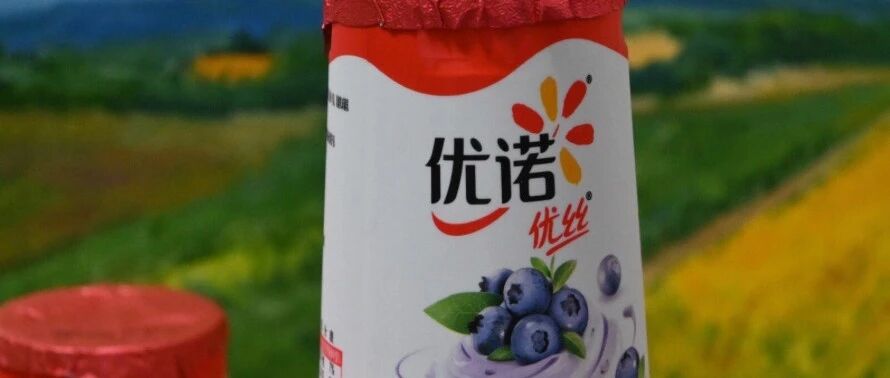
IDG资本以18亿人民币收购优诺中国股权,持续布局消费领域
IPO早知道· 2025-12-02 05:17
Core Insights - The article discusses the acquisition of Unilever's China business by IDG Capital, highlighting it as a classic case of investment firms acquiring multinational brands' operations in China [2][3]. Group 1: Transaction Details - TianTu Investment announced on December 1 that it plans to sell its 45.22% stake in Yuno Dairy Co., Ltd. (Yuno China) to Kunshan Noyuan Ruiyuan Management Consulting Co., Ltd. for a transaction price of 813 million yuan [2]. - IDG Capital will ultimately acquire 100% of Yuno China for a total transaction price of 1.8 billion yuan, becoming the controlling shareholder [2]. Group 2: Strategic Implications - Post-acquisition, IDG Capital will retain the original management team of Yuno China to maintain and enhance brand competitiveness, aiding in regional expansion and continuous product innovation [3]. - The acquisition will leverage IDG Capital's operational experience and efficient decision-making processes to improve overall decision-making and execution efficiency while allowing the management team sufficient operational space [3]. Group 3: Broader Investment Strategy - In addition to acquiring Yuno China, IDG Capital has also acquired a majority stake in the Danish candy brand Lakrids By Bülow and has previously invested in several international consumer brands such as Acne Studios, Moncler, and Gentle Monster [3]. - IDG Capital has a history of supporting potential brands like Heytea and Insta360, helping them scale from early stages to larger operations, while also keeping an eye on companies with sustainable growth potential like Luckin Coffee and Yuanqi Forest [3].
一杯酸奶,估值1422亿
首席商业评论· 2025-11-20 06:35
Core Insights - Chobani, a US yogurt brand, recently completed a $650 million funding round, raising its post-money valuation to $20 billion (approximately 142.2 billion RMB) [4] - The founder, Hamdi Ulukaya, has seen his net worth soar to approximately $13.5 billion, making him the richest person in Turkey [4] Company History and Growth - Chobani was founded 20 years ago when Ulukaya purchased an old yogurt factory for $700,000, despite skepticism from advisors [7] - The brand aimed to introduce Greek yogurt to the US market, which was dominated by sweet, low-fat options, capturing a mere 1% of the yogurt market at the time [8] - By 2012, Chobani's revenue exceeded $1 billion, establishing it as the leader in the Greek yogurt segment [8] Financial Performance - Chobani's projected net sales for this year are expected to reach $3.8 billion, reflecting a 28% increase from the previous year [9] - Historically, Chobani has rarely sought external funding, with only two previous rounds before the recent financing [11] Strategic Moves and Acquisitions - In 2023, Chobani made significant acquisitions, including a $900 million purchase of high-end coffee brand La Colombe, enhancing its competitive edge in the coffee and dairy sectors [14] - The company also acquired plant-based frozen meal brand Daily Harvest, marking its entry into the frozen food market [14] Market Potential in China - The success of Chobani raises questions about the potential for similar models in the Chinese market, where brands like Wuzhou and Lechun are emerging [16] - Wuzhou, founded in 2020, focuses on low-temperature Greek yogurt and has established a factory with a daily processing capacity of 800 tons [17] - Lechun, backed by Coca-Cola, emphasizes high protein content and has received multiple rounds of funding, positioning itself as a strong competitor in the health-focused yogurt segment [17]

一杯酸奶,估值1400亿,创始人成全国首富
创业家· 2025-11-09 10:08
Core Insights - Chobani, an American yogurt brand, recently completed a $650 million funding round, raising its post-money valuation to $20 billion, making its founder Hamdi Ulukaya the new richest person in Turkey with a net worth of approximately $13.5 billion [4][10]. Group 1: Company Overview - Chobani was founded in 2005 when Hamdi Ulukaya purchased an old yogurt factory for $700,000, despite skepticism from advisors [10]. - The company initially focused on promoting Greek yogurt in the U.S. market, which was dominated by sweeter, low-fat options [11]. - By 2012, Chobani's revenue exceeded $1 billion, establishing it as the market leader in the Greek yogurt segment [11]. Group 2: Business Strategy - Ulukaya emphasized a balanced pricing strategy to ensure profitability while remaining competitive [12]. - Chobani adopted a unique distribution strategy by partnering with national supermarket chains and even proposed using yogurt to pay for shelf space [13]. - The brand's focus on health and wellness has allowed it to capture a significant market share, with projected net sales of $3.8 billion in 2023, a 28% increase from the previous year [13]. Group 3: Funding and Financial History - Chobani has had limited funding rounds, with only two significant investments prior to the recent $650 million round [15][16]. - The company faced challenges in 2013 due to a food safety scandal and competition, leading to a $450 million investment to build a large production facility [16]. - After regaining control from investors, Ulukaya's team held a 90% stake in the company, allowing for strategic decisions without external pressure [16]. Group 4: Recent Developments - Chobani has made significant acquisitions, including a $900 million purchase of high-end coffee brand La Colombe and a brand specializing in plant-based frozen meals, Daily Harvest [18]. - These acquisitions are part of Chobani's strategy to diversify its product offerings and enhance its valuation [18]. Group 5: Market Potential in China - The success of Chobani raises questions about the potential for similar models in the Chinese market, where brands like Wuzhou and Lechun are emerging in the Greek yogurt segment [20]. - Wuzhou, founded in 2020, focuses on low-temperature Greek yogurt and has established a significant production capacity [20]. - The competitive landscape in China is still developing, indicating potential opportunities for growth and market capture [22].

(第八届进博会)外企话进博:中国超大规模市场兼具活力、潜力、创新力
Zhong Guo Xin Wen Wang· 2025-11-07 10:31
Group 1 - The China International Import Expo (CIIE) showcases China's vast consumer market, which is characterized by strong growth, vitality, and innovation, providing significant opportunities for global enterprises [1][2] - China has maintained its position as the world's second-largest import market for 16 consecutive years, with over 800 million people expected to join the middle-income group in the next decade, further releasing market potential [1] - Major companies, such as Johnson & Johnson and Amway, highlight their success in the Chinese market, with projections indicating that the medical device market could reach $140 billion by 2030, accounting for 20% of the global market [1][2] Group 2 - The CIIE introduces new themes like the "silver economy," with a significant elderly population of 310 million expected by the end of 2024, representing about 22% of the total population [2] - Companies like IKEA are designing products specifically for the elderly, demonstrating a focus on adapting to the needs of this demographic [2] - Edwards Lifesciences is targeting young patients in China, emphasizing the importance of early detection and treatment in healthcare innovation [2] Group 3 - The diverse consumer demands in China are driving continuous innovation across various industries, with companies like Philips and Rockwell Automation introducing tailored products for the Chinese market [3] - Schneider Electric views the Chinese market as a source of innovation and development, with China being its second-largest market and a key R&D hub [3] - Companies like Herbalife and Toshiba are leveraging the high acceptance of new products among Chinese consumers to foster innovation and adapt their offerings to local preferences [3]