
租赁住房

Search documents
中航北京昌保租赁住房REIT首发价值深度分析:区级人才公租房,受益供需紧平衡
Shenwan Hongyuan Securities· 2026-03-26 02:27
Group 1 - The report analyzes the launch of the Beijing Changbao REIT, which focuses on rental housing for talents in Changping District, Beijing, with a total issuance of 400 million shares priced between 1.822 and 2.318 yuan per share, corresponding to a fundraising scale of 7.29 to 9.27 billion yuan [11][12] - The underlying assets include three projects: Yalan Xincheng, Guorui Xiyuan, and Future Rongshang Garden, all located in the Future Science City of Changping District, benefiting from a balanced supply and demand for public rental housing [13][14] - The expected fair value of the projects is estimated to be between 728 million and 942 million yuan, with a projected dividend yield of 3.71% for 2026, which is higher than comparable REITs [4][29] Group 2 - The projects have a high occupancy rate, with historical rental prices stable at 60%-70% of the market rate, benefiting from the tight supply-demand balance in the area [4][19] - The rental structure shows a high proportion of large tenants, with a significant portion of leases expiring in 2026, leading to a recent decline in renewal rates [4][35] - Changping District has a limited supply of public rental housing, with only one new public rental project planned, while the demand for talent housing is projected to increase by approximately 10,600 units during the 14th Five-Year Plan period [19][29] Group 3 - The operational performance of the underlying assets has shown continuous growth, with revenues increasing from 36.88 million yuan in 2022 to 33.91 million yuan in the first nine months of 2025, and net profits improving correspondingly [44][45] - The gross profit margin of Beijing Changbao REIT is higher than that of comparable projects, with margins of 66.48% in 2022 and 64.91% in 2025, indicating strong operational efficiency [47] - The rental pricing strategy is government-regulated, resulting in minimal price fluctuations and a competitive advantage over market rates [4][19]
公募REITs周速览:可参与东方红隧道打新
HUAXI Securities· 2026-03-21 15:11
1. Report Industry Investment Rating No information provided in the text[1][2][3] 2. Core Views of the Report - This week (March 16 - 20, 2026), the CSI REITs Total Return Index closed at 1,021.8 points, a week - on - week decline of 0.13% and a decline of 2.91% compared to the end of January, falling back to the level around the beginning of the year on January 6, 2026. The daily average turnover rate dropped to 0.3% this week, the lowest weekly average since 2021, indicating a further decline in market trading sentiment. As of March 20, the total market value of 79 listed REITs reached 223.9 billion yuan, with a week - on - week decline of 0.07%, and the circulating market value was 123.8 billion yuan[1][9] - The "Dongfanghong Tunnel Expressway REIT" registered for effect on March 16, 2026, and will start the inquiry on March 25. It is the first infrastructure public REIT since December 2025. With certain primary market new - issue participation value, the project's IRR is expected to be above 4% if issued at the upper limit of the inquiry range[2][3][22] - In the secondary market, the rental housing and transportation facilities sectors led the gains, while the trading sentiment continued to decline. The performance of various assets was differentiated this week[4][29] 3. Summary According to Relevant Catalogs 3.1 Primary Market - "Dongfanghong Tunnel Expressway REIT" started the inquiry. Its underlying asset is the Qianjiang Tunnel connecting Hangzhou and Jiaxing. The project's evaluation value is 4.158 billion yuan, and the proposed issuance scale is 4.356 billion yuan. The inquiry range's corresponding fundraising scale is 4.012 - 4.7 billion yuan, with a discount - premium range of only ±8% compared to the proposed fundraising scale, smaller than the ±20% of new projects in the second half of 2025[2][17][18] - Other infrastructure REITs: Shanxi Securities Jinzhong Public Investment Ruiyang Heating, AVIC CNNC Group Energy, and E Fund Guangxi Beitou Expressway updated their feedback this week. On March 16, 2026, Guangdong Hongchuan Smart Logistics Co., Ltd. announced plans to issue infrastructure public REITs. On March 19, Tianhong Co., Ltd. decided to withdraw the application for "Zhonghang Tianhong Consumption REIT"[3][25][26] - As of March 20, 2026, 15 commercial real - estate REITs have been declared in the market, with 2 accepted and 13 under inquiry by the exchange, and the expected fundraising scale reaches 46.06 billion yuan, covering various business forms[26][28] 3.2 Secondary Market - This week, the rental housing, transportation facilities, energy facilities, and data center sectors rose by 0.97%, 0.67%, 0.1%, and 0.1% respectively, while other sectors fell. The storage and logistics, municipal environmental protection, and industrial park sectors had relatively large declines[4][29][31] - The rental housing sector led the gains this week. China Asset Management Beijing Affordable Housing and CICC Xiamen Anju led the rise. Considering Xiamen Anju's upcoming expansion, the new project's distribution rate is expected to reach 4.13%, and the combined distribution rate of new and old projects is expected to reach 3.05%[4][32] - The storage sector had the largest decline this week. The decline of CICC GLP REIT may be related to market rumors, and GLP has clarified on its official website. The stop - falling of Harvest JD Warehousing Infrastructure REIT may be related to the approaching renewal of the Langfang project[4][35][36] - The transportation facilities sector performed well this week. Most road sections saw an increase in traffic volume and toll revenue during the Spring Festival travel season, but some projects had a decline in toll revenue due to the free - toll policy for small passenger cars and the decrease in freight vehicle traffic[40] - The industrial park sector showed a differentiated performance. For some individual bonds with poor fundamentals or large previous declines and a distribution rate of over 5%, there may be opportunities for marginal improvement. It is recommended to pay attention to park REITs with stable fundamentals, a distribution adjustment mechanism, and a high distribution rate[45] - The energy facilities sector showed an overall positive trend. Against the background of the Middle East war, there are two main lines in the equity market: the substitution logic of rising oil prices and the "computing - power and electricity coordination"[49] - The data center (IDC) sector had a differentiated performance. The distribution rates of Runze Technology and Wanguo Data are slightly higher than the reference value of 3.33% for rental - type REITs projects, and there may be room for a 10BP increase[51] - The trading activity of REITs continued to decline this week. The daily average trading volume was 370 million yuan, the daily average trading volume was 85 million shares, and the daily average turnover rate was 0.30%, with week - on - week declines of 16.74%, 15.71%, and 0.06 percentage points respectively[53]
在上海保租房社区解锁新春“家”年华
Xin Lang Cai Jing· 2026-02-22 16:55
Core Viewpoint - The article highlights the cultural significance of the Chinese New Year ("年味") and how it is experienced by various communities in Shanghai, particularly by migrant workers and entrepreneurs who may not return home for the holiday. The community becomes a space for them to create and experience the festive atmosphere together. Group 1: Community and Living Conditions - A rental community in Shanghai, consisting of 926 units ranging from 51 to 93 square meters, has attracted many new residents due to its prime location and fully furnished apartments, making it appealing for those working in the city [5] - The community offers convenient amenities such as a supermarket and a community canteen, which enhance the living experience for residents [6] - The rental model allows residents to pay rent using their housing provident fund and sign contracts directly with state-owned landlords, simplifying the rental process [6] Group 2: Social Activities and Integration - The community organizes various social events, including activities for traditional festivals like the Spring Festival, fostering interaction among residents [6][8] - Residents, including foreign tenants, participate in cultural activities such as writing couplets and playing traditional games, creating a sense of belonging and shared experience [8] - The community serves as a long-term home for its residents, who appreciate the quality of life and the supportive environment it provides for their entrepreneurial endeavors [8]


国泰海通|地产:租赁住房REITs投资体系——REITs框架研究系列二
国泰海通证券研究· 2026-02-13 11:57
Core Viewpoint - The article emphasizes that the centralized rental housing market is entering a growth phase driven by dual factors: policy benefits and declining interest rates, which help to resolve profitability challenges [1]. Group 1: Policy and Market Dynamics - Multiple policy incentives and macroeconomic interest rate declines are significantly reducing financing costs, allowing rental enterprises to gradually establish their business models [1][2]. - The supply of rental housing is increasing notably, with the market structure shifting towards state-owned enterprises as the main players, while domestic investors prefer risk diversification through entrusted operations, and foreign investors favor self-operated high-end assets for better risk compensation [1]. Group 2: REITs Asset Characteristics - Rental housing REITs primarily include public rental housing, guaranteed rental housing, and market-oriented apartments, each exhibiting distinct characteristics in tenant structure, revenue models, and lease stability [2]. - Public and guaranteed rental housing targets low-income groups and new citizens, benefiting from low land and tax costs, high lease renewal rates, and demonstrating "high stability, low elasticity" cash flow characteristics [2]. - Market-oriented rental housing caters to a broader audience with potential for rent growth but faces higher marketing costs and tax burdens, making lease stability more susceptible to market fluctuations [2]. Group 3: Evaluation Framework - A comprehensive evaluation framework for rental housing REITs is proposed, encompassing five dimensions: regional economy, asset quality, operational capability, management quality, and market/policy environment [2]. - The framework assigns a weight of 37% to operational management capability, focusing on occupancy rates, rent growth rates, EBITDA profit margins, and cash flow distribution rates [2]. - Asset quality is weighted at 26%, while regional economic factors account for 20%, assessing the economic level, population inflow rates, and rent-to-income ratios of the project’s location [2]. Group 4: Expansion Mechanism - The normalization of REITs expansion mechanisms will enhance asset valuation through three pathways: scale effects, risk diversification, and improved expectations [3]. - Expansion not only leads to growth in scale but also value reconfiguration, as it can dilute fixed management costs and directly enhance net operating income (NOI) profit margins, thereby increasing DCF valuations [3]. - By injecting regionally complementary and tenant-structured differentiated assets, the risk of vacancy in single assets can be effectively reduced, enhancing cash flow stability and lowering capitalization rates [3].

REITs 框架研究系列二:租赁住房 REITs 投资体系
GUOTAI HAITONG SECURITIES· 2026-02-13 09:48
Investment Rating - The report rates the industry as "Overweight" [4] Core Insights - The concentrated rental housing market is entering a growth phase driven by dual factors of policy benefits and declining interest rates, which help to resolve profitability issues [2][18] - The report constructs a comprehensive framework to quantify the investment value of rental housing REITs across five dimensions, analyzing how expansion mechanisms can reshape asset valuations through economies of scale and risk diversification [2][19] Summary by Sections 1. Market Growth Under Policy Benefits - Historical challenges include a long-term divergence between rental yield and housing price growth, leading to profitability issues for rental enterprises [9][10] - Policies from both supply and demand sides are addressing challenges in the concentrated rental market, transitioning it from unprofitable to viable [12][19] - A macroeconomic environment of declining interest rates is effectively reducing financing costs for rental enterprises, contributing to the maturation of their business models [15][17] - The rental housing supply has significantly increased, with institutionalized projects in 16 key cities reaching a total of 1.24 million units by the end of 2024, a year-on-year growth of 35.2% [18][19] - The market for large transactions in rental housing is heating up, with a notable increase in transaction volumes and values [23][24] 2. Rental Housing REITs: Types and Characteristics - Rental housing REITs are categorized into public rental housing, guaranteed rental housing, and market-oriented apartments, each with distinct tenant structures, income compositions, and cost structures [32][34] - Public and guaranteed rental housing have strict tenant admission criteria and regulated pricing, while market-oriented housing is driven by market dynamics [34][36] - The income structure varies significantly, with public and guaranteed housing having lower operational costs due to tax exemptions and subsidies, while market-oriented housing faces higher marketing and operational costs [42][46] 3. Comprehensive Value Assessment of Rental Housing REITs - The assessment framework includes five dimensions: regional economy (20%), asset quality (26%), operational management capability (37%), manager quality (12%), and market and policy environment (5%) [19][32] - Operational management capability is weighted most heavily, focusing on occupancy rates, rental growth rates, EBITDA margins, and cash flow distribution rates [19][32] - The report emphasizes that a normalized expansion mechanism for REITs will enhance asset valuations through economies of scale, risk diversification, and improved expectations [19][23] 4. Future Outlook: Impact of REIT Expansion on Asset Valuation - Growth in net operating income (NOI) will directly elevate asset values, while enhanced cash flow stability will lead to revaluation of existing assets [23][24] - "Platform-type REITs" with sustainable expansion capabilities will achieve higher operational funding multiples, resulting in an upward shift in overall valuation [19][23]
筑巢公寓下麦西店启用
Xin Lang Cai Jing· 2026-01-28 19:57
Group 1 - The newly launched "Zhu Chao Apartment" in Xiamaixi, Guiyang, is designed specifically for young talents, featuring 56 units ranging from 42 to 80 square meters, with rental prices between 960 to 1600 yuan [2] - The project is strategically located near the Xiamaixi Station of Metro Line 1 and multiple bus routes, providing a comprehensive transportation network [2] - Eligible young tenants can apply for rental subsidies from Guiyang Talent Group, with monthly subsidies of 200 yuan for undergraduates, 400 yuan for master's students, and 800 yuan for doctoral students, available for up to 18 months [2] Group 2 - Guiyang Talent Group's "Zhu Chao Apartment" brand has established 14 projects in Guiyang and Gui'an, offering a total of 6,480 housing units and serving over 70,000 young talents [3] - The company aims to continue expanding its project coverage and enhancing its talent service system to support young talents in achieving their dreams in Guiyang and Gui'an [3]

公募REITs周速览(2026年1月12-16日):小幅回调
HUAXI Securities· 2026-01-18 13:23
1. Report Industry Investment Rating - No relevant information provided 2. Core Viewpoints of the Report - In the week from January 12 - 16, 2026, the CSI REITs Total Return Index closed at 1025.26 points, down 0.35% weekly, with average daily trading volume of 124 million units, average daily trading value of 526 million yuan, and average daily turnover rate of 0.45%, showing a volume - shrinking correction in the second week of the year. As of January 16, the total market value of 78 listed REITs in China was 222.5 billion yuan, a week - on - week decrease of 0.39%. [1][12] - In the secondary market, except for the industrial park sector which rose 0.36%, other asset types declined slightly, with the energy facilities, new - type facilities, and rental housing sectors leading the decline. In the primary market, the Shanghai Stock Exchange issued the second - round feedback on Shanxi Securities Jinzhong Public Investment Ruiyang Heating REIT on January 15, 2026. [2][6] 3. Summary by Relevant Catalogs Secondary Market: Slight Decline in Each Asset Type and Weakening Trading Activity - **Overall Market Performance**: The CSI REITs Total Return Index declined, with reduced trading volume and turnover rate. The total market value of listed REITs also decreased slightly. [1][12] - **Sector - by - Sector Performance** - **Industrial Park**: The only rising sector this week, with a dividend distribution rate of about 4.57%. It's recommended to focus on park REITs with stable fundamentals, income distribution adjustment mechanisms, and high dividend distribution rates, such as CICC Chongqing Liangjiang, Huaxia Jinyu Zhizao Gongchang, and Chuangjin Hexin Shounong. [2][21] - **Energy Facilities**: The sector with the largest decline this week, possibly affected by the Q4 2025 operating data. Some individual bonds, such as CITIC Construction Investment Mingyang Smart Energy New Energy, had significant declines. However, AVIC Jingneng Photovoltaic REIT is worthy of attention after its expansion and addition of hydropower assets. [3][25] - **Data Center (IDC)**: The sector corrected this week. Benefiting from the strong demand in the AI computing power sector in the equity market, the future demand of the projects is sustainable, and the industry is highly prosperous. The dynamic dividend distribution rates of the two IDC REITs are about 3.60% and 3.47% respectively. [4][29] - **Consumption Infrastructure**: Relatively resilient. Some REITs, such as CCB Principal Wumart Consumption, led the increase. With high occupancy rates and slightly rising rent prices, and approaching traditional consumption seasons like the Spring Festival, it's worth continuing to pay attention to, especially those with high dividend distribution rates. [4][32] - **Rental Housing**: The performance was mixed. Some were driven up by expansion expectations. The sector has a good fundamental situation, and it's recommended to focus on REITs with a dividend distribution rate of over 3.1%. [5][35] Primary Market: Second - Round Feedback on Shanxi Securities Jinzhong Public Investment Ruiyang Heating REIT - On January 15, 2026, the Shanghai Stock Exchange issued the second - round feedback on Shanxi Securities Jinzhong Public Investment Ruiyang Heating REIT, focusing on issues such as heat source price, heating shutdown rate, operation management fee, and pipeline transportation fee. [6][45] - As of January 16, 2026, there was 1 project issued but not yet listed, 11 projects with feedback, and 4 projects accepted by the exchange. [7][47]
华润有巢REIT成功扩募上市:“资产与资本循环”平台战略再进一步
Sou Hu Cai Jing· 2026-01-18 02:59
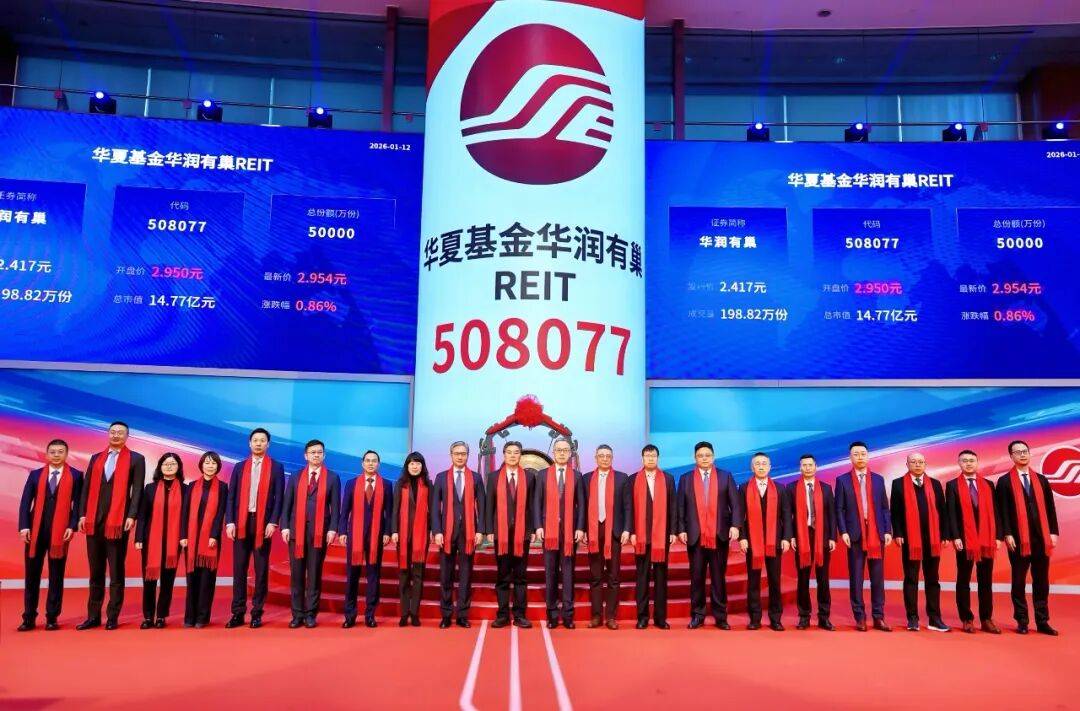
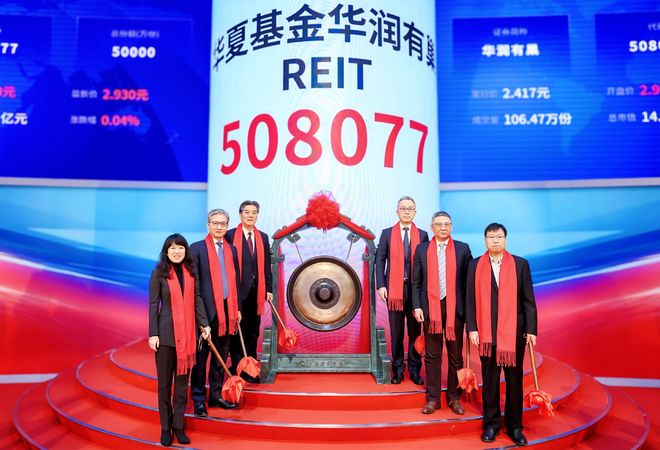
Core Viewpoint - The first non-directional public REITs expansion in China has officially launched, marking a significant milestone in the industry [1] Group 1: Market Confidence and Institutional Innovation - The listing ceremony gathered representatives from various sectors, including the Shanghai Municipal Development and Reform Commission, Housing Management Bureau, Minhang District Government, China Resources Group, CITIC Securities, and Huaxia Fund, highlighting the event's industry-leading significance [3] - China Resources Youchao REIT has become a representative product in the rental housing REITs sector, demonstrating strong performance with over 154 million yuan in cumulative dividends to investors by November 2025, showcasing its robust yield capability and asset resilience [4] Group 2: Fund Utilization and Asset Optimization - The funds raised from this expansion will be used exclusively to acquire the Shanghai Majiao affordable rental housing project, located in a high-demand area with a rental rate of 96% as of June 2025 [5] - Following the acquisition, China Resources Youchao REIT will achieve comprehensive coverage of three core industrial clusters in Shanghai, enhancing asset layout and risk resilience, thereby injecting new momentum into the fund's long-term stable operation and value growth [5] Group 3: Strategic Positioning Upgrade - The strategic positioning of China Resources Youchao has evolved from a "capital management + operation" platform to a "asset and capital circulation" platform, aimed at supporting national livelihood and quality growth for new citizens and youth [6] - This evolution reflects the establishment of a full-cycle closed-loop capability in investment, financing, construction, management, and exit, facilitated by the REITs expansion [6] Group 4: Professional Collaboration - Huaxia Fund, as the fund manager, has established significant management scale and professional advantages in the public REITs sector, managing 19 public REITs to date, which provides a solid foundation for the stable operation of REITs [7] - China Resources Youchao, as the original rights holder and operational management entity, enhances asset rental rates and service satisfaction through a multi-dimensional operational system, achieving a virtuous cycle of "management empowering value, operation creating revenue" [7] Group 5: Industry Outlook - The successful expansion of China Resources Youchao REIT is seen as a milestone not only for the individual product but also as an important practical example for the normalization of expansion mechanisms in the public REITs market, particularly in the rental housing sector [9]
首单非定向扩募公募REITs上市 华夏基金华润有巢REIT探索租赁住房REITs新路径
Zhong Guo Jing Ying Bao· 2026-01-15 04:57
Core Viewpoint - The expansion of public REITs in China marks a significant milestone with the listing ceremony of the Huaxia Fund Huazhong REIT (508077) on January 12, 2026, at the Shanghai Stock Exchange, highlighting the growing recognition and acceptance of market-driven rental housing REITs in the domestic market [1][3]. Group 1: Expansion and Performance - The Huaxia Fund Huazhong REIT has demonstrated strong market performance over three years, achieving over 154 million yuan in cumulative dividends to holders by the end of 2025 [3]. - The recent expansion is the first for the Huaxia Fund Huazhong REIT, successfully completed in December 2025, utilizing a non-directional placement model to protect existing investors' rights, with a placement price of 2.53 yuan per share and a total of 450 million shares available for placement [3][4]. Group 2: Fund Utilization and Asset Acquisition - The funds raised from the expansion, approximately 1.1329 billion yuan (excluding subscription fees and interest), will be fully allocated to acquire high-quality assets under the Huazhong brand, specifically the Shanghai Majiao project, which is part of a demonstration project for affordable rental housing [4]. - The Shanghai Majiao project is strategically located near key industrial clusters, with a strong rental demand and an occupancy rate of 96% as of June 2025, enhancing the resilience of the operations [4]. Group 3: Strategic Vision and Future Development - The Huazhong brand aims to enhance its operational capabilities through a multi-dimensional operational system, focusing on specialized marketing, diverse leasing strategies, community operations, and safety supervision to maintain high occupancy rates and service quality [6]. - The successful expansion is viewed as a practical example of revitalizing existing rental housing assets and expanding effective investment, reflecting the capital market's recognition of the asset quality and operational capabilities of Huazhong [6]. - Future collaboration between Huazhong and Huaxia Fund is expected to enhance the quality and efficiency of public REIT projects, increasing the market influence and industry voice of rental housing REITs, and attracting more social capital into the affordable housing sector [6].
公募REITs周速览:开年放量上涨
HUAXI Securities· 2026-01-12 05:22
1. Report Industry Investment Rating No industry investment rating is provided in the report. 2. Core Viewpoints of the Report - In the first week of 2026 (January 5 - 9), the China Securities REITs Total Return Index closed at 1028.93 points, rising 1.89% weekly, with the market volume increasing and prices rising. The total market capitalization of 78 listed REITs reached 223.3 billion yuan, a 2.23% increase from the previous period, and the tradable market capitalization was 123 billion yuan [1][12]. - In the secondary market, various assets generally rose, and trading activity significantly increased. Except for the rental housing sector, the other sectors had a growth rate of 1.4 - 4.4%. The leading sectors in terms of growth were new - type facilities (+4.41%), consumer facilities (+3.15%), and industrial parks (+3.14%) [2][20]. - In the primary market, on January 9, 2026, the Shenzhen Stock Exchange officially accepted the application for the China Aviation Beijing Changbao Rental Housing REIT [6][49]. 3. Summary by Relevant Catalogs 3.1 Secondary Market: General Rise of Various Assets and Significant Increase in Trading Activity - **Overall Market Performance**: The China Securities REITs Total Return Index rose 1.89% weekly, and the average daily trading volume and turnover from Monday to Friday increased by 75.45% and 69.73% respectively compared to the previous period [1][12]. - **Sector - by - Sector Performance** - **Data Center (IDC) Sector**: Runze Technology Data Center and万国 Data Center rose 5.29% and 2.80% respectively. Runze Technology's average daily turnover rate increased by 0.38pct to 1%. The dynamic distribution rates of two IDC REITs dropped to 3.63% and 3.32% respectively, and attention could be paid to subsequent asset fluctuations [2][23]. - **Consumer Infrastructure Sector**: All individual bonds in this sector rose. With high occupancy rates and slightly rising rental prices, and approaching traditional consumer peak seasons like the Spring Festival, the fundamentals of consumer REITs are expected to perform well. However, it should be noted that 41.32% of the shares of E Fund Huawai Market REIT will be unlocked on January 24, 2026 [3][25]. - **Industrial Park Sector**: The sector rose 3.14% this week, with all individual bonds rising. Although some parks faced issues such as tenant exits or reduced rental areas, they stabilized occupancy rates through price - for - volume strategies. The average distribution rate of industrial parks is 4.60%, significantly higher than other rental - type REITs and the reference value of 3.30%. Attention could be paid to parks with stable fundamentals, income distribution adjustment mechanisms, and high distribution rates [3][28]. - **Rental Housing Sector**: The sector had mixed performance this week, with 5 rising and 3 falling. China Resources Youchao's expansion shares are about to be listed, and its current individual bond distribution rate of 3.35% is still among the top in the sector and can be continuously monitored [4][34]. - **Warehousing and Logistics Sector**: The sector rose 2.23% this week. There were significant differences in the performance of sub - markets. Some projects faced supply shocks, which might lead to a decline in rental income and dividend - paying ability [4][37]. 3.2 Primary Market: Shenzhen Stock Exchange Accepts China Aviation Beijing Changbao Rental Housing REIT - On January 9, 2026, the Shenzhen Stock Exchange officially accepted the application for the China Aviation Beijing Changbao Rental Housing REIT. The project plans to hold assets in Yilan Xinchen, Guorui Xiyuan, and Future Rongshang Jiayuan in Changping District, Beijing. As of September 30, 2025, the occupancy rates of these projects were 96.24%, 96.20%, and 58.86% respectively, with an estimated total value of 847 million yuan [6][49][51]. - As of January 9, 2026, there was 1 project issued but not yet listed, 11 projects with feedback, and 4 projects accepted by the exchange [7][52].