
特色农产品加工

Search documents
“维C黄金”刺梨汁:谋创新、稳销量、闯全球
Xin Lang Cai Jing· 2026-02-09 13:06
Core Insights - Guizhou's prickly pear, known as "Vitamin C Gold," is experiencing a surge in both production and sales domestically while successfully expanding into overseas markets [1] Group 1: Product Innovation - Product innovation is identified as the core competitive advantage for capturing market share, with Guizhou Haike Industrial Development Co., Ltd. actively developing new products like prickly pear sparkling water [3][4] - Guizhou Chuhai Agricultural Technology Development Co., Ltd. has launched the "Jili Dao" series, which includes five new products, achieving production of nearly 5 million glass bottles and 3 million pouch products [5][8] Group 2: Production Capacity and Orders - Companies are operating at full capacity to meet the high demand for orders ahead of the Spring Festival, with Guizhou Chuhai Agricultural Technology Development Co., Ltd. expecting to achieve over 30 million yuan in revenue in the first quarter [12][11] - Guizhou Prickly Pear King Food Processing Co., Ltd. is focused on fulfilling pre-Spring Festival orders, including 100,000 cans and 150,000 oral liquid bottles [11][14] Group 3: Market Expansion - The rapid growth in orders for both companies is attributed to deepening domestic market penetration and ongoing expansion into international markets, particularly Southeast Asia [14][17] - Guizhou Chuhai Agricultural Technology Development Co., Ltd. has already achieved over 70,000 yuan in export sales and is working to expand into markets like Vietnam and Thailand [17][18] - Companies are enhancing their international certification systems and channel layouts to access more global markets, contributing to the high-quality development of Guizhou's specialty agriculture [19]


制定“标准”壮大产业
Xin Lang Cai Jing· 2026-01-25 22:24
Core Viewpoint - The establishment of national standards for fermented sour soup and health food ingredient prickly pear in Guizhou is a significant step towards accelerating the development of these industries, filling a gap in national-level standards [1] Industry Development - Standards serve as a "lifeline" for products, providing a clear baseline for quality and ensuring stability and safety, which helps to transform local specialties into national benchmarks [1] - The lack of unified national standards has hindered the ability of Guizhou's sour soup and prickly pear industries to expand beyond regional markets [1] Market Recognition - The initiation of these national standards is expected to enhance the branding of "Guizhou sour soup" and "Guizhou prickly pear," allowing these products to gain recognition in national and global markets [1] Industry Statistics - Guizhou accounts for over 90% of the national planting area, processing capacity, and product variety for prickly pear, while the sour soup industry has developed a comprehensive industrial chain covering raw material planting, deep processing, and cultural tourism integration [1] Replicable Development Model - The standardization efforts for sour soup and prickly pear are anticipated to not only strengthen these industries but also provide replicable and promotable development experiences for other specialty industries in Guizhou, turning unique resources into "wealth-generating industries" and regional economic "growth engines" [1]
订单来了 就业稳了
Xin Lang Cai Jing· 2025-12-28 22:35
Group 1 - The collaboration between Guangdong and Guizhou has led to the establishment of an industrial park with 17 companies, creating nearly 1,000 local jobs [1] - Guizhou Dehongxi Company, introduced through the collaboration, has seen a 30% increase in production within two years, with projected revenues of over 30 million yuan in 2024 and 70 million yuan in 2025 [1] - The company has a local employee ratio of over 66%, contributing nearly 200,000 yuan in monthly wages to local workers [1] Group 2 - The collaboration has opened new markets for companies, with one company securing over 48 million yuan in procurement contracts and expected annual revenue increases of about 10 million yuan [2] - The industrial park has generated an annual output value exceeding 1 billion yuan from light industry and specialty agricultural products [2] - The collaboration has evolved from traditional economic support to a comprehensive partnership across various sectors, enhancing overall development in Guizhou [3] Group 3 - The collaboration has been ongoing for eight years, focusing on three key areas: selecting strong parks, precise industries, and suitable chain leaders [3] - The initiative has attracted 633 enterprises into 13 provincial industrial clusters, providing stable employment for 43,500 rural workers [3] - The total output value is projected to reach 74.56 billion yuan by 2025, representing an 8.99% year-on-year growth [3]
产业有活力,发展增动力(人民时评)
Ren Min Ri Bao· 2025-12-07 22:02
Group 1 - The core idea emphasizes the importance of industrial development as a fundamental strategy for poverty alleviation, moving away from reliance on aid to a focus on sustainable economic growth [2][4] - The transformation of traditional agriculture into modern practices is highlighted, with specific examples such as the upgrade of apple orchards in Yan'an, which increased annual output value from 140,000 yuan to 320,000 yuan [1] - The establishment of effective market mechanisms and proactive government roles is crucial for enhancing productivity and vitality in rural industries, as seen in the development of the snail rice noodle industry in Guangxi [4] Group 2 - The development of local specialties into pillar industries is essential for stimulating endogenous growth, with examples from various regions in China showcasing successful agricultural products [2][3] - The creation of benefit-sharing mechanisms, such as the "company + cooperative + base + farmer" model in Inner Mongolia, allows farmers to participate in and benefit from the value chain [3] - Continuous efforts to strengthen rural characteristic industries are necessary to ensure sustainable poverty alleviation and pave the way for common prosperity [5]
第八届进博会|西部和沿边自贸试验区集中展示开放创新成果
Xin Hua She· 2025-11-07 13:59
Core Insights - The eighth China International Import Expo featured a special promotion event for the "Invest in China" Free Trade Zone, highlighting the achievements of China's Free Trade Zones over the past decade and emphasizing the country's commitment to open cooperation and mutual benefit [1] Group 1: Free Trade Zones Overview - China's Free Trade Zones have developed a comprehensive reform and opening-up innovation pattern that covers various regions, including coastal, inland, and border areas [1] - The first Free Trade Zone was established in Shanghai in 2013, followed by the establishment of Free Trade Zones in Chongqing, Sichuan, and Shaanxi in 2017, and additional zones in Guangxi, Yunnan, Heilongjiang, and Xinjiang since 2019 [1] Group 2: Regional Highlights - The Free Trade Zones in the western and border areas are leveraging their geographical advantages to position themselves within the national opening-up framework, such as the Chengdu-Chongqing economic circle and the integration of international logistics hubs in Shaanxi [1][2] - The Guangxi Free Trade Zone is developing an artificial intelligence industry hub aimed at ASEAN, attracting 16 overseas companies to its China-ASEAN AI application cooperation center [2] Group 3: Industry Development - The Shaanxi Free Trade Zone is focusing on both traditional industries like photovoltaic and new energy vehicles, as well as emerging sectors such as hydrogen energy and drones [2] - The Guangxi Free Trade Zone has established cross-border supply chains in sectors like agricultural product processing, petrochemicals, electronic information, and new energy vehicles, benefiting from its advantageous location and ease of factor flow [2] Group 4: Impact on Economic Development - The Free Trade Zones allow localities to explore innovations first, which reduces risks while continuously advancing reforms, significantly contributing to China's high-quality development [2]
淳安县政协携手“百村百坊” 助推共富新实践
Hang Zhou Ri Bao· 2025-09-23 02:09
Core Insights - The "Chunan Activity Week" held in Hangzhou showcases the achievements of Chunan's "Hundred Villages, Hundred Workshops, Enriching Hundred People" initiative, emphasizing ecological development and poverty alleviation [1][2] - Chunan has developed a multi-billion dollar agricultural industry chain focusing on specialty products like tea, freshwater fish, and traditional Chinese medicine, contributing to local income growth [1] - The local government, through the county CPPCC, has played a crucial role in supporting businesses, facilitating connections with new customers, and providing expert guidance for scaling operations [2] Group 1 - The "Chunan Activity Week" aims to promote local agricultural products and enhance market visibility for community workshops [1][2] - Chunan's initiative has led to the establishment of over a hundred "2.0 version" community workshops, expanding employment opportunities and improving product competitiveness [1] - The county CPPCC has organized multiple events to showcase ecological products and promote high-quality development in Chunan [2] Group 2 - The county CPPCC has successfully transformed the "Chunan Activity Week" into a comprehensive platform for product display, public service, and development support [2] - The initiative has resulted in practical outcomes through collaborative discussions and community engagement activities, contributing to the local economy [2] - The CPPCC's ongoing efforts aim to inject more resources into Chunan's high-quality development and the establishment of a common prosperity demonstration zone [2]
中国经济信心说丨雪域高原经济发展“含新量”十足
Yang Shi Xin Wen Ke Hu Duan· 2025-08-21 11:52
Core Insights - The economy of Tibet is undergoing a remarkable transformation, showcasing high-quality development through innovative products and digital advancements [1][3][5] Industry Transformation - Traditional Tibetan agricultural and pastoral products are being upgraded, with innovations such as yak milk tea and barley snacks gaining popularity [3] - The introduction of scientific breeding techniques has significantly shortened the yak cattle turnover period, increasing farmers' income [3] - Previously considered waste, yak bones are now being processed into bone china for international markets, demonstrating a successful transformation from waste to valuable products [3] - The deep processing of barley is turning staple grains into profitable products, enhancing the income of local farmers [3] Green and Sustainable Development - By 2024, Tibet has cultivated 404 green food products, organic agricultural products, and geographical indication products, establishing a strong reputation for green and organic products [3] - From 2021 to 2024, Tibet has developed 17 national-level green factories and one national-level green industrial park, reflecting a commitment to sustainable practices [3] Cultural and Tourism Innovation - The large-scale immersive performance "Princess Wencheng" has evolved since its debut in 2012, introducing new experiences such as hot air balloon tours and immersive Tibetan opera [5] - The cultural market in Tibet is thriving, with traditional arts like Thangka painting and Tibetan medicine being innovatively developed [5] Digital Economy Growth - The launch of the "Yajiang No. 1" intelligent computing center in June 2023 is expected to handle significant AI training tasks, saving substantial energy and reducing carbon emissions [5][6] - The center's solar power matrix is projected to generate 4.8 million kilowatt-hours of clean electricity annually, supporting local households [6] Economic Performance - In the first half of 2025, Tibet's GDP reached 138.27 billion yuan, with a year-on-year growth of 7.2%, indicating strong economic vitality [6] - The per capita disposable income of residents increased by 7.6% year-on-year, reflecting ongoing improvements in living standards [6] - Tourism is booming, with over 32.18 million visitors and revenue exceeding 31.5 billion yuan in the first half of the year [6]
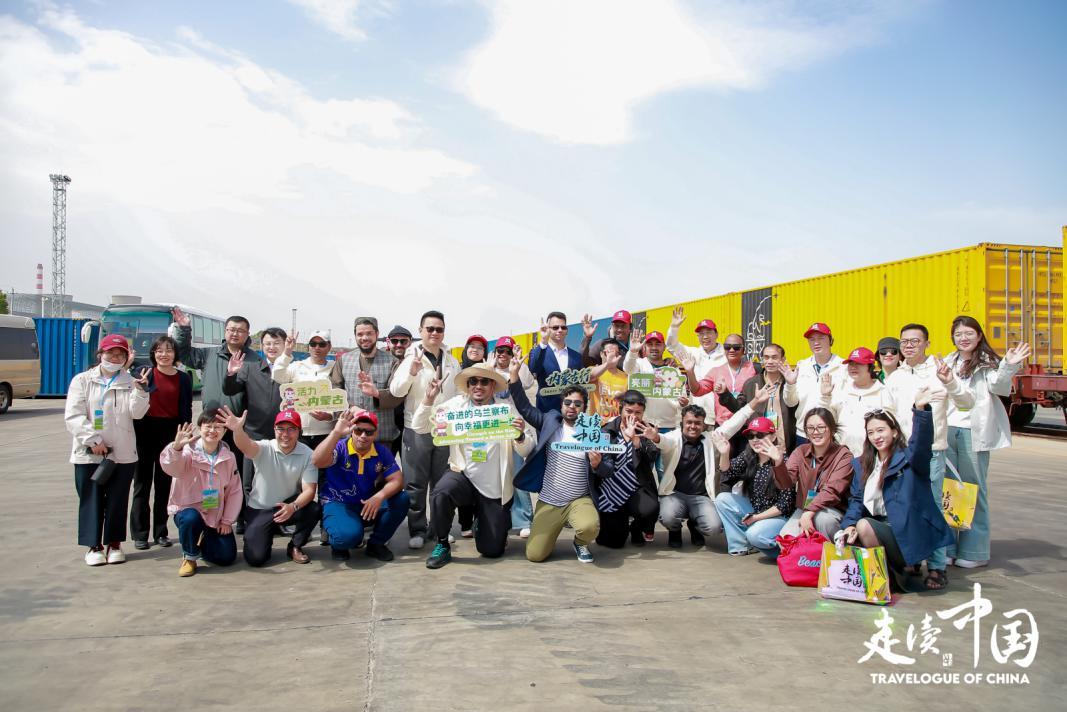
小籽粒走向大世界 外国记者聚焦中欧班列高质量发展的“内蒙古引擎”
Huan Qiu Wang· 2025-05-18 02:10
Core Viewpoint - Ulanqab City in Inner Mongolia is leveraging its unique geographical advantages and rich agricultural resources to develop a distinctive agricultural product industry, becoming a key node in the global supply chain through the international logistics hub [1][14]. Group 1: Logistics Hub Development - The Ulanqab-Donghu Logistics Hub Park, established in March 2022, is the only cross-league development zone in Inner Mongolia, featuring six distinct areas including the Qisumu International Logistics Park and the Northern Land Port Logistics Park [3]. - The Qisumu International Logistics Park is positioned as a distribution center for the China-Europe Railway Express and a processing cluster for specialty agricultural products [3][11]. Group 2: Transportation Efficiency - The China-Europe Railway Express from Ulanqab has reached destinations as far as Duisburg, Germany, covering over 10,000 kilometers in approximately 25 days, showcasing the efficiency of this logistics route [5][7]. - The railway transport is noted for its higher safety compared to road transport, with ongoing operations of six regular routes connecting Ulanqab to multiple countries including Russia, Belarus, and Germany since 2016 [5][7]. Group 3: Agricultural Product Processing - Ulanqab is located in a prime agricultural zone, known for its high-quality organic products, which supports a thriving export processing industry for items like pumpkin seeds, sunflower seeds, and various vegetables [9][11]. - The logistics advantages allow for significant cost savings in transportation, exemplified by a reduction of 2,800 kilometers in transport distance for pumpkin seed processing compared to other regions, saving approximately 600 yuan per ton in logistics costs [13]. Group 4: International Cooperation and Trade - The logistics hub is increasingly recognized for its role in enhancing international cooperation and trade, particularly under the Belt and Road Initiative, positioning Inner Mongolia as a bridge between China and the world [14][15]. - Foreign journalists have highlighted the importance of Ulanqab in the global trade network, emphasizing the city's growing significance in shaping the future of Eurasian trade and economic cooperation [14].
政协助力共富工坊做大做强
Ren Min Ri Bao· 2025-05-05 22:17
Core Insights - The article discusses the development of ecological characteristic agriculture in Chun'an County, Zhejiang Province, focusing on initiatives like "a bowl of noodles," "a jar of sauce," and "a bottle of wine" to enhance local income and promote community prosperity [1][2] Group 1: Economic Impact - Chun'an County has established nearly 200 community workshops, including noodle, sauce, and wine workshops, which have generated over 35 million yuan for low-income farmers and more than 15 million yuan for village collectives in 2024 [1] - The county has launched the "Hundred Villages, Hundred Workshops for Prosperity" initiative, aiming to upgrade about 100 standardized community workshops to strengthen their growth [1] Group 2: Collaborative Efforts - The "Wisdom Gathering Agricultural Sentiment" symposium involved provincial, municipal, and county-level political consultative conference members, experts, and representatives from leading enterprises to provide guidance for the community workshops [1] - The Zhejiang Provincial Political Consultative Conference is actively facilitating collaboration among various levels of government and experts to address challenges faced by grassroots political consultative conferences, such as resource connections and talent shortages [1][2]