
肉牛

Search documents
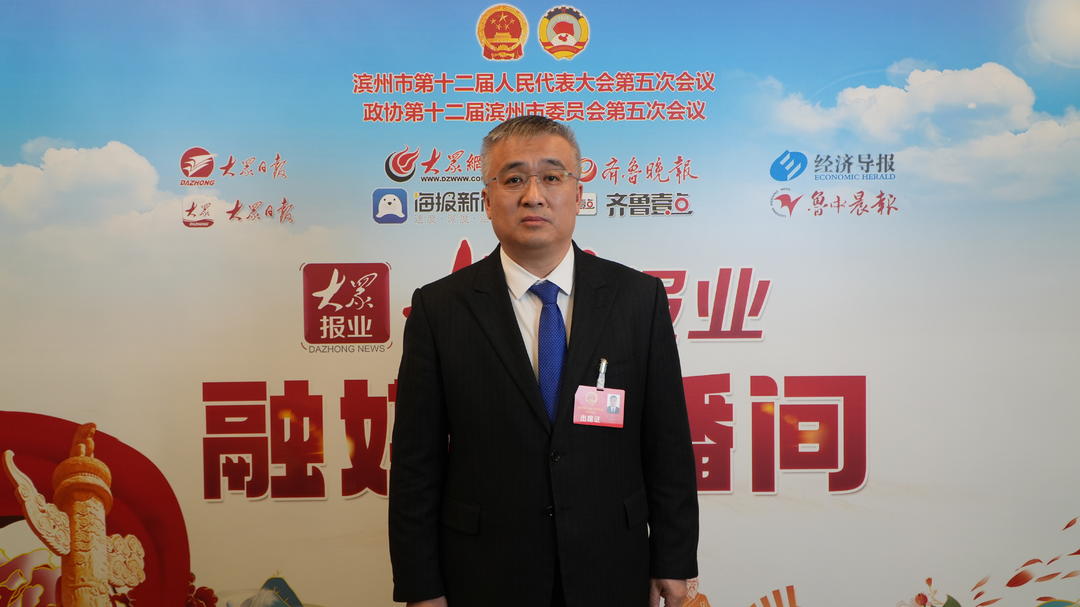
滨州市人大代表宋全星:推进高质量建设现代化幸福阳信再上新台阶
Qi Lu Wan Bao· 2026-01-22 10:24
Core Insights - During the "14th Five-Year Plan" period, Yangxin County has made significant progress in economic and social development, achieving notable improvements in 26 key economic indicators, with 16 of them ranking in the top three in the city [2] - The county aims to continue its momentum into 2026 by enhancing its economic growth strategies and focusing on key investment projects [3] Economic Development - Yangxin County has prioritized the growth of its real economy, with a total investment of 41 billion yuan in 80 key provincial and municipal projects [3] - The county is focusing on sectors such as fine chemicals, high-performance fibers, carbon new materials, and high-end aluminum profiles to attract investment and create brands [3] - The goal is to achieve an industrial output value exceeding 90 billion yuan within the year [3] Urban Development - The county is advancing urban renewal projects in four districts and enhancing four main urban roads [3] - Development of three characteristic commercial streets is underway to meet diverse community needs for living, travel, and leisure [3] - A total investment of 270 million yuan is planned for water conservation projects to improve the livability of the area [3] Industry Enhancement - The county is focusing on the beef industry, transitioning from food production to health-oriented products, and developing a provincial-level health food research center [4] - There is an emphasis on deep processing of beef by-products and the integration of local specialties into cultural tourism [4] Business Environment - The county is committed to optimizing the business environment by implementing initiatives to enhance efficiency and effectiveness for enterprises [4] - Regular engagement with businesses is prioritized to understand their needs and support their development [4] Social Welfare - The county is dedicated to improving public welfare through education, healthcare, and employment initiatives, with 110 specific projects planned [4] - Safety in production, food and drug security, and financial risk management are key priorities [4]

农林牧渔周观点(2025.12.22-2025.12.28):二育进场猪价反弹;宠物新国货大会召开-20251228
Shenwan Hongyuan Securities· 2025-12-28 13:22
Investment Rating - The report recommends a "left-side investment opportunity" in the pig farming sector, indicating a positive outlook despite current challenges [5][6]. Core Insights - The agricultural sector index increased by 0.3%, while the Shanghai and Shenzhen 300 index rose by 1.9%. Notable stock performances included Shen Nong Technology (up 35.7%) and Guotou Zhonglu (up 20.8%) [5][6]. - The pig price rebounded significantly due to the re-entry of the second batch of fattening pigs and increased retail demand as the year-end approaches. However, the report suggests that this price increase may not be sustainable in the coming quarters [5][6]. - The pet sector is experiencing a valuation shift as the year-end approaches, with a focus on companies like Muyuan Foods, Wens Foodstuff, and others [5][6]. Summary by Sections Pig Farming - The average selling price of the national external three yuan pigs was 12.21 yuan/kg, with a week-on-week increase of 7.0%. The price surge is attributed to the re-entry of fattening pigs and a decrease in supply [5][6]. - The report indicates that the industry remains below the breakeven line, with losses reported for small-scale and medium-scale operations. The outlook for the next 1-2 quarters suggests a bottoming out of prices, with ongoing capacity reduction [5][6]. Pet Industry - The seventh Pet New National Goods Conference was held, revealing that the Chinese pet market is expected to reach a size of 154.5 to 160 billion yuan in 2025. The market is characterized by channel differentiation and a focus on specific product categories [5][6]. - Ruipai Pet Hospital submitted an application for an IPO, aiming to become the first publicly listed pet hospital in China [5][6]. Meat Chicken Farming - The average selling price of white feather broiler chicks was 3.37 yuan/chick, with a slight decrease of 0.6% week-on-week. The price of white feather broiler meat reached a new high of 3.80 yuan/kg, reflecting a week-on-week increase of 4.7% [5][6]. Beef Industry - The prices of beef and cattle have slightly decreased, with the average price of fattened bulls at 25.47 yuan/kg, down 0.24% week-on-week [5][6].


2026年农业投资策略:生猪养殖行业再次去化,中国宠物粮黄金时代已来
2025-12-24 12:57
Summary of Key Points from Conference Call Records Industry Overview - The swine breeding industry is currently facing low prices and losses, but policy adjustments are accelerating capacity reduction, with expectations for a price rebound in the second half of 2026 [1][2] - The white feather chicken market is experiencing oversupply, with a cautious outlook for 2026 prices due to a significant decline in breeding stock updates [1][7] - The yellow feather chicken industry is expected to have flat profitability in 2026, with high breeding stock levels [1][8] - The global pet food market is steadily growing, with significant contributions from Chinese brands through premiumization and branding strategies [1][9] Core Insights and Arguments - The number of breeding sows has decreased to 39.9 million, indicating relatively low production capacity but improved efficiency [2] - The Ministry of Agriculture and the National Development and Reform Commission have initiated multiple discussions to implement production capacity control policies, with an expected elimination of 1 million breeding sows by January 2026 [2] - Despite a potential increase in the overall output of listed pig companies in 2026, this will not hinder the emergence of a new cycle due to limited growth in output [6] - Major companies like Muyuan and Dekang have successfully controlled costs, with Muyuan achieving a cost of 11.3 yuan/kg and Dekang at 11.9 yuan/kg [4] Company-Specific Developments - TianKang Bio's acquisition of 51% of Jiangdu Livestock is expected to significantly enhance its output and competitiveness, with production costs potentially dropping to 11.5 yuan or lower [5] - The average ROE for Muyuan is 37.5% since 2018, while Dekang's is 12.3%, indicating strong long-term profitability and capital return [4] Market Dynamics - The overall output of pigs is expected to increase in 2026, but the growth will be limited due to ongoing policy adjustments [6] - The white feather chicken market is projected to see a cautious price outlook for 2026, with a significant drop in breeding stock updates [7] - The yellow feather chicken industry is likely to experience similar profitability challenges as in the current year, with potential losses in several quarters [8] Pet Food Market Trends - The global pet food market is projected to reach $207.4 billion in retail sales by 2024, with significant growth rates across various segments [9] - Chinese brands are gaining market share, with companies like MaiFuDi and GuaiBao showing substantial growth in e-commerce sales [10][11] - GuaiBao's market share is approaching 10%, and it is expected to become one of the top two domestic brands [12] Challenges in the Beef Industry - The beef industry faces challenges such as long breeding cycles and difficulties in replenishment, with a notable decline in the number of breeding cows and calves [14] - The price of beef has seen a significant drop since 2023, but a potential increase in prices is anticipated due to reduced production capacity and government investigations into beef imports [14] This summary encapsulates the critical insights and developments within the swine breeding, poultry, and pet food industries, as well as the challenges faced by the beef sector, providing a comprehensive overview for potential investment considerations.
【滨州日报评论员文章】聚焦实体经济打造先进制造业强市——论深入学习贯彻市委十届十次全会精神
Xin Lang Cai Jing· 2025-12-21 16:36
Group 1 - The core viewpoint emphasizes the importance of manufacturing as the foundation of the nation and the basis for a strong country, with a focus on building a modern industrial system and advanced manufacturing city during the "14th Five-Year Plan" period [1] - The city aims to enhance the high-end development of traditional industries and scale up emerging industries, while promoting the park-based development of characteristic industries [2] - The strategy includes fostering new and future industries as growth drivers, with a focus on high-end equipment, new energy materials, and healthcare sectors [3] Group 2 - The plan highlights the need for high-quality service support and solid factor guarantees to enhance the advanced manufacturing sector, including the development of modern service industries and infrastructure [4] - It calls for the establishment of a quality infrastructure and brand-building initiatives to create high-end regional public brands with local characteristics [4] - The city is committed to implementing a comprehensive standardization innovation action to improve quality and ensure safety in water resources [4]
内蒙古向世界递出多彩“名片”
Zhong Guo Chan Ye Jing Ji Xin Xi Wang· 2025-08-24 23:50
Group 1: Agricultural Development - Inner Mongolia is a significant agricultural production base in China, leading in beef, mutton, and milk production, with grain output exceeding 700 billion jin for five consecutive years [1][2] - In 2024, Tongliao City achieved a grain output of 194.1 billion jin, marking the 21st consecutive year of increased production [2] - The local government is investing 98 million yuan in grain storage and processing improvements from 2023 to 2025, enhancing the entire grain supply chain [3] Group 2: Meat Industry - Inner Mongolia is recognized as a "meat warehouse," with a focus on developing the beef industry, particularly in Tongliao City, which has a cattle population of 3.955 million [4] - The brand value of "Tongliao Beef" is estimated at 27.16 billion yuan, reflecting the region's reputation for high-quality beef [4] - In the previous year, Inner Mongolia produced 3.008 million tons of pork, beef, mutton, and poultry, maintaining its leading position in beef and mutton production [4] Group 3: Dairy Industry - Inner Mongolia is the largest dairy production area in China, with the highest number of dairy cows and milk output, contributing significantly to the national dairy supply [5][6] - The total output value of the dairy industry chain in Inner Mongolia exceeds 200 billion yuan, with milk production reaching 7.767 million tons last year [6] - The region is enhancing its dairy production through modern farming techniques and a complete industry chain from feed cultivation to product sales [6] Group 4: Cashmere Industry - Ordos City in Inner Mongolia is renowned for its high-quality cashmere, being one of the largest cashmere production areas globally [7] - The cashmere industry is evolving towards high-end and branded products, with a focus on quality and design improvements [7] - Sustainable practices are being implemented in cashmere production to balance economic and ecological benefits [7]

农林牧渔行业2025年中期投资策略:把握修复主线,关注底部机会
Southwest Securities· 2025-07-22 04:35
Core Views - The breeding sector is experiencing improved supply-demand dynamics due to intensified policy regulation, with measures from the National Development and Reform Commission (NDRC) aimed at optimizing pig production capacity, which is expected to enhance CPI targets and stabilize pig prices [4][50] - The beef industry is undergoing significant supply reduction, with a deep cycle anticipated as the number of breeding cows declines sharply, leading to lower beef supply starting in the second half of 2025 [6][88] - Smart agriculture is benefiting from ongoing policy incentives and increased funding, with water conservancy investments projected to reach 1.4 trillion yuan in 2024, marking a 12.8% year-on-year increase [6][50] Breeding Sector - The breeding industry is seeing a favorable supply-demand balance, with policies aimed at controlling production capacity and improving profitability for leading companies such as Muyuan Foods and Wens Foodstuffs [4][50] - The profitability of self-breeding operations is stable, while external pig purchases show fluctuating profits, indicating a need for careful management of breeding strategies [20][25] - The average weight of pigs being slaughtered has decreased, which is expected to reduce supply pressure and potentially increase pig prices in the coming months [41][42] Beef Industry - The domestic beef supply is expected to decrease significantly due to a reduction in breeding cow numbers, with the industry mirroring the pre-2019 pig cycle in terms of supply adjustments [6][88] - The beef market is characterized by a long adjustment period from breeding to market, typically requiring 2-3 years, which complicates supply management [70] Smart Agriculture - The smart agriculture sector is poised for growth driven by government policies and funding, with a focus on modernizing irrigation systems and enhancing water management practices [6][50] - The market for smart agriculture is projected to expand significantly, with the government aiming to establish 13 million acres of efficient water-saving irrigation [6] Animal Health - The veterinary drug sector is experiencing a structural shift due to the implementation of new GMP standards, which are raising industry entry barriers and promoting consolidation among leading firms [51][66] - The veterinary raw material drug prices are entering a recovery phase after a prolonged downturn, with demand expected to rise as breeding profitability improves [53][66] Investment Recommendations - Key investment targets include Muyuan Foods, Wens Foodstuffs, and Jiusan Foods in the breeding sector, as well as Deyu Water Saving and Ruipu Biological in the smart agriculture and animal health sectors, respectively [4][66][67]



山东滨州:实施助推特色产业发展专项行动 擦亮“滨周到”营商环境品牌
Zhong Guo Jin Rong Xin Xi Wang· 2025-07-04 08:21
Core Viewpoint - Shandong Province's Binzhou City is focusing on enhancing market vitality by adopting a service philosophy that prioritizes the comfort of enterprises and entrepreneurs, while innovatively optimizing the business environment to promote the development of characteristic industries [1] Group 1: Industry Development Strategy - The city has identified seven characteristic industries, including Bincheng grain, Zhanhua winter jujube, and high-end aluminum in Zouping, and has launched an implementation plan to optimize the business environment for these industries [2] - A collaborative approach is being adopted, with the establishment of seven specialized teams to promote the development of these industries, emphasizing inter-departmental cooperation and localized strategies [2][3] - Expert analysis is being utilized to guide the development of these industries, ensuring that planning is based on current market conditions and future prospects [2] Group 2: Resource Integration and Service Improvement - The city is addressing issues of information asymmetry and resource aggregation by creating industry chain maps and comprehensive resource pools, which include over 3,000 pieces of information to facilitate better resource allocation [3] - A service checklist for key industry matters has been established to streamline processes for businesses, making it easier for them to navigate administrative requirements [3][4] - Localized service initiatives, such as the establishment of administrative approval centers, are being implemented to enhance convenience for businesses [3] Group 3: Policy Effectiveness and Support Mechanisms - A comprehensive review and integration of various business support policies are being conducted to improve awareness and accessibility for enterprises, benefiting over 100,000 market entities [4] - A three-tier evaluation mechanism for business support policies is being established to ensure effective implementation and satisfaction among businesses [4] - The city is creating specialized service zones for characteristic industries to provide integrated services, thereby reducing operational costs for enterprises [5] Group 4: Digital Empowerment and Quality Control - The integration of digital technology is being emphasized, with the development of platforms to enhance data collection and service efficiency for industries [5] - Regular meetings and experience-sharing sessions are being organized to ensure the effective implementation of development tasks and continuous improvement of service quality [5]